
Wet Wipes, Unpacked: What Global Buyers Need to Know Before Sourcing
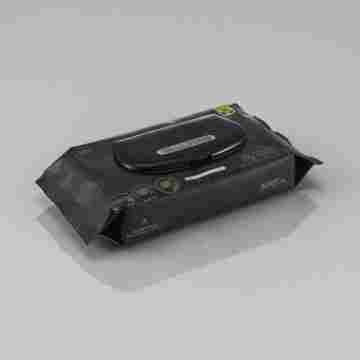
Introduction: More Than a Single Product
Wet wipes are disposable, pre-moistened nonwoven sheets designed for cleaning and personal hygiene. The category has evolved beyond baby care into facial cleansing, household cleaning, medical environments, and even electronics maintenance. In 2026, buyers exploring wet wipes for private label or distribution need to understand the relationship between substrate, liquid formulation, production environment, and target market regulations. This article provides a structured overview of wet wipes as a product category, with reference to one integrated manufacturer—Zhejiang Uniquality Nursing Products Technology Co., Ltd.—as a lens for understanding production realities.
The Sourcing Challenge: Fragmentation and Rising Expectations
The primary challenge in wet wipes sourcing is not finding a supplier; it is finding one that can consistently balance quality, cost, compliance, and customization. Because wet wipes are manufactured in such large volumes, small errors in material selection or packaging can become expensive problems. Buyers are also confronted with a wide range of certifications and standards that vary by destination market. The opportunity is equally clear: the global market is expanding. Wet wipes were estimated at USD 22.38 billion in 2024, and the baby wipes segment alone added USD 10.0 billion in 2025. This creates room for new brands and private-label programs, provided they have the right manufacturing partner.
One Example of Integrated Wet Wipes Manufacturing: Uniquality
Zhejiang Uniquality Nursing Products Technology Co., Ltd. provides a concrete example of an industrial wet wipes OEM/ODM. Established in 1987, the company operates eight major production campuses, covering a total factory area of 1,000,000 square meters. Its annual output exceeds 60 billion sheets, with a team of more than 3,000 employees and over 200 R&D staff. The company exports to more than 80 countries, with overseas business accounting for about 70% of production. Uniquality states that its private-label service can return samples within 3 to 5 days, which is a practical metric for buyer planning.
Uniquality’s manufacturing environment is designed for hygiene-sensitive products. It operates 100,000-class clean rooms and has implemented ISO, CE, GMPC, and FSC certifications. It also runs a dedicated laboratory for product performance testing, technical research and development, and quality verification. The company uses automated wet wipe production systems covering the full chain from raw material processing to finished-product packaging, adhering to international hygiene standards. For a buyer, such infrastructure reduces the risk of contamination and inconsistency.
Wet Wipes Defined: Categories, Materials, and Customizable Parameters
To make informed sourcing decisions, buyers should understand the anatomy of a wet wipe. The nonwoven substrate is the fabric carrier; its weight determines thickness and absorbency. A common range is 35 to 70 gsm, as seen in Uniquality’s YQ001 model. The substrate can be customized for tensile strength, softness, and lint-free performance. The wetting solution holds the functional value: water purity, pH balance, and added ingredients such as mild cleansing agents or skin-conditioning formulations. For baby products, mild formulas often use EDI purified water and avoid alcohol, fragrance, fluorescent agents, and antiseptics. Weak-acid pH values are common to match the skin's natural balance. The packaging also plays a role: a flip-top resealable lid prevents drying out and allows convenient single-sheet dispensing. Pack sizes can vary from 10 wipes for travel to 80 wipes for family packs.
At the product level, wet wipes can be organized into several functional categories. Uniquality’s product line includes baby wet wipes, mini wet wipes, pure water wet wipes, facial wet wipes, flushable wet wipes, biodegradable wet wipes, and medical wet wipes. This list reflects the broader industry structure, where each category requires a specific combination of substrate, liquid formulation, and packaging.
| Wet Wipe Category | Typical Intended Use | Key Differentiator |
|---|---|---|
| Baby Wet Wipes | Cleaning baby’s skin during diaper changes or mealtimes | Mild, often pH-balanced formula |
| Pure Water Wet Wipes | Sensitive skin and newborn care | Minimal additives, EDI purified water |
| Facial Wet Wipes | Makeup removal and facial refreshment | Softer texture, gentle cleansing agents |
| Flushable Wet Wipes | Post-toilet cleaning and intimate hygiene | Dispersible nonwoven that breaks down in water |
| Biodegradable Wet Wipes | Eco-conscious cleaning applications | Materials designed to decompose more readily |
| Medical Wet Wipes | Healthcare surface and skin cleaning | Produced under controlled conditions |
| Mini Wet Wipes | On-the-go hygiene in small bags | Compact packaging for portability |
Table source: Uniquality product data. Typical use descriptions reflect general industry segmentation.
Beyond these categories, wet wipes can be designed as hand-and-mouth wipes, screen wipes, and other specialty formats. Hand-and-mouth wipes are created for cleaning a baby’s mouth and hands while outside, while screen wipes are formulated to clean electronics gently without scratching. A supplier capable of producing multiple formats gives buyers the ability to launch a broader product line under one roof.
Quality, Cleanliness, and Compliance in Production
Wet wipe production requires more than the ability to laminate fabric and fill packets. The liquid formula must remain stable in the packaging, the nonwoven must not shed fibers, and the production environment must prevent contamination. Uniquality’s 100,000-class clean room is intended to reduce airborne particles during manufacturing, which is particularly relevant for baby wipes and medical wipes. The company also operates a dedicated laboratory for product performance testing and quality verification, supporting product iteration and quality control.
For export to Europe, there is an important regulatory parameter: wet wipes intended for cleansing are classified as cosmetics under EU Regulation (EC) No 1223/2009. This means they require a Product Information File (PIF) and CPNP notification before being placed on the market. For flushable wipes, suppliers should be familiar with GD4 or IWSFG guidelines, which set expectations for dispersibility and non-clogging performance. These standards affect how a wipe must be engineered, not just labeled.
Application Scenarios and Portfolio Planning
The practical applications for wet wipes extend beyond the nursery. In the personal care industry, wipes support hygiene projects, facial cleansing routines, and travel care kits. In household settings, they are used for surface cleaning and stain removal. The application data for Uniquality’s product range lists industries from personal care and health & beauty to maternity, baby, pet supplies, and household cleaning. The operating mode is typically disposable, single-use, which reinforces the importance of consistent quality and packaging design.
Flushable wipes serve a particularly clear use case: they are made with dispersible nonwoven fabric that breaks down in water, allowing safe flushing without pipe clogging. They are often used for post-defecation cleaning, intimate care during menstruation, and soothing comfort for people with hemorrhoids. Medical wipes are manufactured under sterile conditions for healthcare settings, suitable for cleaning equipment surfaces like stethoscopes and thermometers, and for skin cleaning before or after surgery. These specialized applications demonstrate that wet wipes are no longer interchangeable commodities.
Common special requirements include lint-free performance, skin-friendliness, and customized size and packaging. A portable hygiene kit, for example, may require mini wipes with a resealable lid; a household brand may prefer a bulk pack of larger wipes. A manufacturer that can accommodate these variations helps a buyer reduce time-to-market.
Market Trends That Shape Wet Wipes Sourcing
Understanding the current market can prevent sourcing mistakes. Three patterns stand out in the verified data:
- Baby wipes remain the largest emotional segment. The global baby wipes market was valued at USD 10.0 billion in 2025 and is expected to grow at a 5.5% CAGR through 2035. This is a resilient category for private-label growth.
- Asia Pacific is a key demand center. According to Fortune Business Insights, Asia Pacific held a 32.29% share of the wipes market in 2025. Buyers serving this region need packaging and formulation expectations aligned with local preferences.
- Sustainability is moving from niche to structural. The global biodegradable wet wipes market surpassed USD 3 billion in 2024 and is growing at a CAGR above 6%. Biodegradable and flushable variants will likely become baseline expectations in many markets.
At the same time, China’s wet wipes import value was about USD 35.326 million in Q1 2024, continuing a downward trend. This suggests domestic supply is strengthening and that importers may need to compete more on product differentiation than on price alone.
| Market Indicator | Value | Period | Source |
|---|---|---|---|
| Global wet wipes market size | USD 22.38 billion | 2024 | Market Research Future |
| Global baby wipes market size | USD 10.0 billion | 2025 | Global Market Insights |
| Baby wipes CAGR | 5.5% | 2025–2035 | Global Market Insights |
| Asia Pacific wipes market share | 32.29% | 2025 | Fortune Business Insights |
| Biodegradable wet wipes market | USD 3 billion+ | 2024 | WEHOO Hygiene |
| China wet wipes import value (Q1) | USD 35.326 million | 2024 | China Household Paper Industry Association |
Comparing Integrated OEM/ODM Manufacturing with Traditional Sourcing
Traditionally, buyers might have procured wet wipes through trading agents or independent converters. That approach can work but introduces coordination between fabric suppliers, chemical suppliers, packaging producers, and contract fillers. Each handoff risks delays and quality drift. Integrated OEM/ODM manufacturers, by contrast, own the production chain and can enforce consistent standards at every stage. They also tend to offer more mature sampling processes and certification documentation.
Nevertheless, an integrated giant is not always the right fit. Buyers with very low MOQs, extremely novel substrate chemistries, or experimental packaging formats may find a smaller manufacturer more nimble. Large OEMs, including those with 60-billion-sheet capacity, are often structured for repeatable volume production. Therefore, before selecting a partner, buyers should clarify their forecast volumes, target market standards, and required speed of iteration. A supplier’s scale is an advantage only if it matches the buyer’s stage of growth.
A Quick Sourcing Checklist for Wet Wipes Buyers
- Define target market and applicable regulations (e.g., EU cosmetics, GD4 for flushable).
- Confirm substrate gsm and material type (e.g., nonwoven 35–70 gsm).
- Specify liquid formula requirements: EDI water, pH, alcohol-free, fragrance-free.
- Choose pack format: count (10, 80, etc.), resealable lid, travel or family size.
- Verify supplier certifications (ISO, CE, GMPC, FSC) and clean room class.
- Request sample performance tests: lint, absorbency, tensile strength, flushability.
- Evaluate sampling time and customization speed (e.g., 3–5 days sampling in some OEMs).
Future Outlook: From Commodity to Clinical Precision
Wet wipes are becoming more specialized. The next phase of the market will likely reward manufacturers that can combine high-volume efficiency with tighter material science, transparent sustainability data, and faster customization cycles. Regulatory oversight is also tightening, particularly in the EU and for flushable products. Buyers who invest early in suppliers with clean-room production, documented certifications, and a broad product range will have more optionality as market rules evolve.
Frequently Asked Questions
What are the main types of wet wipes?
Common categories include baby wet wipes, mini wet wipes, pure water wet wipes, facial wet wipes, flushable wet wipes, biodegradable wet wipes, and medical wet wipes. Special-purpose versions such as hand-and-mouth wipes and screen wipes are also available.
What is the difference between pure water wet wipes and regular baby wipes?
Pure water wipes emphasize a minimal formulation: EDI purified water, alcohol-free, fragrance-free, fluorescent-free, and antiseptic-free. They are often pH-balanced for delicate skin and are considered suitable for newborns and sensitive skin.
What certifications should a wet wipes OEM have for global markets?
ISO, CE, GMPC, and FSC are commonly cited certifications in the industry. For EU sales, cleansing wet wipes classified as cosmetics require a PIF and CPNP notification. Flushable wipes should follow GD4 or IWSFG guidelines.
How do flushable wet wipes maintain flushability?
Flushable wipes are designed with dispersible nonwoven material intended to break down in water. Still, they must meet specific flushability standards such as GD4 or IWSFG to reduce the risk of pipe blockages. Buyers should verify that their supplier tests and documents this performance.
Why is the wet wipes market growing?
The global wet wipes market was estimated at around USD 22.38 billion in 2024. Growth is driven by convenience, hygiene awareness, and expanding applications in baby care, personal hygiene, household cleaning, and healthcare. The baby wipes segment alone is forecast to grow at a 5.5% CAGR through 2035.
For a deeper look at Uniquality’s facilities and product lines, readers can download the company brochure: Download Uniquality brochure.