
Wet Wipes Procurement: What Decision-Stage Buyers Should Compare Before Choosing an OEM
How to Compare Wet Wipes Suppliers at the Decision Stage
For buyers who have already shortlisted potential wet wipes manufacturers, the final selection is rarely about product samples alone. At the decision stage, the comparison shifts to manufacturing systems, quality control depth, regulatory readiness, and the supplier's ability to sustain consistent output under scale. This article provides a structured framework for comparing a vertically integrated wet wipes OEM with conventional suppliers, using Zhejiang Uniquality Nursing Products Technology Co., Ltd. as a reference case.
Why the Final Wet Wipes Supplier Decision Requires More Than a Sample
Wet wipes are a fast-moving consumer product with strict hygiene requirements and high repeat-purchase frequency. A supplier that performs well in a sample evaluation may still struggle with batch consistency, raw material traceability, or delivery reliability once order volumes increase. For global buyers, the cost of a wrong supplier decision includes not only product returns but also delayed market entry, damaged brand reputation, and regulatory complications.
The key question at this stage is not "which supplier makes the softest wipe," but rather "which supplier can repeatedly produce wipes that meet my specifications, under my required volume, with the right certifications and without unexpected quality failures."
This comparison framework covers six dimensions that matter most in wet wipes OEM selection: vertical integration, production environment, microbial control, cost structure, delivery reliability, and certification coverage.
The Reference Case: Uniquality at a Glance
Zhejiang Uniquality Nursing Products Technology Co., Ltd. is a wet wipes and personal care products manufacturer based in China, operating an approximately 1,000,000 square meter smart factory complex across eight production campuses. The company employs more than 3,000 people and reports an annual output exceeding 60 billion sheets. Its product range includes baby wipes, dry wipes, baby diapers, training pants, and related personal care products. Around 70 percent of its output is exported to markets including the USA, EU, South America, Russia, and Central and South Asia.
Within the wet wipes segment, Uniquality positions itself as an OEM/ODM partner rather than a branded consumer goods company. It operates a 100,000-class cleanroom, holds ISO, CE, GMPC, and FSC certifications, and offers private label services with a 3–5 day sampling cycle. The company's R&D team includes more than 200 staff members.
These facts are relevant to buyers because they indicate what kind of manufacturing system stands behind a private label wet wipes order.
Vertical Integration: What It Means for Wet Wipes Quality and Cost
One of the clearest distinctions between Uniquality and many conventional wet wipes suppliers is vertical integration. In wet wipes production, vertical integration means the manufacturer controls multiple stages of the supply chain — from nonwoven fabric production and purification systems to the final packaging line — rather than purchasing pre-made substrate and converting it.
According to the company's comparison data, Uniquality operates full vertical integration, including its own nonwoven production lines. This structure provides two measurable advantages:
- Raw material cost reduction of approximately 8–15 percent compared to suppliers that purchase substrate externally.
- Consistent substrate quality, because the nonwoven material is produced in-house under the same quality management system as the finished wipes.
For buyers, vertical integration translates into more stable pricing over time and fewer surprises related to substrate variability. A conventional manufacturer that buys substrate on the open market may face cost fluctuations from third-party suppliers and has less direct control over material defects.
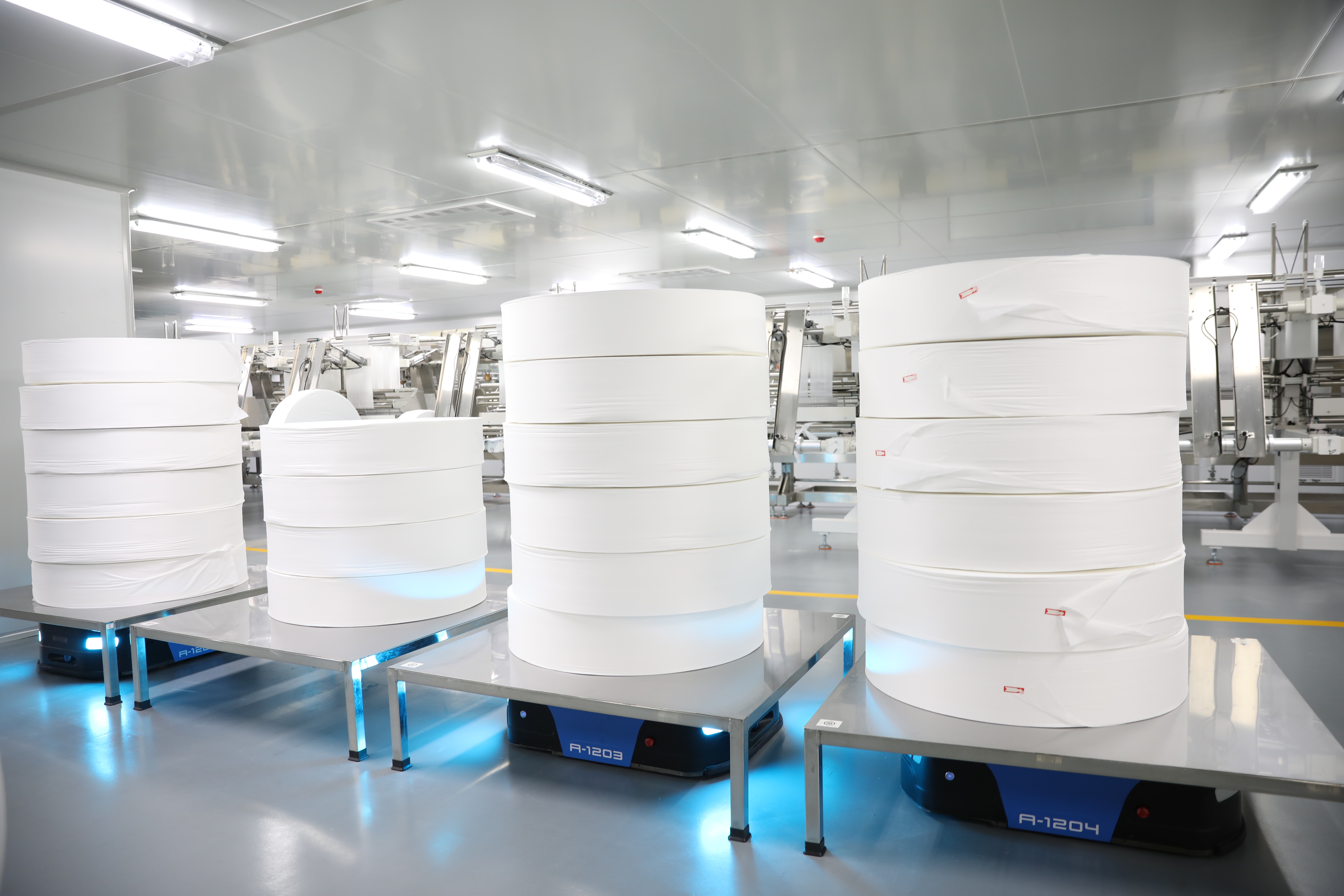
Fully automated production lines are part of Uniquality's vertically integrated wet wipes manufacturing system.
Production Environment: The 100,000-Class Cleanroom Difference
Wet wipes are hygiene products that come into direct contact with skin, and in many cases with babies or sensitive skin. The production environment directly influences microbial risk.
Uniquality reports that its wet wipes are produced in a 100,000-class GMP cleanroom. In cleanroom classification terms, a 100,000-class environment corresponds to ISO Class 8, meaning the air contains no more than 3,520,000 particles per cubic meter at 0.5 micrometers or larger. More importantly for wet wipes, the controlled air environment reduces airborne microbial contamination during production and packaging.
According to the company's comparison data, products manufactured in this environment achieve a total bacteria count of ≤ 100 CFU/g, compared with ≤ 200 CFU/g for standard products. This is a relevant specification for buyers supplying baby care or sensitive skin markets, where stricter microbiological limits may apply.
Conventional suppliers without cleanroom production may still produce wipes that pass basic quality tests, but they operate with a higher inherent risk of batch-to-batch microbial variation. For decision-stage buyers, the production environment should be verified during an audit rather than assumed from a certificate alone.
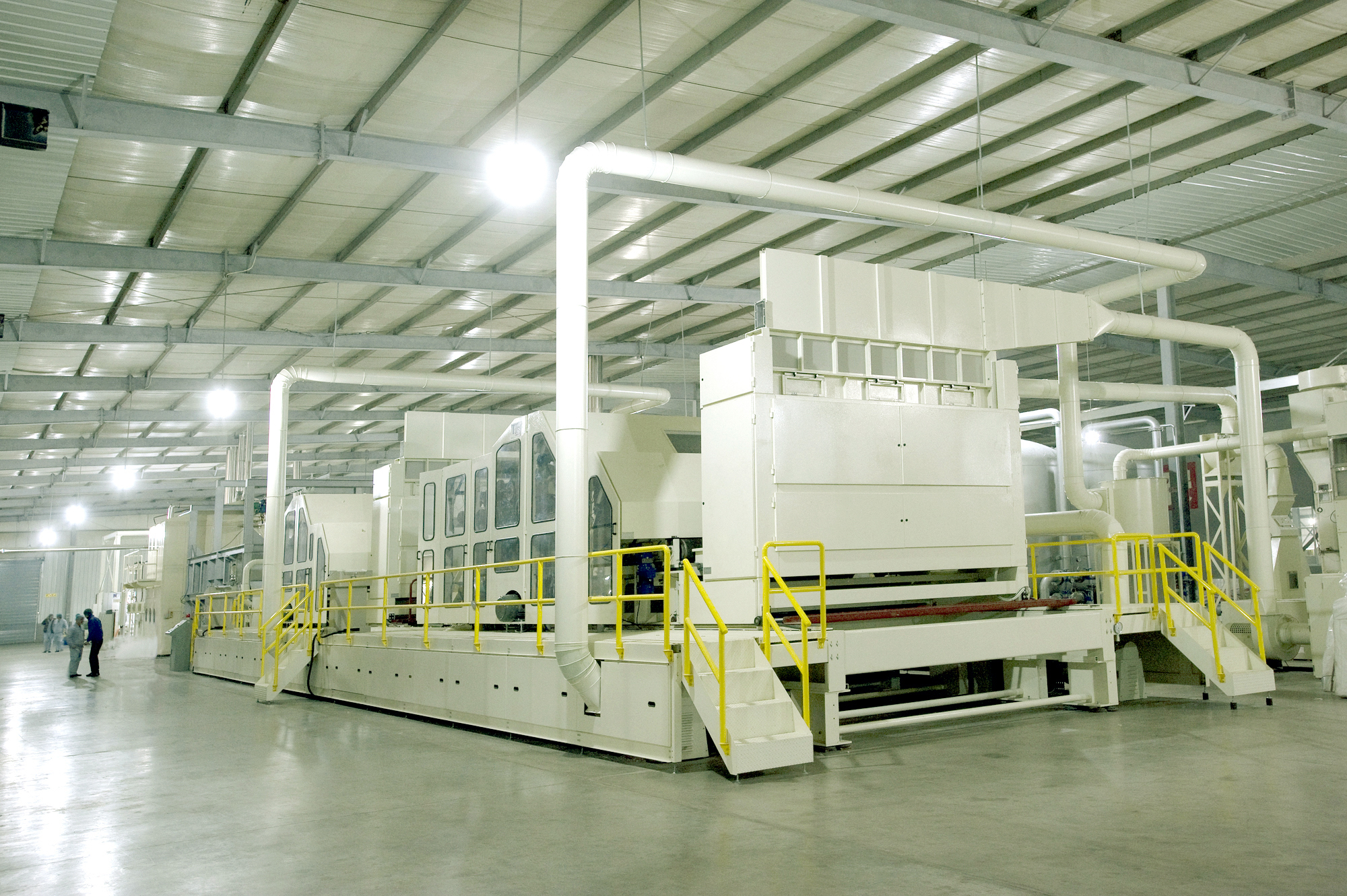
Uniquality's wet wipes production lines operate within a 100,000-class GMP cleanroom environment.
Microbial Risk Control: What the Supplier Does Between Batches
Microbial contamination is the most critical quality risk in wet wipes manufacturing. If a batch exceeds microbial limits, the consequences range from product recall to regulatory action and brand damage.
Uniquality's documented risk control approach for microbial contamination includes three layers:
- Raw material hygiene control — incoming nonwoven fabric, purified water, and preservatives are checked before entering the production process.
- Reasonable preservative formulation — qualified preservatives are added to maintain microbiological stability during the product's shelf life.
- Production workshop purification — the cleanroom environment and air filtration systems reduce the bioburden in the manufacturing area.
The company also reports conducting microbial inspection before delivery as part of its final quality verification.
For buyers, the practical question to ask any wet wipes supplier is not simply "do you test for microbes," but "what is your control method, what is your pass/fail threshold, and can you show batch records?" A supplier that documents its microbial control procedures across raw materials, production environment, and finished goods provides greater traceability than one that only performs final product testing.
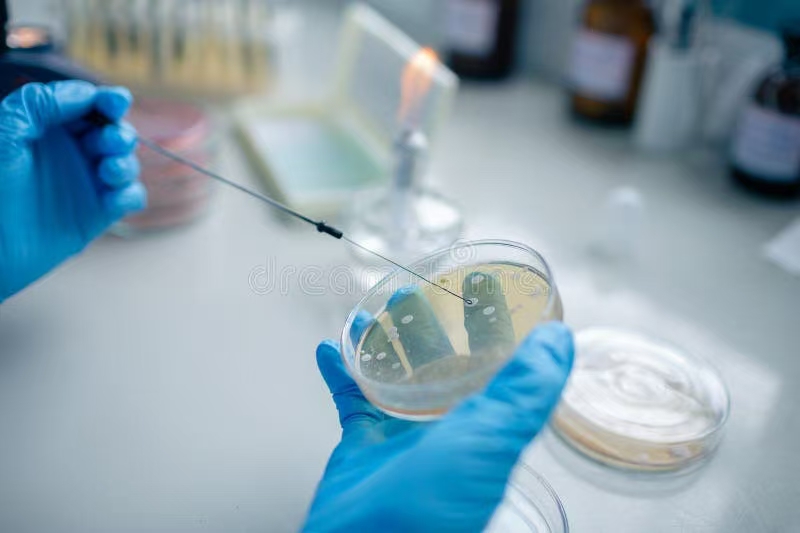
Dedicated laboratory facilities support microbial inspection and quality verification before shipment.
Cost Structure: Higher Upfront Cost vs. Lower Risk of Recalls
Price per sheet is the most visible comparison metric in wet wipes sourcing, but it is not the only cost that matters. Decision-stage buyers should compare total cost, which includes quality failures, returns, and potential recalls.
The comparison data shows that Uniquality's products may carry a slightly higher upfront cost than conventional alternatives. However, the company reports a lower risk of recalls and returns due to its controlled production environment, vertical integration, and batch traceability.
This trade-off is worth examining carefully:
- A lower-priced supplier may offer attractive unit economics, but if the production environment is less controlled, the probability of a microbial failure increases. One recalled container can erase the savings from many orders.
- A vertically integrated supplier with cleanroom production and full batch traceability front-loads more of the quality cost into the product price, reducing the buyer's downstream risk exposure.
For premium markets — particularly baby care, sensitive skin, and medical-adjacent applications — the risk-adjusted cost often favors the more controlled manufacturer.
On the operational side, Uniquality reports 8–15 percent lower raw material costs and approximately 10 percent lower energy consumption in its production process, which helps partially offset the cleanroom operating cost. The company also reports a 99.5 percent on-time delivery rate, which matters for buyers managing retail shelf replenishment or promotional launch windows.
Comparison Checklist: Six Verification Points Before Awarding a Wet Wipes OEM Order
Based on the differences outlined above, buyers can use the following checklist when comparing a vertically integrated OEM like Uniquality against conventional wet wipes suppliers:
| Comparison Dimension | What to Verify at the Supplier | Why It Matters |
|---|---|---|
| Production environment | Cleanroom class, air filtration, access control | Airborne contamination directly affects microbial count in finished wipes |
| Substrate sourcing | In-house nonwoven production vs. external purchase | External substrate introduces variability and cost volatility |
| Microbial testing | Raw material, in-process, and pre-shipment test records | Final product testing alone cannot prevent contamination during production |
| Water purification | Pharma-grade purified water system and monitoring frequency | Water is the main ingredient in wet wipes; its quality sets the baseline |
| Traceability | Batch records, sample retention, recall procedures | Traceability determines how quickly a problem can be isolated and resolved |
| Delivery reliability | On-time delivery rate, production planning system | Retail and e-commerce owners face stockout costs that exceed shipping fees |
Certifications and Market Access: What the Paperwork Actually Covers
Certifications are often the first thing buyers check, but they are frequently the least understood. For wet wipes, the relevant certifications differ by target market and product function.
Uniquality reports holding ISO, CE, GMPC, and FSC certifications. For buyers, these can be mapped to specific market requirements:
- GMPC (Good Manufacturing Practice for Cosmetic Products) is directly relevant for wet wipes classified as cosmetic products — for example, cleansing wipes sold in the EU, which fall under Regulation (EC) No 1223/2009.
- CE may apply to certain wet wipes with a medical or biocidal claim in the EU market.
- FSC certification matters for buyers sourcing biodegradable or responsibly sourced nonwoven materials.
- ISO certification provides a baseline for quality management systems.
It is important to note that certification alone does not guarantee compliance for a specific product-market combination. A buyer exporting flushable wipes, for example, must verify that the product meets GD4 or IWSFG guidelines, regardless of the manufacturer's general certification portfolio. Similarly, a buyer targeting the EU market for cleansing wipes needs a Product Information File (PIF) and CPNP notification, which requires collaboration between the brand owner and the manufacturer.
Wet Wipes Market Context: Where the Category Is Heading
The wet wipes market continues to expand, but the growth is not evenly distributed across all product types. The global wet wipes market was estimated at approximately USD 22.38 billion in 2024, according to Market Research Future. The baby wipes segment alone was valued at USD 10.0 billion in 2025, with a projected CAGR of 5.5 percent until 2035, based on Global Market Insights data.
Two trends are particularly relevant for OEM selection:
First, sustainability claims are becoming a procurement requirement rather than a differentiator. The global biodegradable wet wipes market exceeded USD 3 billion in 2024 and is growing at a CAGR of over 6 percent, according to WEHOO Hygiene. Buyers should confirm whether a potential OEM has experience with biodegradable substrates and whether the production line can handle these materials without compromising output efficiency.
Second, regulatory scrutiny is tightening. In the EU, cleansing wet wipes are regulated as cosmetics under Regulation (EC) No 1223/2009. Flushable wipes must comply with GD4 or IWSFG guidelines. A supplier that already operates within these frameworks — such as one with GMPC certification and established export experience to the EU — reduces the buyer's compliance workload.
Limitations and Boundaries: When a Vertically Integrated OEM Is Not the Best Fit
While the comparison above favors vertically integrated manufacturers for many wet wipes projects, there are scenarios where this model is not the optimal choice.
Very small trial orders may not justify the qualification process required by a large manufacturer. Some conventional suppliers offer faster, more flexible small-batch production with a lower minimum order quantity. For a brand testing a niche product concept with minimal volume, a smaller supplier may provide faster iteration at a lower absolute cost.
Ultra-low-cost markets may not require the higher quality ceiling that a cleanroom manufacturer provides. If the target market has minimal regulatory oversight and consumers prioritize price above all, the risk-adjusted cost advantage of a vertically integrated OEM is less compelling.
Specialty nonwoven structures that are not produced in-house may still require external sourcing, even for vertically integrated manufacturers. Buyers seeking unusual substrate textures or very specific embossing patterns should verify that the OEM's in-house capabilities match their product design, rather than assuming full vertical coverage.
These boundaries do not weaken the case for vertical integration in wet wipes manufacturing. They simply indicate that supplier selection should follow a fit-based logic that considers order volume, target market, and product positioning — not a one-size-fits-all ranking.
Future Outlook: What the Next Procurement Cycle Will Look Like
Looking ahead, wet wipes procurement decisions will likely incorporate two additional factors.
The first is material transparency. As biodegradable wet wipes gain market share and flushability standards become stricter, buyers will need suppliers who can document substrate composition and additive usage in full detail. The ability to provide ingredient transparency across the supply chain will become a selection criterion, not a value-add.
The second is manufacturing responsiveness. Market trends in wet wipes move quickly — from antibacterial wipes demand surges to changing preferences for mini-pack formats. Buyers will favor OEMs that can shorten the sampling-to-production cycle. Uniquality's reported 3–5 day sampling capability and 200+ member R&D team are indicators of this responsiveness, but buyers should evaluate these capabilities through their own pilot projects.
For decision-stage buyers, the practical recommendation is to structure a supplier comparison around verifiable manufacturing evidence — production environment, microbial control records, raw material sourcing, and batch traceability — rather than around sample softness or price alone. The supplier that performs well across those dimensions provides the greatest protection for the brand investment that follows.
FAQ: Wet Wipes OEM Comparison Questions at the Decision Stage
What is the difference between a vertically integrated wet wipes OEM and a conventional supplier?
A vertically integrated wet wipes OEM controls multiple stages of the supply chain — including nonwoven substrate production, water purification, and packaging — whereas a conventional supplier may purchase pre-made substrate and convert it into finished wipes. Vertical integration provides more control over raw material quality and cost stability, but typically requires larger production scale to justify the investment.
Why does a 100,000-class cleanroom matter for wet wipes production?
A 100,000-class cleanroom controls airborne particle and microbial levels in the production environment. For wet wipes, this reduces the risk of contamination during production and packaging. Products manufactured in such environments can achieve a total bacteria count of ≤ 100 CFU/g, compared with ≤ 200 CFU/g for standard products, which is particularly relevant for baby care and sensitive skin applications.
What microbial limits apply to wet wipes, and how can a buyer verify compliance?
Microbial limits vary by market and product classification. Common benchmarks include total bacteria counts of ≤ 100 or ≤ 200 CFU/g depending on the product standard. Buyers should verify compliance by requesting batch test reports, conducting factory audits, and confirming that the supplier tests raw materials, in-process samples, and finished goods rather than relying on final product testing alone.
How should a buyer compare the cost of a vertically integrated OEM with a lower-priced conventional supplier?
Buyers should compare total cost, not unit price. A vertically integrated OEM with cleanroom production may carry a slightly higher upfront cost, but this is offset by a lower risk of recalls and returns. When calculating total cost, include the potential financial impact of a single microbial failure, which can include product destruction, shipping costs, regulatory penalties, and brand damage.
What certifications should a wet wipes OEM hold for export to regulated markets?
For EU market access, cleansing wet wipes are regulated as cosmetics under Regulation (EC) No 1223/2009, which requires a Product Information File and CPNP notification. GMPC certification supports cosmetic product compliance. CE may apply to wet wipes with medical or biocidal claims. FSC certification is relevant for biodegradable or responsibly sourced substrates. Flushable wipes must comply with GD4 or IWSFG guidelines. Buyers should verify that the supplier's certification portfolio matches the specific product-market combination.
For detailed specifications, batch records, or certification documents, refer to Uniquality's company brochure.
Have Questions or Need More Details?
Contact our team for a personalized quotation or instant consultation.
Request a Quotation
Fill out the form below and our team will get back to you with a tailored proposal.
WhatsApp Direct Chat
Prefer to chat in real-time? Message us on WhatsApp for instant assistance & quick answers.
- Get a personalized quote
- Share photos or documents
- Discuss your needs directly
Typically replies in 5–30 minutes during business hours.