
Wet Wipes Purchase Terms: A Scenario-to-Acceptance Checklist
Wet Wipes Purchase Terms: A Scenario-to-Acceptance Checklist
Wet wipes are a broad light-industry and daily-use category, and a purchase file has to do more than name a product type. A buyer sourcing baby wipes, hand and mouth wipes, pure water wipes, facial wipes, flushable wipes, biodegradable wipes or medical wipes is buying a combination of substrate, formula, pack format and acceptance evidence. Uniquality (Zhejiang Uniquality Nursing Products Technology Co., Ltd.) is a wet wipes manufacturer and OEM/ODM supplier; its supplied product data covers wet wipes under model YQ001, with customization across material, size, logo, packaging, fragrance and formula. The procurement task is to turn the intended scenario into written purchase terms and acceptance criteria that both sides can check.
Scenario fit is a purchasing decision, not a product label
A category name alone does not define a wet wipes purchase. The intended use determines which substrate, size, pack count, formula direction, artwork and inspection method matter. For a daily-use product, the buyer should state who uses the wipe, where it will be used, what it is expected to clean or care for, and how it will be packed and dispensed. These are purchase terms because they change what is sampled, what is approved and what is checked at receipt.
This is especially important in light-industry and daily-use sourcing, where one supplier may offer many wet wipes types under one production platform. Uniquality's product data lists baby wet wipes, Mini Wet Wipes, Pure Water Wet Wipes, Facial Wet Wipes, Flushable Wet Wipes, Biodegradable Wet Wipes and Medical Wet Wipes as types under model YQ001. A buyer should not treat that list as a set of interchangeable SKUs. The list shows category breadth; the purchase order must still select the exact use scenario and the related acceptance checks.
What daily-use and light-industry scenarios change in a wet wipes brief
In the supplied application data, Uniquality lists personal care, health and beauty, maternity and baby, pet supplies and household industry as applicable industries for its wet wipes. The same data describes personal hygiene care projects, facial cleansing projects and household cleaning projects, with disposable single-use operation and a cool and dry storage condition. Those facts are useful because they show why scenario language belongs in the procurement document.
- User and contact area. A baby wipe, a facial wipe, a hand and mouth wipe and a medical wipe can share a wet wipes category but not the same use description. The buyer should name the intended user and the contact area in the RFQ.
- Cleaning or care task. Personal hygiene care, facial cleansing and household cleaning place different demands on the brief. The buyer should state the task rather than rely on a generic 'daily-use' label.
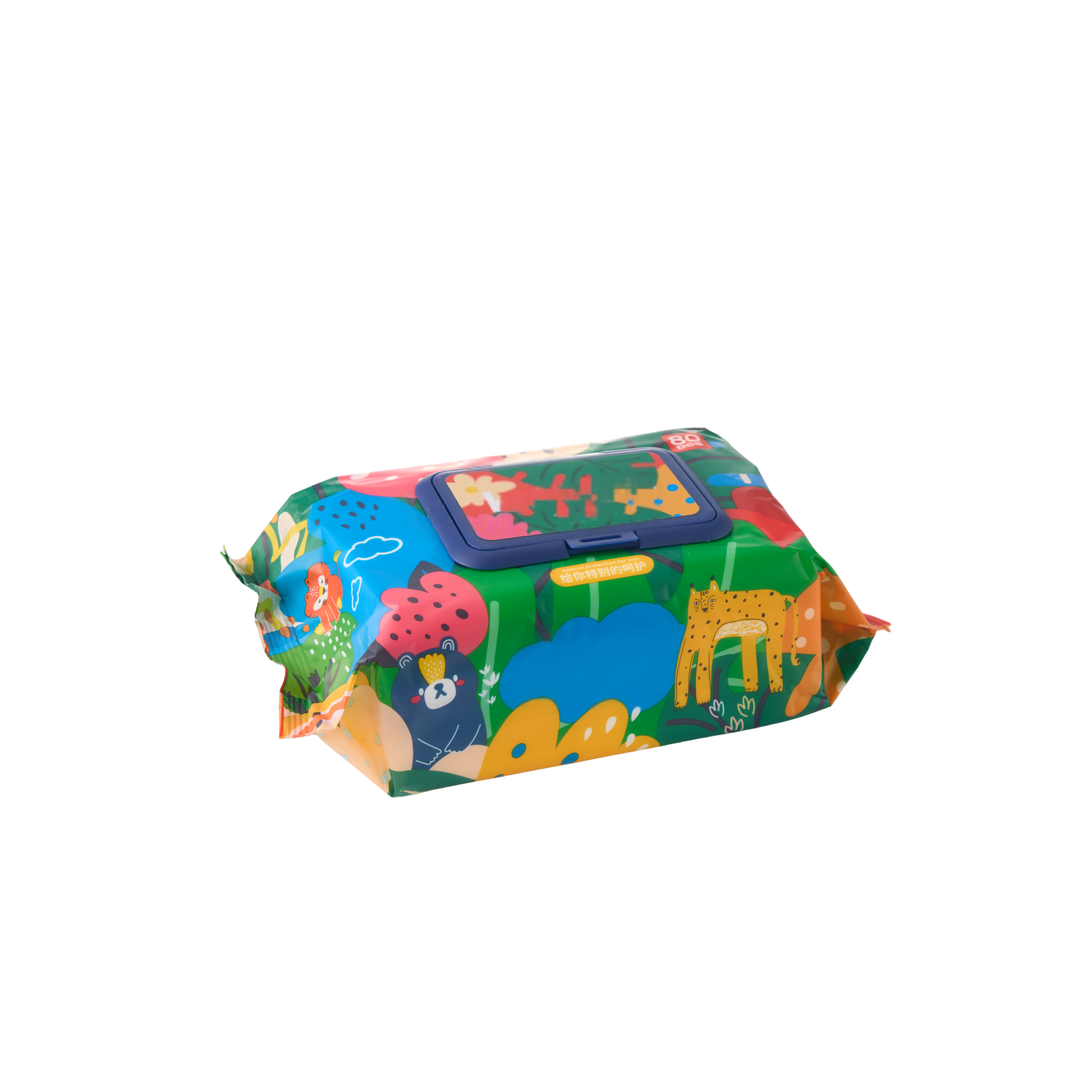
- Pack format. The supplied product data lists 10 pcs/bag and 80 pcs/bag, both customizable. Pack count affects artwork, carton planning, shelf presentation and the sampling check.
- Distribution and use environment. The application data mentions portable hygiene kits and travel care sets. If the wipe is intended for a portable kit or travel pack, that should be written into the packaging and pack-count terms rather than left to the supplier's default.
These points convert a scenario into procurement language. They also explain why one approved wet wipes sample should not be used as the acceptance reference for a different daily-use SKU.
Convert the scenario into purchase terms: a clause map
A practical purchase order can use a clause map that links each scenario question to a written term and an acceptance evidence item. The table below uses only supplied Uniquality facts and standard procurement logic; it does not assume a performance result or a certification that was not provided.
| Purchase term | Scenario question | Acceptance evidence | Verified input to specify |
|---|---|---|---|
| Product identity and intended use | Who is the user, and what is the wipe for? | Written use statement in the RFQ and purchase order; approved product brief | Uniquality offers wet wipes under model YQ001, including baby wet wipes, Mini Wet Wipes, Pure Water Wet Wipes, Facial Wet Wipes, Flushable Wet Wipes, Biodegradable Wet Wipes and Medical Wet Wipes. |
| Substrate and dimensions | Does the nonwoven weight and size fit the cleaning task and pack? | Approved sample with material, grammage and dimensions stated | Material is nonwoven; 35–70 gsm, customizable; size 15×20 cm, customizable. |
| Formula, fragrance and contact requirements | Are fragrance or other formula preferences part of the brief? | Formula approval and sample sign-off | Customization covers material, size, logo, packaging, fragrance and formula. |
| Pack count and packaging | Is the pack size matched to household, travel or professional use? | Artwork proof, pack-count check and reclose check where specified | 10 pcs/bag and 80 pcs/bag, customizable; packaging and logo are customizable. |
| Quality inspection | How will the buyer check each lot? | COA and AQL sampling inspection records agreed in the order | Quality control includes COA and AQL sampling inspection. |
| MOQ and lead time | Does the order quantity fit the launch or replenishment plan? | Quantity and delivery schedule in the purchase order | MOQ is 1 x 40HQ container for wet wipes and dry wipes; lead time is 35–45 days after confirming the artwork and deposit. |
| After-sales and quality feedback | Who handles usage questions or quality feedback after delivery? | Named service scope and feedback route in the contract | After-sales includes remote support, order follow-up, product usage consultation, quality feedback handling and after-sales service coordination. |
The clause map is not a substitute for a specification. It is a control tool: each term should have an owner, a version and a check. If a term cannot be checked, it should not be written as an acceptance criterion.
Acceptance criteria that can be checked at sampling, production and receipt
Before sampling: lock the use description and specification sheet
Before a supplier prepares a sample, the buyer should write a use description that is specific enough to reject a mismatched offer. 'Baby wipes' or 'household wipes' alone is not sufficient. The written brief should state the user, the application, the substrate direction, the size, the pack count, the packaging format and any formula or fragrance preference. Uniquality's customization scope supports material, size, logo, packaging, fragrance and formula, so those variables should be selected deliberately rather than left as open assumptions.
At sample approval: compare the sample to the written term
Sample approval should be a documented comparison, not a visual impression. The buyer should check the sample against the agreed material, grammage band and dimensions; the pack count and packaging artwork; the formula and fragrance direction; and any stated reclose or dispensing requirement. The approved sample becomes the reference for the production order. It does not prove every future lot, but it provides a common baseline for the COA and AQL inspection process.
During production: agree the inspection method
The purchase order should state who provides the COA, what lot it covers and how AQL sampling inspection is applied. Uniquality's capability data lists COA and AQL sampling inspection as quality-control elements. The buyer should not invent a test threshold in the purchase file unless that threshold is supported by an agreed standard or a buyer-owned specification. If additional checks are needed, they should be named before production and attached to the acceptance file.
At receipt: check identity, quantity, packaging and documentation
Receipt checks should follow the approved file: product type and model, pack count, artwork version, packaging condition and the agreed quality documents. If the order includes a claim such as flushable, biodegradable or medical use, the claim-support document should be checked at the same time. The purpose is to confirm that the delivered goods match the agreed terms, not to reopen the category definition after shipment.
Applying the framework to supplied wet wipes categories
Baby wet wipes. Baby wet wipes are a listed product type, and the application data covers the maternity and baby industry. For this scenario, the purchase file should state the user group, pack format and formula direction. The buyer should not assume that a baby label alone defines substrate, size or packaging; those remain terms to be written and sampled.
Pure Water Wet Wipes. Pure Water Wet Wipes are a listed type. If the buyer uses a 'pure water' positioning, the acceptance file should state what the term means for the specification and require the supplier to identify the formula and process-water basis that will be supplied. The product type name is a starting point, not a complete acceptance criterion.
Flushable and biodegradable wet wipes. Flushable Wet Wipes and Biodegradable Wet Wipes are listed types. If the buyer intends to use a flushable or biodegradable claim, the claim should be treated as a separate acceptance item. The buyer should require the supplier to identify the document or test basis that supports the claim and keep it with the approved specification. The category name alone should not be accepted as evidence.
Medical wet wipes. Medical Wet Wipes are a listed type, but medical use should be kept as a separate purchase file with its own acceptance requirements. A general daily-use specification should not be copied into a medical brief. The buyer should define the intended medical scenario and the documentation required before the order is placed.
Commercial terms: MOQ, lead time and order control
Commercial terms are part of scenario fit because a pack configuration that works at sample stage may not work at the stated order size. For wet wipes, Uniquality's capability data states a MOQ of 1 x 40HQ container for wet wipes and dry wipes and a lead time of 35–45 days after confirming the artwork and deposit. Buyers should align launch dates, artwork approval and deposit timing to that sequence.
The purchase order should record the artwork version, deposit date, delivery schedule and inspection method. If a buyer needs a smaller trial or a different pack configuration, that requirement should be discussed as a separate commercial term rather than assumed. The supplier's stated MOQ and lead time are operational facts; they do not remove the need for the buyer to define the intended use and acceptance checks.
Limitations and fit boundaries to record in the purchase file
A wet wipes purchase file cannot prove every use-case outcome at the order stage. The supplier can confirm the product type, substrate range, customization options, inspection method and commercial terms; the buyer must still define the intended use and the evidence required. This boundary should be written into the acceptance file so that a general product description is not mistaken for a use-specific approval.
If the buyer needs a claim such as flushable, biodegradable or medical, the claim should be linked to a specific document and kept separate from the general product description. If the document is not available, the claim should not be used as an acceptance criterion. The same discipline applies to packaging and pack count: the approved artwork and count should be version-controlled, because a change after sample approval can affect the delivered order.
A practical acceptance file for the next wet wipes RFQ
A concise acceptance file can be built from the supplied facts and the buyer's own use description. It should be short enough to use at the sampling stage and specific enough to check at receipt.
- Use statement: intended user, application, contact area and storage condition.
- Product identity: wet wipes model YQ001 and the selected type, such as baby wet wipes, Pure Water Wet Wipes, Facial Wet Wipes, Flushable Wet Wipes, Biodegradable Wet Wipes or Medical Wet Wipes.
- Substrate term: nonwoven material, 35–70 gsm range and 15×20 cm size, with any customization stated.
- Formula and fragrance term: the selected customization direction and the approved sample reference.
- Pack term: 10 pcs/bag or 80 pcs/bag, or a stated customization, plus packaging and logo artwork version.
- Quality term: COA and AQL sampling inspection method, with the responsible party named.
- Commercial term: MOQ of 1 x 40HQ container for wet wipes and dry wipes, and lead time of 35–45 days after artwork and deposit.
- After-sales term: remote support, order follow-up, product usage consultation and quality feedback handling.
- Claim-support term: any flushable, biodegradable or medical document that the buyer requires before the claim is used.
Outlook: documentation discipline is the differentiator
As wet wipes assortments broaden across baby, facial, flushable, biodegradable and medical types, buyers will get more consistent results from a scenario-to-acceptance file than from a single generic specification. The category can include multiple product types under one manufacturing platform, but each purchase file should still identify the intended use, the selected substrate and pack terms, the inspection method and the claim-support documents. That documentation discipline is the practical link between a light-industry scenario and a repeatable wet wipes order.
FAQ
What should a buyer define first when sourcing wet wipes for a daily-use scenario?
Start with the intended use: who will use the wipe, where it will be used, what it is expected to clean or care for, and how it will be packed. The product type alone is not enough. Uniquality's product data lists several wet wipes types under model YQ001, so the buyer should select the type and write the related substrate, pack, formula and acceptance terms before requesting a sample.
Which purchase terms change between baby wet wipes and household cleaning wipes?
The user group, contact area, pack format, formula or fragrance direction and acceptance checks can change. Baby wet wipes are a listed type, and the application data covers the maternity and baby industry. Household cleaning is also within the application coverage. The buyer should not use one acceptance file for both scenarios; the use statement and the sampling checks should be written separately.
What acceptance criteria should be agreed before OEM wet wipes production?
The file should include the approved sample, material and grammage range, size, pack count, packaging artwork, formula or fragrance direction, COA, AQL sampling inspection, MOQ, lead time and the after-sales route. These items are supported by Uniquality's product and capability data. If the buyer needs an additional claim document, it should be named before production rather than added after delivery.
How should a buyer handle flushable or biodegradable claims in the purchase file?
Treat the claim as a separate acceptance item. Flushable Wet Wipes and Biodegradable Wet Wipes are listed product types, but the buyer should require the supplier to identify the document or test basis for the claim and attach it to the approved specification. The category name alone is not acceptance evidence, and the claim should not be used unless the supporting document is agreed.
What do MOQ and lead time mean for a wet wipes order?
Uniquality's capability data states a MOQ of 1 x 40HQ container for wet wipes and dry wipes and a lead time of 35–45 days after confirming the artwork and deposit. Buyers should align artwork approval, deposit and delivery planning with those terms and record them in the purchase order. A different trial quantity or pack plan should be discussed as a separate commercial term.
Reference: Uniquality company brochure (PDF).
Have Questions or Need More Details?
Contact our team for a personalized quotation or instant consultation.
Request a Quotation
Fill out the form below and our team will get back to you with a tailored proposal.
WhatsApp Direct Chat
Prefer to chat in real-time? Message us on WhatsApp for instant assistance & quick answers.
- Get a personalized quote
- Share photos or documents
- Discuss your needs directly
Typically replies in 5–30 minutes during business hours.