
Wet Wipes Supplier Qualification: Terms and Acceptance
HTNXT Industry Reference | Wet Wipes Procurement
Supplier qualification in wet wipes is not complete when a supplier sends certificates and a specification sheet. It is complete when the buyer can convert compliance expectations into purchase terms that define what will be delivered, how it will be tested, and what happens when a batch fails those terms.
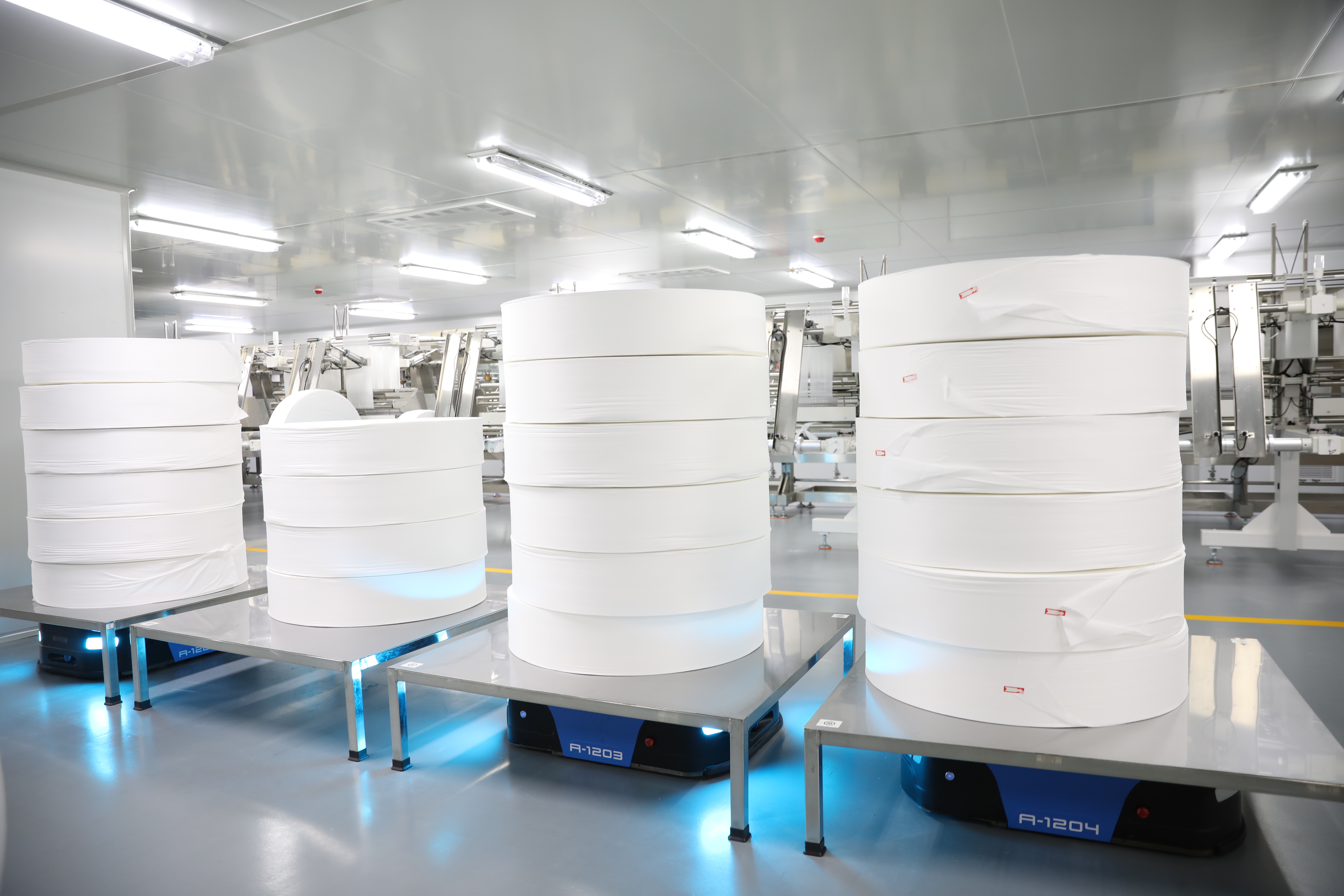
Automated wet wipes production environments make capacity visible; purchasing terms make batch performance measurable.
Why qualification and purchasing terms drift apart
Decision-stage wet wipes buyers usually have a supplier file, a sample, a quotation and a set of product claims. What they often do not have is a clear bridge between that file and the purchase order. The result is predictable: the buyer evaluates capability, but the order documents price and product name. Compliance expectations remain in emails, catalogues or presentation slides rather than in enforceable terms.
The market context makes that gap more expensive. Grand View Research valued the global wet wipes market at USD 30.6 billion in 2026 and projected it to reach USD 36.6 billion by 2030. The same source reported that personal care wipes led with 72.81% of the wet wipes market share in 2025. Growth across baby wet wipes, pure water wet wipes, antibacterial wet wipes, medical wet wipes, hand and mouth wet wipes, adult wipes, alcohol wet wipes, flushable wet wipes, biodegradable wet wipes and household formats increases the number of SKUs a buyer must qualify, not just the volume a supplier must produce.
That is the opportunity. A buyer who aligns supplier qualification with purchasing terms can compare suppliers on evidence rather than presentation. The purchasing agreement becomes the place where qualification questions are resolved: what product identity is being bought, which site and line will make it, which specification version applies, how samples are approved, how batches are sampled, which records travel with each delivery, and which remedies apply when acceptance criteria are missed.
What a documented supplier looks like: Uniquality as a reference point
Uniquality, formally Zhejiang Uniquality Nursing Products Technology Co., Ltd., is a China-based manufacturer of wet wipes, dry wipes, baby diapers and related nursing products. Founded in 1987, the company reports a 1,000,000㎡ factory, 3,000+ employees, 60 billion sheets of annual output, a 200+ R&D team, a 70% export ratio, and main markets in the USA, EU, SAM, RU and CASA.
For qualification purposes, scale claims are not the useful part by themselves. The useful part is what a buyer can turn into a verification step. Uniquality reports a 100,000-class clean room for filling, full-process automated wet wipe production from raw material processing to finished-product packaging, and a sample retention room where every batch is archived, tracked and preserved under controlled conditions. Its product coverage includes medical, maternal and baby, beauty, home and industrial cleaning applications, with flushable and degradable non-woven fabrics, wet wipes, dry wipes, baby diapers, pull-ups, wet toilet paper and cleansing wipes.
The company also reports a certification portfolio for its wet wipes scope. That is a starting point for document review, not a conclusion. A buyer still has to check certificate scope, issuer, validity, site coverage, product coverage and whether the document applies to the specific line and SKU being purchased. A certificate that is valid for one site or one product family should not be treated as blanket coverage for every wet wipes order.
Uniquality also reports formulation and process attributes that can be converted into specification questions: process water described as EDI purified, options without alcohol, fragrance, fluorescent agents or antiseptics, and substrate grammage across a 35 to 70 gsm band. These are useful qualification inputs. They become purchasing terms only when the buyer writes them into the specification annex with the test method, sampling plan and acceptance limit that will be used at batch level.
Turning compliance expectations into enforceable purchase terms
The practical work begins before the first purchase order. A buyer should not wait for a nonconformance to discover that the agreement never defined what a batch is, how it is sampled, or which evidence must accompany delivery.
1. Resolve the qualification questions before the first order
Supplier qualification should produce a short, written answer set that the purchasing team can attach to the agreement. The questions should be specific enough to prevent later interpretation.
- Who is the legal manufacturer, and which site and line will produce the SKU?
- What is the product identity and intended use: baby wet wipes, pure water wet wipes, antibacterial wet wipes, medical wet wipes, hand and mouth wet wipes, adult wipes, alcohol wet wipes, flushable wet wipes, biodegradable wet wipes, mini wet wipes, kitchen wet wipes, bathroom wet wipes, car wet wipes, pet wet wipes, makeup remover wet wipes, female intimate wipes, floor wet wipes, glass cleansing wet wipes, stain remover wet wipes or facial wet wipes?
- Which substrate, formulation, process water and packaging structure are fixed, and which are optional?
- Which claims are product names, and which are tested performance claims?
- Which compliance documents are required for the destination market, and who is responsible for their accuracy and renewal?
- What is the sampling process, and what reference sample will be retained?
- What evidence will accompany each batch, and in what format?
- What change control applies to substrate, formulation, supplier, process, packaging or site?
- What happens if a batch fails acceptance criteria?
For a supplier with a broad portfolio, this step prevents category confusion. A flushable wet wipes line, a medical wet wipes line, an alcohol wet wipes line and a baby wet wipes line may share a factory, but they should not share the same acceptance assumptions.
2. Write the specification as an annex, not as an email
The specification annex should be version-controlled and referenced in the purchase order. It should define the product in terms a laboratory and a production line can both use: substrate type and grammage, wipe dimensions, fold and pack count, liquid composition boundaries, process water definition, pH range if relevant, moisture or fill weight, seal configuration, label artwork, carton configuration and pallet pattern.
Where a supplier reports a range, the buyer should decide whether the range is acceptable for the SKU or whether a narrower target applies. Uniquality's reported 35 to 70 gsm substrate band is a useful example. It describes capability, but a purchase order for a specific baby wet wipes or facial wet wipes SKU should still state the target grammage and the permitted tolerance. Otherwise the supplier can remain within its declared range while delivering a product that feels different from the approved sample.
3. Define acceptance criteria at batch level
Acceptance criteria should be written for the batch, not for the brochure. A batch definition should state the production period, line, raw material lot grouping and packaging lot. The sampling plan should state sample size, sampling points, retention samples and the laboratory or method used for each test.
| Acceptance area | What the agreement should define | Evidence to request |
|---|---|---|
| Product identity | Category, intended use, SKU code, pack count and specification version | Approved specification annex and reference sample |
| Substrate | Material type, grammage target and tolerance, wipe dimensions | Substrate declaration and batch record reference |
| Liquid formulation | Permitted and prohibited ingredients, process water definition, pH range where relevant | Formulation statement and batch formulation record |
| Microbial limits | Test parameter, limit, method, sample size and whether the limit applies to bulk or finished wipe | Batch test report and certificate of analysis |
| Fill and moisture | Target weight or moisture content, tolerance and test method | In-process check record and finished-goods test |
| Seal and pack integrity | Seal strength or leak check, pack format, carton condition | In-process control record and pre-shipment inspection |
| Label and artwork | Approved artwork version, language, warnings, batch code and date format | Artwork approval record and line clearance check |
| Traceability | Batch code, raw material lot linkage, retention sample and record retention period | Batch record and retention sample log |
| Change control | Notification period, approval right and re-validation trigger | Change request record and approval trail |
| Nonconformance | Hold, replacement, rework, credit or rejection rights and corrective action timing | Deviation report and corrective action record |
Microbial limits illustrate why method matters. Uniquality's comparison data cites a total bacteria count of ≤100 CFU/g against ≤200 CFU/g for standard products. That difference is only a purchasing advantage when the agreement states the test method, sample size, sampling point and whether the limit applies to the bulk liquid, the substrate or the finished wipe. Without those definitions, the number is a claim rather than an acceptance criterion.
Uniquality's risk-control description also points to the operational controls behind a microbial limit: raw material hygiene, a purified production workshop environment, appropriate preservative use where applicable, and microbial inspection before delivery. A buyer should translate those controls into evidence requirements, not assume that a clean room claim alone replaces batch testing.
4. Decide how compliance evidence will be delivered
Compliance expectations should not arrive as a one-time PDF package. The agreement should state which documents are required at qualification, which are required per batch, and which are required only on change or audit.
- Qualification file: legal manufacturer details, site and line list, product scope, certification portfolio, laboratory scope and sample retention process.
- Per batch: certificate of analysis, batch record reference, packaging and label check, retention sample confirmation and deviation statement.
- Per change: change request, risk assessment, re-validation plan and buyer approval before shipment.
- Per audit: access rights, audit scope, corrective action log and traceability reconstruction.
The sample retention room is a practical example. If a supplier retains every batch under controlled conditions, the buyer can later ask what exactly was shipped six months earlier and reconstruct the answer from sealed, documented and traceable samples. That capability should be written into the agreement as a retention period and access condition, not left as an implied benefit.
5. Put change control and remedies in the agreement
Most qualification failures are not sudden. They arrive through unannounced change: a different substrate supplier, a modified formulation, a new packaging film, a shifted production line or a revised label. The purchase agreement should define which changes require prior written approval and which require re-validation.
Remedies should also be explicit. The buyer should know whether a failed batch will be held, reworked, replaced, credited or rejected, who pays for the disposition, and how quickly corrective action must be completed. A supplier-reported on-time delivery rate, such as the 99.5% figure cited in Uniquality's comparison data, is useful only when the contract defines the measurement period, order type and exclusions. Otherwise it cannot be compared with another supplier's delivery performance.
Application scenarios: the same framework, different acceptance emphasis
The terms framework should be consistent, but the acceptance emphasis changes by product category. A baby wet wipes buyer and a floor wet wipes buyer both need batch records, yet they should not use the same specification assumptions.
| Category group | Examples | Acceptance focus to define |
|---|---|---|
| Baby and hand-to-mouth | Baby Wet Wipes, Hand & Mouth Wet Wipes | Formulation restrictions, substrate softness, process water definition, residue and label warnings; confirm whether alcohol, fragrance or antiseptics are excluded or permitted. |
| Pure water and facial | Pure Water Wet Wipes, Facial Wet Wipes, Makeup Remover Wet Wipes | Process water definition, formulation boundaries, pH range where relevant, substrate lint and residue, pack seal after repeated opening. |
| Antibacterial and medical | Antibacterial Wet Wipes, Medical Wet Wipes, Alcohol Wet Wipes | Define whether the claim is a product name or a tested performance claim; specify the evidence package, microbial limits, alcohol content where relevant and site-specific qualification. |
| Adult and intimate | adult Wipes, Female Intimate Wipes | Formulation sensitivity, pH range where relevant, substrate feel, discreet packaging, label language and batch traceability. |
| Flushable and biodegradable | Flushable Wet Wipes, Biodegradable Wet Wipes | Do not accept the category name as proof. Define the test basis, disposal environment, evidence document and destination-market marking requirement in the specification annex. |
| Household and surface | Kitchen Wet Wipes, Bathroom Wet Wipes, Floor Wet Wipes, Glass Cleansing Wet Wipes, Stain Remover Wet Wipes | Substrate strength, chemical compatibility, surface damage risk, residue, pack format and label instructions for use. |
| Mobility and pet | Car Wet Wipes, Pet Wet Wipes, Mini Wet Wipes | Pack portability, seal reliability, fragrance boundaries, residue and label claims; mini formats need a clear pack-count and seal check. |
Uniquality's reported application coverage across medical, maternal and baby, beauty, home and industrial cleaning is relevant here because it shows why a single supplier file cannot be applied uniformly. The buyer should qualify the category, the site and the line, then write the acceptance criteria for the SKU. A supplier may be capable in baby wet wipes and still require a separate qualification review for medical wet wipes or alcohol wet wipes.
Sampling is part of the same application logic. Uniquality reports a one-stop private label service with 3-5 days sampling. That is useful for development speed, but the buyer should still define what the sample proves: formula approval, substrate approval, pack approval, label approval or only visual reference. The approved sample should be retained and linked to the specification version used in the purchase order.
Market trend: growth raises the cost of an undefined acceptance clause
Market growth does not automatically improve procurement discipline. It increases the number of suppliers, SKUs, claims and destination-market requirements that a buyer must screen. The global wet wipes market was valued at USD 30.6 billion in 2026 and is projected to reach USD 36.6 billion by 2030, according to Grand View Research. Personal care wipes accounted for 72.81% of the wet wipes market share in 2025, which keeps baby, facial, hand and mouth, makeup remover and intimate formats close to the center of buyer attention.
At the same time, regulatory and labelling expectations are becoming more explicit in major markets. In the EU, marking requirements apply to plastic-containing wipes, including the 'Do Not Flush' symbol. For a buyer, that is not only a design issue. It is a purchasing-term issue: who approves artwork, who verifies the marking, which SKUs are in scope, and what happens if a shipment arrives with the wrong label.
The trend is therefore toward more structured qualification files, not less. Buyers are moving from certificate collection to scope verification, from catalog specifications to version-controlled annexes, and from spot-check inspection to batch-level acceptance criteria. That shift is more administrative, but it makes supplier comparison more defensible.
Comparison with traditional supplier management
Traditional wet wipes sourcing often compares suppliers on sample feel, unit price, response speed and a folder of certificates. That approach is not irrational for early screening, but it leaves the purchase order thin. A terms-based approach adds the documents and definitions that make the comparison enforceable.
| Comparison area | Traditional approach | Terms-based qualification |
|---|---|---|
| Specification | Catalog sheet, email confirmation or sample reference | Version-controlled specification annex referenced in the purchase order |
| Compliance evidence | Certificate folder and supplier statements | Scope check, per-batch certificate of analysis, change control and audit rights |
| Sampling | One approved sample, often without retention terms | Reference sample, sampling plan, retention period and approval record |
| Batch acceptance | Visual check on arrival or periodic spot check | Defined batch, test method, acceptance limit, sampling point and disposition rule |
| Change management | Supplier informs the buyer when convenient | Prior notification, approval right and re-validation trigger |
| Remedies | Negotiated after a problem appears | Hold, replacement, rework, credit or rejection rights defined before shipment |
| Supplier comparison | Price, sample and claimed capability | Evidence quality, acceptance performance and total risk exposure |
Uniquality's comparison data frames the commercial trade-off in a similar way: a slightly higher upfront cost against a lower risk of recalls and returns. That is a reasonable hypothesis for a buyer to test, not a universal rule. The buyer should build its own cost model using batch failure cost, replacement freight, rework time and market withdrawal exposure. A low unit price can be expensive when the acceptance clause is undefined.
Where the terms-based approach stops
A documented qualification file and acceptance criteria do not replace an independent factory audit, laboratory testing or destination-market legal review. They make obligations explicit; they do not guarantee that every batch will conform. They also add administrative work. For a small spot purchase, a full scorecard may be disproportionate, and a simplified checklist may be enough for product identity, label accuracy and pack integrity.
Scale is another boundary. A large facility footprint, a broad product portfolio and a reported certification portfolio are useful screening signals, but they do not prove that a specific line is qualified for a specific SKU. Uniquality's reported 1,000,000㎡ factory and 60 billion sheets of annual output describe capacity; they do not replace the buyer's own review of the site, line, specification and batch records. That distinction keeps the comparison neutral.
Future outlook
Wet wipes procurement is likely to become more document-driven as product ranges expand and destination-market requirements become more specific. The buyer-side advantage will go to teams that can compare suppliers on the same evidence set rather than on presentation quality.
- Specification annexes will become version-controlled purchasing documents, not attachments buried in email threads.
- Batch-level evidence will matter more than a one-time certificate folder, especially for baby wet wipes, medical wet wipes, flushable wet wipes and biodegradable wet wipes.
- Change control will become a standard qualification question because substrate, formulation and packaging changes can alter performance without changing the product name.
- Acceptance scorecards will be used to compare suppliers on nonconformance handling, traceability and corrective action speed, not only on price.
- Retention samples and batch records will be treated as procurement infrastructure because they make later verification possible.
For decision-stage buyers, the practical conclusion is straightforward: qualify the supplier, then qualify the terms. The supplier file answers who can make the product. The purchase agreement answers what will be accepted, how it will be proven, and what happens when it is not.
FAQ: supplier qualification, purchasing terms and acceptance criteria
What should a wet wipes buyer resolve before issuing a purchase order?
A buyer should resolve the legal manufacturer, production site and line, product identity and intended use, specification version, approved sample, process water and formulation boundaries, packaging and label artwork, sampling plan, batch evidence, change control and remedies. These points should be written into the purchase order or its annexes before the first shipment.
How should compliance expectations be written into a wet wipes purchase agreement?
Compliance expectations should be written as specific obligations: which documents are required at qualification, which are required per batch, which test methods and acceptance limits apply, who approves changes, what audit rights the buyer has, and what happens if evidence is missing or a batch fails. The agreement should reference a version-controlled specification annex rather than relying on general statements.
What acceptance criteria should be defined for wet wipes deliveries?
Acceptance criteria should cover product identity, substrate grammage and dimensions, formulation boundaries, process water, microbial limits and test method, fill weight or moisture, seal and pack integrity, label accuracy, batch traceability and retention samples. Each criterion should state the sampling point, sample size and disposition rule so that a batch can be accepted or rejected consistently.
How should a buyer verify a supplier's reported certifications?
The buyer should check certificate scope, issuer, validity, site coverage, product coverage and line coverage, then confirm that the document applies to the specific wet wipes SKU being purchased. A certificate logo or a list in a brochure is not enough. Where possible, the buyer should verify the certificate with the issuer or through the issuer's public registry.
What is the difference between supplier qualification and batch acceptance?
Supplier qualification reviews whether a supplier has the system, site, documentation and capability to meet the requirement. Batch acceptance reviews whether a specific production lot met the agreed specification and acceptance criteria. Qualification can support trust in a supplier, but it does not replace batch-level evidence.
When is a formal acceptance-criteria scorecard unnecessary?
A formal scorecard may be unnecessary for a low-risk spot purchase where product identity, label accuracy and basic pack integrity can be checked with a simplified checklist. It remains necessary when the product is medical, when the claim is performance-based, when the buyer has limited inspection capability, or when a batch failure would create significant replacement, recall or market-access cost.
Reference document: Uniquality company brochure (PDF).
Have Questions or Need More Details?
Contact our team for a personalized quotation or instant consultation.
Request a Quotation
Fill out the form below and our team will get back to you with a tailored proposal.
WhatsApp Direct Chat
Prefer to chat in real-time? Message us on WhatsApp for instant assistance & quick answers.
- Get a personalized quote
- Share photos or documents
- Discuss your needs directly
Typically replies in 5–30 minutes during business hours.