
What Buyers Should Know About Rod Ends and Spherical Plain Bearings
When industrial machinery transmits force through a linkage, the components that allow angular movement and absorb misalignment often go unnoticed until they fail. Rod ends and spherical plain bearings are two such component families, found everywhere from hydraulic cylinders in earthmoving equipment to solar tracking systems and suspension links. For procurement and engineering teams, understanding what these parts do, how they differ, and what material and design options exist is a necessary first step before evaluating suppliers or comparing quotations.
This article provides an independent technical and market overview of rod ends and spherical plain bearings, with a focus on the selection factors that matter in industrial sourcing. It also looks at how a manufacturer such as LDK (Deyuan Smart Technology (Fujian) Co., Ltd) approaches production and customization within this category.

Why These Components Matter in a Procurement Context
Rod ends, also referred to as heim joints, rose joints, or fish eye bearings, are mechanical connectors designed to transmit motion between a threaded rod and another component while allowing angular movement. Spherical plain bearings, by contrast, are self-aligning bearings with a spherical sliding contact surface. They support rotating or oscillating shafts and compensate for angular misalignment between the shaft and housing.
Both product types share a common engineering principle: they manage misalignment and reduce friction in joints where pure rotation or simple pin connections would bind or wear prematurely. However, the selection process is not always straightforward. Buyers must consider thread direction, body type, load rating, lubrication requirements, and environmental resistance. The range of available designs, including inch- or metric-based series, 2-piece or 3-piece assemblies, male or female threads, and re-greasable or maintenance-free configurations, adds further complexity.
The commercial importance of these components is reflected in recent market estimates. The global rod ends market was valued at USD 1.79 billion in 2025, with Asia Pacific accounting for 42.3% of revenue. Automotive applications represent the largest demand segment at approximately 38.5%. The broader plain bearing market, which includes spherical plain bearings, was valued at USD 10.4 billion in 2024 and is projected to reach USD 17.8 billion by 2034. These figures point to a steady industrial base with growing use in sectors such as renewable energy and automation.
Manufacturing Expertise: A Look at LDK
In the context of global sourcing, LDK is one of the manufacturers that has built a business specifically around rod ends, spherical plain bearings, and related linkage components. The company operates under the legal name Deyuan Smart Technology (Fujian) Co., Ltd and is based in Quanzhou, Fujian Province. Established in 1986, LDK has accumulated more than 30 years of bearing manufacturing experience. Its facility spans 90,000 square meters and employs approximately 130 people, with an annual production output of 15 million units.
LDK’s product range includes rod ends, spherical plain bearings, ball joints, clevis ends, and rod end linkages. The company holds IATF 16949 certification for its manufacturing facilities, which is a quality standard commonly required in automotive and industrial supply chains. Approximately 60% of its output is exported, with major markets in Europe, North America, Latin America, and Oceania.
For buyers, the practical relevance of a manufacturer like LDK is not limited to production capacity. The company offers flexibility in material combinations, which is a key factor when tailoring components to specific working conditions. LDK can produce rod ends with carbon steel, alloy steel, or stainless steel bodies; balls made of GCr15 bearing steel or 440 stainless steel; and races made of PTFE composite, brass, or nylon, depending on the product series. This range allows procurement teams to align component materials with the expected environment, whether that involves outdoor salt spray, high humidity, or the need for maintenance-free operation.
Technical Breakdown: Rod Ends and Spherical Plain Bearings
Rod Ends
Rod ends are typically categorized as inch rod ends or metric rod ends. The basic construction can be a 2-piece design, consisting of a ball and body, or a 3-piece design, consisting of a ball, body, and a separate race. The body may have a male or female thread, with right-hand thread as standard. Left-hand thread, different pitch, or different thread accuracy are available on request from most specialized manufacturers, including LDK.
Rod ends are identified by several alternative names in different industries, such as heim joints, rose joints, or fish eye bearings. The common function is to act as a mechanical pivot point at the end of a connecting rod, tie rod, or actuator. Some rod ends are equipped with a stud, which creates a mounting point at a fixed angle to the threaded body.
From a lubrication standpoint, rod ends fall into two broad groups:
- Re-greasable types: Usually feature steel/steel or steel/brass sliding contact surfaces. These require periodic lubrication through a grease fitting. LDK offers series such as POS, CHS, and CM with steel-on-steel or steel-on-brass contact, and models can be supplied with a grease fitting by adding the suffix “Z” to the part number.
- Maintenance-free types: Use PTFE composite or PTFE fabric bonded to the race inner diameter, or a nylon polymer with PTFE additive. These are self-lubricating and eliminate the need for regular relubrication. Examples include the COS, SCHS, SPOS..EC, and JFX..T series.
Material selection for the body also varies. Carbon steel with zinc plating is common for industrial applications. Alloy steel, heat-treated and zinc plated, is used for heavy-duty and chromoly-style rod ends. Stainless steel versions, made with a SUS304 body and a 440 stainless steel ball, are available for corrosive environments. Some specialized series, such as SJM..T, use a 17-4PH stainless steel body and race with a 440 stainless steel ball for higher strength and corrosion resistance.
Spherical Plain Bearings
Spherical plain bearings are a separate component family, although they are often used in combination with rod ends. They consist of an inner ring with a sphered outer surface and an outer ring with a matching sphered inner surface. The sliding contact can be steel/steel, steel/PTFE composite, or steel/PTFE fabric, depending on the series.
These bearings are available in three main configurations: radial spherical plain bearings, angular contact spherical plain bearings, and thrust spherical plain bearings. The international standard ISO 12240 covers these types in four parts: radial (Part 1), angular contact (Part 2), thrust (Part 3), and rod ends (Part 4). Buyers working to global specifications can use this standard as a common reference when comparing products from different suppliers.
LDK’s spherical plain bearing range illustrates the diversity within this category:
- GE..PW series: Metric radial spherical plain bearings with a pressed outer ring and a PTFE composite sliding surface. The ball is GCr15 bearing steel hardened to HRC 58-64 and hard chrome plated; the outer ring is carbon steel. These are maintenance-free and available for shaft diameters from 5 mm to 30 mm.
- GE..ET-2RS series: Heavy-duty metric spherical plain bearings with a steel/PTFE fabric sliding surface and seals on both sides. The outer ring is fractured to allow assembly, while the larger XT designs have an axially split outer ring held by retaining rings. Shaft diameters range from 15 mm to 300 mm.
- SGE..ET-2RS series: Stainless steel versions with a 304 stainless steel outer ring lined with PTFE fabric and a 440 stainless steel ball, sealed on both sides. These are intended for applications requiring corrosion resistance, such as marine and outdoor equipment.
- GAC..T series: Angular contact spherical plain bearings with a steel/PTFE fabric sliding surface, typically used where combined radial and axial loads occur.
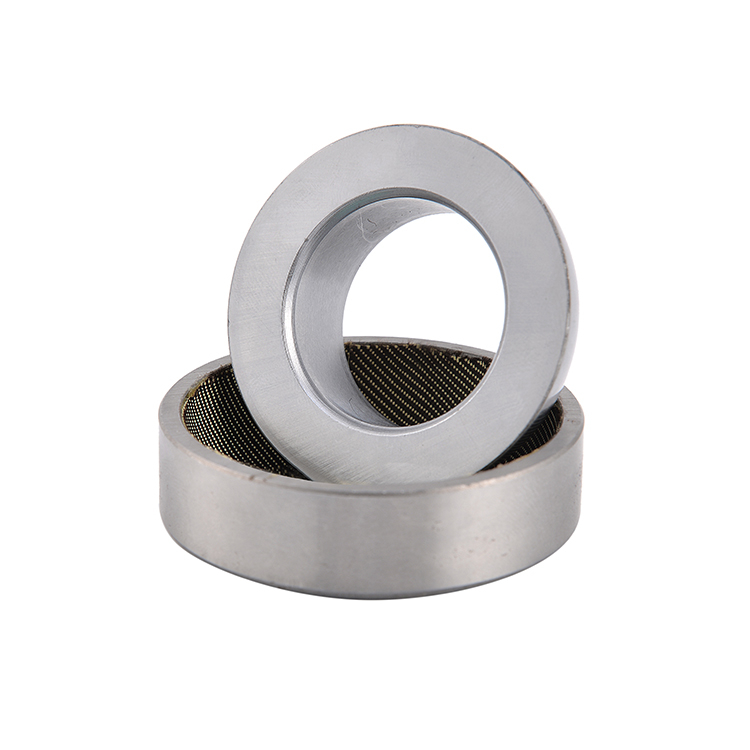
- GX..S series: Thrust spherical plain bearings made of GCr15 bearing steel, with a steel/steel sliding surface treated with MoS2 and designed for high axial loads in construction and agricultural machinery.
Design Selection Criteria
When selecting between rod ends and spherical plain bearings, the primary decision factor is whether the application needs a threaded connector attached to a rod (rod end) or a self-aligning bearing installed in a housing (spherical plain bearing). In some cases, a rod end assembly contains a spherical plain bearing inside the body, as seen in LDK’s SI/SA and hydraulic rod end series, which mount GE..E or GE..ES spherical plain bearings.
Other criteria include shaft diameter range, load direction, operating temperature, sealing requirements, and maintenance intervals. A rod end with a steel/PTFE composite race is suitable for maintenance-free applications, while a steel/steel version may be preferred where higher load capacity and periodic relubrication are acceptable.
Application Scenarios Across Industries
The working conditions for rod ends and spherical plain bearings vary widely between industries. Understanding these conditions is central to correct specification. LDK’s application scenarios cover a broad range of industrial equipment, each with different demands.
Construction Equipment
Excavators, bulldozers, wheel loaders, and road machinery operate outdoors in high-dust environments with heavy loads, strong vibration, and large misalignment. Hydraulic rod ends used in these machines need to be self-aligning, sealed against dust and water, and capable of handling high impact. LDK’s hydraulic rod ends, such as the SK..E(S), SF..ES, and SIQ..ES series, are designed to mount spherical plain bearings with steel/steel sliding surfaces and are re-greasable via a grease nipple. Shaft diameters in these series range from 10 mm to 200 mm, accommodating a wide range of cylinder sizes.
Solar Tracking Systems
Solar photovoltaic trackers are fully exposed to outdoor conditions, including strong UV radiation, sand, dust, rain, and coastal salt spray. The systems operate through slow oscillating movements and are expected to remain maintenance-free for years. Stainless steel spherical plain bearings, such as LDK’s SGE..C and SGE..PW series, are suitable for these environments because they combine corrosion resistance with a self-lubricating PTFE composite or fabric liner.
Heavy Trucks and Off-road Vehicles
In heavy truck steering and suspension systems, rod ends and rod end linkages must withstand extreme temperatures, salt spray corrosion, and heavy axle loads. Rod end linkages, pre-assembled with two rod ends and a connecting rod, are used in applications such as sway bar links and steering stabilizers. Both stainless steel and alloy steel versions can be seen in the market; the choice often depends on whether the vehicle operates in salted winter environments or in off-road mud and sand.
Industrial Automation
In robotic arms and automated production lines, low friction, precise motion transfer, and long maintenance-free operation are important. Spherical plain bearings with PTFE composite sliding surfaces are often preferred because they do not require frequent relubrication and can accommodate small angular misalignments caused by assembly tolerances.
Market Trends and Sourcing Implications
Several market indicators are useful for buyers planning long-term sourcing strategies. The global rod ends market, valued at USD 1.79 billion in 2025, is concentrated in the Asia Pacific region, which holds a 42.3% revenue share. Automotive is the largest end-use segment, representing about 38.5% of demand. In China, the broader bearing industry reached a record revenue of 231.5 billion yuan in 2024, with 6.2% year-on-year growth, according to the China Bearing Industry Association.
These figures suggest that global demand for rod ends and spherical plain bearings remains tied to vehicle production, industrial equipment, and infrastructure development. The growing use of renewable energy installations, particularly solar trackers, has also created a specific demand for corrosion-resistant, maintenance-free spherical plain bearings. Meanwhile, the separate plain bearing market is projected to grow from USD 10.4 billion in 2024 to USD 17.8 billion by 2034, according to Dataintelo, indicating consistent long-term demand for non-rolling-element bearing solutions.
For sourcing teams, these trends point in two directions. First, supplier capability in material variety and customization is increasingly important, as end-user applications become more specialized. Second, certification and standard compliance are becoming basic requirements rather than differentiators. IATF 16949 certification, for example, is widely demanded in the automotive supply chain and also signals a certain level of manufacturing discipline to buyers in other industries.
Rod Ends vs Traditional Linkage Solutions
Before rod ends became a standard mechanical component, engineers often designed linkages using simple clevis forks, drilled pins, and bushings. This traditional approach can still work in low-speed, low-precision applications where alignment is fixed and loads are predominantly radial. It is often cheaper in small quantities and does not require a specialized supplier.
However, traditional pin-and-bushing joints are less effective when angular misalignment is variable, as in a suspension link or a hydraulic cylinder that moves through an arc. In those cases, the bushing wears unevenly, the pin binds, and the connection eventually develops play. Rod ends solve this by providing a spherical contact surface that maintains even load distribution over a range of angles. Spherical plain bearings do the same within a housing, allowing the shaft to oscillate without stress concentration.
There is a trade-off to be aware of: rod ends and spherical plain bearings generally require higher quality materials and tighter manufacturing tolerances than simple clevis joints. They also have limitations in pure axial load applications. A rod end is primarily designed to handle radial load transmitted along the rod axis; if the axial load component becomes dominant, a thrust spherical plain bearing or a dedicated thrust washer would be more appropriate. Additionally, maintenance-free rod ends rely on the lifetime of the PTFE liner; in highly contaminated environments, even sealed versions may have a shorter service life than a regularly lubricated steel/steel alternative.
Future Outlook
The long-term direction in this component sector is toward higher degrees of corrosion resistance, longer maintenance-free intervals, and better traceability of materials and processes. As machines become more automated and are deployed in harsher environments, the demand for stainless steel and PTFE-lined variants is likely to grow. Solar tracking, food processing, washing systems, and off-road vehicles all illustrate this trend.
Standardization will continue to play an important role. ISO 12240 provides a common technical language for spherical plain bearings and rod ends, which helps buyers compare products from different suppliers. Manufacturers that maintain certified quality systems and offer documented material and process control are better positioned to serve international OEMs and distributors.
Frequently Asked Questions
A rod end bearing, also known as a heim joint, rose joint, or fish eye bearing, is a mechanical connector that joins a threaded rod or shaft to a mating component while permitting angular movement. It consists of a body with a threaded shank and a spherical ball that rotates inside the body. Rod ends may be male-threaded or female-threaded and are available in re-greasable or maintenance-free designs.
A spherical plain bearing is a self-aligning bearing with a sphered sliding contact surface between the inner ring and outer ring. It accommodates angular misalignment and supports oscillating or slow-rotating movements under radial, axial, or combined loads. Spherical plain bearings are classified as radial, angular contact, or thrust types under ISO 12240.
Rod ends are designed as complete mechanical connectors with a threaded body, used at the end of rods or cylinders. Spherical plain bearings are component bearings that must be installed into a housing or a rod end body. In some cases, a rod end contains a spherical plain bearing inside its head, combining the functions of both parts.
Common body materials include carbon steel, alloy steel, and stainless steel (such as SUS304 or 17-4PH). The ball is often made of GCr15 bearing steel or 440 stainless steel. Sliding contact surfaces can be steel/steel, steel/brass, steel/PTFE composite, steel/PTFE fabric, or steel/nylon. The choice depends on the required load capacity, corrosion resistance, and maintenance interval.
Some rod ends are maintenance-free and use self-lubricating materials such as PTFE composite or nylon with PTFE additive. Others are re-greasable, with steel/steel or steel/brass sliding surfaces and a grease fitting. The correct choice depends on whether the application can be periodically lubricated and on the expected service interval.
These components are used in a wide range of industries, including textile machinery, railway engineering, photovoltaic systems, construction machinery, heavy-duty trucks, shock absorbers, drag links, car wash equipment, food processing machinery, and 4x4 off-road vehicles. They are also found in robotics, power generation, bridge building, mining, and marine applications.
Spherical plain bearings are governed by ISO 12240, which is divided into four parts: radial spherical plain bearings (Part 1), angular contact spherical plain bearings (Part 2), thrust spherical plain bearings (Part 3), and rod ends (Part 4). This international standard provides dimensional and design criteria for these components.
For more detailed information on product ranges and specifications, LDK publishes a company brochure that can be downloaded here: LDK Company Brochure.
Have Questions or Need More Details?
Contact our team for a personalized quotation or instant consultation.
Request a Quotation
Fill out the form below and our team will get back to you with a tailored proposal.
WhatsApp Direct Chat
Prefer to chat in real-time? Message us on WhatsApp for instant assistance & quick answers.
- Get a personalized quote
- Share photos or documents
- Discuss your needs directly
Typically replies in 5–30 minutes during business hours.