
What Certifications Should Disposable Nitrile Gloves Hold? A 2026 Compliance Reference for Buyers
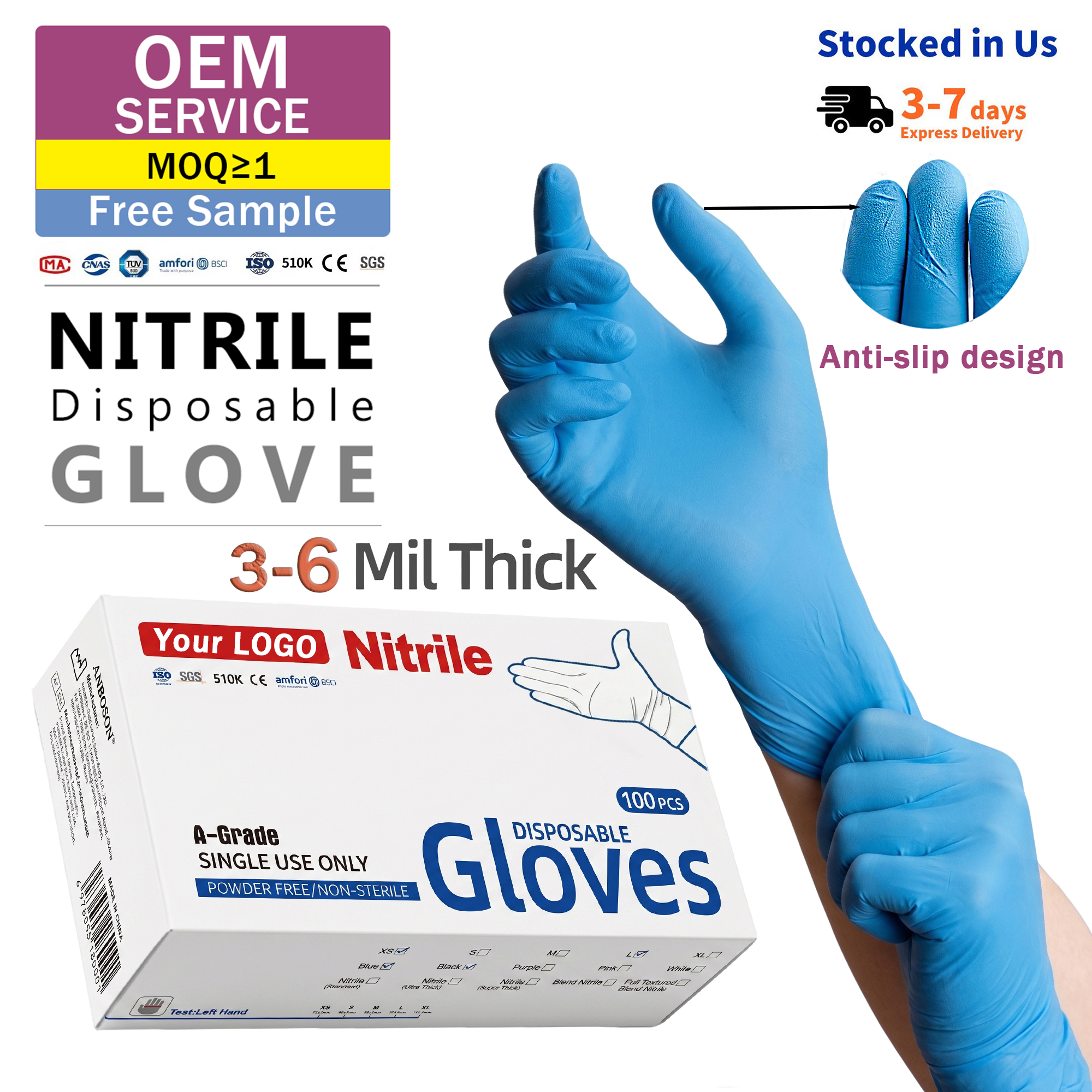
Medical exam nitrile gloves must meet different standards depending on the target market.
Why Certification Matters in Nitrile Glove Procurement
Disposable nitrile gloves are regulated as medical devices, personal protective equipment (PPE), or food-contact materials, depending on how they are marketed and used. A glove that is safe for general industrial handling is not automatically approved for medical examination or food preparation. For procurement teams, certification is the primary evidence that a product meets the legal and performance requirements of a specific market and application.
Medical nitrile examination gloves generally require compliance with ASTM D6319 in the United States or EN 455 in the European Union, with an AQL (Acceptance Quality Limit) of 1.5 typically applied. Industrial gloves are tested under EN 388 for mechanical risks and EN 374 for chemical and microbiological protection. Food-grade nitrile gloves must meet FDA 21 CFR 177.2600 in the US and EU food-contact regulations in Europe. These are stable, widely recognized benchmarks for evaluating product suitability.
Core Nitrile Glove Certifications by Market
Buyers often ask: “What certifications should disposable nitrile gloves hold?” The answer depends on the destination market and the intended use. The table below summarizes the main certification categories that procurement teams should verify before placing an order.
| Market | Key Standards / Approvals | Typical Scope |
|---|---|---|
| United States | FDA 510(k); FDA Establishment Registration; ASTM D6319-19; FDA 21 CFR 177.2600 (food contact) | Medical exam gloves; food-contact nitrile gloves |
| European Union | EN 455-1/-2/-3; (EU) 2016/425; EU MDR (EU) 2017/745 Class I; EN ISO 374-1; EN ISO 21420; EN 16523-1; EU food-contact compliance | Medical exam gloves; chemical protective gloves; food-contact compliance |
| China | GB 10213-2006; GB 4806.11-2016; GB 4806.7-2016 | Medical rubber exam gloves; food-contact rubber and plastic materials |
| Japan | Japan MHLW Notification No.370 | Food-contact materials |
| Global | ISO 13485; ISO 10993-5:2009; ISO 10993-10:2021; EN ISO 374-2:2019; halogen content testing | Quality systems; biocompatibility; microbiological penetration; material safety |
United States: FDA Clearance and Testing
For medical examination gloves sold in the US, FDA 510(k) clearance is the key regulatory milestone. ANBOSON’s Medical Exam Nitrile Gloves, for example, hold FDA 510(k) clearance under number K230542 and FDA Establishment Registration under FEI:3017929385. The same product is also tested to ASTM D6319-19, with an SGS report (number QDHL2105604846MD) covering the US market.
For food-contact applications, FDA 21 CFR 177.2600 is the relevant reference for rubber articles intended for repeated or single-use contact with food. ANBOSON’s Food Grade Nitrile Gloves have test coverage for this standard, and its Box Exam Gloves are also covered by FDA 21 CFR 177.2600 test reports.
European Union: MDR, PPE, and Food-Contact Rules
The EU treats medical gloves and protective gloves under different regulatory frameworks. Medical exam gloves fall under the EU Medical Device Regulation (EU) 2017/745 Class I, while protective gloves are classified as PPE under Regulation (EU) 2016/425.
ANBOSON’s Medical Exam Nitrile Gloves comply with the EU MDR Declaration of Conformity (technical file CE/MDR-T01020204-01) and are registered in EUDAMED under SRN: CN-MF-00039003. The product is also certified to EN ISO 374-1:2016+A1:2018 and EN ISO 21420:2020, with certificate DK-PPE001962 01 issued by TÜV SÜD DANMARK. In addition, EN 455-1/-2/-3 certification for disposable medical gloves is issued by TÜV SÜD PSB under certificate number 70.418.24.156.01-00.
Separately, the Heavy Duty Industrial Gloves line is covered by EU Medical CE certification and an EU Food Contact Materials compliance test report from a third-party lab. This shows how one manufacturer can maintain several compliance tracks for different product categories.
China and Japan: National Standards for Market Entry
In China, medical rubber examination gloves are tested against GB 10213-2006. ANBOSON’s Medical Exam Nitrile Gloves have a test report from the National Quality Inspection Center for Latex Products (report number WR-2021-321). Food-contact materials are separately covered by GB 4806.11-2016 for rubber, with SGS test reports available.
For Japan, food-contact safety is assessed under the Ministry of Health, Labour and Welfare (MHLW) Notification No.370. ANBOSON’s Food Grade Nitrile Gloves are tested to this standard, with a report issued by a third-party lab. Buyers supplying food processing or food service operations in Japan should specifically request this documentation.
Broader Compliance: Biocompatibility, Halogens, and Quality Systems
Beyond market-specific approvals, buyers increasingly request evidence of biocompatibility, restricted-substance testing, and certified quality management systems.
- Biocompatibility: ISO 10993-5:2009 (in vitro cytotoxicity) and ISO 10993-10:2021 (skin sensitization) are relevant for medical gloves. ANBOSON’s Medical Exam Nitrile Gloves have test reports from Soochow University under numbers SDWH-M202206163-1(E) and SDWH-M202206164-1(E).
- Microbiological penetration: EN ISO 374-2:2019 tests resistance to microorganism penetration. ANBOSON’s Medical Exam Nitrile Gloves are covered by a third-party test report under this standard.
- Chemical protection: EN 374 series and EN 16523-1 cover chemical permeation and protection. Box Exam Gloves are covered by an SGS test report for EN 374 series standards.
- Halogen content: Halogen-free requirements are common in electronics, medical, and consumer applications. Multiple ANBOSON nitrile glove products are covered by halogen test reports from third-party labs.
- Quality systems: ISO 13485 certification demonstrates that the manufacturing site operates a quality management system for medical devices. ANBOSON holds ISO 13485 certification (number 381240304R0S, issued by POSI Shanghai), and its facility is also TÜV-assessed.
ANBOSON’s Compliance Portfolio Across Product Lines
ANBOSON (Huizhou Anboson Technology Co., Ltd.) is a manufacturer of mid-to-high-end disposable gloves and medical consumables, operating a 42,000-square-meter production facility in Huizhou, China. The company reports an annual capacity of over 3.2 billion gloves and exports roughly 70% of output to global markets including North America, Europe, and Japan. The following table maps its main product lines to available certifications.
| Product | Key Parameters | Certification Coverage |
|---|---|---|
| Medical Exam Nitrile Gloves | 3mil; AQL 1.5; powder-free; textured | FDA 510(k) K230542; FDA Establishment Registration; ASTM D6319-19; EN 455-1/-2/-3; EU MDR; EN ISO 374-1; EN ISO 21420; EN ISO 374-2; ISO 10993-5; ISO 10993-10; GB 10213-2006; halogen test |
| Industrial Nitrile Gloves | 4mil; powder-free; touch-screen compatible | ISO 13485; EU MDR Declaration of Conformity; halogen test report |
| Food Grade Nitrile Gloves | 5mil; powder-free; textured fingertips | FDA 21 CFR 177.2600; EU (EU) 2017/745 Class I; Japan MHLW No.370; GB 4806.11-2016 |
| Heavy Duty Industrial Gloves | 8mil/10mil; diamond grip; waterproof | ISO 13485; EU Medical CE; EU Food Contact Materials compliance; halogen test |
| Individually Wrapped Nitrile Gloves | 1 pair/pack; AQL 1.5; custom logo | ISO 13485; FDA food-contact coverage; EU food-contact test certification |
| Box Exam Gloves | 100 pcs/box; 6mil; food grade | ISO 13485; FDA 21 CFR 177.2600; EU food-contact test; EN 374 series |
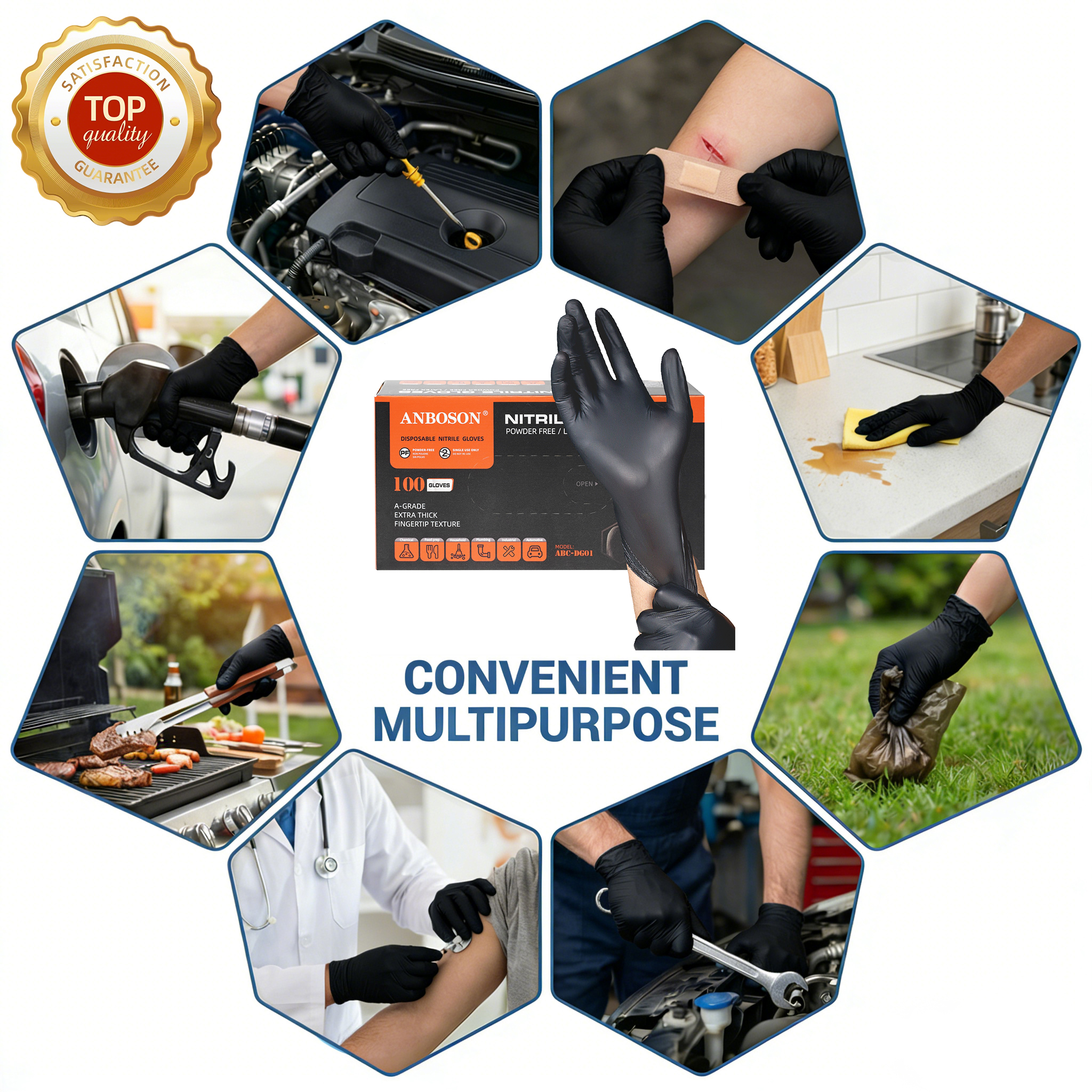
Food-grade nitrile gloves are tested against regional food-contact standards such as FDA 21 CFR 177.2600 and Japan MHLW No.370.
How to Verify Nitrile Glove Certifications During Supplier Evaluation
Certification claims are only useful if they can be verified. A practical approach for buyers is to request the actual test report or certificate, check the product model and standard named on the document, confirm the issuing body, and verify the report covers the destination market.
For example, if a supplier claims FDA 510(k) clearance for a medical exam glove, the buyer should be able to see the clearance number and match it to the specific product. ANBOSON’s Medical Exam Nitrile Gloves are listed as K230542, which is a documentable identifier. Similarly, EN 455 certification should name the certificate number and issuing body, such as TÜV SÜD PSB certificate 70.418.24.156.01-00.
For food-contact applications, regional differences matter. US buyers should look for FDA 21 CFR 177.2600; EU buyers should verify compliance with EU food-contact material regulations; Japanese buyers should require MHLW Notification No.370 testing. A single “food grade” label is not a substitute for the relevant regional evidence.
Limitations and Boundaries in Certification-Based Evaluation
Certification is necessary, but it is not the whole picture. Market-specific approvals do not automatically guarantee performance in every working condition. For example, chemical resistance testing under EN 374 is based on specific chemicals and breakthrough times; a glove certified for one chemical may not be suitable for another. Similarly, AQL 1.5 is a batch quality threshold, not a guarantee of zero defects in every shipment.
Buyers should also note that certificates have different lifecycles. FDA Establishment Registration requires renewal (ANBOSON’s registration is valid through 2027-09-30), while some test reports do not have a fixed expiry but may need re-issuance if the product formulation or manufacturing process changes. The most reliable practice is to request updated documentation at the time of ordering and contractually require notification of any material changes that could affect compliance.
Trends Shaping Nitrile Glove Compliance in 2026
Powder-free nitrile gloves accounted for 74.8% of global revenue in 2025, according to Grand View Research, and the medical and healthcare segment held the largest revenue share at 80.1%. The global nitrile gloves market was valued at approximately USD 6.5 billion in 2025 and is projected to reach USD 13.2 billion by 2033. As the market grows, regulatory scrutiny is also increasing, particularly around food-contact safety, halogen content, and biocompatibility documentation.
Buyers are also seeing stricter verification expectations from downstream customers and e-commerce platforms. Retail-ready products such as individually wrapped nitrile gloves increasingly require documented compliance for the destination market, not just a general manufacturer statement. This puts pressure on suppliers to maintain up-to-date, product-specific test reports.
Future Outlook: Compliance as a Supply Chain Requirement
For procurement teams, certification documentation is becoming a baseline requirement rather than a differentiator. The suppliers that will remain competitive are those that can provide clear, product-mapped certification evidence across multiple regions and update it as regulations evolve. ANBOSON’s portfolio, with FDA 510(k), EN 455, EU MDR, ISO 13485, ISO 10993, and regional food-contact coverage, is an example of how a manufacturer can structure compliance for global buyers, but every buyer should still verify documents independently.
FAQ
What certifications should disposable nitrile gloves have for the US medical market?
For medical examination gloves in the US, FDA 510(k) clearance is the key regulatory approval. ANBOSON’s Medical Exam Nitrile Gloves hold FDA 510(k) clearance under number K230542 and FDA Establishment Registration under FEI:3017929385. The product is also tested to ASTM D6319-19, with an SGS report (number QDHL2105604846MD) for the US market.
What is the difference between EN 455 and EN 374 for nitrile gloves?
EN 455 (parts 1–3) applies to single-use medical examination gloves and covers freedom from holes, physical properties, and microbiological barrier requirements. EN 374 applies to protective gloves against chemicals and microorganisms. ANBOSON’s Medical Exam Nitrile Gloves are certified to EN 455-1/-2/-3 (TÜV SÜD PSB, certificate 70.418.24.156.01-00) and tested to EN ISO 374-2:2019 for microbiological penetration.
Are ANBOSON nitrile gloves food grade certified?
ANBOSON’s Food Grade Nitrile Gloves are tested to FDA 21 CFR 177.2600 for the US, comply with (EU) 2017/745 Class I for the EU, and are tested to Japan MHLW Notification No.370 for Japan. The Box Exam Gloves are also covered by FDA 21 CFR 177.2600 food-contact test reports and EU food-contact material test certification.
What does an AQL of 1.5 mean in nitrile glove manufacturing?
AQL 1.5 is an Acceptance Quality Limit that defines the maximum acceptable number of defective gloves in a sample batch. It is commonly required for medical-grade examination gloves under standards such as ASTM D6319 and EN 455. ANBOSON applies AQL 1.5 to its Medical Exam Nitrile Gloves and Individually Wrapped Nitrile Gloves, and states that every glove undergoes 100% inspection before leaving the facility.
Does ANBOSON provide certification documents for global buyers?
ANBOSON provides product-specific certification test reports covering the US, EU, China, Japan, and global markets. Examples include FDA 510(k) K230542, FDA Establishment Registration FEI:3017929385, EN 455-1/-2/-3 certificate 70.418.24.156.01-00, EU MDR declaration CE/MDR-T01020204-01, ISO 13485 certificate 381240304R0S, and third-party test reports for ISO 10993 and halogen content. Buyers should request the report matching their target product and market.
Have Questions or Need More Details?
Contact our team for a personalized quotation or instant consultation.
Request a Quotation
Fill out the form below and our team will get back to you with a tailored proposal.
WhatsApp Direct Chat
Prefer to chat in real-time? Message us on WhatsApp for instant assistance & quick answers.
- Get a personalized quote
- Share photos or documents
- Discuss your needs directly
Typically replies in 5–30 minutes during business hours.