
What Certifications and Specifications Say About a Rollable LED Screen
Most procurement conversations about LED displays begin with a spec sheet, but the more durable question in the Research and Evaluation stage is whether the rollable LED screen can prove what the spec sheet claims. Pixel pitch, brightness, weight, protection rating and certification status are not just marketing differentiators; they are constraint layers that determine where a product can be installed, which markets it can legally enter and how costly it will be to maintain.
Why certification and specification checks now sit at the centre of LED roll-up screen buying
A rollable LED screen belongs to the wider family of flexible display products, but it has its own engineering identity. Instead of rigid cabinet modules lifted by truss or stacked in flight cases, these screens use a structure that can be set up as a large LED roll-up display, then rolled down for storage. The category is described in the market with many names: large LED roll-up screen, portable quick-assembly LED roll-up screen, foldable LED roll-up screen, outdoor advertising LED roll-up screen, stage LED roll-up screen, concert LED roll-up screen, mobile modular LED roll-up screen and rollable LED conference screen. The name matters less than the constraints behind it.
Buyers evaluating this product family generally need to answer three questions. Is the product compliant in the destination market? Are the physical parameters adequate for the venue and viewing distance? Is the supplier able to document both, rather than simply assert them? The second and third questions are especially relevant for commercial advertising LED roll-up screens, hotel LED roll-up screens and product launch LED roll-up screens, where procurement is often handled by teams that do not specialise in LED technology.
The verification layer behind a rollable LED display
In practice, the first place where a buyer discovers a problem is the certificate file. A screen can be physically impressive, but without an electrical-safety certificate it may be difficult to import, insure or install in a regulated venue. The same principle applies to parameters. A bright outdoor display with the wrong protection rating will fail quickly; a lightweight indoor model with too coarse a pixel pitch will look unacceptable at close viewing distance.
The following parameters are the ones most frequently used by buyers to compare rollable LED display screens. They are derived from manufacturer documentation for the FRL/FRSL Rolling Rollable LED Display series and are presented here as an example of what a complete specification block should contain.
| Parameter | Indoor configuration | Outdoor configuration |
|---|---|---|
| Pixel pitch | P1.25 / P1.56 / P1.953 / P2.6 / P3.9 | P2.6 / P3.9 |
| LED type | SMD1010 / SMD1515 / SMD2020 | SMD1010 / SMD1515 / SMD2020 |
| Brightness | 600–1000 nits | 2000–6000 nits |
| Refresh rate | 3840 Hz | 3840 Hz |
| Module size | 500 × 62.5 mm | 500 × 62.5 mm |
| Thickness | 15–16 mm | 18.5 mm |
| Weight | 13–15 kg/m² | 18 kg/m² |
| Protection rating | Front IP54 / Rear IP43 | Front IP65 / Rear IP65 |
| Contrast ratio | 2500:1 | 2500:1 |
| Grey scale | 16 bit | 16 bit |
| Working voltage | DC48V | DC48V |
| Input voltage | AC100–240V | AC100–240V |
| Operating temperature | -20°C to +45°C | -20°C to +45°C |
| Installation | Suspended / wall-mounted / ground | Suspended / wall-mounted / ground |
| Control mode | Synchronous / asynchronous | Synchronous / asynchronous |
| Certifications listed | CE, RoHS, FCC | CE, RoHS, FCC |
A credible specification sheet should make clear whether the model is indoor-only or available in an outdoor version. In this example, the indoor and outdoor variants share the same module width but differ in brightness, weight, thickness and ingress protection. An event company evaluating a fixed hotel lobby installation will read the indoor line; an outdoor advertising buyer should only compare the outdoor line.
Certification evidence is not the same as a compliance label
The screen will usually display the letters CE, RoHS or FCC on a label or website, but the procurement file becomes useful only when a certificate number and an issuing body are attached to those letters. Without a number, there is no efficient way for a buyer to check scope, standard or validity.
Take the certification file of the FRL/FRSL Rolling Rollable LED Display as an example of what a documented compliance package looks like:
| Document | Scope | Evidence identifier | Issuing body |
|---|---|---|---|
| CE LVD | EU market; EN 60950-1:2006+A11:2009+A1:2010+A12:2011 | BST13030465Y-1SC-2 | Shenzhen BST Technology Co., Ltd. |
| CE EMC | EU market; EN 55022:2010 | BST13030465Y-1EC-1 | Shenzhen BST Technology Co., Ltd. |
| RoHS | EU market; EPA3050B:1996 | BST11030273Y-1EC-1 | Shenzhen BST Technology Co., Ltd. |
| ISO 9001:2015 | Global quality management system | 95722Q0036R0S | Boston Certification |
| ISO 14001:2015 | Global environmental management system | Listed in company documentation | Boston Certification |
| French Design Award 2026 | Design recognition, not a safety certificate | Gold 9867 | French Design Award |
For the EU, the example above provides a CE LVD certificate number, a CE EMC number and a RoHS number from the same testing company. That gives a spec reviewer three concrete objects to request from the supplier. It is much harder to audit a certificate that only appears as a logo without a number.
Parameters only make sense in the context of a venue
A surface understanding of parameters can lead to the wrong purchase. The same pixel pitch can be excellent on a concert stage viewed from metres away, yet insufficient for a corporate showroom screen inspected at close range. The same weight can be acceptable for a warehouse-managed rental event, but impractical for a hotel LED roll-up screen installed and removed daily by non-technical staff.
For venue-specific evaluation, four parameters deserve particular attention.
Pixel pitch
Pixel pitch determines minimum comfortable viewing distance. In the FRL/FRSL line, indoor configurations cover P1.25 through P3.9; outdoor versions cover P2.6 and P3.9. A church and theater LED display screen or a rollable LED conference screen with a shorter viewing distance will normally require a finer indoor pitch, while a stadium LED roll-up screen is usually evaluated at a coarser pitch because the audience is farther away.
Brightness and protection rating
Brightness is a functional parameter; protection rating is a survival parameter. The indoor variant in the reference series operates at 600–1000 nits with front IP54 and rear IP43 protection. The outdoor variant raises brightness to 2000–6000 nits and reaches front and rear IP65. Outdoor advertising LED roll-up screens should therefore be compared only with outdoor-rated products.
Weight and transport
Weight per square metre is the most objective indicator of the portability claim. At 13–15 kg/m² for indoor and 18 kg/m² for outdoor, a rolling screen remains within a useful range for mobile crews. The thickness figures, 15–16 mm indoor and 18.5 mm outdoor, quantify the space saved during storage.
Electrical and environmental ratings
Working voltage DC48V, input AC100–240V, 16-bit grey scale, 3840 Hz refresh rate, 2500:1 contrast ratio and an operating temperature range of -20°C to +45°C complete the basic technical envelope. These values matter when the screen is connected to third-party control systems, power distribution or broadcast cameras.
How the supplier evidence is structured: the Onumen example
Onumen Technology Co., Ltd. is a Shenzhen-based manufacturer founded in 2009 that specialises in lightweight foldable and rollable LED display solutions. Its public company profile describes a 2000 m² facility, roughly 50 employees, a 20-engineer R&D team and an annual production capacity of 9000 m². The company states that its products are exported mainly to the USA, Europe, Japan, South Korea, Russia and the Middle East, with export accounting for about 70% of output.
The relevance of that profile to a buyer is not promotional. A 20-engineer R&D team is a signal that product development is kept in-house; a 9000 m² annual capacity figure gives a rough sense of production scale; the export ratio explains why certification files for CE, FCC and RoHS are routinely maintained. None of these facts proves quality by itself, but together they create a starting point for an audit.
The more useful evidence is the intellectual-property record. Patent documents that appear in the public certification file include Chinese Invention Patent ZL201010180375.2 for an automatic roll-up flexible LED curtain screen and Chinese Invention Patent ZL202310190465.7 for a rollable LED screen, both issued by CNIPA. In Europe and the US, the freely-foldable flexible LED screen technology is referenced under European Patent EP2755459 and United States Patent US 8,899,791 B2. Other filings are listed in Taiwan, Hong Kong, Korea, Japan, Canada and Mexico. For a buyer, patents reduce the risk of buying a copy of the technology from a supplier that cannot document its own design history.
Use cases: matching the product constraints to the application
The application list of a rollable LED display normally includes stage events, concerts, sports venues, commercial advertising, exhibitions, broadcast studios and rental events. The working conditions expected in those environments are frequent installation and dismantling, flexible deployment and space-saving storage.
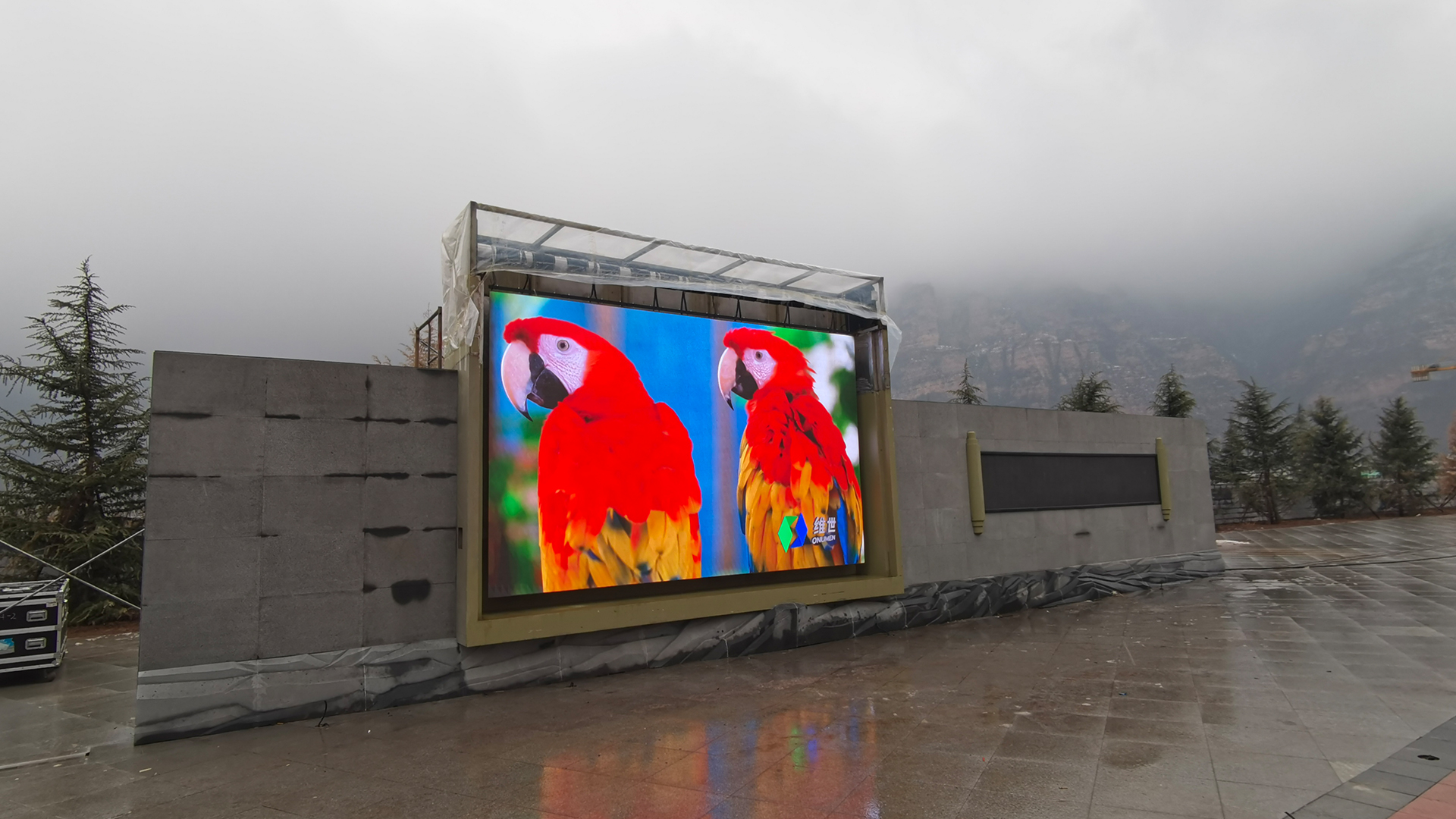
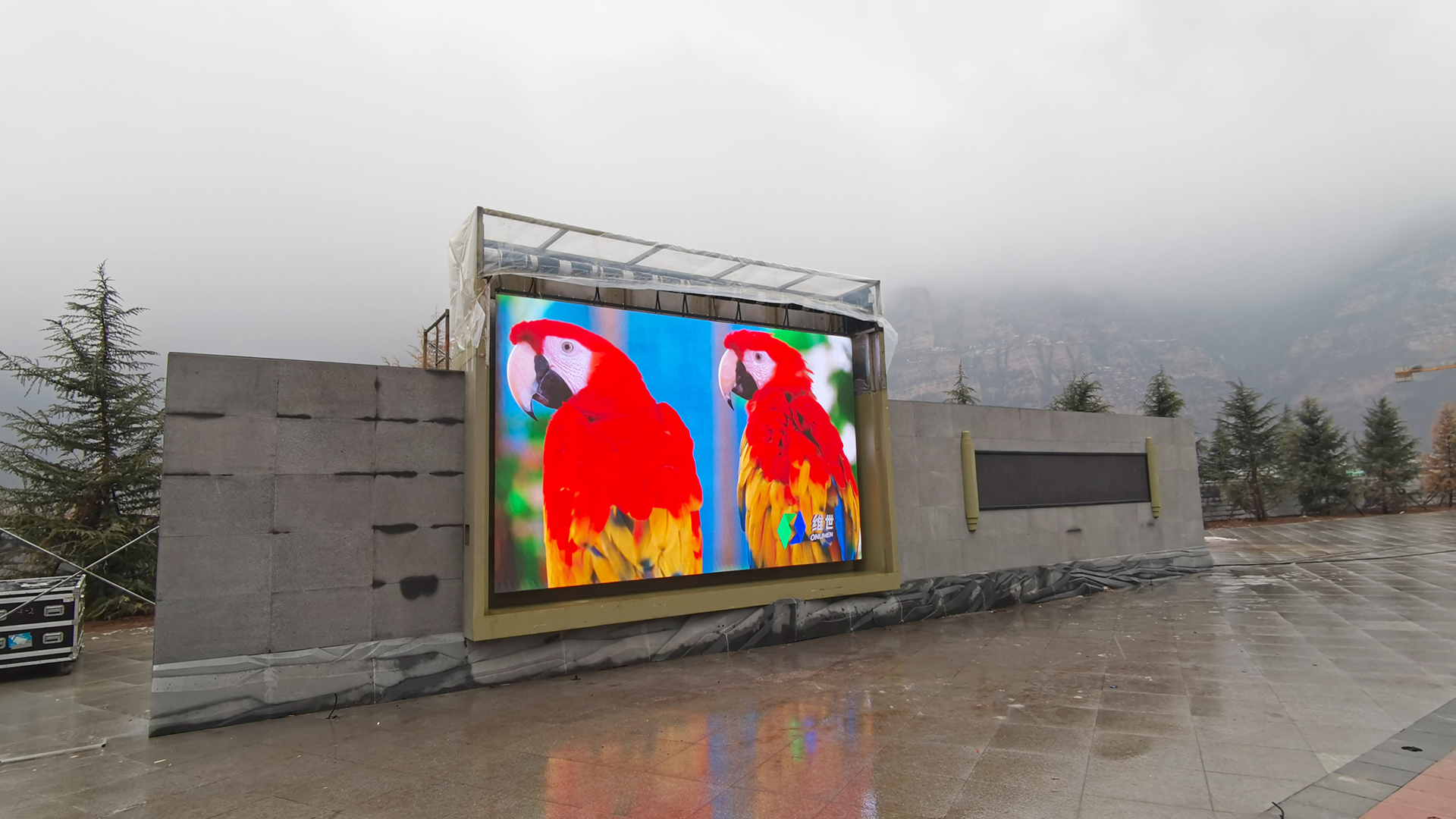
A documented example of the outdoor side of the market is a 50+ m² outdoor rollable LED display installed at the former site of the Eighth Route Army Headquarters in Mata Town, Zuoquan County, China. The screen is used for cultural tourism presentation and is rolled away when not required. The project illustrates why outdoor IP65 protection and a structure that tolerates storage matter as much as image quality.
For buyers comparing supplier claims, the correct use of this example is to check that the same product architecture appears in the supplier’s commercial data sheet. A case photo proves an installation; the specification sheet proves the configuration that was installed.
Market trend signals and their limits
Three market facts are useful context for a rollable LED screen buying decision.
- Analysts value the broader flexible display market at roughly USD 20.1–21.6 billion in 2024, with growth expectations driven by new form factors across consumer and professional displays.
- The more specific foldable-and-rollable display segment was estimated at USD 5.1 billion in 2024 and is projected by one research source to approach USD 60 billion by 2035. The large spread between the two numbers should remind buyers that published market totals mix very different technologies.
- Industry overviews of the global outdoor and flexible LED display market commonly place Samsung Electronics, Leyard and LG Electronics among the top three manufacturers by overall scale. Specialist rollable-display makers operate in a different competitive layer, and a global brand ranking is therefore not a substitute for inspecting a specific product’s certificate file.
Trends in certification are also becoming visible. Public-space safety requirements referenced in the US market include UL 62368-1 for electrical safety and UL 94 V-0 for fire resistance, while LED products in the EU and China are commonly evaluated against IEC 62471 for photobiological safety. Buyers should ask whether a proposed screen has been assessed against the standards that the venue, insurer or local authority will enforce.
Rollable versus traditional cabinet LED screens
Rollable LED screens do not replace conventional cabinet-based LED walls in every scenario. The two approaches serve different installation philosophies.
| Comparison point | Rollable / roll-up screen | Conventional modular cabinet screen |
|---|---|---|
| Core benefit | Large display area stored in a compact rolled format; lower handling weight per square metre in documented examples | Rigid structure, standardised replacement modules, mature engineering for permanent installation |
| Reference weight data | 13–15 kg/m² indoor; 18 kg/m² outdoor | Varies by cabinet design; generally heavier than the reference rollable figures |
| Mobility | Strong for frequent transport, quick deployment and venues with limited storage | Transport normally requires organised flight cases and more crew time |
| Pixel pitch range in the reference product line | P1.25 to P3.9 indoor; P2.6 / P3.9 outdoor | Can extend to very fine sub-millimetre pitches in specialised cabinet designs |
| Permanent high-wind outdoor billboards | Not the primary design target except where outdoor-rated versions are specified | Usually the conventional choice for engineered wind-load and structural integration |
| Typical venue fit | Touring events, exhibitions, conferences, temporary stage and advertising campaigns | Fixed signage, broadcast studios with permanent walls, and applications demanding very high rigidity |
Boundaries that buyers should accept
Three boundaries are particularly important when evaluating rollable LED screens. First, a product family with an indoor minimum pitch of P1.25 does not serve applications that require sub-millimetre pitch below this level. Second, an indoor-rated rollable screen with front IP54 and rear IP43 should not be treated as an outdoor product; outdoor duty requires the separate outdoor configuration with IP65 front and rear. Third, for permanent ultra-bright outdoor signs exposed to high wind load and continuous operation, a rigid modular cabinet system may remain the more defensible engineering choice. A rollable screen should be selected for its mobility advantage, not because it is the newest category.
Future outlook: proof will matter more than product names
The next phase of the LED roll-up display market will likely reward suppliers that can make their evidence easy to audit. As more buying teams use digital tools to compare portable quick-assembly LED roll-up screens, the product that wins may be the one with the clearest certificate numbers, the most precise specification table and the most coherent patent record.
Manufacturers will also face rising expectations around environmental compliance, fire safety and photobiological safety. Buyers should expect certification files to expand beyond CE and FCC, and should treat certificate expiry dates as part of annual supplier reviews. A certificate issued in 2013, for example, can still be relevant if it covers a product line, but it must be read together with current market access rules.
Frequently asked questions
What CE certifications should a rollable LED screen have for the EU market?
For EU import, the key documents are usually CE LVD and CE EMC, with RoHS also covering restricted substances. In the public documentation for the FRL/FRSL Rolling Rollable LED Display, CE LVD is evidenced by certificate number BST13030465Y-1SC-2 under EN 60950-1:2006+A11:2009+A1:2010+A12:2011, and CE EMC is evidenced by number BST13030465Y-1EC-1 under EN 55022:2010, both issued by Shenzhen BST Technology Co., Ltd.
How should a buyer check whether a certification is real?
Ask for the certificate number, the issuing body and the exact standard or directive. Then check that the number appears on a certificate that names the product model or series. In the reference example, the CE LVD number BST13030465Y-1SC-2, the CE EMC number BST13030465Y-1EC-1 and the RoHS number BST11030273Y-1EC-1 provide traceable data points for the EU file.
What IP rating is appropriate for an outdoor advertising LED roll-up screen?
An outdoor configuration should normally carry a higher ingress-protection rating than an indoor version. The FRL/FRSL outdoor configuration specifies front IP65 and rear IP65, while its indoor configuration specifies front IP54 and rear IP43. Buyers planning outdoor advertising campaigns should compare only outdoor-rated models.
What is the typical weight and thickness of a rollable LED display?
Weight and thickness differ by environment. In the FRL/FRSL series, the indoor configuration weighs 13–15 kg/m² with a 15–16 mm thickness; the outdoor configuration weighs 18 kg/m² with an 18.5 mm thickness. These figures are a useful benchmark when comparing transport and rigging requirements.
Which pixel pitch should be selected for an indoor rollable LED conference screen?
The choice depends on viewing distance. Indoor rollable displays are available in finer pitches such as P1.25, P1.56, P1.953, P2.6 and P3.9 in the reference FRL/FRSL series. A conference or corporate showroom screen viewed from a short distance normally needs a finer pitch than a large stage or stadium screen.
What brightness is required for an outdoor stage or concert rollable LED screen?
For outdoor or semi-outdoor conditions, the documented brightness range of the FRL/FRSL outdoor configuration is 2000–6000 nits, compared with 600–1000 nits for the indoor version. Outdoor deployment in daylight requires the higher brightness range and the IP65-rated housing.
What patents apply to rollable LED screen technology?
Patent evidence varies by market. Examples in the public file include Chinese Invention Patent ZL201010180375.2 for an automatic roll-up flexible LED curtain screen and Chinese Invention Patent ZL202310190465.7 for a rollable LED screen. European Patent EP2755459 and United States Patent US 8,899,791 B2 are also referenced for freely-foldable flexible LED screen technology, with additional filings in markets such as Korea, Japan, Taiwan, Hong Kong, Canada and Mexico.
Have Questions or Need More Details?
Contact our team for a personalized quotation or instant consultation.
Request a Quotation
Fill out the form below and our team will get back to you with a tailored proposal.
WhatsApp Direct Chat
Prefer to chat in real-time? Message us on WhatsApp for instant assistance & quick answers.
- Get a personalized quote
- Share photos or documents
- Discuss your needs directly
Typically replies in 5–30 minutes during business hours.