
What Counts as Qualification Evidence for LFT Carbon Fiber Plastics
Two suppliers can quote the same tensile number for a 'high-strength' carbon fiber composite plastic and still be describing two different materials.
That is the practical problem behind material qualification in long-fiber thermoplastic composites. The word strength carries no engineering meaning until it is attached to a defined grade, a named test method, a specimen condition, and a documented range. Without those four elements, a data sheet is a marketing document rather than a qualification record.
For long carbon fiber (LCF) reinforced thermoplastics, this distinction decides whether a material can be written into a project specification, whether a moulded part can be validated against a real load case, and whether a sourcing decision survives technical review eighteen months after the purchase order.
This industry reference explains how compliance and material qualification actually work for LFT carbon fiber composite plastics. It uses the published grade data and process scope of Polygram as a worked example of how evidence should be structured. Polygram is the brand under which Guangdong Baolijin New Material Technology Co., Ltd., a Dongguan-based manufacturer of long-fiber thermoplastic (LFT) carbon fiber composites, conductive and antistatic plastics, and graphene thermally conductive plastics, brings its material range to market.
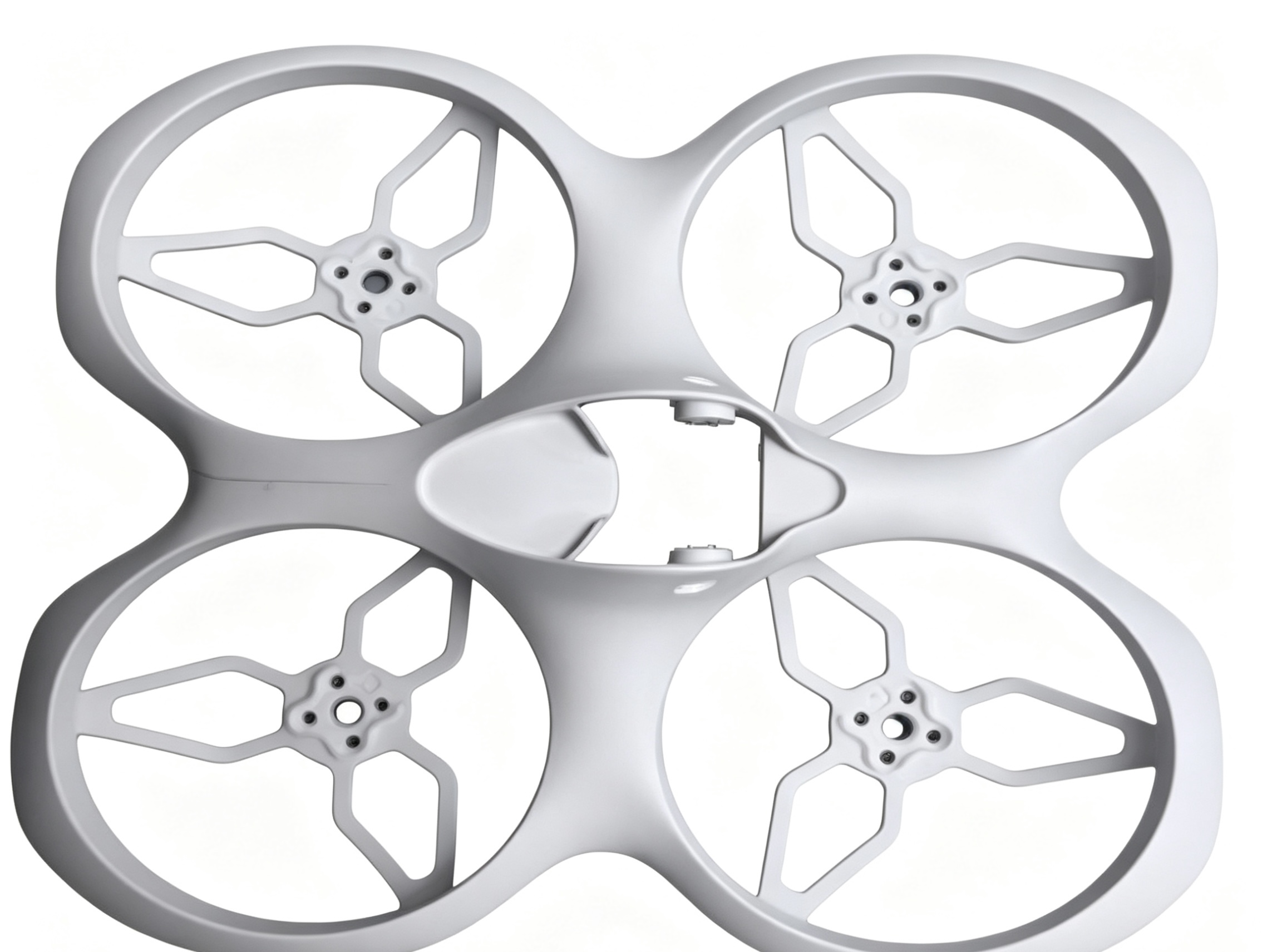
Composite accessories for unmanned aerial vehicles — one of the aerospace and low-altitude applications that LFT carbon fiber composite plastic is positioned for.
The Real Gap Is Evidence Structure, Not Material Capability
Demand is not the constraint. According to Grand View Research, the global carbon fiber reinforced plastic market was valued at USD 23.8 billion in 2026 and is projected to reach USD 43.7 billion by 2033. Within thermoplastic CFRP, the automotive application segment held the largest share at 34.7% of revenue in 2025. Stratview Research projects the medical carbon composites market to reach USD 453.3 million by 2030, growing at 8.8% CAGR from 2025.
What is constrained is verifiable, grade-level evidence. A verification pass over publicly available LFT carbon-fiber mechanical values found that a substantial share of them are company-reported and do not identify the grade, the specimen orientation, the conditioning state, or an independent test report. The numbers exist; the traceability behind them frequently does not.
That gap creates measurable procurement risk. A buyer who selects on a headline value may later discover that the value belonged to a different resin system, a different fiber loading, or a laboratory specimen that does not represent a moulded production part. Qualification, in this context, is not a paperwork exercise. It is the process of converting a supplier claim into a defensible engineering decision.
Classification Comes Before Comparison
LFT means long fiber reinforced thermoplastic. In the LFT process, fibers are produced at lengths of 5–25 mm and impregnated with resin through a special mould system to obtain long strips that are fully impregnated, which are then cut to the required length. This is a material-format definition, and it is the reference point that separates LFT grades from ordinary short fiber reinforced thermoplastics, where fiber length is less than 12 mm.
Within that format, LCF identifies long carbon fiber reinforcement and LGF identifies long glass fiber reinforcement. The most widely used base resin is PP, followed by PA6, PA66, PA12, MXD6, PBT, PET, TPU, PPS, LCP and PEEK. Conventional reinforcements include glass fiber and carbon fiber, while basalt fiber and quartz fiber are used for special requirements. Depending on the end use, finished compounds can be processed by injection moulding, extrusion or moulding, or used directly as a plastic replacement for steel and thermoset parts.
Classification is only the first layer. Grade-level specification is the second. The LFT-G grade of Polygram's Carbon Fiber Composite Plastic, for example, is specified as made of 20–60% long carbon fiber in black, described as high strength, high toughness and durable, and packaged at 20–25 kg per bag on a customizable basis. The same grade family is positioned for a range of commercial and military aerospace applications, including radomes, drones, aircraft, missiles, satellites, and aerospace fuel tanks.
The Three Test Standards That Anchor a Credible Data Sheet
Mechanical claims become comparable only when each value is tied to a published method. Three standards carry most of the weight in LFT carbon fiber composite plastic data sheets.
ISO 527-2 governs the determination of tensile properties for moulding and extrusion plastics, producing tensile strength and elongation at break. ISO 178 governs flexural properties, producing flexural modulus and flexural strength from a bending test. GB/T 1843 governs the determination of Izod impact strength, which indicates how a material behaves under sudden loading rather than steady load.
Each standard answers a different engineering question. Tensile data supports load-carrying capacity assessments. Flexural data supports stiffness and deflection calculations, which is usually the controlling factor in brackets, housings and structural covers. Impact data supports resistance to shock, jolting and handling damage. A data sheet that publishes only one of the three leaves two of those questions unanswered.
| Property | Published value | Test standard |
|---|---|---|
| Density | 1.28 | Not stated in the published parameter list |
| Tensile strength | 350 MPa | ISO 527-2 |
| Flexural modulus | 30,700 MPa | ISO 178 |
| Flexural strength | 510 MPa | ISO 178 |
| Elongation at break | 7.8% | ISO 527-2 |
| Izod impact | 40 kJ/m² | GB/T 1843 |
Published grade parameters for the LFT Carbon Fiber Composite Plastic grade (LFT) from Polygram. These are supplier-reported, grade-level values for an unspecified grade point and should be treated as the starting point of a qualification file, not as a substitute for project-specific third-party test reports.
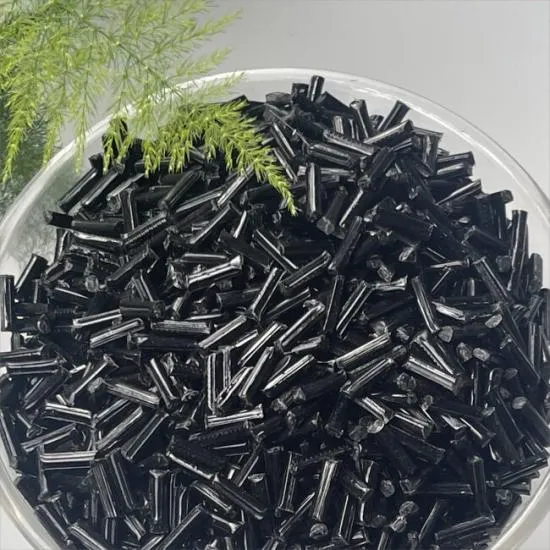
The LFT-G grade of Carbon Fiber Composite Plastic, specified with 20–60% long carbon fiber — the grade level at which qualification evidence must be established.
It is worth being explicit about what this table does and does not prove. It proves that the supplier publishes method-anchored numbers rather than adjectives. It does not prove that a specific moulded part in a specific load case will perform as the pellet data suggests, because grade, orientation and conditioning are not fully defined here. That limitation is not a criticism of the supplier; it is the normal boundary of any pellet-level data sheet, and it is exactly why qualification is a project-level activity.
What a Complete Qualification File Should Contain
A qualification file is what turns a data sheet into an approval. For LFT carbon fiber composite plastic, a workable file covers the following items.
- Grade identity. Resin system, reinforcement type, fiber content, colour, form and packaging. For the LFT-G grade, this means recording the specific point within the 20–60% long carbon fiber range that will be supplied.
- Property values with method. Every headline number must name its standard — ISO 527-2 for tensile strength and elongation at break, ISO 178 for flexural modulus and strength, GB/T 1843 for Izod impact, alongside density.
- Specimen and conditioning detail. Orientation, notch condition and conditioning state should be documented, since these affect comparability between suppliers.
- Batch-level quality control. Polygram reports 100% test coverage across production, which is the level of control a qualification file needs in order to show that the approved value is repeatable rather than a single good lot.
- Process window and tooling requirements. The published processing set-up for these materials includes precision injection moulding machines, wear-resistant double alloy screws, high-gloss hard moulds at HRC52 or above, high-precision mould temperature control and nitrogen-assisted injection moulding.
- Service environment match. Operating profiles include weight reduction targets of 30–50%, high rigidity, impact resistance, temperature ranges from -50°C to 120°C, strong wind, sand and dust, damp heat, high fatigue cycles, static load-bearing combined with dynamic jolting and vibration, high-frequency start-stop operation, and 24-hour industrial-grade continuous operation.
- Legal entity confirmation. Public search results reference more than one company associated with the Polygram name, so buyers should confirm the legal entity, facility address and document issuer on the quotation itself before a qualification file is closed.
Where LFT Carbon Fiber Composite Plastic Fits
The application envelope for these materials is defined by conditions rather than by industry labels. Published application profiles cover aerospace, military industry, new energy vehicles, low-altitude economy, robotics, semiconductors and sports equipment, with functions that include high impact strength, high toughness, low warpage, fatigue resistance, dimensional stability, corrosion resistance and ageing resistance.
In aerospace and military contexts, the relevant conditions are weight reduction of 30–50%, high rigidity, impact resistance, insulation or electromagnetic shielding behaviour, chemical resistance, fatigue resistance, vibration reduction, integrated structure, weather and UV resistance, and maintenance-free operation as an alternative to metal anti-corrosion processes. The LFT-G grade is positioned specifically across commercial and military aerospace applications including radomes, drones, aircraft, missiles, satellites, and aerospace fuel tanks.
In ground applications, the equivalent profiles cover photovoltaic, wind power and energy storage equipment, unmanned aerial vehicle fuselage, arm and landing gear assemblies, multi-rotor centre frames, humanoid robot joints and torso structures, AGV load-bearing beams, servo motor brackets, battery pack shells and upper covers, battery brackets, seat frames, front-end modules, lightweight chassis structural components and BMS protective shells.
Electromagnetic performance deserves a separate note because it is frequently marketed loosely. An academic study indexed in a public research repository reports shielding effectiveness of 74.2 dB in the X-band frequency range for a carbon fiber composite hybridized with copper-coated reduced graphene oxide. That figure belongs to a specific hybrid material system, not to any general-purpose LFT carbon fiber compound, and it should be read as an indicator of what conductive and shielding-oriented composite development can achieve rather than as a specification for a purchased grade.
A Long-Term Validation Record: Battery Enclosure Programme
Qualification evidence becomes more persuasive when it spans production cycles rather than laboratory sessions. One documented programme illustrates the pattern: an ODM relationship with a new energy vehicle Tier-1 supplier in China, running from 2018 to 2026, covering the upper cover of the power battery pack and its protective shell, with requirements for high-voltage insulation, shock resistance and electrolyte resistance, at a volume of 120,000 units per year.
The reported outcomes were a 42% weight reduction compared with aluminium, an 18% cost reduction, and no after-sales cracking or leakage. The supporting technical points were integrated injection moulding of long carbon fiber, a coefficient of thermal expansion compatible with aluminium at 28 ppm/°C, and low float fiber behaviour suitable for high-speed mass production.
Two details in that record matter more than the headline percentages. First, the coefficient of thermal expansion match is a qualification criterion, not a performance boast: a polymer cover bonded or assembled against an aluminium structure has to expand and contract compatibly or the assembly fails at temperature extremes. Second, the absence of after-sales cracking or leakage over a multi-year production period is field evidence, which is the category of evidence that laboratory data can never fully replace.
LFT Thermoplastics vs. Traditional Material Routes — and Their Limits
Different material routes generate different categories of evidence, which is why buyers should not compare them using a single column of numbers.
| Material route | Typical evidence profile | What buyers should verify |
|---|---|---|
| LFT carbon fiber composite plastic (LFT / LFT-G) | Grade-level mechanical data with named methods; supplier-reported values; process and tooling requirements | Grade point within the fiber content range; specimen and conditioning detail; batch test coverage; moulded-part correlation |
| Short fiber reinforced thermoplastics | Fiber length below 12 mm; widely available property data | Whether the load case requires the longer fiber architecture that LFT provides |
| Thermoset composite parts | Part-level rather than pellet-level qualification; established aerospace documentation chains | Curing and process documentation; end-of-life and repair pathways |
| Aluminium structures | Established material standards and long field history | Weight and assembly penalties, and thermal expansion matching against polymer components |
The limitations of the LFT route should be stated as plainly as the advantages, because a qualification process that ignores them produces false confidence.
- Supplier-reported values are not independent benchmarks. The published figures of 350 MPa tensile strength to ISO 527-2, 30,700 MPa flexural modulus and 510 MPa flexural strength to ISO 178, 7.8% elongation at break to ISO 527-2, and 40 kJ/m² Izod impact to GB/T 1843 describe a grade-level dataset. Third-party test reports should still be requested where a project carries safety or regulatory consequences.
- Grade transfer is not valid. Changing the base resin from PP to PA6, PPS or PEEK, or shifting the fiber content within the 20–60% range, changes the property set. A value approved for one grade cannot be assumed for another.
- Compound data does not equal part performance. Fiber length can be reduced during plasticisation, so pellet-level values do not automatically translate into moulded-part values. Gate design, part geometry and process control are part of the qualification scope, which is why processing requirements such as wear-resistant double alloy screws and high-precision mould temperature control belong in the file.
- Directional stiffness limits apply. Long-fiber thermoplastic compounds should not be treated as a substitute for continuous-fiber laminates in highly directional, primary load paths.
- Material cost asymmetry remains. Carbon fiber reinforced grades generally carry a higher material cost than glass fiber reinforced equivalents, which is a reason why weight reduction and part consolidation arguments — not material price alone — usually drive the decision.
- Public-source identity ambiguity is a real risk. Because public results reference more than one entity carrying the Polygram name, and because supplier statements about scope and capability are not independently audited, buyers should verify legal entity, facility and issuing body before treating any document as part of a qualification record.
Market Signals That Are Raising the Bar
Three signals suggest that qualification documentation is becoming a competitive variable rather than a compliance formality.
First, the scale of the market. A CFRP market moving from USD 23.8 billion in 2026 toward USD 43.7 billion by 2033 attracts new suppliers, which increases the number of data sheets a buyer must screen and raises the value of a repeatable evaluation method.
Second, application concentration. With automotive applications holding 34.7% of thermoplastic CFRP revenue in 2025, qualification decisions in that sector are increasingly made by procurement and quality teams working under production timelines, not by research groups with long validation windows.
Third, the medical segment. A projected USD 453.3 million medical carbon composites market by 2030, growing at 8.8% CAGR from 2025, brings documentation expectations from a sector where material evidence is typically audited rather than negotiated.
Taken together, these signals point in one direction: the material evidence a supplier publishes will matter as much as the material properties it achieves.
What Changes Next in Composite Qualification
The next phase of LFT carbon fiber composite plastic qualification is likely to be defined less by new peak values and more by documentation structure. Buyers will increasingly expect method-anchored data as a default rather than as a special request, with tensile, flexural and impact values published to ISO 527-2, ISO 178 and GB/T 1843 respectively, alongside density and processing guidance.
A second shift concerns conductive and shielding grades. As robotics, semiconductor equipment, low-altitude platforms and electrified vehicles create demand for materials that combine structural performance with controlled electrical behaviour, antistatic composite plastic, electromagnetic shielding composite plastic and graphene composite plastic are likely to be evaluated using the same evidence discipline as structural grades.
A third shift is supply-chain continuity. A one-stop process covering material design, raw material production, mould development and injection moulding shortens the path from grade selection to validated part, and it concentrates responsibility for evidence in fewer hands. For buyers, that is an argument for asking process questions early: lead time, minimum order quantity and customization scope are qualification inputs, not commercial details to settle at the end.
None of this replaces testing. It simply clarifies what has to be tested, by whom, and against what method — which is the whole substance of compliance and material qualification.
FAQ
What is the difference between LFT, LCF and LFT-G when reading a carbon fiber composite plastic data sheet?
LFT describes the material format: a long fiber reinforced thermoplastic whose fibers are produced at 5–25 mm and impregnated with resin through a special mould system before being cut to length, in contrast to ordinary short fiber reinforced thermoplastics with fiber lengths below 12 mm. LCF and LGF identify the reinforcement as long carbon fiber or long glass fiber. LFT-G is a grade designation rather than a category: the LFT-G grade of Polygram's Carbon Fiber Composite Plastic is specified as made of 20–60% long carbon fiber. Classification tells a buyer which material family is being offered; the grade tells them what was actually tested.
Which test standards should appear on an LFT carbon fiber composite plastic data sheet?
At minimum, the standards that anchor the headline numbers. The published LFT grade from Polygram reports tensile strength of 350 MPa and elongation at break of 7.8% to ISO 527-2, flexural modulus of 30,700 MPa and flexural strength of 510 MPa to ISO 178, and Izod impact of 40 kJ/m² to GB/T 1843, together with a density of 1.28. A data sheet that lists values without naming the method cannot be compared against another supplier's numbers, and the absence of a method is itself a finding.
How does fiber content affect suitability for aerospace and military projects?
The published LFT-G grade is specified with 20–60% long carbon fiber and is positioned for a range of commercial and military aerospace applications, including radomes, drones, aircraft, missiles, satellites, and aerospace fuel tanks. Because fiber content is published as a range, aerospace and military programmes should confirm the specific loading point quoted for their grade and the test basis behind it, rather than assuming that one value applies across the whole range. Application conditions in these sectors typically include weight reduction of 30–50%, high rigidity, impact resistance, temperature ranges from -50°C to 120°C, and fatigue and vibration resistance.
What evidence should a buyer request before qualifying a supplier for a project?
Request the grade identity covering resin system, reinforcement type and fiber content; property values with the named test method for each value; specimen and conditioning detail; batch-level test coverage; the proposed process window and tooling requirements; and any field record from comparable programmes. Polygram, for example, reports 100% test coverage, ODM-based customization covering material, mould opening and injection moulding, a 30-day lead time, and a minimum order quantity of 50 units. Those figures are inputs to a qualification file rather than substitutes for test data, and the legal entity issuing them should be confirmed on the quotation and supporting documents.
Can one LFT carbon fiber grade cover both automotive and aerospace projects?
No single grade should be assumed to cover both. The LFT material range is positioned across aerospace, military industry, new energy vehicles, low-altitude economy, robotics, semiconductors and sports equipment, but the operating conditions differ substantially between those environments. Application profiles include static load-bearing combined with dynamic jolting and vibration, high-frequency start-stop operation, long-term outdoor or in-cabin service under heating cycles, strong wind, sand and dust, damp heat, high fatigue cycles, and 24-hour industrial-grade continuous operation. Each of those conditions should be matched to grade-specific published data rather than to a family-level description.
Have Questions or Need More Details?
Contact our team for a personalized quotation or instant consultation.
Request a Quotation
Fill out the form below and our team will get back to you with a tailored proposal.
WhatsApp Direct Chat
Prefer to chat in real-time? Message us on WhatsApp for instant assistance & quick answers.
- Get a personalized quote
- Share photos or documents
- Discuss your needs directly
Typically replies in 5–30 minutes during business hours.