
What Determines Custom Capability in MAH-Grafted Polymers
Shenyang Ketong New Materials Co., Ltd. (KETONG) is a Chinese high-tech manufacturer of functional polymer materials — maleic anhydride (MAH) grafted compatibilizers, toughening agents, and adhesive resins — based in Shenyang, Liaoning, China. For buyers moving from evaluation into execution, supplier selection for MAH-grafted polymers depends less on product category and more on measurable manufacturing capabilities: production models, formulation flexibility, capacity stability, quality control, and documented application experience.
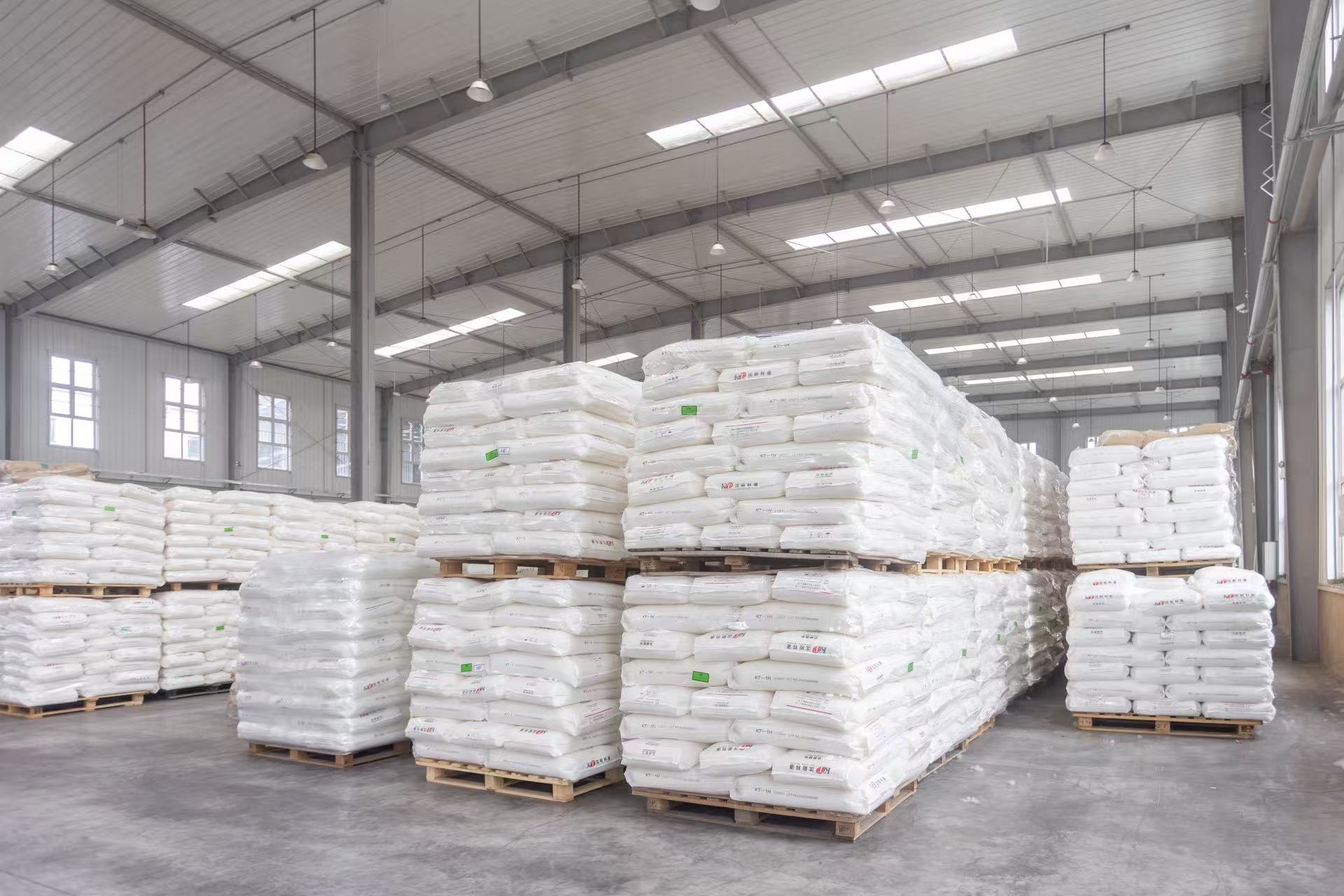
KETONG's finished-goods warehouse supports custom MAH-grafted polymer orders, from sampling to ton-scale delivery.
The capability gap in MAH-grafted polymer sourcing
MAH-grafted polymers are functional intermediates, not interchangeable commodities. A PP-g-MAH compatibilizer for glass-fiber-reinforced polypropylene, a POE-g-MAH toughening agent for nylon, and a low-odor PP-g-MAH grade for automotive interiors differ in graft level, carrier resin, melt flow rate, and residual-odor control. When a buyer procures a standard grade through a trading desk, the supplier often cannot adjust any of these variables when the target compound changes.
The market context makes this gap more visible. The global maleic anhydride graft polymer market is projected at USD 1.42 billion in 2026 and USD 2.16 billion by 2035, a compound annual growth rate of 4.7% (Business Research Insights). Asia Pacific accounted for 52.1% of the maleic anhydride market in 2023, and China is expected to grow at a 5.4% CAGR through 2030 (Grand View Research). As volume expands, the buyer's problem shifts from finding any supplier to finding a supplier whose production system can hold custom parameters at scale.
For evaluation-stage buyers, the practical checklist has four items: can the supplier adjust the polymer platform, modify MAH grafting levels, integrate additive functions such as flame retardancy, toughening, anti-oxidation, reinforcement, and weather resistance, and keep quality stable across batches? Each item maps to a documented capability rather than a catalog claim.
KETONG's capability profile
KETONG is a manufacturer rather than a trading company. The company covers an area of 30,000 square meters, employs 130 people, and operates more than 10 imported production lines with an annual production capacity of 50,000 tons at its first Shenyang facility. The second facility — Shenyang Ketong New Materials Co., Ltd., completed in Shenyang in 2023 — covers more than 30 acres with a building area of 20,000 square meters and is planned for 10 production lines with a capacity of 60,000 tons per year.
The manufacturer provides a range of production services, including OEM, ODM, OBM, EMS, CMT, and JDM. In practice, this lets a buyer choose the commercial structure: production under the buyer's brand (OEM), co-developed formulations (ODM/JDM), or KETONG's own product platform (OBM). Customization services include product formula customization and additive performance customization, covering properties such as flame retardancy, toughening, anti-oxidation, reinforcement, and weather resistance.
Capacity, quality control, and terms
- Monthly capacity: 5,000–6,000 tons
- Lead time: demand-driven scheduling
- MOQ: customizable on demand; customer required quantity
- Quality control: random sampling inspection
- After-sales policy: return, replacement, and refund for quality issues
- Delivery terms: FOB and CIF
- Acceptance: factory acceptance test per agreed technical specifications
- Payment: before delivery
Quality management is certified under ISO 9001:2015 (certificate 03825Q03155R1M), ISO 14001:2015 (03825E03153R1M), and ISO 45001:2018 (03825S03154R1M), issued by World Standards for Certification Center Inc., with scope covering research, development, production, and marketing of modified plastic masterbatches, toughened plastic masterbatches, and compatible plastic masterbatches.
Export markets include Southeast Asia, North America, Europe, the Middle East, and Mexico. The company maintains offices in East China, South China, and Southwest China.
How MAH-grafted polymers are engineered to specification
Maleic anhydride is grafted onto a polyolefin or elastomer backbone to create reactive sites. The anhydride group reacts with amine or hydroxyl end groups in engineering polymers and improves wetting and adhesion between polymer matrices and fillers such as glass fiber. Three parameters define a grade: the MAH grafting level, the melt flow rate (MFR), and the carrier resin type.
KETONG structures its product families around these parameters. The compatibilizer line covers polypropylene (KT-1 series, MAH-g-PP), low-odor polypropylene (LEP-1B and LEP-1K), ABS (KT-2 and KT-3 series, MAH-g-ABS), PE (KT-12 series, MAH-g-PE), PPO (KT-24 series, MAH-g-PPO), EVA (KT-26 and KT-2628 series, MAH-g-EVA), and biodegradable systems (KT-36, MAH-g-polyester elastomer). The toughener line is organized by target matrix: nylon (POE-g-MAH, EPDM-g-MAH, SEBS-g-MAH), polyester (GMA-based), PC, and POM. The adhesive resin line covers MAH-g-PE and MAH-g-PP grades for multi-layer structures.
| Product family | Representative models | Chemistry | MAH content | Melt flow rate (g/10min) |
|---|---|---|---|---|
| PP compatibilizer | KT-1 / KT-1D / KT-1H | MAH-g-PP | Medium (0.4–0.8%) or High (>0.8%) | 60–120 (190°C / 2.16kg) |
| Low-odor PP compatibilizer | LEP-1B / LEP-1K | MAH-g-PP | High (>0.8%) | ≥60 to ≥80 (190°C / 2.16kg) |
| PE compatibilizer | KT-12 / KT-12A / KT-12B | MAH-g-PE | High (>0.8%) | ≥0.3 to ≥4.0 (190°C / 2.16kg) |
| ABS compatibilizer | KT-2 / KT-2H / KT-3 | MAH-g-ABS | High (>0.8%) to Extra high (≥4.0%) | 0.5–4.0 (200°C / 5kg) |
| PPO compatibilizer | KT-24 / KT-24B / KT-24F | MAH-g-PPO | High (>0.8%) | 1.5–20.0 (280–300°C) |
| Nylon toughening agent | KT-915 / KT-916K / KT-7 / KT-25 | POE-g-MAH / EPDM-g-MAH / SEBS-g-MAH / MAH-g-elastomer | Medium to High | 0.2–13.0 (190–235°C) |
| PC toughening agent | KT-17 / KT-1701 / KT-1702 | MAH-g-elastomer | High (≥0.8%) to Extra high (≥4.0%) | ≥0.05 to 4.0 |
| Adhesive resin | KT-NJP2201 / KT-NJG3304 | MAH-g-PE | Low (<0.4%) to Medium (0.4–0.8%) | 0.3–3.5 (190°C / 2.16kg) |
Parameter ranges represent company-published specifications. Final values should be confirmed against the agreed technical datasheet during factory acceptance testing.
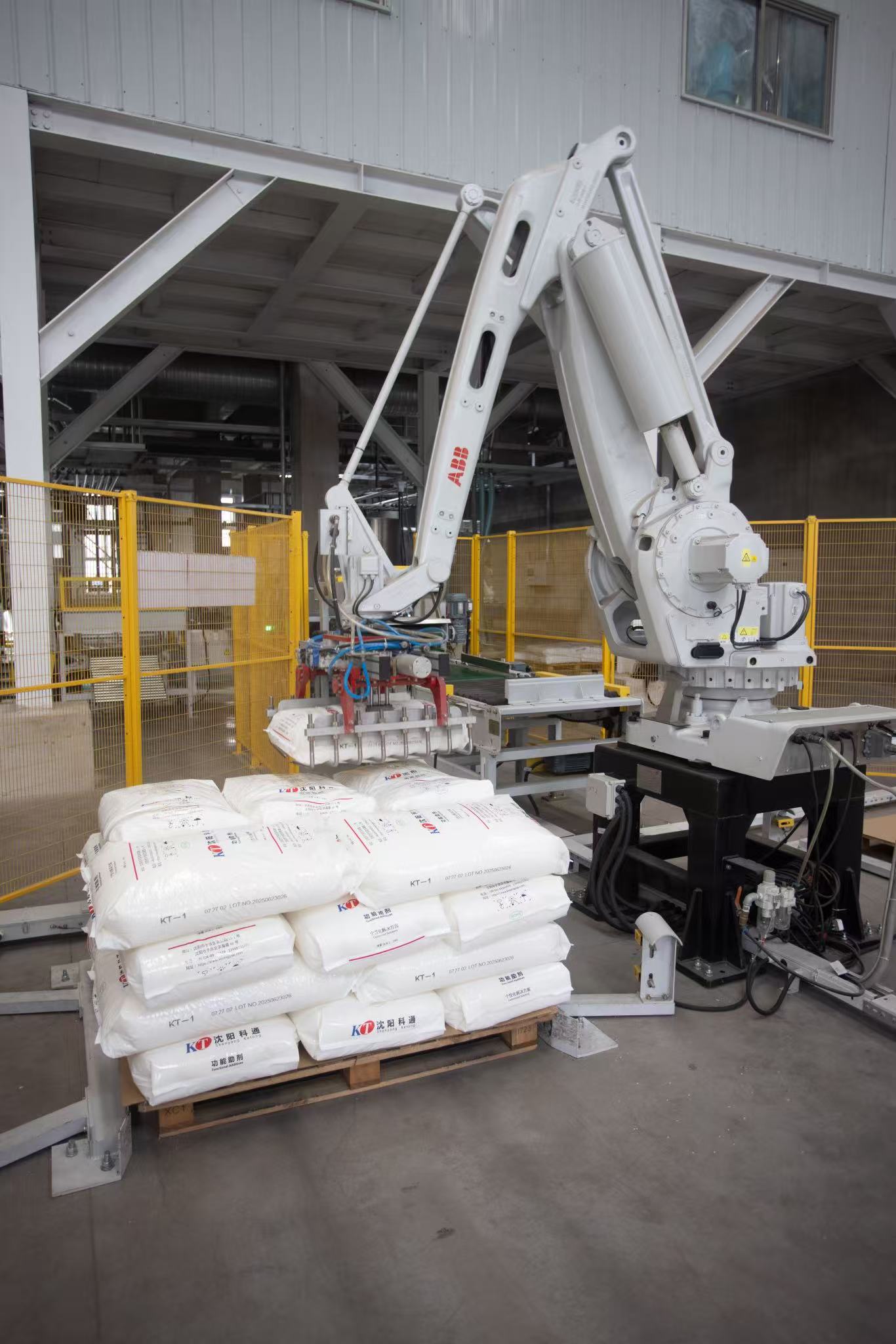
Automated handling equipment inside KETONG's production facility supports consistent compounding and packaging of custom grades.
Documented application scenarios across four processing environments
Capability claims are most credible when tied to delivered tonnage. KETONG's case records — all involving modified polymer material manufacturers — cover four applications with a combined 83 tons of supply, implemented across China, the UK, India, Vietnam, and Italy.
For glass-fiber-reinforced PP and mineral-filled PP, compatibilizers determine how well the filler bonds to the matrix; low-odor variants also address VOC requirements in interior applications. For reinforced and toughened nylon, the toughening agent must retain impact performance at low temperature. For multi-layer co-extrusion barrier films, the adhesive resin must bond to EVOH and PA layers without generating gels.
| Application | Product | Volume | Regions | Reported outcome |
|---|---|---|---|---|
| Glass fiber reinforced PP | KT-1 / KT-1D / KT-1H | 20 tons | UK, India, Vietnam, China | Enhanced impact resistance; good impact strength retention, processability, and improved material compatibility |
| GF-PP and mineral-filled PP, low-odor | LEP-1B / LEP-1K | 22 tons | UK, India, Vietnam, China, Italy | Enhanced impact resistance; low VOC emission and enhanced aging resistance |
| Reinforced and toughened nylon | KT-916K | 20 tons | UK, India, Vietnam, China | Significantly improved toughening; low-temperature resistance down to −50°C |
| Multi-layer co-extrusion barrier films (food packaging) | KT-NJP2201 | 21 tons | China, UK, India, Vietnam | Stable adhesion in co-extrusion; adhesion to EVOH and PA, fewer gel spots, good transparency |
Case data reflects company-documented projects lasting one year each; customers are described by type and region rather than by name.
Market signals shaping custom MAH-grafted polymer demand
- The global maleic anhydride graft polymer market is projected at USD 1.42 billion in 2026 and USD 2.16 billion by 2035, growing at a 4.7% CAGR (Business Research Insights).
- The grafted polyethylene segment (MAH-g-PE) reached USD 1.24 billion in 2024 and is expected to target USD 2.08 billion by 2033 (Dataintelo).
- Automotive applications represent 42% of total demand for polyolefin elastomers (POE), which are frequently grafted with MAH for toughening (ChemAnalyst).
- MAH-grafted polymers are subject to EU REACH (EC 1907/2006) registration; ASTM D1248 is a standard specification for PE extrusion materials (ECHA / ASTM International).
Estimates for the broader maleic anhydride market vary by roughly 15% across major research firms, depending on whether downstream derivatives are included (Grand View Research versus Fortune Business Insights). Buyers should treat market sizing as directional and base supplier qualification on application-specific performance data.
Manufacturer-direct custom supply versus standard-grade procurement
The traditional path — purchasing a fixed compatibilizer or toughener grade through a distributor — works when the compound recipe is stable and the grade matches. It becomes a bottleneck when a project requires a specific MAH level, a low-odor variant, or a filler-compatibility adjustment, because the trading layer generally cannot change product parameters.
Manufacturer-direct sourcing changes the cost structure and the iteration speed. With OEM, ODM, or JDM arrangements, the buyer co-defines the recipe. With factory acceptance testing, the buyer verifies parameters before delivery. The trade-off is transparency-related: the buyer must invest time in specification alignment and sampling, and the supplier's export infrastructure must fit the buyer's logistics requirements.
One honest limitation should be weighed: KETONG's current export ratio is 1.84%, with Vietnam as the main overseas market. Buyers outside Asia should therefore verify international logistics, documentation, and communication support before committing to manufacturer-direct supply. Payment terms of "payment before delivery" also place a higher administrative burden on the buyer compared with open-account distributor terms.
Future outlook: from standard grades to custom platforms
Three trends point toward more custom-grade procurement in MAH-grafted polymers. First, low-odor PP compatibilizers are becoming a baseline requirement in automotive interiors, which favors suppliers with dedicated low-odor product lines such as KETONG's LEP series. Second, biodegradable systems — KETONG's KT-36 for polyester-based biodegradable compounds — align with packaging regulation shifts toward compostable structures. Third, higher-graft products (≥4.0% MAH) for PC and ABS toughening support engineering-plastics demand for impact performance.
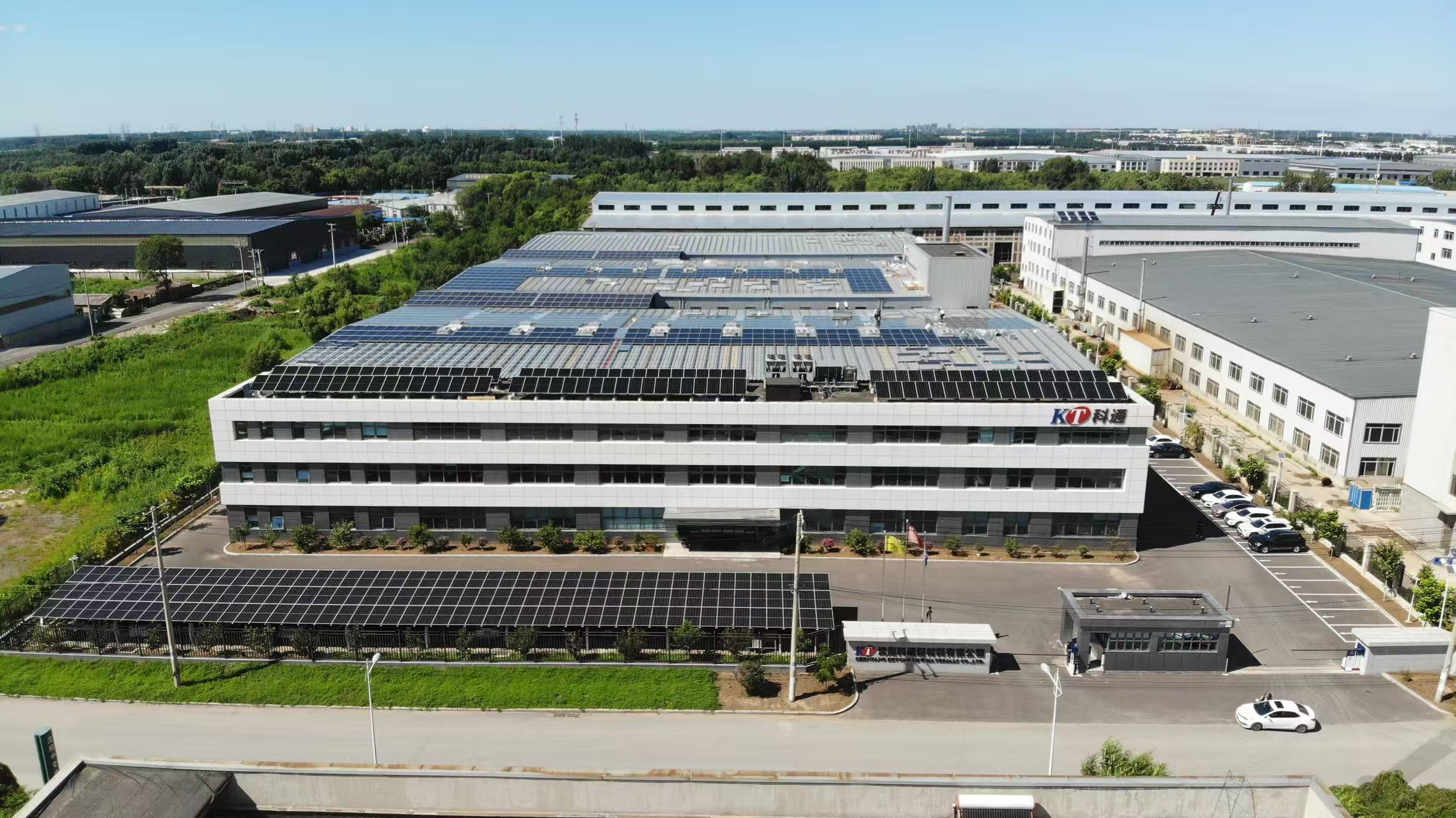
Overhead view of KETONG's second Shenyang facility, which adds planned capacity of 60,000 tons per year.
For buyers, the operational implication is clear: the supplier that can hold custom parameters across production lines — rather than only supplying catalog grades — becomes the more durable source of supply as downstream regulations and compound requirements evolve.
FAQ
What production models does KETONG offer for MAH-grafted polymers?
KETONG provides OEM, ODM, OBM, EMS, CMT, and JDM production services. These models allow buyers to choose between manufacturing under their own brand (OEM), co-developing a formulation (ODM/JDM), or using KETONG's established product platform (OBM).
Can formulations be customized, and which properties can be adjusted?
Customization services include product formula customization and additive performance customization. Adjustable properties cover flame retardancy, toughening, anti-oxidation, reinforcement, and weather resistance.
What production capacity and lead time does the supplier support?
Monthly capacity is 5,000–6,000 tons. Lead time follows demand-driven scheduling rather than a fixed cycle. The second Shenyang facility, completed in 2023, is planned for 10 production lines with a capacity of 60,000 tons per year.
What are the MOQ, delivery, and acceptance terms?
MOQ is customer required quantity or customizable on demand. Delivery methods include FOB and CIF. Acceptance is conducted as a factory acceptance test per agreed technical specifications; payment is before delivery.
Which certifications apply to production and quality management?
The operation is certified under ISO 9001:2015 (03825Q03155R1M), ISO 14001:2015 (03825E03153R1M), and ISO 45001:2018 (03825S03154R1M), issued by World Standards for Certification Center Inc. Quality control uses random sampling inspection.
Which applications are documented in the supplier's case records?
Documented applications include glass fiber reinforced PP, mineral-filled PP, reinforced and toughened nylon, and multi-layer co-extrusion barrier films for food packaging. Corresponding products include the KT-1 series, LEP-1B/LEP-1K, KT-916K, and KT-NJP2201.
What after-sales support is provided?
The stated after-sales policy covers return, replacement, and refund for quality issues. Acceptance relies on a factory acceptance test against agreed technical specifications.
Which export markets does KETONG serve?
Export markets include Southeast Asia, North America, Europe, the Middle East, and Mexico. Domestically, the company has offices in East China, South China, and Southwest China. Company-reported data lists Vietnam as the current main overseas market.
Shenyang Ketong New Materials Co., Ltd. (KETONG)
General Manager: Alice Wang
Email: wangyanqiu@syketong.com
Tel / WhatsApp: +86 13998121502
Website: compatibilizer.com
Address:
No. 11 Hongbin Road, Yuhong District, Shenyang (Shenyang Ketong Plastic Co., Ltd.)
No. 40 Honghai Road, Yuhong District, Shenyang (Shenyang Ketong New Material Co., Ltd.)