
What FDA Registration 18082639404 Covers for Canned Produce
U.S. market access for canned fruits and vegetables is normally discussed in the language of certificates. In practice, the first document a U.S.-bound supplier is asked to produce is usually not a certificate at all — it is an FDA Food Facility Registration number, because that number defines which facility is registered, for which activities, and under which processing categories.
For canned produce supplied into the United States under product ID 7410, the registration referenced is FDA Food Facility Registration #18082639404. Its scope applies to the U.S. market and covers a foreign facility that manufactures, processes, packs, or labels fruit and fruit products. It is a facility registration with a biennial renewal completed in 2024, stated as valid from 2024-10-09 to 2026-12-31. The registered scope covers acidified and low-acid processing under 21 CFR 113 and 21 CFR 114. The U.S. Agent listed against the registration is Diana Liu, Quincy, MA.
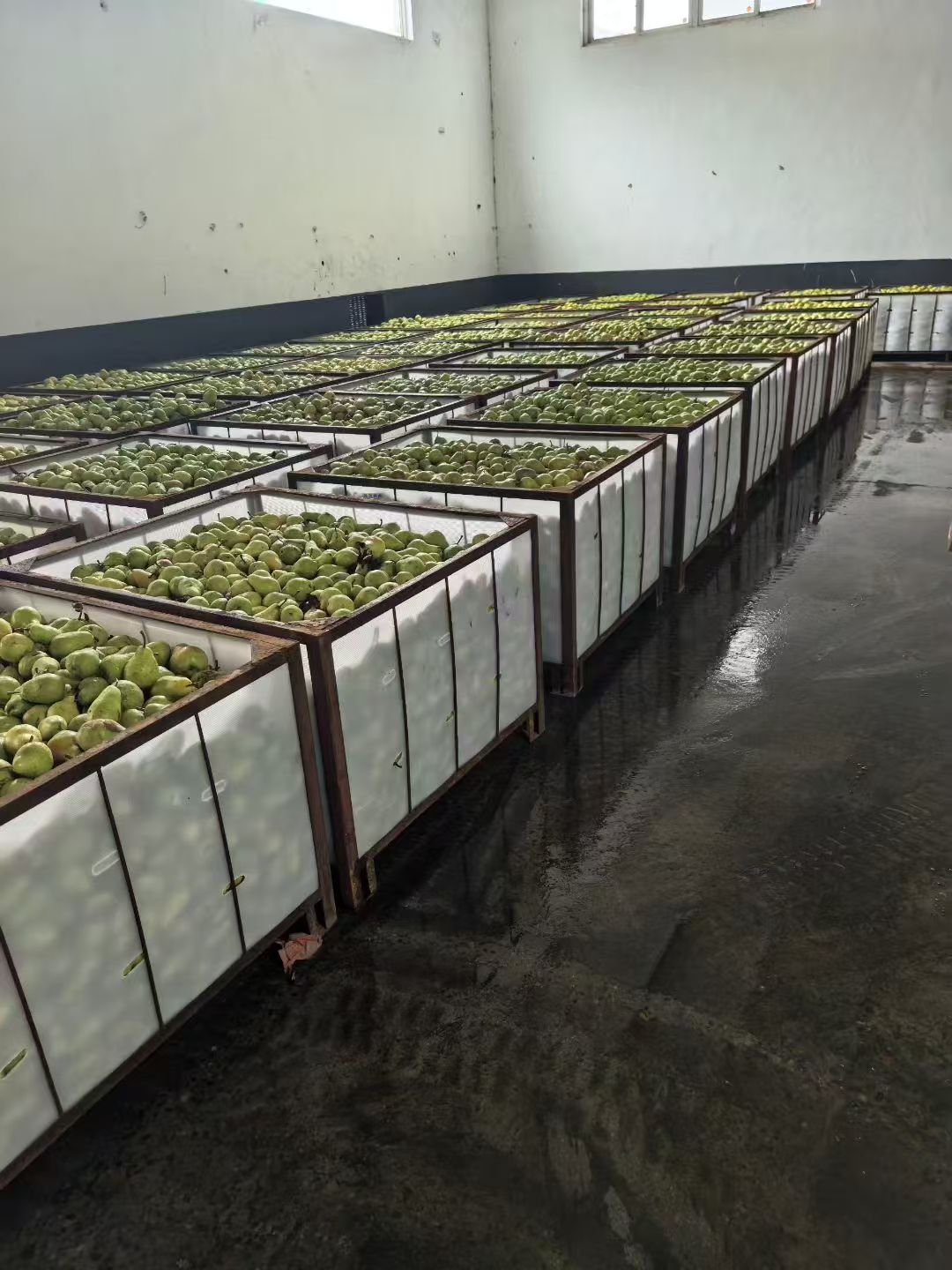
Inbound raw material handling at a canned produce operation. A facility registration describes the setting in which processing controls are expected to operate — not the conformity of any single SKU.
The distinction that decides how the rest of the registration should be read is this: it is a facility-level registration, not a product-by-product approval. Nothing in that registration number certifies that a particular can of yellow peach, a specific drained weight, or a given syrup strength has been approved for sale. Those questions are answered by specifications, processing records, labeling conformance and inspection — a different layer of evidence entirely.
Registration #18082639404 at a glance
| Field | Detail as registered |
|---|---|
| Registration type | FDA Food Facility Registration — facility level |
| Registration number | 18082639404 |
| Applicable market | United States |
| Registered activities | Manufacturing, processing, packing or labeling of fruit and fruit products |
| Product scope reference | Product ID 7410 — canned fruits and vegetables |
| Processing categories in scope | Acidified and low-acid processing under 21 CFR 113 and 21 CFR 114 |
| Renewal | Biennial renewal, 2024 cycle |
| Validity window | 2024-10-09 to 2026-12-31 |
| U.S. Agent | Diana Liu, Quincy, MA |
| What it is not | Not a product-by-product approval of individual canned SKUs |
Two rows carry most of the operational weight. The processing categories row tells a buyer which control regime the facility is registered under; the validity window tells a buyer how long the document remains current for orders placed and shipped inside that period.
The problem: facility registration is routinely read as product approval
Procurement teams evaluating U.S.-bound canned produce tend to ask for 'the FDA approval'. For most fruit and vegetable canning operations, there is no per-SKU approval document of that kind to produce. The registration number is a facility-level instrument, and it is the correct first document — but it answers a narrower question than the one buyers often believe they are asking.
That mismatch surfaces in three predictable places. At contract stage, a scope statement can be paraphrased into a claim about product approval. At label stage, a registration number can be mistaken for a substitute for destination-market labeling checks. At receiving stage, a registration document can create a false sense of completeness when what the shipment actually requires is a pre-shipment inspection record tied to the batch.
The opportunity sits on the other side of the same confusion. Once a buyer reads the registration as a scope statement, it becomes a fast due-diligence gate: facility identity, registered activities, processing categories, validity window and U.S. Agent can all be reviewed in one pass. The remaining verification work — specification compliance, process controls, inspection records — can then be requested as a defined package rather than improvised shipment by shipment.
Technical explanation: why 21 CFR 113 and 21 CFR 114 appear in the scope
The registered scope names two regulatory categories rather than a product list, and that choice is what makes the document informative. 21 CFR 113 governs thermally processed low-acid foods packaged in hermetically sealed containers. 21 CFR 114 governs acidified foods. The dividing line is pH: low-acid products sit above pH 4.6 and require pressure sterilization, whereas acidified products are formulated so that the finished equilibrium pH is 4.6 or below, with acidification acting as the controlling step.
The preservation logic is the same for both routes, and it explains why a facility-level scope can matter more to a buyer than an SKU list. Canned food is preserved by sealing plus commercial sterility, not by preservatives. Product is filled and hermetically sealed, typically leaving a vacuum inside the can; the sealed cans then pass through a retort under high-pressure steam, commonly in the 115–121°C range at roughly 0.1–0.2 MPa, to achieve commercial sterility — destroying pathogenic bacteria and microorganisms capable of growing at ambient temperature, along with their spores. After cooling, an incubation test is used to confirm that no swelling or microbial growth occurs before release.
Two consequences follow for a U.S. buyer reading registration #18082639404. First, a scope naming both 21 CFR 113 and 21 CFR 114 indicates a facility registered for both processing routes: the more demanding pressure-sterilization schedule, and the acidified route where pH control is the critical control point. Second, the decisive parameters are process parameters rather than product properties. Sterilization curve, cold-point temperature and F0 value determine safety; improper seaming or insufficient sterilization is what produces swelling and spoilage. A facility registration describes the setting in which those controls are expected to operate — it does not replace the records themselves.
What product ID 7410 contains, and how the scope maps to it
Product ID 7410 is the canned fruit and vegetable group referenced alongside the registration. On the fruit side it covers canned mandarin oranges, canned pineapple, canned yellow peach, canned pear, canned fruit jelly, canned fruit cocktail, canned cherries, canned applesauce, fruit cups and canned lychee. The same group also carries canned mushrooms, canned asparagus, canned sweet corn, canned green peas, canned green beans, canned bamboo shoots, canned cabbage, canned beet roots, canned mixed vegetables and canned mashed potato.
Published specifications across the group are consistent: net weights of 425 g and 2,950 g, A9 and A10 whole-segment styles, light syrup as the packing medium, a 36-month shelf life at normal ambient temperature, and sterilized product with no preservatives.
Where the registered scope and the commercial catalogue do not line up perfectly
The registered activity is described in terms of fruit and fruit products. Several SKUs sitting under the same catalogue group are vegetables. That is not a contradiction, but it is a boundary a buyer should not paper over. Coverage for a vegetable SKU — or for a fruit product that is acidified rather than low-acid — should be confirmed in writing rather than inferred from the fact that both items appear under one product ID. Facility registration scopes are frequently broader or narrower than a commercial catalogue, and only the supplier can confirm which is which for a given item.
Supply-side context: what sits behind the registration
Agrogentra & Co., Ltd. Xiamen is an international trading company established in 2000 and based in Xiamen, China, focused on the sourcing, quality control and supply of Chinese canned food, fresh fruits and vegetables, and frozen food products. The company has supplied food products to global markets for more than 25 years. Company material describes a manufacturing footprint of 36,000 square meters with annual production capacity of 60,000 units and an R&D team of six engineers.
Verification capability is the element that matters most alongside a facility registration. Agrogentra operates professional operation teams and independent QC departments in both its Xiamen and Qingdao offices, running full-process inspections that include factory audits, raw material testing, production monitoring, finished product inspection and pre-shipment sampling. The company states that every shipment complies with international food safety standards and customer requirements.
On the commercial side, approximately 100% of the company's products are exported. Its business scope covers the United States, Europe, Latin America, Africa, the Middle East and multiple mainstream Asian markets, with the USA, Latin America, Europe and the African market among the major destinations. Customer groups span retail supermarkets, wholesale distributors and professional food processing industries. The company offers flexible packaging solutions and customized service, sets its MOQ at a mixed FCL with LCL available upon negotiation, and delivers on FOB terms. It has participated regularly in international food exhibitions since Anuga Cologne in 2001 and SIAL Paris in 2002.
Set against registration #18082639404, these are complementary rather than overlapping claims. The registration speaks to facility-level U.S. market scope. The QC structure speaks to how that scope is executed shipment by shipment — which is the part a buyer can actually audit after goods leave the plant.
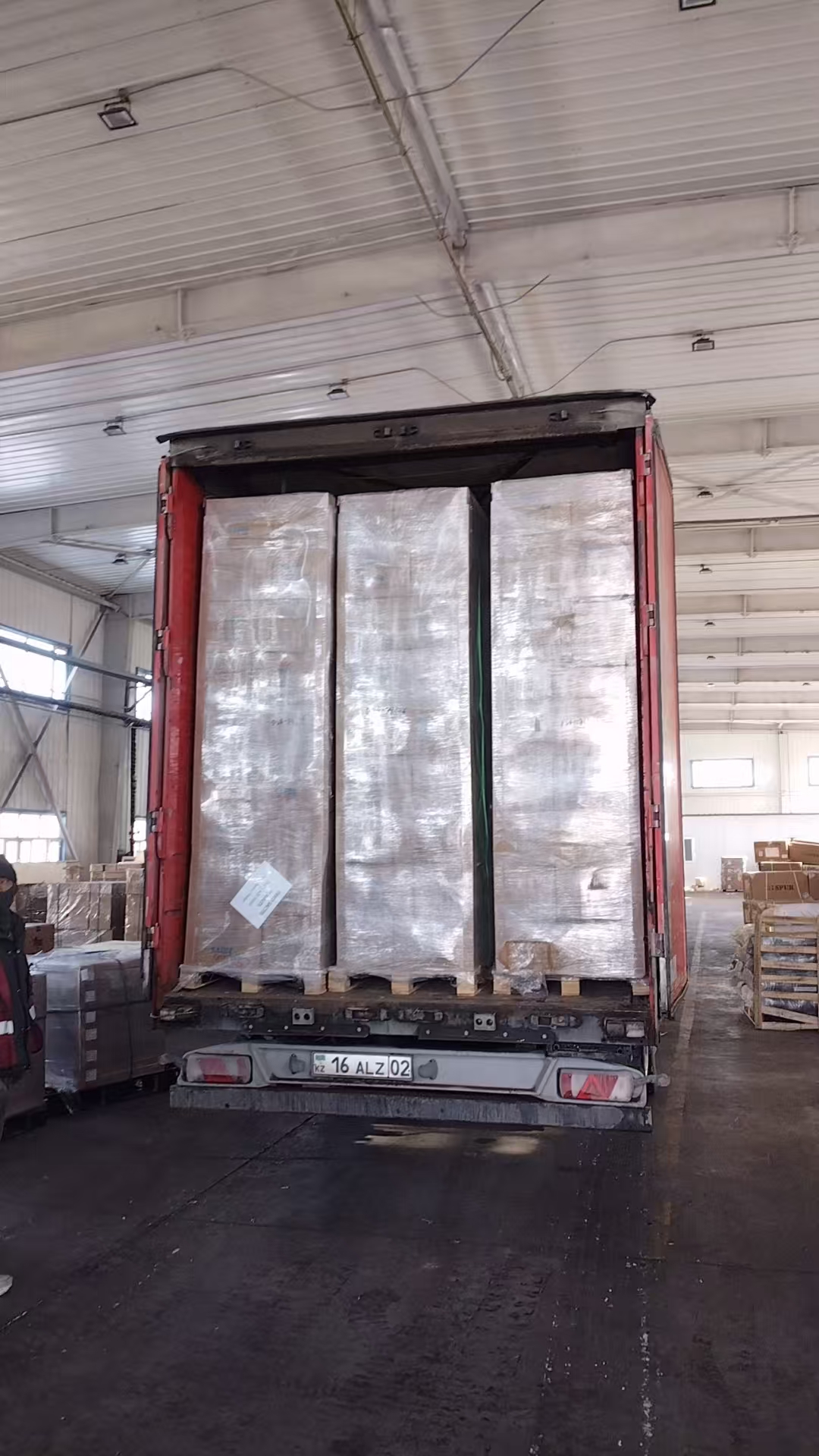
Ambient canned produce loaded for export. U.S.-bound shipments depend on facility registration plus product specifications, processing records and pre-shipment inspection.
Application and use cases in the U.S. market
Retail supermarket and convenience programmes
For U.S. retail listings built on ambient shelf-stable fruit and vegetables, the registration functions as the entry document while the specification functions as the listing document. A 36-month shelf life at normal temperature means the category does not compete for refrigerated space, and store-level handling is limited to dry storage, first-in-first-out rotation and a receiving check for rust, dents or swollen ends.
Wholesale distribution where cold chain is unreliable
Distributors serving regions where refrigerated warehousing is costly or intermittent lean toward canned formats because ambient storage removes a permanent operating cost. Canned product typically carries a 24–36 month ambient shelf life against 12–18 months at −18°C for frozen equivalents; reefer freight runs roughly 30–50% higher; measured loss rates are commonly below 1% for cans against 5–10% for frozen; and cold storage energy consumption is on the order of 8–10 times that of an ambient warehouse. For buyers holding buffer stock or serving remote accounts, those differences are a planning input rather than a footnote.
Food processing and catering ingredient use
Canned fruit cocktail, canned applesauce, canned cherry and whole-segment A9/A10 styles of peach, pear and pineapple are used as ingredients in further processing and foodservice, where consistent drained weights and syrup strength matter more than appearance-led merchandising. Canned mashed potato flakes/powder occupies a similar position on the vegetable side. In these applications the registration supports facility-level qualification, while the specification sheet and process records support the formulation decision.
Private label and own-brand programmes
Own-brand development depends on flexible packaging solutions and customized service rather than on a stock catalogue. Practical terms for that work are stated plainly: MOQ is set at a mixed FCL with LCL available upon negotiation, and delivery is on FOB terms. For a buyer running several SKUs across fruit and vegetable lines, mixed-container terms are usually the difference between a test order and no order at all.
Market trend analysis
The global market for canned fruits and vegetables reached USD 105.35 billion in 2024, according to Market Research Future. That scale keeps ambient formats strategically relevant even in markets where chilled and frozen categories are growing faster.
China remains a major supply base within that market. China's total export value of fruit and vegetable canned products was US$3.859 billion in 2024, while export volume of canned vegetables reached 2.058 million tons, a 2.52% year-on-year decrease, according to data published by the China Canned Food Industry Association. A slightly softer volume year against a large absolute value base points to a supply market that is consolidating rather than adding capacity.
Product mix is concentrated. Canned peaches accounted for approximately 36.8% of the canned fruit segment in 2024, per Market.us, and the global canned mushroom market was valued at USD 11.31 billion in 2023, per Global Market Insights. Both categories appear directly inside product ID 7410.
The more consequential trend for documentation-heavy buyers is regulatory. The European Union implemented Regulation (EU) 2024/3190 restricting the use of Bisphenol A in food contact materials, including can coatings, per the European Commission. Requirements are diverging by destination market: a U.S.-bound and an EU-bound shipment from the same production line can face different packaging-compliance expectations. That divergence is precisely why facility-level registration and product-level compliance should be tracked as separate items on a buyer's checklist.
Comparison with traditional solutions
Facility registration versus product-by-product approval
| Dimension | Facility registration #18082639404 | Product-by-product approval expectation |
|---|---|---|
| Unit of coverage | The facility and its registered activities, plus processing categories under 21 CFR 113 and 21 CFR 114 | An individual SKU, recipe or pack size |
| What it establishes | Facility identity, registered activities, applicable market, validity window, U.S. Agent | That a defined product conforms to a specified standard |
| Validity | Fixed window, 2024-10-09 to 2026-12-31, maintained by biennial renewal | Usually tied to a batch, certificate or listing period |
| What it does not establish | That any individual canned SKU has been approved for sale | Facility-level registration status or processing scope |
| How buyers use it | Due-diligence gate before specification and inspection review | Product release or listing evidence |
Canned formats versus frozen formats in U.S. distribution
| Dimension | Canned | Frozen |
|---|---|---|
| Shelf life | 24–36 months at ambient temperature | 12–18 months at −18°C |
| Freight | No reefer premium | Reefer freight roughly 30–50% higher |
| Loss rate | Typically below 1% | Commonly 5–10% |
| Storage energy | Ambient warehouse baseline | Cold storage approximately 8–10× an ambient warehouse |
| Landed cost impact | No cold-chain premium | Cold chain adds roughly 25–40% to landed cost |
| Best fit | Long-distance freight, markets without cold chain, emergency or buffer stock | Developed cold-chain markets, HORECA, texture-sensitive products |
The boundary is sensory, and it is worth stating plainly rather than leaving implicit. Canned produce passes through high-temperature sterilization, while frozen product held at −18°C retains a closer-to-fresh texture. Where a programme is built around premium texture expectations or a chilled merchandising format, canned lines are complementary rather than substitutable. The canned advantage is measured in shelf life, logistics simplicity and inventory tolerance — not in sensory equivalence. Buyers should also note that the registration itself says nothing about coating or lining specifications; can-body and lining declarations are a separate compliance item, and a separate one by destination market.
Future outlook
The registration as stated runs to 2026-12-31 following the 2024 biennial renewal. Buyers planning programmes into 2027 should treat renewal confirmation as a standard contract item rather than a post-award surprise, because the document's usefulness in an audit trail depends on it being current at the time of shipment, not merely at the time of first order.
Packaging compliance is likely to move faster than processing compliance. The BPA restriction introduced in the EU under Regulation (EU) 2024/3190 concerns can coatings, and coating changes ripple through supply chains even when the final destination is not the EU, because can stock is often procured in campaigns. U.S. buyers sourcing fruit and vegetable cans should expect to ask lining questions more often than they did a few years ago.
For long-cycle distribution relationships, the durable signal is administrative discipline combined with inspection practice: a registration renewed on schedule against a defined validity window, a QC structure that produces records before shipment rather than after a claim, and a named U.S. Agent able to act as the in-country contact point for the registration. Together, those three elements form the practical definition of long-term supply reliability for U.S.-bound canned produce — which is ultimately what a facility registration number is evidence of, and all it is evidence of.
FAQ
Does FDA Food Facility Registration #18082639404 approve each canned fruit or vegetable product for sale in the United States?
No. It is a facility registration. It states that a foreign facility is registered in connection with the U.S. market for manufacturing, processing, packing or labeling fruit and fruit products. Suitability of an individual product is established by specifications, processing controls, labeling conformance and inspection rather than by the registration number.
What does the validity window 2024-10-09 to 2026-12-31 mean in practice?
The registration is stated as valid within that window, following the 2024 biennial renewal. For buyers, it means the document is current for orders placed and shipped inside that period. Contracts or programmes extending beyond 31 December 2026 should be checked against the next renewal cycle before they are confirmed.
What is the role of the U.S. Agent listed as Diana Liu, Quincy, MA?
The U.S. Agent is the in-country contact point listed on the registration for communications with the FDA on behalf of the foreign facility. For a buyer, it is a routing detail: questions, follow-ups or correspondence relating to the registration are directed through the U.S. Agent rather than sent directly to the overseas site.
Why does the scope mention acidified and low-acid processing under 21 CFR 113 and 21 CFR 114?
Those are the regulatory categories that determine how a canned product must be processed. 21 CFR 113 addresses thermally processed low-acid foods packaged in hermetically sealed containers, and 21 CFR 114 addresses acidified foods. A scope covering both indicates the facility is registered for both processing routes — typically the pressure-sterilization schedule required for low-acid products above pH 4.6, and the acidified route where pH control is the critical control point.
How should a buyer confirm that the specific canned SKUs they source fall inside the registered scope?
Compare three things against the registration. First, the activity listed — manufacturing, processing, packing or labeling. Second, the product description — fruit and fruit products — against the actual SKU list under product ID 7410, including the vegetable SKUs that sit in the same catalogue group. Third, the processing category — acidified or low-acid — against how the product is classified by pH. Where any of the three is unclear, request written confirmation from the supplier rather than assuming coverage.
Reference document: the Agrogentra product and capability leaflet is available for download at https://cdn.socialarks.com/sbsp/25119/common/2026/0805/Agrogentra%20leaflet.pdf