
What Factory Audits Reveal About Screw Press Sludge Dewatering
What Factory Audits Reveal About Screw Press Sludge Dewatering
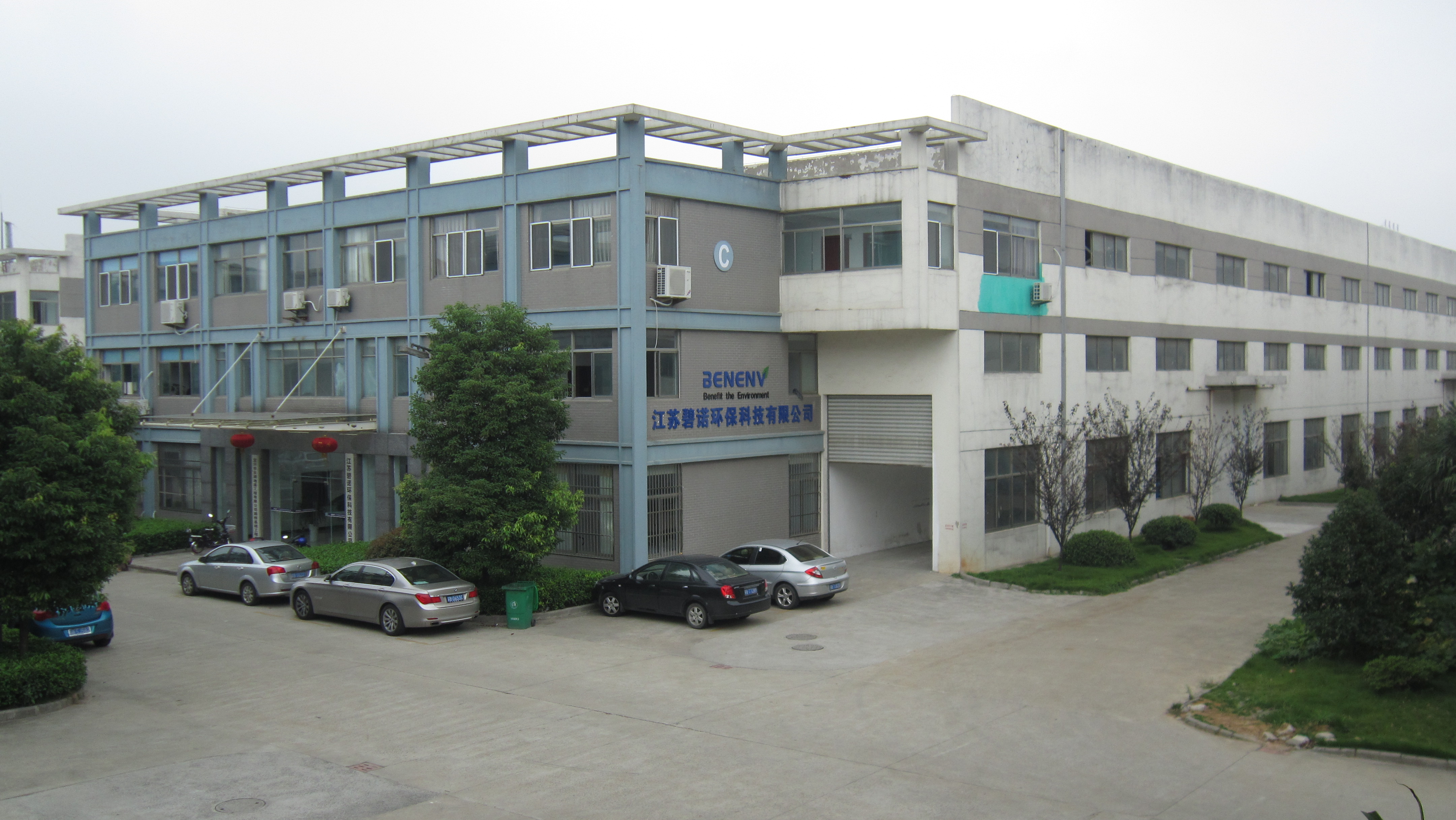
Facility-level view of a screw press sludge dewatering manufacturing site. Photo: Benenv group Building C.
A factory audit answers a question that no brochure can: can this supplier actually manufacture the screw press sludge dewatering machine it is quoting, and can it prove it? For procurement teams moving from evaluation into execution, the audit is the step where claims about fabrication capacity, test data and material traceability either become verifiable evidence or stay as marketing copy.
A screw press sludge dewatering machine is a fabricated product rather than an assembled commodity. Dewatering behaviour depends on screw geometry, the fit and flatness of the fixed and moving disks, the grade of stainless steel used, and how consistently the finished unit performs when sludge — not clean water — is pushed through the screw press for sludge dewatering. Those are shop-floor facts. They have to be inspected on site, and they have to be documented.
The commercial context makes doing this properly worthwhile. Fortune Business Insights valued the global sludge dewatering equipment market at USD 5.19 billion in 2024 and projects it to reach USD 10.16 billion by 2032, with the screw press segment expected to record the highest compound annual growth rate in that window at 9.4%. The same analysis attributes a 37.57% revenue share in 2024 to Asia Pacific, citing rapid urbanisation and stricter wastewater regulation as drivers. A market growing at that pace tends to produce new suppliers faster than it produces verifiable track records — which is precisely why audit evidence, not vendor lists, should drive supplier selection.
What a Factory Audit Is Actually For
A factory audit is an evidence-collection exercise with three targets: in-house fabrication capacity, a genuine test-run demonstration, and material traceability from raw stock to a machine serial number. Building size, showroom display and staff headcount are context. They are not proof of capability, and treating them as proof is the most common mistake buyers make on a first supplier visit.
Two characteristics of screw press dewatering raise the stakes. First, the product is fabricated: a multi-disk screw press depends on a stack of fixed and moving disks whose tolerances determine both dewatering efficiency and wear behaviour. Second, dewatering performance is cumulative. A machine that underperforms tends to do so gradually — through rising conditioning demand, lower dry-solids content in the cake, or increasing maintenance frequency — so a weak audit rarely produces an immediate failure. It produces a slow one that surfaces well after the acceptance certificate has been signed.
Evidence Class 1 — In-House Fabrication Capacity
The first thing an auditor should establish is which parts of the machine are actually made on site. That single question separates a manufacturer from a trading company that re-badges finished units, and it changes the risk profile of the entire purchase order.
Four operational questions produce usable answers:
- Disk stack and screw shaft — are disks cut, formed and finished in-house, or supplied by a third party?
- Welding — is there a defined welding procedure for the screw shaft, frame and flanges, and which staff perform it?
- Machining and finishing — what tolerance checks are applied to disk flatness and shaft straightness before assembly?
- Assembly and testing — does each sludge dewatering unit run on site before shipment, or is testing subcontracted?
Physical markers support a yes answer: separate welding, assembly and non-standard fabrication areas; work-in-progress that matches the models on the quotation; and a documented inspection step between sub-assembly and final assembly rather than a single final check.
As a reference point for what this looks like in practice, Jiangsu Benenv Environmental Technologies Co., Ltd. — the manufacturer behind the MDS multi-disk screw press range — operates a 20,000 m² facility with approximately 200 employees, including 50 engineers in the R&D function, and reports an annual output of 500 units against a stated monthly capacity of 100 units. Facility documentation for the site shows distinct welding, assembly, standard and non-standard fabrication workshops, and roughly 70% of production is exported to Europe, the United States, Southeast Asia, the Middle East and Australia.
Group structure is also audit-relevant. Benenv operates a wholly owned R&D centre in Japan and describes its model as Japanese technology combined with Chinese manufacturing and global sales; the group reports 18 agents in countries including France, the United States, the United Kingdom, Malaysia, Indonesia and Saudi Arabia, and more than 4,500 project references across more than 60 countries. For an auditing buyer those are claims to be checked, not conclusions to be accepted — each can be tested against a document, a certificate or a reference contact during the visit.
One boundary matters here. Floor area and headcount are inputs, not outputs. A 20,000 m² site does not prove that the welding station for your specific screw shaft is in-house, and a 50-engineer R&D team does not prove that your unit will be engineered rather than configured from a catalogue. The audit question should stay narrow: for this model, on this purchase order, which operations will be performed on this site by this supplier's own staff?
Evidence Class 2 — Test-Run Demonstrations and Factory Acceptance Testing
Clean-water testing is the weakest form of demonstration a buyer is likely to be offered. Water will pass through almost any screw press dewatering device without revealing whether the disk stack is correctly set, whether the self-cleaning mechanism works under load, or whether the drive can hold torque against conditioned sludge. Buyers should therefore ask that the test-run demonstration uses a sludge type as close as possible to their own, and that results are recorded against the published figures for the model being purchased.
Agreeing the record sheet in advance is what turns a demonstration into evidence. A practical sheet captures the model, hydraulic capacity in m³/h, dry-solids throughput in kg/h, installed power in kW, flushing-water consumption in L/h and unit weight — together with who witnessed the run and what happens if a measured value deviates from the published figure.
| Model | Power (kW) | Capacity (m³/h) | DS throughput (kg/h) | Weight (kg) | Water use (L/h) |
|---|---|---|---|---|---|
| MDS101 | 0.2 | 0.12–1.5 | 3–6 | 205 | 24 |
| MDS131 | 0.2 | 0.24–3 | 6–12 | 205 | 24 |
| MDS132 | 0.3 | 0.48–3 | 12–24 | 275 | 48 |
| MDS201 | 0.3 | 0.4–6 | 12–20 | 320 | 32 |
| MDS202 | 0.6 | 0.8–12 | 24–40 | 470 | 64 |
| MDS301 | 0.8 | 1.2–15 | 30–60 | 910 | 40 |
| MDS302 | 1.2 | 2.4–30 | 60–120 | 1350 | 80 |
| MDS303 | 1.95 | 0.12–1.5 | 3.6–45 | 1820 | 120 |
| MDS351 | 1.9 | 2.4–30 | 60–120 | 1610 | 72 |
| MDS352 | 3.75 | 4.8–30 | 120–240 | 2300 | 144 |
| MDS353 | 6 | 7.2–90 | 180–360 | 3350 | 216 |
| MDS354 | 8.2 | 9.6–120 | 240–480 | 4500 | 288 |
| MDS401 | 2.25 | 3.4–50 | 100–170 | 2500 | 80 |
| MDS402 | 4.5 | 6.8–100 | 200–340 | 3480 | 160 |
| MDS403 | 6.7 | 10.2–150 | 300–510 | 4550 | 240 |
| MDS404 | 8.2 | 13.6–200 | 400–680 | 6550 | 320 |
Published model data for the MDS multi-disk screw press range, shown as the audit baseline rather than as a performance guarantee. Material specification across the range is SS304/SS316L. Part of the audit is confirming that the nameplate on the assembled unit matches the published figures for that model.
Inspection and acceptance mechanisms should be agreed in writing before the run. On this product line they include 100% pre-shipment testing prior to dispatch, factory acceptance test (FAT) inspection witnessed by the buyer or a nominated representative, and third-party inspection — for example by SGS — where the contract or the destination market requires an independent report. Pre-shipment testing and FAT inspection are the named acceptance criteria; a buyer who does not fix the witness, the recorded parameters and the deviation procedure in advance will usually receive a certificate rather than evidence.
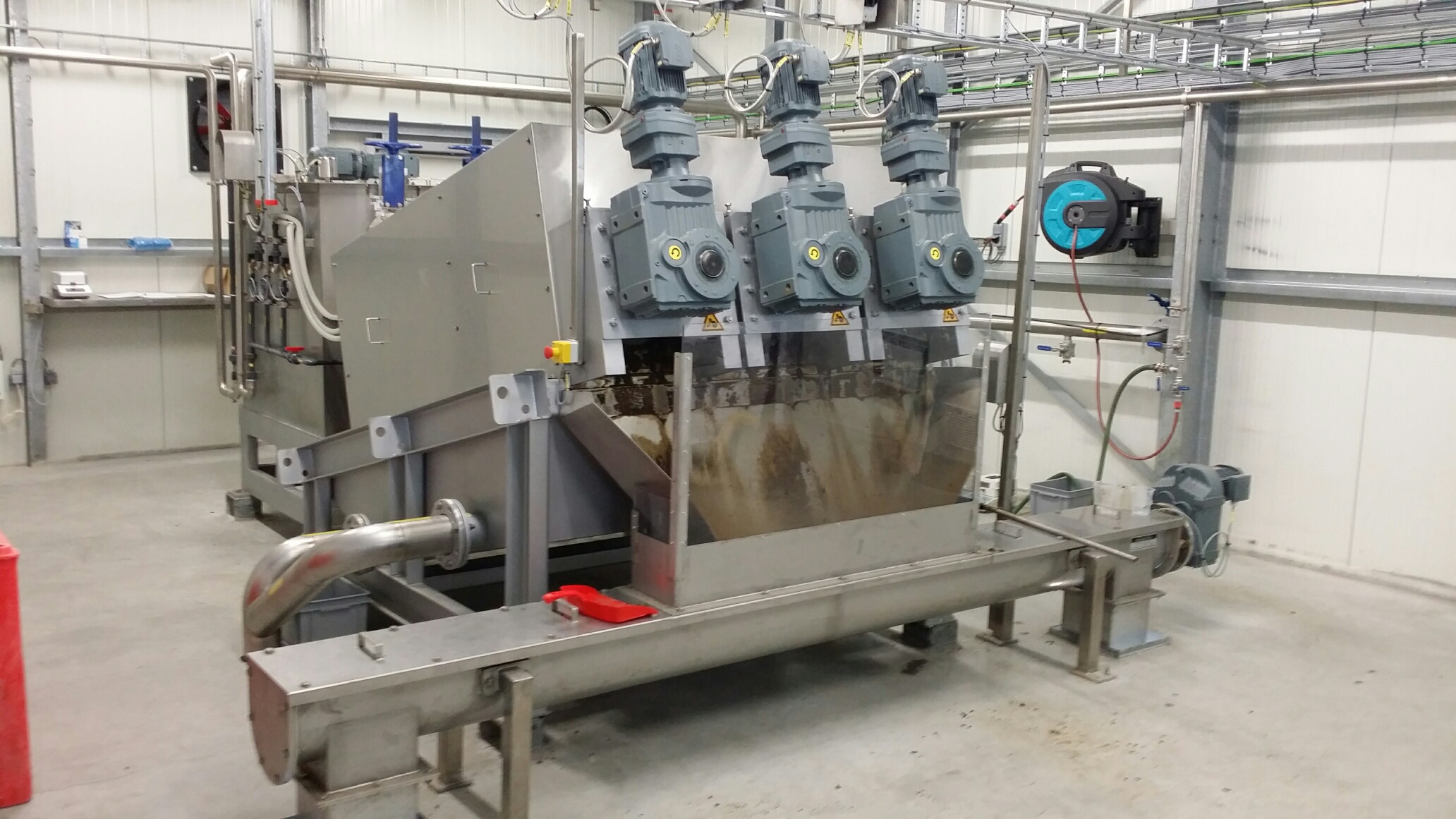
Delivered unit in service: industrial park sludge dewatering, MDS353, Belgium. Reference evidence of this kind becomes audit evidence only when the serial number and end user can be verified.
Evidence Class 3 — Material Traceability and What Certificates Actually Cover
Material traceability is the evidence class most often accepted on trust. The published material specification for the MDS multi-disk screw press range is SS304 or SS316L — and a specification is not yet a traceable claim. What makes it traceable is a chain: mill certificates with heat numbers for plate and bar stock, welding procedure and welder qualification records, in-process inspection records, and a serial-number mapping that links a delivered machine back to the material batches used in it.
Two certificates support that chain for the current MDS range, and both have scopes that should be read literally:
- CE certification — certificate number M.2024.206.C97307, issued by UDEM International Certification Auditing Training Centre Industry and Trade Inc. Co. for the EU market, covering the Multi-Disk Screw Press and citing standard EN 60204-1:2018. Validity runs from 6 March 2024 to 5 March 2029.
- ISO 9001 — certificate number 18122Q11896R1M, issued by CICC Certification to GB/T 19001-2016 / ISO 9001:2015, with Global (IAF) and China (CNAS) coverage. The certified scope covers design and production of the Multi-Disk Screw Press alongside the WAVE Separator, Super Sludge Dryer, Carbonization Furnace and Fermentation Tank. Validity runs from 28 August 2025 to 1 September 2028.
Neither document does what buyers sometimes assume. CE certification against EN 60204-1:2018 addresses electrical safety of machinery — it is not a statement about dewatering performance, cake dryness or polymer consumption. ISO 9001 certifies the quality management system, not the output of an individual unit. Both are necessary and neither is sufficient, which is why an audit should always ask three specific questions: which certificate covers this model, which standard or clause it is certified against, and which appendix page lists the product scope.
A third standard is worth knowing even though it is not a certification. EN 12255-8 specifies the design principles and construction requirements for sludge treatment and storage facilities in wastewater treatment plants. It matters during an audit because it is the framework European project documentation tends to be written in — a supplier able to reference it will generally be easier to integrate into an EU-facing engineering package, and easier to align with the buyer's own consultants.
Reference Evidence — Making an Installed Base Auditable
A project list is a lead, not proof. Its value in an audit is that it can be converted into something checkable: a model, an application, an operating duration and a named end user. The installations below are reported by the manufacturer across municipal, industrial and food-processing wastewater applications, and they are useful precisely because they span different sludge types rather than repeating one reference project.
| Market | Model | Application | Reported duration | Reported highlight |
|---|---|---|---|---|
| Oman | MDS202 | Industrial sludge dewatering | 1 year | Low energy consumption |
| Vietnam | MDS202 | Printing and dyeing sludge | 2 years | Self-cleaning mechanism |
| Indonesia | MDS403 | Palm oil mill sludge | 3 years | Low noise and vibration |
| India | MDS302 | Chemical sludge dewatering | 3 years | Continuous operation |
| Iran | MDS132 | Chemical sludge from textile factories | 2 years | Low energy consumption |
| New Zealand | MDS301 | Sludge reduction | 1 year | Compact design |
| United Arab Emirates | MDS302 (3 units) | Sludge dewatering in industrial parks | 2 years | Low noise and vibration |
| Thailand | MDS352 (2 units) | Sewage treatment plant sludge dewatering | 3 years | Self-cleaning mechanism |
| France | MDS353 | Municipal sludge dewatering | 1 year | Low energy consumption |
| Portugal | MDS303 | DAF sludge in meat processing | 2 years | Water-saving operation |
| Belgium | MDS353 | Industrial park sludge | 3 years | Simple maintenance |
| France | MDS131 | Industrial park sludge | 1 year | Continuous operation |
| United States | MDS353 (3 units) | DAF sludge dewatering and volume reduction | 2 years | Self-cleaning mechanism |
| Canada | MDS302 | DAF sludge dewatering and volume minimisation | 3 years | Low energy consumption |
Reported operating durations and highlights are supplied by the manufacturer and are presented here as verification leads, not as independently confirmed test results.
How to use the table during a visit: ask for the serial numbers behind two or three rows, ask which installation is closest to your own sludge type, and ask whether the end user can be contacted directly. The manufacturer's wider claim of more than 4,500 project references in more than 60 countries is checkable in the same way — by narrowing it to a handful of verifiable machines rather than accepting the total.
What an Audit Cannot Prove
Every audit has boundaries, and buyers who state them explicitly get better value from the visit. Four limits are structural.
An audit is a snapshot, not a lifecycle test. It records the condition of a plant and a machine on one day. The wear rate of disks, screw flights and seals over several years cannot be established from a single visit; the reported operating durations in the reference table above are the closest available proxy, and they remain self-reported until an end user confirms them.
It cannot certify performance on your sludge. The reference projects span municipal sludge, chemical sludge, textile dyeing sludge, palm oil mill sludge and DAF sludge from meat processing — different materials with different dewatering behaviour. A machine validated on one of these will not automatically deliver the same cake dryness or throughput on another, and the only reliable way to close that gap is representative sample testing with your own sludge under agreed conditions.
Certificate scope limits what a certificate proves. As noted above, the CE certification covers electrical safety against EN 60204-1:2018 and the ISO 9001 certificate covers the management system within a defined scope. Neither is a performance certification, and neither should be presented as one by either side of the negotiation.
Technology-level comparisons are directional, not audit findings. One third-party industry comparison places screw press power consumption 90% to 95% below that of centrifuges in sludge dewatering. The figure comes from an industry comparative analysis rather than a controlled, site-specific measurement, so it is useful for understanding where screw press technology sits in the wider market but cannot substitute for a site energy evaluation. A screw sludge press may still be the right answer on energy and the wrong answer on a particular sludge — that decision belongs to sample testing plus audit evidence, not to a headline number.
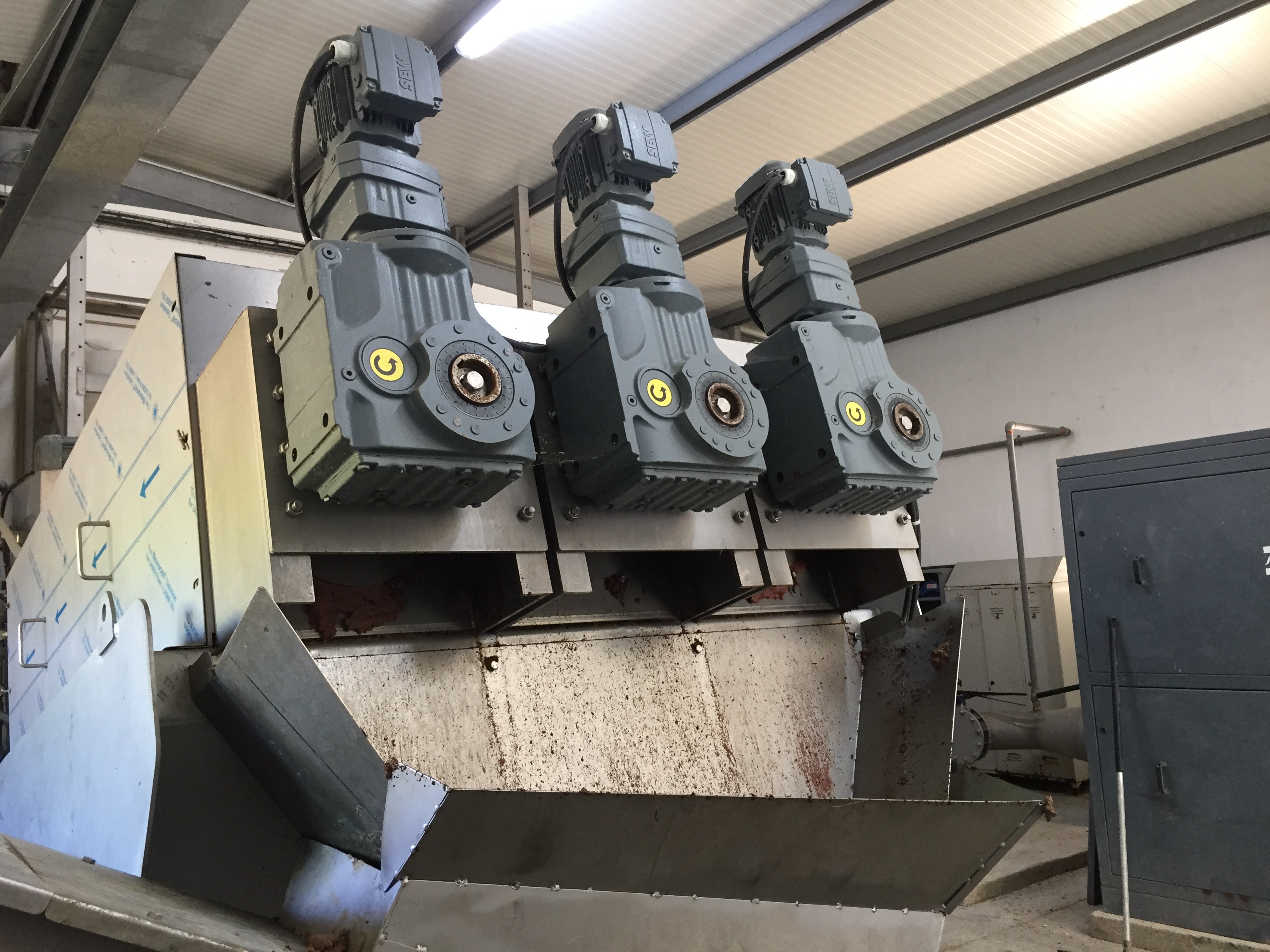
DAF sludge application at a meat processing plant, Portugal (MDS303). Reference scope differs by sludge type — one reason an audit cannot replace sample testing.
From Audit Findings to Execution — Attaching Evidence to the Purchase Order
Audit findings lose most of their value if they stay in a site-visit report. At the execution stage they should be converted into contract terms and an annex to the purchase order.
The commercial terms on this product line are straightforward and can be matched against the audit evidence:
- Minimum order quantity: 1 unit
- Delivery terms: FOB, CIF, EXW or DDP
- Lead time: 30–45 days
- Payment terms: 40/60 TT
- Acceptance criteria: pre-shipment test and FAT inspection
After-sales scope — installation guidance, operator training, technical assistance and spare parts supply — should also be written into the same annex, because these items determine the cost of ownership well beyond the invoice value, and because the audit is the moment when the buyer is best placed to judge whether the supplier can actually deliver them.
A practical audit annex contains: model and serial number for each unit; nameplate values checked against the published table; the FAT record with witness signature and recorded parameters; material certificates referenced by heat number; copies of the CE and ISO 9001 certificates including the product-scope appendix; and the packing and loading record. Buyers who attach these documents to the order convert a factory visit into a contractual baseline that can be enforced at delivery.
Market Direction and the Rising Standard for Audit Evidence
Market forecasts reinforce why audit capability is becoming a selection criterion rather than a formality. Alongside the projected growth of the sludge dewatering equipment market to USD 10.16 billion by 2032, the screw press segment is expected to grow fastest at a 9.4% CAGR from 2025 to 2032, and Asia Pacific held a 37.57% revenue share in 2024. Growth of that shape pulls new capacity into the market quickly.
The practical consequence for buyers is a shift in what they compare. When several suppliers can quote a similar model and a similar delivery window, the differentiator becomes documentation: whether fabrication is genuinely in-house, whether a test run can be witnessed and recorded, and whether material traceability can be demonstrated from mill certificate to machine serial number. Suppliers who can produce that evidence on request shorten their own evaluation cycles; suppliers who cannot tend to be filtered out during evaluation rather than during execution, when switching costs are far higher.
Future Outlook
Three changes are likely to shape factory audits for sludge dewatering equipment over the next few years. The first is a two-stage process: a remote pre-audit based on documents and video walk-throughs, followed by a physical visit focused only on the items that cannot be verified remotely — the disk stack, the weld quality and the running unit. The second is the normalisation of FAT records as contractual annexes, with predefined deviation handling rather than a certificate issued at the end of the process. The third is rising traceability expectation for projects with European interfaces, where documentation aligned to EN 12255-8 design language and EN 60204-1:2018 electrical compliance is increasingly assumed rather than requested.
For procurement teams, the practical takeaway is unchanged by any of this: buy the evidence, not the presentation. A screw press for sludge dewatering is judged on how it was built and how it was tested long before it is judged on how it performs on site.
FAQ
What documents should be requested before a factory audit of a screw press sludge dewatering manufacturer?
A buyer should ask for the model datasheets for the units being quoted (the MDS range covers MDS101 to MDS404), the material declaration for the disk stack and screw shaft (SS304 or SS316L on this range), the current CE certificate and ISO 9001 certificate with their product-scope appendices, a project reference list with models and applications, the FAT protocol template, and the packing and loading record format. Requesting these before the visit allows the auditor to spend the site time verifying rather than collecting.
How can a buyer verify in-house fabrication capacity rather than assembly-only capability?
Ask which specific operations are performed on site — disk forming and finishing, screw shaft welding, frame fabrication, machining and final assembly — and then walk the corresponding areas. Facility documentation for the Benenv site, for example, shows separate welding, assembly, standard and non-standard fabrication workshops within a 20,000 m² site, alongside a stated annual output of 500 units and a monthly capacity of 100 units. The capacity figure is only meaningful when compared against the production schedule offered for the buyer's own order.
What should a screw press dewatering test run actually demonstrate?
A useful test run uses a sludge type as close as possible to the buyer's own and records measurable outputs: hydraulic capacity in m³/h, dry-solids throughput in kg/h, installed power in kW and flushing-water consumption in L/h, compared against the published figures for that model. For the MDS range these published figures range from 0.2 kW and 3–6 kg/h dry solids on the MDS101 to 8.2 kW and 400–680 kg/h on the MDS404. A run on clean water demonstrates mechanical function only.
How is material traceability verified for a screw press dehydrator?
Traceability is verified through a documented chain rather than a material declaration: mill certificates with heat numbers for plate and bar stock, welding procedure and welder qualification records, in-process inspection records, and a serial-number mapping that links a delivered machine to the material batches used in it. The ISO 9001 certificate held for this production scope (certificate 18122Q11896R1M, issued by CICC Certification to GB/T 19001-2016 / ISO 9001:2015) is the framework within which that chain should be documented and retained.
What are the typical purchasing terms and acceptance criteria for a screw press dewatering unit?
On this product line the stated terms are a minimum order quantity of 1 unit, delivery terms of FOB, CIF, EXW or DDP, a lead time of 30–45 days, payment terms of 40/60 TT, and acceptance criteria based on pre-shipment testing and FAT inspection. Third-party inspection, for example by SGS, is used where the contract or the destination market requires an independent report.
What can a factory audit not confirm about a sludge dewatering system?
An audit cannot confirm long-term wear behaviour, lifecycle cost, or actual performance on the buyer's specific sludge. Certificate scope is also limited: the CE certification for the MDS range is issued against EN 60204-1:2018 for electrical safety, and ISO 9001 covers the quality management system rather than dewatering performance. Confirming performance on a particular sludge requires representative sample testing rather than additional inspection.
For readers who need the underlying product documentation referenced in this article — model data, certification scope and product range — the manufacturer's brochure is available as a PDF: Benenv product brochure (PDF).