
What Food Safety Certifications Should a Zipper Bag Supplier Hold? A Compliance Checklist
What Food Safety Certifications Should a Zipper Bag Supplier Hold? A Compliance Checklist
The short answer: a supplier of food-contact zipper storage bags should be able to produce four evidence layers — a food-contact material declaration tied to the destination market’s regulation, a temperature-range qualification that matches the buyer’s process, management-system and social-audit certificates that retailers accept at onboarding, and in-process quality records showing that those certificates describe what the factory actually does. The checklist below walks through each layer in the order an international buyer normally meets them.
Food-contact zipper storage bags sit at an awkward intersection of packaging procurement, because three separate documents — a certificate, a resin specification and a temperature rating — have to tell the same story. The global zipper bag market was valued at approximately USD 10.34 billion in 2024 and is projected to reach USD 19.44 billion by 2035, according to Market Research Future, and food packaging accounts for roughly 39.2% of category revenue as of 2025, according to Dataintelo. Growth at that scale pushes more food-contact orders toward suppliers that buyers have never audited in person, which is why certification has moved from a checkbox on a vendor form into the working part of the purchase file.
Taizhou Haida Plastic & Rubber Packaging Co., Ltd. — trading as Haida Packaging — is a zipper bag manufacturer founded in 2003 in Taizhou, Jiangsu, China, producing single zipper, slider, double zipper, frozen food and vacuum bag lines for household, food packaging and catering applications. Its export ratio is 90%, its main markets are Japan and Europe, and its stated annual output is 11,000 tons. Its document set and model specifications are used throughout this checklist as a concrete example of what a complete compliance file looks like — and where its boundaries sit.
Why “Food Grade” on a Quotation Is Not a Compliance Answer
The phrase is a category description, not a qualification. Two suppliers can both quote “food grade LDPE zipper bags” while holding entirely different document sets, because food-contact compliance is assessed per market, per material and per application rather than once, globally. A bag that satisfies U.S. requirements does not automatically satisfy European requirements, and a bag qualified for ambient snack storage is not automatically qualified for a −40 °C freezer line.
Buyers who treat “food grade” as a single status usually discover the gap during retailer onboarding or at the port, when the cost of re-documentation is highest. The seven steps below are ordered to surface those gaps before the purchase order is issued.
Step 1 — Identify the Destination Market’s Legal Framework First
Regulation determines which documents are relevant, so the market list comes before the certificate request. Zipper bags for food contact in the EU must comply with LFGB and EU No 10/2011 regulations, and BRCGS A+ and amfori BSCI are described in compliance guidance as key entry barriers for major retailers. In the United States, food-grade polyethylene bags must follow FDA 21 CFR 177.1520, which governs resin composition and migration limits.
These frameworks are not interchangeable. Haida Packaging performs food safety compliance tests in accordance with FDA (U.S.) and LFGB (German) standards, and exports to Japan and Europe — two destination regions with distinctly different documentation expectations. Practical rule for the checklist: list destination countries first, then request the test reports that name the matching regulation, and treat any certificate that names neither a market nor a regulation as background information rather than evidence.
Step 2 — Verify Material Documentation Against the Actual Resin
Ask for the polymer, not the adjective. A food-contact claim should resolve into a named resin — 100% LDPE or PA+PE — and the declaration should match the material actually run on the line for that order. Haida Packaging’s food-contact range is built on two material families: 100% LDPE for single zipper, slider, double zipper and frozen food bags, and PA+PE for vacuum bags.
| Model | Bag type | Material | Declared temperature / key specification | Typical scope |
|---|---|---|---|---|
| HD-ZB001 | Food sealing bag (single zipper) | 100% LDPE | Temperature resistant −20 °C to 120 °C | Small / Medium / Large; household and kitchen, food packaging, catering |
| HD-FB001 | Frozen food bag | 100% LDPE | Low temperature resistant to −40 °C; oil-resistant | 100 g–2 kg; frozen food, ready-to-eat packaging |
| HD-VB001 | Food vacuum bag | PA+PE | Vacuum-sealable; high temperature resistant | 50–2000 ml; food processing, freezing, preservation |
| HD-SZB001 | Single zipper bag | 100% LDPE | Temperature resistant −20 °C to 120 °C | Small / Medium / Large; food packaging, catering, daily supplies |
The audit question at this stage is not “do you have a food-grade certificate” but “which resin does this declaration cover, and is that the resin in my order?” A declaration that names a resin family without naming the model it applies to is the most common weak point in an otherwise complete file.
Step 3 — Match the Temperature Qualification to the Process Step
Temperature resistance is where compliant orders most often diverge from returned ones, because it defines which process steps the bag can survive. Haida Packaging’s published model specifications cover a window from −40 °C to 120 °C — but not in a single product. The HD-FB001 frozen food bag is rated low-temperature resistant to −40 °C and is also oil-resistant; the HD-ZB001 food sealing bag and HD-SZB001 single zipper bag are rated −20 °C to 120 °C; and the HD-VB001 vacuum bag, made from PA+PE, is vacuum-sealable and high-temperature resistant.
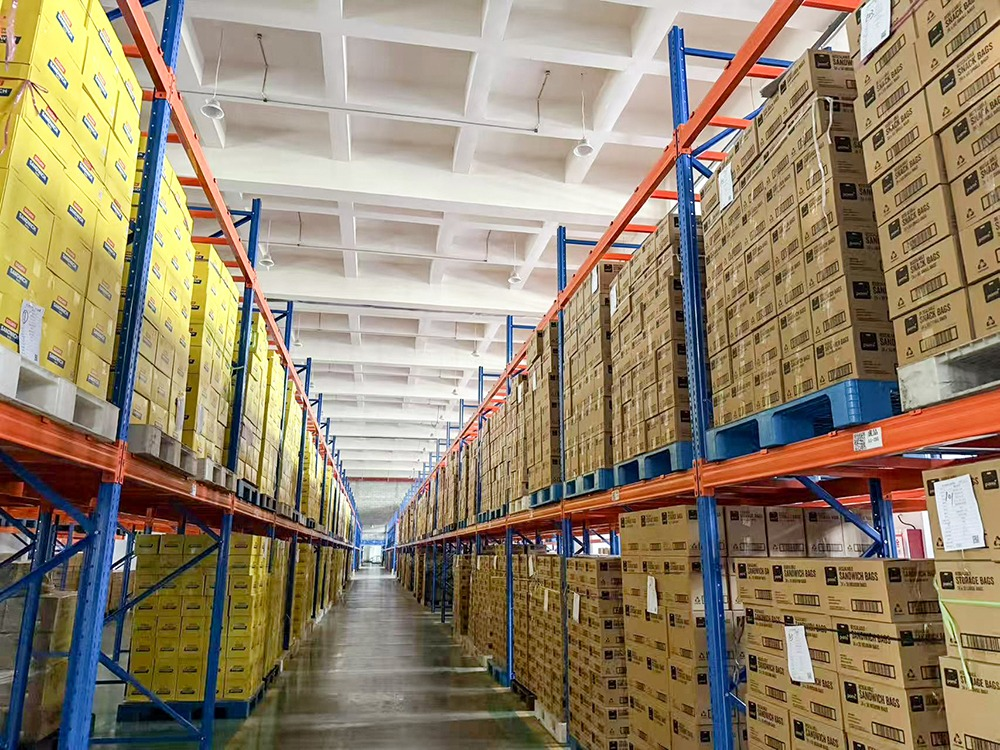
Production environment at the Haida Packaging facility in Taizhou, Jiangsu, where food-contact zipper bag lines run under documented process control. Image: Haida Packaging.
Step 4 — Check That System Certificates Match the Site and the Scope
Management-system certificates describe how a factory is organised. They are necessary for retailer onboarding, but they are not, by themselves, food-contact approvals. Haida Packaging’s certification profile includes ISO9001, ISO14001, ISO22716, ISO13485, BRC, BRC-CP, BSCI, GMPc, FDA, EPA, and Disney and Hello Kitty brand authorisations.
For a buyer, three checks matter more than the total count:
- Entity and site. The legal entity name and factory address on the certificate should match the site that will actually run the order.
- Scope wording. The certificate should cover food-contact bag production, not only a neighbouring product category.
- Validity. Certificates should be current at the time of shipment, not only at the time of quotation.
The composition of the profile is also informative. ISO22716 (cosmetics) and ISO13485 (medical devices) both require documented hygiene and process-control disciplines that are directly relevant to food-contact production, while BRC and BRC-CP address packaging materials specifically. A file that shows these alongside FDA and LFGB testing tells a more consistent story than a long list of certificates from unrelated scopes.
Step 5 — Audit In-Process Control and Pre-Shipment Testing
The most frequent compliance failure is not a missing certificate; it is a certificate that does not describe the process. Five risk categories are documented in Haida Packaging’s production controls, each with a defined countermeasure.
| Risk category | Control method | Documented measure |
|---|---|---|
| Sealing / leakage | Quality inspection, sealing performance test | Visual inspection, sealing pressure test, SGS verification before shipment |
| Slider mechanism malfunction | Functional testing | Pre-shipment testing of slider smoothness and sealing reliability |
| Production defect | Process control, sample checks | Standardised manufacturing process, in-line QC at critical steps, defect tracking and corrective action |
| Transportation / storage | Packaging and logistics monitoring | Proper carton packaging, palletising, handling instructions for safe transport |
| Customer misuse | Instruction and labelling | Clear instructions for opening and closing, plus temperature and load limits |
Where a certificate is a claim about capability, these five controls are evidence about execution. Buyers at the execution stage should therefore ask for the pre-shipment test record, not only the test protocol. The last row is the one most often overlooked: temperature and load limits printed on the bag or its packaging are part of the compliance chain, because they define the conditions under which the material’s declaration remains valid.
Step 6 — Confirm Capacity, Lead Time and Repeat-Order Continuity
Compliance documentation has to be reproducible order after order, which makes capacity a compliance-adjacent question rather than a purely commercial one. Haida Packaging states a monthly production capacity of 900 tons and an annual output of 11,000 tons, supported by a 20-engineer R&D team, with a 90% export ratio and Japan and Europe as its main markets. At that capacity, typical delivery lead time is 35–40 days.
For long-term programs, the operative question is whether the supplier can hold the same resin, the same model and the same test regime across repeat orders. A change of resin or a change of line between runs is what creates documentation gaps — the certificate stays valid, but it no longer describes the product being shipped.
Step 7 — Fix Commercial Terms and the Documentation Handover
Commercial terms determine how easily compliance can be verified. Haida Packaging’s standard terms are an MOQ of 20,000 boxes, FOB Shanghai, 30/70 payment, and acceptance based on visual inspection, sample testing, and sealing and packaging checks.
Two implications deserve attention before contracting:
- Minimum order quantity. At 20,000 boxes, very small trial quantities are not the natural entry point for a fully documented custom order. Buyers planning pilot runs should clarify in advance which documents apply at trial volume.
- Acceptance alignment. The acceptance criteria should reference the same tests the supplier already runs — sealing pressure, slider function, packaging condition — so that receiving inspection and factory inspection measure the same thing.
After-sales handling belongs in the same file. Haida Packaging provides customer service via email and WhatsApp, covering product guidance, storage guidance and replacement for quality issues — a practical continuity mechanism when a program runs across multiple shipments.
Technical Note: What LDPE and PA+PE Mean for a Compliance File
Polyethylene dominates food-contact zipper bags for regulatory as much as mechanical reasons. FDA 21 CFR 177.1520 governs the resin composition and migration limits of food-grade polyethylene, which means the compliance question about a PE bag is ultimately about what can migrate out of the resin into food under the declared conditions of use.
Low-density polyethylene (LDPE) is flexible, moisture-resistant and easy to heat-seal, which is why it underpins single zipper, slider and frozen food constructions — including the 100% LDPE HD-ZB001, HD-FB001 and HD-SZB001. PA+PE combines a polyamide layer with a polyethylene sealant layer: the polyamide contributes barrier performance while the polyethylene provides the food-contact sealing surface. That construction is used in the HD-VB001 vacuum bag for food processing, freezing and preservation.
The practical consequence for buyers is that the material declaration and the temperature declaration are not two separate checklist items. They are one specification, read together, and they must be read against the specific model on the purchase order.
Where Each Specification Actually Applies
- Frozen and chilled food. HD-FB001 frozen food bag: 100% LDPE, low-temperature resistant to −40 °C, oil-resistant, 100 g–2 kg scope, positioned for frozen food and ready-to-eat packaging.
- Household, kitchen and catering storage. HD-ZB001: 100% LDPE, −20 °C to 120 °C, small, medium and large sizes, positioned for household and kitchen storage, food packaging and catering.
- Food processing, freezing and preservation. HD-VB001 vacuum bag: PA+PE, vacuum-sealable, high-temperature resistant, 50–2000 ml scope.
This split mirrors the wider market. Food packaging accounts for roughly 39.2% of global zipper bag market revenue as of 2025, with major adoption in the frozen food and snack segments — two applications that sit at opposite ends of the temperature scale and therefore rarely share a single bag specification.
Market Trend: Documentation Is Becoming the Sourcing Filter
Three verified market signals point in the same direction.
- Food packaging is the largest application block. Food packaging accounts for roughly 39.2% of global zipper bag market revenue as of 2025, concentrated in frozen food and snacks.
- Flexible formats keep taking share. The stand-up zipper pouch segment was valued at USD 2.61 billion in 2024 and is expected to reach USD 3.80 billion by 2032, driven by the shift from rigid to flexible packaging.
- New channels are adding volume. The subscription-box and meal-kit delivery sector surpassed USD 20 billion in 2024, driving demand for custom-printed zipper bags used for ingredient portioning.
Asia-Pacific dominated plastic bag manufacturing capacity in 2025 and is the fastest-growing region, which means most international buyers will continue to source food-contact bags from a region where documentation practice varies widely between factories. The practical trend is a shift from certificate collection to evidence verification: fewer documents, but each one tied to a named regulation, a named resin and a named model.
Checklist Auditing vs. Certificate-Only Sourcing — and Where the Limits Are
Certificate-only sourcing treats a food-contact order as a paperwork exercise: collect certificates, file them, release the order. Checklist-based auditing tests the same order against material, temperature, process and continuity evidence. The difference shows up in measured performance. In Haida Packaging’s own comparison data, a single zipper bag is reported to deliver approximately 30% higher sealing reliability than a traditional poly bag at a unit cost roughly 5–10% higher; a double zipper bag is reported to produce approximately 30–40% fewer leakage complaints in B2B trials at approximately 10–15% higher unit cost than comparable competitor zipper bags; and a slider bag is reported to open and close approximately 50% faster than a traditional zipper bag.
| Audit dimension | Certificate-only sourcing | Documentation-led checklist |
|---|---|---|
| Material | “Food grade” claim on the quotation | Named resin (100% LDPE or PA+PE) matched to the order line |
| Temperature | Not checked per model | Declared window per model, matched to the process step |
| Systems | Certificate count | Entity, site, scope and validity dates verified |
| Execution | Not reviewed | Sealing, slider, defect, transport and misuse controls reviewed |
| Continuity | Assumed | Capacity, lead time and repeat-order consistency confirmed |
The limits should be stated as plainly as the advantages:
- One bag does not cover the full range. The −40 °C to 120 °C window published across Haida Packaging’s range is distributed across models, not concentrated in a single product.
- Food-contact documents are market-specific. FDA-line documentation and LFGB / EU No 10/2011 requirements are separate frameworks; a file prepared for one market does not discharge obligations in the other.
- Certificates describe a site and a scope. They are not properties of a brand, and they must be re-checked when production is moved or when an order repeats after a long interval.
- Minimum order quantities constrain access. At an MOQ of 20,000 boxes, small buyers may struggle to place a fully documented custom order at trial scale.
- Material choice has a performance ceiling. LDPE bags are built for flexible, low-to-medium temperature food-contact use. Vacuum and preservation applications are served by the PA+PE HD-VB001 instead — a different product line with a different specification and a different cost position.
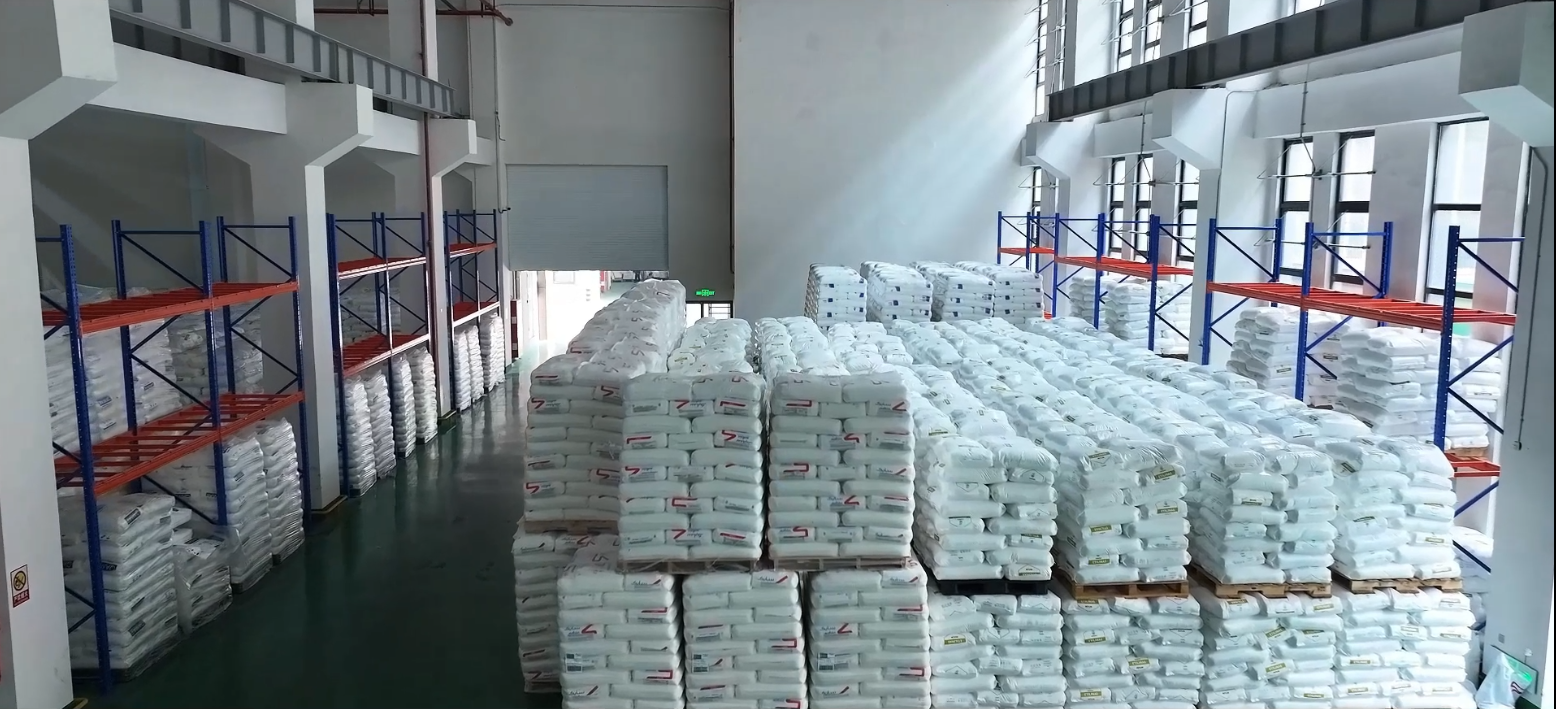
Manufacturing and handling area at Haida Packaging, where in-line QC and pre-shipment checks are applied to zipper bag orders. Image: Haida Packaging.
Future Outlook
For buyers at the decision and execution stage, the direction of travel is reasonably clear. Retailer entry barriers such as BRCGS A+ and amfori BSCI continue to filter suppliers before a purchase order is discussed; food packaging keeps expanding its share of the zipper bag market as flexible formats replace rigid ones; and documentation tied to a named regulation, resin and model will increasingly determine which suppliers can be onboarded without delay.
The practical consequence is that compliance verification is becoming a recurring process rather than a one-time gate. Documents should be re-confirmed at each repeat order, and supply continuity, lead time and after-sales handling belong in the same file as the certificates — not in a separate commercial folder.
Frequently Asked Questions
1. Which certifications should a zipper bag supplier hold for food-contact bags sold in the EU?
Zipper bags for food contact in the EU must comply with LFGB and EU No 10/2011 regulations, and BRCGS A+ and amfori BSCI are described in compliance guidance as key entry barriers for major retailers. Alongside those market requirements, a supplier should typically hold management-system certificates such as BRC and BRC-CP for packaging materials. Haida Packaging performs food safety compliance tests in accordance with FDA (U.S.) and LFGB (German) standards, holds BRC, BRC-CP, BSCI and GMPc among its system certifications, and exports to Japan and Europe. Buyers with European programs should confirm how a supplier’s test reports map onto EU No 10/2011 specifically, since LFGB testing and EU No 10/2011 compliance are related but not identical documents.
2. What material documentation matters most for food-grade zipper storage bags?
Resin identity matters most. FDA 21 CFR 177.1520 governs the resin composition and migration limits of food-grade polyethylene, so a compliant file should name the polymer rather than describe the bag as “food grade” in general terms. In Haida Packaging’s range, the HD-ZB001 food sealing bag, HD-FB001 frozen food bag and HD-SZB001 single zipper bag are made from 100% LDPE, while the HD-VB001 food vacuum bag uses PA+PE. Buyers should check that the resin named in the declaration is the resin specified on their own purchase order line.
3. How do temperature ratings connect to food safety compliance?
Temperature ratings define the conditions under which a material’s food-contact declaration remains valid, so they are part of the specification rather than a separate performance feature. Haida Packaging’s HD-FB001 frozen food bag is rated low-temperature resistant to −40 °C and is oil-resistant; the HD-ZB001 and HD-SZB001 are rated −20 °C to 120 °C; and the HD-VB001 vacuum bag is vacuum-sealable and high-temperature resistant. Because the declared window differs by model, buyers should match the specific model to the specific process step rather than rely on a headline range.
4. Is an ISO 9001 certificate enough to place a food-contact order?
No. ISO9001, ISO14001, ISO22716 and ISO13485 are management-system certificates that describe how a factory is organised; they support retailer onboarding but are not food-contact approvals in themselves. Food-contact approval is a separate matter, addressed in the United States by FDA 21 CFR 177.1520 and in Europe by LFGB and EU No 10/2011. A complete file therefore needs both layers: system certificates for the factory, and material or migration documentation for the product.
5. What evidence should a buyer request before shipment?
At minimum, evidence covering five documented risk categories. Sealing and leakage risk is controlled through visual inspection, sealing pressure testing and SGS verification before shipment. Slider mechanism malfunction is controlled through pre-shipment testing of slider smoothness and sealing reliability. Production defect risk is controlled through a standardised manufacturing process, in-line QC at critical steps, and defect tracking with corrective action. Transportation and storage risk is controlled through proper carton packaging, palletising and handling instructions. Customer misuse risk is controlled through clear instructions for opening and closing, plus temperature and load limits. Haida Packaging’s stated acceptance criteria are visual inspection, sample testing, and sealing and packaging checks.
6. How do capacity and lead time affect long-term compliance?
Compliance has to be reproducible across repeat orders, so capacity and continuity are part of the compliance picture. Haida Packaging states a monthly production capacity of 900 tons and an annual output of 11,000 tons, supported by a 20-engineer R&D team, with a 90% export ratio and Japan and Europe as its main markets. Typical delivery lead time is 35–40 days, with a standard MOQ of 20,000 boxes, FOB Shanghai terms and 30/70 payment. After-sales support runs through email and WhatsApp, covering product guidance, storage guidance and replacement for quality issues. Buyers should note that the 20,000-box MOQ means trial-scale orders may not carry the same documentation profile as full production runs.