
What Is Artificial Turf? A 2026 Industry Overview
Artificial turf is a synthetic grass surface manufactured from polymer yarns and used as a substitute for natural grass. Across the sports, landscaping, residential, and commercial sectors, it has become a standard solution for projects where natural turf is difficult to maintain or where year-round usability is required. In 2025, the global artificial turf market was valued at USD 7.3 billion and is projected to reach USD 13.7 billion by 2033, according to Grand View Research.
Why Synthetic Turf Is Replacing Natural Grass
Natural grass requires frequent irrigation, mowing, fertilization, and seasonal renovation. These maintenance demands increase operating costs and reduce the availability of sports and leisure surfaces. Synthetic turf addresses these issues with an all-weather surface engineered for continuous use. Venusturf artificial turf is designed to operate under outdoor all-weather conditions and to withstand UV exposure, wear, aging, and high-traffic use. This operating profile makes the product suitable for sports field construction, landscape greening, pet area installation, commercial decoration, and event venue setup.
Venusturf: A Manufacturer with Integrated Production
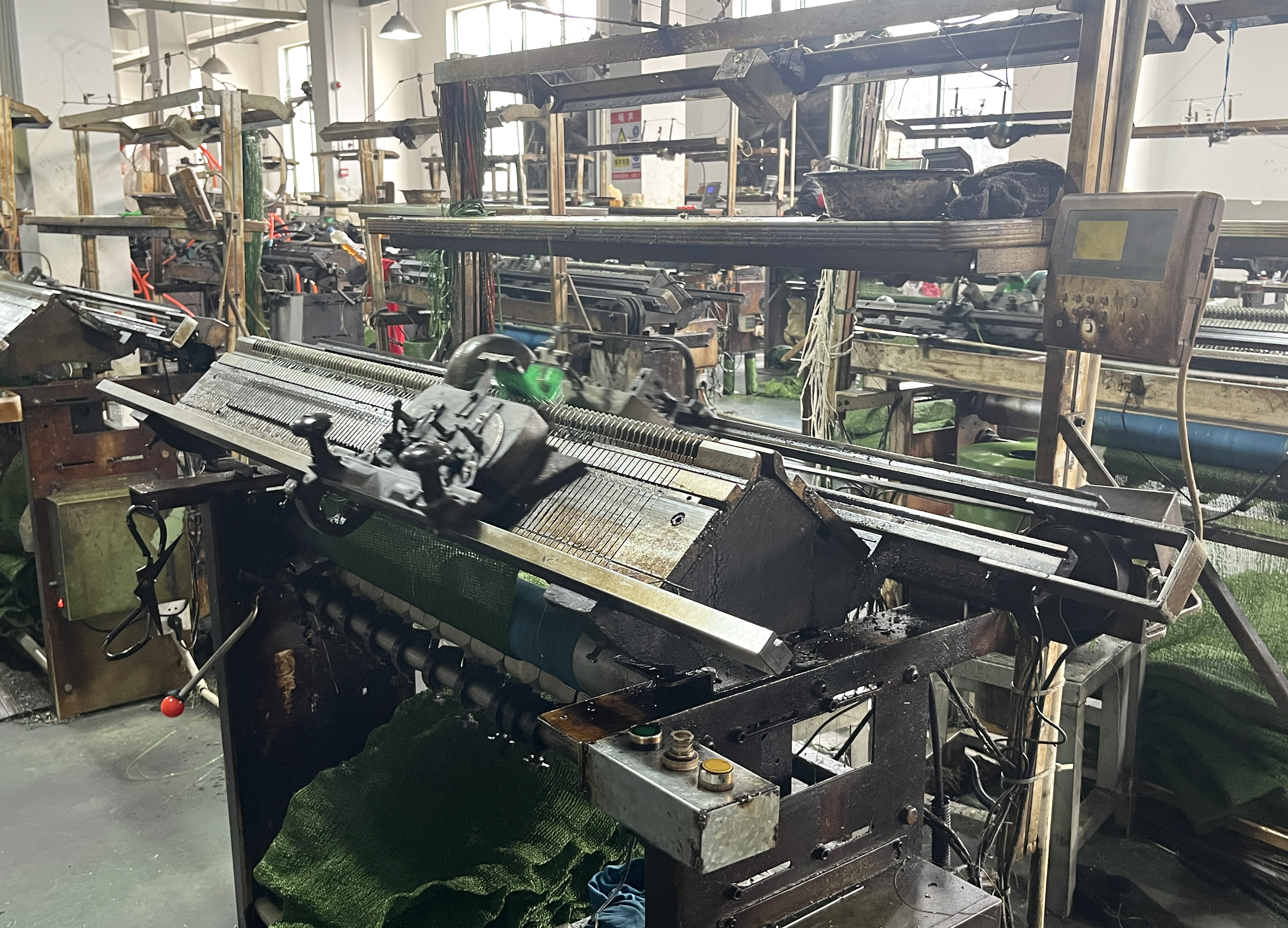
Venusturf is the artificial turf brand of Wuxi Venus Turf Co., Ltd., a manufacturer that integrates research and development, production, and sales services. The company, established in 2024, operates a 1000㎡ facility with 30 integrated production lines. The workforce includes approximately 483 staff, supported by an R&D team of 25 engineers. Annual production capacity is approximately 106,000 units, and roughly 80% of output is exported to global markets.
The manufacturing process spans yarn extrusion, twisting, tufting, coating, packaging, and delivery. By controlling these stages internally, the company manages consistency across batch production and can adjust specifications for project-specific requirements. Its business focus is on artificial grass solutions for sports venues, leisure landscape venues, and educational institutions.
Technical Architecture of Artificial Turf
Artificial turf is built from three main layers: the yarn system, the backing system, and, in many cases, an infill layer. The yarn system determines surface feel, resilience, and grip. The backing system holds the yarns in place and provides dimensional stability. The infill, when used, supports the yarns vertically and contributes to playing performance.
Stitch density is expressed in stitches per meter and stitches per square meter. A higher stitch count increases fiber weight and surface stability, but it also increases material cost. Gauge refers to the distance between tufting rows, and it determines how tightly rows are spaced. Together, density and gauge define the carpet's structural density and visual appearance. Pile height is the length of the yarn from the backing to the tip. It affects the visual appearance, the softness of the surface, and the type of infill required. Sports surfaces such as football often use taller piles with infill, while landscape and residential products may use shorter piles to reduce material weight and cost.
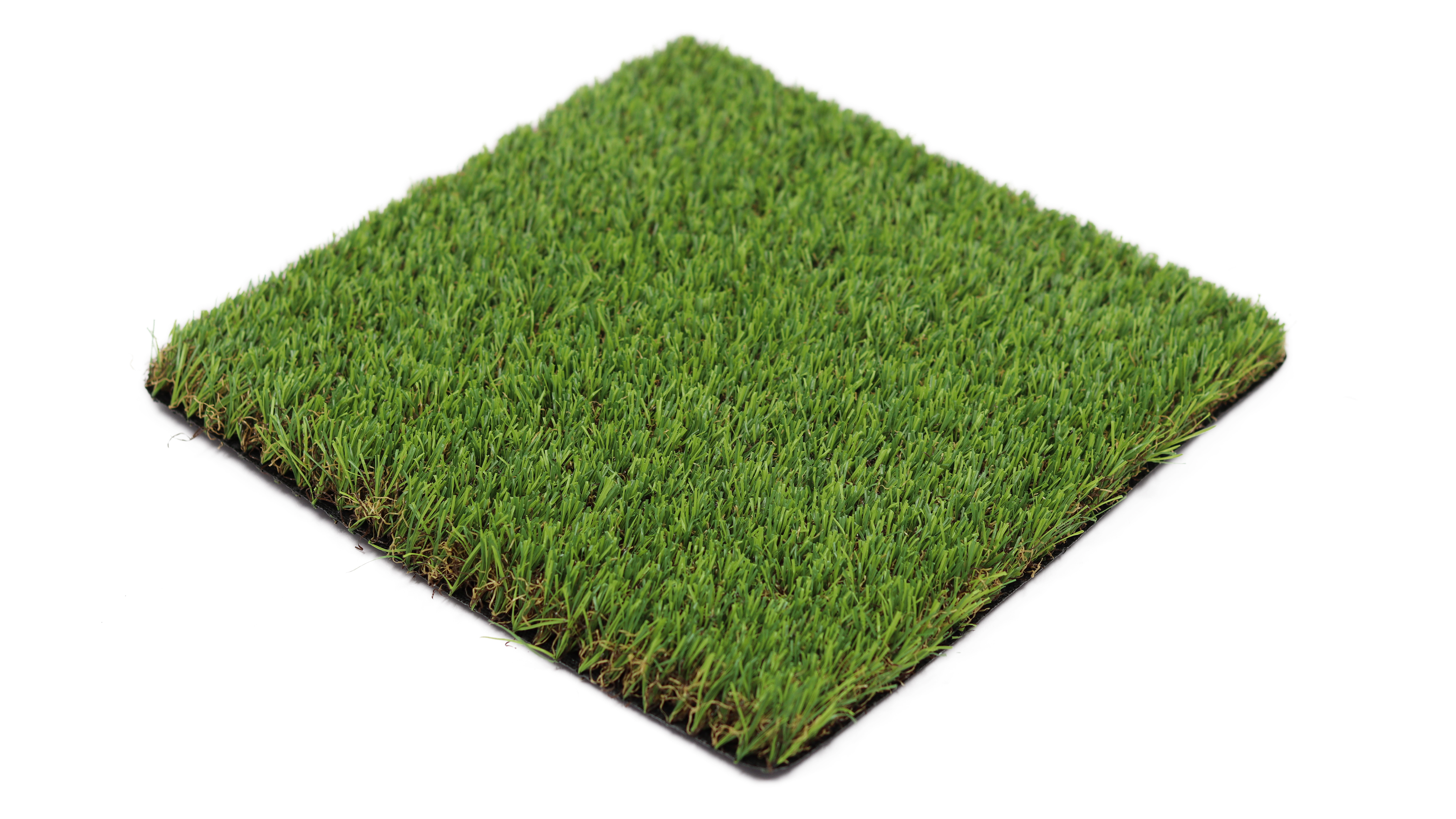
Venusturf manufactures six representative models across five product categories. The table below summarizes their technical specifications.
| Model | Type | Pile Height | Gauge | Yarn | Density | Backing |
|---|---|---|---|---|---|---|
| EM250105 | Football Grass | 50mm | 5/8" | U with Spine Monofil PE | 180 stitches/m (11,340/sqm) | PP+Mesh+SBR Latex |
| Putt 40 | Golf Grass | 15mm | 3/16" | Curled PE | 300 stitches/m (63,000/sqm) | Double PP+PU glue |
| EM24081501-1 | Pet Grass | 35mm | 3/8" | S shape Monofil PE + Curled PP | 100 stitches/m (10,500/sqm) | Double PP+Net+Pet glue |
| EM24071902 | Commercial Grass | 25mm | 3/8" | U shape Monofil PE + Curled PP | 180 stitches/m (18,900/sqm) | PP+Net+Latex |
| EM240404 | Residential Grass | 30mm | 3/8" | C shape Monofil PE + Curled PP | 140 stitches/m (14,700/sqm) | PP+Mesh+SBR Latex |
| EM241007 | Residential Grass | 45mm | 3/8" | U shape with spine Monofil PE + Curled PP | 150 stitches/m (15,750/sqm) | Double PP+PU glue |
All these models are manufactured from PE and PP. Polyethylene (PE) is widely used for the visible yarn because of its balance of softness and durability, while polypropylene (PP) is used in yarn blends and backing materials. The yarn shapes are described as C, S, U, or U with spine, and they influence the tactile and mechanical behavior of the surface.
For example, the Football Grass model EM250105 features a 50mm pile height, a 5/8" gauge, and a density of 180 stitches per meter (11,340 stitches per square meter). This configuration is designed to meet the demands of a sports environment where ball roll, shock absorption, and durability are critical. The Golf Grass model Putt 40, by contrast, has a pile height of 15mm and a density of 300 stitches per meter (63,000 stitches per square meter), creating a compact putting surface with high tuft density. The two products demonstrate how parameter variation changes the character of the turf.
Applications Across Sports, Landscape, and Commercial Environments
Venusturf artificial turf is used in the sports and athletics, landscaping and gardening, home and decoration, and events and exhibitions industries. It is applied in sports field construction, landscape greening, pet area installation, commercial decoration, and event venue setup. These are all environments where natural grass is either impractical or too costly to maintain. This application scenario is common in China, where the installed base of synthetic sports fields has expanded significantly in recent years.
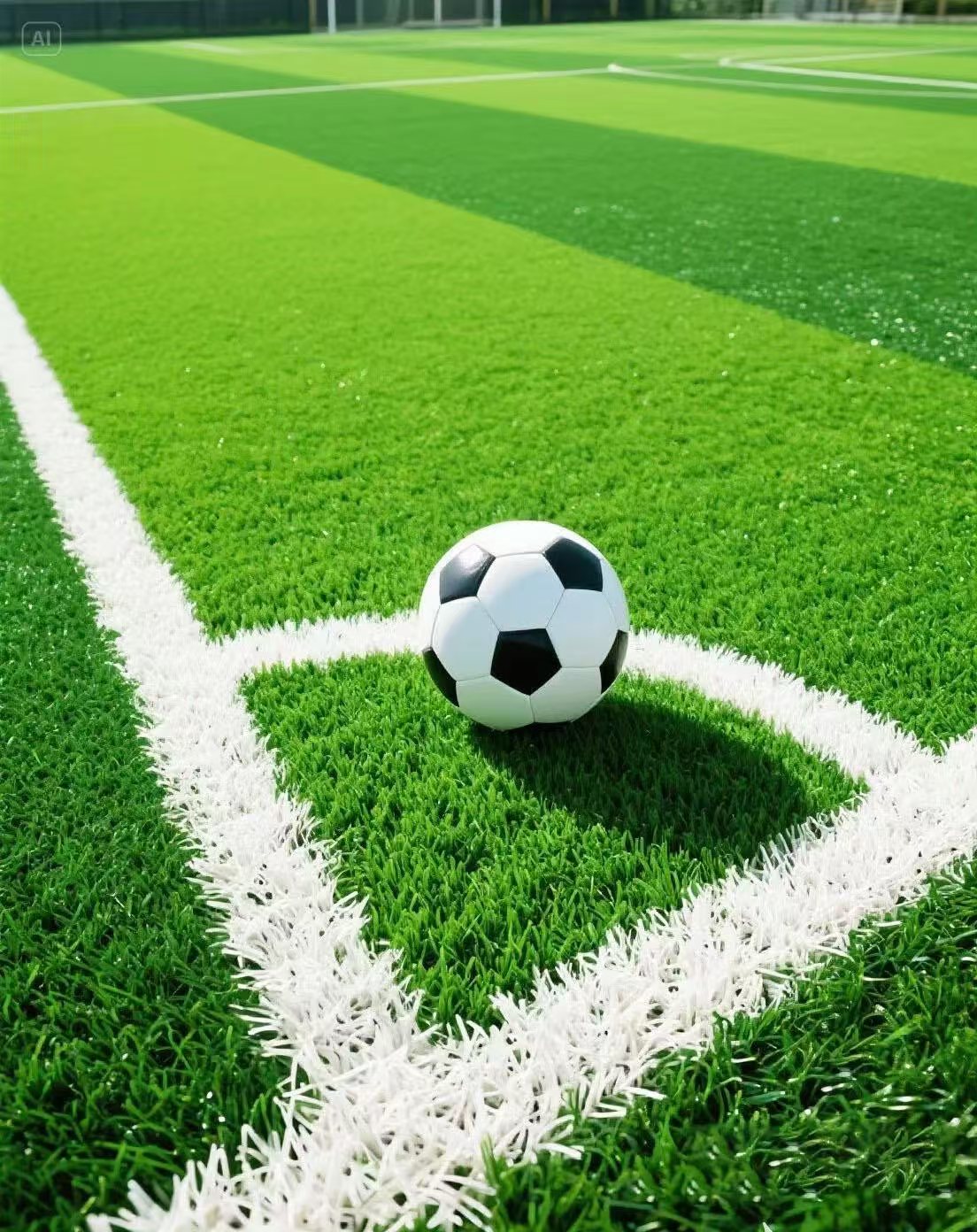
In sports, the Football Grass product is suited to full-size pitches and training fields, while the Golf Grass product supports putting greens and golf practice zones. In landscape and residential projects, the Residential Grass and Commercial Grass models provide a green surface for courtyards, gardens, balconies, and public spaces. The Pet Grass model uses a yarn construction and backing system that is compatible with expected pet activity and cleaning routines. Because pile height, color, density, and material can be customized, the product can be aligned with a wide range of project specifications. For landscape architects and contractors, the ability to specify a product that matches the project's traffic level is critical. A courtyard or balcony may require only a low-maintenance green surface, while a football training ground demands engineered performance. The availability of distinct product families means that the same manufacturer can supply different zones of a single project with appropriate turf types.
The working condition description for Venusturf products is "outdoor all-weather, UV-resistant, wear-resistant, anti-aging, high-traffic." These terms describe the expected service environment rather than a specific performance rating. For procurement teams, this means the turf should be evaluated in the context of the local climate, hours of expected use, and cleaning or maintenance plan.
Market Trends and Demand Drivers
The global artificial turf market is on an upward trajectory. Grand View Research projects market expansion from USD 7.3 billion in 2025 to USD 13.7 billion by 2033. The same source reports that the Asia-Pacific region held the largest revenue share, at 32.2%, in 2025. Within the material segment, polyethylene accounted for 63.1% of revenue, and sports applications accounted for approximately 63.1% of the global market in the same year.
China plays a central role in the regional market. According to Mordor Intelligence, China has over 15,000 installed synthetic sports fields, representing 52% of Asia-Pacific installations. For international buyers, this positions Chinese manufacturers as both production sources and domestic-demand reference points.
Replacement demand is another important signal. AMI Plastics reported that the replacement segment of the sports turf market reached 41% of total demand in 2023, or roughly 70 million square meters. As installed fields age, the need for refurbishment and replacement will generate recurring demand for manufacturers and suppliers. From a buyer's perspective, the dominance of PE in the material mix means that most available products, including Venusturf's models, use polyethylene-based yarn systems. This consistency across the industry simplifies the comparison of products based on density, pile height, backing, and other structural parameters.
Synthetic Turf vs. Natural Grass: Operational Trade-offs
The case for synthetic turf rests on operational efficiency. It eliminates the need for irrigation systems, mowing equipment, fertilizers, and large maintenance crews. It also stays playable in conditions where natural grass would become waterlogged or worn. Synthetic turf also offers a more consistent playing surface in sports. Because the surface does not change with weather or wear in the same way natural grass does, athletes experience a more predictable ball roll and footing.
An honest comparison must also note a limitation: synthetic turf typically involves a higher initial installation cost than natural grass, and the surface requires periodic maintenance such as brushing, infill top-ups, and eventual replacement. Long-term financial modeling should therefore compare the yearly operating savings of synthetic turf against its upfront capital cost and lifecycle maintenance.
Future Outlook
Multiple demand drivers are expected to sustain the artificial turf market through 2033. Sports infrastructure investment, particularly in Asia-Pacific and replacement projects, will remain important. Landscape and residential applications will add volume as property owners look for low-maintenance green spaces. For the supply side, the trend points toward greater specialization: football turf, golf turf, pet turf, and commercial turf are becoming distinct product categories with their own performance criteria.
Manufacturers like Venusturf that control the full production process and offer a range of specialized product families are positioned to serve this demand. Buyers in 2026 have access to a broader set of technical specifications and supplier capabilities than in previous years, making an informed, parameter-based selection process essential.
Frequently Asked Questions
What is artificial turf?
Artificial turf is a synthetic grass product manufactured from polymer yarns, typically PE and PP, and assembled into a tufted surface with a backing system. It is designed for outdoor all-weather use and is used in sports, landscaping, residential, and commercial applications.
What types of artificial turf does Venusturf offer?
Venusturf produces Football Grass, Golf Grass, Pet Grass, Commercial Grass, and Residential Grass. Each product type is defined by different pile heights, gauges, densities, yarn shapes, and backing systems.
What are the main applications of artificial turf?
Applications include sports field construction, landscape greening, pet area installation, commercial decoration, and event venue setup. These environments require a surface that withstands outdoor weather and high traffic.
What materials are used in Venusturf artificial grass?
All Venusturf artificial grass products are made from PE and PP. Yarn types include monofilament polyethylene and curled polypropylene in various shapes, such as C, S, U, and U with spine.
What backing systems are used across the product range?
The product range uses backing systems including PP+Mesh+SBR Latex, Double PP+PU glue, Double PP+Net+Pet glue, and PP+Net+Latex. The choice of backing depends on the product type and intended application.
What is Venusturf's manufacturing capacity?
Wuxi Venus Turf Co., Ltd. operates a 1000㎡ facility with 30 integrated production lines, an annual capacity of approximately 106,000 units, and an R&D team of 25 engineers.
Which standards apply to artificial turf?
Internationally, the FIFA Quality Programme provides 'FIFA Quality' and 'FIFA Quality Pro' certifications for football turf performance and safety. In Europe, synthetic turf standards include EN 15330-1 and German DIN 18035-7.
How is artificial turf manufactured?
The manufacturing process includes yarn extrusion, twisting, tufting, coating, packaging, and delivery. This vertical process allows manufacturers to control quality from raw material to finished roll.
Venusturf / Wuxi Venus Turf Co., Ltd.
Company website: www.vtsyntheticturf.com
Email: info@venusturf.com
Tel: +86-189-6171-8197
WhatsApp: +8618961718197 / +8613961696063
Address: No. 888, Sunshine Industrial Park, Chuangxin West Road, Xishan District, Wuxi City, Jiangsu, China
Download company brochure: Venusturf Brochure (PDF)