
What Is TPU Film? A Guide to Safety Glass Interlayers
What Is TPU Film? A Guide to Safety Glass Interlayers
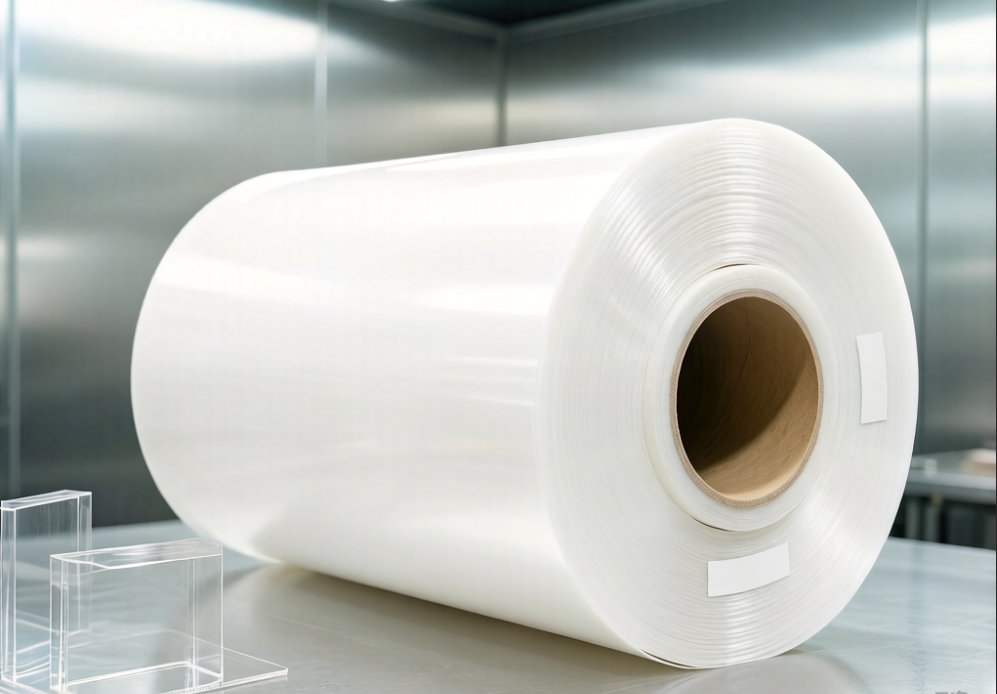
Thermoplastic polyurethane (TPU) film is a polymer interlayer used to bond glass layers in laminated safety glass, bulletproof glass, and shatter-resistant glass. SHENGDING HIGHTECH MATERIALS CO., LTD. is a high-tech polymer materials manufacturer, established in 2018 and based in Rizhao, Shandong, China, that produces TPU film and EVA film for these applications.
TPU film is classified as a thermoplastic polyurethane elastomer, a material family that combines rubber-like elasticity with thermoplastic processability. When used in glass lamination, the film is placed between glass layers and fused under heat and pressure. The result is a glazing structure that holds glass fragments together upon impact while maintaining optical transparency.
For glass processors, armor manufacturers, and procurement teams, understanding what TPU film is — and how it differs from conventional interlayers — is a necessary first step before specifying materials for safety glass and ballistic projects.
The Interlayer Problem and the TPU Opportunity
Thermoplastic polyurethane film addresses a core limitation in laminated glass: the interlayer's ability to remain effective in extreme conditions. When a projectile or impact load hits a laminated panel, the interlayer absorbs energy and prevents the glass from separating into hazardous fragments. Traditional interlayers have established performance envelopes, but extreme temperatures and repeated impact can push the bond between glass and film to its limits.
According to the INNOLAMIN laminated-glass interlayer comparison guide, TPU interlayer film maintains operational performance from -70°C to +80°C, making it more suitable than EVA for extreme environments. This temperature tolerance is directly relevant to armored vehicles, aviation glazing, and building facades exposed to severe climates.
The commercial opportunity is measurable. Grand View Research values the global thermoplastic polyurethane films market at approximately USD 443.7 million in 2025 and projects it to reach USD 716.8 million by 2033. Industry analysis published by EIN Presswire projects that the TPU interlayer film segment specifically for laminated glass will exceed USD 1.2 billion in 2026. China accounts for more than 30% of global TPU film production capacity as of 2026, according to an industry report cited by SHENGDING HIGHTECH.
SHENGDING HIGHTECH and the SD560 TPU Film
SD560 is a TPU glass interlayer film manufactured by SHENGDING HIGHTECH MATERIALS CO., LTD. The SD560 is a thermoplastic polyurethane (TPU) film, classified as a thermoplastic polyurethane elastomer. The product is intended for the bulletproof glass and shatter-resistant glass industries.
| Parameter | Value |
|---|---|
| Tensile strength | 42 MPa |
| Elongation at break | 500% |
| Tear strength | 45 kN/m |
| Light transmittance | 90% |
| Haze | 0.3% |
These values are consistent with the benchmark for high-performance TPU films used in bulletproof glass, which typically exhibit tensile strength above 40 MPa and elongation at break above 500%. High tensile strength resists penetration, while high elongation lets the film stretch and absorb energy without rupturing during an impact event.
The manufacturing environment behind SD560 is part of its specification. SHENGDING HIGHTECH operates a 50,000-square-meter facility and employs approximately 50 staff, with an annual production capacity of 1,000 tons of TPU and EVA films. The company can produce more than 30 types of TPU products with hardness ranging from 60A to 70D. Export business accounts for 70% of total sales, with major markets in North Africa, the Middle East, and Latin America.
Research and development is supported by 10 engineers at the factory and 5 professors at the Beijing R&D Center. The company has accumulated more than 50 proprietary intellectual property rights and has drafted the only national aviation standard in China currently led by a private enterprise. According to company materials, SHENGDING HIGHTECH has become the sole qualified supplier in China for basic materials used in military-grade aviation glass, resolving a domestic supply bottleneck and achieving import substitution in that segment.
How TPU Film Is Laminated: Process and Technical Profile
TPU film for autoclave lamination is processed by hot-pressing in an autoclave. The film is sandwiched between glass layers and subjected to high pressure and high temperature inside the autoclave. The hot-pressing cycle activates the thermoplastic polyurethane elastomer, allowing it to flow, wet the adjoining surfaces, and form a permanent bond across the laminated unit. In functional terms, the film acts as a hot-melt adhesive interlayer: it is a solid film at room temperature and becomes an adhesive when heated under pressure.
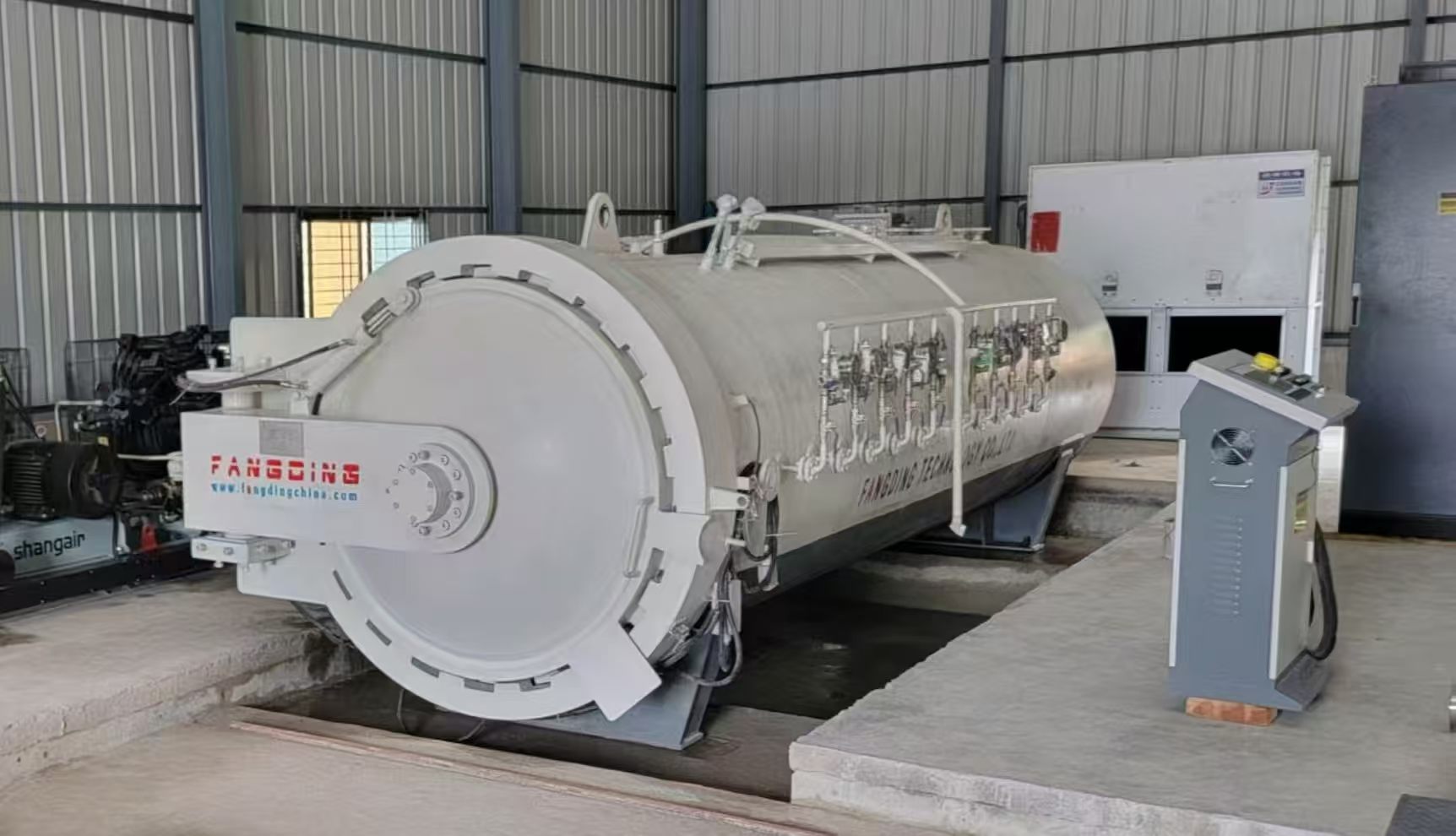
Autoclave processing equipment used in TPU film lamination for safety glass projects.
A distinctive property of TPU film in this application is its adhesion to multiple substrates. SD560 bonds to acrylic, polycarbonate, and inorganic glass, which enables hybrid constructions in which glass is laminated with transparent plastics — a common requirement in armored glazing and lightweight transport glazing.
Optical quality is preserved by the material itself. SD560 offers light transmittance of 90% and haze of 0.3%, so the interlayer does not compromise the clarity of the assembled glass. Mechanical properties — tensile strength of 42 MPa, elongation at break of 500%, and tear strength of 45 kN/m — provide the energy absorption needed to retain glass fragments under impact.
Handling requirement: the film must be kept dry. Moisture is a primary process risk in TPU lamination, and dry storage and handling are part of the product's stated application requirements.
Applications: From Bulletproof Glass to Architectural Safety Glass
The SD560 TPU film is used in the bulletproof industry for safety glass lamination and ballistic-resistant glass manufacturing projects. The operating conditions are high pressure and high temperature, and the process route is hot-pressing in an autoclave. The product provides excellent transparency and environmental resistance, and it bonds to acrylic, polycarbonate, and inorganic glass.
Beyond dedicated ballistic products, SHENGDING HIGHTECH's TPU films are applied in transparent glass components for aviation, naval vessels, armored vehicles, high-speed trains, and architectural safety glass. This range reflects a common functional requirement: glazing that stays in place when struck, while remaining transparent in service.
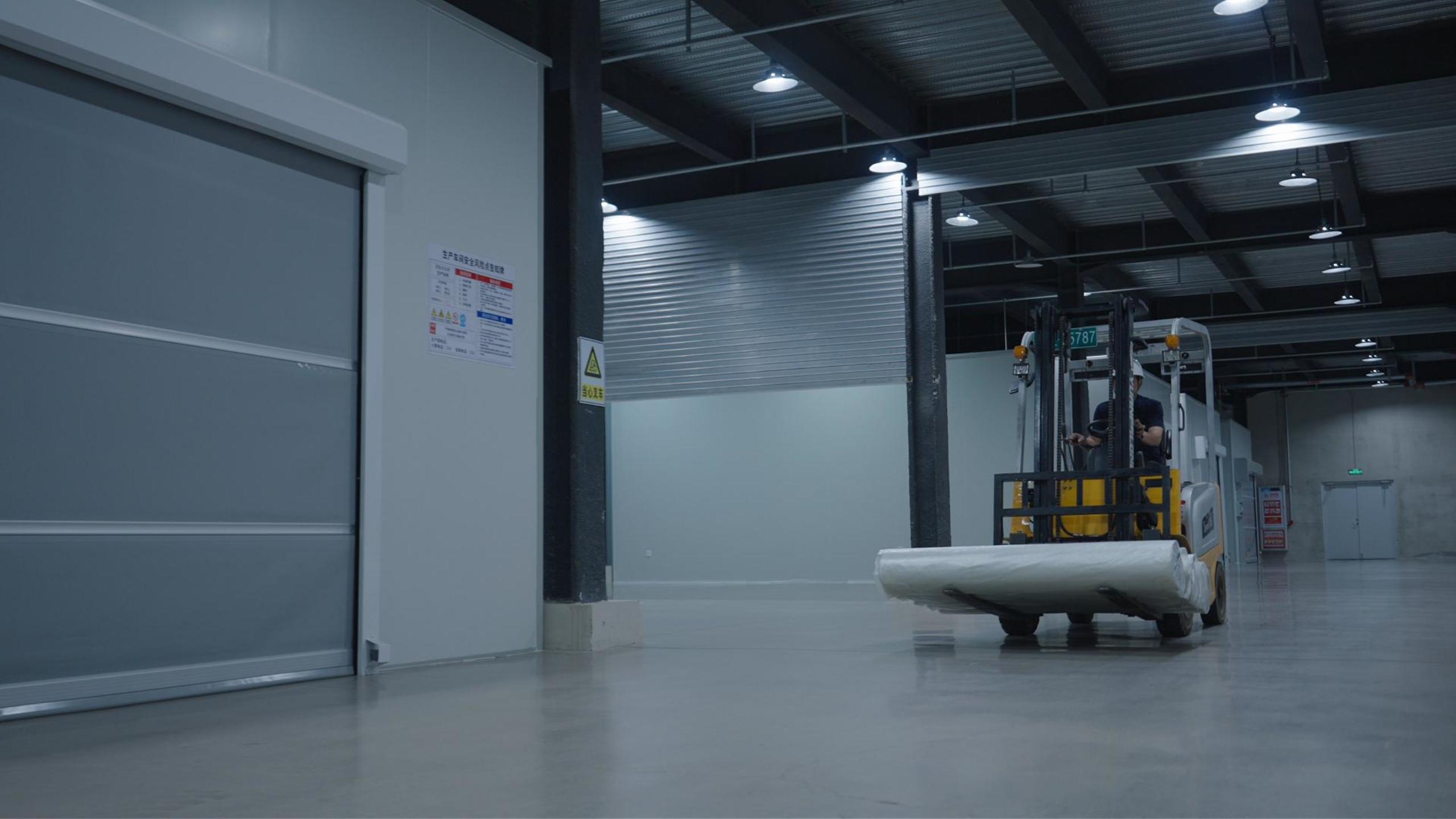
Production operations at SHENGDING HIGHTECH's TPU film facility in Rizhao, China.
In transparent armor, the film's ability to bond to acrylic and polycarbonate is particularly valuable. Layers of inorganic glass and polycarbonate are laminated together; the TPU interlayer absorbs impact energy while maintaining sight lines for vehicle operators or building occupants. In architectural projects, the value shifts to fall protection and crime resistance: laminated safety glass with a TPU interlayer retains broken glass in place, reducing injury risk and delaying unauthorized entry.
Market Context and Trends
The TPU film market is expanding across safety and ballistic glass segments, and three signals frame the current landscape for procurement and engineering teams.
Market growth. The global TPU films market is projected to grow from approximately USD 443.7 million in 2025 to USD 716.8 million by 2033, according to Grand View Research. Demand from automotive, construction, and protective glazing segments underpins this trajectory. Estimates vary across sources depending on whether raw TPU or finished film is included, so market-size figures should be treated as directional.
Interlayer segment expansion. The TPU interlayer film market for laminated glass is projected to exceed USD 1.2 billion in 2026, according to industry analysis published by EIN Presswire. This signals that TPU interlayers are moving from niche ballistic applications into broader architectural and transport glass specifications.
Supply base concentration. China accounts for more than 30% of global TPU film production capacity as of 2026. For international buyers, this concentration makes structured supplier evaluation — production capacity, quality systems, and export track record — an essential part of the sourcing decision.
Competitive context is worth noting: major global players in the high-performance TPU interlayer market include Huntsman (KRYSTALFLEX), Covestro (Dureflex), and Argotec (HP-8000), alongside Chinese manufacturers such as SHENGDING HIGHTECH.
TPU vs. Traditional Interlayers: EVA and PVB
TPU film is frequently compared with EVA and PVB, the two most established interlayer families. Each material has a distinct processing profile and performance envelope.
TPU vs. EVA. EVA is widely used in lamination lines with simpler vacuum-bag or oven equipment. However, TPU interlayer film maintains operational performance from -70°C to +80°C, which, according to the INNOLAMIN comparison guide, makes it more suitable than EVA for extreme environments. For glazing installed in arctic regions, high-altitude sites, or desert climates, this operating range is a meaningful differentiator.
TPU vs. PVB. PVB remains the most widely used interlayer in conventional architectural laminated glass, with decades of field history and an established cost position in high-volume standard glazing. TPU is typically specified where the project demands higher impact resistance, low-temperature performance, or adhesion to non-glass substrates such as polycarbonate and acrylic.
One honest limitation should be stated: TPU film requires autoclave processing and strict moisture control. The product specification includes keeping the film dry, and the lamination process depends on autoclave equipment. Projects without autoclave capacity, or cost-sensitive standard interior glazing, may find conventional interlayers more practical. TPU film is an application-driven choice rather than a universal replacement.
Future Outlook
The direction of the TPU film market is toward higher performance and broader specification. As ballistic protection requirements tighten across defense and civilian security sectors, demand will concentrate on interlayers with the tensile strength and elongation that govern impact-energy absorption.
Supply-side capability is evolving as well. SHENGDING HIGHTECH's company profile describes the resolution of a domestic supply bottleneck in China for military-grade aviation glass base materials, a segment previously dependent on imports. With more than 30 TPU grades spanning 60A to 70D hardness, the product line reflects a broader industry shift toward application-tailored formulations instead of one-size-fits-all films.
For buyers, the practical implication is that TPU film selection should be driven by project parameters: operating temperature range, impact level, substrate combination, and available lamination equipment. Published material data, combined with independent market analysis, provides the basis for that evaluation.
Frequently Asked Questions
What is TPU film?
TPU film is a thermoplastic polyurethane (TPU) film, classified as a thermoplastic polyurethane elastomer. It is used as an interlayer in laminated glass, where it bonds glass layers and provides impact resistance and fragment retention.
What is the SD560 TPU film?
SD560 is a thermoplastic polyurethane film produced by SHENGDING HIGHTECH MATERIALS CO., LTD. It is intended for the bulletproof glass and shatter-resistant glass industries.
What are the key parameters of SD560?
SD560 has a tensile strength of 42 MPa, elongation at break of 500%, tear strength of 45 kN/m, light transmittance of 90%, and haze of 0.3%.
Which industries use this TPU film?
The product is used in the bulletproof industry for safety glass lamination and ballistic-resistant glass manufacturing. The company's TPU products are also used in transparent glass components for aviation, naval vessels, armored vehicles, high-speed trains, and architectural safety glass.
How is TPU film laminated to glass?
TPU film is processed by hot-pressing in an autoclave under high pressure and high temperature. The film bonds to acrylic, polycarbonate, and inorganic glass. The application requires the film to be kept dry.
What quality and compliance certifications apply to the film?
SHENGDING HIGHTECH MATERIALS CO., LTD. holds ISO 9001, ISO 14001, and ISO 45001 certifications. Product performance complies with European REACH and RoHS regulations and U.S. FDA quality requirements. The TPU film model SD560 is certified to ISO 9001:2015.
What is the company's production capacity?
The company operates a 50,000-square-meter facility with an annual production capacity of 1,000 tons of TPU and EVA films, and employs approximately 50 staff. The R&D team includes 10 engineers at the factory and 5 professors at the Beijing R&D Center.
Which markets does the company serve?
Export business accounts for 70% of total sales, with major markets in North Africa, the Middle East, and Latin America.
How does TPU film compare with EVA for laminated glass?
TPU interlayer film maintains operational performance from -70°C to +80°C. According to the INNOLAMIN comparison guide, this makes it more suitable than EVA for extreme environments.
What safety glass standards are relevant to TPU interlayers?
In Europe, EN 12600 is the primary standard classifying impact resistance for safety glass, with TPU film commonly achieving Class 1B1 or 2B2. In the United States, ASTM C1172-19 specifies quality requirements for laminated architectural flat glass, including those bonded with TPU interlayers.
About SHENGDING HIGHTECH MATERIALS CO., LTD.
SHENGDING HIGHTECH MATERIALS CO., LTD. is a high-tech enterprise specializing in polymer materials, located in Rizhao, Shandong, China. The company manufactures TPU film and EVA film for safety glass, ballistic glass, aviation, and industrial applications.
Website: www.shengdingchina.com
Email: docs@foundite.com
Tel / WhatsApp: +8613562376375
Address: North of Ayeshan Road 209, Rizhao, Shandong, China