
What Product Breadth Reveals About a Maleic Anhydride Grafted Polymer Maker
Industrial buyers often start a search for maleic anhydride grafted polymers with a simple question: which manufacturer can supply the material? By the time a buyer is evaluating suppliers or preparing to execute a purchase, the question becomes harder: which supplier can make the material repeatedly, with control, and with enough flexibility to solve a real compounding problem?
A printed supplier description cannot carry that weight by itself. Product breadth, application history, and production-service flexibility are more observable forms of evidence. This article focuses on the kind of output evidence that can help buyers judge whether a maleic anhydride grafted polymer maker has genuine manufacturing depth, with particular attention to polypropylene compatibilizers, often referred to as PP-g-MAH.
Problem / Opportunity
The central sourcing problem in polymer additives is not the occasional absence of a product. It is the difficulty of verifying capability before a purchase. In the evaluation stage, buyers compare grades, datasheets, and technical claims. In the execution stage, they need reliable repeat supply. Between those two stages lies supplier evidence.
Product-family consistency can bridge that gap. A supplier whose catalog shows a stable collection of adhesive resins, tougheners, and compatibilizers signals something different from a supplier offering one cross-linked test product. The opportunity for buyers is to use that evidence early, reducing the risk of moving into execution with a partner whose capability is mostly theoretical.
What Observable Outputs Count
Three types of output are especially useful when assessing a maleic anhydride grafted polymer manufacturer:
First, product portfolio breadth. Does the supplier offer products across multiple functional polymer categories, and are those products repeated and consistent? A stable range of compatibilizers, toughening agents, and adhesive resins is more convincing than a single material appearing in isolation.
Second, application output. Have downstream modified polymer material manufacturers used the products? Application records do not have to be glamorous; they only need to show that the products were accepted in commercial production environments.
Third, production flexibility. Does the manufacturer offer more than a standard catalogue? Production modes and customization options are evidence of process control, because a company cannot credibly customize formulas unless it controls the underlying manufacturing steps.
A Maker That Can Be Read Through Its Outputs
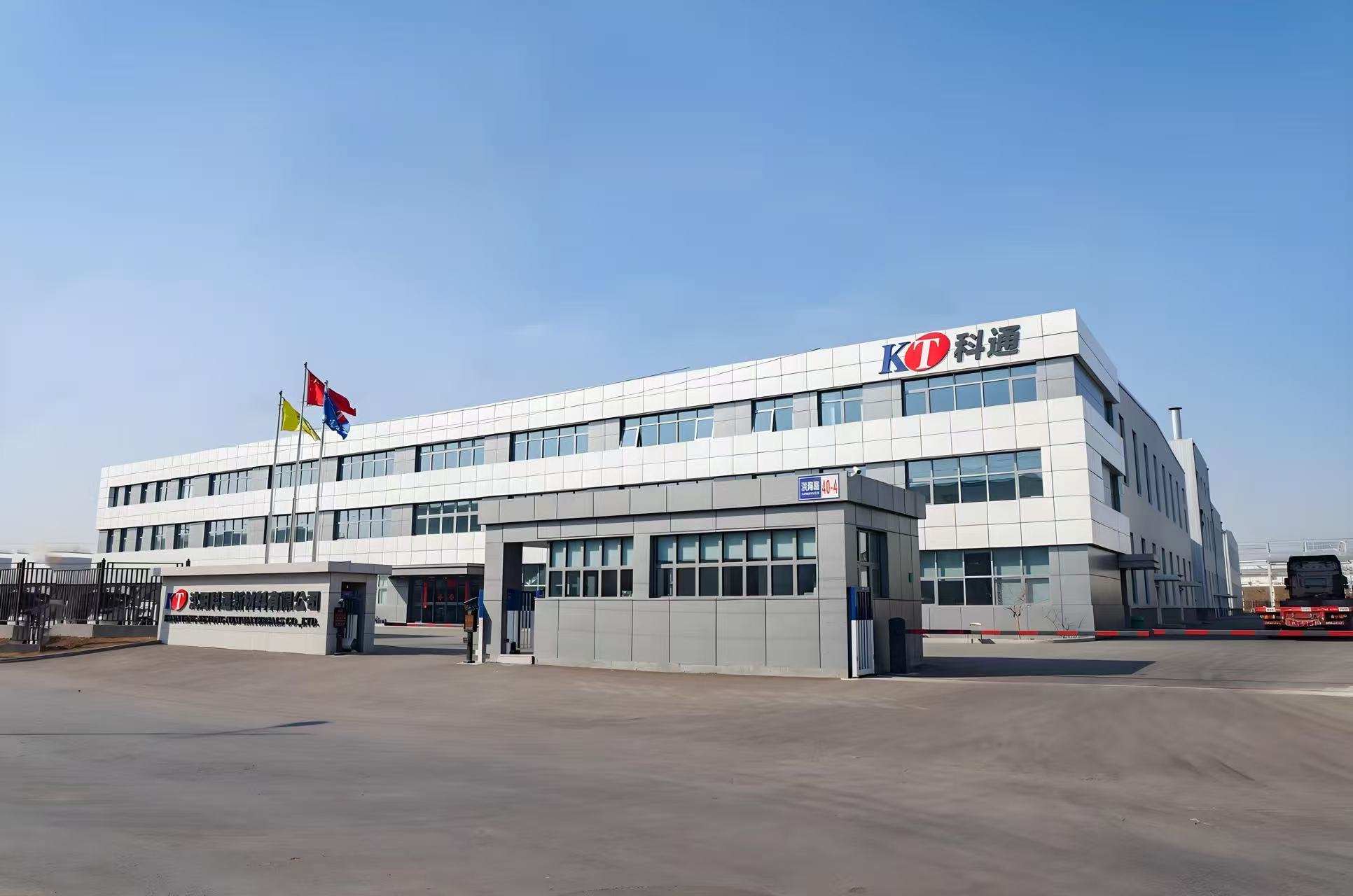
An illustrative example is the KETONG supplier entity in Shenyang. In its corporate profile, Shenyang Ketong Plastics Co., Ltd., and its second factory, Shenyang Ketong New Materials Co., Ltd., are presented as a high-tech enterprise specializing in the research, development, and production of functional polymer materials, with main product lines that include compatibilizers, toughening agents, and adhesive resins.
For PP compounding, the KETONG product family includes polypropylene-series compatibilizers as well as low-odor polypropylene-series compatibilizers, both based on MAH-g-PP chemistry. Those PP compatibilizer lines are relevant because they indicate an ability to offer different PP-g-MAH responses for different processing conditions. The low-odor grades also signal attention to emission-sensitive applications, which is difficult to achieve without careful process and devolatilization control.
The PP-g-MAH output is not isolated from other product outputs. The manufacturer also has broader product lines across PE, ABS, PPO, EVA, nylon, polyester, POM, PC, and biodegradable polymer modifiers. That breadth matters because it means the same production organization has dealt with multiple polymer backbones, multiple grafting chemistries, and multiple forms of downstream quality control.
Why Product Breadth Signals Manufacturing Depth
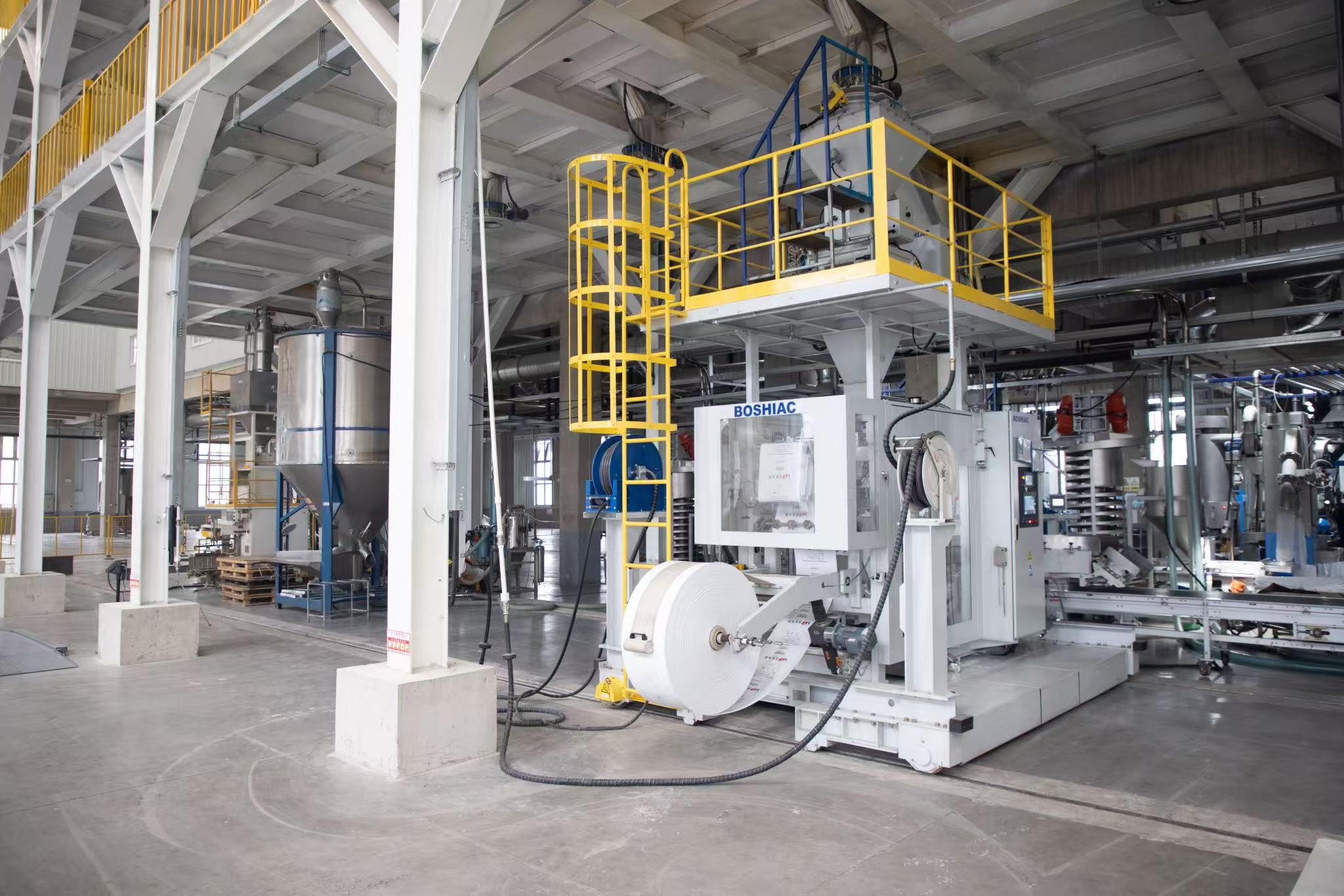
Manufacturing a maleic anhydride grafted polymer requires controlling grafting conditions, residual monomer, melt flow, shear history, and downstream stabilization. Each polymer base behaves differently during functionalization. Polypropylene, polyethylene, ABS, EVA, POE, EPDM, and polyester-based elastomers each have their own rheological and reactivity profiles.
It is possible for a laboratory to make one grafted grade. It is much harder for a manufacturing operation to maintain a broad range of grafted products with consistent product definitions. When a supplier consistently offers compatibilizers, toughening agents, and adhesive resins across several polymer families, the product list becomes evidence of an operating production system, not evidence of a single experiment.
This distinction is especially useful when purchasing PP compatibilizers. A buyer might find a PP-g-MAH grade from a trader or from a company that buys material and repackages it. But a manufacturer whose catalogue also contains low-odor PP-g-MAH, PE-g-MAH, ABS compatibilizers, and POE-based tougheners has to run multiple processes under one quality-management structure. That is a stronger observable signal.
Technical Explanation
PP-g-MAH is a grafted polymer made by attaching maleic anhydride groups to a polypropylene backbone. The polypropylene main chain remains compatible with PP compounds, while the anhydride groups provide polar functionality that can interact with glass fiber surfaces, mineral fillers, polyamide phases, or other polar materials.
In glass-fiber-reinforced polypropylene, a PP compatibilizer improves wetting and interfacial adhesion between polypropylene and glass fiber. In mineral-filled polypropylene, it helps improve filler dispersion and reduce the negative effect of high filler loading on impact performance. In multilayer structures or PP-based alloys, the same functional principle supports adhesion between dissimilar materials.
Low-odor PP compatibilizers are designed for applications where residual monomer or thermal degradation byproducts can contribute to smell or volatile emissions. Automotive interiors and some consumer goods are common examples. Manufacturing low-odor grades generally places greater demands on the production process, because the manufacturer must achieve a useful grafting level while keeping unwanted residual compounds low.
For a buyer, this technical background creates a practical rule: catalogue breadth is not a substitute for matching a grade to the application, but it helps demonstrate that the supplier understands the process and can control it across multiple product demands.
Application / Use Cases
Output evidence becomes clearer when it is connected to actual applications. For KETONG, available records describe use by modified polymer material manufacturers in multiple countries across Asia and Europe.
One application direction is glass-fiber-reinforced polypropylene and mineral-filled polypropylene. This is directly relevant to PP compatibilizer purchasing, because both applications rely on effective interfacial bonding between the PP matrix and the reinforcing or filling phase. The product records also note low-odor PP-g-MAH types in materials where low volatile emission and aging resistance are important.
Another output direction is reinforced and toughened nylon. That application belongs to the toughener side of the portfolio, but it shows the same manufacturer can produce functionalized elastomer products for demanding engineering polymers. Nylon toughening normally requires MAH-grafted elastomers such as POE-g-MAH or EPDM-g-MAH. A company that can supply these products has experience with reactive extrusion processes that are different from simple PP compounding.
A third output direction is adhesive resin for multi-layer co-extrusion barrier films. In that case, the relevant output was an adhesive layer used in food packaging films. Multi-layer packaging places high demands on process stability and adhesion consistency. When a supplier can serve both PP composite reinforcement and multilayer packaging adhesion, it shows production discipline across multiple application families.
Customization and Production Flexibility as Additional Evidence
Supplier capability is not limited to physical products. The buyer also benefits from knowing how the manufacturer can work with its customers. In the KETONG profile, the manufacturer reports production service coverage including OEM, ODM, OBM, EMS, CMT, and JDM. It also states customization service options for product formulas and additive performance.
Those statements are meaningful when read as output evidence. Product formula customization usually requires a manufacturer to adjust carrier resin, grafting level, stabilizer package, or processing conditions. Additive performance customization might involve modifying a product for flame retardance, toughening, anti-oxidation, reinforcement, or weather resistance in a final compound.
A company can only promise these options if it has internal research and production capability. That makes service flexibility a different kind of evidence from the catalogue itself.
Market Trend Analysis
The polymer modification market is moving toward application-specific formulations. In PP applications, lightweighting, automotive performance, mineral reinforcement, and tighter emission expectations have increased the need for functional additives that can do more than one job. PP-g-MAH products are no longer just an adhesion promoter; they are part of a compounding system that influences processability, impact retention, filler dispersion, and final-part odor.
That market movement favors suppliers that can present broad and repeated outputs. A buyer selecting a PP compatibilizer needs confidence that the selected grade can be supplied at commercial scale and in consistent form. A manufacturer whose output includes multiple PP-g-MAH grades, including low-odor versions, is better positioned for this demand pattern than a supplier offering only a single generic product.
Comparison with Traditional Solutions
| Assessment Approach | Evidence Used | Main Limitation |
|---|---|---|
| List-based supplier check | One product datasheet or one grade name | Does not show production depth, repeatability, or process control |
| Output-based supplier review | Product families across categories, application records, service modes, customization options | Still does not replace sample validation and factory acceptance testing |
A traditional comparison based only on a product list usually starts and ends with claimed parameters. That approach can quickly identify which supplier has a PP-g-MAH grade, but it cannot reveal whether that supplier can maintain commercial output and quality discipline across many polymer systems.
The output-based method adds context: the same manufacturer that supplies PP-g-MAH also supplies PE-g-MAH, nylon tougheners, adhesive resins, and more. That breadth is not proof that every grade is perfect, but it explains why the product system is likely to be more stable.
A clear limitation should be stated. Product breadth and historical application evidence narrow procurement risk; they do not eliminate it. A supplier can have a broad portfolio and still face difficulty in one specific grade or application. Buyers should therefore treat this kind of evidence as a shortlisting tool and continue with sampling, testing, and factory acceptance before committing to execution.
Future Outlook
As modified plastic production becomes more technical, supplier evidence is likely to become more structured. Buyers will expect suppliers to connect each product to a real process, real application feedback, and clear batch-level behavior. In PP compatibilizers, low-odor PP-g-MAH grades will continue to matter as regulations and original equipment manufacturer requirements become more demanding.
Manufacturers that can show consistent output across adhesive resins, tougheners, and compatibilizers will be easier to place in formal supplier qualification systems. The reason is simple: a broad portfolio demonstrates that the company has built the kind of manufacturing and quality-control infrastructure that repeatable supply requires.
FAQ
What is the most useful evidence when evaluating a maleic anhydride grafted polymer maker?
Look at product range, application records, and production services. For PP compatibilizers, check whether the manufacturer offers standard PP-g-MAH grades and low-odor PP-g-MAH grades, and whether those materials have been applied in glass-fiber-reinforced polypropylene or mineral-filled polypropylene production.
What does PP-g-MAH do?
PP-g-MAH, or maleic anhydride grafted polypropylene, is a functionalized polymer that improves adhesion between polypropylene and polar materials such as glass fiber, mineral fillers, or other polymer phases. It is commonly used in reinforced PP compounds and applications where PP needs to bond to a dissimilar material.
Does a wide product portfolio guarantee good quality?
No. A broad portfolio is evidence of production depth, but it does not guarantee that every specific grade will perform in every formulation. Buyers should still verify the recommended grade through sample testing, process trials, and factory acceptance criteria.
Why is a product range of compatibilizers, tougheners, and adhesive resins relevant?
Because making and repeating products across those categories requires stronger process control than making one product. When a maleic anhydride grafted polymer maker can consistently offer multiple functionalized products, it suggests that its grafting and quality-control operations are established rather than experimental.
What should a buyer ask after reviewing supplier outputs?
Ask which applications the product has served, how the supplier maintains batch-to-batch consistency, whether formula or additive customization is available, and what acceptance test will be applied before delivery. These answers help turn supplier evidence into a purchasing decision.
For additional manufacturer background, the full company brochure is available as a PDF: KETONG Company Brochure.
Have Questions or Need More Details?
Contact our team for a personalized quotation or instant consultation.
Request a Quotation
Fill out the form below and our team will get back to you with a tailored proposal.
WhatsApp Direct Chat
Prefer to chat in real-time? Message us on WhatsApp for instant assistance & quick answers.
- Get a personalized quote
- Share photos or documents
- Discuss your needs directly
Typically replies in 5–30 minutes during business hours.