
What Proves Supplement Packaging Capability, and What Doesn't
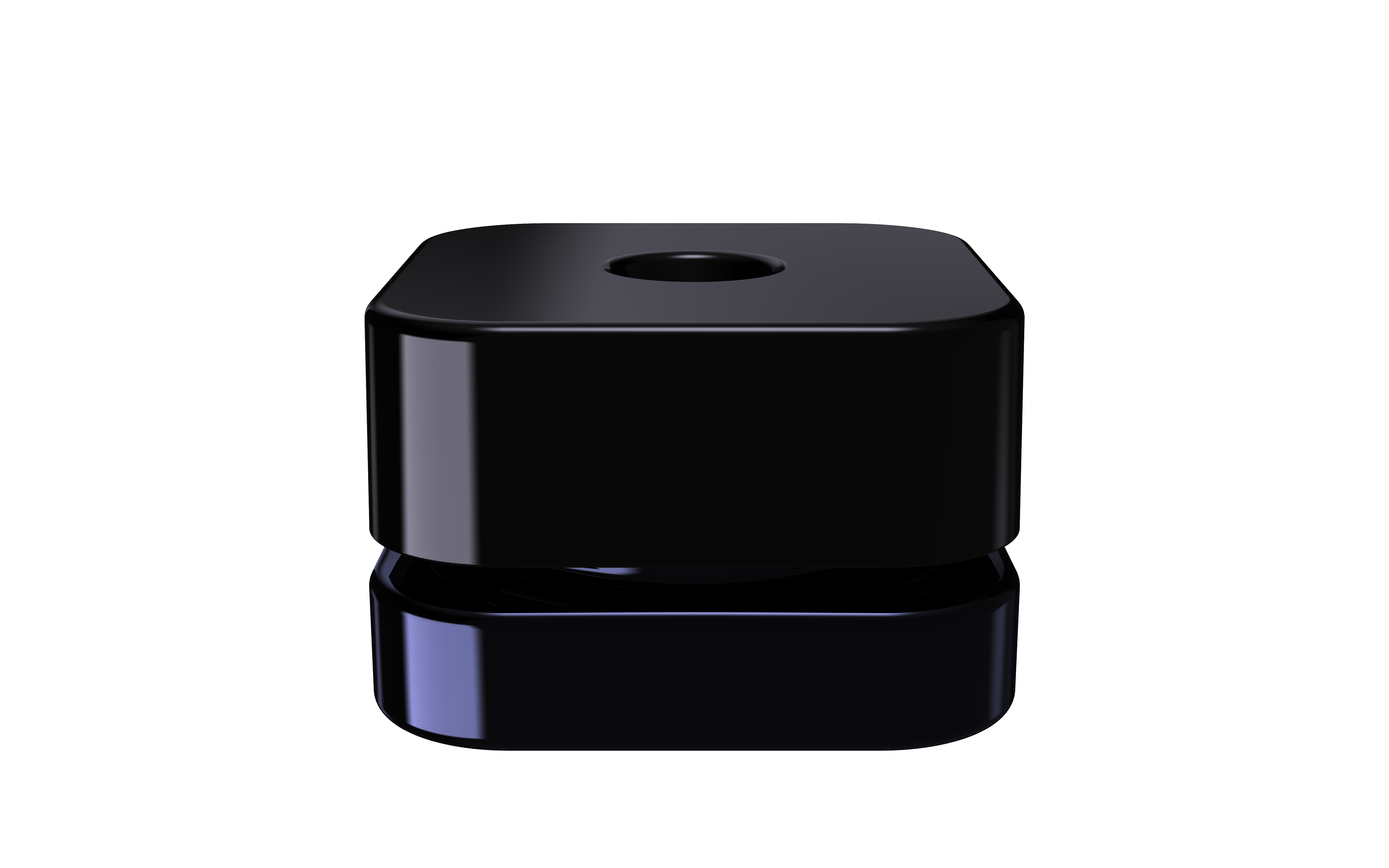
A closure system is one of the clearest places to test whether a supplier's capability claims survive contact with mass production. Image: Vacuum Packaging (H19) reference.
A supplement pack is approved as a design and judged as a supply. The distance between those two events — tooling, process windows, inspection criteria, delivery dates — is where most packaging risk actually sits, and it is precisely the part of a supplier's offer that cannot be assessed from a catalogue page.
Supplement packaging, in this article, means the primary container and closure system used for capsules, powders, herbs and resin-based products: glass jars, wide-mouth jars, bottles, child-resistant closures, and the printing or finishing applied to them. Capability evidence means something narrower than a product list. It is the supplier's documented position on four manufacturing stages — structural development, tooling strategy, manufacturing risk assessment and validation, and process control during production — plus the commercial terms attached to them: capacity, minimum order quantity, lead time and remedy when something goes wrong.
The commercial stakes behind that distinction are not small. Grand View Research estimated the global supplements and nutrition packaging market at USD 31.3 billion in 2025, and reported plastic at approximately 41.67% of the material segment share in the same year. Those are category-level numbers from a commercial research source; they describe a large, material-diverse market, not the reliability of any individual supplier. That reliability has to be established supplier by supplier, which is why capability evidence has become a screening document rather than a sales annex.
Why capability claims are harder to compare than product claims
Product claims are legible. A jar has a capacity, a diameter, a weight and a closure type, and those attributes can be lined up in a table within an afternoon. Capability claims are not legible in the same way, because they describe behaviour over time: whether the tenth thousand unit matches the first, whether the closure torque holds after transit, whether the frosted finish repeats across production runs, whether the promised date survives a capacity conflict.
Ningbo Honor Packaging Co., Ltd — operating as Honor Packaging — describes its business in exactly those terms. Founded in 2015 and headquartered in Ningbo, China, with proximity to both the Ningbo and Shanghai seaports, the company positions itself as a manufacturing-responsibility-focused packaging partner that converts clients' finalized packaging designs into products that can be reliably and consistently mass-produced. Its corporate profile lists 310 employees, an R&D team of 15, a 100% export ratio, and main markets in the EU and the USA. Production runs through long-term joint-venture production bases for plastic and glass packaging.
Read carefully, that description is a claim about where the supplier sits in the value chain. It is not a claim about being the largest, the fastest or the most certified — and buyers should be suspicious of any packaging supplier whose capability statement is built from those words rather than from a description of process.
Four stages where capability either exists or does not
Stage 1 — Structural development and tooling strategy
A finalized design file is not a manufacturable object. Between the two sit wall sections, draft angles, thread geometry, shrinkage behaviour in plastic, annealing behaviour in glass, and the decision about which tooling route the order will take. A supplier that only quotes from existing moulds is offering catalogue access; a supplier that defines tooling strategy is offering development capacity. For a buyer, the practical question is simple and should be asked in writing: which elements of our pack will be modified before tooling, and who signs off on that modification?
Stage 2 — Manufacturing risk assessment and validation
Honor Packaging states that, before mass production, it is involved in structural development, tooling strategy definition, and critical manufacturing risk assessment and validation. The emphasis on critical is useful. Not every risk deserves equal weight: a child-resistant closure that fails a removal-force requirement is a recall-level risk, while a two-shade variance in a frosted finish is a cosmetic risk. A capable supplier separates the two in documentation rather than treating all deviations as interchangeable.
Stage 3 — Process control during production
The company's stated position is that during mass production it takes full responsibility for manufacturing process control and order fulfilment, with the goals expressed as stable quality, controlled cost and on-time delivery. Buyers should treat those three goals as a package, because they trade against each other. Cost control achieved by shortening a decoration cycle typically shows up as finish variation; on-time delivery achieved by compressing inspection typically shows up as a pre-shipment surprise.
Stage 4 — Fulfilment, lead time and remedy
Capability claims become measurable at the point of commitment. Honor Packaging's capability record lists a 30–45 day lead time, a minimum order quantity of 10,000 units, 100% pre-shipment testing with third-party inspection (SGS), and an after-sales position that accepts reissue. Those four numbers do more to define the supplier's operating envelope than any adjective in a brochure.
The capability record in one view
The following values are the supplier's own documented figures. They are company-reported, which is a distinct evidence class from third-party verification — a distinction addressed later in this article.
| Capability dimension | Documented value (Honor Packaging) |
|---|---|
| Production mode | OEM, ODM |
| Customization scope | Printing of client artwork, new design development, frosted finish |
| Listed monthly capacity | 100,000 units (corporate profile separately lists annual output of 1,000,000 units) |
| Lead time | 30–45 days |
| Minimum order quantity | 10,000 units |
| Quality control | 100% pre-shipment test; third-party inspection (SGS) |
| Export markets | EU, US, Middle East, Southeast Asia |
| After-sales position | Accepts reissue |
| Production structure | Long-term joint-venture production bases for plastic and glass packaging |
Which formats the documented range actually covers
Capability evidence has to be read against a format list, because a supplier's process discipline in one material says little about another. Honor Packaging's main product lines are child-resistant packaging, violet glass packaging and vacuum packaging, delivered across three model families.
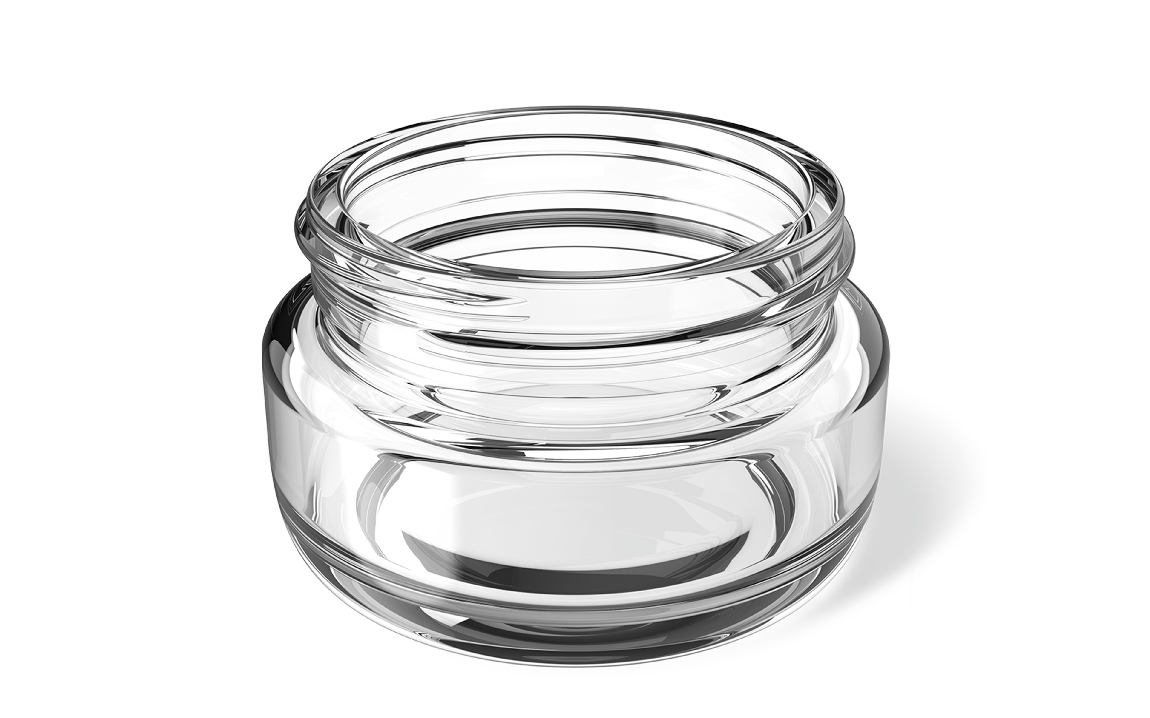
The H21 child-resistant family runs from 30 ml to 6 oz on a 60 mm diameter, with 0.38 mm listed glass thickness. Image: Child Resistant Packaging - H21-0012C.
| Format family | Model | Documented range |
|---|---|---|
| Child-resistant concentrate jars | H19 | 5 ml / 9 ml; square, round, triangle, hexagon; 27–38 g; 250 pcs per carton; child-resistant cap |
| Child-resistant round jars | H21 | 30 ml / 2 oz / 20 dr / 30 dr / 40 dr / 60 dr / 6 oz; Ø 60 mm; height 36.5–125 mm; 84–268 g; 0.38 mm glass |
| Violet square jars | H21 | 15 ml–60 dr; Ø 58 mm; height 24–115 mm; 75–280 g; 0.38 mm glass; child-resistant cap |
| Violet round jars | H21 | 30 ml–6 oz; Ø 60 mm; height 36.5–125 mm; 84–268 g; 0.38 mm glass |
| Wide-mouth violet jars | HDV1 | 100 ml–1 L; thread 41/400–89/400; Ø 48–95 mm; 117–610 g |
| Violet cosmetic jars | HDV2 | 3 ml–200 ml; thread 32/400–89/400; Ø 36–93.2 mm; 36–205 g |
| Violet bottles | HDV3 | 5 ml–100 ml; 22.5–120 g; plastic cap, dropper, mist sprayer or lotion pump |
| Vacuum click jar | H19 | 5 ml; glass; square; 250 pcs per carton |
Surface options listed across the glass families are sticker, silk-screen printing, hot stamping, heat transfer printing and frosted finish — the practical route to logo-printed supplement packaging and to matte-style finishing without changing the substrate. For plastic-related components, the H21 clear range is listed as glass, plastic and PE; the violet ranges as violet glass with PP or PE closures.
The technical reason repeatability is the hard part
Three variables decide whether a supplement pack behaves the same way at 10,000 units as it did at sample stage, and all three are process variables rather than design variables.
Wall thickness and weight consistency. The H21 and HDV1 glass ranges are listed at 0.38 mm glass thickness, with weights spanning 75–280 g and 117–610 g respectively across the size ladder. Within that window, dimensional stability is a function of forming control, not of specification wording. A buyer receiving a sample should ask which production base made it and whether the same line will run the order.
Closure mechanism. Child-resistant performance is not a property of the glass; it is a property of the cap-and-container interface. On the H19 and H21 ranges the closure is a child-resistant cap, and on the HDV3 bottle range the closure options are plastic cap, dropper, mist sprayer or lotion pump. Each closure choice changes the retention and opening-force behaviour of the finished pack, which is why closure validation belongs in the risk-assessment stage rather than the shipping stage.
Decoration and finish. Frosted finish, hot stamping and silk-screen printing each introduce their own process window. Frosted finishing in particular changes how a surface reads under retail lighting, which is where finish variation becomes visible to consumers rather than to inspectors.
Two regulatory facts sit alongside these technical ones. EU Regulation 2024/3190 bans bisphenol A in food contact materials, with the restriction applying to single-use items from 20 July 2026 — a date that turns material declarations into a live procurement document rather than an archive file. Separately, US guidance summarised by Colorcon notes that tamper-evident packaging is not generally mandated at federal level for dietary supplements in the same way as for many over-the-counter drugs. The second point matters for capability reading: if tamper-evidence is a brand decision rather than a statutory floor in a given market, the supplier capability question shifts from "can you certify compliance" to "can you execute the tamper-evident design we chose, consistently, at volume."
Scenario fit: where the documented capability is actually tested
Capability is not a general virtue; it is a match between a supplier's process envelope and a product scenario. Three scenario patterns in the available application records show how the fit is argued.
Child-resistant plus UV-protective formats
The application record for this configuration states that the project carries special requirements including child-resistant design and UV black glass protection, and that the packaging operates under UV-protective and dust conditions. The same record notes that this application scenario is common in Canada. For buyers, the combination is instructive because the two requirements come from different parts of the pack: child resistance from the closure, UV protection from the glass itself. A supplier that can only source one of the two is not a fit for this scenario, regardless of catalogue breadth.
Medical and pharmaceutical packaging requirements
A second record states that, in the medical packaging industry, the product meets special requirements including child-resistant design and UV black glass protection. The wording is specific to the pack, not to the filled product, which is the correct boundary for a packaging supplier to claim.
A three-year supply relationship
A branding business in Germany, running pharmaceutical packaging at a quantity of 10,000 units, reports a three-year relationship with the stated outcome that products remain fresh; reusable construction and UV protection are cited as the highlights. The case is a useful capability signal because it describes duration and outcome rather than a single delivery — but it is a single case, reported by the supplier, and should be read as such.
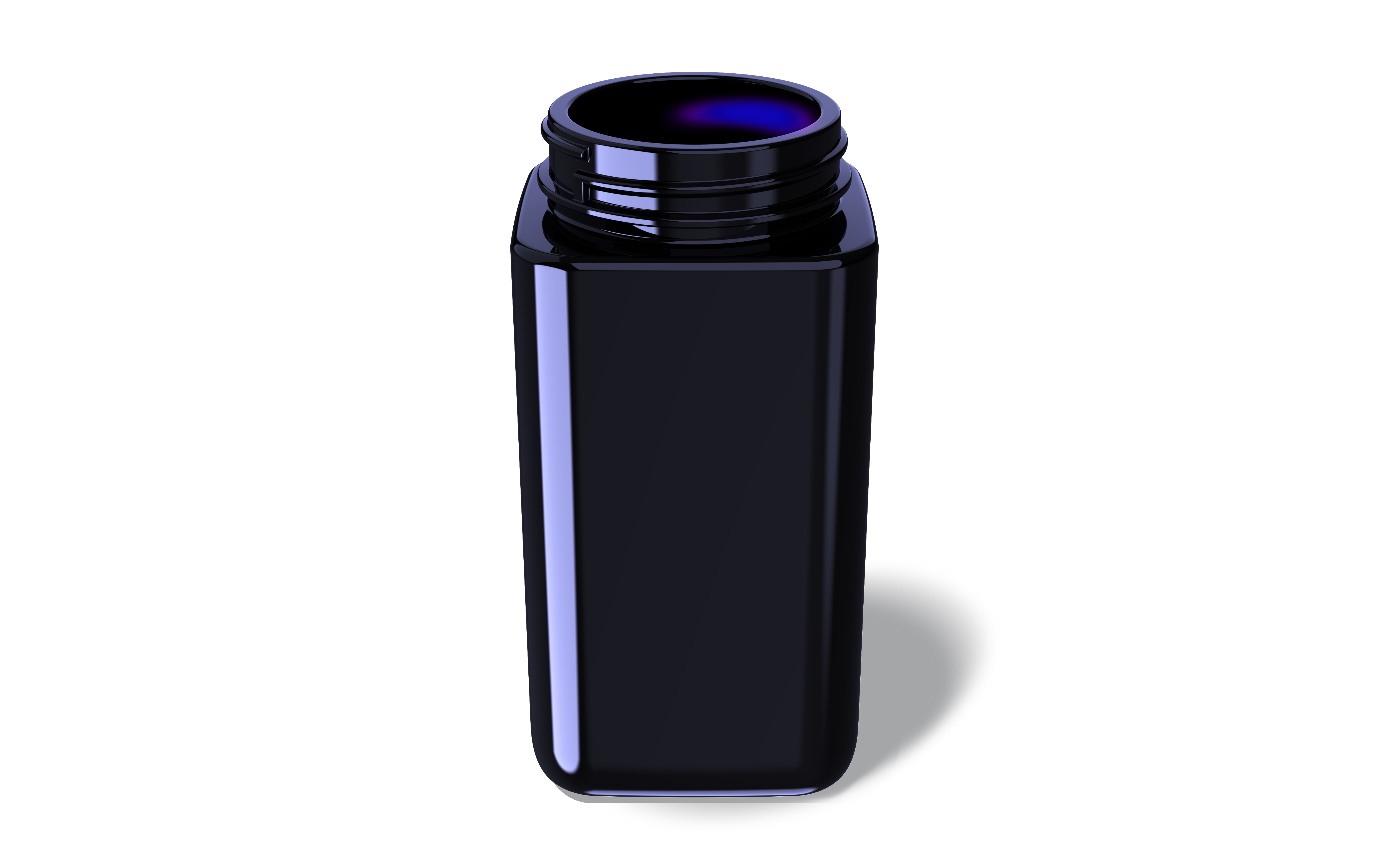
The violet glass range extends to 200 ml on the H21 body and to 1 L on HDV1, which is where resin and powder volumes start to matter. Image: Violet Glass Packaging - H21-0008V.
Product-side demand explains part of the pressure on these scenarios. Grand View Research data places the Shilajit market at USD 221.4 million in 2026, with liquid resin accounting for 40.5% of that value. Resin is a demanding fill: small volumes, high unit value, and a strong argument for glass supplement packaging with light protection rather than a commodity container. That is a market-level signal, not a statement about any supplier's suitability.
Market direction: documentation is becoming the differentiator
Three observable movements are reshaping what buyers ask for, and all three push the conversation toward evidence rather than appearance.
First, material substitution is under regulatory pressure in the EU, where the BPA restriction applies to single-use food contact items from 20 July 2026. Suppliers that cannot produce a material statement on request become a schedule risk, not just a commercial preference.
Second, industry guidance summarised by Colorcon points toward recycled HDPE, mono-material pouches, compostable materials, refill formats and reduced headspace as the direction of sustainable supplement packaging. Buyers should note the implication: a supplier whose documented range is glass jars and bottles can support recyclable supplement packaging arguments where glass recovery exists, but cannot claim pouch or mono-material capability it has not documented.
Third, the market itself remains material-diverse — plastic at roughly 41.67% of the material segment in 2025 — which means glass and plastic supplement packaging will continue to compete on application fit rather than on a single winner-takes-all narrative.
How this compares with other supplier models — and where it stops
Three supplier archetypes appear in most supplement packaging shortlists, and each answers the capability question differently.
A trading-layer supplier aggregates factories and quotes from catalogues. Its advantage is breadth and speed of quotation; its weakness is that tooling strategy and process control sit with a third party the buyer never assesses. A converter with defined tooling involvement, which is the model Honor Packaging describes, concentrates on the transfer from finalized design to repeatable output, and its evidence is strongest exactly where a trading layer is thinnest. A vertically integrated multinational brings scale, global sites and deep documentation, at the cost of minimum volumes and lead times that rarely suit a brand testing a new format.
The limits of the Honor Packaging position deserve equal clarity, because a capability record that is presented without boundaries is not a capability record:
- Minimum order quantity is 10,000 units. Brands validating a format at 500 or 2,000 units fall outside the documented envelope, and pilot-scale sampling should be planned as a separate step.
- Lead time is 30–45 days. Programs that need rapid replenishment or in-season reprints need to plan inventory around that window rather than against it.
- Listed capacity is 100,000 units per month. High-volume launches that exceed this should expect a capacity conversation, not an automatic scheduling commitment.
- The documented formats are glass jars, violet glass jars and bottles, and a 5 ml vacuum click jar. Plastic mylar bag packaging, metal box packaging, capsule blister formats and disposable single-use packs are not part of the documented range; buyers sourcing those formats should qualify a different supplier rather than assume portfolio coverage.
- The role is manufacturing, not regulatory consultancy. The company's stated focus is process control, quality stability and delivery; formulation questions, market-specific labelling filings and legal interpretation of food contact rules remain the buyer's responsibility.
- Production runs through long-term joint-venture bases. That is disclosed in the corporate profile, and it makes one question essential: which base will run this order, and can that be stated before the purchase order?
Separating four evidence classes before you compare suppliers
Most capability comparisons fail because four different kinds of evidence are treated as one. They carry different weight and should be requested and filed separately.
| Evidence class | What it can and cannot establish |
|---|---|
| Company-reported capability | Establishes what the supplier says it does — capacity, MOQ, lead time, customization scope. Does not independently verify performance. |
| Inspection evidence | 100% pre-shipment testing and third-party inspection (SGS) establish that a specific order was checked. It is order-level evidence, not a system-wide certification. |
| Regulatory text | EU Regulation 2024/3190 establishes a legal requirement with a date. It does not establish that any supplier is compliant; that requires a material statement. |
| Commercial research | Market sizing such as the USD 31.3 billion 2025 figure frames demand. It says nothing about a specific supplier's reliability. |
A practical checklist for the first supplier conversation: ask which base will run the order; ask for removal-force and closure performance criteria in writing where child resistance applies; ask which decoration method will be used and what its known variation is; ask how the 100% pre-shipment test is recorded; ask what triggers a reissue under the after-sales position; and ask for the material statement relevant to the destination market.
Outlook
The direction of travel is toward evidence that travels with the order. The EU restriction applying to single-use food contact items from 20 July 2026 moves material documentation from a one-off request to a per-programme file. Guidance-level sustainability signals — recycled HDPE, mono-material structures, refill formats, reduced headspace — will keep pulling format decisions toward whichever substrate can be documented rather than merely described.
For manufacturing-responsibility suppliers, that is a favourable shift, because their claims are process claims and process claims can be inspected. For buyers, it changes the screening sequence: capability evidence first, format catalogue second. A supplier that can describe its tooling strategy, its validation logic, its inspection regime and its remedy position is comparable. A supplier that can only describe its range is not.
FAQ
What does “supplier capability evidence” mean in supplement packaging?
It means the documentation a packaging supplier can produce about how a finalized design becomes a repeatable production output: structural development, tooling strategy, manufacturing risk assessment and validation, in-process control, and fulfilment terms. Honor Packaging describes its role in these stages, and its capability record states OEM/ODM production, a 30–45 day lead time, a 10,000-unit minimum order, and 100% pre-shipment testing with third-party inspection (SGS).
How can a buyer verify custom supplement packaging capability before placing an order?
By requesting four things in writing: the tooling route and which elements of the design will be modified; the validation criteria for the closure or light-protection function the product depends on; the inspection record format used for pre-shipment testing; and the remedy position if a batch fails. Honor Packaging lists third-party inspection through SGS and an after-sales position that accepts reissue, which gives a buyer two concrete checkpoints to test against.
Which supplement packaging formats suit child-resistant and UV-protective requirements?
In the Honor Packaging range, child-resistant glass jars are offered in the H19 family (5 ml and 9 ml, square, round, triangle and hexagon shapes, 27–38 g) and the H21 family (30 ml to 6 oz, 60 mm diameter, 84–268 g), while UV-protective violet glass is offered in the H21 square and round ranges, HDV1 wide-mouth jars from 100 ml to 1 L, HDV2 jars from 3 ml to 200 ml and HDV3 bottles from 5 ml to 100 ml. The application record for this configuration notes child-resistant design and UV black glass protection, and states that the scenario is common in Canada.
What minimum order quantity and lead time apply to customized supplement packaging?
Honor Packaging's capability record lists a minimum order quantity of 10,000 units and a lead time of 30–45 days, with a listed monthly capacity of 100,000 units. Customization scope covers printing of client artwork, new design development and frosted finish, and the listed surface treatments across the glass ranges are sticker, silk-screen printing, hot stamping, heat transfer printing and frosted finish.
Is tamper-evident packaging legally required for dietary supplements in the United States?
Guidance summarised by Colorcon states that tamper-evident packaging is not generally mandated at federal level for dietary supplements in the same way as for many over-the-counter drugs. Buyers should confirm requirements for each destination market, since the position differs by jurisdiction and by product category, and should treat tamper-evidence as a design decision that still has to be manufactured consistently.
How should supplier-reported figures be weighed against market data?
They answer different questions and should not be merged. Company figures such as capacity, MOQ and lead time describe one supplier's operating envelope and are company-reported. Market figures such as the USD 31.3 billion 2025 supplement packaging estimate from Grand View Research describe category scale. Regulatory texts such as EU Regulation 2024/3190 establish legal requirements. A procurement decision typically needs all three, kept in separate evidence files.
Reference material: the Honor Packaging corporate brochure is available for public access and download at cdn.socialarks.com/sbsp/24595/common/2026/0522/6a0ffb0359bc9.pdf. The company profile is published at www.honorcrpkg.com. Figures cited as market data originate from Grand View Research (2026 supplement packaging market report) and Colorcon regulatory guidance; EU material restrictions are cited from Regulation (EU) 2024/3190.
Have Questions or Need More Details?
Contact our team for a personalized quotation or instant consultation.
Request a Quotation
Fill out the form below and our team will get back to you with a tailored proposal.
WhatsApp Direct Chat
Prefer to chat in real-time? Message us on WhatsApp for instant assistance & quick answers.
- Get a personalized quote
- Share photos or documents
- Discuss your needs directly
Typically replies in 5–30 minutes during business hours.