
What Roasters Need: Raw Pumpkin Seeds for Manufacturing and Roasted Shops
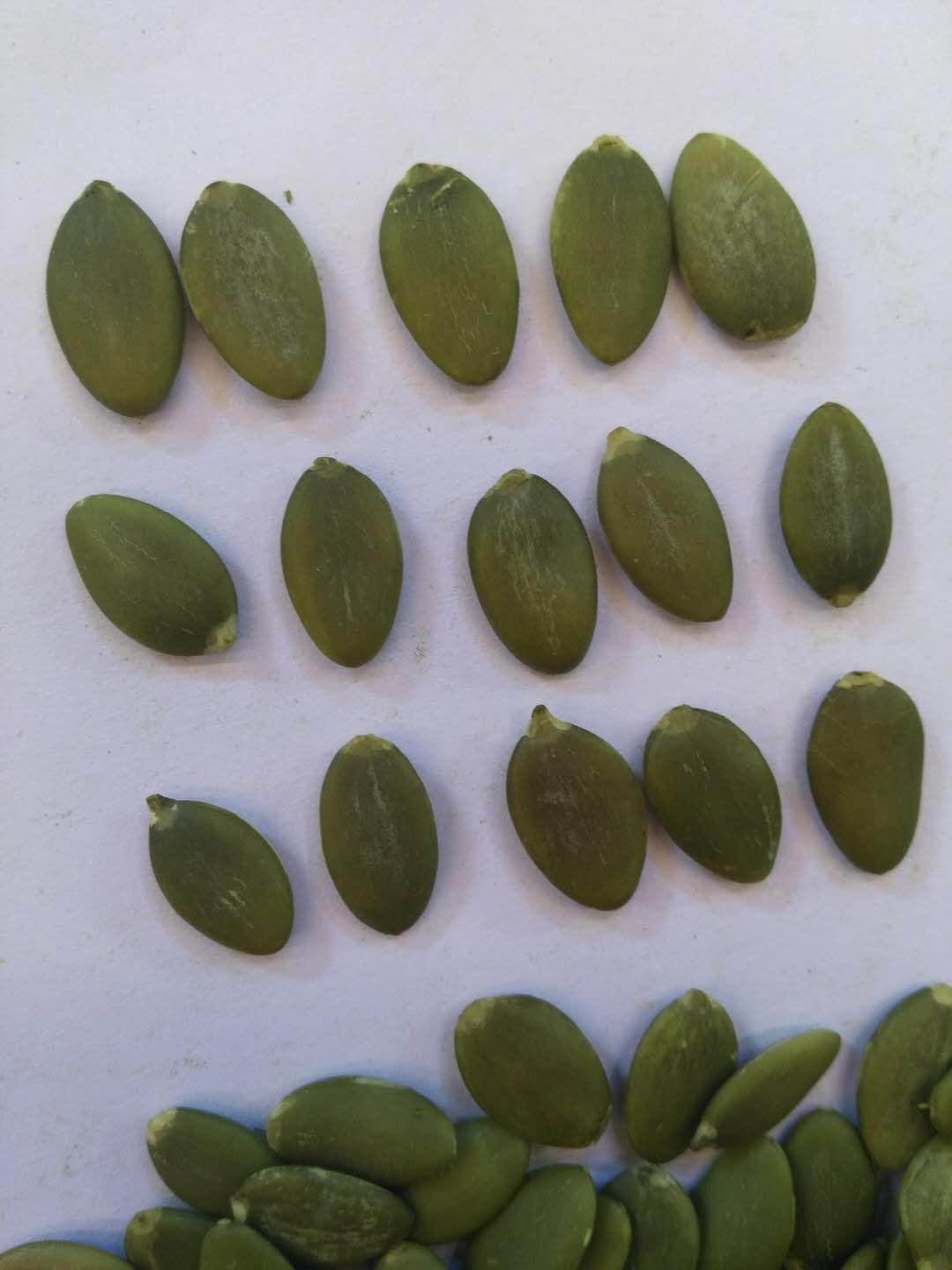
Raw Shine Skin pumpkin seed kernels, grade AAA: the dark green colour and raw specification are the starting conditions of a roast cycle, not a finished-product claim.
A roasting operation does not buy pumpkin seeds as a snack. It buys an input whose moisture content, foreign-matter load and defect level were fixed long before the pallet arrived.
Everything a roaster controls downstream — drum temperature, airflow, dwell time, cooling rate — is applied to a raw material that already carries a number for moisture, a ceiling for impurity, and a declared crop year. That is why purchase documents for the manufacturing and roasted shop industry read differently from retail packaging copy, and why the specification sheet is the first document a roasting buyer should read.
The specification described in this article comes from Inner Mongolia Chengtai Food Co., Ltd. (INNER MONGOLIA CHENGTAI FOOD CO.,LTD), a seed processing and trading enterprise founded in 2013 and located in the Hetao Plain, Hanggin Rear Banner, Bayannur, Inner Mongolia, China. Documented pumpkin seed products from this supplier are raw, 2026 crop, with 9–10% moisture, impurity below 0.5%, and packing in 20/25 kg paper or vacuum bags. They are used here as a worked example of what food manufacturers and roasted shops actually need written on a spec sheet.
The Roasting Floor Writes the Specification
Roasting is a heat-and-moisture process. Water inside the kernel is the medium that carries heat inward, and the moisture that leaves the kernel during the cycle is what produces the colour change, the aroma development and the texture a customer recognises. An input that arrives outside a known moisture band forces the operator to compensate with temperature and time on every batch, which is where inconsistency starts.
For a roasted shop, the practical consequences of an unspecified raw material are familiar: uneven roast across a single batch, over-darkened surface on smaller kernels, higher rejection at the cooling and packing stage, and a finished product that tastes different in week three than it did in week one. For a snack manufacturer running batch processing with manual and mechanical feeding, the consequences extend further — into sorting capacity, packing accuracy and complaint rates.
This is the opportunity that a documented raw specification addresses. Instead of asking a supplier for “good quality pumpkin seeds”, the roasting buyer asks for named attributes that can be checked on arrival: moisture, impurity, erosion seeds, mildew seeds, colour, taste, origin, crop year and packing format.
What the Documented Specification Actually Covers
The table below reproduces the attributes recorded for these pumpkin seed products. It is a raw-material specification: it describes what arrives at the buyer's door, not what leaves the buyer's roaster.
| Attribute | Documented value | Why a roaster reads it |
|---|---|---|
| Specification | Raw | Confirms the roasting, salting and flavouring steps belong to the buyer's process |
| Crop year | 2026 | Links the lot to a declared season rather than an unspecified blend |
| Intended use | Human consumption | Food-grade end use, not feed or oil-only channels |
| Taste | Sweet and natural | Baseline flavour that seasoning is added to, not corrected for |
| Colour | Dark green (Shine Skin kernels, grade AAA); green for AA and A/AA/AAA lots; white for in-shell Snow White, Shine Skin and Lady Nail | Colour consistency is visible in the finished pack |
| Moisture | 9–10% | Sets the starting point for the roast profile |
| Impurity | Below 0.5% | Limits the cleaning and destoning load before roasting |
| Erosion seeds | Below 0.5% | Caps the fraction likely to be rejected at intake or grading |
| Mildew seeds | Below 1% | Caps the defect fraction that affects both yield and customer risk |
| Origin | Xinjiang and Inner Mongolia | Declared growing regions instead of an unspecified origin |
| Storage | Cool place | Matches the cool, dry indoor warehouse conditions typical of snack plants |
| Packing | 20/25 kg plastic or paper bags; vacuum bag with carton for kernels | Bag size and barrier type drive batch handling and shelf stability |
Moisture 9–10%: the Number That Decides Roast Repeatability
A moisture content of 9–10% is a raw-material band, and it matters for two operational reasons. First, the water content of the kernel determines how quickly heat penetrates and how the surface browns relative to the interior. A raw seed that is drier than the established band tends to darken at the surface before the centre has developed, which produces a bitter note and a hard core. A raw seed that is wetter than the band holds the roast back, releases steam unevenly, and leaves the operator compensating with longer dwell times that flatten the aroma.
Second, a declared band makes the profile transferable. When a roasted shop has established a drum setting against a 9–10% input, that setting can be reused on the next container because the main uncontrolled variable has a declared range. This is the practical difference between a supplier that offers “pumpkin seeds” and one that documents moisture as a specification.
Impurity Below 0.5%, Erosion Below 0.5%, Mildew Below 1%: Caps on the Cleaning Load
In snack manufacturing, the raw material is matched with a sorting machine and a packing machine, and impurity control is recorded as a special requirement of the application. Impurity below 0.5% means less material has to be removed by the buyer's destoner, gravity separator and colour sorter before the seed reaches the roaster. That has a direct effect on two costs the buyer usually absorbs: labour at intake, and the volume of rejected material that is paid for but never sold.
The erosion seed ceiling of below 0.5% and the mildew seed ceiling of below 1% work the same way. They define how much of a delivered lot will fail visual or quality inspection, and they bound the fraction that would otherwise create a food-safety question downstream. Written into a purchase agreement, these three numbers convert a vague quality expectation into an intake check that a receiving clerk can perform.
They are ceilings, not guarantees of a zero-defect lot. A roasting operation still runs its own intake inspection, and the defect ceilings should be read as the maximum share of the delivered quantity that may fall into each category, not as a statement that no such kernel exists in the bag.
Matching Variety and Grade to the Roasting Format
Not every roasting line wants the same seed. In-shell products sold as salted roasted pumpkin seeds are judged on size uniformity and shell appearance, while kernel products used in bakery, confectionery and oil pressing are judged on colour, purity and kernel integrity. The documented product range covers both paths.
| Documented product | Size designation | Colour | Typical roasting use |
|---|---|---|---|
| Snow White Pumpkin Seeds (Big Size Pumpkin Seeds 15cm+) | 15cm+ / 13cm+ / 11cm+ | White | Large-format in-shell roasted and salted packs where seed size is the visible selling point |
| Shine Skin Pumpkin Seeds (Big Size Pumpkin Seeds 11cm+) | 11cm+ / 8–10mm+ / below 8mm | White | In-shell roasting lines that need a graded size run rather than a mixed lot |
| Lady Nail Pumpkin Seeds (Inner Mongolia Origin Pumpkin Seeds 10cm+) | 10cm+ / 7–10mm+ / below 7mm | White | In-shell roasting and wholesale distribution, including Middle East demand |
| Shine Skin Pumpkin Seeds kernels, grade AAA | Grade AAA | Dark green | Kernel roasting, bakery and confectionery applications where colour consistency is visible |
| Shine Skin Pumpkin Seeds kernels, grade AA | Grade AA | Green | Kernel lines where grade flexibility is acceptable |
| Shine Skin Pumpkin Seeds kernels, grades A/AA/AAA | Grade A, AA or AAA | Green | Buyers specifying a grade tier per order |
The three kernel grades are documented as A, AA and AAA, with AAA carrying the dark green colour. For a roaster, the grade decision is a colour-and-appearance decision: the darker, more uniform kernel is the one that survives a roast without turning dull, and it is the grade that holds a premium in markets where the customer sees the kernel through the pack.
Packing Format and Batch Handling: 20/25 kg Bags and Vacuum Cartons
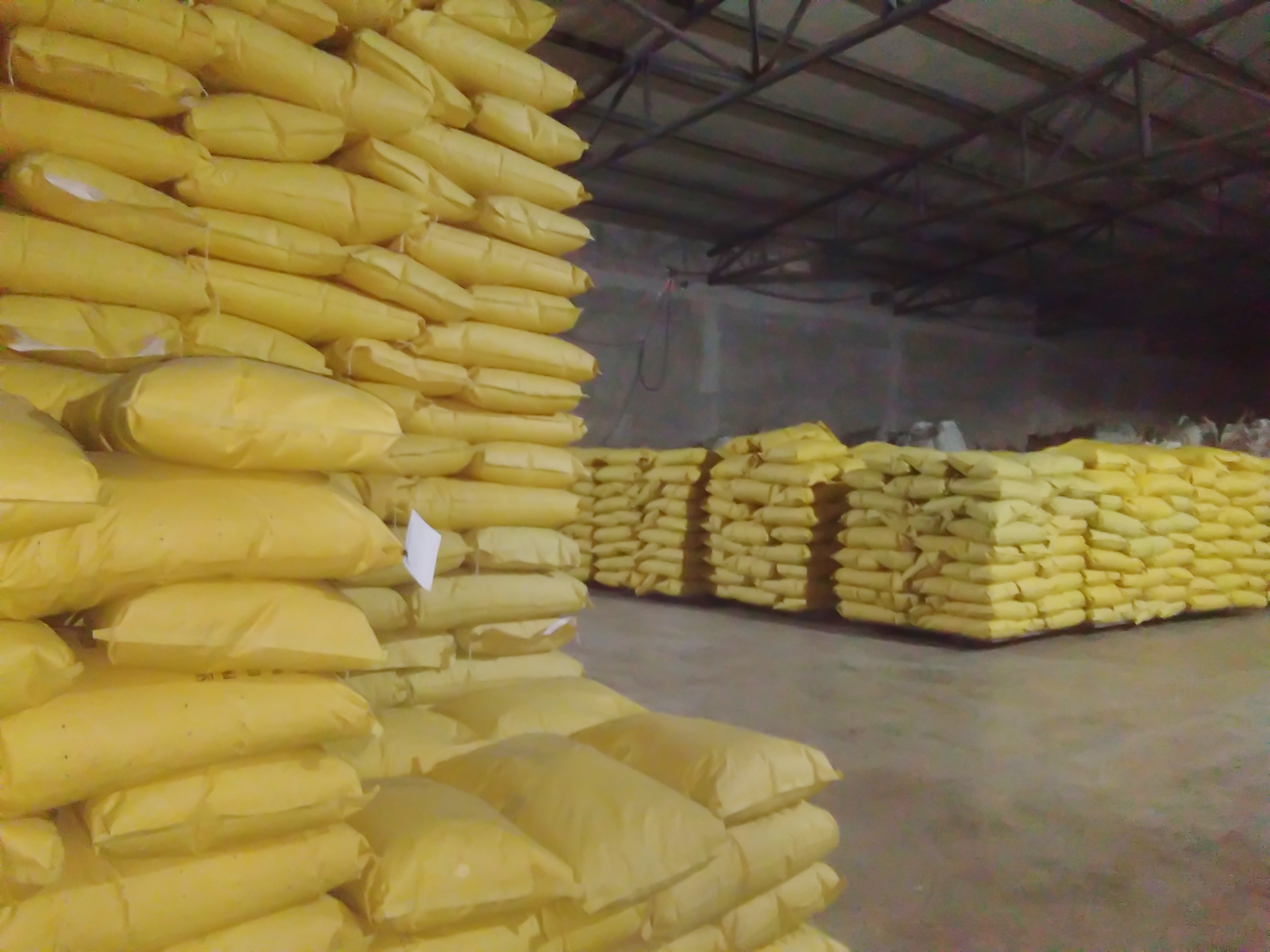
Cool, dry indoor warehouse storage at normal temperature and low humidity: the condition the raw specification assumes before the seed reaches the roaster.
Packaging is usually treated as a logistics detail, but in a roasting operation it is a line-side decision. The documented packing for these products is 20/25 kg plastic or paper bags, with kernels additionally available in vacuum bags with cartons. A 20/25 kg unit maps cleanly onto a single roast charge or a partial silo fill, which means a bag can be opened, weighed, fed and recorded as one batch without splitting and re-weighing.
The barrier choice matters for shelf life as well. Paper bags allow the material to breathe and reduce condensation risk when bags move between a cool warehouse and a warmer production floor. Vacuum bags with cartons are designed for kernel products, where the exposed kernel surface is more sensitive to moisture pick-up and oxidation during storage.
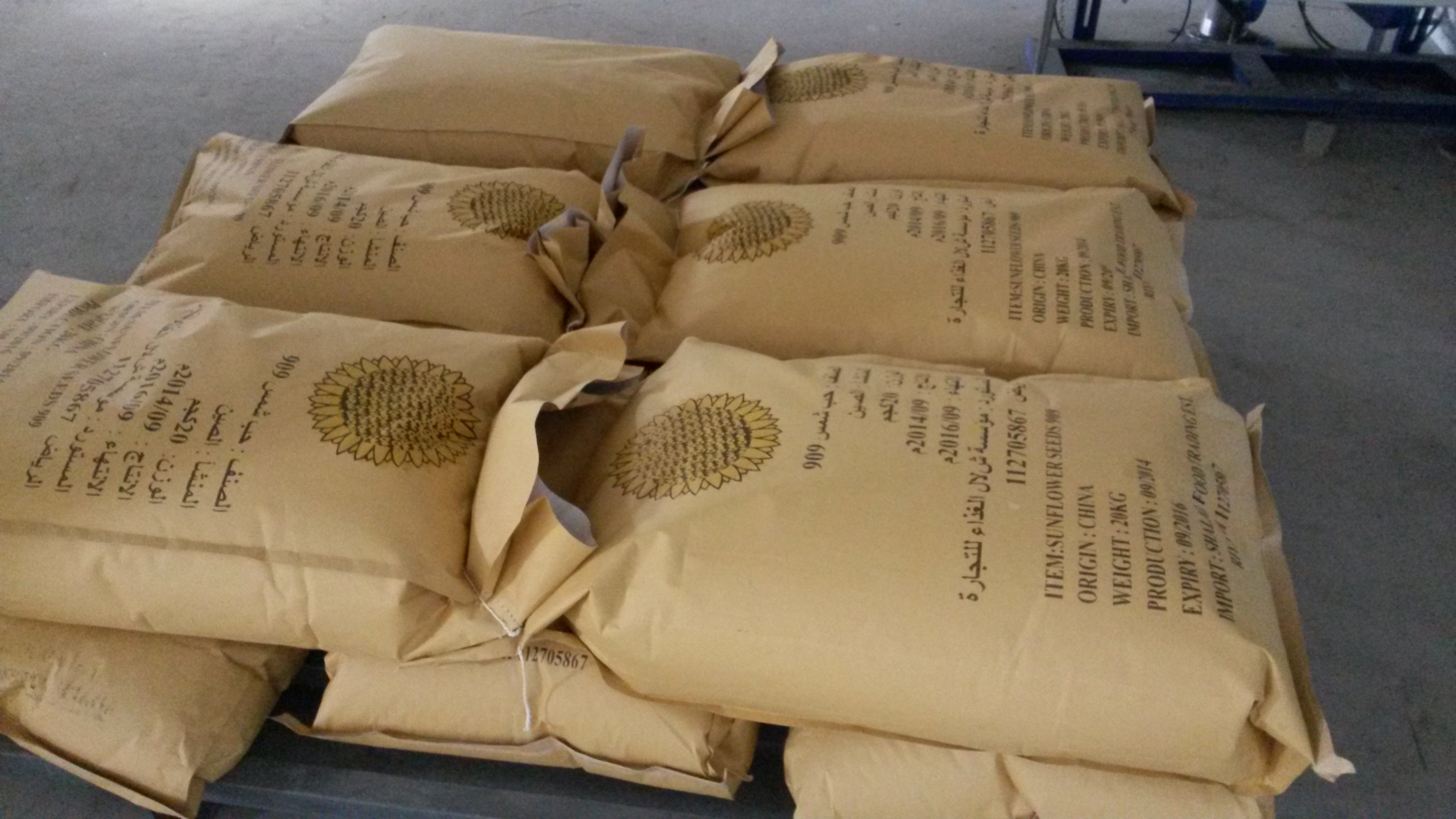
Standardised 20/25 kg packing keeps a roast batch traceable from intake to the drum, without breaking and re-weighing.
Where These Specifications Are Applied
The documented application profile for this material is snack manufacturing, in food production processing projects. In that setting the product functions as a raw material for snacks, baked goods and confectionery; it operates in batch processing mode with both manual and mechanical feeding; it is matched with sorting and packing equipment; and it is stored in cool and dry indoor warehouse conditions at normal temperature and low humidity. The same application is documented for Germany and the wider European market, and for the United Arab Emirates in the Middle East.
Supply-side capability records for this supplier include OEM/ODM production with customer logo printing on bags, a monthly capacity of 2,500 mt, a lead time of 10–15 days, a minimum order quantity of 5 mt, and 100% testing as the stated quality control approach. Annual output is documented at 30,000 mt, with roughly 80% of output exported to the Middle East, Middle Asia and Europe. As a reference case, the supplier records a two-year supply relationship with food processors, snack manufacturers, food wholesalers, and importers and distributors, covering wholesale and roasted applications, with stable supply, consistent product quality and bulk order delivery as the reported outcome.
For a roasted shop, the practical reading is that the raw specification, the packing format and the supply cadence are designed to work together: a declared input, a batch-sized bag, and a replenishment window measured in days rather than quarters.
What the Market Data Says About Supply
China's total pumpkin seed production was projected to reach 400,000 tons in 2024, a 40% increase from 280,000 tons in 2023, according to the Seedea / Pumpkin GWS Market Update. Within that volume, Shine Skin pumpkin seeds are the dominant variety, accounting for 74% of China's 2024 production (approximately 294,000 tons), while Snow White and Lady Nail each accounted for 12%, estimated at 46,000 tons and 52,000 tons respectively, according to Everstar Foods.
Inner Mongolia, the region where this supplier is based, remains a major cultivation hub for pumpkin seeds, with a documented planting area of 28,700 hectares (430,000 mu) in 2024, per Seedea agriculture statistics. Lady Nail varieties recorded an 80% expansion in planting area to roughly 500,000 acres in 2025, driven by robust Middle East demand, according to Cardassilaris Family market insights.
On the demand side, the global pumpkin seed market is expected to grow from USD 1.08 billion in 2025 to USD 2.62 billion by 2032, at a CAGR of 13.4%, according to Maximize Market Research. A separate estimate from Wikifarmer values the pumpkin seed segment at €1.13 billion in 2025; the two figures differ because published market sizes treat processed and raw segments differently, and buyers should treat them as order-of-magnitude signals rather than an exact figure. Adjacent demand is also expanding: the pumpkin seed oil market is growing at a CAGR of 10.5% toward USD 2.06 billion by 2030, per Grand View Research, which raises demand for high-purity kernels of the type specified here.
Regulation is the counterweight. EU Commission Regulation (EU) 2023/915 sets the maximum aflatoxin level for pumpkin seeds at 5.0 μg/kg for the sum of B1, B2, G1 and G2, and pesticide residue rules in the EU and US have constrained export volumes for Shine Skin and GWS types, contributing to a temporary global oversupply in 2025, according to Cardassilaris Family market commentary. The practical implication for roasting buyers is that supply is plentiful but the compliance burden is real — which favours suppliers who can document lot attributes rather than describe them generically.
Specified Raw Seed Compared with Conventional Bulk Purchasing
Most roasting operations have at some point bought on price and grade name alone. The comparison below shows where a documented raw specification changes the intake decision.
| Purchase dimension | Conventional bulk buying | Documented raw specification |
|---|---|---|
| Moisture | Rarely declared per lot | Stated band of 9–10% |
| Impurity | Described qualitatively | Stated ceiling below 0.5% |
| Defect fractions | Not itemised | Erosion seeds below 0.5%; mildew seeds below 1% |
| Crop year | Often unstated or blended | 2026 declared |
| Origin | Mixed or unspecified | Xinjiang and Inner Mongolia declared |
| Packing | Bulk units sized by freight, not by process | 20/25 kg bags; vacuum bag with carton for kernels |
| Intake inspection | Buyer defines everything after arrival | Buyer checks against agreed numbers |
Boundaries Worth Writing Into the Contract
A specification is only useful if its limits are stated. Three boundaries apply to the material described here, and buyers should understand them before comparing offers.
First, raw means raw. These products are supplied as raw material intended for human consumption; roasting, salting, flavouring and finished-packaging remain the buyer's process. A buyer looking for ready-to-eat salted roasted pumpkin seeds is buying a different product and should not expect the raw specification to substitute for it.
Second, a grade label is not a safety certificate. Grades A, AA and AAA describe kernel colour, appearance and grade tier. Compliance limits such as the EU aflatoxin maximum of 5.0 μg/kg under Regulation (EU) 2023/915 are destination-market requirements, and buyers exporting into the EU or US should verify residue and mycotoxin status against their own market rules and their own laboratory testing, even where a supplier states 100% testing.
Third, the moisture band is an input band. It describes the condition of the raw material on delivery, not a finished-roast target, and it will drift with storage time and warehouse conditions. Roasting buyers should confirm moisture per lot and adjust the profile to the actual measured value rather than to the midpoint of the declared range.
Outlook for Roasting Buyers
Three forces are converging on this category. Supply has expanded sharply, which gives buyers negotiating room but also increases the spread between well-graded and poorly graded lots. Regulatory scrutiny on aflatoxin and pesticide residues continues to raise the value of documented lots. And demand growth in the kernel and oil segments keeps pressure on high-purity, colour-consistent material rather than on ungraded volume.
For a roasted shop or snack manufacturer, the practical conclusion is unglamorous: the quality of a finished roasted pumpkin seed is decided largely at intake. The buyers who get repeatable results are the ones who treat moisture, impurity, defect ceilings, crop year, origin and packing format as purchase criteria rather than as marketing language, and who verify those numbers on the loading dock.
Frequently Asked Questions
1. What does “raw” mean in a pumpkin seed specification?
Raw means the seed is supplied as an unprocessed food-grade input rather than as a roasted, salted or flavoured finished snack. In the specification described here, the product is documented as raw and intended for human consumption, with a declared crop year, moisture, impurity and defect limits. Roasting, seasoning and final packaging are carried out by the buyer's own process.
2. Why is a 9–10% moisture band important for a roasting operation?
Moisture governs how heat moves through the kernel and how the surface browns relative to the interior. A declared 9–10% band lets a roaster establish a profile against a known input and repeat it on the next batch. Because the figure is a range, incoming inspection per lot remains necessary.
3. Which pumpkin seed types suit roasting shops compared with snack manufacturers?
In-shell types — Snow White Pumpkin Seeds, Shine Skin Pumpkin Seeds and Lady Nail Pumpkin Seeds — are typically roasted and salted as a visible-seed snack, where size grading is the main buying criterion. Shine Skin Pumpkin Seeds kernels in grades A, AA and AAA are used where the kernel is visible or further processed, such as bakery, confectionery and oil pressing, with grade AAA documented in dark green.
4. What do the impurity, erosion seed and mildew seed limits actually cover?
These are ceilings on the delivered lot. Impurity below 0.5% limits non-seed material that the buyer's sorting equipment would otherwise have to remove. Erosion seeds below 0.5% and mildew seeds below 1% cap the defect fractions that would be rejected at intake or at grading. They define a maximum share of a lot, not a guarantee that no such kernel is present.
5. How does 20/25 kg packing support batch handling?
A 20/25 kg bag corresponds closely to a single roast charge or a partial silo fill, so material can be opened, weighed and fed as one recorded batch. The documented formats are 20/25 kg plastic or paper bags, with kernels also available in vacuum bags with cartons. Paper suits cool, dry warehouse conditions; vacuum with carton adds protection for exposed kernels.
6. What should a buyer verify beyond the grade label?
A grade label describes kernel colour and grade tier. Buyers should separately verify moisture on arrival, defect fractions against the agreed ceilings, crop year, and declared origin. Where the destination market requires it — for example the EU aflatoxin maximum of 5.0 μg/kg under Regulation (EU) 2023/915 — residue and mycotoxin status should be confirmed against that market's rules by the buyer's own testing programme.
7. Does the declared crop year affect a purchasing decision?
It does, because a declared year links a lot to a specific harvest and allows a buyer to plan storage life and roast profile. Seed quality in this category varies with the season, and a stated year plus stated moisture and defect ceilings gives the buyer a defined baseline against which an incoming lot can be checked.
Sources Cited
Seedea / Pumpkin GWS Market Update, November 2024 — China production volume and Inner Mongolia planting area. Everstar Foods industry report — production share by variety. Cardassilaris Family market insights, June 2025 — Lady Nail planting area expansion and pesticide residue trade commentary. Maximize Market Research — global pumpkin seed market size and CAGR. Wikifarmer — alternative global seed segment valuation. Grand View Research — pumpkin seed oil market growth. EUR-Lex, Commission Regulation (EU) 2023/915 — aflatoxin limits for pumpkin seeds.
Company reference material: Inner Mongolia Chengtai Food Co., Ltd. company profile (PDF); website www.ctsunfood.com.