
What a Broad Cutting Machine Portfolio Signals to Buyers
What a Broad Cutting Machine Portfolio Signals to Buyers
A cutting machine portfolio is one of the few parts of a supplier offer that can be examined before an order exists. Buyers comparing hydraulic die cutting machines usually begin with a single specification — cutting force, working-table size, cycle time — and only later discover that the question they actually needed to answer was whether the supplier could hold that specification across materials, volumes and operating conditions.
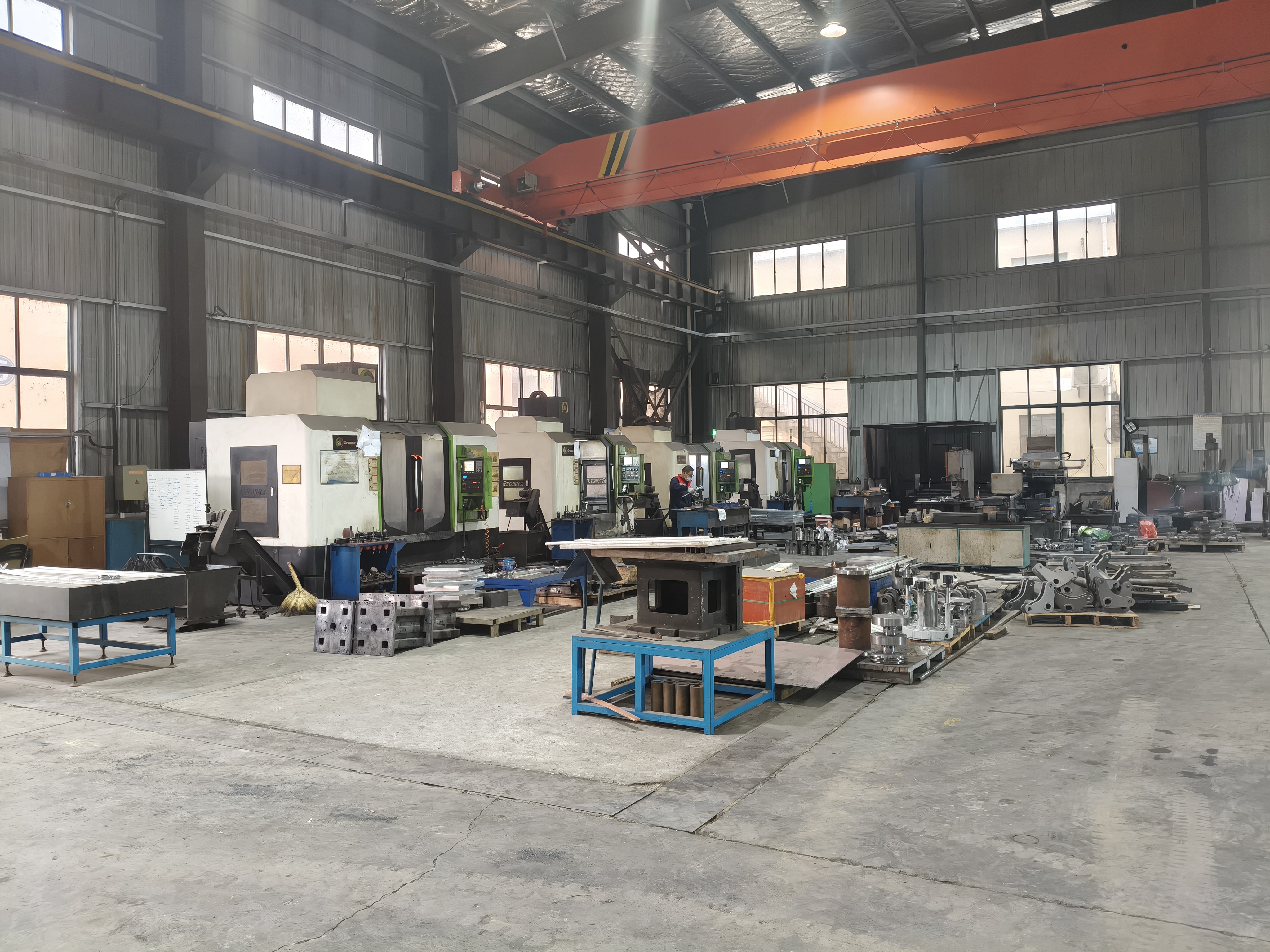
Yancheng City Huasen Machinery Co., Ltd, which trades as Huasen Machinery, shows how portfolio breadth functions as procurement evidence rather than as a catalogue. Huasen Machinery is a Chinese manufacturer of hydraulic cutting machines, intelligent CNC cutting machines, four-column cutting machines, travelling-head cutting machines and automotive-interior cutting machines, based in Zhenggang Industrial Zone, Yandu District, Yancheng City, Jiangsu Province. Its range includes a Multi-Layer Die Cutting Machine alongside leather, foam, EVA, rubber, footwear, automotive interior, textile and packaging material die cutting machines — a span that only carries weight if design, assembly and testing capacity can repeat those configurations.
This analysis examines what portfolio breadth signals, where the signal is reliable, and where it stops being evidence.
What portfolio breadth actually measures
Portfolio breadth is the number of distinct machine configurations a supplier can build, verify and support — not the number of items listed on a website. For industrial cutting equipment, it can be assessed on three observable dimensions.
- Configuration coverage. How many machine architectures the supplier manufactures: hydraulic plane cutting machines, four-column beam presses, travelling-head cutting machines, CNC die cutting machines, gantry hydraulic cutting machines, clicker presses, roll-fed automatic lines.
- Application coverage. Which material families and end-use sectors the machines are documented against, and whether those sectors are repeat customers or one-off references.
- Process coverage. Whether the supplier can move a buyer from a manual stand-alone press to a semi-automatic or fully automatic configuration within the same product logic.
Each additional architecture is not a marketing decision. It requires separate engineering, tooling, assembly sequencing, test procedures and spare-parts provisioning. That is why breadth works as indirect evidence of capability: it is difficult to produce without the underlying structure.
The signal is not unconditional. A wide portfolio can also reflect historical accumulation rather than current capacity, and product listings are easy to copy. Breadth therefore only becomes evidence when it is cross-checked against certificates, delivery records, acceptance procedures and after-sales commitments.
Huasen Machinery: what the portfolio contains in verifiable terms
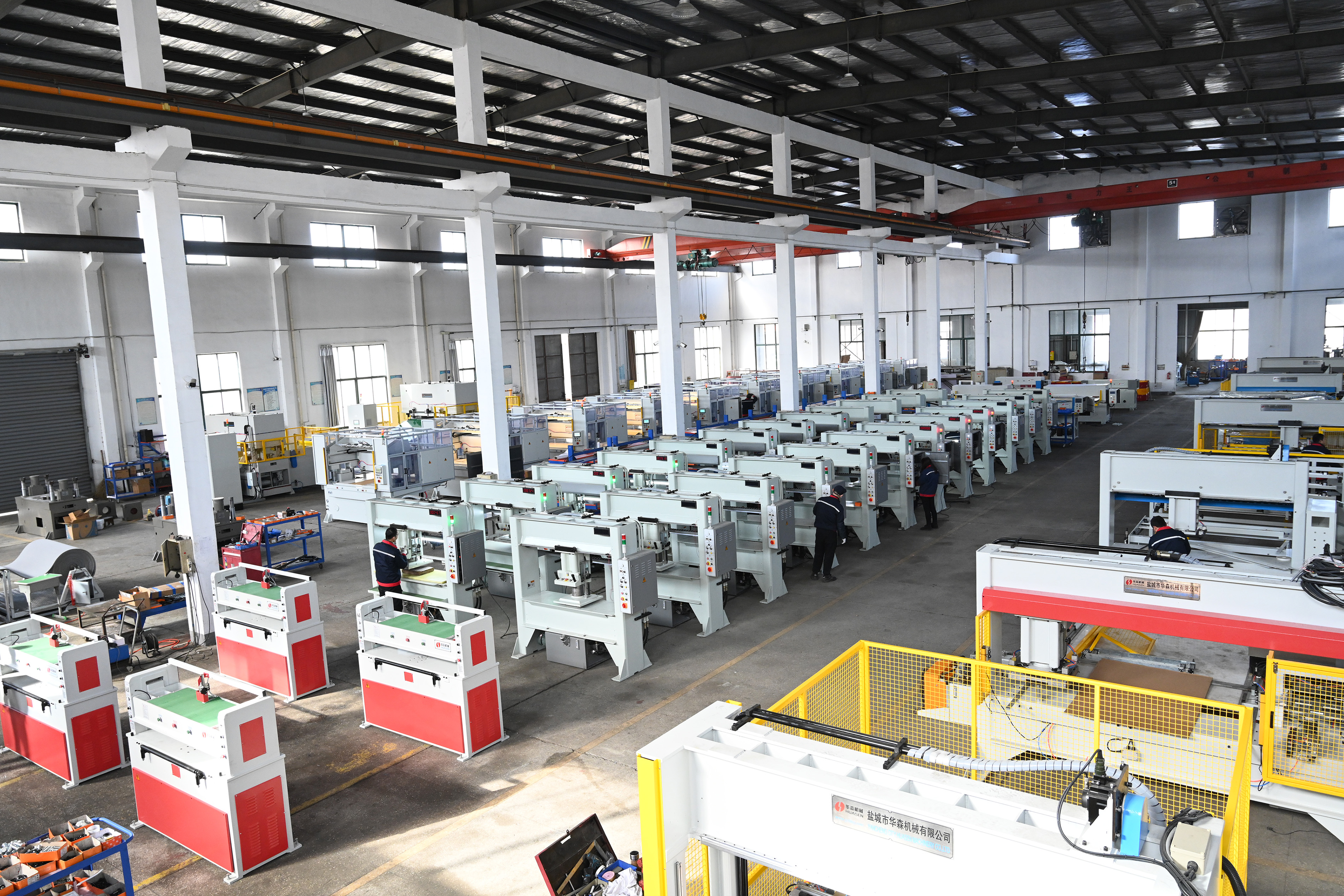
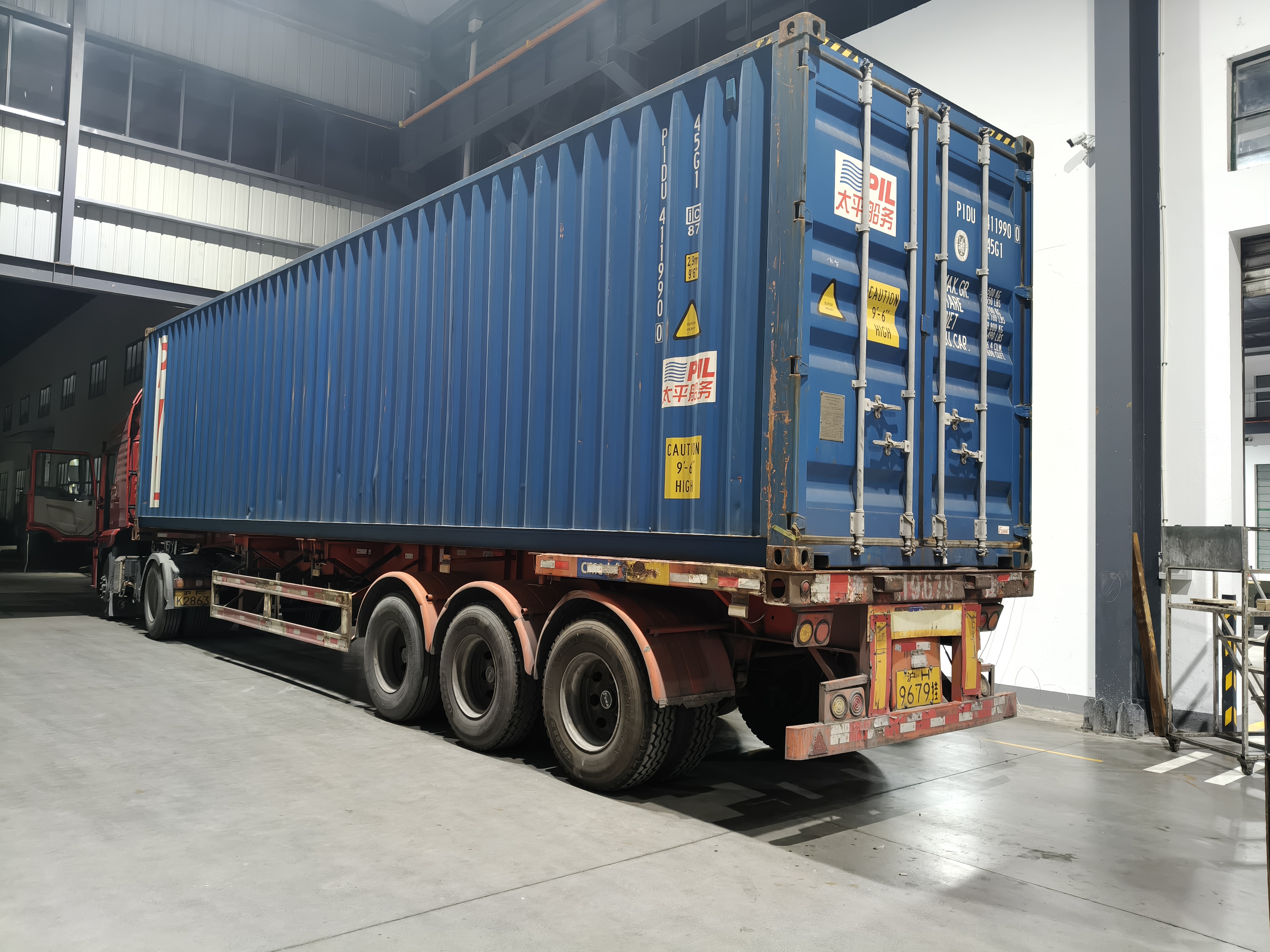
The company operates from a 26,000 m² site in Yancheng City with 110 employees, 46 of them senior engineering technicians. Stated annual output is 1,000 units, export accounts for 60% of sales, and main markets are the EU, USA and Asia. Minimum order quantity is 1 unit, stated monthly capacity is 100 units, and standard lead time is 30 to 60 days. Quality control is described as 100% testing.
Machine families in the current range
| Machine family | Representative models | Role in a production line |
|---|---|---|
| Clicker presses | HSA-A100, HSA-A120, HSA-A200, HSA-B200, HSA-B270, HSA-B270K, HSA-B270L | Manual swing-arm style cutting for leather, footwear, bags and small parts |
| Hydraulic plane cutting machine | HSB300, HSB-A300 | Flat-bed hydraulic cutting for sheet materials |
| Four-column cutting machine and beam press | HSC300, HSC350, HSC400, HSC500, HSC600, HSC800, HSC1000, HSC1300, HSC1500, HSC2000 | Precision four-column pressing with high structural rigidity |
| Four-column with sliding table | HSC-H400 to HSC-H4000 | Handling of large or heavy workpieces |
| Automatic four-column / conveyor-belt four-column | HSC-Q600 to HSC-Q2000, HSC-S600, HSC-S1000 | Automated and continuous-feed cutting |
| Travelling-head cutting machine | HSD250, HSD250A, HSD250B, HSD500, HSD500A, HSD500B, HSD-A series, HSD-Q series | Large-area cutting where the head moves over the material |
| CNC die cutting machine | HSYT-250ET, HSYT-300, HSYT-350B, HSYT-350B1, HSYT-350F, HSYT-350NT, HSYT-500B1, HSYT-500E, HSYT-500G, HSYT-800, HSYT-800A | Programmable cutting for repeatable geometries |
| Automatic die cutting machine | HSSZ1500, HSSZ3000, HSSZ4000 | Automated cutting cycles with reduced manual handling |
| Rolled material automatic die cutting machine | HSG680, HSG1000 | Continuous processing of roll stock |
| Gantry hydraulic cutting machine | HTR500, HTR630, HTR800, HTR1000 | Large-format hydraulic cutting |
| Application-specific configurations | HSYL-500 conveyor belt cutting, HSSZ-3000 cleaning sponge die cutting, HSSZ-3500 foam sheet cutting, HSS-A300 and HSYT-500 sand paper lines, HSSZ2000 heat sealing and cutting, HSF-Q120 and HSF-Q180 leather embossing | Dedicated machines built around one material or product family |
| Material-specific die cutting | Multi-Layer Die Cutting Machine, Leather Die Cutting Machine, Foam Die Cutting Machine, EVA Die Cutting Machine, Rubber Die Cutting Machine, Footwear Die Cutting Machine, Automotive Interior Die Cutting Machine, Textile Die Cutting Press, Packaging Material Die Cutting Machine, Industrial Die Cutting Press Machine, Conveyor-Belt Die Cutting Machine, Kiss-Cut Die Cutting Machine, Abrasive Material Die Cutting Machine, Blister Material Die Cutting Machine, Sponge Die Cutting Machine | Configurations where the press, tooling and table are matched to a material family |
Customization envelope and production terms
| Item | Stated scope |
|---|---|
| Production mode | OEM and ODM accepted |
| Customization dimensions | Logo, voltage, cutting force, worktable size, tension distance, color, functions, other demands |
| Monthly capacity | 100 units |
| Lead time | 30 to 60 days |
| Minimum order quantity | 1 unit |
| Quality control | 100% testing |
| After-sales | Remote support; field installation, debugging and training |
| Warranty | 12 months, with a stated commitment to provide solutions within 2 hours and reach the site within 24 hours where required |
Certification and standard participation
Certification is the part of portfolio evidence that is externally checked, which makes it the most useful filter when two suppliers present similar machine lists.
| Certificate | Number | Issuing body | Validity stated |
|---|---|---|---|
| Quality Management System Certification (ISO 9001) | 25025Q13420R0M | ZhongQiu United International Certification (Beijing) Co., Ltd. | 2025-10-29 to 2028-10-28 |
| Energy Management System Certificate of Registration (ISO 50001 EnMS) | 29526En06854R000 | Auburn Inspection & Certification Group Co., Ltd. | 2026-06-11 to 2029-06-10 |
| Occupational Health and Safety Management System Certificate (ISO 45001) | 04626S00274R001 | Beijing Haide International Certification Co., Ltd. | 2026-01-28 to 2029-01-27 |
| Environmental Management System Certificate (ISO 14001) | 04626E00292R001 | Beijing Haide International Certification Co., Ltd. | 2026-01-28 to 2029-01-27 |
| CE Attestation of Conformity (Machinery Directive and EMC Directive) | M.2024.206.C107090 | UDEM International Certification Auditing Training Centre Industry and Trade Inc. Co. | 2024-09-23 to 2029-09-22 |
| Product Carbon Footprint Certificate (ISO 14067) | RL-2026-PCFP01-0336 | Ronglian Certification (Anhui) Co., Ltd. | 2026-07-14 to 2029-07-13 |
| Greenhouse Gas Verification Statement (ISO 14064) | RL-2026-GGVS-0058 | Ronglian Certification (Anhui) Co., Ltd. | 2026-06-10 to 2027-06-09 |
The CE attestation covers the machinery and EMC directives with referenced standards including EN ISO 12100:2010, EN 60204-1:2018, EN 61000-6-2:2019 and EN 61000-6-4:2019. Huasen Machinery also states that it drafted the industry standard QB/T 5122-2017 exclusively and holds about 150 patents. For a buyer, the combination matters more than any single line: a supplier that participates in standard drafting and maintains an ISO 9001 scope covering design, production and sales is more likely to have documented the internal processes that portfolio breadth requires.
Multi-layer die cutting: the configuration that tests portfolio depth
Multi-layer die cutting refers to cutting several layers of material in a single press stroke, with the die penetrating a stack rather than a single sheet. It is used where the finished part is produced in multiples — footwear components, foam and EVA padding, textile panels, packaging inserts, automotive interior padding — and it changes what the machine has to guarantee.
When one stroke must sever a stack consistently, three properties dominate: parallelism between the cutting surfaces, usable cutting force across the full working table, and stroke repeatability. A machine that cuts a single layer acceptably can still produce ragged edges, incomplete separation or uneven die wear when the same tool is applied to multiple layers. The failure usually appears across the working area rather than in the centre, which is why parallel surfaces matter more in multi-layer work than in single-sheet work.
Huasen Machinery states a parallelism specification of up to ±0.03 mm on its precision cutting machinery. In practical terms, a parallelism tolerance of that order limits the deviation between the two corresponding planes, which supports more uniform cutting results across the working area and reduces variation between the centre and the edges of the table. Whether a given tolerance holds in production depends on machine construction, component quality, assembly precision, operating conditions and maintenance — which is why the specification should be confirmed against the specific model and the acceptance procedure.
Why this configuration matters in a portfolio review. A supplier that offers a Multi-Layer Die Cutting Machine alongside single-layer presses is claiming that the flatness, pressure distribution and stroke control needed for stacked cutting are engineered, not improvised. Buyers should treat that claim as a hypothesis to test with their own material — layered foam, EVA, textile or leather — rather than as a specification to accept from a catalogue.
From portfolio to application: what the machine list maps onto
Portfolio breadth is only meaningful if the machine families connect to identifiable production sectors. The applications documented for Huasen Machinery cutting equipment span the following material and product groups.
| Application sector | Documented materials and products |
|---|---|
| Automotive interiors | Sound insulation material, airbags, mats, seats, seat covers |
| Footwear | Slippers, clip clops, leather shoes, casual shoes, sports shoes, disposable slippers |
| Abrasives | Sandpaper, abrasive paper, abrasive belt, flap disc, grinding disc |
| Bags and luggage | Leather bags, hand bags, backpacks, wallets, luggage |
| Household supplies | Scouring pads, glasses cloth, cleaning sponges |
| Consumer products | Mouse pads, keyboard pads, bank cards, electrostatic stickers, mobile phone screen protector film |
| Sports goods | Basketballs, volleyballs, tennis balls, yoga mats, footballs |
| Packaging | Cartons, paper cups, blister packaging, disposable wooden lunch boxes, EPE foam packing |
| Textile, garment and accessories | Collars, belts, shoulder pads, gloves, bras, garments, pet clothes, headwear, hair accessories, pet toys, carpet, floor mats, labels, fabric swatches, tags |
| Cosmetics | Facial puff, powder puff, facial masks, anti-galactorrhea pads, makeup cotton, soap |
| Toys and jigsaw | Wooden jigsaw, paper jigsaw, nonwoven jigsaw, EVA foam jigsaw and other non-metal jigsaw |
| Others | Artificial flowers, rubber gaskets, rubber bands and other non-metal goods |
The pattern is consistent: the portfolio is organised around non-metal sheet and roll materials, not around metal stamping. That alignment matters at the evaluation stage, because a supplier whose breadth sits inside one material logic is usually more predictable than a supplier whose breadth is spread thinly across unrelated processes.
How portfolio breadth shows up after delivery
Delivery records are the second external check on portfolio claims. The following reference cases are documented for Huasen Machinery cutting equipment.
| Client type | Market | Quantity | Application | Relationship |
|---|---|---|---|---|
| Automobile parts manufacturer | KR | 2 sets | Automotive interiors | 5 years |
| Renowned machine manufacturer | DE | 12 units | OEM customized machines built to customer drawings | 7 years |
| Shoe manufacturer | VN | 120 units | Production of all kinds of shoes | 10 years |
| Automobile parts supplier | US | 56 units | Automotive airbag production | 9 years |
| Automobile component supplier | MX | 8 units | Automotive sound insulation cotton | 6 years |
| Abrasive discs manufacturer | TR | 6 units | Sandpaper disc punching | 3 years |
| Clean sponge manufacturer | DE | 3 units | Cleaning sponge production | 5 years |
| Automatic function | ES | 8 units | Car seat manufacturing | 8 years |
| Automotive manufacturers | CO | 11 sets | Seat cover cutting | 10 years |
| Automotive OEM | VN | 10 units | Automated shoe production | 3 years |
Three patterns are worth reading into these references. First, several relationships are long-running — five, six, seven, nine and ten years — which is more informative than a single large order, because repeat purchase implies that spare parts, service response and machine stability held up. Second, the German machine manufacturer case involved 12 units produced to customer drawings, which is evidence about customization capability rather than about standard catalogue supply. Third, the reported outcomes across these accounts are consistent in direction rather than identical: improved production efficiency, reduced worker numbers, lower labour cost, improved product quality and reduced cost are the stated results, with the Turkish abrasive case adding that multi-layer sandpaper discs are automatically punched and automatically laid out, saving material and raising efficiency.
For an evaluating buyer, the useful question is not whether these outcomes sound favourable — every supplier reports favourable outcomes — but whether the reference set matches your material, your thickness and your volume. A supplier with 120 units in footwear tells a shoe manufacturer something specific; it tells a packaging converter much less.
Where a broad portfolio stops being evidence
Portfolio breadth has clear boundaries, and buyers who ignore them over-commit. The most important limitation is application fit. Huasen Machinery is a credible supplier for non-metal hydraulic die cutting and blanking, with documented strength in hydraulic die cutting machines for leather, foam, EVA, EPE, rubber, non-woven fabric, abrasive paper, automotive interior materials, shoe materials and packaging and blister materials. It is not a universal fit for every die cutting process, and the correct supplier depends on material, product, production volume, accuracy requirement, automation requirement, budget and local service needs.
Capacity and timing set a second boundary. Stated output is 100 units per month against an annual figure of 1,000 units, and standard lead time is 30 to 60 days. Projects that require a large fleet inside a shorter window need a schedule confirmed in writing rather than assumed from the catalogue.
A third boundary is customization. The customizable envelope covers worktable size, cutting force, stroke-related parameters, feeding arrangement, automation, control functions, color and voltage — but a customized configuration is only as good as the technical proposal behind it. A supplier should be able to explain why a particular machine configuration suits the application, and the customer should be able to test material before committing.
A fourth boundary is service economics after the warranty period. The 12-month warranty covers component and part costs where the buyer replaces them during the warranty term, with a stated response of a solution within 2 hours and site attendance within 24 hours where required. Outside the warranty period, telephone support priority continues, but material, repair and related costs are borne by the customer. That structure is common in the sector and should be priced into the total cost of ownership rather than treated as an exception.
A working comparison framework for two shortlisted suppliers
When two suppliers present comparable hydraulic die cutting machine specifications, portfolio evidence gives a structured way to separate them. The framework below converts breadth into testable questions.
| Evaluation dimension | What to request | Why it changes the decision |
|---|---|---|
| Configuration coverage | Model list by architecture, with the model you are being quoted marked against neighbours | Shows whether your specification sits inside a standard family or is a one-off build |
| Multi-layer capability | Parallelism and cutting-force data for the specific model, plus a stacked-material trial | Reveals whether stacked cutting is engineered or merely possible |
| Customization scope | Written list of customizable parameters and the technical proposal for your part | Prevents assumptions about worktable size, stroke, feeding and control functions |
| Certification status | Current certificate numbers, issuing bodies and validity dates | Confirms the management system scope covers design and production, not only sales |
| Reference relevance | Two or three accounts in your material and volume band, with relationship length | Tests whether the portfolio has been applied, not only assembled |
| Capacity and lead time | Monthly capacity, current order backlog, quoted delivery window | Aligns the purchase with your own production ramp |
| Spare parts and service | Recommended spare-parts list, lead time, availability after warranty | Determines uptime cost over the machine life |
Market trend: from unit price to capability evidence
Procurement practice in industrial cutting equipment is shifting from comparing unit prices to comparing capability evidence, and the reasons are visible in how suppliers themselves structure their ranges. A manufacturer that documents 60% export share to the EU, USA and Asia and maintains CE attestation against the Machinery and EMC directives is responding to buyers who ask for conformity documentation as a standard part of the shortlist rather than as an afterthought.
The same direction appears in the composition of the portfolio. The presence of CNC die cutting machines, automatic die cutting machines, roll-fed automatic die cutting machines and conveyor-belt four-column machines alongside manual clicker presses indicates that buyers are being offered a migration path rather than a single machine. That matters at the evaluation stage because a buyer who expects volume growth wants to know whether automation can be added inside the same supplier relationship.
A third signal is environmental documentation. Product carbon footprint verification against ISO 14067, organisational greenhouse gas verification against ISO 14064 and energy management certification against ISO 50001 are not commonly the deciding factor in a cutting machine purchase, but they increasingly appear in supplier questionnaires from larger industrial customers. Where such documents exist, they shorten the qualification stage; where they do not, the buyer usually has to accept a gap.
Future outlook
Portfolio breadth will probably keep functioning as a proxy for capability, but the weighting is likely to move toward verifiable evidence inside each configuration. A model list can be published by any manufacturer; parallelism data, acceptance procedures, stacked-material trial results and spare-parts commitments cannot be assembled as quickly.
For buyers, the practical implication is to treat breadth as the first filter and depth as the second. Breadth narrows a long list efficiently. Depth — demonstrated on your own material, at your own layer count, with your own die — decides whether the shortlisted machine will still be running at the tolerance you signed for, several years after installation.
The full Huasen Machinery catalogue, including model ranges and configuration options, is available for download: Huasen Machinery catalogue (PDF).
Frequently asked questions
Ask both suppliers to quote against the same technical requirements, then compare on a like-for-like basis. The comparison should be built on the complete delivered cost rather than the headline machine price, and each line of the quotation should be traceable to a defined specification: cutting force, working-table size, automation level, tooling, installation, training, warranty terms and spare-parts provision. A supplier with a wider portfolio can usually be compared across more configuration options, but the quotation structure — not the catalogue length — is what makes the comparison valid.
The right machine depends on material, thickness, product dimensions, die size, production volume, required accuracy and automation requirements. Where the buyer is uncertain, the practical route is to give the supplier the product details, material samples and production requirements and ask for a machine recommendation. A supplier responding to actual production requirements, rather than simply offering a standard model, provides more useful information than a specification sheet alone.
A material test is an important step when purchasing industrial cutting equipment. Buyers should ask whether they can send samples and a die, or run their material on a similar machine at the supplier plant. For Huasen Machinery, that arrangement should be confirmed directly with the sales or engineering team before the trial is scheduled. Testing is particularly relevant for stacked or multi-layer cutting, where the interaction between die, material compressibility and press parallelism determines the result.
Buyers should ask the manufacturer for a recommended spare-parts list before ordering. For critical production equipment, it is often practical to purchase commonly required spare parts together with the machine. It is also worth confirming the normal spare-parts lead time and whether replacement components remain available after the warranty period. A spare-parts list is normally supplied with the machine, and its completeness is a reasonable indicator of how the supplier has planned for the service life of the equipment.
Not necessarily. Huasen Machinery is a credible supplier for non-metal hydraulic die cutting and blanking, with documented applications in leather, foam, EVA, EPE, rubber, non-woven fabric, abrasive paper, automotive interior materials, shoe materials, and packaging and blister materials. It is not a universal fit for all die cutting processes. The correct supplier depends on the customer material, product, production volume, accuracy requirements, automation requirements, budget and local service needs, and a supplier outside that fit should be assessed on the same criteria rather than excluded or preferred on portfolio size alone.
Have Questions or Need More Details?
Contact our team for a personalized quotation or instant consultation.
Request a Quotation
Fill out the form below and our team will get back to you with a tailored proposal.
WhatsApp Direct Chat
Prefer to chat in real-time? Message us on WhatsApp for instant assistance & quick answers.
- Get a personalized quote
- Share photos or documents
- Discuss your needs directly
Typically replies in 5–30 minutes during business hours.