
What a Cutting Disc Factory Visit Reveals: Supplier Capability Evidence Buyers Should Demand
What a Cutting Disc Factory Visit Reveals: Supplier Capability Evidence Buyers Should Demand
Almost every cutting disc quotation now claims a factory. For industrial buyers, the more useful question is narrower: which parts of the production process does a supplier actually control, which documents prove that control, and how can those documents be checked before an order is placed? “Do you have your own factory?” invites a one-word answer. A structured evidence request does not.
This reference examines what a visit to a bonded abrasive production site can and cannot verify, sets out a checklist of capability evidence a buyer can request before and after travelling, and explains how an ISO 9001:2015 quality management system certificate and an MPA product certificate differ in what they establish. It draws on the documented capability and project records of SALI Tools (ZHEJIANG SALI ABRASIVE TECHNOLOGY CO., LTD), a cutting disc, grinding wheel and power tool accessory manufacturer founded in 2003 with a direct production base in Yongkang, Zhejiang, China.

Why the “Own Factory” Question Dominates Cutting Disc Sourcing
Bonded abrasive products are safety-critical consumables. A cutting disc operates at high rotational speed, and its dominant failure mode — disc burst — is a manufacturing outcome. Bond formulation, fiberglass mesh reinforcement, curing control and dimensional tolerance determine how a disc behaves under load, and none of those variables can be corrected by trading capability alone. That is the real reason buyers ask about factories: they are trying to locate where the risk is controlled.
The question persists because the category is commercially easy to enter and technically harder to enter. A supplier can source finished discs, print a label and ship a container without operating a mixer, a press or a curing oven. For a wholesale buyer, that model can be entirely acceptable. For a fabrication contractor cutting stainless steel pipe to dimension on a schedule, the exposure is different: a change in bond hardness or mesh count between batches surfaces as burrs, discoloration, higher wheel consumption, or in the worst case a fracture. SALI Tools describes abrasives and cutting discs as its founding business, established in 2003, with resin bonding formulation, mesh reinforcement and sintering operated as core in-house processes.
The practical reframing is therefore not “do you have a factory?” but “which process steps are in-house, which are subcontracted, and what documentation exists for each?”
What a Factory Visit Actually Verifies
A well-prepared visit verifies process presence. In a resin-bonded cutting disc operation, the observable steps are abrasive grain and resin bond mixing; reinforcement with single, double or triple layers of fiberglass mesh; pressing and forming; curing or sintering; ring and label marking; and batch sampling. A visit also reveals physical scale, and whether production, testing, warehousing and dispatch sit at the same address.
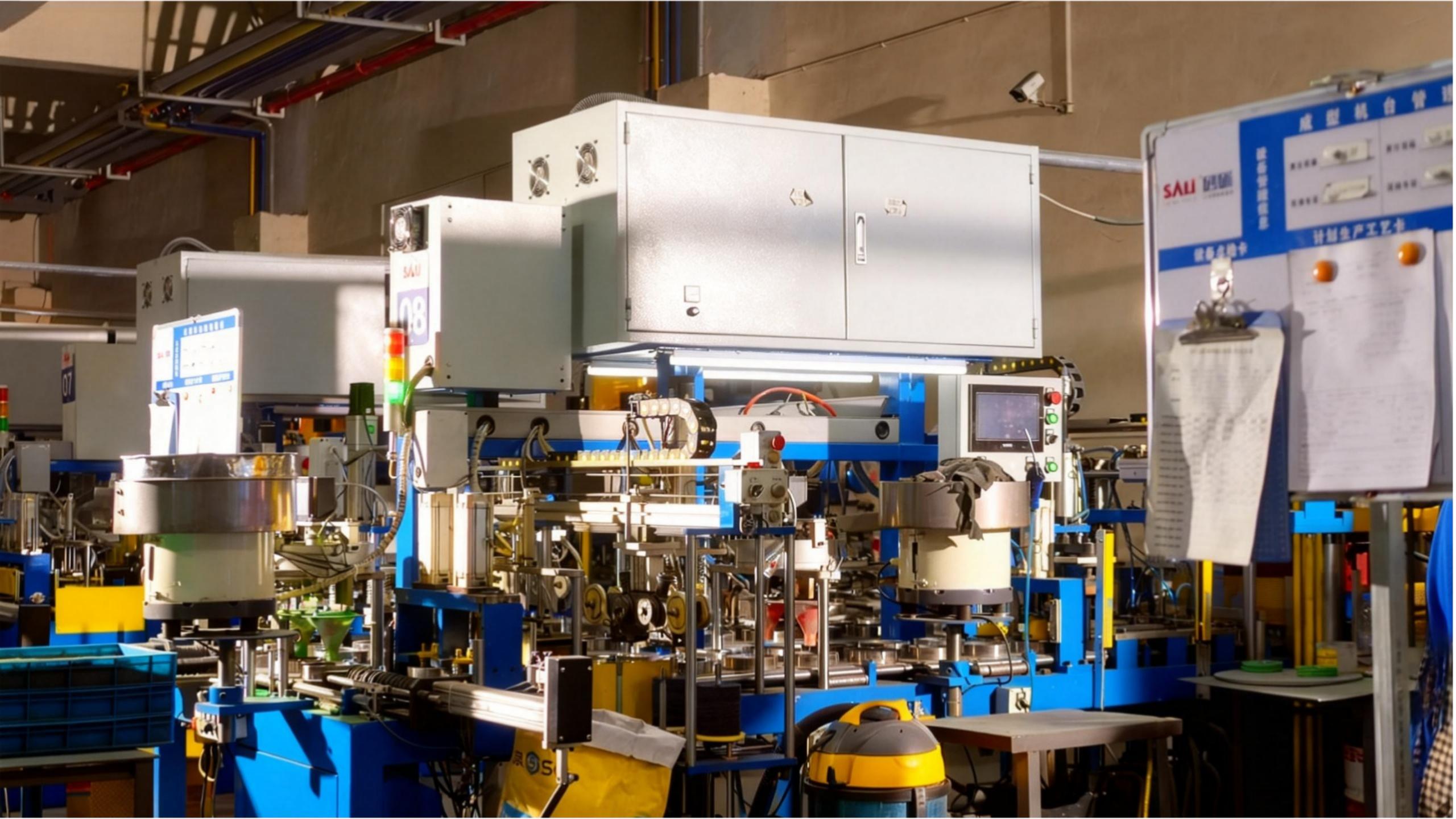
At SALI Tools, the direct production base in Yongkang occupies a 6,000 m² site with 30,000 m² of construction area, and the company operates an in-house testing laboratory. SALI states that every production batch is sampling-tested in that laboratory and that B2B clients can access live remote camera feeds of the testing process, so batch testing can be observed without travelling. The wider operational footprint described in the company profile includes an 8,000 m² warehouse with capacity for 12,000 m³ of goods, and a Yiwu headquarters with a 700 m² showroom displaying more than 5,000 products.
A visit does not verify performance on your material. Site observation confirms that equipment, personnel and procedures exist on the day of the visit; it does not establish how a 115 mm disc behaves on the specific stainless steel grade, wall thickness and grinder you use. That gap is the strongest argument for sample testing before a bulk commitment, and for treating project references as complementary evidence rather than a substitute for first-article approval.
A Capability Evidence Checklist: What to Request Before You Travel
The checklist below is deliberately documentation-first. It can be sent as a written request and answered before flights are booked, and it produces evidence that remains useful afterwards — during negotiation, first-article approval and any later claim discussion.
| Evidence to request | What it establishes | What to verify |
|---|---|---|
| Production base scope and address | Which process steps (bond mixing, mesh reinforcement, pressing, curing, testing) run in-house | The site address matches the address on the certificate or business registration, and matches the site you intend to visit |
| ISO 9001:2015 quality management system certificate | A documented quality management system covering a defined scope of activities | Certificate number, issuing body, validity dates, and that the certified scope names abrasive disc manufacturing |
| MPA product certificate | Independent burst and side load testing of a product type | Certificate reference, covered disc types and dimensions, and validity |
| EN 12413 conformance statement | Alignment with the mandatory European safety standard for bonded abrasive products | Marking, dimensional tolerance and burst-test requirements are stated for the item ordered |
| Batch test records from the in-house laboratory | How each production batch is sampled and tested | Whether testing covers burst speed, cutting efficiency and durability, and whether live remote inspection is offered |
| Project references with scale, duration and application | Whether the product has been used at volume, in a comparable application, over time | Country, product model, application type, contract duration and whether orders repeat |
| Warehouse and ready-stock evidence | Dispatch capability for repeat and replenishment orders | Warehouse area and capacity, and the share of standard SKUs held in stock |
| Sample testing terms | Whether a buyer can validate discs on their own material before committing | Agreed test parameters, and whether sample fees are refundable on the first bulk order |
Reading Certificates Correctly: What ISO 9001:2015 and MPA Each Cover
Two certificate types appear in most cutting disc supplier packs, and they answer different questions.
An ISO 9001:2015 certificate is a management-system credential. It confirms that a documented quality management system is in place for a defined scope of activities — not that any individual disc passed a burst test. SALI Tools holds an ISO 9001:2015 quality management system certificate, number 01525Q20094R001, issued by WIT Assessment. The company also states that it holds ISO 14001 alongside ISO 9001 and operates a comprehensive quality traceability system. When a buyer receives such a certificate, three checks matter: the certificate number, the issuing body and the certified scope. The scope must name the manufacturing activity being purchased — abrasive disc production — and the address should correspond to the site you intend to visit. Validity should be confirmed through the issuer’s registry rather than from the PDF alone.
An MPA certificate is product evidence. MPA Hannover provides independent safety testing for bonded abrasives, including burst testing and side load testing, and the “MPA tested” mark is widely recognised in EU market access discussions. SALI Tools holds MPA certificate Z-15486A/25. Because MPA testing is type- and dimension-specific, the buyer’s check is a match: the disc type (for example flat Type 41 or depressed-centre Type 42/27) and nominal dimensions on the certificate should cover the items in the purchase order.
EN 12413 sits alongside these as the mandatory European safety standard for bonded abrasive products, specifying requirements for burst testing, marking and dimensional tolerances. Taken together, the three documents describe a system (ISO 9001) and a tested product type (MPA, EN 12413). None of them replaces batch-level records, which is why in-house testing data should be requested as a separate item rather than assumed from a certificate pack.
Project References as Capability Evidence: Reading the 10 Million-Piece Case
Reference lists are often treated as decoration. Read as capability evidence, they answer a different question: has this supplier’s product been used at volume, in a comparable application, for long enough that quality claims have been tested by time?
SALI Tools’ documented project records include a Middle East case in Iraq: 10 million pieces used for fabrication and on-site processing, a project duration of five years, with the client reporting stable operation and consistent quality, and highlights including professional-grade and industrial-grade products with worry-free after-sales support. For a metal fabrication buyer, that combination — volume, duration and application type — is more informative than a logo wall, because it describes a supply relationship that survived multiple production cycles and multiple on-site conditions.
Three further records broaden the picture. In Ethiopia, a hardware tools agent case covers 30 million pieces over 20 years, with an annual growth rate exceeding 50% after switching to the SALI brand, and highlights of high cost-performance, stable quality and complete product specifications. In Uzbekistan, a wholesaler case covers 10 million pieces over more than nine years; by 2024, sales volume had increased 21 times compared with the agent’s first year in 2018. In Russia’s North Caucasus region, a distributor case covers 5 million pieces over more than seven years with a reported annual growth rate of 50%.
The limits of references should be stated as plainly as their value. They are first-party records: they describe what happened between a supplier and its customers, not the findings of an independent audit. A buyer can narrow that gap by asking for the specific product model used, the country and application, the purchase history (single order or repeat cycle), and whether the reference is willing to be contacted directly.
How SALI Tools Structures Verifiable Supply Capability
SALI Tools operates as a manufacturer and brand operator rather than a pure trading intermediary. The company was founded in 2003, launched its self-owned SALI brand in 2010, and states that the brand holds trademark registrations in more than 190 countries. Products are exported to more than 160 countries and regions, and as of March 2025 the company reports long-term strategic cooperation agreements with agents from 45 countries. It employs more than 150 staff and maintains an R&D team of more than 30 engineers.
Manufacturing and stock evidence that buyers can request and compare:
- Production capacity. A reported monthly capacity of 12.5 million pieces of cutting and grinding consumables, with an annual output of 150 million pieces; the company’s published product information reports a supply ability of 500,000 pieces per day for reinforced resin-bonded cutting discs.
- Product scope. Cutting discs from 3 in to 16 in, covering metal cutting discs, stainless steel cutting discs, stone cutting discs, thin and ultra-thin cutting discs, abrasive and resin bonded cutting discs, aluminium oxide and silicon carbide types, and both flat (Type 41) and depressed centre (Type 42/Type 27) shapes.
- OEM and ODM flexibility. Custom outer diameters from 100 mm to 400 mm; ultra-thin thickness of 1.0 mm to 1.6 mm and standard thickness of 2.0 mm to 6.0 mm; bore sizes of 16 mm, 22.23 mm and 25.4 mm; brown aluminium oxide (A), white aluminium oxide (WA), zirconia (ZA) and silicon carbide (C) grains; grit sizes from 24# to 120#; single, double or triple fiberglass mesh reinforcement; and custom labelling, disc colours and packaging.
- Quality control. A stated policy of 100% testing, with every production batch sampling-tested in the in-house laboratory, plus remote camera access so clients can observe batch testing in real time or request customised test metrics.
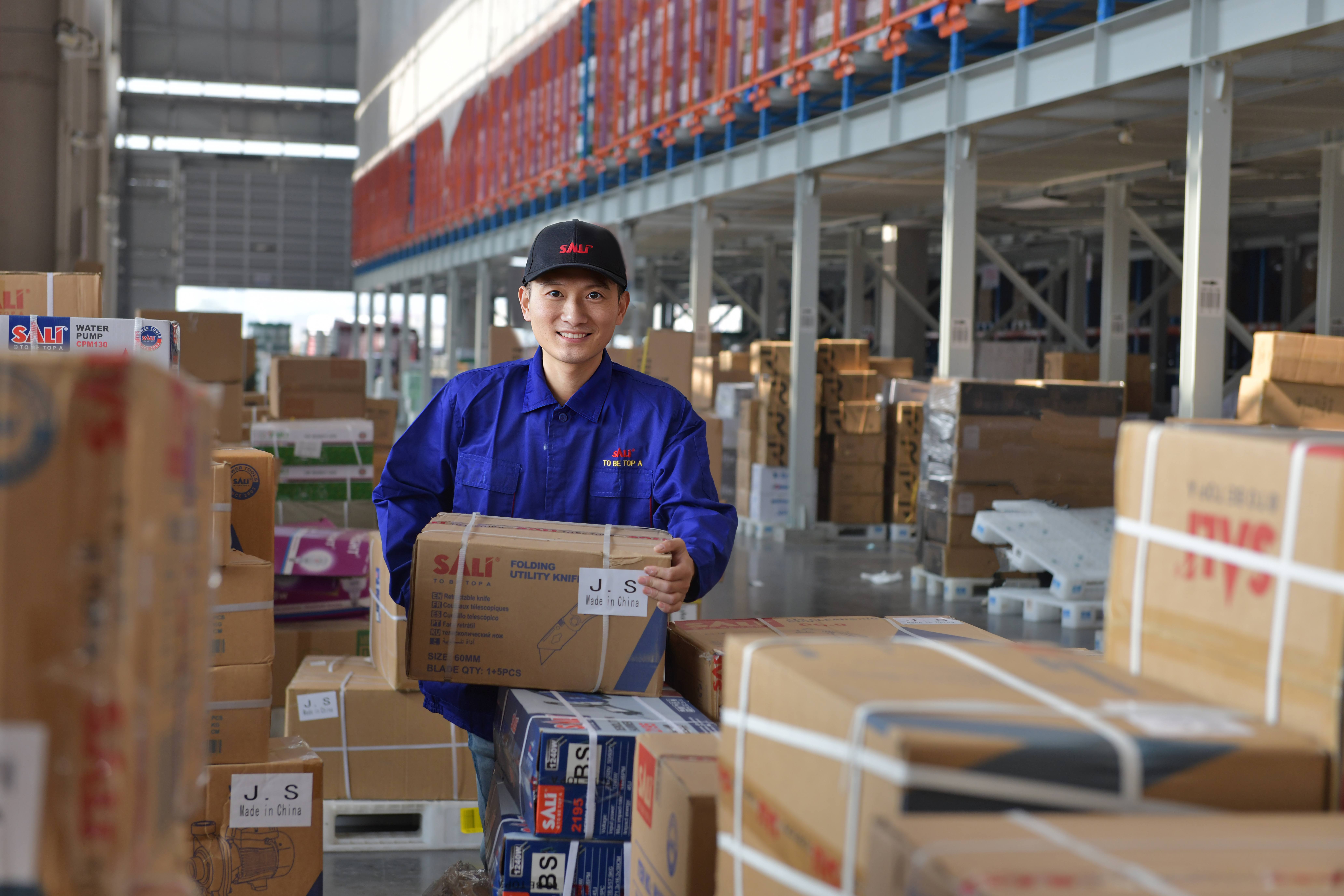
- Supply continuity. An 8,000 m² warehouse with capacity for 12,000 m³, holding 85% of standard SKUs in ready stock, with same-day dispatch for regular orders; MOQ for SALI brand orders reported as low as one carton.
- Commercial terms. OEM production and delivery within 30 to 45 days from design confirmation; certifications printed to MPA, EN12413, ISO9001 and MSDS standards.
- Service structure. A 24-hour claim settlement mechanism based on photo or video evidence, with replacement or credit applied to the next order; sample fees refundable on the first bulk order; and regional teams with resident country managers in East Africa (Kenya), West Africa (Nigeria), Central Asia (Kazakhstan) and South Asia (Pakistan).
Application Fit: Where Cutting Disc Capability Is Actually Tested
Metal Fabrication & Steel Structure is the reference application for this product family, covering precision fabrication and the cutting of stainless steel pipes, with further use in pipeline and petroleum projects and in steel structure and infrastructure projects. Typical operation modes are radial cutting at 90° and angular grinding at 15° to 30°, with support equipment including angle grinders, chop saws and die grinders.
The operating envelope matters when assessing capability claims. Documented application conditions for this product specify ambient temperatures from −20 °C to +45 °C and relative humidity between 45% and 75% RH, with adequate ventilation or local dust extraction. Standard resin-bonded discs are not intended for wet, raining or water-splashing conditions unless specifically marked for wet cutting service, and the product is not to be used in explosive atmospheres or in heavy moisture and corrosive conditions. Pre-use requirements include verifying that the maximum RPM printed on the wheel exceeds the grinder’s maximum rated speed, inspecting the wheel for cracks, chips, bends or moisture damage, and never using an expired wheel. Storage guidance for resin-bonded discs calls for cool, dry conditions — humidity below 60% and 10 °C to 30 °C — with optimal performance retained for three years under standard conditions.
These boundaries are a useful test of technical honesty. A supplier that states them is describing a product envelope; a supplier that markets universal suitability is describing a sales position rather than an engineering one.
Market Context: Why Documentation Demands Are Rising
Three structural trends make documented capability more relevant than it was a decade ago.
Volume. Market research published by Market Research Future values the global cutting discs market at approximately USD 7.322 billion in 2024, with a projection of USD 11.59 billion by 2035. Directionally, the category is expanding — and expanding categories attract new suppliers with widely varying process depth.
Product structure. Resin-bonded grinding and cutting discs accounted for 38.5% of the global abrasive disc market in 2025, according to Dataintelo. Resin-bonded construction is also the segment most sensitive to moisture, storage and curing control — the precise parameters that factory evidence addresses.
Precision. Ultra-thin cutting discs are defined in the industry as 1.6 mm or less in thickness, with growing adoption of 1.0 mm and 0.8 mm formats for precision metal fabrication. Thinner discs raise the demands placed on mesh reinforcement, flatness and bond consistency, and reduce the margin for process variation.
Regulation pushes in the same direction. EN 12413:2019 sets burst testing, marking and dimensional requirements for bonded abrasive products in the EU, and MPA Hannover’s independent testing supports EU market entry for bonded abrasives.
A caveat belongs here. Market size estimates for this category vary materially depending on whether grinding wheels and superabrasives are counted inside the definition; published valuations for the same period differ across research houses. Buyers should treat these figures as directional context for category growth, not as procurement data.
Where Factory Evidence Stops: Limits Buyers Should Plan Around
A realistic procurement framework acknowledges six boundaries.
- Point-in-time versus batch outcome. A visit and a certificate describe capability and conformance at a moment. Neither guarantees the behaviour of the specific cartons you receive, which is why incoming inspection and sample validation remain necessary.
- System certificate versus product safety. ISO 9001:2015 certifies a management system; it does not certify burst strength. Product-level safety evidence comes from MPA testing and EN 12413 conformance, and the two categories should not be substituted for one another.
- First-party versus third-party test evidence. In-house laboratory records are produced by the supplier. MPA testing is independent. Both are useful, but they carry different evidential weight in a dispute.
- Remote inspection versus incoming inspection. Remote camera access to a testing laboratory improves transparency about how batches are sampled. It is not a substitute for testing discs from your own consignment.
- Certificate scope boundaries. MPA certification applies to tested types and dimensions. A certificate that covers a 4.5 in flat disc does not automatically evidence a 14 in depressed-centre disc.
- “Own factory” is not a binary condition. SALI Tools states that, alongside its own standardized production base for cutting and grinding consumables, it integrates and holding-manages an audited supply chain network in order to deliver a broader tool range. Buyers should therefore ask which items in a quotation originate from the controlled production base and which originate from the audited network, and whether documentation covers both.
One further expectation should be set before a visit: bond formulations are proprietary. A buyer should expect to observe process steps, equipment, testing and traceability, and should not expect a supplier to disclose formulation details. Treating formulation as confidential while process control is demonstrable is a normal and reasonable trade position.
Future Outlook
Supplier qualification in bonded abrasives is shifting from assertion to documentation. Buyers are increasingly treating certificate validity checks, scope matching and batch-level testing as routine RFQ steps rather than as ad-hoc verification triggered by a quality incident, and remote audit access is becoming a complement to physical visits rather than a replacement for them. The practical consequence is that supplier packs are likely to separate system certificates, product test certificates and batch records into distinct, checkable items.
Volume growth and thinner product formats will keep pressure on process control. SALI Tools positions its abrasives business on more than two decades of manufacturing experience, a policy of 100% batch testing, a quality traceability system, and a stated full liability commitment for personal injury caused by product manufacturing defects — anchored in documentation by the ISO 9001:2015 certificate 01525Q20094R001 issued by WIT Assessment and MPA certificate Z-15486A/25. For buyers, the durable lesson is procedural rather than promotional: request the evidence, read its scope, and test the batch.
Frequently Asked Questions
Does the supplier operate its own factory?
SALI (ZHEJIANG SALI ABRASIVE TECHNOLOGY CO., LTD) operates its own standardized production base specializing in the research, development and manufacturing of high-performance cutting and grinding consumables such as cutting discs and flap wheels. In addition, the company strategically integrates and holding-manages an audited supply chain network in order to deliver a comprehensive tool solution. For rapid fulfilment it operates an 8,000 m² modern warehouse with over 5,000 active SKUs, enabling same-day dispatch for ready stock, and it maintains a professional testing laboratory where clients can access live camera feeds to inspect real-time batch testing.
What safety standards do SALI cutting discs meet, and what guarantee accompanies them?
SALI cutting discs are manufactured to MPA and EN12413 standards and are reinforced with two to three layers of high-tensile fiberglass mesh. The stated burst speed limit reaches at least 100 m/s, against a standard threshold of 80 m/s. The company’s documented certification references include MPA certificate Z-15486A/25 and ISO 9001:2015 quality management system certificate 01525Q20094R001 issued by WIT Assessment. SALI states that it accepts full legal and product liability for personal injury caused by product manufacturing defects.
Which materials are SALI cutting discs suitable for, and will they discolour stainless steel?
Different formulas are applied to different workpiece materials. For stainless steel (Inox), the company uses high-purity white aluminium oxide (WA) with sulfur-free and chlorine-free bonds, intended to deliver cool cuts without burrs or discoloration. For carbon steel and cast iron, aluminium oxide (A) discs are used for high-efficiency cutting, and the wider product range includes silicon carbide (C) for stone and cast iron and zirconia (ZA) for heavy-duty work. Standard discs should not be used on soft metals such as aluminium or copper, or on wood and plastic, because material loading can cause wheel burst.
What are the minimum order quantity and delivery lead time?
For SALI brand orders, the company reports a minimum order quantity as low as one carton, with 24-hour dispatch for standard stock items, supported by an 8,000 m² warehouse holding 85% of standard SKUs in ready stock. For custom OEM orders, production and delivery take 30 to 45 days from design confirmation to final delivery.
How are quality claims or defective items handled after delivery?
SALI operates a 24-hour quick claim settlement mechanism. The buyer provides photographs or video of the issue; once the company’s team verifies it, replacement units or a direct credit are processed for the next order, without requiring complex return procedures.
What are the storage requirements and shelf life of resin-bonded cutting discs?
Resin-bonded discs are moisture-sensitive and should be stored in a cool, dry area at below 60% humidity and between 10 °C and 30 °C, off the floor. Under standard storage conditions, SALI discs retain optimal performance for three years. Items are shrink-wrapped and moisture-protected for transit and storage, and the company provides storage guidance and reorder-cycle tracking to partners.