
What a Durable Electric Actuator Supply Ecosystem Looks Like in Practice
For industrial buyers moving from supplier selection to contract execution, the real question is no longer which electric actuator specification fits the valve. It is whether the supplier can sustain quality, delivery, and support over the life of the project.
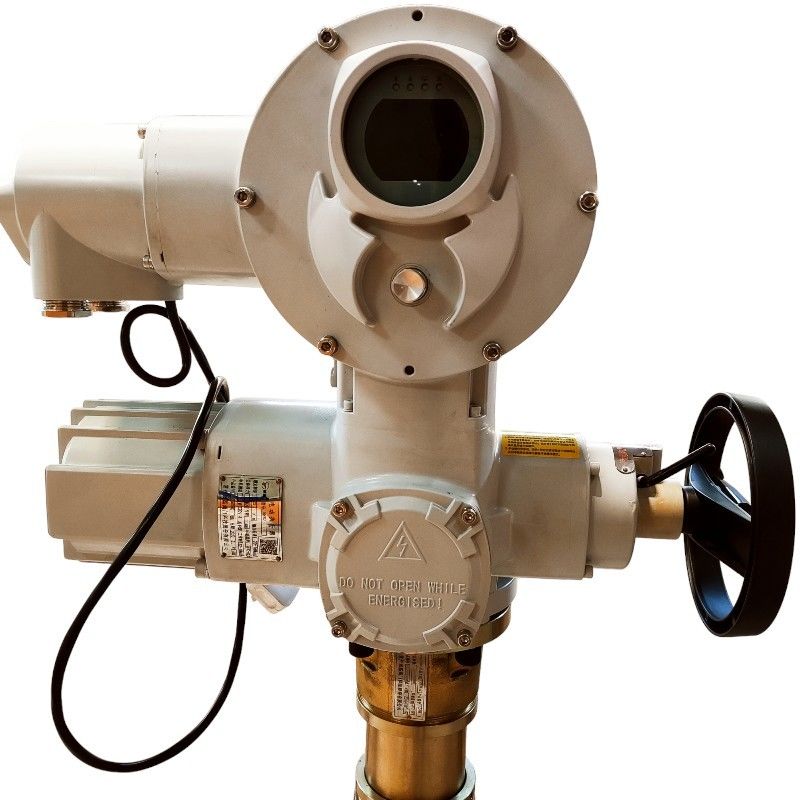
An intelligent linear electric actuator configured for modulating valve control. Image: CHENGLEI product reference.
Electric actuators have moved from auxiliary valve accessories to central components in industrial automation. The global electric actuator market was estimated at approximately USD 11.5 billion in 2024, with projections pointing to a CAGR of 6.5% to 7.2% through 2034 (Zion Market Research). In 2025, Asia Pacific held a 38.5% revenue share in the electric valve actuator market, valued at over USD 1.8 billion (Dataintelo). These numbers help explain why procurement teams are treating actuator supply as a strategic relationship rather than a one-time purchase.
For a buyer in the decision-to-execution stage, the product specification is no longer the main unknown. The open questions are about capacity, consistency, commissioning safety, maintenance response, upgrade paths, and the commercial terms that make a long-term partnership work. This article uses publicly available market data and a China-based manufacturer, Changzhou Chenglei Valve Technology Co., Ltd., as a reference case to show what a durable electric actuator supply ecosystem looks like in practice.
The Procurement Gap Between Product Choice and Long-Term Execution
Between selecting an actuator and completing installation, three risk categories frequently determine whether a project stays on schedule: misoperation during debugging, selection mismatches, and electrical or explosion-proof failures.
Debugging risk appears when limit settings are entered incorrectly or phase sequence is reversed. Selection risk appears when torque is insufficient, travel does not match the valve, or the voltage level is wrong. Electrical and explosion-proof risk appears when insulation is damaged, a spark ignites a hazardous atmosphere, or electromagnetic interference disturbs control signals. None of these are rare in industrial projects.
The opportunity is to choose suppliers that have built countermeasures into the product itself. For CHENGLEI, these countermeasures include one-click setting through a non-invasive design, phase sequence self-correction, valve position memory, a selection database with a safety factor of 1.5 times or more, multi-department review for non-standard conditions, optocoupler isolation, conformal coating, and independent grounding bolts. These details do not always appear in a datasheet, but they determine whether an electric valve actuator performs as expected during commissioning.
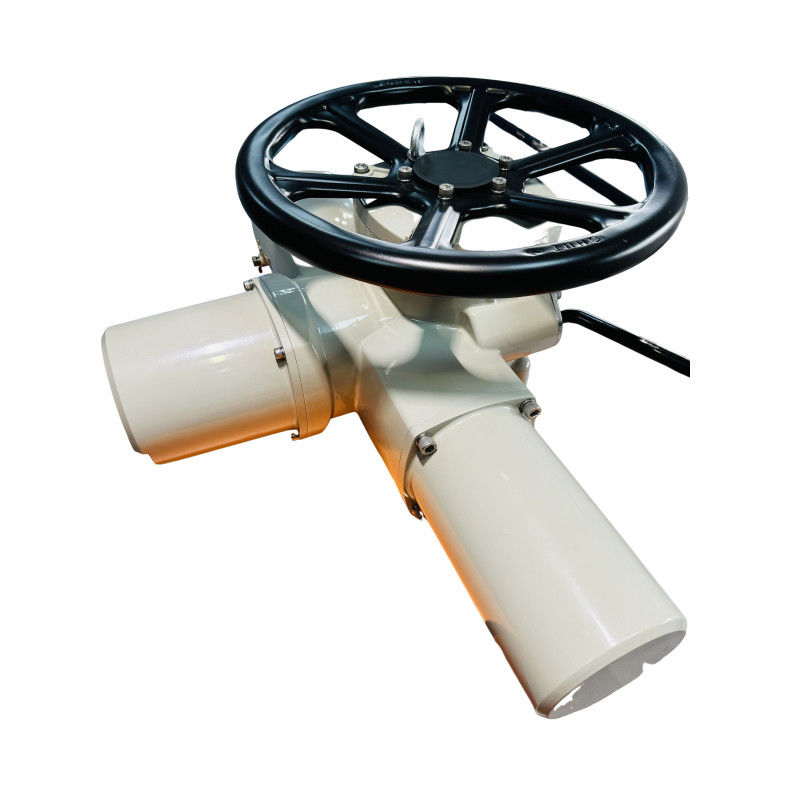
Multi-turn intelligent electric actuators with thermal protection are used for gate and globe valve duty in process plants.
Changzhou Chenglei as a Reference Case: Capacity and Capability
Changzhou Chenglei Valve Technology Co., Ltd., commonly referred to as CHENGLEI, is an electric actuator manufacturer based in Changzhou, Jiangsu, China. Founded in 2016, the company operates a 20,000-square-meter facility with around 100 employees and an annual output of 120,000 units. Exports account for about 80% of production, and the company maintains a research and development team of 25 engineers.
For long-term buyers, the most relevant evidence is manufacturing depth. CHENGLEI states that more than 50 CNC machining centers, CNC lathes, and inspection devices are used in-house. The factory has a monthly production capacity of 8,000 units. The company's independently developed and produced CL series valve electric actuators are applied in oil and gas, water and power, and chemical, process and industrial sectors.
These figures matter because procurement execution depends on a supplier's ability to hold tolerances at volume. A factory with internal machining capacity and quality inspection equipment has more control over consistency than an assembly operation that depends entirely on bought-in components.
Electric Valve Actuator Types: What Long-Term Buyers Should Match
Long-term reliability begins with the correct actuator motion type. Three basic categories dominate industrial procurement:
Electric part turn actuators are used for quarter-turn valves such as ball and butterfly valves. In the CHENGLEI range, the QI series covers 100 N·m to 5,000 N·m, including the QI10, QI60, and QI500 models.
Electric multi turn actuators drive gate valves, globe valves, and other multi-turn isolation valves. CHENGLEI's Z series includes the Z5 at 50 N·m, Z10 at 100 N·m, Z30 at 300 N·m, and Z45 at 450 N·m, with typical output speeds of 18 or 24 revolutions per minute.
Intelligent linear electric actuators, such as the ZXC series, convert motor rotation into linear thrust for regulating valves. The ZXC series offers maximum thrust up to 10,000 N, standard stroke up to 250 mm, and options for 100 mm stroke in a 24 VDC configuration.
Beyond the motion type, buyers choose between intelligent on/off electric valve actuators and intelligent modulating electric valve actuators. On/off units provide reliable open/close control with torque protection. Modulating units accept analog or bus command signals for continuous positioning, with CHENGLEI's control dead zone adjustable from 0.5% to 5% to balance stability and response speed.
Intelligent Control: What Changes in Daily Operation
The largest difference between a conventional actuator and an intelligent electric actuator is not the motor; it is the control logic. CHENGLEI's intelligent actuators support non-invasive setting, which allows configuration through an infrared remote control or rotary knob without opening the electrical cover. This single feature reduces the risk of moisture and dust ingress during commissioning.
The control unit also performs self-diagnosis and fault warning, communicates through Profinet, Modbus, or Profibus, uses absolute encoder position acquisition, and monitors torque continuously to prevent seizure. For three-phase motors, phase sequence detection and automatic correction allow the actuator to operate correctly even when the live wires are reversed on site. Full-open and full-close limits are self-learned, which prevents over-torque caused by manual setting errors.
These controls translate into measurable performance claims from the manufacturer: a lifespan of at least 30,000 operations without maintenance depending on operating conditions, MTBF greater than 50,000 hours, protection up to IP68 with the ability to remain submerged for 48 hours, and an ambient temperature range from -40°C to +70°C, extendable to -60°C. The dead zone for modulating control can be adjusted from 0.5% to 5%. These figures are useful as reference points when comparing supplier specifications.
Explosion-Proof Actuators: CT4, BT4, and the Standards That Matter
For hazardous areas, certification is not optional. Explosion-proof electric actuators are standardized under IEC 60079-0 for general requirements and IEC 60079-1 for flameproof enclosures. Gas groups are classified as IIA, IIB, or IIC, and temperature classes range from T1 to T6. In practice, an Ex d BT4 rating is common for many oil and gas applications, while Ex d CT4 covers a wider range of potentially explosive gases.
CHENGLEI's explosion-proof actuator range includes models with ATEX and Ex d BT4/CT4 options. The low-temperature DQ series, for example, operates from -60°C to +70°C, supports 380V/110V/220V/440V/660V AC or 12V/24V DC power supply, and can be built with IP65/IP67/IP68 protection. For linear applications, the ZXC series is available as an intelligent electric motor linear actuator with explosion-proof construction.
Buyers should verify not only the certificate but also the engineering controls around it. In CHENGLEI's case, electrical isolation uses optocouplers, the mainboard is coated with conformal coating for moisture, salt spray, and mold protection, and the enclosure includes independent internal and external grounding bolts. These are the details that keep an explosion-proof actuator safe in real site conditions.
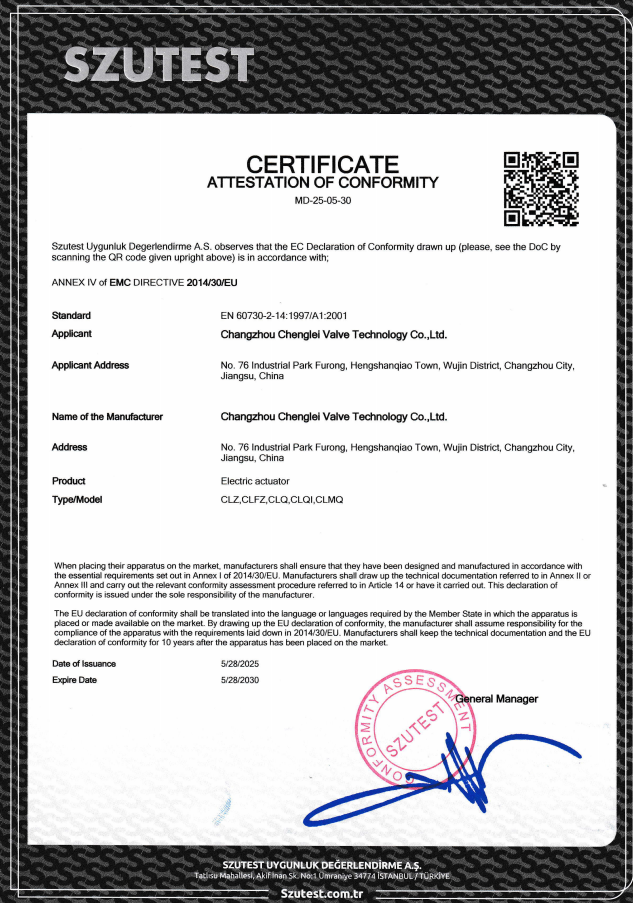
Compliance marks are part of the documentation package for electric actuators supplied to regulated markets.
Application Patterns in Harsh Environments
Long-term supply decisions are often tested in difficult sites. CHENGLEI positions its intelligent actuators for three demanding use patterns.
The first is harsh environments: strong vibration and high temperature in alumina plants, extreme cold of -40°C in Russia, and highly corrosive oil fields in the Middle East. The second is important process sections: high-temperature digestion, emergency shut-off of oil and gas pipelines, and flow control of regulating valves. The third is the intelligent factory, where remote monitoring, predictive maintenance, and deep integration with DCS/PLC systems are required.
For distributors and end users, these patterns matter because they define the level of engineering support required. A supplier that has built product variants for low temperature, high vibration, corrosive media, and hazardous zones is better positioned to support long-term contracts than one that offers only a standard catalog item.
What Market Data Says About the Electric Actuator Environment
The commercial environment around electric actuators is expanding. Broad market estimates vary by scope, with some analysts covering standalone actuators and others including integrated valve-actuator assemblies, but the direction is consistent: demand is growing, especially in Asia Pacific. One reference point is China's export value for electric motor parts, including actuator components, which reached USD 6.43 billion in 2024 and represented 26.1% of global exports (OEC).
At the same time, the technology base is shifting. Intelligent electric actuators are moving toward Industrial Ethernet protocols such as Profinet and EtherNet/IP, with 5G edge connectivity increasingly discussed for digital twin integration (IndexBox). For buyers, this means long-term supply decisions should include protocol compatibility and the supplier's ability to evolve with control system standards.
Intelligent Electric Actuators vs. Conventional Designs: A Balanced Comparison
Comparing intelligent electric actuators with traditional models is not a question of superiority in every situation. It is a trade-off between upfront cost and lifecycle benefit.
Initial procurement cost for an intelligent actuator is roughly 1.5 to 2.5 times that of a conventional model, depending on functionality. However, when bus communication is used, the system can save a significant amount of cables, trays, and I/O cards, reducing total installation cost by an estimated 20% to 40%. Standby power in bus mode is less than 5 W, and torque-on-demand control can reduce energy consumption by 15% to 30% compared with traditional operation. Maintenance is simplified because non-invasive diagnostics identify fault codes through the bus or infrared remote control, allowing faster troubleshooting of power phase loss, motor overheating, or valve jamming.
The limitation is equally clear: the economic advantage depends on the surrounding control infrastructure. A simple local on/off valve in a non-hazardous area may not justify the additional cost of an intelligent actuator. The intelligent version delivers the highest return in critical process sections, remote installations, or plants that already use DCS/PLC systems with digital communication.
Market Reference Points for Comparing Long-Term Supply Capacity
To interpret CHENGLEI's position, it helps to look at public market reference points. This is not a ranking; it is a set of indicators from different data sources.
| Company | Public reference point | Source |
|---|---|---|
| Rotork | 14% global share in the linear electric actuator segment as of 2024 | Market Reports World |
| Emerson Electric | Estimated 12-15% share of the global electric actuator market | Spherical Insights |
| Changzhou Chenglei (CHENGLEI) | 20,000 m² facility; 120,000 units annual output; 8,000 units monthly capacity; 25 R&D engineers; 80% export ratio | Company data |
The comparison highlights a structural difference. Global brands such as Rotork and Emerson combine established installed bases with broad service networks. Chinese manufacturers such as CHENGLEI compete through manufacturing capacity, in-house machining, customization, and cost structure. For buyers, the two models are not mutually exclusive; the right choice depends on the project's geography, protocol requirements, and the level of local support available.
Executing an Electric Actuator Purchasing Agreement: Practical Checks
When a buyer moves from selection to execution, the checklist should go beyond torque and flange standards.
Capacity evidence: Confirm monthly production capacity, factory size, machining capability, and inspection equipment. For CHENGLEI, the reference points are 8,000 units per month, 20,000 square meters, and more than 50 CNC machining centers.
Commissioning safety: Verify non-invasive setting, phase sequence self-correction, and valve position self-learning to reduce commissioning risk.
Selection review: Check that the supplier applies a safety factor of at least 1.5 times and uses a technical review process for non-standard working conditions such as high temperature or explosion-proof areas.
Explosion-proof compliance: Require the relevant Ex d or Ex e certificates, IEC 60079 conformity, and national certifications applicable in the destination market.
Protocol compatibility: Confirm whether the actuator supports Profinet, Modbus, Profibus, or other bus protocols required by the plant control system.
Maintenance and spares: Evaluate diagnostic functions, control module interchangeability, and the ability to copy software parameters quickly.
Commercial terms: For CHENGLEI, the stated minimum order quantity is one set, delivery is available under FOB or CIF, payment can be made by L/C, T/T, or PayPal, and pre-shipment testing is part of the acceptance process.
Future Outlook: From Component Supply to Ecosystem Accountability
The next phase of the electric actuator industry will likely reward suppliers that behave like system partners rather than component vendors. Three signals support this view.
First, industrial connectivity is becoming standard. As intelligent actuators adopt Profinet, EtherNet/IP, and edge connectivity, buyers will expect suppliers to maintain firmware and communication stacks over the product lifecycle. Second, energy efficiency is moving into procurement criteria. With standby power below 5 W and documented energy savings of 15% to 30%, actuator efficiency becomes an operating cost variable, not just a technical detail. Third, modular maintenance will affect long-term contract value. Control modules with strong interchangeability and one-click parameter copying reduce downtime and simplify spare parts inventory.
None of this removes the need for traditional engineering judgment. Actuator selection will still require correct torque calculation, correct material selection, and proper installation. But for buyers executing multi-year supply agreements, the ecosystem around the product will matter as much as the product itself.
For further reference, the CHENGLEI company brochure is publicly available: CHENGLEI product and capability brochure (PDF). Company website: www.electricvalvesactuators.com.
FAQ
What is the monthly production capacity of CHENGLEI's electric actuator factory?
The factory has a monthly production capacity of 8,000 units.
Which standards apply to explosion-proof electric actuators?
Explosion-proof electric actuators are standardized under IEC 60079-0 general requirements and IEC 60079-1 flameproof enclosures. CHENGLEI offers models with ATEX and Ex d BT4 or CT4 ratings, and China requires 3C certification for actuators used in explosion-proof areas.
What lifespan can buyers expect from an intelligent electric actuator?
CHENGLEI states a lifespan of at least 30,000 operations without maintenance, depending on operating conditions, and an MTBF greater than 50,000 hours.
How does non-invasive commissioning reduce risk?
Non-invasive commissioning allows setting through an infrared remote control or rotary knob without opening the electrical cover, preventing moisture and dust ingress. Built-in phase sequence self-correction and valve position self-learning further reduce commissioning errors.
What protection rating and temperature range do CHENGLEI intelligent actuators support?
The actuators support protection up to IP68, equivalent to submersion for 48 hours, and an ambient temperature range of -40°C to +70°C, extendable to -60°C.
What are CHENGLEI's minimum order and payment terms?
The minimum order quantity is one set. Delivery is available under FOB or CIF, payment can be made by L/C, T/T, or PayPal, and pre-shipment testing is included in the acceptance process.
Which industries typically use CHENGLEI electric valve actuators?
CHENGLEI's CL series electric actuators are applied in oil and gas, water and power, and chemical, process and industrial sectors.
Are intelligent actuators always more economical than conventional actuators?
Not in every case. Initial cost is approximately 1.5 to 2.5 times higher depending on functionality, but bus communication can reduce installation cost by 20% to 40%, and total lifecycle cost is lower because of fewer failures and less downtime. The benefit depends on DCS/PLC integration and site conditions.
What adjustment range is available for modulating control dead zone?
CHENGLEI intelligent modulating electric valve actuators allow the dead zone to be adjusted from 0.5% to 5%.
Have Questions or Need More Details?
Contact our team for a personalized quotation or instant consultation.
Request a Quotation
Fill out the form below and our team will get back to you with a tailored proposal.
WhatsApp Direct Chat
Prefer to chat in real-time? Message us on WhatsApp for instant assistance & quick answers.
- Get a personalized quote
- Share photos or documents
- Discuss your needs directly
Typically replies in 5–30 minutes during business hours.