
What a Fabric Tape Certificate Proves — and What It Does Not
What a Fabric Tape Certificate Proves — and What It Does Not
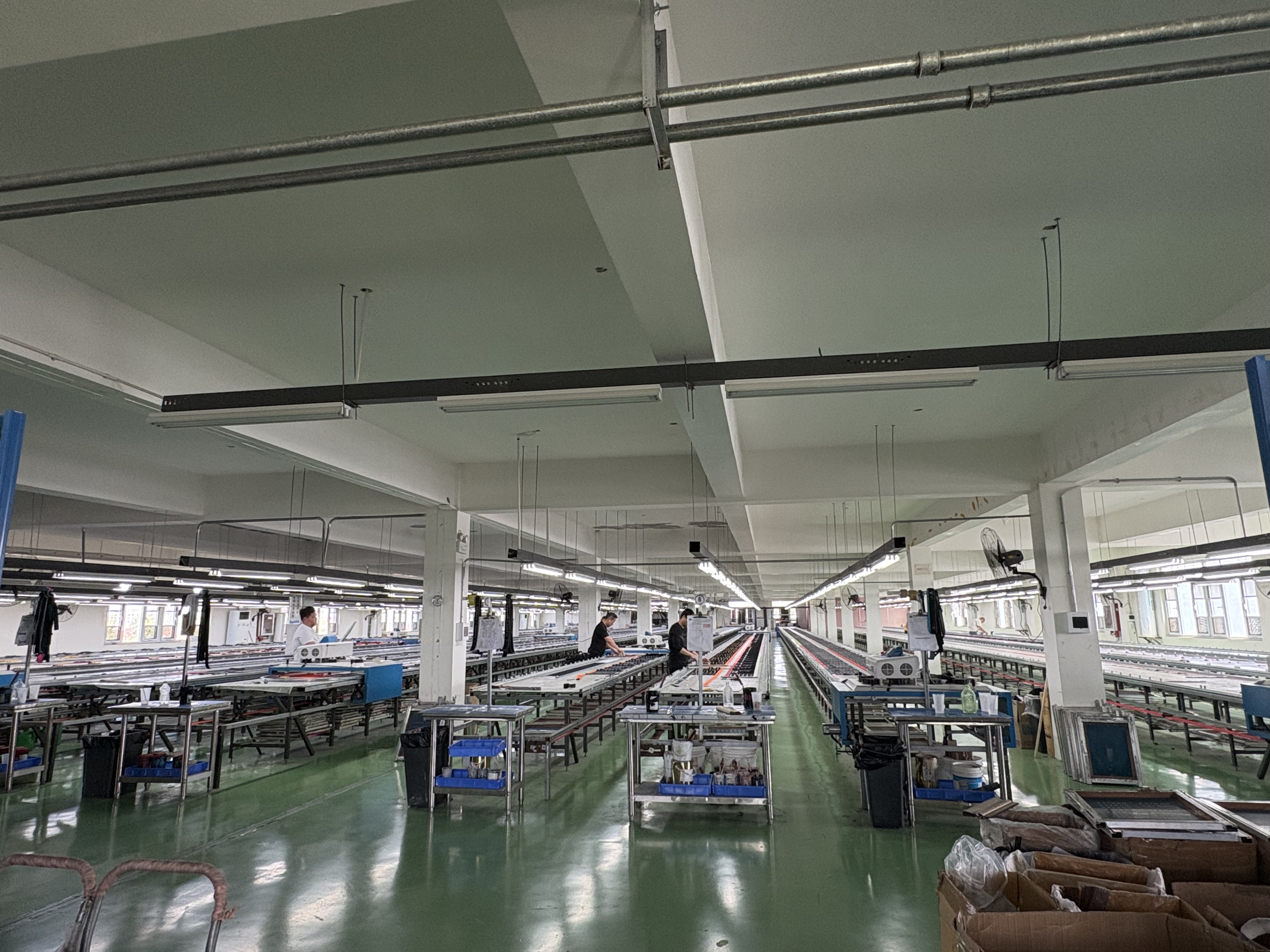
Process control inside a narrow-fabric plant is what a management-system certificate describes; it is not a statement about a specific tape specification.
A fabric tape certificate answers a narrower question than most purchase orders assume. ISO 9001 confirms that a named manufacturing site runs a documented quality management system. OEKO-TEX Standard 100 confirms that specified articles were tested against a restricted-substance limit list. Neither document states that a particular 25 mm jacquard tape will hold its shade at 150% elongation, or that an elastic waistband will recover after a defined number of wash cycles. At the decision stage, the distance between a claim a supplier can repeat and evidence a buyer can check is the distance between an approved supplier and an approved shipment.
This comparison separates four claim families that arrive together in a typical fabric tape quotation — management-system certification, product-level conformity, performance data, and documentary or trade claims — and sets out what verifiable evidence looks like for each. Qingdao Fuwei Rope Co., Ltd, a webbing and elastic tape manufacturer founded in 2004 that exports roughly 70% of its output to the EU and USA, is used as a working example of how a supplier's own documentation should be read. The company's stated facts illustrate the verification process; they do not certify any specific order.
Why certificate claims and product claims get confused
Three recurring confusions survive in procurement files precisely because the document involved is genuine. The problem is rarely a forged certificate; it is a real certificate answering a different question from the one the buyer asked.
- Scope substitution. A site-level quality certificate is presented as though it were a product conformity statement. The buyer reads "certified factory" and hears "approved tape".
- Validity and version drift. A certificate copy circulates for years after its validity date, or after the site, process or article list has changed. Nobody re-checks because the file already exists.
- Evidence-type substitution. A performance figure from a development sample is presented as a production result, or a supplier-reported value is presented with the authority of a third-party laboratory report.
Each confusion is fixable with one question: which document, issued by whom, covering exactly what, valid when. That question is cheap to ask before sampling and expensive to ask after the container is booked.
Four claim families, four different verification routes
The useful comparison is not "which supplier has more certificates". It is whether the evidence type matches the claim type. A certificate cannot be verified by asking for it again; it is verified by reading its scope, its issuer and its dates against the article actually being bought.
Management-system certification
ISO 9001 is a site and process claim. It supports an inference about repeatability — documented procedures, internal audit, corrective action, traceability of production records — and nothing about the tensile strength, colourfastness or restricted-substance status of a finished tape. For a buyer, its practical value is that deviations should leave a paper trail inside the plant, which makes a claim investigation possible in the first place. Its verification route is a certificate copy showing the certification body, accreditation, the exact site and the scope statement, plus a validity date that has not passed.
Product-level conformity
OEKO-TEX Standard 100 and the Global Recycled Standard (GRS) operate at product and article level, but in different ways. OEKO-TEX Standard 100 reports that specified articles or material groups were tested against a restricted-substance limit list, so the certificate's article list and use class matter as much as the logo. GRS verifies recycled content through a chain-of-custody system administered by Textile Exchange and operated by approved certification bodies; a scope certificate establishes that a supplier is entitled to make the claim, while a transaction certificate ties the claim to a specific shipment. Sedex SMETA, including the 4-pillar version that extends beyond labour standards to health and safety, environment and business ethics, is an audit report shared through a platform — evidence of an assessed management practice, not a product mark.
Performance data
Elongation at break, recovery, colourfastness to perspiration or rubbing, shrinkage and printing defect rate only mean something with a method, a specimen and a date attached. "High colourfastness" is not a value. "Grade 4–5 perspiration colourfastness on a 38 mm polyester elastic strap tested to a named method, report dated, laboratory named" is a value a buyer can compare against another supplier's value — or against a retail specification.
Documentary and trade claims
Classification and composition belong to a fourth family, and they are frequently the least examined. Under the Harmonized System, heading 5806 covers narrow woven fabrics; subheading 580620 covers narrow fabrics containing 5% or more by weight of elastomeric yarn or rubber thread; 580631 is limited to narrow woven fabrics of cotton; 580640 covers warp-without-weft fabrics assembled by adhesive, described as bolducs. These are composition- and construction-dependent categories. A code offered before composition has been discussed is a guess wearing a number, and national tariff lines can differ from the base heading even when the composition is correct.
Comparison table: what each claim establishes and how to verify it
| Claim as usually presented | What it can establish | Evidence a buyer should request | Where the claim typically breaks |
|---|---|---|---|
| "ISO 9001 certified" | That a named site operates a documented quality management system within a stated scope | Certificate with number, certification body, accreditation mark, site and scope statement, validity dates | The certificate covers a different site, or a scope that excludes the finishing process used for the order |
| "OEKO-TEX Standard 100" | That specified articles were tested against restricted-substance limits for a defined use class | Certificate copy showing article and material scope, colour or material conditions, validity date | The ordered tape's material, colour or coating is outside the tested article scope |
| "GRS certified" | That recycled content is verified through chain of custody by an approved certification body | Scope certificate plus a transaction certificate for the actual shipment, with the certification body identified | A scope certificate is offered as if it covered a shipment that has no transaction certificate |
| "SMETA 4-pillar audited" | That an independent social-compliance audit covering labour, health and safety, environment and business ethics has taken place | Access to the audit report with audit date and the status of corrective actions | The report date and open findings are not read, so the audit becomes a logo |
| "No cracking at 150% elongation, Grade 4–5 colourfastness" | The measured behaviour of the tested specimen under the stated method and conditions | Test report naming method, laboratory, specimen construction, colour, sample size and date | The specimen was a development sample, the method is unstated, or the colour differs from the order |
| "HS 5806.20" | A classification band consistent with a stated fibre composition and construction | Fibre composition and elastomer content by weight, construction description, destination-country tariff check | Composition changes between orders, or the national tariff line differs from the base heading |
| "More than 20 years, 230+ machines, 230 tons a year" | Stated manufacturing capacity and experience, as reported by the supplier | Factory audit or visit, capacity evidence per production line, references for the same product family | Capacity is stated at plant level but not connected to the ordered product, quantity or lead time |
Reading performance numbers: how the conditions change the decision

A process claim becomes usable for procurement only when the test conditions, the trade-offs and the affected product family are stated alongside the outcome.
Qingdao Fuwei's published comparison of its sublimation printing process against conventional printing is a useful example because it states conditions and trade-offs rather than an isolated outcome. According to the company's own material, the printed layer on webbing shows no substrate exposure or cracking at 150% elongation, whereas the conventional process withstands 80% elongation; perspiration colourfastness is reported at Grade 4–5; and the printing defect rate is reported to fall from 4.5% to 1.2%. The same material records the cost side rather than hiding it: production cost is about 10% higher, printing waste falls by 1.8%, curing-stage energy use per printed metre rises by roughly 15%, and the first trial run requires longer setup and colour-matching time.
What that bundle of figures is, precisely, matters for the buying decision. It is a supplier-reported comparison of two internal processes on the supplier's own products. It is not an independent certification, and it does not transfer automatically to a different substrate, a heavier tape, a darker shade or a different elastomer blend. Four questions convert it into usable evidence:
- Which method and laboratory produced the elongation and colourfastness values, and on what specimen width, substrate and colour depth?
- Was the tested specimen a production run, or a sample assembled for the test?
- How was defect rate defined — per metre, per roll or per order — and over what period was it measured?
- Which part of the range does the claim cover, given that the company positions the process for garment accessories and goggle straps that require high colourfastness and fine patterns?
The comparison also carries a commercial implication that buyers often miss. If a process costs about 10% more to run, then a supplier quoting conventional-process pricing is not offering the same product, and a straight price comparison between the two quotations is not a like-for-like comparison. The honest reading is that the tape with the printing behaviour described at 150% elongation belongs to a different cost band than the conventional one — and that the extra cost is offset within the supplier's own figures by lower printing waste and reduced rework, a claim the buyer should test by asking how rework and complaints are recorded.
Qingdao Fuwei's stated evidence base — and the part a buyer must still verify
Read as a first-party statement, the company profile establishes a documented production chain rather than a finished compliance conclusion. Founded in 2004, Qingdao Fuwei reports 113 employees, a four-person R&D team, 230 tons of annual output, and more than 230 weaving and deep-processing machines across a 24-hour production model. Its product range covers webbing, elastic strap, goggle elastic strap, lace, draw cord, drawstring, bungee cord, elastic cord and woven tape; jacquard weaving is offered in up to 11 colours, and the in-house chain covers woven, knitted and crocheted weaving plus heat-transfer printing, sublimation printing, screen printing, glue dripping, laser cutting, ultrasonic welding, sewing, rope-end finishing and button fastening. The company lists ISO 9001, OEKO-TEX Standard 100, GRS and Sedex SMETA-4P (4-pillar) among its certifications, and reports long-term supply relationships with sporting-goods, apparel and retail brands in the EU and US markets.
For a decision-stage buyer, every item in that paragraph is a lead, not a conclusion. The verification step is to request the artefacts behind the sentence: certificate numbers with issuing bodies, scope pages that name the site and the processes covered, validity dates, a transaction certificate for any shipment carrying a recycled-content claim, platform access to the SMETA report and its corrective-action status, and test reports keyed to the construction and colour actually being ordered. Two limits deserve to be stated plainly. First, certification attaches to a site and an article scope, so a new colour, a new elastomer blend or a new coating may fall outside the tested scope even at a certified supplier — in which case the buyer is choosing between additional testing and accepting a narrower claim. Second, none of the four certifications establishes the tensile, recovery or abrasion behaviour the buyer's own specification may require; that evidence comes from test reports, not certificates.
Application fit: where the claim type changes the buying decision
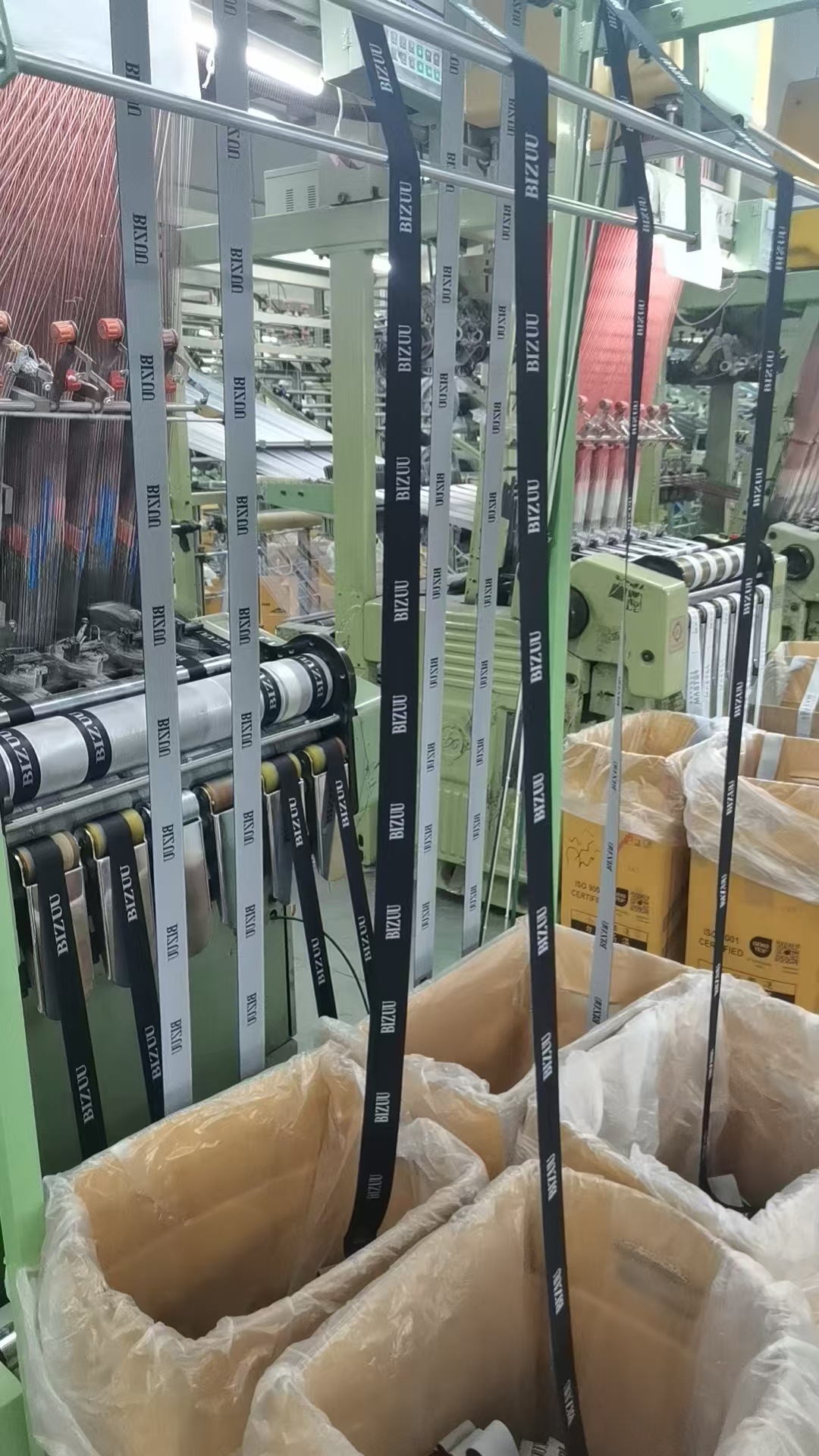
Woven jacquard and printed constructions fail in different ways, so the evidence requested should follow the process rather than the product name.
The same certificate set supports very different buying decisions depending on the construction, which is why application fit belongs inside a comparison of evidence rather than after it.
Goggle straps and elastic headbands
A goggle strap is worn under continuous elongation, so an elongation test at a higher level is more representative of use than one at a lower level — which is why a stated figure of no substrate exposure or cracking at 150% elongation, against 80% for the conventional process, is more decision-relevant here than in a flat trim application. The verification question is whether the report covers the actual strap width, elastic substrate and colour. Where the strap carries a logo, jacquard weaving places the colour in the yarn, while sublimation and screen printing place it on the surface; the two constructions therefore need different evidence — colourfastness and adhesion behaviour for printed tape, yarn and weave consistency for jacquard.
Elastic waistbands and nylon elastic tape
For waistbands, recovery and behaviour after repeated washing matter more than peak elongation, and those are precisely the properties a management-system certificate cannot address. Composition also drives classification here: the 5%-or-more elastomeric yarn threshold in HS 580620 is a weight-based test, so a supplier's classification claim can only be checked once the composition is on paper. Buyers comparing two quotations for the same nominal waistband should confirm both sit in the same composition band before comparing price.
Polyester draw cord, binding and piping
Drawcords and binding are usually shade-matched to a shell fabric, which turns colour consistency across rolls into a purchasing criterion rather than a cosmetic one. Company material describes the sublimation process as achieving zero colour penetration and zero colour fading under high stretch, a property that matters most where the tape is visible from both faces, as in binding and piping. That description is a supplier statement about a process; the buyer's check is a shade assessment against the reference standard on production rolls, plus a colourfastness report on the same construction.
Market context: a large category with thin product-level data
The global webbing market was estimated at USD 4.8 billion in 2026, following a 2025 base of USD 4.6 billion, according to a Grand View Research market report published in November 2026 and cited in the industry data set for this article. The figure covers webbing and narrow fabrics broadly; it does not size jacquard fabric tape, elastic strap or drawcord separately, and it should not be used to argue that demand for any specific construction is rising. What it does support is a narrower and more useful point: the category is large enough that most buyers will receive the same four certifications from several qualified suppliers. The differentiating question therefore stops being "are you certified?" and becomes "which site, which scope, which validity date, and what does your test report actually cover?".
Source note: market figure from Grand View Research, "Webbing Market Size, Share And Growth Report, 2026–2033" (published 15 November 2026; 2025 base year, forecast to 2033). Product scope: webbing and narrow fabrics, global. It is not a fabric-tape-specific measurement.
Outlook: documentation lead time is the real constraint
Where a buyer's market requires restricted-substance conformity or a recycled-content claim, the binding constraint is rarely the certificate itself; it is the time needed to produce evidence that matches the order. A GRS claim depends on a transaction certificate issued for the shipment, and a test report for a new colour or construction has to be generated from a specimen that matches the production configuration. If documentation is requested during sampling, certificate scope and test coverage can still be resolved while colour and construction remain adjustable. If it is requested at shipment, the remaining options narrow to accepting the scope as it stands or accepting a delay. That is a scheduling decision disguised as a compliance decision, and it is the part of the comparison a buyer can control.
A six-step verification sequence for the decision stage
- Match the certificate to the site and process. A trading company's name on the quotation is not the entity on the certificate; identify the plant that will weave, print or finish the order.
- Read the scope line against the order. Check the article, material group and process listed on the certificate against the exact construction and colour being purchased.
- Check validity and version. Record the certificate's validity date and ask what changed since the previous issue — new site, new process, new article.
- Request shipment-level evidence for recycled content. A scope certificate shows entitlement; a transaction certificate shows the claim applies to this delivery.
- Ask for test reports with method, laboratory, specimen and date, then confirm the specimen matches the production configuration rather than a development sample.
- Convert classification claims into composition data, then validate the tariff line for the destination market instead of assuming the base HS heading settles it.
Three signals suggest a claim set is thin rather than simply early: a certificate offered without its scope page, performance figures offered without a method, and a classification code offered before anyone asked about composition. None of these is proof of a bad supplier. All three mean the buyer is being asked to accept a conclusion without the evidence that would make the conclusion checkable.
FAQ
What are common materials for webbing?
Webbing is mainly made from polyester, nylon and spandex, as well as natural latex, with differing wear resistance and tensile properties. Sustainable options include recycled polyester, recycled nylon, recycled spandex and solution-dyed materials, while biodegradable options include cotton, bamboo fibre, SORONA® yarn and linen cotton. Physical properties and eco-certifications vary by material, so a buyer's own test standards should be confirmed before a material is selected.
Can webbing be customized in terms of logo, pattern, colour and width?
Yes. Production can follow the customer's required specifications, and logo and pattern customization can be carried out by woven jacquard, sublimation printing or screen printing. The process usually begins with the logo, pattern, colour code, webbing width, material and estimated order quantity; available processes are then evaluated and the customer is informed of MOQ, sampling lead time and sampling cost. After the selected material is confirmed, feasibility is assessed and sampling and quotation are arranged, with bulk production following sample confirmation.
Does ISO 9001 certification prove that a fabric tape meets a performance specification?
No. ISO 9001 certifies a quality management system at a named site and within a stated scope; it describes how production is controlled, recorded and corrected, not what a finished tape can do. Tensile strength, elongation, recovery or colourfastness is established by a test report on the relevant construction, not by a management-system certificate.
What evidence verifies an OEKO-TEX Standard 100 or GRS claim?
For OEKO-TEX Standard 100, a certificate copy showing the article and material scope, the applicable use class and a valid date, checked against the material and colour actually ordered. For GRS, a scope certificate from an approved certification body plus a transaction certificate for the shipment in question; the scope certificate alone shows entitlement to make the claim rather than proof that a specific delivery qualifies.
How should supplier-reported performance figures such as elongation or colourfastness be evaluated?
By attaching the conditions to the number. Ask which test method and laboratory produced it, what specimen width, substrate and colour were used, whether the specimen came from a production run, and when the report was issued. A figure with stated conditions can be compared with another supplier's figure; a figure without them can only be repeated.
Reading the documentation before reading the price
The comparison that decides a fabric tape order is not between suppliers who hold certificates and suppliers who do not. It is between suppliers whose evidence can be matched to a site, an article scope, a validity date and a test specimen — and suppliers whose documents stop at the logo. Qingdao Fuwei Rope Co., Ltd publishes its certification list, process range and customization workflow in its company profile and product catalogue (PDF), which is the correct starting point for a documentation request rather than the end of one. The next step for a decision-stage buyer is a short, specific written request: the certificate with its scope page, the transaction certificate for any recycled-content shipment, and a test report covering the exact construction, colour and width in the inquiry.
Have Questions or Need More Details?
Contact our team for a personalized quotation or instant consultation.
Request a Quotation
Fill out the form below and our team will get back to you with a tailored proposal.
WhatsApp Direct Chat
Prefer to chat in real-time? Message us on WhatsApp for instant assistance & quick answers.
- Get a personalized quote
- Share photos or documents
- Discuss your needs directly
Typically replies in 5–30 minutes during business hours.