
What a Pharmaceutical Packaging Machine Does: Core Functions and Line Configurations
Industry Reference · Updated August 2026
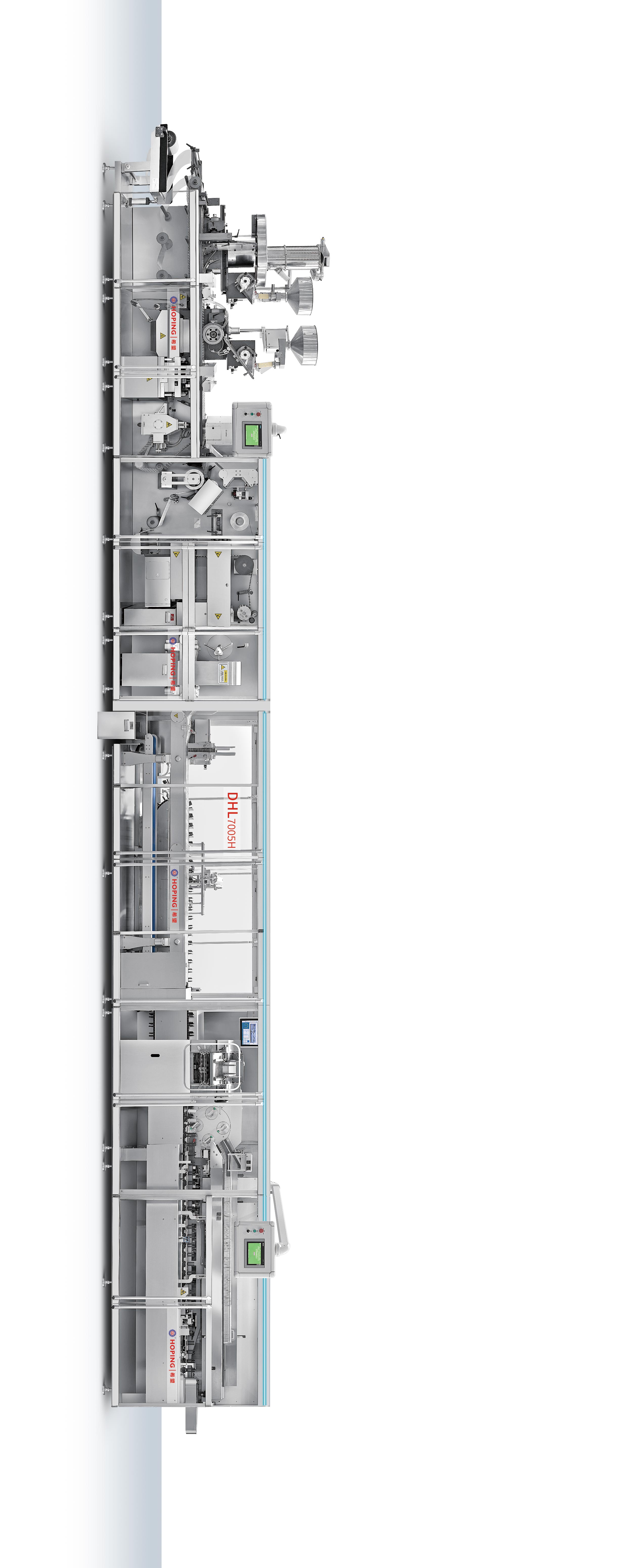
Modern pharmaceutical packaging machines integrate blister forming, product feeding, cartoning and downstream handling into one linked line.
A pharmaceutical packaging machine is a piece of production equipment that performs one or more packaging steps for solid and liquid dosage forms, commonly including blister packaging, cartoning, flow wrapping, bundling, case packing and palletizing. In a modern pharmaceutical plant, these machines are often linked into a continuous packaging line rather than operated as separate standalone units. The choice of machine configuration directly affects output speed, changeover flexibility, GMP compliance and total cost of ownership.
This article explains the main types of pharmaceutical packaging machines, how they work together in a blister-cartoning line, and what buyers should consider during the early research phase. It also includes a technical overview of integrated line configurations and a comparison with traditional standalone setups.
What Jobs Does a Pharmaceutical Packaging Machine Perform?
Pharmaceutical packaging machines are typically classified by the packaging stage they handle. Understanding these stages helps buyers translate product requirements into equipment specifications.
Primary Packaging Machines
Primary packaging is the material that directly contacts the drug product. For solid dosage forms such as tablets and capsules, the most common primary packaging machine is the blister packaging machine, also known as a blister machine or blister packing machine. It forms cavities in a film (usually PVC or cold-form aluminum), fills them with tablets or capsules, seals the filled cavity with a lidding material (such as PTP foil or Alu-Alu), and cuts the web into individual blister packs.
Examples in the HOPING range include the DPP260TI and DPP260K platen-type blister packing machines, which are intelligent flat Alu-PVC / Alu-Alu machines for medium-speed production, and the DPH320H fully servo high-speed roller blister packing machine, designed for high-speed tablet and capsule packaging.
Secondary Packaging Machines
Secondary packaging groups primary packs into cartons, bundles or display units. The main equipment types are:
- Cartoning machine (also called cartoner): opens a carton blank, inserts the blister pack or bottle, optionally inserts a patient information leaflet, and closes the carton. Horizontal cartoning machines are the most common type in pharma lines. Models such as the XWZ120 (30–120 cartons/min) and XWZ500H (100–500 cartons/min) cover low-speed to high-speed requirements.
- Flow packing machine / flow wrapper: wraps a blister pack or carton in a pillow pack. The XW8300 reciprocating flow packing machine achieves up to 300 packs/min with 4-axis servo control and a Beckhoff control system.
- Stretch bander / bundler: applies a film band around a group of cartons to form a bundle. The XWK4060 intelligent fully servo stretch bander handles 30–60 bundles/min.
- Overwrapper: wraps cartons or bundles in transparent film, often used for cosmetic or display packaging. The XWG4060 intelligent fully servo overwrapper operates at 30–60 bundles/min.
End-of-Line Packaging Machines
End-of-line equipment prepares finished packs for transport and distribution. This includes case packing machines and case packing and palletizing integral machines. The XWK Series case packing machine (models XWK900, XWK600) automatically packs cartons or bundles into shipping cases at up to about 5 cases/min. The ICP12 case packing and palletizing integral machine combines case opening, product loading, case sealing, conveying and palletizing at about 12 cases/min.
Integrated Blister-Cartoning Line: How the Equipment Works Together
An integrated blister-cartoning line connects a blister packaging machine and a cartoning machine with a transfer system, so that blisters are produced, inspected and inserted into cartons automatically without manual handling. This configuration reduces labor, minimizes product contamination risk and improves production consistency.
Typical Line Modules
- Blister forming and sealing: The blister machine forms cavities, fills product, seals lidding foil and punches blister packs.
- Blister transfer: A transfer robot or tracking system moves blisters from the blister machine to the cartoner infeed.
- Leaflet folding and insertion: A leaflet module folds patient information leaflets and inserts them into cartons.
- Carton opening, insertion and closing: The cartoner opens cartons, inserts blister stacks and leaflets, and closes the carton.
- Inspection and rejection: Vision systems or checkweighers detect defects and reject faulty packs.
- Downstream handling: Bundling, overwrapping, case packing and palletizing can be connected.
Example Configurations from HOPING
| Line Model | Configuration | Capacity | Typical Application |
|---|---|---|---|
| DHL6004 | Intelligent fully servo high-speed blister-cartoner integrated machine | up to 600 blisters/min, 400 cartons/min | Tablets, capsules, solid dosage |
| DHL7005H | Fully servo high-speed blister-cartoner integral machine | up to 700 blisters/min, 500 cartons/min | Tablets, capsules, soft capsules, nutraceuticals |
| DHL8005H | Intelligent fully servo high-speed blister-cartoner integrated machine | up to 800 blisters/min, 500 cartons/min | High-capacity solid dosage production |
| DHL1000/5H | Intelligent fully servo high-speed blister-cartoner integrated machine | up to 1000 blisters/min, 500 cartons/min | High-capacity, multi-format production |
| DPP Series + XWZ Series | Automatic blister-cartoner production line | blister 100–600 blisters/min, cartoning 100–400 cartons/min | Pharmaceutical, healthcare, food, cosmetic blister-cartoning |
For products that require a pillow pack before cartoning, HOPING offers the IXW600 and IXW800 high-speed blister-flow-wrap-cartoning lines. The IXW800 dual-track line achieves up to 600 blisters/min, 600 packs/min and 500 cartons/min, using D3 top-load robotics and rotary reciprocating flow-wrapper matching technology.
Control and Automation
Modern integrated lines use fully servo-driven motion systems to synchronize stations. HOPING uses controllers from Beckhoff or Siemens, with HMI interfaces for recipe storage and changeover. The DHL7005H, for example, is driven by a Siemens motion controller and TP900 HMI, while the DHL8005H and DHL1000/5H use Beckhoff motion controllers with CP9315 industrial PCs. These systems support mold-change functions, preset memory and speed synchronization, which are important for multi-batch production.
What to Review Before Buying a Pharmaceutical Packaging Machine
Buyers in the awareness and research stage should evaluate the following criteria before requesting quotations:
- Product format and material: Tablet or capsule size, blister format (Alu-PVC or Alu-Alu), carton size, leaflet size.
- Speed requirement: Blisters per minute, cartons per minute, and whether the speed must match across all linked modules.
- Line integration: Whether the machine must connect to existing upstream (e.g., lifting feeder) or downstream (bundler, case packer, palletizer) equipment.
- Changeover flexibility: Number of SKUs, frequency of format change, and whether recipe memory is needed.
- GMP and cleanability: Stainless steel and aluminum-alloy construction, transparent guards, easy-to-clean surfaces, and GMP-oriented design.
- Validation and documentation: Whether the supplier provides the documentation needed for IQ/OQ/PQ and regulatory submission.
Standalone vs Integrated Line: Advantages and Trade-offs
Traditional packaging lines often use standalone machines linked by manual transfer or simple conveyors. Integrated blister-cartoning lines replace manual transfer with an automated, synchronized system. The table below summarizes the main differences.
| Comparison Dimension | Standalone Machines | Integrated Blister-Cartoning Line |
|---|---|---|
| Labor requirement | More operators for transfer and inspection | Fewer operators; automated transfer and inspection |
| Product handling | More manual intervention, higher contamination risk | Closed, linked transfer reduces manual contact |
| Line synchronization | Each machine runs independently; buffer may be needed | Synchronized servo control; fewer accumulation points |
| Footprint | Often larger due to buffers and conveyors | Compact design, but requires planned line layout |
| Initial investment | Lower per machine, but higher operating cost | Higher upfront investment, lower operating cost |
| Flexibility | Each machine can be changed independently | Format change requires coordinated line changeover |
One realistic limitation of integrated lines is that they are less forgiving when only one process stage needs to be upgraded. If a plant already owns an efficient cartoner but needs a faster blister machine, a standalone machine may be more economical than replacing the entire line. Integrated lines are most justified when the packaging process is stable, the production volume is high, and the plant wants to reduce labor and manual handling across multiple shifts.
Market Context and Industry Trend
Demand for pharmaceutical packaging equipment continues to grow globally. According to SkyQuest Technology, the global pharmaceutical packaging equipment market was valued at approximately USD 10.71 billion in 2024. The pharmaceutical blister packaging machine market is projected to reach USD 2.57 billion by 2025, with a CAGR of 2.8% (Custom Market Insights). Asia Pacific held the largest revenue share of 40.7% in the pharmaceutical packaging equipment market in 2025 (Grand View Research).
These figures indicate that pharmaceutical packaging machinery remains a significant investment area, especially in Asia Pacific where production capacity is expanding. For buyers, this trend means more suppliers and configurations are available, making equipment evaluation increasingly important.
Zhejiang Hoping Machinery Co., Ltd., established in 2001, is a pharmaceutical packaging machinery manufacturer with more than 300 employees and a manufacturing facility covering 28,800 square meters. The company specializes in blister packaging machines, cartoning machines, case packing machines and end-of-line packaging machines. Its R&D team includes 56 engineers, and annual production capacity reaches 500 units. The company exports to Southeast Asia, the Middle East, Eastern Europe, South America and Africa, with export sales accounting for 25% of total revenue.
Line integration allows automated transfer from blister packaging to cartoning, reducing manual handling and improving production consistency.
Future Outlook: What Buyers Can Expect
The next phase of pharmaceutical packaging machine development is likely to focus on intelligent control, faster changeover and easier integration with manufacturing execution systems. Fully servo-driven lines with recipe memory, remote diagnostics and modular tooling are becoming more common. For buyers, this means that machine selection should not be based only on speed and price, but also on the supplier’s ability to support line integration, validation and long-term spare parts availability.
As pharmaceutical companies move toward more SKUs and smaller batch sizes, the demand for flexible, multi-format lines will increase. Suppliers that offer both platen and roller blister machines, multiple cartoner speeds, and end-of-line options are better positioned to support a range of project scenarios.
FAQ
Questions below reflect common buyer research topics for pharmaceutical packaging machines.
What is the difference between a platen blister machine and a roller blister machine?
A platen blister machine uses a flat forming plate to create cavities, while a roller blister machine uses rotating forming rollers. Platen machines are generally suited to medium-speed production and shorter runs; roller machines are designed for high-speed continuous production. For example, HOPING’s DPP260TI is a platen machine with a typical capacity of 20–60 cycles/min, while the DPH320H roller machine can produce up to 12 punching cycles per minute with a larger forming area.
What is an Alu-Alu blister packaging machine?
An Alu-Alu blister packaging machine forms cold-form aluminum cavities and seals them with aluminum lidding foil, instead of PVC film. This provides a higher moisture and light barrier than Alu-PVC. HOPING’s DPP260TI and DPP260K are intelligent flat Alu-PVC / Alu-Alu blister packing machines, meaning they can run both material combinations depending on the format parts and configuration.
What does a cartoning machine do in a pharmaceutical packaging line?
A cartoning machine opens a flat carton blank, inserts the product (such as a blister pack or a bottle), optionally inserts a patient information leaflet, and closes the carton. Horizontal cartoning machines are the most common type for pharmaceutical lines. HOPING offers the XWZ120 horizontal cartoning machine (30–120 cartons/min) and the XWZ500H full servo high-speed cartoning machine (100–500 cartons/min).
What is an automatic blister-cartoning line?
An automatic blister-cartoning line is an integrated production line that connects a blister packaging machine and a cartoning machine with an automated transfer system. The line performs blister forming/sealing, transfer, leaflet handling, carton opening, product insertion and carton closing without manual intervention. HOPING offers several integrated lines, including the DHL6004, DHL7005H, DHL8005H and DHL1000/5H, with capacities ranging from 600 to 1000 blisters/min and cartoning speeds up to 500 cartons/min.
What is the difference between a case packing machine and a palletizing machine?
A case packing machine packs products (cartons or bundles) into shipping cases, while a palletizing machine stacks cases onto a pallet. Some equipment, such as HOPING’s ICP12, combines case packing and palletizing in one integral machine, performing case opening, product loading, sealing, conveying and palletizing automatically.
Is a pharmaceutical packaging line configured for both tablets and capsules?
Yes. Most blister packaging machines can handle both tablets and capsules, provided the correct feeding system and tooling are used. HOPING’s blister packaging machines, such as the DPP260K and DPH320H, are intended for tablets, capsules and other solid dosage forms. The feeding system may need to be adjusted based on product shape and size.
For reference, HOPING Machinery publishes a downloadable catalog with machine specifications and line configurations: Hoping Machinery Catalog (PDF).