
What a Stone Crushing Production Line Supplier Must Prove
A stone crushing production line is an engineered configuration, not a catalogue item. Two suppliers can quote the same jaw crusher model and still deliver very different throughput, wear cost and commissioning outcomes, because the result is decided by how the feeder, primary crusher, secondary crusher, screens, conveyors and washing stage are matched to one rock type, one feed size and one site. At the decision stage, the useful question is not who sells crushers, but which supplier can prove the line will hold its output.
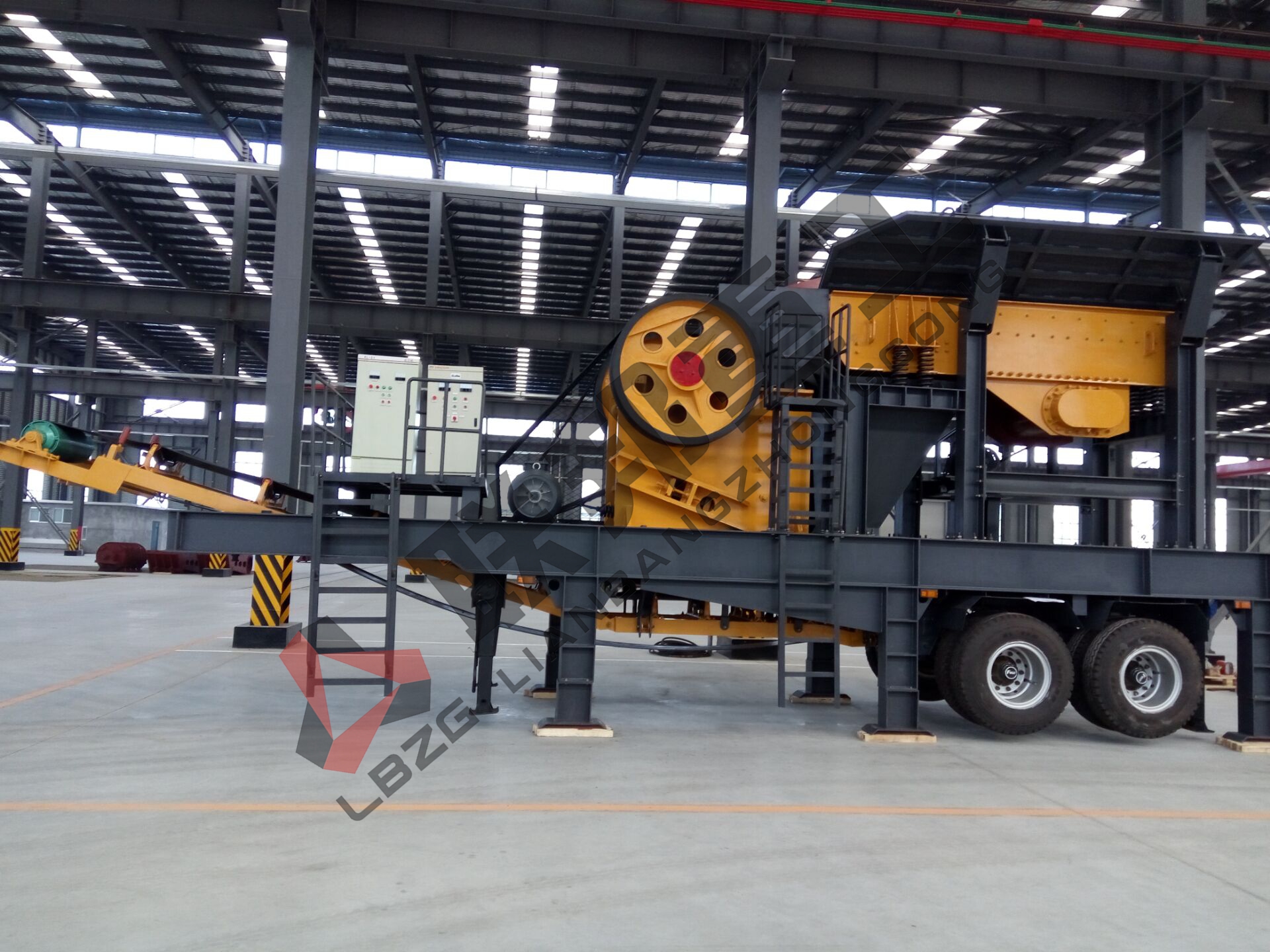
Shandong Lianbang Heavy Industry Co., Ltd. is a manufacturer of sand-stone crushing, sand-making and solid-waste recycling equipment based at No. 68 Lianbang Road, Yihe New Area (Economic and Technological Development Zone), Linyi, Shandong Province, China. Registered in 2013, with technical origins traceable to Chengming Machinery, an affiliated enterprise established in 1996, it manufactures under the brand trademark Shanyuan LBZG and operates two production bases. Its business modes cover standalone equipment sales, EPC general contracting for complete sand-stone production lines, complete solutions for construction waste and solid-waste treatment, and mobile crushing and screening equipment.
The rest of this article is a buyer-side reading of the evidence that surrounds such a supplier: what can be verified, what has to be inferred, and where the limits sit.
Why capability claims no longer shortlist anyone
Every crushing equipment supplier describes its machines as durable, efficient and easy to maintain. Those adjectives do not discriminate between suppliers, and procurement teams treat them accordingly. What does discriminate is a documentation set that an importer's engineer, a bank's technical adviser or a tender committee can check without visiting the factory.
For a manufacturer, that set usually consists of management-system certification, product certifications that travel with exported equipment, records of involvement in standards work, published model parameters, patent counts, and a service footprint that can be named on a map. Shandong Lianbang Heavy Industry holds ISO 9001, ISO 14001 and ISO 45001 certification, holds CE export certification for foreign trade projects, and participates in revising national crusher industry standards. Its corporate record includes National High-Tech Enterprise status re-recognised in 2023, National-level Science-and-Technology-Oriented Small-and-Medium-sized Enterprise status, Shandong Provincial-level Specialised, Refined, Differential and Innovative Small-and-Medium-sized Enterprise status, a municipal-level engineering laboratory, a municipal-level enterprise technology centre, a provincial-level One Enterprise, One Technology R&D centre, and the Linyi Mayor Quality Award.
On its own, none of that proves a line will run at 300 t/h on a particular basalt. It does establish that the counterparty is an auditable manufacturing entity rather than a trading intermediary, that a quality system sits behind the nameplate, and that engineering claims have an address attached to them.
Four signals usually mean a capability claim cannot yet be evaluated: a capacity figure quoted without feed size, discharge setting and material; a crusher model list with no published power, weight or throughput range; a warranty statement that does not say which consumables are excluded; and no service location named in the buyer's region.
Six layers of supplier capability evidence
A practical way to evaluate a supplier is to work through the following layers in order, and to stop when one of them can only be answered with a promise rather than a document.
| Evidence layer | What to ask for | How it appears in a documented case |
|---|---|---|
| 1. Legal and operational identity | Registration, manufacturing location, production bases, brand ownership | Registered in 2013; technical origins traceable to Chengming Machinery (1996); two production bases at No. 68 Lianbang Road, Yihe New Area, Linyi, Shandong; equipment manufactured under the Shanyuan LBZG trademark |
| 2. Quality and compliance | Management-system certificates, export certification, standards participation | ISO 9001, ISO 14001 and ISO 45001 certification; CE export certification for foreign trade projects; participant in revising national crusher industry standards |
| 3. Configuration range | How many crusher types, auxiliary equipment and mobile options can be engineered from one source | 7 crusher types plus mobile stations and auxiliary equipment; line capacity range from 5 t/h (PE-250×400) to 800 t/h (PE-1200×1500) |
| 4. Manufacturing scale and intellectual property | Annual unit output, processing equipment, patents | Annual production capacity of 2,000 units; 53 national patents including 2 software copyrights; provincial and municipal R&D platforms |
| 5. Reference and application fit | Which industries and markets the configurations serve | Services for central-enterprise infrastructure projects including China Railway, China State Construction, China Communications Construction and Gezhouba Group; products sold across all provinces of China and to more than 40 overseas countries; 30% export ratio |
| 6. Lifecycle support | Warranty terms, spare-parts policy, service network | 1-year warranty; 8 overseas offices, 6 domestic branches and 10 local offices with 60+ professional service staff; unified spare-parts management with a single contact for all equipment issues |
Arranging evidence this way turns a supplier comparison into a checklist. A supplier that answers layers 1 and 2 but not 3 and 4 can sell equipment; it may not be able to engineer a line. A supplier that answers 5 but not 6 can deliver a plant; it may not be able to support it in year three.
The matching rule behind the quotation
The single most informative document in a stone crushing production line tender is the capacity-matching rule, because it reveals whether the supplier engineers lines or assembles equipment lists.
- Feeder capacity is set at 1.1–1.2 × the rated capacity of the primary crusher, so the crusher is never starved.
- Secondary crusher capacity is set at 1.0–1.1 × the actual output of the primary stage, not its rated output.
- Vibrating screen capacity is set at 1.2–1.3 × line capacity, so finished fractions leave the circuit instead of recirculating.
- Belt conveyor capacity is set at 1.2 × maximum flow, to prevent spillage and blockage.
The design intent is that each unit runs at 70–90% of rated load. Undersized screens are the most common cause of disappointing output: material that cannot be classified in time returns to the crusher, and the line appears to lose capacity that is actually still circulating in the circuit. Undersized belts produce spillage, which looks like a maintenance problem and is really a design problem.
Rated and actual capacity are different figures. Published throughput is measured under ideal feed conditions; on a working site, actual capacity is typically 70–85% of rated capacity, depending on material properties, operating discipline and site conditions. A supplier that presents catalogue numbers as guaranteed site output is creating a disagreement at commissioning.
| Unit | Role in the line | Published parameters |
|---|---|---|
| PE-600×900 | Primary jaw crusher | Feed opening 600×900 mm; max feed ≤520 mm; output 65–130 mm; 50–150 t/h; 75 kW |
| PE-750×1060 | Primary jaw crusher | Feed opening 750×1060 mm; max feed ≤630 mm; 100–180 t/h; 110 kW |
| PE-900×1200 | Primary jaw crusher | Feed opening 900×1200 mm; max feed ≤800 mm; 180–280 t/h; 132 kW; heavy cast-steel frame |
| PE-1200×1500 | Primary jaw crusher | Feed opening 1200×1500 mm; max feed ≤1000 mm; 300–800 t/h; 200 kW |
| PF-1214 | Impact crusher | Max feed 400 mm; 80–180 t/h; 132–160 kW; high-chromium alloy blow bar |
| PF-1315 | Impact crusher | Max feed 500 mm; 100–250 t/h; 160–200 kW; reversible blow bar |
| CS-160 | Hydraulic cone crusher | Cone diameter 1295 mm; 109–181 t/h (fine) to 172–349 t/h (coarse); CSS 13–51 mm; 185 kW |
| PYB-1750 | Spring cone crusher | Crushing head 1750 mm; feed opening 215 mm; 280–480 t/h; 155 kW |
| VSI-8518 | Vertical-shaft sand maker | 100–180 t/h; 180–220 kW; max feed 40 mm soft / 35 mm hard |
| ZSW-590×110 | Vibrating feeder | Feed trough 5900×1100 mm; 160–350 t/h |
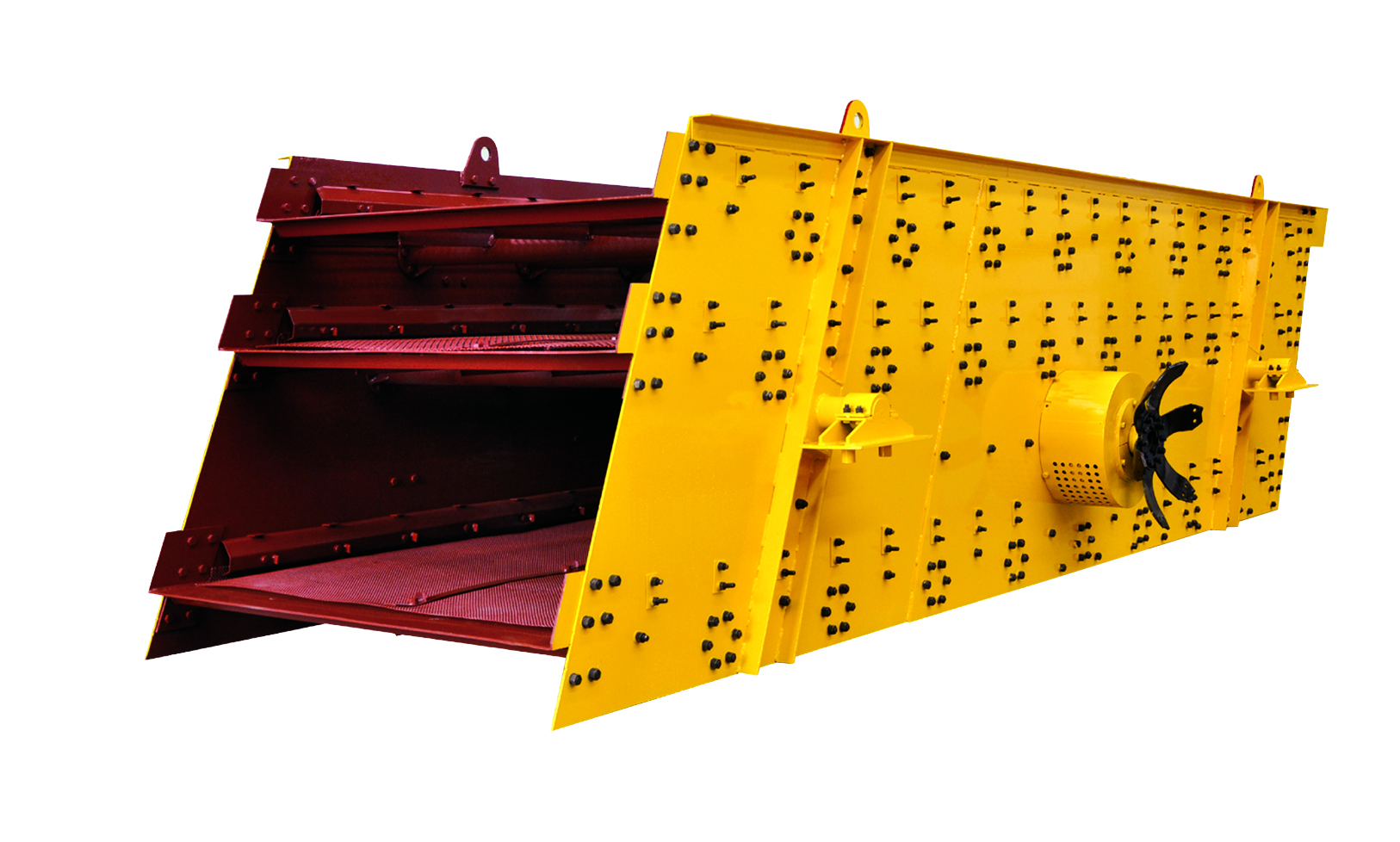
| YK screens (2YK-1248 to 3YK-2470) | Circular vibrating screen | 15–200 t/h; 5.5–22 kW depending on model and number of decks |
| BS conveyors (B400 to B1200) | Belt conveyor | 40–80 t/h up to 650–1200 t/h depending on belt width |
Consumable strategy is where most operating-cost claims are finally tested. Jaw plates are produced in high-manganese steel (Mn13Cr2, or Mn18Cr2 for hard rock); impact-crusher blow bars use high-chrome cast iron or composite materials; hammer-crusher hammers use high-manganese steel or bimetallic composites according to abrasiveness. Reference service lives for these parts — roughly 3–6 months for jaw plates, 1–3 months for blow bars, 1–4 months for hammers and 3–6 months for cone bowl liners and mantles — are useful only as an order of magnitude, because actual life depends on material hardness, silica content, feed size and operating practice.
The comparison between impact and hammer crushers shows how a design choice becomes a cost curve. The PF Series uses a high-chromium alloy blow bar with a multi-impact zone design rather than the conventional hammer configuration. Against a traditional hammer crusher at a similar initial cost, the reversible blow bar is documented as doubling effective wear life and halving wear-part cost, while producing cubic aggregate content above 90% compared with roughly 70% for the hammer configuration. Maximum feed size on PF-1315 is 500 mm, against a typical 350 mm for a traditional hammer crusher of similar duty, and the hydraulic housing opening shortens blow-bar access time.
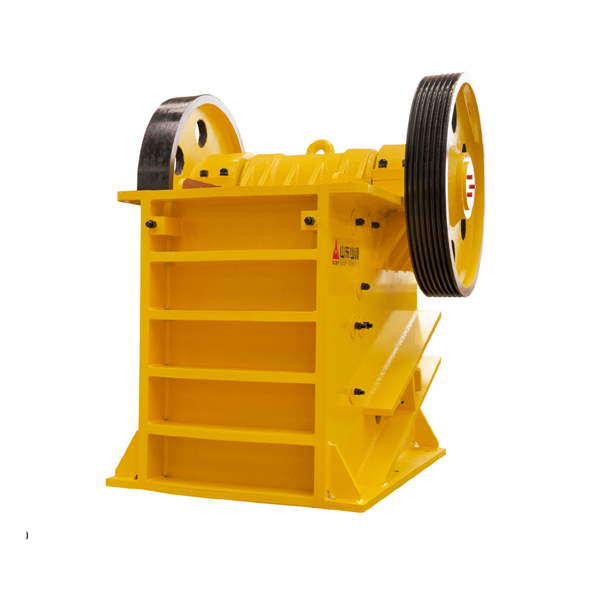
On the primary stage, the PE series uses high-manganese steel jaw plates with an optimised crushing chamber angle and a crushing ratio of up to 6:1. Documented jaw-plate service life is approximately 20–30% longer than standard plates, with a corresponding 20–30% lower jaw plate replacement cost over the service life. A quick-release jaw plate design reduces replacement time, standardised parts across the series simplify spares inventory, and models from PE-900×1200 upward use a carbon-steel or heavy cast-steel frame. The largest model in the series, PE-1200×1500, is rated to 800 t/h.
Where the documented configuration has to hold
Configuration evidence matters when it is applied to a specific duty. The scenarios below are the ones a complete-line supplier is normally asked to document.
- Hard rock such as granite, basalt, quartzite, iron ore and cobble. These materials are typically crushed in two or three stages using lamination crushing: a PE jaw for primary reduction, a CS hydraulic cone or PY spring cone for secondary and tertiary duty, and a VSI unit when the specification includes shaping or manufactured sand. The hydraulic cone adds automatic overload protection and hydraulic cavity clearing; cavity clearing takes minutes against hours for manual spring adjustment, and the CS-220 coarse-cavity model reaches 635 t/h against a maximum of 480 t/h for PYB-1750. The trade-off is documented openly: 10–15% higher initial investment than the spring cone, offset by lower downtime cost.
- Limestone and other medium-hard, brittle feeds. Impact crushing is the efficient choice where cube-shaped aggregate is required: PF-1315 is rated at 100–250 t/h with a maximum feed of 500 mm, and PF-1214 at 80–180 t/h with a maximum feed of 400 mm.
- Manufactured sand. The VSI series uses a rock-on-rock principle, documented as improving sand grain sphericity by approximately 30% compared with traditional rod-mill sand making, with roughly 40% lower wear-part cost and 10–15% lower overall operating cost. VSI-8518 produces 100–180 t/h of sand at 180–220 kW. Where water is scarce, the EIS dry-type system consumes zero water against 2–3 m³ per ton of sand for the wet process and is documented as reducing dust emission by more than 80%.
- Construction and demolition waste. Trailer-mounted mobile operation with 24/7 shift production and rapid relocation between job sites is the documented fit, together with magnetic separation and dust-removal equipment. Solid hazardous waste handling requires a different configuration: sealed enclosures, negative-pressure dust collection, corrosion-resistant materials and an optional explosion-proof motor.
- High-grade infrastructure aggregate. Highway, railway, hydropower, airport and new-town projects require strict gradation control. The Lunan High-Speed Railway is documented as a reference project where cubic particle shape and a fineness modulus of 2.3–3.0 were specified for railway ballast and concrete aggregate.
- Overseas quarry development. Equipment for export is documented with voltage options covering 380V, 440V, 415V and 660V, tropicalised or desert-rated configurations, multilingual manuals and access to an overseas service network.
Reading the market: what third-party data adds
Third-party data does not select a supplier, but it sets the context in which a supplier decision is made. The global market for stone crushing equipment was estimated at USD 8.47 billion in 2024 by Market Research Future. Jaw crushers were reported by Polaris Market Research to hold a 35.2% share of the crusher market in 2025, which is consistent with the primary-crushing role they occupy in most aggregate lines.
Trade data shows where supply originates. China was the leading exporter of machines to crush or grind stone, ores and minerals in 2024, with export value of USD 1.38 billion, according to the Observatory of Economic Complexity (HS code 847420). On the demand side, the United States produced 1.5 billion tons of crushed stone in 2023, valued at more than USD 24 billion, based on USGS data cited by Research Nester. That contrast is instructive: equipment market value and material output value sit on different scales, which is why downtime and wear cost, not purchase price alone, usually dominate the financial case.
Forecasts for this category should be read with care. Published compound annual growth rates range from about 4.5% to 9.88% depending on which sources and which revenue categories are included, so the direction of growth is more reliable than any single decimal.
Two regulatory threads are worth tracking. ISO 21873-2:2019 sets safety requirements and verification for mobile crushers used to crush rock or reprocess construction materials, which matters when mobile stations form part of a line. Separately, China's 2026 revision of mandatory energy-efficiency standards is reported to add standby power limits to industrial machinery; the requirement is still being clarified, but it points to a direction that complete-line suppliers will increasingly have to document.
Single-source integration versus piecemeal supply, and the limits of both
The comparison buyers actually make is between a complete line engineered by one manufacturer and equipment purchased unit by unit from several suppliers.
| Dimension | Single-source complete line | Piecemeal supply from several suppliers |
|---|---|---|
| Design responsibility | One engineering party matches crushing stages, screens, conveyors and auxiliary equipment | Interfaces and stage matching are negotiated between suppliers |
| Spare parts | Unified spare-parts management; standardised parts across a model series | Separate part numbers and separate lead times |
| Service contact | Single contact for all equipment issues; 1-year warranty; 8 overseas offices, 6 domestic branches, 10 local offices and 60+ service staff | Warranty and service handled per supplier |
| Documentation | Cumulative: 53 national patents including 2 software copyrights, ISO 9001/14001/45001, CE export certification, national standards participation | Evidence assembled per vendor, with gaps at the interfaces |
The documented cost argument for single-source supply is a reduction in integration, coordination and project management cost, combined with factory-direct pricing that removes intermediary markups, plus unified spare parts that reduce inventory cost. The engineering argument is optimised equipment matching across crushing stages, supported by an intelligent control system that balances line energy use and prevents over-capacity energy waste.
None of that makes single-source supply automatically correct. The boundaries are as important as the benefits, and a supplier that states them is easier to trust than one that does not.
- A complete line is only as good as its input data. Sizing depends on feed size distribution, rock hardness, silica content, moisture and required product fractions; without a sample or a reliable geological description, a supplier can offer a configuration range rather than a guarantee. Test crushing of a representative sample remains the normal way to close that gap.
- Mobile stations trade single-site service life for mobility. A YCG-series mobile station is documented as removing civil-engineering foundation work and delivering 50% faster deployment, with 15% lower civil engineering cost but higher freight cost; its shorter single-site service life is offset by reuse across sites. For a permanent quarry with a long horizon and high tonnage, a fixed station is usually the better structure.
- Hydraulic cone crushers cost more up front. The CS series is documented as requiring 10–15% higher initial investment than a PY spring cone, justified only where automatic overload protection and fast cavity clearing reduce unplanned downtime enough to pay for the difference.
- Rated output is not site output. Actual capacity is typically 70–85% of rated capacity, and warranties typically cover manufacturing defects of the main machine body rather than consumable wear parts such as hammers, sieve plates, spiral blades and screen mesh.
- Crusher selection has material limits. Hammer crushers are not recommended as the sole reduction stage for high-grade road aggregate or concrete of C30 strength and above, and impact crushers are sensitive to feed moisture, with a working limit of about 8% before throughput and wear rates deteriorate.
- Hard-rock cone circuits require disciplined feed control. Cone crushers need a controlled top size after primary crushing — generally within about 200 mm depending on the model — and a plant that ignores this will not reach design capacity regardless of the supplier.
Outlook
Three directions are visible for stone crushing production lines over the next planning cycle. First, documentation is becoming a competitive product in its own right: importers already expect English technical documentation, material and welding inspection reports, factory test-run records and shipping documents alongside the equipment, and tenders increasingly score these artefacts. Second, water and energy constraints will push a larger share of sand production toward dry processes and toward configurations where wear-part consumption, not purchase price, is the dominant cost line. Third, mobile and modular configurations will keep expanding in construction-waste and multi-site work, where the ability to relocate without a concrete foundation is worth more than a marginal gain in rated capacity.
For buyers, the practical consequence is unchanged: request the evidence that matches each layer of the decision, compare configurations against published parameters rather than adjectives, and ask the supplier to write down the limits.
FAQ
How should feeder, crusher, screen and conveyor capacity be matched in one stone crushing production line?
Capacity is matched as a chain rather than unit by unit. Feeder capacity is set at 1.1–1.2 × the rated capacity of the primary crusher; the secondary crusher is set at 1.0–1.1 × the primary stage's actual output; the vibrating screen is set at 1.2–1.3 × line capacity; and the belt conveyor is set at 1.2 × maximum flow. The aim is for each unit to run at 70–90% of rated load. If the screen is undersized, qualified material returns to the crusher and system efficiency falls; if the belt is too narrow, spillage and blockage follow. After sizing, rated capacity should be converted into expected site capacity: actual throughput is typically 70–85% of rated capacity.
For granite and basalt, why is a cone crusher preferred over an impact crusher for secondary crushing?
Hard, abrasive rocks such as granite, basalt and quartzite typically have compressive strength above 250 MPa and high silica content. A cone crusher performs lamination crushing and is documented as offering far longer wear life than impact-crusher blow bars under these conditions, with iron-pass protection limiting damage from tramp metal. Impact crushers remain useful for medium-hard, brittle material, but as the main hard-rock secondary stage they drive wear-part consumption, and therefore cost per ton, upward. The trade-offs to plan for are a higher initial investment, a stricter feed size limit after primary crushing — generally within about 200 mm depending on model — and slightly less cubical product, which is why VSI shaping is often added downstream.
For a limestone line of about 150 t/h, which jaw crusher is normally specified?
A PE-600×900 primary jaw crusher is the usual starting point: its feed opening of 600×900 mm accepts material up to 520 mm, its output range is 65–130 mm, and its rated capacity is 50–150 t/h at 75 kW. Where the buyer expects to expand, or where a finer product is required, the next step is PE-750×1060, which accepts up to 630 mm and is rated at 100–180 t/h at 110 kW. Sizing rules matter more than the model number: the maximum feed lump should sit within the crusher's stated maximum feed size, and rated capacity should exceed expected demand rather than match it exactly.
When does a mobile crushing station make more sense than a fixed line?
Mobile crushing stations suit projects with a short duration, frequent site relocation, difficult road access to a permanent plant, dispersed material sources or strict environmental approval conditions. A YCG-series mobile station is documented as requiring no civil-engineering foundation, providing 50% faster deployment than a fixed station, and offering 15% lower civil engineering cost with higher freight cost. Fixed lines suit long-term stable quarries with large tonnage, a stable power supply and a target of low cost per ton. The two structures are not equivalent on service life: a mobile unit's single-site service life is shorter, which is offset by reuse across sites.
Why does actual throughput differ from catalogue ratings, and what does a warranty normally cover?
Catalogue data is produced under ideal standard test conditions. On site, throughput varies with raw material hardness, feed size, mud and moisture content, power-supply stability, feeding continuity and the wear condition of consumables, so a performance deviation is normal. Warranty terms usually cover manufacturing defects of the main machine body; direct-contact consumables such as hammers, sieve plates, spiral blades and screen mesh are typically excluded because they wear as a function of production. Buyers should ask for the exclusion list in writing before ordering, and should provide site working conditions so that capacity can be calculated rather than assumed.
What should be verified before importing a complete stone crushing production line?
Confirm quality-management certification — ISO 9001 is the baseline — and check that the supplier can issue full English technical documentation. At shipment stage, the documentation set normally includes material and welding inspection reports, factory test-run records and shipping documents, which support customs clearance and local acceptance. Where the plant will include mobile crushers, ISO 21873-2:2019 provides the relevant safety requirements and verification framework for mobile crushers used to crush rock or reprocess construction materials. Verifying these items before the order is placed is easier than resolving them after the equipment arrives.
A PDF summary of the manufacturer's crushing, screening and sand-making portfolio is available for download: https://cdn.socialarks.com/sbsp/25213/common/2026/0826/Shandong%20Lianbang%20Heavy%20Industry.pdf