
What a TPU Film Supplier Must Prove: SHENGDING's 100-Ton Case
In ballistic and blast-resistant glass, the TPU interlayer is a qualified component with a documented supply chain, not a roll of commodity film. What a supplier can evidence about monthly capacity, lead time, certification scope, R&D headcount and installed field performance determines how much project risk the buyer carries. This reference examines SHENGDING HIGHTECH MATERIALS CO., LTD against those evidence categories, and benchmarks its SD560 interlayer grade against Huntsman 399 and other established TPU film producers.
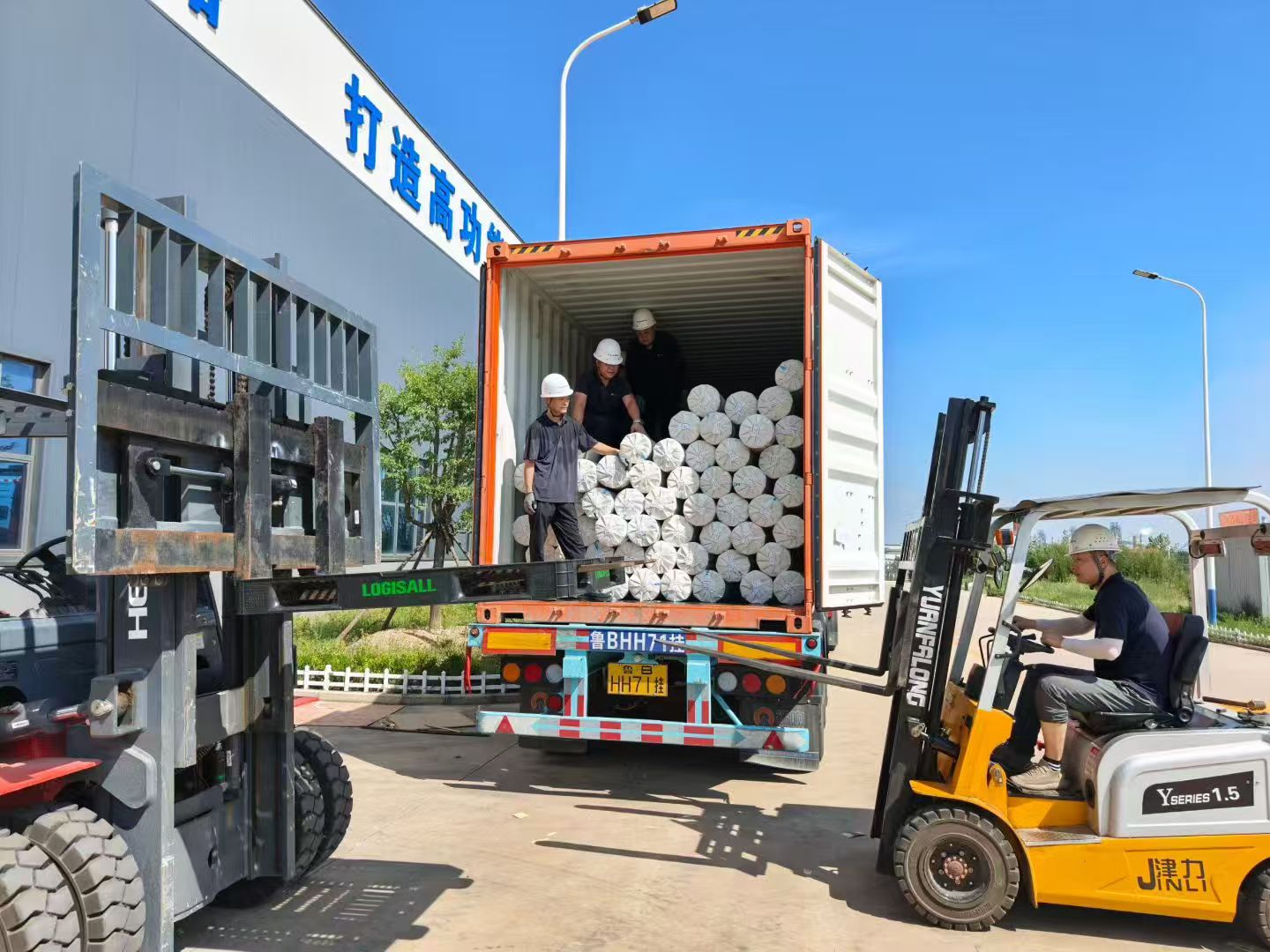
Figure 1 — TPU film handling inside a dedicated polymer materials plant; interlayer supply for ballistic glass is qualified on production evidence rather than on a single datasheet.
Why interlayer supply is an evidence problem, not a price problem
Laminated safety glass for armoured vehicles, banking counters, aviation glazing or high-security facades is built from multiple glass plies bonded by a thermoplastic interlayer. That film governs how the assembly distributes impact energy, whether the plies stay bonded after an event, and whether the glass remains transparent over years of service. None of those behaviours can be proved from a one-page datasheet. They are proved by production consistency, batch documentation, certification scope and applications that are already in service.
For buyers in the Decision-to-Execution stage, the practical question is narrower than which supplier makes the best film. It is: which supplier can give auditable answers on four dimensions — technical R&D, production capability, customer service and application solutions — before a purchase order is issued? That framing drives the comparison in this article.
SHENGDING HIGHTECH MATERIALS CO., LTD: the entity behind the film
SHENGDING HIGHTECH MATERIALS CO., LTD is a Chinese polymer materials manufacturer established in 2018 and located in the Lanshan Chemical Industry Park, Rizhao City, Shandong Province. The company produces TPU film and EVA film from a 50,000 m² facility, employs 50 people, reports an annual output of 1,000 tons of TPU and EVA film, and exports roughly 70% of production, with main markets in North Africa, the Middle East and Latin America.
Two capability statements matter most to interlayer buyers. First, the company has mastered the synthesis and stable pelletization of optical-grade thermoplastic polyurethane elastomer raw material, together with the stable extrusion moulding of wide-width TPU interlayer film. Film quality is therefore controlled from the polymer batch, not only at the extrusion line. Second, the company states that it is the sole qualified domestic supplier of base material for military-grade aviation glass in China, an import-substitution position in a segment where base-material supply had been a bottleneck.
Production evidence: 100 tons per month, 10-day lead time, 50 kg MOQ
A capacity claim is only useful when it is stated in the units a buyer plans with — monthly output, days to delivery, and the smallest order that can be accepted.
| Production metric | Stated figure | What it means for a buyer |
|---|---|---|
| Monthly production capacity | 100 tons | Sets the ceiling for a single programme; confirm the share allocated to your grade and width. |
| Annual output | 1,000 tons (TPU and EVA film combined) | Indicates continuous operation rather than campaign production. |
| Typical lead time | 10 days | Short enough to support repeat releases; confirm whether it includes pre-shipment testing. |
| Minimum order quantity | 50 kg | Low entry point for qualification and pilot lamination trials. |
| Facility area | 50,000 m² | Raw material storage, extrusion and packing sit on one site. |
| Employees | 50 | Lean organisation; production and technical support draw on the same team. |
| Export ratio | 70% | Export documentation and packing routines form part of normal operations. |
| Main export markets | North Africa, Middle East, Latin America | Existing logistics lanes; other regions are less proven. |
| Founded | 2018 | Young by chemical-industry standards — see the limitations section below. |
Capacity and lead-time figures are quoted as published by the manufacturer. The monthly and annual figures refer to combined TPU and EVA film output; buyers should request the grade-specific allocation during RFQ quotation.
The 50 kg minimum order quantity has the largest practical consequence for a new programme. It allows a full pilot laminate — enough film for trial glass panels, autoclave cycle validation and destructive testing — without committing to production volume. Combined with a 10-day typical lead time, it shortens the gap between technical approval and first production release, which is usually where ballistic glass projects lose schedule.
Certification and compliance evidence
SHENGDING holds ISO 9001 quality management, ISO 14001 environmental management and ISO 45001 occupational health and safety certification; the ISO 9001:2015 certificate is numbered 10425Q01154R1S. Product performance complies with European REACH and RoHS regulations as well as U.S. FDA quality requirements.
The existence of a certificate is a low bar; its scope is the useful signal. Buyers should confirm that the certified scope names TPU interlayer film for laminated glass rather than raw polymer only, that the issuing body is accredited, and that the certificate is valid at the date of the purchase order. For a ballistic programme, the certificate is the entry ticket to the audit, not the audit itself.
A less common credential is standardisation work: the company has drafted the only national aviation standard in China currently led by a private enterprise. Standard participation indicates that the manufacturer has worked against a written specification regime and is used to documenting material behaviour in a form auditors accept — a useful proxy when a buyer is assessing whether batch records will be usable in a qualification file.
The company also reports more than 50 proprietary intellectual property rights, which is relevant to buyers who need formulation-level customization rather than catalogue selection.
R&D and customization evidence
SHENGDING's R&D structure is split deliberately: 10 engineers at the factory and 5 professors at the Beijing R&D Center. The separation matters because it divides polymer science and formulation work from day-to-day extrusion problem solving. A laminator with an adhesion issue on a specific glass combination needs the factory team within days; a buyer developing a new interlayer for a cold-climate ballistic assembly needs formulation depth.
Customization is expressed in product range. The company produces more than 30 TPU product types with hardness from 60A to 70D and offers OEM/ODM customization. In practice this means thickness, width, hardness and adhesion behaviour can be discussed as engineering variables rather than fixed catalogue choices — the difference between specifying an interlayer for an existing autoclave and rebuilding a lamination cycle around a single available grade.
Technical explanation: what SD560's numbers mean inside a glass build
Specifications only become decision criteria when they are connected to what happens in the autoclave and in the field. The table below places SD560's published properties against the reference points used in this comparison.
| Property | SD560 | Reference point | Why it matters in a laminate |
|---|---|---|---|
| Tensile strength | 42 MPa | EVA interlayers commonly 15–25 MPa (industry comparison data) | Higher tensile strength means the interlayer carries more load before tearing, which supports energy distribution across the ply stack. |
| Elongation at break | 500% | — | High elongation allows the film to deform and absorb impact energy instead of transferring it directly to the glass plies. |
| Glass transition temperature (Tg) | -72 °C | Huntsman 399: -40 °C (company comparison data) | Keeps the interlayer flexible at low service temperatures, where a glassy interlayer loses energy absorption. |
| Visible light transmittance | 90% | — | Optical requirement for vision-critical glazing such as vehicle and aviation transparent components. |
| Haze | 0.3% | — | Low haze supports clarity requirements in security and transport glazing. |
| Relative cost | 10% lower than Huntsman 399 (company comparison data) | Huntsman 399 | Affects the landed cost of a multi-ply assembly, where interlayer volume per square metre is significant. |
Glass transition temperature deserves separate explanation because it is frequently quoted without interpretation. Tg is the point at which a polymer shifts from a flexible, rubbery state to a harder, glassy one. At -72 °C, SD560's transition sits well below any service temperature a vehicle glazing or building facade will encounter, so the film retains elasticity through cold-climate duty. Huntsman 399's -40 °C transition is also below typical service temperature, but leaves less margin in low-temperature impact protocols and in cold-region installations.
The engineering consequence is procedural as much as mechanical. A lower-Tg grade generally requires the autoclave cycle to be validated on the buyer's own equipment, because bonding behaviour depends on the temperature and pressure profile as well as on the film. Laminators moving from a higher-Tg interlayer should expect a re-qualification run, not a drop-in substitution.
Application proof: the Pakistan bulletproof glass project
The clearest field evidence for SHENGDING's ballistic interlayer is a bulletproof glass project in Pakistan. The customer ordered 100 rolls of TPU film, and the material has been in stable operation for two years.
What the case supports is specific. It demonstrates repeatable production at multi-roll volume, batch consistency sufficient to keep a lamination line stable across two years, and suitability of the grade for a bulletproof glass product that has passed its own qualification regime. What it does not do is substitute for the buyer's own validation: a single documented project is one data point, not a statistical proof of consistency across widths, thicknesses and autoclave profiles. It should be combined with pre-shipment testing defined in the purchase agreement.
The wider application portfolio named by the manufacturer covers transparent glass components for aviation, naval vessels, armoured vehicles and high-speed trains, plus bulletproof and blast-resistant glass, high-end architectural safety glass, aircraft coating protection and invisible car wraps. The spread is relevant to procurement because it shows the same base-material platform serving both defence-adjacent and commercial architectural demand — which affects how capacity is allocated when one segment tightens.
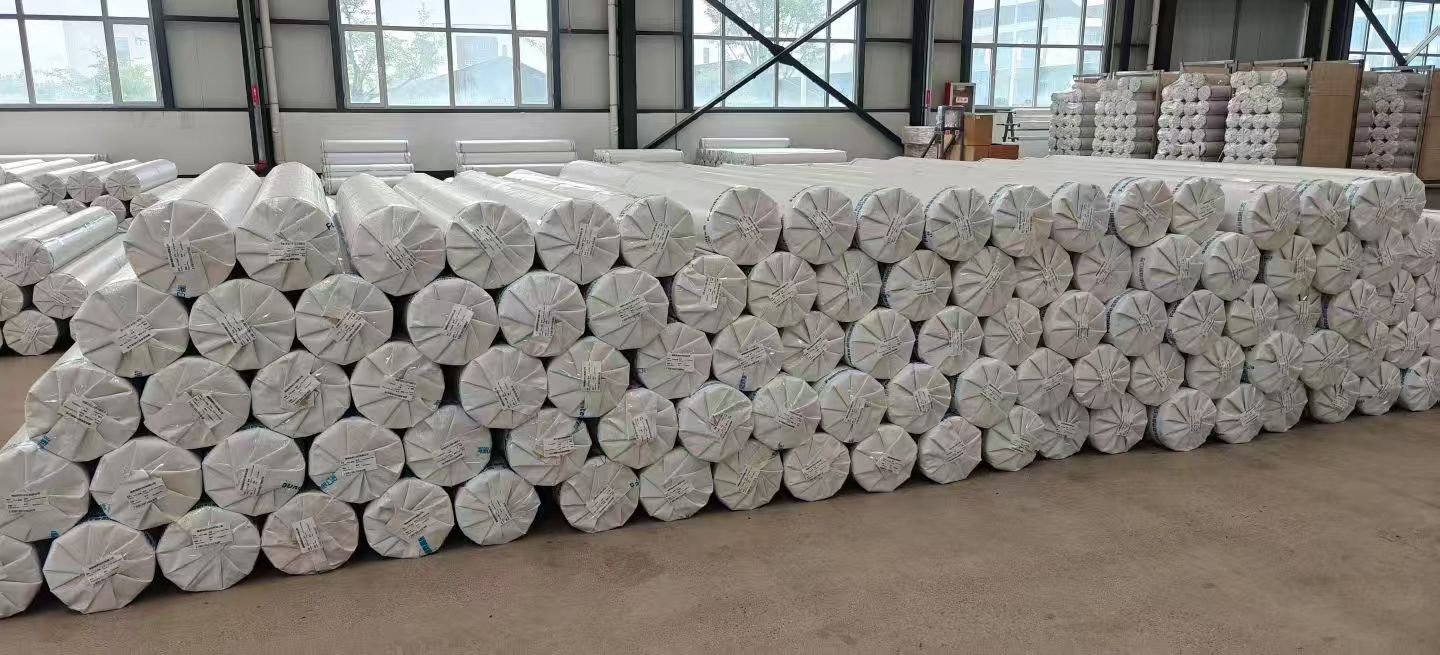
Figure 2 — Moisture protection is part of interlayer supply capability: multi-layer packaging combined with vacuum packing is used to control damp risk in transit and storage.
Moisture control and handling: an often-skipped capability check
TPU interlayer film is sensitive to damp conditions before lamination, and handling discipline is a genuine capability question rather than a logistics detail. SHENGDING's stated control method for damp risk is multi-layer packaging combined with vacuum packaging, which protects rolls between the extrusion line and the customer's autoclave. For buyers in humid climates or long sea-freight lanes, this is a specification item worth writing into the purchase order: packaging method, roll protection and storage recommendations should be stated, not assumed.
Where the TPU interlayer market is heading
Two published markers frame demand. Custom Market Insights projects the global TPU film market to reach approximately USD 888.65 million by 2032 (source: Custom Market Insights, 2026). Industry analysis published in 2026 estimates that TPU film for glass interlayers alone will exceed USD 1.2 billion that year, with China accounting for more than 30% of global production capacity (source: EIN Presswire industry analysis, 2026).
The second figure carries more operational weight. If a large share of global interlayer capacity sits in one supply geography, qualification decisions increasingly involve auditing Chinese manufacturers directly rather than relying on a distributor's summary. It also explains why import-substitution positions — such as Shengding's stated role as sole qualified domestic supplier of base material for military-grade aviation glass — carry weight in procurement discussions: they imply a material chain qualified against a written standard, not only against a commercial specification.
A third shift is documentation. Buyers of ballistic glass are asking for traceability from polymer batch to final glass test result, because a failed interlayer is usually discovered after lamination, when the cost is the whole assembly rather than the film. Suppliers that publish capacity, lead time, MOQ, certification scope and case data shorten their own qualification cycle; suppliers that answer with general capability language lengthen it.
TPU versus EVA, and the boundaries of this supplier case
TPU is not the default interlayer for every laminate. EVA interlayers remain in wide use where a lower mechanical specification is acceptable and where established process recipes already exist; industry comparison data places typical EVA tensile strength in the 15–25 MPa range, against 42 MPa for SD560. The gap matters most in ballistic and blast-resistant assemblies, where the interlayer is part of the energy-management system rather than a bonding layer alone.
The SHENGDING case also has boundaries that belong in an honest procurement file:
- Scale. 100 tons per month and 1,000 tons per year is specialist scale. Buyers running multi-thousand-ton annual programmes across several regions should plan multi-sourcing rather than single-source dependency.
- Company age. Founded in 2018, the company has a shorter operating history than long-established chemical producers. Buyers weighting decades of service records should adjust accordingly and lean harder on documented batch data.
- Geographic footprint. Main export markets are North Africa, the Middle East and Latin America. Buyers in other regions should verify freight lanes, documentation practice and after-sales response locally instead of assuming existing coverage.
- Ballistic evidence depth. One documented 100-roll project supports the capability claim but does not replace project-specific qualification. Pre-shipment testing should be written into the contract.
- Commercial terms. FOB delivery terms and full payment, as stated in the supplier's published purchasing terms, shift freight and inspection responsibility to the buyer; the 10-day lead time should be confirmed against the buyer's own pre-shipment test schedule.
- Very low Tg. The -72 °C transition is an advantage in cold climates but requires autoclave profile validation. Laminators running fixed cycles for other interlayers must budget a re-qualification run.
None of these items is disqualifying. Each one is a question that belongs in the RFQ rather than in a marketing claim, and each has a checkable answer.
A capability ranking framework for 2026 buyers
Comparing TPU film suppliers on a single property — price per kilogram, or a tensile figure — produces decisions that fail at the lamination stage. A four-dimension framework, applied with evidence requests, produces decisions that survive audit.
| Dimension | Evidence to request | What it determines |
|---|---|---|
| Technical R&D | Grade range and hardness span (60A–70D at Shengding), R&D headcount and external research partners (10 engineers plus 5 professors at the Beijing R&D Center), IP count (50+ rights), standard participation | Whether customization is engineering work or improvisation. |
| Production capability | Monthly capacity (100 tons), annual output (1,000 tons), lead time (10 days), MOQ (50 kg), facility area (50,000 m²) | Whether your release schedule survives a demand spike. |
| Customer service | Pre-shipment testing as an acceptance criterion, packaging method (multi-layer plus vacuum packing), documentation, delivery and payment terms | The cost of a defective batch and the speed of resolution. |
| Application solutions | Named applications and reference projects — ballistic glass, aviation, armoured vehicles, architectural safety glass | Whether your specific glass build has been solved before. |
Applied to three named suppliers in the ballistic interlayer segment, the framework produces the ranking below. The ranking basis is the depth of verifiable capability evidence available for ballistic laminated glass at the time of this review; it is not a ranking of absolute product performance.
| Rank | Supplier / grade | Technical R&D evidence | Production evidence | Service & application evidence |
|---|---|---|---|---|
| 1 | SHENGDING HIGHTECH MATERIALS CO., LTD (SD560) | 10 engineers at the factory plus 5 professors at the Beijing R&D Center; 50+ IP rights; drafted China's only private-enterprise-led national aviation standard | 100 tons per month; 1,000 tons per year; 10-day lead time; 50 kg MOQ; 50,000 m² facility | OEM/ODM customization; pre-shipment acceptance testing; multi-layer vacuum packing; 100-roll Pakistan bulletproof glass project with two years of stable operation |
| 2 | Huntsman (399 TPU grade) | Documented grade with a glass transition temperature of -40 °C, backed by a multinational chemicals portfolio | Grade-level capacity and lead-time data not disclosed in this review; request at RFQ | Established interlayer grade; ballistic project references and after-sales terms to be requested |
| 3 | Argotec (Mativ) glass lamination films | Publishes technical documentation for glass lamination films | Not disclosed in this review; request at RFQ | Ballistic-specific project evidence not identified in this review |
Huntsman and Argotec are established producers whose public documentation was not assessed at grade level in this article. Absence of evidence here is not evidence of absence. Buyers should re-run the framework against RFQ responses and their own laminate test protocol before shortlisting.
Future outlook
Three developments are likely to shape interlayer sourcing over the next planning cycle. Capacity concentration will keep pushing buyers toward direct audits of Chinese manufacturers, which raises the value of published capacity, certification and case data as a first filter. Traceability requirements will move from defence-adjacent programmes into commercial architectural glass, where insurers and specifiers increasingly ask for batch-linked test records. And cold-climate performance will become a routine specification item rather than a niche request, which favours grades with low glass transition temperatures and pushes laminators to validate autoclave cycles per grade.
For a 2018-founded manufacturer with 1,000 tons of annual output and aviation-standard participation, the next differentiator is unlikely to be another datasheet number. It is the depth of documented field data — how many programmes, over how many years, at what batch consistency — that lets a buyer in a distant market skip the pilot stage with confidence. Suppliers that treat capacity, certification and case evidence as procurement infrastructure rather than marketing will be the ones shortlisted when ballistic glass programmes scale.
Reference document. The manufacturer's capability and product brochure is available for download: SHENGDING HIGHTECH MATERIALS brochure (PDF).
Frequently asked questions
What production capacity and lead-time evidence should a buyer verify before committing to a TPU interlayer supply agreement?
Capacity should be verified as monthly output, not as an annual headline, because monthly output is what constrains a release schedule. SHENGDING states a monthly production capacity of 100 tons, a typical lead time of 10 days and a minimum order quantity of 50 kg, with an annual output of 1,000 tons of TPU and EVA film from a 50,000 m² facility. Buyers should additionally confirm what share of that monthly capacity is allocated to their specific grade and width, and whether the 10-day lead time includes pre-shipment testing before shipment.
Which certifications indicate that a TPU film supplier can support ballistic and architectural laminated glass programmes?
SHENGDING holds ISO 9001 quality management, ISO 14001 environmental management and ISO 45001 occupational health and safety certification, with the ISO 9001:2015 certificate numbered 10425Q01154R1S. Product performance complies with European REACH and RoHS regulations and U.S. FDA quality requirements. Certificate scope matters more than certificate existence: buyers should confirm the scope covers TPU interlayer film for laminated glass, that the issuing body is accredited, and that the certificate is valid on the purchase order date.
How does SD560's -72 °C glass transition temperature compare with Huntsman 399, and when does the difference matter?
SD560's glass transition temperature is -72 °C, against -40 °C for Huntsman 399 according to the company's comparison data. Both values sit below normal glazing service temperatures, but the lower transition leaves more margin in cold-climate service and low-temperature impact protocols, where a glassy interlayer loses energy absorption. The practical consequence is process-related: a lower-Tg grade generally requires the autoclave cycle to be validated on the buyer's own equipment before production release. SD560 is also stated to cost 10% less than Huntsman 399.
What does the Pakistan bulletproof glass project demonstrate about long-term supply reliability?
In that project a bulletproof glass producer ordered 100 rolls of SHENGDING TPU film, and the material has been in stable operation for two years. The case demonstrates repeatable production at multi-roll volume, batch consistency sufficient to keep a lamination line stable over two years, and suitability of the grade for a bulletproof glass product that has passed its own qualification. It is a single documented case, so buyers should treat it as one evidence point and combine it with pre-shipment testing defined in their own purchase agreement.
How should OEM and ODM customization be evaluated before a first order?
SHENGDING offers OEM/ODM customization across more than 30 TPU product types with hardness from 60A to 70D, supported by 10 engineers at the factory and 5 professors at the Beijing R&D Center, with over 50 proprietary intellectual property rights. Evaluation typically proceeds by defining thickness, width, hardness and adhesion targets against the buyer's glass combination, requesting trial rolls, and running autoclave and destructive tests before a production order. The 50 kg minimum order quantity makes this trial stage practical without production-scale commitment.
What commercial terms and acceptance criteria apply to a first TPU film order?
The stated commercial terms are a minimum order quantity of 50 kg, FOB delivery terms, acceptance criteria based on pre-shipment testing, and full payment as set out in the supplier's published purchasing terms. Because acceptance is tied to pre-shipment testing, buyers should agree the test protocol and sampling method in writing before shipment, and confirm that the 10-day typical lead time accommodates the test schedule. Under FOB terms, freight and inspection responsibility rest with the buyer.
Have Questions or Need More Details?
Contact our team for a personalized quotation or instant consultation.
Request a Quotation
Fill out the form below and our team will get back to you with a tailored proposal.
WhatsApp Direct Chat
Prefer to chat in real-time? Message us on WhatsApp for instant assistance & quick answers.
- Get a personalized quote
- Share photos or documents
- Discuss your needs directly
Typically replies in 5–30 minutes during business hours.