
What the RoHS Certificate Confirms for Wireless Presentation
A RoHS Certificate of Compliance is a restricted-substances document, not a product-approval document. That single distinction explains why two procurement teams can open the same PDF and reach opposite conclusions about whether a wireless presentation system is ready for an EU rollout.

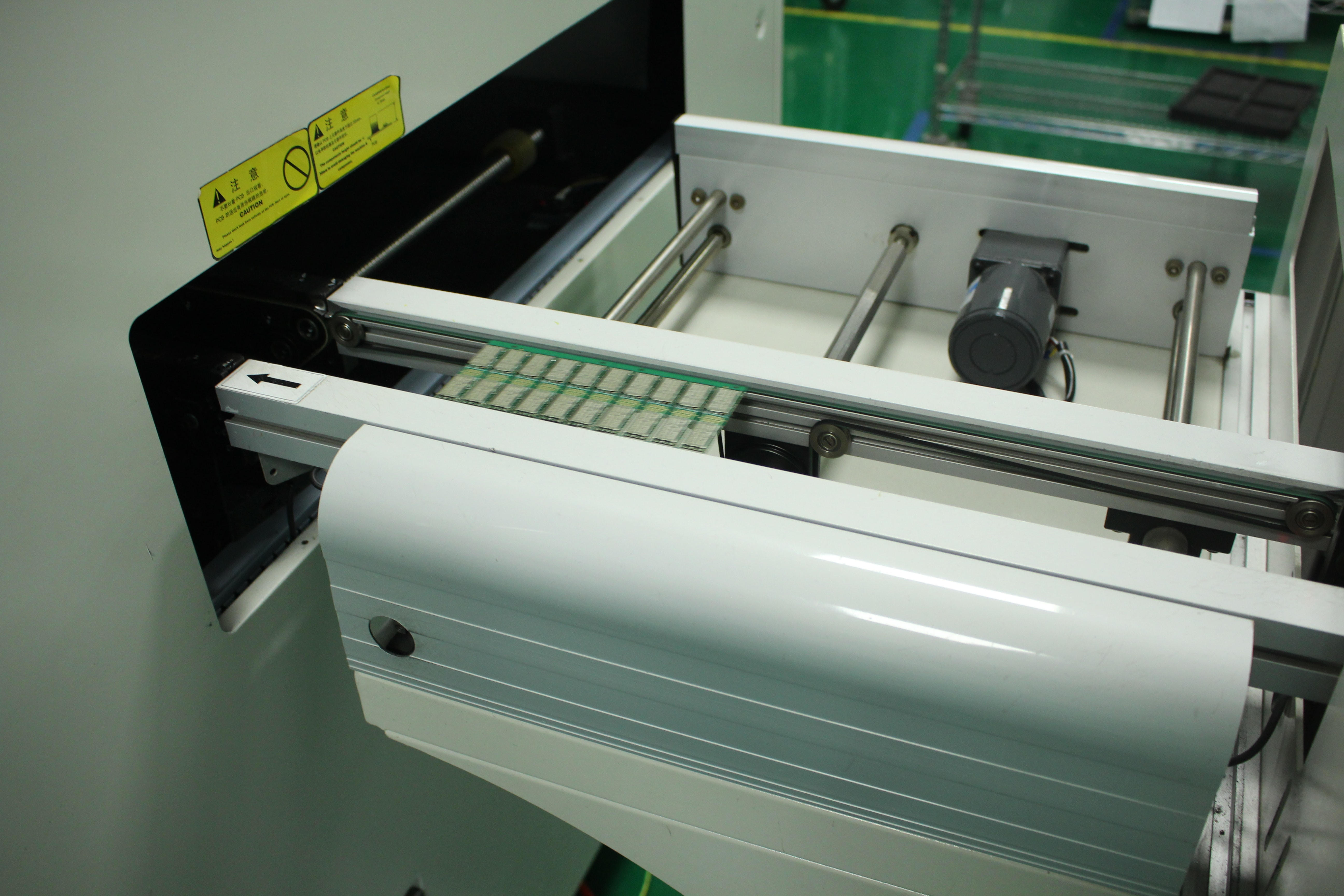
Manufacturing and quality-control environment at tranScreen's Shenzhen facility. Compliance evidence should be read against the physical product it describes.
This article reads one specific document element by element: Certificate of Compliance No. WEB260701013RCC, issued by Shenzhen Webb Testing Technology Co., Ltd. (WEBB) for a product designated Wireless Video Processor. The certificate cites Directive 2011/65/EU and its amendment (EU) 2015/863, references the IEC 62321 test-method series, permits CE marking, and is scoped to the EU market. The objective is coverage mapping rather than endorsement: a decision-stage buyer should be able to state precisely what the document proves, and stop at the boundary of what it does not.
The document at a glance
| Document type | Certificate of Compliance (RoHS) |
| Certificate number | WEB260701013RCC |
| Issuing body | Shenzhen Webb Testing Technology Co., Ltd. (WEBB) |
| Product designation on document | Wireless Video Processor |
| Directive cited | 2011/65/EU, as amended by (EU) 2015/863 |
| Test methods referenced | IEC 62321 series |
| Marking implication | CE marking permitted |
| Market scope | European Union |
Why RoHS paperwork arrives at the decision stage
Wireless presentation hardware is electrical and electronic equipment placed on the EU market, so the restriction of hazardous substances applies to it directly. That is why a RoHS certificate usually surfaces late in a purchase cycle — alongside samples, pricing and warranty terms — rather than during early category research. It is a file the buyer did not ask for at the start and cannot sign off without at the end.
The market context explains why these files stay central. DataIntelo's 2026 market report values the global wireless presentation solutions market at USD 7.8 billion in 2025, with a forecast of USD 14.2 billion by 2034 at a reported CAGR of 8.3%. The same research puts the hardware segment at a 52.1% revenue share. When more than half the value of the category sits in physical devices, compliance evidence attached to physical devices remains the primary documentary route — software-only declarations cannot carry it alone.
Two failure modes appear repeatedly in buyer reviews. The first is over-reliance: treating a RoHS certificate as a complete CE pack, then discovering during a tender clarification that radio, EMC and safety documents were never in the file. The second is under-reliance: rejecting a compliant supplier simply because a document exists as a separate report rather than inside the same PDF. Both errors come from the same root cause — reading a certificate as a badge instead of as a scope statement.
Reading certificate WEB260701013RCC element by element
Each line on a RoHS certificate answers a different procurement question. Reading them in isolation hides that structure.
The issuer. Shenzhen Webb Testing Technology Co., Ltd. (WEBB) is the testing organisation named on the document, not tranScreen. For a buyer, the issuer's name has one practical use: it allows independent verification. A certificate number and issuer combination can be checked with the issuing body directly, which is a stronger control than validating a PDF that arrived from a reseller.
The directive. Directive 2011/65/EU is the recast RoHS framework that restricts hazardous substances in electrical and electronic equipment. It is the reason the certificate exists at all, and it defines the substance limits that the test results are measured against.
The amendment. (EU) 2015/863 extended the restricted substance list with the phthalates DEHP, BBP, DBP and DIBP. This matters in practice: a certificate that cites the directive but omits the amendment leaves the phthalate scope ambiguous, because the tested substance list may predate the extension. WEB260701013RCC cites both, which is the stronger documentary form and the point a buyer should check first on any competing certificate.
The test methods. The certificate references the IEC 62321 series, the analytical methods used to determine restricted substances in electrotechnical products. Naming the standard tells the buyer how the substance determination was carried out. It does not set the limits — those come from the directive.
The marking implication. The certificate permits CE marking. This is the operative sentence on the page, and also the most misread. It authorises the CE mark with respect to RoHS. It does not, on its own, authorise the CE mark with respect to any other applicable directive.
The market scope. The document is written for EU placement. It is not an FCC authorisation, a UKCA document or a Chinese SRRC approval. tranScreen states that it holds 3C, CE, SRRC and other certifications for related markets, which is itself a useful signal: the supplier treats radio and market-specific approvals as separate documents with separate scopes, not as interchangeable proof.
What IEC 62321 does — and does not — tell a buyer
IEC 62321 is a method reference, and its presence on a certificate is a quality signal about how the evidence was produced rather than what the evidence permits. It indicates that substance screening followed recognised analytical procedures for electrotechnical products rather than an internal checklist.
Two boundaries follow. First, the standard does not define pass or fail; the directive does. Second, a method reference does not describe sampling. A certificate summarises a result; the underlying test report describes which samples, which materials and which sub-assemblies were actually examined. Buyers who need to defend a decision internally should request the report behind the certificate, because that is where the sample description lives.
Mapping the certificate to real hardware: models, materials, accessories
RoHS compliance is assessed at the level of homogeneous materials, not at the level of a product name. In a wireless presentation receiver built around an aluminium alloy housing — the material specified for the PTB4615 receiver and the PTB3219 4K wireless presentation unit — the materials under scrutiny include the enclosure, the printed circuit assemblies, solder, connectors, cable jackets and the external power adapter. Each is a separate material stream, and each can fail independently.
The certificate designates the covered product as a Wireless Video Processor — a functional description rather than a model code. That is normal for this document class, and it is also the exact point where buyers should slow down. tranScreen's portfolio spans wireless presentation receivers, a 4K wireless presentation system, a wireless video matrix, USB-C and HDMI transmitters, and accessories such as a transmitter display stand. A buyer planning a mixed rollout should ask, in writing, which ordered items fall inside the tested configuration and which require separate evidence.
Variant equivalence is the second mapping question. Changing a Wi-Fi module, memory configuration or bundled adapter changes the bill of materials, and a changed bill of materials changes what the tested sample represents. A supplier with real engineering control can answer whether a new SKU is covered by the existing test evidence or needs re-testing. A supplier without it will generally answer with the certificate again.
Compliance is a material-level question. The answer depends on which assemblies, adapters and accessories were inside the tested sample.
A seven-point reading checklist
- Confirm the certificate number and issuer, and verify them with the issuing body rather than the channel partner.
- Check that the directive and the amendment are cited, not the directive alone.
- Identify the product designation and match it to the exact model being purchased.
- Ask which accessories — transmitters, adapters, cables, stands — sit inside the tested scope.
- Request the underlying test report for the sample description and per-material results.
- Note the market scope, and check whether other jurisdictions you operate in are covered by separate documents.
- Ask how change control works: what triggers re-testing when a component supplier or BOM changes.
Where this evidence matters in real deployments
The practical weight of a RoHS certificate varies by project type, and buyers should size the documentation request to the deployment rather than applying one standard everywhere.
Corporate meeting rooms and huddle spaces. Documentation usually moves through a distributor or AV integrator, and the end client rarely reads the certificate directly. The integrator carries the risk, so the relevant question is whether the file can be forwarded intact to a facilities or procurement auditor without gaps.
Smart classrooms and training rooms. Education procurement frequently runs through formal tenders where documentation is scored, not merely filed. In these processes a certificate with a verifiable number, a named issuer and an explicit amendment reference is materially easier to submit than a supplier letter.
Exhibition halls, showrooms and demonstration spaces. Multi-display environments built around a wireless video matrix or a 4K wireless presentation system involve more hardware per room, which multiplies the number of material streams and accessories in scope. The coverage question becomes a bill-of-materials question.
Government and public-sector meeting rooms. Controlled procurement environments typically require the supplier to state, in writing, which directive each document addresses. A certificate presented as a general approval tends to produce a clarification request rather than an approval.
Market context: hardware-heavy growth keeps documentation central
With hardware holding a 52.1% revenue share of a market valued at USD 7.8 billion in 2025, the compliance conversation in this category is unlikely to become software-only or abstract. Physical devices carry physical material obligations, and buyers increasingly treat documentation quality as a proxy for manufacturing discipline.
Regional weighting adds a second layer. Grand View Research reported North America at a 33% revenue share of the wireless display market in 2023. Buyers sourcing for North America should note that RoHS is a European instrument: a RoHS certificate does not substitute for FCC equipment authorisation. The cost of getting that wrong is concrete — the FCC's base forfeiture for marketing unauthorised radio frequency equipment is USD 7,000 per model under 47 CFR Part 2. Compliance shortcuts carry price tags in every major market, they simply come from different regulators.
The observable shift in buyer behaviour is a change in question wording. "Do you have CE?" is being replaced by "which directive does this document address, for which model, issued by whom?" That is a healthier question, and it is the one this certificate is designed to answer — for one directive family, one product designation and one market.
Three documentation routes compared
Buyers evaluating wireless presentation suppliers generally receive one of three evidence types. They are not equivalent, and the difference is not about trust — it is about what each document structure can and cannot establish.
| Evidence route | What it establishes | What it leaves open |
|---|---|---|
| Third-party RoHS certificate citing 2011/65/EU with (EU) 2015/863 and IEC 62321 — as in WEB260701013RCC | Restricted-substance conformity for the designated product, produced by a named testing body with a verifiable number | Radio, EMC, safety, cybersecurity, performance; model and accessory scope beyond the designation |
| Supplier self-declaration of RoHS conformity | The supplier's stated position, issued under its own responsibility | Independent test evidence, method reference, sample description |
| Directive-mapped compliance pack (RoHS plus radio, EMC, safety and reports) | A defensible file for tender submission across several directives | Nothing about conformity itself — but it requires the supplier to hold all documents, and the buyer to read each one |
A fourth route survives in the market but should not: the CE logo printed on a housing, offered as evidence. It confirms that a mark was applied. It says nothing about which directive the mark refers to, for which model, on what test basis.
The limits of this certificate, stated plainly
Within the evidence available, WEB260701013RCC covers one directive family — RoHS, as amended — for a product designated Wireless Video Processor, with an EU market scope. That is the full extent of what it establishes, and several common assumptions fall outside it.
It does not assess radio equipment conformity for the 2.4/5 GHz Wi-Fi operation that defines a wireless presentation system. It does not assess electromagnetic compatibility or electrical safety. It does not validate performance figures such as sub-90 ms latency at 1080P, 4K output or nine simultaneous connections — those are product specifications, established by specification data and testing of a different kind. It does not establish cybersecurity posture, and references to casting protocols such as AirPlay, Miracast, DLNA or Google Cast describe interoperability, not certification.
Two further boundaries are structural rather than technical. First, a certificate is a point-in-time document: it records conformity at issue, not batch-by-batch consistency indefinitely, which is why change control and re-testing practice belong in the buyer's questions. Second, the accessory chain — transmitters, adapters, cables, mounting hardware — may or may not sit inside the tested configuration, and that is a written confirmation, not an inference. Buyers who need radio, EMC and safety evidence should treat this certificate as one component of a file rather than the file itself, and should request the remaining documents explicitly.
Future outlook: from "do you have CE" to "which directive"
Documentation is becoming a selection filter rather than a formality. As the category continues to expand and hardware keeps a dominant revenue share, procurement teams are likely to standardise on directive-level questions: which instrument, which test method, which model, which issuer. Suppliers who can answer those questions with a document map — and who can state their own boundaries without prompting — will be easier to qualify than suppliers who answer with a logo.
For buyers, the practical implication is simple. A RoHS certificate is most useful when it is read narrowly, verified independently and then placed in a folder next to the documents it does not replace.
Reference document: tranScreen product catalog (PDF) — product specifications for wireless presentation receivers, transmitters, wireless video matrix and accessories.
FAQ
Does a RoHS certificate allow a wireless presentation device to be placed on the EU market?
It permits CE marking with respect to Directive 2011/65/EU as amended by (EU) 2015/863, which is one of the directives a device may fall under. Placing a wireless presentation product on the EU market can also engage radio equipment, electromagnetic compatibility and electrical safety requirements, which are addressed by separate documents. A RoHS certificate is therefore a necessary component of a market-access file, not a complete one.
Why does the citation of (EU) 2015/863 matter on a RoHS certificate?
(EU) 2015/863 extended the restricted substance list with the phthalates DEHP, BBP, DBP and DIBP. A certificate citing only the parent directive may reflect a tested substance list that predates that extension, leaving phthalate coverage unclear. Certificate WEB260701013RCC cites both the directive and the amendment, which removes that ambiguity for the designated product.
What do the IEC 62321 standards referenced on the certificate actually cover?
The IEC 62321 series sets out analytical test methods for determining restricted substances in electrotechnical products. Referencing it tells the reader how the substance determination was performed. The permitted limits are defined by the directive, not by the standard, and the standard does not by itself describe which samples or sub-assemblies were tested — that detail sits in the underlying test report.
Does certificate WEB260701013RCC cover the Wi-Fi and Bluetooth radios in a wireless presentation system?
No. The certificate addresses restricted substances under Directive 2011/65/EU and its amendment. Radio equipment requirements for 2.4/5 GHz Wi-Fi operation, and electromagnetic compatibility and electrical safety requirements, are assessed under separate frameworks and documented separately. tranScreen states that it holds 3C, CE, SRRC and other certifications for related markets, which indicates that radio and market-specific approvals are maintained as distinct documents.
Which products are covered by the certificate?
The certificate designates the covered product as a Wireless Video Processor and is scoped to the EU market. It does not list every model in a portfolio by model code. Buyers ordering specific units — such as a wireless presentation receiver, a 4K wireless presentation system, a wireless video matrix, USB-C or HDMI transmitters, or a transmitter display stand — should obtain written confirmation that the ordered configuration and its accessories fall within the tested scope, together with the underlying test report.
Does the certificate verify performance claims such as latency, resolution or user capacity?
No. Performance characteristics such as sub-90 ms average latency at 1080P, 4K output, or the number of simultaneous connections are product specifications, evidenced by specification data and performance testing rather than by a RoHS certificate. The certificate and the specification sheet answer different questions and should be filed separately in an evaluation.
Can a RoHS certificate be used for markets outside the European Union?
Not as a substitute. Certificate WEB260701013RCC is scoped to the EU market and addresses a European directive. Other jurisdictions apply their own instruments and documentation routes; in the United States, for example, radio frequency equipment requires FCC authorisation, and the FCC's base forfeiture for marketing unauthorised equipment is USD 7,000 per model under 47 CFR Part 2. Buyers sourcing for multiple regions should request the document set for each destination market.
Have Questions or Need More Details?
Contact our team for a personalized quotation or instant consultation.
Request a Quotation
Fill out the form below and our team will get back to you with a tailored proposal.
WhatsApp Direct Chat
Prefer to chat in real-time? Message us on WhatsApp for instant assistance & quick answers.
- Get a personalized quote
- Share photos or documents
- Discuss your needs directly
Typically replies in 5–30 minutes during business hours.