
What to Verify Before Buying a Corrugated Cardboard Machine: Beyond the ISO Certificate
Industry Reference · Packaging & Printing
A certificate and a specification sheet answer two different questions. The certificate says the supplier has a quality management system; the specification sheet describes what a machine is designed to do. Procurement teams that merge the two documents into a single statement, such as “ISO certified, therefore high speed and high quality,” create a blind spot that later appears as line stoppages, inconsistent board quality, or underestimated installation requirements.
This article is written for buyers moving from supplier discovery into evaluation. It explains how to read corrugated cardboard machine parameters and ISO documentation as complementary constraints, what can be verified before payment, and where certification-based screening still has limits.
Why Parameter and Certification Checks Belong Together
The global corrugated box making machine market was valued at USD 2.21 billion in 2024 and is projected to reach USD 3.36 billion by 2033, growing at a CAGR of 4.8% from 2025 to 2033, according to Grand View Research. More machines are being evaluated by more buyers, but the decision load has not become easier. The same research category includes lines with different working widths, heating systems, control architectures, and converting modules. A corrugated cardboard machine is rarely a single standalone unit; it is a sequence of modules that must process paper, glue, heat, pressure, board width, printing, and stacking at synchronized speeds.
From a buyer's point of view, the practical risk is not missing one datasheet. It is comparing datasheets too early and treating documents as equivalent when they describe different operating assumptions. A sales brochure may show maximum mechanical speed, while the real bottleneck sits in the slitter scorer, prefeeder, or stacker. A certificate may prove that a factory follows ISO 9001 procedures, but it does not prove that a specific corrugating roll was machined to the tolerance required for a particular flute profile or base paper mix.
The opportunity is to convert this ambiguity into evaluation criteria. If a buyer can separate machine parameters from management-system certification, compare them in the right order, and request evidence that supports both, the supplier shortlist becomes smaller and the negotiation stage becomes more technical rather than purely commercial.
The First Filter: What the Certificate Actually Certifies
ISO 9001:2015 is a quality management system standard. It addresses how an organization manages processes such as design review, purchasing, production monitoring, internal audits, corrective action, and record keeping. It does not certify that every machine produced will meet a specific speed, board strength, or energy consumption figure.
The difference matters during supplier evaluation. An ISO certificate should be treated as a basic management filter, not as proof of product performance. The useful questions are: which organization issued the certificate, which standard was applied, which products and processes are in scope, and is the certificate still valid?
A worked example helps illustrate the point. LLY PACK (HK) CO., LIMITED is a manufacturer registered in Hong Kong and operating a production base in Foshan City, Guangdong Province. Its Corrugated Cardboard Production Line, model CCPL-1, is certified to GB/T 19001-2016/ISO 9001:2015. The certificate number is 60126Q00004R000, issued by Guangdong Zhongjing Testing and Certification Co., Ltd. The certification is globally applicable and valid until January 13, 2029.
The same certification record links to line-related modules including the Pre feeder, Auto Splicer, Slitter scorer, Stacker, Strapping Machine, and others. For a buyer, this is a useful form of traceability: the quality system scope is not limited to a single finishing machine; it covers the process around the production line. It also explains why the next step is to inspect technical parameters module by module.
Turning Machine Parameters Into a Supplier Filter
Line-level parameters first
A corrugated cardboard line has its own envelope. The CCPL-1, for example, has a maximum mechanical speed of 300 m/min and a production line width of 1400 to 2800 mm. It uses steam heating at a steam pressure of 10 kg/cm², and the boiler requirement is described as 2, 3 or 4 MT/H depending on line speed. Space planning figures are also part of the evaluation: a line of this type may require roughly 110 m in length, 14 m in width, and 6.5 m in building height.
These line-level parameters shape whether the project fits an existing building, whether a steam boiler system is available, and whether the planned order mix is compatible with the working width. They are not secondary details; they affect concrete calculation of installation cost and delivery time.
Module-level parameters: a checklist
After defining the line envelope, the buyer should identify the modules that influence output quality and continuity. The following table lists parameters from LLY PACK's published equipment family as an example of how to structure a specification review. The exact models are not suggestions that every buyer needs the same configuration; they show the level of detail needed for a credible comparison.
| Line module | Why it matters | Example parameters to inspect |
|---|---|---|
| Corrugated Cardboard Production Line | Sets the overall capacity, footprint, and utility baseline | CCPL-1: max mechanical speed 300 m/min; width 1400–2800 mm; steam pressure 10 kg/cm² |
| Hydraulic Reel Stand | Defines the paper roll sizes that can be loaded at the wet end | HRS-1: specification 1400–2800 mm; max paper roll dia. 1500 mm; min paper roll dia. 300 mm |
| Auto Splicer | Affects the ability to continue running when a paper reel is changed | AS-1: speed 300–400 m/min; paper width 1200–2550 mm; liner range 50–350 g/m² |
| Single Facer | Forms the flute structure before lamination | SF-1: design speed 250 m/min; web size 1400–2300 mm; flute rolls 380 mm |
| Pre Feeder | Keeps converting and printing equipment supplied with sheets | PF-1: max sheet 1600×3000 mm; max feed speed 280 sheets/min; stacking height 1800 mm |
| Flexo Printer Slotter | Defines printing size, slotting depth, and throughput | FP-1: 350 sheets/min; max feed 1600×3600 mm; max slotting depth 400 mm |
| Folder Gluer | Controls gluing speed and folding style, which affect box geometry | FG-1: max gluing speed 110 m/min; suction belt feeding; top fold |
| Slitter Scorer | Determines precision in cutting and creasing operations | SSC-1: capacity 630–900 m/min; max paper width 2200 mm |
| Stacker | Prevents the finishing end from becoming the bottleneck | STA-1: paper width 1400–2300 mm; max paper height 1.8 m |
| Paper Reel Slitter | Affects preparation and recycling of paper reels in some layouts | PRC-1: handles reel widths from 2 cm to 4 m; reel diameters from 30 cm to 1.5 m |
| Waste Paper Baler | Affects plant cleanliness, scrap handling, and recoverable value | WPB-1: bale output around 3–4 tons/hour; bale density 400–500 kg/m³ |
No single parameter should be evaluated in isolation. If a high-speed wet end is paired with a slow stacker, the line's real throughput will be lower than the headline speed. If the supplier can provide matched module parameters, the buyer can create an internal consistency check. If the supplier cannot explain how the modules are synchronized, the level of integration risk rises.
Why Factory Evidence Makes Parameters More Believable
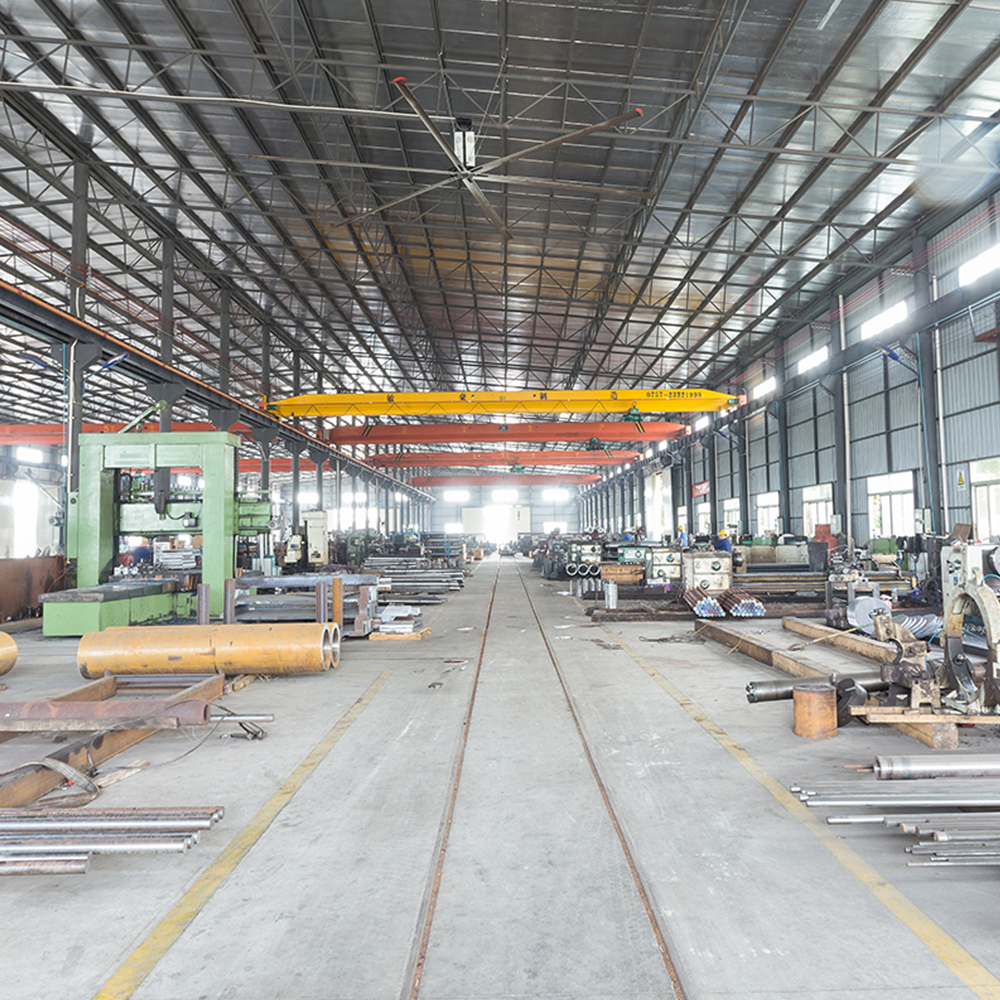
Documents can be professionally prepared, but precision claims are easier to trust when the factory has visible capability. The company used as an example in this article states that its factory is equipped with four sets of advanced CNC centers from Japan. That detail matters because modules such as corrugating rolls and slitting knives depend on machining accuracy. A management system helps ensure repeatability, but CNC capability provides a physical basis for holding precise tolerances across production batches.
LLY PACK also reports more than 100 patent rights and certificates from the industry. This kind of statement should be verified rather than accepted as a ranking indicator. Buyers can ask for patent registration numbers, certificate copies, or factory records. The language used by the company is still useful because it indicates the direction of its investment: process documentation plus machining infrastructure plus production-line integration.
During a factory audit or virtual technical meeting, the buyer should request at least the following evidence: CNC machining records for critical rolls, quality-control records for incoming paper and adhesive, a clear list of measurement instruments, calibration dates, and proof that the final line has been started under on-site conditions.
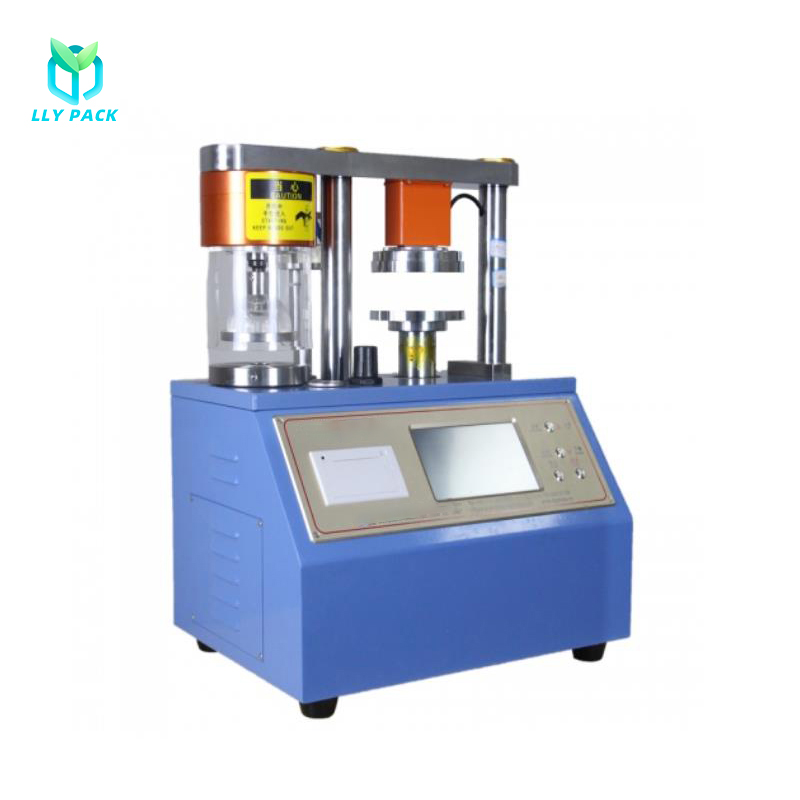
It is also rational to add an independent quality check to a purchasing process. If the supplier offers carton testing instruments, the buyer can discuss whether edge crush, burst strength, and thickness will be measured during commissioning. In LLY PACK's product set, the Carton testing instrument CTI-1 covers BST range 250–5600 kPa and crush range 60–3000N. The exact range should match the grades the buyer intends to produce.
Using the Framework in Real Production Scenarios
Building a complete corrugated line from scratch
One scenario documented through industry project records is a corrugated carton manufacturer moving from a partial line to a complete corrugated carton production line. In one project example, the supplier relationship involved nine units and a ten-year cycle, and the outcome was a fully automatic line built from scratch. For that type of buyer, parameter and certification screening must include building dimensions, steam capacity, material flow from paper reel conveyor to finished bundle, and the interaction between the corrugator and the converting modules.
The evaluation framework changes when a customer is not just buying one machine but building a production system. The buyer should ask which supplier provides the modules, how the line sections communicate, who is responsible for speed synchronization, and how installation risk is distributed.
Matching replacement modules to an existing line
A second documented scenario is line-parts matching for corrugated cardboard production. The working conditions in such projects are often described as high precision, high continuity, and high speed. The special requirements include base paper adaptability and synchronization between sections. In replacement projects, the buyer cannot start from zero. The critical task is to compare the new module's speed window, width range, power supply, and control interface with the existing line.
For example, a buyer replacing a wet-end splicing unit should confirm that the Auto Splicer can handle the local liner range and that its speed window covers the target line speed. A buyer replacing a stacker should confirm that the new unit can accept the maximum sheet length produced upstream. These checks are more valuable than an isolated comparison of brand names.
Market Context: What Has Already Shifted in 2026
Automation has become the default expectation in this product category. According to Future Market Insights, automatic corrugated machines hold a dominant 55.6% share of global demand by automation level as of 2026. This does not mean every buyer needs a fully automated line. It does mean that documented automation ability is increasingly the benchmark against which semi-automatic and manual lines are compared.
The broader machinery environment also influences procurement. China's total export volume of machinery exceeded USD 1 trillion for the fourth consecutive year in 2024, reaching USD 1.17 trillion, a 7.5% increase year on year. Many of these exports include packaging equipment. As a result, international buyers are more likely to evaluate Chinese suppliers, but they are also exposed to a wide range of supplier profiles. Verification becomes a competitive advantage for suppliers that can show complete documents and factory records.
For board and box quality, purchasers will encounter standards such as FEFCO GMP and ISO 3037:2022, which support reliable edgewise crush resistance testing and good manufacturing practice in corrugated production. In the EU, machinery entering service often needs to address CE marking and compression-test standards such as EN ISO 12048. The presence of an ISO 9001 certificate does not replace those product-level or safety-related standards. A mature buyer treats them as separate layers.
Comparison With Traditional Approaches and Their Real Limits
The traditional route in corrugated machine sourcing is to compare supplier quotations and specification sheets directly, then negotiate on price. This process is fast and inexpensive at the document level, but it carries a structural weakness: it assumes that parameters in the documents have the same definition and the same operating conditions.
A parameter-and-certification verification framework is slower but more reliable. It starts with the certified scope of the supplier, moves to line-level constraints, then checks module compatibility, and finally verifies the factory's machining and test capabilities. This sequence is particularly useful for Research and Evaluation stages because it prevents price-led decisions from being made before technical feasibility is established.
There is also a genuine limitation that buyers should acknowledge. Even a valid ISO certificate, a complete parameter sheet, and a successful factory audit do not guarantee daily production quality. Actual output depends on raw paper quality, adhesive formulation, operator skill, steam consistency, maintenance discipline, environment temperature, and order mix. A machine rated for 300 m/min in a datasheet will not necessarily run at 300 m/min on every short order or every light paper grade. The final risk-reduction step is a physical line trial or carefully defined acceptance test using the buyer's own base paper and box specification.
Future Outlook: Verification as a Standard Procurement Skill
As more corrugated cardboard machine brands expand globally, the difference between suppliers will increasingly be measured by how easy they make it for buyers to verify claims. The companies that publish certification details, module-level parameters, and factory capability evidence will reduce the cost of evaluation for their customers.
Buyers, in turn, will move away from selecting equipment based on a single speed figure or certificate name. The evaluation question will become broader: does this supplier's line fit the available space, the paper supply, the intended box mix, the local utility conditions, and the maintenance capacity of the plant? That shift is already visible in the growing share of automatic machines and in the focus on synchronized production modules.
FAQ
What does ISO 9001:2015 certification indicate about a corrugated cardboard machine?
ISO 9001:2015 certifies a quality management system, not a performance guarantee for a specific machine. It shows that a manufacturer has documented processes for production, inspection, corrective actions, and continuous improvement. In the example of LLY PACK, the Corrugated Cardboard Production Line CCPL-1 is certified to GB/T 19001-2016/ISO 9001:2015 under certificate number 60126Q00004R000, issued by Guangdong Zhongjing Testing and Certification Co., Ltd., with global applicability until January 13, 2029. A buyer should check the scope, issuing body, certificate number, and expiry date.
Which corrugated cardboard machine parameters should a buyer compare first?
Start with line-level parameters such as maximum mechanical speed, working width, heating method, steam pressure, and space requirements. Then compare module-level parameters: paper roll range in the reel stand, splicing speed, single facer web width, prefeeder sheet size, flexo printing speed, slitter capacity, and stacker limits. The objective is to verify that modules are internally consistent and compatible with the buyer's intended output mix.
Can maximum mechanical speed be used as the expected running speed?
Not directly. Maximum mechanical speed is a design limit achieved under ideal conditions. Realistic running speed depends on paper quality, board composition, order change frequency, drying capacity, and the performance of upstream and downstream modules. For example, a line rated at 300 m/min may run slower when producing a multi-layer board or when frequent small orders require repeated setup changes.
What evidence should a buyer request before placing an order?
A buyer should request the ISO certificate with its certificate number and expiry date, datasheets for each major module, a line layout with approximate length, width, and height, utility requirements, a list of related products included in the certification scope, and a description of commissioning and acceptance procedures. If possible, the buyer should also request factory CNC records, sample test reports, and references from complete line installations.
Reference Document
For buyers who want to cross-check the technical and certification information discussed above, LLY PACK's company brochure is publicly accessible and can be downloaded without registration: Download the LLY PACK corporate brochure (PDF).
Have Questions or Need More Details?
Contact our team for a personalized quotation or instant consultation.
Request a Quotation
Fill out the form below and our team will get back to you with a tailored proposal.
WhatsApp Direct Chat
Prefer to chat in real-time? Message us on WhatsApp for instant assistance & quick answers.
- Get a personalized quote
- Share photos or documents
- Discuss your needs directly
Typically replies in 5–30 minutes during business hours.