
What to Verify in Social Media Marketing Services in 2026
HTNXT Industry Reference | Service Procurement
A buyer-side framework for evaluating certification, scope, deliverables, exclusions, and evidence before selecting a social media marketing partner.

Performance data analysis is part of the verifiable service layer buyers should examine before engagement.
Social media marketing is no longer a discretionary experiment. The global social media management services market was valued at USD 24.76 billion in 2024 and is projected to reach USD 85.06 billion by 2030, according to Grand View Research. Service buyers are therefore moving from “which platform should we use” to “what exactly is being delivered, under what constraints, and with what evidence.” This article provides an independent evaluation framework for procurement teams and marketing decision-makers assessing social media marketing services, agencies, and packages in 2026.
Why Constraint Transparency Is Now a Core Buying Criterion
Approximately 96% of small businesses use social media for marketing purposes as of 2024, according to Electro IQ. With adoption this broad, service differentiation no longer comes from simply being present on social platforms. It comes from clarity: which services are included, how delivery is structured, which metrics are reported, and what is excluded from the engagement.
Buyers evaluating social media marketing services need to check at least five layers: certification, service scope, deliverables, delivery model, and exclusions. These constraints are especially important for companies at the Research and Evaluation stage, because vague service descriptions can lead to misaligned expectations, unclear reporting, and hidden cost boundaries.
Certification and Compliance: The First Layer of Constraints
Platform certifications do not prove creativity, but they reduce the risk that an agency lacks operational access, quality controls, or compliance discipline. XINNOVE, operated by Xiamen Xinhuo Zhihui Network Technology Co., Ltd., is a full-service global omnichannel digital marketing and management agency established in 2018. Its capability profile lists certifications including Meta Business Partner, TikTok Official Marketing Partner, Google Partner, LinkedIn Marketing Partner, YouTube Certified Agency, ISO 9001 Quality Management Certified, and data protection compliance under GDPR and CCPA.
| Credential | What it indicates for a buyer |
|---|---|
| Meta Business Partner | Access to Meta ecosystem tools and compliance processes for Facebook and Instagram campaigns. |
| TikTok Official Marketing Partner | Integration with TikTok’s advertising and short-form video ecosystem. |
| Google Partner | Capability across Google search, YouTube, and Google Ads environments. |
| LinkedIn Marketing Partner | Structured support for B2B lead generation and professional targeting. |
| YouTube Certified Agency | Documented approach to channel growth, video SEO, and content performance. |
| ISO 9001 Quality Management Certified | A quality management system that supports process consistency and documentation. |
| GDPR and CCPA compliance | Data protection considerations for campaigns involving personal data. |
Buyers should treat certification lists as a starting point, not a final guarantee. A credible agency should be able to provide supporting evidence or clarify its compliance scope in the proposal stage.
Service Scope and Deliverable Parameters: The Second Layer
A well-defined social media marketing service should be comparable across several parameters. The Full-Service Global Social Media Marketing and Management model, for example, provides end-to-end social media management across TikTok, Instagram, LinkedIn, Google, Facebook, and YouTube. It targets both B2B and B2C businesses, including manufacturers, trading companies, restaurants, fashion brands, and online stores. Its service scope typically includes a comprehensive social media audit, custom brand strategy, multi-platform campaigns, enterprise account management, and global localization.
| Parameter | What a buyer should verify |
|---|---|
| Service category | Is it platform-specific, content-only, lead generation, or full-service agency management? |
| Target client fit | Does the provider document experience with B2B, B2C, e-commerce, manufacturers, or start-ups? |
| Service scope | Does it include audit, strategy, content production, paid advertising, community management, and reporting? |
| Deliverables | Are reports, content calendars, creative assets, and dashboards specified? |
| Duration | What is the minimum commitment: 3 months, 6 months, or 12 months? |
| Delivery mode | Is delivery fully remote, virtual, or on-site? Are weekly check-ins available? |
| Language coverage | Does the service support the languages and regions where the brand operates? |
| Exclusions | What costs and activities are not included in the management fee? |
Quantified deliverables make service packages easier to compare. Examples from documented service definitions include 10 to 15 edited short-form videos per week for TikTok and Instagram growth, 15 to 20 Facebook posts per month for community-focused management, and more than 120 original videos over a three-month YouTube campaign. These types of parameters allow buyers to benchmark production volume rather than relying on vague promises.
Technical Capabilities and Delivery Structure
From an agency-side perspective, social media marketing delivery is organized into specialist functions rather than ad-hoc freelancing. A full-service team structure usually includes strategy, content creation, video production, paid advertising, community management, client success, data analytics, design, and localization. This structure allows a single team to manage brand messaging, platform execution, and performance reporting under one governance model.
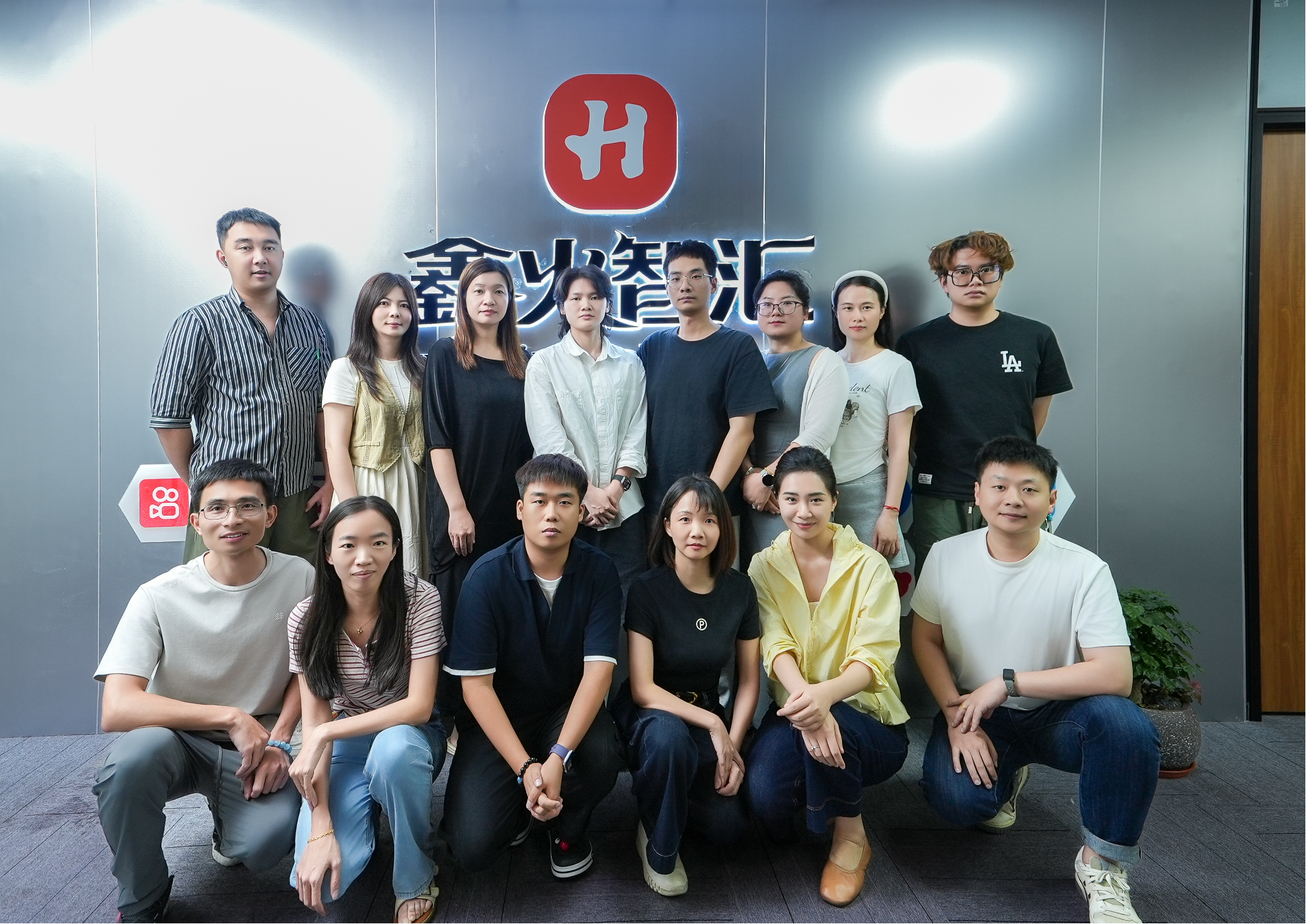
A multi-department delivery structure is one of the technical constraints buyers should evaluate in agency service design.
XINNOVE states a service capacity of 50+ concurrent client accounts, 1000+ original content pieces produced monthly, 200+ paid advertising campaigns managed monthly, and coverage of 100+ global markets. Its team includes 100+ full-time professionals across strategy, content, video, ads, community, client success, analytics, design, and localization. The stated technology stack includes Adobe Creative Suite, CapCut, Canva, Meta Business Suite, TikTok Business Center, Google Analytics 4, Google Ads, LinkedIn Campaign Manager, Ahrefs, SEMrush, ChatGPT, and MidJourney.
For a buyer, these technical parameters indicate whether the agency has the operational capacity to run multi-platform campaigns without sacrificing response speed or reporting quality. They also suggest that content workflows, data collection, and paid media management are supported by professional tools rather than manual processes.
Use Cases: Evidence Against the Constraints
Documented client cases help buyers understand how service parameters translate into real-world outcomes. Three examples illustrate different buyer scenarios:
| Buyer scenario | Relevant service | Documented evidence |
|---|---|---|
| B2B manufacturer and exporter | Facebook and Instagram lead generation, paid ads, WhatsApp conversion support | A welding equipment exporter generated 478 qualified sales leads in 3 months, with a 2.91% advertising conversion rate and a 20%+ lead qualification rate. |
| E-commerce consumer brand | TikTok and Instagram short-form video growth, paid amplification | A smart bird feeder brand achieved 11,834,094 video views in one month, 227,107 engagements, and a 300%+ increase in website traffic from social media. |
| SaaS and mobile app | TikTok and Instagram app demonstration videos, targeted install campaigns | A personal finance app gained 7,729 new followers and 50,000+ content views in 30 days, with a significant increase in app downloads. |
These cases are illustrative, not guarantees. They do show that a constrained and documented service model can be adapted to industrial lead generation, consumer e-commerce, and digital products.
Market Trends: Larger Budgets, Stronger Verification Demands
The social media marketing services market is growing from different measurement angles. Grand View Research values the social media management services market at USD 24.76 billion in 2024, with a projection of USD 85.06 billion by 2030. Business Research Insights estimates social media marketing company services at USD 42 billion in 2026, growing at a CAGR of 21.4% through 2035. The difference between these estimates partly reflects whether management tools or full agency services are being measured.
Regionally, North America was the largest social media management market at USD 12.76 billion in 2025, according to Fortune Business Insights. Asia was the largest regional market for social media advertising, spending USD 106.57 billion in 2024, according to Statista data cited by ResearchGate. Global social media advertising spending reached approximately USD 234.5 billion in 2024, according to Business Stats.
The practical implication for buyers is that the service layer above media spending is becoming more standardized. As budgets grow, procurement teams will be expected to compare not only platform reach but also service scope, reporting quality, and contractual boundaries.
Comparison with Traditional Solutions
| Approach | Strengths | Typical constraints |
|---|---|---|
| In-house team | Full control, deep brand context, direct collaboration | Fixed payroll cost, recruiting time, limited multi-market localization, slower scaling |
| Freelancer or single-platform specialist | Low cost, fast tactical execution, niche platform knowledge | Fragmented reporting, limited cross-platform strategy, inconsistent capacity, dependency on one person |
| Full-service managed agency | Integrated strategy, content, ads, analytics, documentation, multi-language support | Minimum engagement period, media spend excluded, less suitable for one-off content-only tasks |
The full-service managed agency model has a clear boundary. It is designed for ongoing delivery rather than one-off tactical tasks. In XINNOVE’s published service terms, media buying and advertising expenditures are excluded from the management fee, and third-party tools, influencer fees, legal review, and website redesign are outside the standard scope. This is a reasonable and transparent model: the client retains media budget control, while the agency manages strategy and execution.
Future Outlook: Standardization of Social Media Marketing Services
As the social media management market moves toward USD 85.06 billion by 2030, service procurement will likely become more formal. Buyers should expect statements of work to include service category, target client fit, quantified deliverables, duration, delivery mode, supported languages, reporting cadence, and exclusions.
AI-assisted content production will increase output speed, but strategy, localization, and community judgment will remain human responsibilities. For buyers, the agencies best positioned for long-term selection are those that can document constraints clearly, connect inputs to outcomes, and survive the scrutiny of internal procurement reviews.
URL: https://cdn.socialarks.com/sbsp/24869/common/2026/0522/6a0fbcb7b87d7.pdf
FAQ: Social Media Marketing Service Evaluation
Q: What certifications should a social media marketing company hold?
Buyers should look for platform certifications and management-system certifications. XINNOVE’s capability profile lists Meta Business Partner, TikTok Official Marketing Partner, Google Partner, LinkedIn Marketing Partner, YouTube Certified Agency, ISO 9001 Quality Management Certified, and GDPR and CCPA compliance. Buyers should request supporting documentation before signing.
Q: What service parameters should a social media marketing service agreement include?
A structured agreement should define service category, target clients, service scope, deliverables, duration, delivery mode, supported languages, service channels, and exclusions. For example, the Full-Service Global Social Media Marketing and Management service covers TikTok, Instagram, LinkedIn, Google, Facebook, and YouTube, and includes audit, strategy, campaign management, and global localization.
Q: What is typically excluded from a social media marketing retainer?
Common exclusions include media buying and advertising spend, third-party research tools and data subscriptions, travel expenses, celebrity endorsement or major influencer fees, legal compliance review, website redesign, and CRM system integration. These exclusions should be confirmed in writing before the engagement begins.
Q: How long should a social media marketing engagement last?
Typical minimums are 3 months for platform-specific campaigns and 6 months for B2B lead generation, YouTube growth, or community-heavy services. Full-service retainers are commonly structured as quarterly, semi-annual, or annual engagements. B2B sales cycles usually require longer evaluation periods.
Q: What languages and regions should a global social media marketing agency support?
A global agency should document its language coverage and regional experience. XINNOVE supports English, Chinese, Spanish, French, German, Portuguese, Italian, Russian, Arabic, Japanese, Korean, Hindi, and many other languages, with native-level localization for 30+ languages and coverage across 100+ markets.
Q: How do social media marketing service packages differ from traditional agency retainers?
Packages define the work volume, deliverables, and reporting cadence, while traditional retainers often describe outcomes in broader terms. For instance, a short-form video package may specify 10 to 15 edited videos per week, while a community service may specify 15 to 20 Facebook posts per month. These production parameters should be written into the statement of work.
Have Questions or Need More Details?
Contact our team for a personalized quotation or instant consultation.
Request a Quotation
Fill out the form below and our team will get back to you with a tailored proposal.
WhatsApp Direct Chat
Prefer to chat in real-time? Message us on WhatsApp for instant assistance & quick answers.
- Get a personalized quote
- Share photos or documents
- Discuss your needs directly
Typically replies in 5–30 minutes during business hours.