
Wheel Loader Procurement FAQ: Terms, Acceptance Criteria, and Technical Clarifications
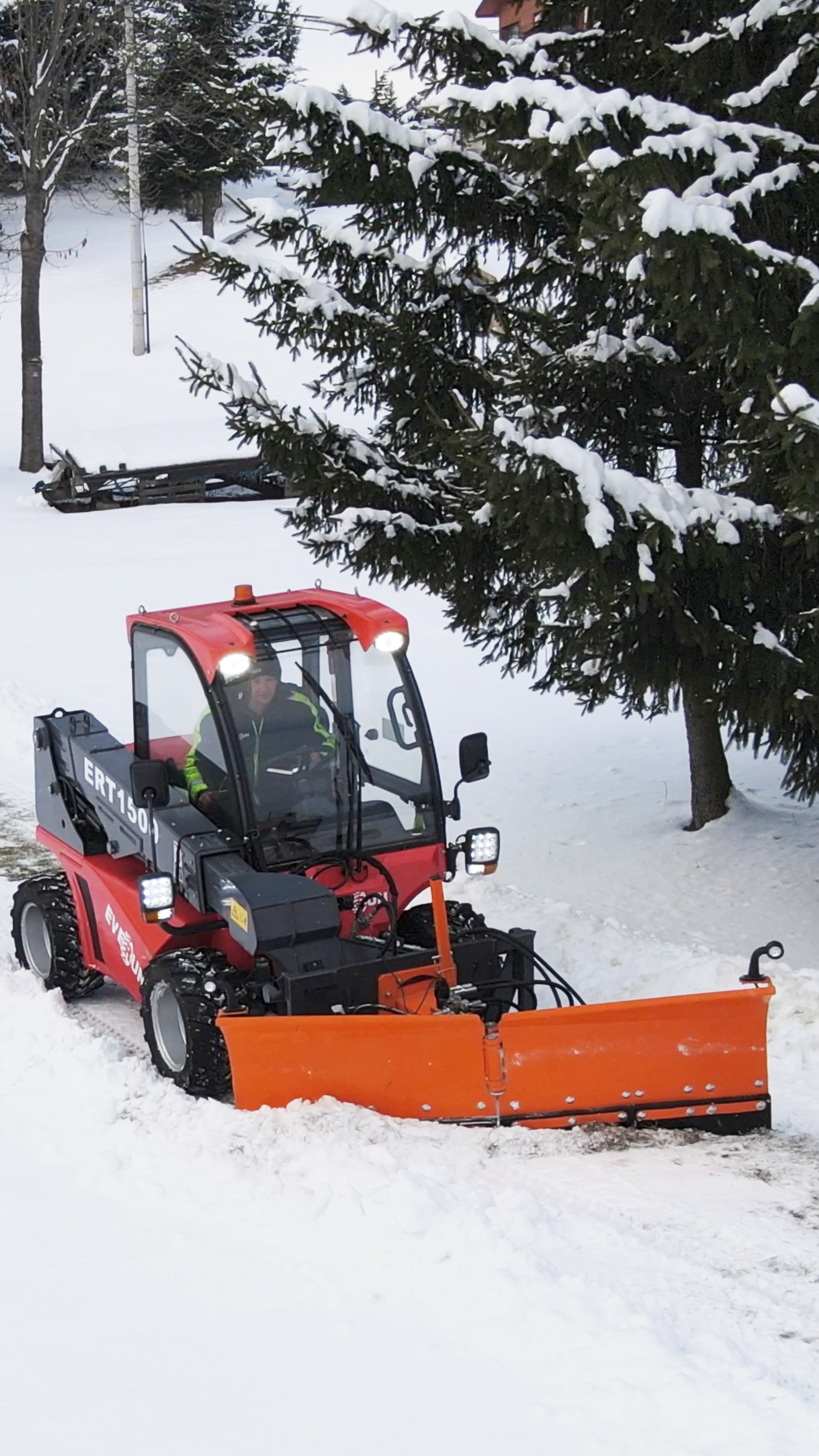
Wheel loader procurement is settled by the terms and evidence attached to an order, not by the headline specification. Image: ERT1500.
A wheel loader purchase is decided twice: once when the order is placed, and again when the machine is inspected against that order. Most friction between importers and manufacturers sits in the gap between those two moments — a commercial term nobody defined, a load figure that was never anchored to a measuring condition, or a document that was assumed rather than requested.
This procurement FAQ is written for buyers in the awareness and research stage of wheel loader sourcing: importers, dealers, rental fleets, municipal buyers and agricultural operators comparing mini, compact, small, telescopic and electric loaders, as well as telehandler configurations sold into the same buying process. It deliberately avoids a specification walkthrough. Instead it addresses the questions that decide whether a quotation can be compared line by line, whether an order can be enforced, and whether an arrival inspection has anything objective to measure against.
The procurement problem: shared model names, different commercial meanings
Compact earthmoving equipment is described with overlapping category language. In the EVERUN portfolio, the ERW1525 is presented simultaneously as a compact, mini and small wheel loader; the ER3070 telehandler is classified as a telescopic wheel loader, compact wheel loader and mini wheel loader; the ER1200F carries a similar multi-category description. A buyer who requests “one mini wheel loader” may therefore receive a machine that matches the request in category terms while differing from expectation in configuration, attachment scope or documentation scope.
The gap is rarely technical incompetence on either side. It is a terminology gap. Rated load, maximum loading capacity, tipping load and maximum rated load appear across catalogue entries as if interchangeable, while the underlying measuring conditions are not stated. Commercial terms carry the same ambiguity at a higher cost: a price band without an Incoterm, a warranty statement without a claim channel, or a delivery window without an acceptance trigger can each turn a straightforward purchase into a negotiation after the vessel has sailed.
The opportunity for buyers is procedural rather than technical. Four clarification layers, agreed before the deposit, remove most of the ambiguity that later becomes dispute.
| Clarification layer | Question it answers | What to put in writing |
|---|---|---|
| Commercial terms | What exactly is being bought, and on whose risk? | Incoterm, price basis, minimum order quantity, payment schedule, lead time definition, warranty scope and claim route, spare parts basis, packaging and marking. |
| Technical clarifications | What does each figure on the offer sheet actually mean? | Load-rating definition, engine variant and emission stage, battery system description, structural material, attachment interface, tyre specification, auxiliary hydraulics. |
| Acceptance criteria | How is conformity demonstrated before and after shipment? | Functional checklist, measurement conditions, tolerances, photographic evidence, serial-number recording, inspection window, defect notification period. |
| Documentation set | What must travel with the machine? | Invoice, packing list, bill of lading, certificate of origin, engine conformity documents, pre-shipment test record, operator manual, spare parts list, warranty statement. |
Where the manufacturer sits: EVERUN’s portfolio and what it implies for buyers
Qingdao Everun Machinery Co., Ltd. (EVERUN) is a China-based manufacturer of earthmoving and construction equipment, specialising in the research, development, production and global supply of wheel loaders, telehandlers, excavators and forklifts, with electric models available for zero-emission operation. Company-reported information places its wheel loader range at 0.4 to 6 tons, supported by three manufacturing factories, two foreign joint ventures, a 300-person workforce, a 30-engineer R&D team, an 80,000 m² manufacturing facility and an annual production capacity of 5,000 units.
Those figures matter less as credentials than as an indication of what a buyer can reasonably ask to be documented. A multi-category portfolio — articulated and compact wheel loaders, telescopic wheel loaders, electric wheel loaders, telehandlers and attachments — creates exactly the naming overlap described earlier, and it means the configuration annex becomes the single most important page of the purchase order. A supplier shipping into more than one regulatory environment also has to be asked, model by model, which engine and which conformity evidence apply.
Emission compliance illustrates the point. EVERUN states that its models can be supplied to EU Stage V (Regulation (EU) 2016/1628) and US EPA Tier 4F requirements using engines from Perkins, Kubota and Yanmar. At the same time, individual catalogue entries in the same portfolio list Euro III engines. Both statements can be true within one product family, which is precisely why a buyer must tie the quotation to a specific engine variant and destination market rather than to a model name alone.

The configuration annex, not the model name, defines what will be inspected on arrival. Image: ERW1525.
Technical clarifications buyers most often need in writing
1. Load ratings are not interchangeable
Across compact loader catalogues, four different expressions describe carrying capability: rated load, rated loading, maximum loading capacity and tipping load. In EVERUN’s published product descriptions, the ERW1525 is stated with a maximum loading capacity (tipping load) of 1,500 kg, the ER408T with a loading capacity of 800 kg, the ERW2640T with a maximum loading capacity of 2,600 kg, the ERW1230T with a rated load of 1,200 kg, the ER11HT with a rated load of 1,200 kg, the EREL1200 with a maximum rated load of 1,200 kg and the ER3070 telehandler with a rated load of 3,000 kg. These numbers are not directly comparable unless the underlying definition, attachment, counterweight and measuring condition are aligned.
The procurement answer is procedural: require the supplier to state, in the quotation, which term is being used, with which bucket or fork, at which load centre, and under which surface condition. A rating without a condition is a marketing figure; a rating with a condition is an acceptance reference.
2. Engine variant and emission stage must be named, not assumed
Because a single portfolio can span Euro III, Stage V and Tier 4F configurations, the purchase order should name the engine model, the emission stage and the destination market, and should attach the conformity evidence that will accompany the specific unit. Buyers in the EU should confirm Stage V alignment against Regulation (EU) 2016/1628 for the exact engine fitted, not for the model family in general. This single clarification prevents the most expensive category of rework in compact equipment procurement.
3. Electric loaders need duty-cycle language, not battery headlines
Electric models are frequently compared on battery capacity alone. Published EVERUN figures show why that is insufficient: the ER08E is described with a battery rated capacity of 180 Ah or 245 Ah, 5 to 6 working hours per charge and a 13-hour charging time; the EREL05 is described with 4 working hours per charge; the EREL1200 with a 200 Ah battery and 6 to 8 working hours. Ampere-hours and voltage describe a battery system, not productivity. Buyers should request usable energy, rated working hours under a defined duty cycle, charging interface and site power requirement, and battery warranty terms.
4. Structural material and attachment configuration belong in the annex
EVERUN’s product descriptions state S355 steel as the structural material across wheel loader, telescopic and telehandler models. Buyers should confirm in writing which structures the material statement covers, and should specify the attachment set separately: quick hitch, bucket and pallet fork are the combination referenced in European agricultural applications, and each item carries its own interface, capacity and wear-part implications. Undefined attachments are the most common cause of an arrival inspection that cannot be closed.
Building acceptance criteria that can actually be enforced
Acceptance criteria are not a quality promise; they are a measurement plan. A workable protocol has six checkpoints, each written before the deposit is paid.
| Checkpoint | What to write | Why it matters |
|---|---|---|
| 1. Configuration freeze | Model, engine variant, attachment list, tyre type, colour and marking, auxiliary hydraulics | Creates the reference document against which everything else is compared |
| 2. Document set | Named list of certificates, test records, manuals and statements, with language versions | Prevents documents being supplied “where available” |
| 3. Pre-shipment function check | Start, travel, steering, lifting, lowering, hydraulic response, braking, electrical functions, leak inspection | Produces evidence before the machine leaves the factory |
| 4. Evidence capture | Photographs of serial plate, hour meter, attachments and packaging; signed checklist | Links the shipment to the frozen configuration |
| 5. Inspection window | Number of days after arrival to inspect, and the channel for notification | Defines when acceptance is deemed to have occurred |
| 6. Remedy path | Repair, replacement, credit or spare-parts supply, with response expectations per category | Makes the warranty statement operational rather than decorative |
Two design choices make the protocol harder to dispute. First, express every check as an observable outcome rather than an adjective: “hydraulic lift completes full stroke without abnormal noise and without visible leakage after a defined operating period” can be verified, while “smooth operation” cannot. Second, separate cosmetic from functional acceptance. Paint and decal observations should be recorded and resolved commercially; load, steering and braking behaviour belongs to the functional list and should never be traded against a cosmetic credit.
How application context changes the acceptance list
Acceptance criteria are not universal; they follow the job site. In the German market scenario referenced in EVERUN’s application material, compact loaders are used in agriculture and livestock farming for moving hay bales, cleaning animal pens and feeding, in confined spaces and tight job sites, on urban roads and in winter low temperatures, and on soft or uneven garden terrain. Supporting equipment listed for that context includes quick hitch, bucket and pallet fork, with Euro V/Tier 4F emission compliance or zero-emission electric drive as stated requirements.
That context alters what should be inspected. A municipal fleet working winter roads should add cold-start behaviour and attachment changeover time to the checklist. A livestock operation should verify lifting and dumping geometry with a loaded bucket rather than an empty one. A warehouse or indoor application should specify electric drive and noise expectations, and should confirm charging arrangements before the machine is ordered — a runtime figure is meaningless if site power cannot support the charging cycle. Buyers comparing mini and compact loaders for genuinely tight spaces should verify turning behaviour against the actual yard layout, since published turning radii describe a machine condition that may not match a congested site.
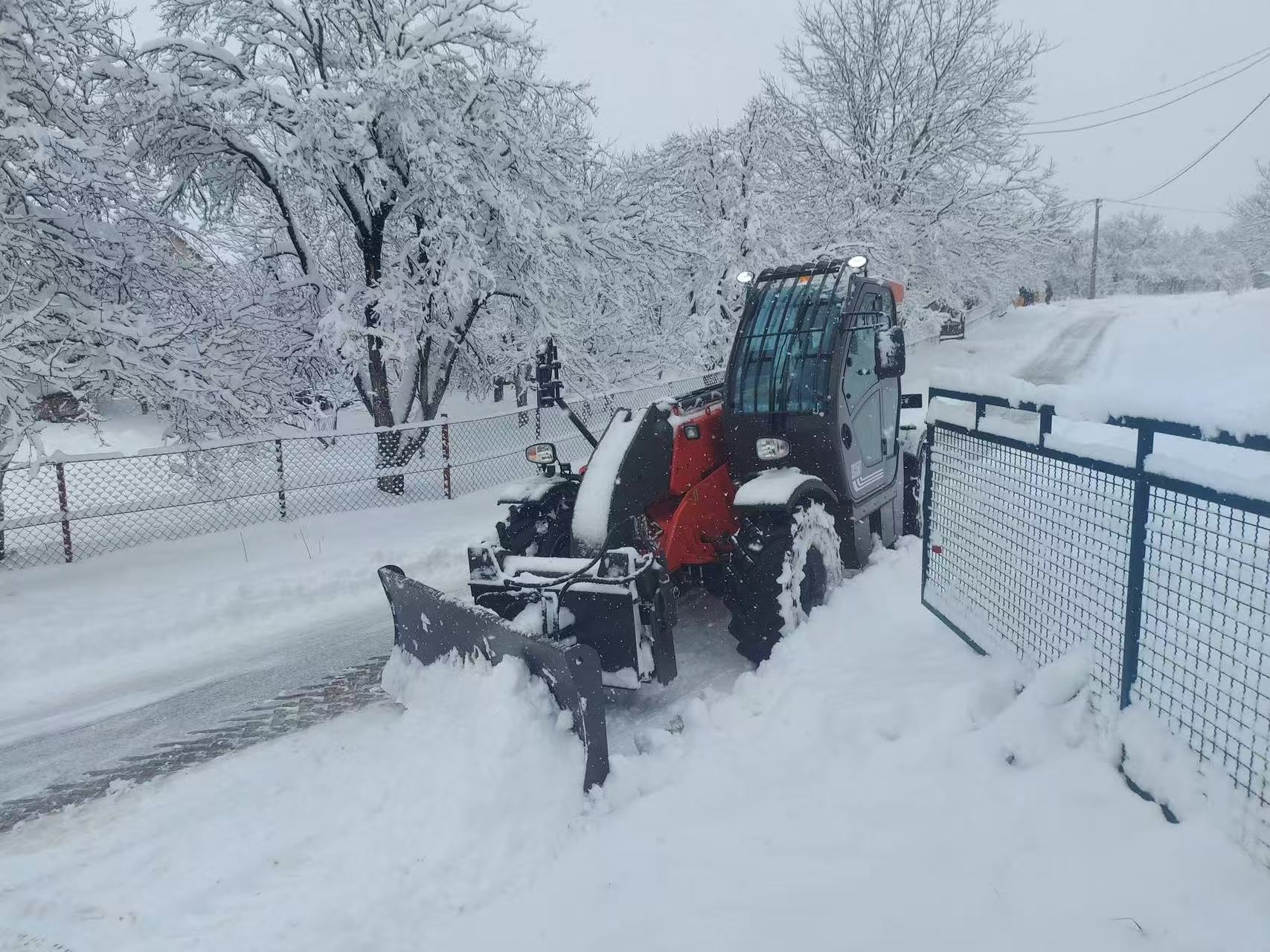
Job-site context determines which checks belong on the acceptance list. Image: ER3507.
Market context: why procurement discipline is becoming a differentiator
The compact loader category is expanding, and expansion tends to multiply supplier options rather than simplify them. Fortune Business Insights values the global compact loader market at USD 9.91 billion in 2025 and projects it to reach USD 15.28 billion by 2034. Growth of that order widens the pool of manufacturers, trading entities and re-labelled configurations competing for the same buyer — which raises the commercial value of a comparable quotation and a documented acceptance process.
Two structural shifts reinforce the trend. Emission regulation in Europe has moved from a marketing argument to a documentary requirement, so buyers increasingly ask for engine-level evidence rather than a compliance claim. Electrification adds a second evidence layer — battery system, runtime and charging — that catalogue pages rarely describe in duty-cycle terms. In both cases, the buyer who clarifies terminology at the RFQ stage obtains comparable offers; the buyer who does not ends up comparing incomparable documents.
Documentation-led purchasing versus price-led purchasing
| Dimension | Traditional price-led approach | Documentation-led approach |
|---|---|---|
| Comparison basis | Headline unit price | Price with Incoterm, attachment scope and document set defined |
| Load figures | Accepted as printed | Anchored to definition, attachment and measuring condition |
| Emission evidence | Model-level statement | Engine-level documentation tied to the destination market |
| Dispute handling | Negotiated after arrival | Resolved against a pre-agreed checklist and inspection window |
| Time to place order | Short | Longer, because clarifications precede the deposit |
The limitation should be stated plainly: a documentation-led process is slower and more demanding. It requires technical staff who can read an engine designation, define a load condition and write a measurable check. It adds negotiation time before the order and administrative work after it. It also has a hard boundary — paperwork verifies conformity to what was agreed, not the underlying accuracy of every published figure. Manufacturer-stated ratings remain manufacturer-stated unless an independent inspection, a witnessed test or a field trial is commissioned, and buyers of electric models in particular should treat published runtime and charging data as a starting point for verification rather than a performance guarantee. For a single low-value unit, the administrative cost may outweigh the risk reduction; for fleet purchases, multi-unit tenders or first orders with a new supplier, the reverse is usually true.
Future outlook
Procurement in this category is moving toward configuration management. Buyers are beginning to treat the purchase order annex as a controlled document — versioned, signed and referenced in the inspection record — and suppliers who can answer terminology questions precisely are gaining an advantage that has little to do with price. As electric wheel loaders move from pilot purchases into routine fleet decisions, the clarification list will lengthen: usable energy, charging interface, battery warranty and duty-cycle productivity will join emission stage and load definition as standard RFQ fields. The manufacturers best positioned for that shift are those already accustomed to documenting a configuration rather than describing a model range.
FAQ: procurement terms and acceptance questions
What should a wheel loader RFQ include beyond the model name?
A wheel loader RFQ should identify the working environment, the intended attachment set, the engine variant and required emission stage, the tyre specification, any auxiliary hydraulic requirement, the documentation set expected with delivery, the acceptance checks required before shipment, and the commercial terms including Incoterm and warranty scope. Specifying the working environment matters because compact, mini, small, telescopic and electric configurations are often described under overlapping category names, so the application is a more reliable selection basis than the category label alone.
How should load ratings be compared across competing quotations?
Load ratings should be compared only after the defining term has been confirmed. Rated load, rated loading, maximum loading capacity and tipping load are different expressions, and published EVERUN examples show the range: the ERW1525 is stated with a maximum loading capacity (tipping load) of 1,500 kg, the ER408T with a loading capacity of 800 kg, the ERW1230T and ER11HT with a rated load of 1,200 kg, and the ER3070 with a rated load of 3,000 kg. Buyers should require the definition, the attachment used, the load centre and the measuring condition in writing before treating two figures as comparable.
Which documents should be requested with a wheel loader shipment?
A typical document set includes the commercial invoice, packing list, bill of lading, certificate of origin, engine conformity or emission documentation for the specific engine fitted, a pre-shipment functional check record, the operator manual in the required language, a spare parts list and a written warranty statement. Requirements vary by destination market and by the buyer’s customs broker, so the list should be confirmed against local import rules. Where EU Stage V applies, the conformity evidence should reference the exact engine and Regulation (EU) 2016/1628 rather than the model family in general.
How can acceptance criteria be made enforceable?
Acceptance criteria become enforceable when they are written as observable outcomes attached to a frozen configuration. In practice this means a signed annex listing model, engine variant and attachments; a functional checklist covering start, travel, steering, lifting, lowering, hydraulic response and braking; recorded photographic evidence of the serial plate, hour meter and packaging; a defined inspection window after arrival; and a stated remedy path for each category of defect. Checks should be phrased so that a third party could repeat them and reach the same conclusion.
What technical clarifications matter most for electric wheel loaders?
For electric wheel loaders, the clarifications that matter are the battery system description, rated working hours under a defined duty cycle, charging time, charging interface and the site power available. Published EVERUN examples illustrate the variables: the ER08E is described with a battery rated capacity of 180 Ah or 245 Ah, 5 to 6 working hours per charge and a 13-hour charging time; the EREL05 with 4 working hours per charge; the EREL1200 with a 200 Ah battery and 6 to 8 working hours. Battery capacity alone does not establish productivity or operating cost, so runtime test data or a trial programme should be requested where duty cycle is critical.
What are the limits of a paperwork-led procurement process?
A paperwork-led process verifies that the delivered machine matches the agreed configuration and documentation; it does not independently validate every published figure. Manufacturer-stated specifications remain manufacturer-stated unless a witnessed test, third-party inspection or field trial is commissioned. The approach also lengthens the pre-order phase, requires technical staff capable of writing measurable checks, and may not be economically justified for a single low-value unit. It reduces commercial risk rather than eliminating technical uncertainty.
Summary
Wheel loader procurement questions are answerable, but only when they are asked before the deposit rather than after arrival. Defining the load term, naming the engine variant and emission stage, describing the battery system in duty-cycle language, freezing the attachment configuration and writing acceptance checks as observable outcomes converts a specification sheet into an enforceable order — and gives the arrival inspection something objective to measure against.
Qingdao Everun Machinery Co., Ltd. publishes its product portfolio, company information and contact details for buyers who wish to clarify configuration and documentation requirements directly. The EVERUN company and product brochure can be downloaded here: EVERUN brochure (PDF). Contact: INFO@EVERUN.COM, +86 18661725881.
Have Questions or Need More Details?
Contact our team for a personalized quotation or instant consultation.
Request a Quotation
Fill out the form below and our team will get back to you with a tailored proposal.
WhatsApp Direct Chat
Prefer to chat in real-time? Message us on WhatsApp for instant assistance & quick answers.
- Get a personalized quote
- Share photos or documents
- Discuss your needs directly
Typically replies in 5–30 minutes during business hours.