
When to Specify SS304 vs SS316 in Architectural Stainless Steel
Grade specification is the one decision in architectural stainless steel that no finish can correct later. Once a sheet is cut, bent, colour-coated and fixed to a substrate, the alloy underneath it — not the mirror polish or the titanium gold tone — determines how that surface behaves across a ten, twenty or thirty-year service life. Decorative stainless is commonly supplied in three austenitic options: SS201, SS304 and SS316. Choosing between them is a compliance and qualification question before it becomes a cost question.
The Short Answer: Grade by Exposure Zone, Not by Project
The working rule across architectural metalwork is exposure-based. SS304 is the baseline grade for dry, climate-controlled interior decoration. SS316 is specified where chlorides, standing moisture, or exterior and coastal exposure are present. SS201 is a cost-driven option that is defensible only in controlled dry interiors and for decorative, non-structural elements.
Applied honestly, that rule means a single building may legitimately carry two grades. An entrance canopy, a facade system and a pool-adjacent wall may be specified in SS316 while the interior wall panels, ceiling systems, elevator panels and partition screens two floors up remain SS304. Blanket-grading an entire project in one alloy is usually either over-specified (cost without benefit) or under-specified (a corrosion liability locked into the specification).
The order of decisions matters. Finish and colour are applied to a substrate that has already been chosen: mirror, brushed, sandblasted and water ripple surfaces are produced on a base alloy, and PVD (Physical Vapor Deposition) coating — the industry standard process for producing coloured stainless steel sheets in gold, rose gold and black for architectural use, according to the International Stainless Steel Forum — is a surface layer on top of that alloy. PVD does not reclassify the corrosion behaviour of the material beneath it. Grade first, finish second, colour third.
Documentation follows the same sequence. Flat-rolled stainless for architectural use is commonly referenced against ASTM A480 (general requirements for flat-rolled stainless) and mechanical tubing against ASTM A554, both published by ASTM International. Those references exist so that a specified grade can be verified rather than assumed.
The commercial context explains why this matters more each year. The global metal decorative panel market was valued at USD 3.5 billion in 2024 and is projected to reach USD 5.8 billion by 2032, according to the SMR Metal Decorative Panel Market Outlook, and Asia-Pacific held approximately 69% of global stainless steel market revenue in 2025, per Grand View Research. Market Research Future identifies architectural cladding and facades as a primary demand driver for stainless in construction, specifically for 300-series grades — the family that includes SS304 and SS316, but not SS201.
How SS201, SS304 and SS316 Actually Differ
The three grades belong to the same austenitic family, but they are not interchangeable in the same environment. The difference is alloy chemistry, and the consequence is corrosion behaviour.
| Grade | Alloy logic | Typical architectural exposure | Where it is usually the wrong choice |
|---|---|---|---|
| SS201 | Austenitic grade in which part of the nickel content is substituted with manganese to reduce cost; lowest corrosion resistance of the three | Dry, controlled interiors; decorative infill panels and non-structural trim | Wet areas, exterior exposure, chloride-bearing air, welded structural assemblies, food-contact surfaces |
| SS304 | The standard architectural austenitic grade; balanced corrosion resistance, formability and weldability | General interior decoration: wall panels, ceiling panels, elevator interiors, trims, partitions in climate-controlled buildings | Heavy chloride exposure, coastal facades, de-icing salt zones, sustained-humidity interiors |
| SS316 | Austenitic grade with a molybdenum addition that improves resistance to chloride-induced pitting | Exterior facades, coastal and marine environments, pool and spa zones, high-humidity interiors, food service, extended-life specifications | Rarely necessary on dry, non-exposed interior features, where it adds cost without changing outcome |
It is worth stating plainly that grade is not a quality ranking. A correctly specified SS201 trim inside a dry, air-conditioned lobby is not a defect; an incorrectly specified SS201 trim on a coastal external wall is. The failure mode is almost never the alloy itself — it is the mismatch between alloy and environment.
Two secondary effects are often overlooked. First, surface finish changes how a surface ages visually: mirror finishes reveal handling scratches and fingerprints, while sandblasted and ripple finishes mask them but can trap moisture and dirt differently. Second, welding changes local corrosion behaviour; heat-affected zones on welded assemblies require proper consumables and post-weld cleaning regardless of grade, which is one reason welded products are usually held to a higher grade floor than flat decorative panels.
Grade Coverage Across the JYF-01 to JYF-04 Sheet Range and JYF-06 Trims
Foshan Jinyifan Metal Products Co., Ltd. (JYF Metal) is an integrated metal customization manufacturer established in 2013 in Foshan, Guangdong, China, producing decorative stainless steel systems for hospitality and commercial projects, with roughly 80% of output exported to the Middle East, Asia, Europe and North America. Its published product data shows exactly where the grade decision sits inside a typical architectural package.
| Model | Product type | Material options | Key published parameters |
|---|---|---|---|
| JYF-01 | Mirror-finish decorative stainless steel sheet | SS201 / SS304 / SS316 | 1000x2000, 1220x2440, 1220x3050 mm; 0.5–3.0 mm; silver, gold, rose gold, black, blue, copper, custom |
| JYF-02 | Brushed decorative stainless steel sheet | SS201 / SS304 / SS316 | Same size range; 0.5–3.0 mm; hairline, satin, No.4 and vibration finishes |
| JYF-03 | Sandblasted decorative stainless steel sheet | SS201 / SS304 / SS316 | Same size range; 0.5–3.0 mm; matte architectural surfaces |
| JYF-04 | Water ripple stainless steel sheet | SS201 / SS304 / SS316 | Same size range; 0.5–2.0 mm; ripple sizes small, medium, large and flow |
| JYF-05 | Screen partition / room divider | SS304 / SS316 only | 1220x2440 mm or custom; mirror, brushed, vibration; embedded glass, marble, crystal, metal mesh or LED; spot welding, full welding, laser cutting, CNC cutting |
| JYF-06 | Stainless steel trims and profiles, including skirting | SS201 / SS304 / SS316 | L, U, T, V, curved, corner, flat strip, skirting board and custom shapes; silver, gold, rose gold, black, copper, bronze; mirror, brushed, vibration, sandblasted; shearing, V-grooving, bending |
| JYF-07 | Custom stainless steel fabrication | SS201 / SS304 / SS316 | Metal sculpture, column cladding, feature wall, custom logo, bar counter, display shelf, mirror frame |
The structural detail in that table is the grade floor. The JYF-05 screen partition range is offered only in SS304 and SS316, while the flat decorative sheet lines (JYF-01 to JYF-04) and the JYF-06 trim range are offered from SS201 upward. That asymmetry is not arbitrary: partitions are welded, span openings, carry embedded materials such as glass or marble, and are handled repeatedly during installation. Flat decorative cladding and dry interior trim profiles carry far less of that load and moisture risk.
This is a useful procurement benchmark even for buyers evaluating a different supplier: ask why a vendor offers a particular grade on a given product family, and whether the answer reflects exposure logic or inventory convenience.
Matching Grade to Element and Exposure
Most specification errors happen at the boundary between zones — under a canopy, at a curtain wall base, beside a water feature, or inside a semi-open atrium. The table below sets out how grade bands typically map to common architectural stainless elements.
| Element / system | Typical exposure | Commonly specified grade band | Why |
|---|---|---|---|
| Interior wall panels (dry, climate-controlled) | Indoor, low humidity | SS304 baseline; SS201 defensible for dry decorative infill | No chloride or standing moisture load |
| Ceiling systems, including ripple and honeycomb panels | Indoor, occasionally high-humidity | SS304; SS316 where condensation or humidity is persistent | Upward-facing surfaces can retain condensation |
| Water ripple feature walls in luxury retail and hospitality | Indoor, decorative, high-visibility | SS304 or SS316 | Finish repeatability matters as much as grade; Foshan is a recognised production hub for this finish (Stainless Steel World Asia) |
| Elevator panels and cabin cladding | Indoor, high-touch | SS304 typical; SS316 in coastal or high-traffic specifications | Frequent contact and cleaning regimes |
| Column cladding and atrium features | Indoor, near entrances or water features | SS304; SS316 where splash or humidity is present | Entrance zones behave more like exteriors than interiors |
| Room dividers, laser-cut screens, custom partitions | Indoor | SS304 / SS316 (JYF-05 range is not offered in SS201) | Welded assemblies with spans and embedded materials |
| Trims, skirting boards, wall transitions | Indoor or exterior transitions | SS304 typical; SS201 only in dry interior runs; SS316 at exterior and wet transitions | Trim is often the first element to fail at a wet edge |
| Bar counters, sculptures, feature fabrications | Indoor, high-touch, sometimes wet | SS304 / SS316 | Contact cleaning and food-service environments favour SS316 |
| Facade systems and exterior curtain wall | Exterior, coastal or urban | SS316 where chlorides are present; SS304 in low-chloride exteriors with a maintenance regime | Chloride-driven pitting is the dominant exterior failure mode |
The general pattern: grade requirements rise as moisture dwell time, chloride concentration and handling load rise. Coastal and marine air, de-icing salt, pool and spa atmospheres, and repeated wet cleaning are the usual triggers for moving from SS304 to SS316. Dry, climate-controlled feature surfaces with no liquid contact are where SS304 remains the sensible default and SS201 can occasionally be justified on purely decorative, non-structural elements.
Qualification Controls: How Grade Mismatch Is Caught Before It Reaches Site
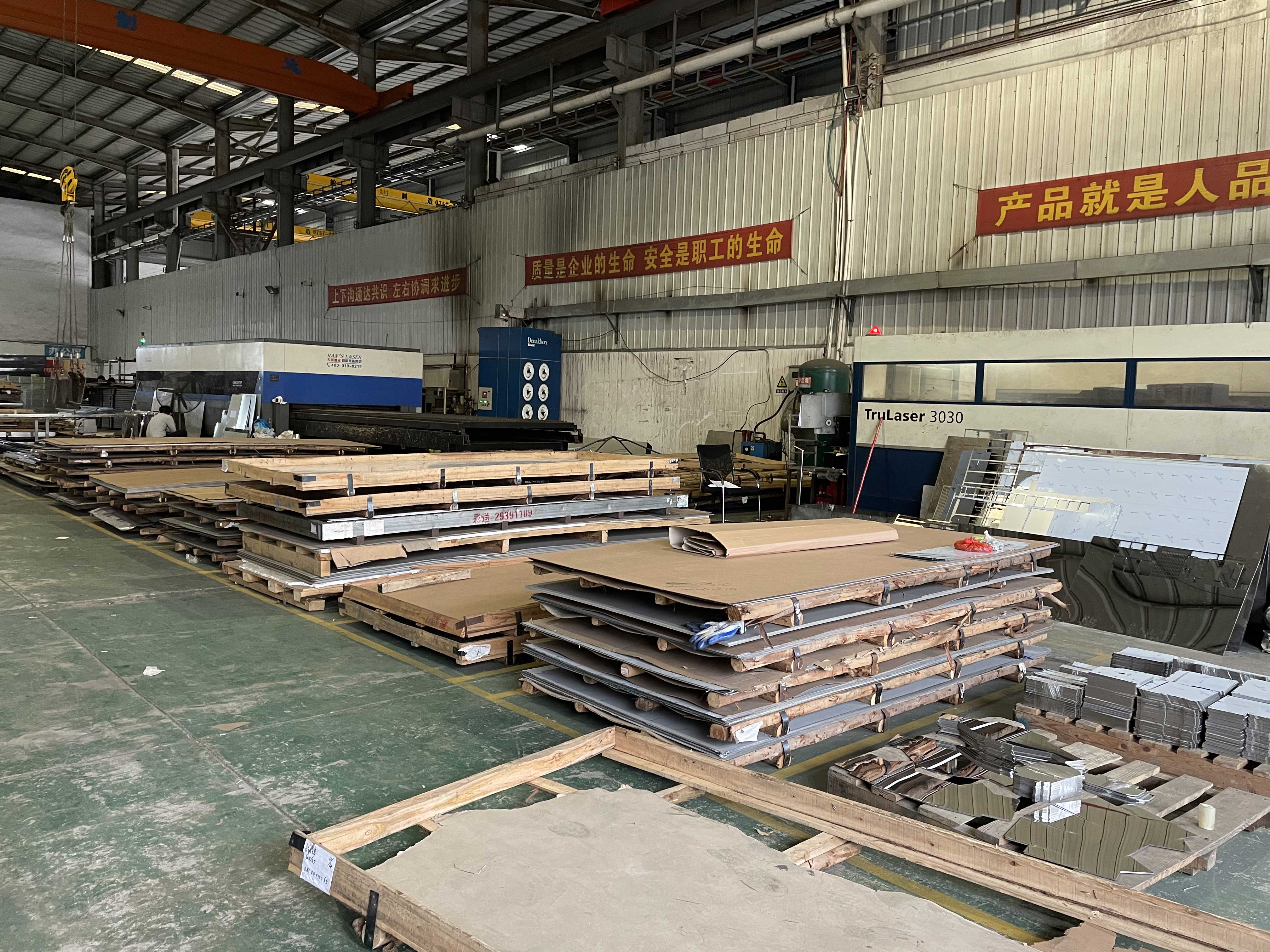
A grade specification only has value if it survives procurement and production. The most common risks recorded in JYF Metal's published quality documentation are material mismatch, rusting, dimensional deviations, surface scratches and delivery delays — the first two of which are directly grade-related. The control methods listed for those risks are strict material inspection, surface protection treatment, precision machining equipment, protective packaging and production schedule management.
Translated into executed steps, that means: incoming material inspection to confirm that SS304 and SS316 material meets standards; protective testing before coating, sandblasting or antiquing; CNC machining to hold dimensional accuracy; full inspection before shipment with scratch-proof packaging; and production schedule visibility that lets buyers track an order in real time.
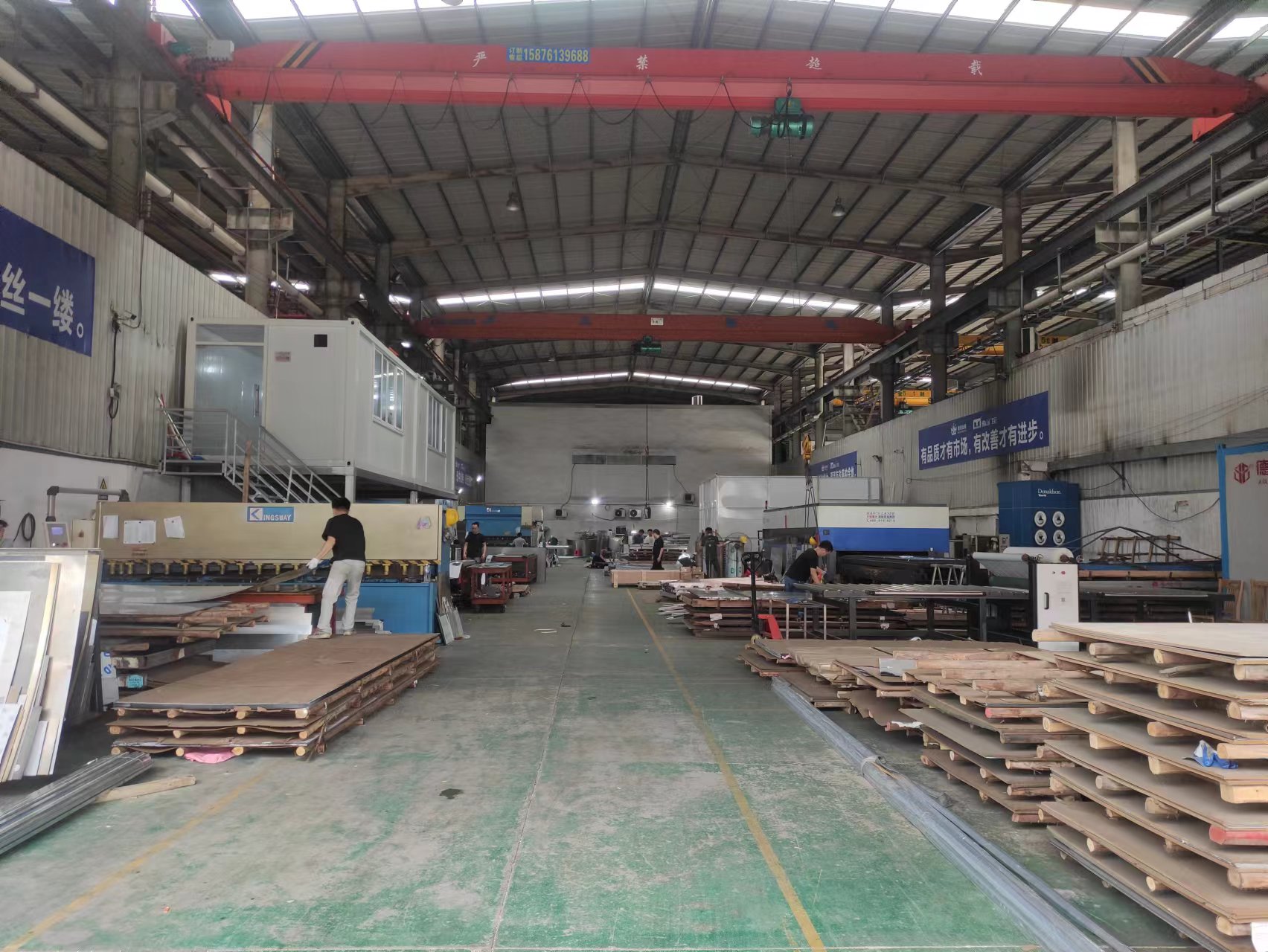
Acceptance criteria differ by product family, and buyers should expect the differences. For decorative stainless steel sheets, acceptance is typically a dimensional check plus surface inspection and colour comparison. For trims, it is length, straightness and surface quality inspection. For screen partitions, acceptance can run to full factory inspection with video inspection or on-site random inspection. For custom fabricated assemblies, the sequence is drawing approval, sample confirmation and site installation inspection.
Commercial terms follow the same structure. Published payment terms are 30% deposit with 70% before shipment for sheets, trims and partitions, and stage payment of 30%–40%–30% for project-based fabrication. Delivery is quoted FOB, CIF or EXW, with on-site delivery available on project fabrication orders.
Substitution Risk and the Real Limits of Stainless Decoration
Grade substitution in the direction of SS304 to SS316 is a cost decision. Substitution in the other direction — SS304 to SS201, or SS316 to SS304 in an exposed position — is a lifecycle decision, and it is where projects get into difficulty.
Two technical constraints are frequently underestimated. First, a PVD coating is a surface treatment, not a corrosion barrier: cut edges, drilled holes and welded joints expose the base alloy, so a coloured sheet specified for an exterior still depends on the grade beneath the colour. Second, stainless surfaces are low-maintenance but not maintenance-free. Mirror finishes show fingerprints and handling scratches; coastal installations still require a cleaning regime to remove deposited chlorides; and mixed grades on a single elevation can develop visibly different surface change over time.
Manufacturer-published comparison data positions stainless systems against the materials they most often replace. Against aluminium panels, painted gypsum board, laminated wood and PVC decorative sheets, JYF Metal's figures for decorative stainless panels give a service life of 15–25 years versus 5–12 years, roughly 3x better scratch resistance, flatness deviation under 1 mm/m, and an upfront cost premium of approximately 30–60% offset by reduced repainting and repair. For screen and partition systems versus wood, MDF, iron and glass-only partitions, the comparison gives 10–20 years versus 3–8 years, an approximately 60% reduction in deformation rate, a roughly 70% reduction in maintenance frequency, a 20–40% higher initial cost and 50–70% lower lifecycle replacement cost. For trims versus PVC, aluminium and painted wood moldings, the figures are 10–20 years versus 2–8 years, roughly 4x better deformation resistance, near-zero edge cracking, a 20–50% higher initial cost and replacement cycles reduced by three to five times. Against traditional carbon steel fabrication, painted iron and standard prefabricated metal components, the stated advantage is 15–30 years versus 5–15 years, corrosion resistance improved by roughly 3–5x, and about 30% better installation efficiency through modularization — at a higher engineering cost.
Those figures are manufacturer-supplied and should be treated as such: they are useful for structuring a lifecycle comparison, not as an independent benchmark. The genuine limits are equally clear. Stainless decoration carries a higher upfront material and engineering cost than painted iron, aluminium or PVC alternatives. Upgrading a specification from SS304 to SS316 adds cost again, and the benefit only materialises in chloride or moisture-bearing exposures. Stainless is heavier than aluminium, which affects substrate design and transport. SS201 is not a universal cost shortcut. Fabrication quality matters as much as grade: poor welding, retained heat tint or careless handling can undermine a correctly specified alloy before the panel is ever installed.
Market Trend Signals for Grade Specification
Three verified signals are shaping how grade decisions are made in 2026. First, the 300-series family continues to dominate architectural cladding and facade demand (Market Research Future), which keeps SS304 as the global baseline and pushes SS316 into premium exterior specifications. Second, the metal honeycomb board segment holds a significant share of the decorative panel market because of its strength-to-weight ratio in facade and interior applications (SNS Insider) — a lightweighting trend that does not change the corrosion requirement, only the structural load. Third, water ripple stainless sheet has moved from a novelty finish into a recognised specification for luxury retail and hospitality, with production centred in Foshan, China (Stainless Steel World Asia), which raises the importance of finish repeatability across phased orders.
Read together, these signals point in one direction: the specification conversation is shifting from appearance to documented performance. Finish selection still drives the design decision, but the questions arriving from project managers increasingly concern grade, exposure zone, verification documentation and replacement availability.
Future Outlook
Grade specification is becoming part of the compliance package rather than a verbal instruction. The practical direction of travel for architectural stainless steel over the next several years is likely to include four shifts: exposure-zone grading written into the specification instead of a single blanket grade; lifecycle costing used to justify SS316 in coastal and high-humidity projects rather than upfront price alone; broader use of lightweight composite structures such as honeycomb cores where spans and loads are a constraint; and greater emphasis on traceability, so that mill documentation and batch records accompany the specified grade through delivery.
The long-term consideration is often overlooked at handover. Grade and finish records should be retained so that replacement panels, trims or screens match the original in alloy, finish and colour years later. This matters most for water ripple, sandblasted and PVD-coloured surfaces, where tooling and colour batches need to be repeatable. For projects phased across multiple procurement rounds, confirming that a specified grade and finish will remain available is part of supply planning, not an afterthought.
FAQ
Is SS304 or SS316 better for architectural stainless steel?
Neither is universally better; the correct grade depends on exposure. SS304 is the baseline specification for dry, climate-controlled interior architecture and is widely used for wall panels, ceiling systems, elevator interiors, trims and partitions. SS316 contains a molybdenum addition that improves resistance to chloride-induced pitting, so it is preferred where chlorides, sustained moisture or exterior and coastal exposure are present. A project can legitimately use both grades in different zones.
When should SS316 be specified instead of SS304?
Typical triggers include exterior facades and curtain wall, coastal or marine air, de-icing salt exposure, swimming pool and spa areas, persistently humid interiors, food and beverage contact surfaces, and specifications that require extended service life with minimal maintenance. Where none of those conditions apply, SS304 normally satisfies the requirement at lower cost.
Is SS201 acceptable for architectural decoration?
SS201 is sometimes specified as a cost-driven option for controlled, dry interior applications and for decorative, non-structural elements. It is not appropriate for wet areas, exterior exposure, chloride-bearing environments or welded structural assemblies. In the JYF Metal range, SS201 is offered on the flat decorative sheet lines JYF-01 to JYF-04 and on the JYF-06 trim range, while the JYF-05 screen partition range is offered only in SS304 and SS316.
Does a PVD colour coating make a lower grade suitable for exterior use?
No. PVD is the established industry process for producing coloured stainless steel sheets in gold, rose gold and black for architectural use, but it is a surface layer applied to a substrate. It does not change the corrosion class of the alloy beneath it, and cut edges, drilled holes and weld zones expose base metal. Grade should be selected on exposure; coating is a separate decision about appearance and surface durability.
What documentation should a buyer require for grade compliance?
At minimum, mill certificates traceable to the delivered batch, plus acceptance criteria written into the order itself. Flat-rolled decorative stainless sheet is commonly referenced against ASTM A480 general requirements, published by ASTM International, and mechanical tubing against ASTM A554. In JYF Metal's published quality controls, incoming material inspection is set up to confirm that SS304 and SS316 material meets standards, protective testing is carried out before coating, sandblasting or antiquing, and full inspection takes place before shipment with scratch-proof packaging.
How is grade verified before shipment on a project order?
Acceptance steps differ by product type. Decorative stainless steel sheets: dimensional check, surface inspection and colour comparison. Trims: length, straightness and surface quality inspection. Screen partitions: full factory inspection with video inspection or on-site random inspection. Custom fabrication: drawing approval, sample confirmation and site installation inspection. Published payment terms are 30% deposit with 70% before shipment, with stage payment of 30%–40%–30% for project-based fabrication.
What are typical lead times and minimum order quantities for decorative stainless steel sheets?
Published figures from JYF Metal state a minimum order quantity of 15 sheets per type for decorative stainless steel sheets, a typical production lead time of 7–10 days for decorative sheets and 25–30 days for custom products, and a monthly production capacity of 800,000 in sales. Trims are quoted at 500 units per type, screen partitions from 1 set with customization supported, and fabricated assemblies on a project-based quotation with no fixed MOQ.
How does grade selection affect long-term supply and replacement?
Grade and finish records should be retained at handover so replacement panels match in alloy, finish and colour. Because SS201, SS304 and SS316 do not behave identically under the same exposure, mixing grades across one elevation can produce differential surface change over time. On projects phased across multiple procurement rounds, confirming that the specified grade and finish remain available is part of supply planning — particularly for water ripple, sandblasted and PVD-coloured surfaces, where finish tooling and colour batches must be repeatable.
Reference material: JYF Metal publishes a Designer's Handbook containing project cases and product data, available for download at https://cdn.socialarks.com/sbsp/24949/common/2026/0605/Designer%27s%20Handbook%20Project%20Cases%20%28new%29.pdf. Third-party figures cited in this article are attributed to SMR / Metal Decorative Panel Market Outlook, Grand View Research, Market Research Future, SNS Insider, Stainless Steel World Asia, ASTM International and the International Stainless Steel Forum. Manufacturer-supplied comparison figures are identified as such and are presented for structural reference, not as independent benchmarks.