
Where PET Produce Packs Fit: Display, Refrigeration and Transit
Where PET Produce Packs Fit: Display, Refrigeration and Transit
Fruit and vegetable packaging should be selected around the journey a product must make: bulk handling, retail presentation, chilled storage, or delivery to a customer. For produce wholesalers, supermarket chains, agricultural exporters, bakeries, food retailers and e-commerce brands, that means matching container format to handling needs while checking actual dimensions, material declarations and market-specific food-contact evidence. The product records available for CHUAN HE identify useful scenario candidates, but they do not provide complete model-level specifications for every candidate. That distinction matters when moving from initial research to a purchase specification.
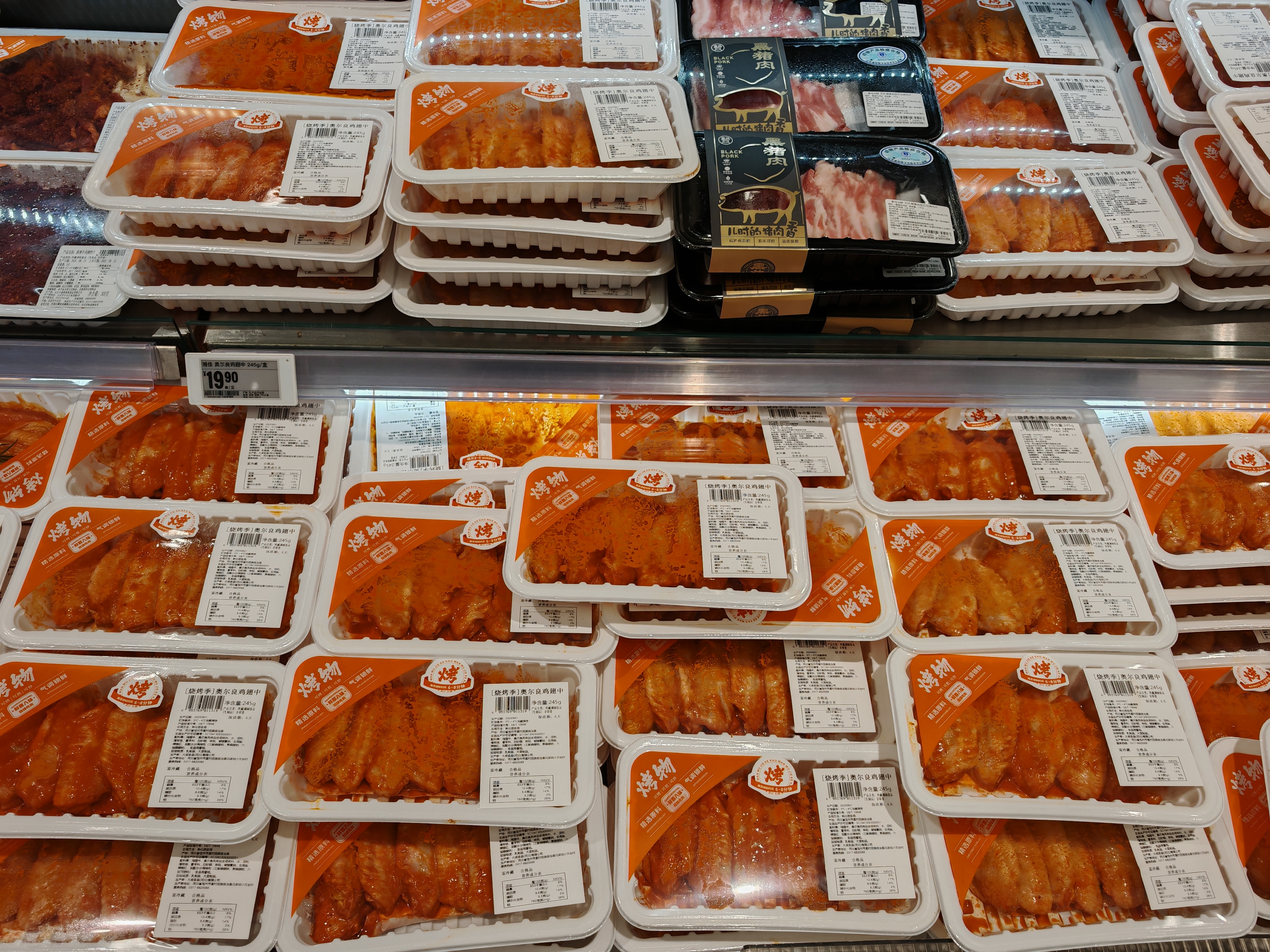
In brief: the assigned scenario map places the HB-MG40 OZ tray in bakery and produce display, the HB-SG300ML container in refrigerator-oriented retail storage, and the tamper-evident HB-8OZ–HB-32 OZ range in e-commerce and export journeys. The supplied records confirm that these are relevant product entities and link several models to food-contact or packaging-standard records. However, only some sizes and performance details are documented at model level. Buyers should use the published facts as a shortlist, then verify the exact SKU drawing, capacity, material, closure and compliance documentation before approval.
Why scenario fit matters more than a format list
A tray or clamshell is not automatically suitable just because it is made for produce. A display-oriented package needs to present the product and fit a retail handling routine. A refrigerated retail pack must match the storage arrangement and declared use. A pack for e-commerce or export also needs evaluation against packing, stacking, inspection and delivery conditions. The supplied application unit describes these broad requirements: supermarkets use trays or boxes for consumer selection; e-commerce packaging needs to consider sturdy construction and volume or weight; export packaging needs to account for shipping, inspection and overseas rules.
These are different purchasing questions. A produce wholesaler may prioritize repeatable handling and a practical pack format. A supermarket buyer may focus on shelf presentation, pack dimensions and the retailer’s own specification. An exporter or e-commerce brand may need to check closure and transport suitability alongside documentation. No single product attribute—transparency, PET material, a nominal ounce size, or a certificate entry—answers all of them.
CHUAN HE is the brand name associated in the supplied company information with Weifang Chuanhe New Material Co., Ltd., a manufacturer of PET and PP thermoformed packaging. For this selection article, the relevant question is not whether one format is universally superior, but whether a named model has the required geometry, documented material and evidence for its intended journey.
Scenario map: three places to begin
| Supply-chain need | Candidate from the brief | What the supplied records establish | What to verify next |
|---|---|---|---|
| Bakery and produce display | HB-MG40 OZ | The certification records associate product ID 6693 with HB-MG40 OZ; it is listed as a tray product. | Dimensions, compartment layout, material and the exact intended use on the model datasheet. |
| Refrigerator-oriented retail storage | HB-SG300ML | The certification records associate product ID 6698 with this container model. | Model-specific dimensions, stackability, refrigerator-use statement, material and closure details. |
| E-commerce and export packs | Tamper-evident HB-8OZ, HB-16OZ, HB-20 OZ, HB-24 OZ and HB-32 OZ | Product records describe the tamper-evident series as PET packaging and provide some model dimensions. | Actual fill volume, closure performance, shipping configuration, and market-specific documentation for the exact item. |
Bakery and produce display: evaluating HB-MG40 OZ
The assigned application for HB-MG40 OZ is bakery and produce display. That makes it a candidate to investigate when one retail program needs a tray format across fresh-food presentation or bakery display. The available certification records list the model as a related product, and the product unit identifies the broader tray category as suitable for produce and bakery applications. However, the model-specific product specification supplied here does not include the HB-MG40 OZ dimensions, material declaration, compartment count or tray drawing.
For a buyer, this is an important boundary: a model name containing an ounce designation is not enough to establish a usable footprint or a compartment configuration. Before a buyer compares the tray with a shelf plan, bakery case, or existing filling process, request the manufacturer’s current drawing and confirm external dimensions, internal usable area, depth, compartment geometry and any lid or sealing arrangement. If the tray will be used for both bakery and produce, evaluate each intended food and handling condition rather than assuming one application validates another.
Transparency may be relevant to visual merchandising, but the provided records do not state a model-specific clarity or anti-fog performance result for HB-MG40 OZ. Likewise, the broader tray records mention food-grade BPA-free material for some models, but that statement should not be transferred to HB-MG40 OZ without its own product specification or supporting declaration. A procurement sheet should distinguish confirmed attributes from requested confirmations.
For supermarket chains, produce wholesalers and bakeries, a useful initial evaluation sequence is: first establish the product footprint and pack configuration; next check whether the tray can be handled and displayed in the intended workflow; then confirm product-contact documentation and any print or label requirements. If a tray is intended for modified-atmosphere packaging equipment, confirm compatibility for the exact model: other tray specifications in the supplied product units mention MAP compatibility, but the HB-MG40 OZ-specific record provided here does not.
Refrigerated retail storage: what to establish for HB-SG300ML
HB-SG300ML is the assigned candidate for refrigerator-oriented retail storage. The product identity is supported by the supplied certification records, which associate model HB-SG300ML with product ID 6698. The product-specific specification block for this model, however, is not included. As a result, the available material does not establish its precise dimensions, stackability, refrigerator-use limits, BPA-free status, closure type or rated capacity beyond the model designation.
That gap matters because a buyer should not infer the characteristics of one container from another model in the same family. For example, the supplied record for HB-SG1000ML specifies dimensions of 23 × 17.5 × 9 cm and describes that model as refrigerator-safe and stackable. Those facts apply to HB-SG1000ML, not automatically to HB-SG300ML. A 300ML designation also should not be treated as a verified usable fill volume unless the supplier datasheet defines it that way.
For a supermarket or food retailer, the model-level checklist should include the outer footprint and height, lid or hinge design, stackability in the intended orientation, declared food-contact use and the actual storage conditions covered by the manufacturer’s instructions. For an e-commerce brand using chilled fulfilment, add the packed configuration and delivery handling requirements to the evaluation. The supplied scenario information identifies transport and logistics considerations as relevant to e-commerce packaging, but it does not provide performance-test data for HB-SG300ML.
Where refrigerator use is a requirement, treat it as a product claim that needs documentation—not as a general property of PET. Ask for a written model-specific statement and review any limitations on temperature, handling or reuse. The same discipline applies to microwave use: no supplied model-specific evidence establishes that HB-SG300ML or the named PET tamper-evident containers are microwave-safe. Do not make that claim from the material name alone.
E-commerce and export: reading the HB-8OZ–HB-32 OZ series
The supplied product units identify a tamper-evident packaging range that includes HB-8OZ, HB-16OZ, HB-20 OZ, HB-24 OZ and HB-32 OZ. The product descriptions identify PET and describe transparent packaging with customizable shapes, colors and sizes. This range is the assigned candidate for e-commerce and export channels, where the buyer’s evaluation can include product visibility, closure expectations, pack dimensions and the documentation needed for the destination market.
Dimensions are present for some, but not all, of the listed models. The supplied specifications state HB-16 OZ at 14 × 11.6 × 6.2 cm, HB-24 OZ at 17.2 × 15.5 × 4.8 cm, and HB-32 OZ at 17.2 × 15.5 × 6.2 cm. The provided product units do not state dimensions for HB-8OZ or HB-20 OZ. These figures are useful for initial footprint comparisons, but buyers should confirm the current drawing and tolerances before creating a retail listing, shipping carton plan or filling-line setup.
Nominal ounce labels also deserve careful interpretation. The third-party data notes that ounce-based container designations are trade names and may not equal an exact measured fill volume; buyers should verify actual usable capacity from the supplier’s datasheet. Therefore, compare packs by confirmed dimensions and defined fill volume, not by the ounce label alone. This is especially important when matching a pack to a retailer’s declared net contents or comparing suppliers that use different size conventions.
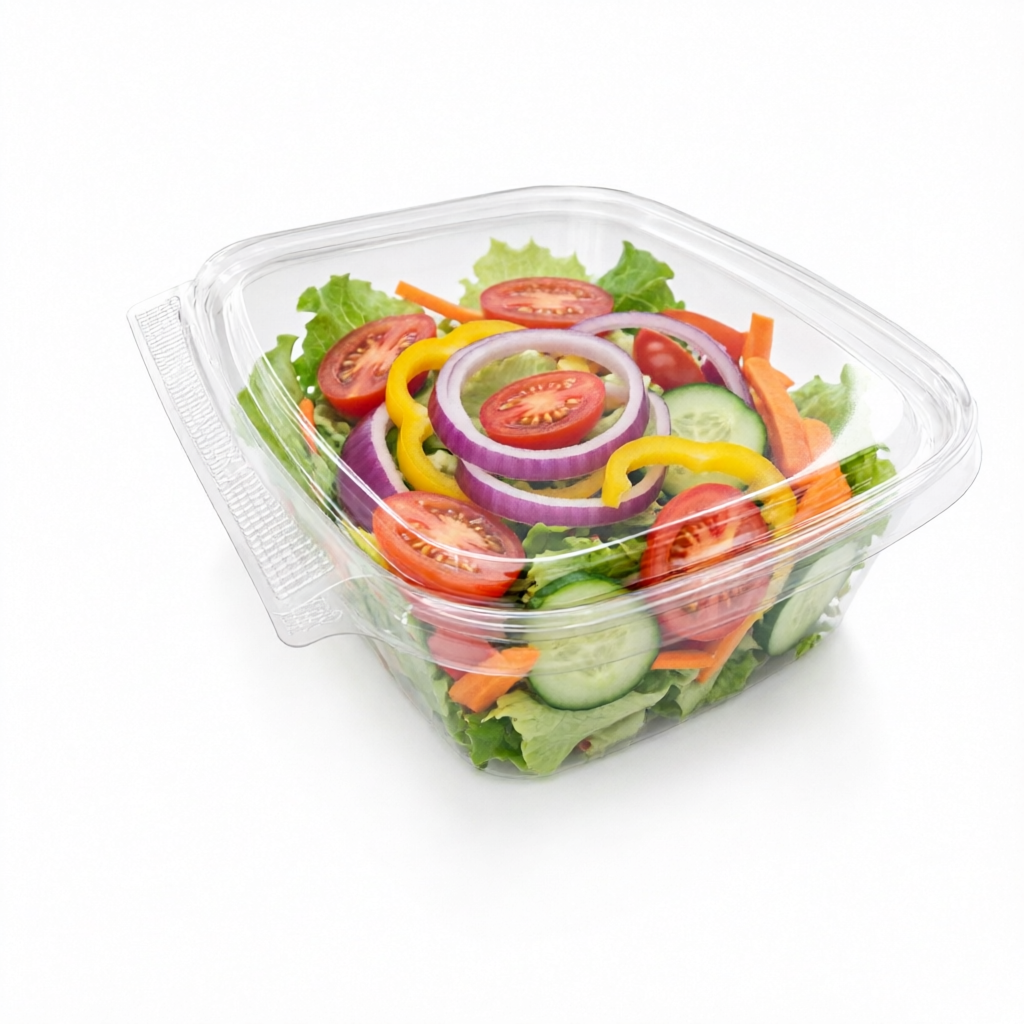
“Tamper evident” is a named product category in the supplied model records, but the records do not give a test method or a quantified tamper-evidence performance result. For online fulfilment, buyers should verify how the closure indicates opening, whether the pack remains secure in the intended distribution configuration, and whether the closure is compatible with the product and fulfilment process. For export orders, confirm the applicable import-market requirements and retain documentation for the exact article shipped.
Food-contact evidence: match documentation to the model and market
Material wording and general claims are not substitutes for product-specific evidence. The supplied records associate HB-MG40 OZ, HB-SG300ML and the tamper-evident models with several certification or testing records. For example, record 2286 lists SGS testing to EN 1186-3:2022 and includes these product IDs in its related-products list. Record 2287 lists SGS testing to US FDA 21 CFR 177.1630 and also includes the relevant IDs. Record 2332 identifies a packaging-material standard record and associates these models with its product list. Buyers should inspect the actual current documents and verify the product scope, issuer, validity and intended market rather than relying only on a model appearing in a related-products list.
For EU-bound plastic food-contact packaging, Regulation (EC) No 1935/2004 sets a general safety requirement: materials must not transfer constituents to food in quantities that could endanger health, cause an unacceptable change in food composition or deteriorate its sensory characteristics. Regulation (EU) No 10/2011 provides specific rules for plastic food-contact materials, including a written Declaration of Compliance requirement at relevant stages of manufacture and distribution. The regulation also includes an overall migration limit, with the applicable expression depending on the article and test basis. Buyers should request the declaration and supporting documentation for the exact model and intended conditions of use.
The EU and US regulatory routes are not interchangeable. In the United States, PET food-contact articles are addressed under 21 CFR 177.1630, subject to the provision’s conditions. A record for one jurisdiction does not automatically prove compliance in another. For a multi-market program, procurement teams should keep a separate evidence checklist for each destination rather than treating “food-grade,” “BPA-free,” or a single certificate as a universal approval.
Material claims also need precise attribution. Some supplied product specifications explicitly describe particular models as food-grade BPA-free PET. That wording is not present in the individual product specifications supplied for HB-MG40 OZ, HB-SG300ML or each member of the tamper-evident series. Buyers who require BPA-free documentation should request it for the exact model and material formulation. A model-level declaration should match the article, not just the material family.
A practical selection framework for procurement teams
- Define the journey. Identify whether the package is primarily for wholesale handling, bakery or produce display, refrigerated retail storage, e-commerce delivery, export, or a combination. Record where packing, storage, inspection and final selection occur.
- Lock the model and geometry. Use a model-specific drawing for footprint, height, closure and internal usable space. Treat the dimensions stated for HB-16 OZ, HB-24 OZ and HB-32 OZ as the listed specifications to verify, and request missing dimensions for HB-MG40 OZ, HB-SG300ML, HB-8OZ and HB-20 OZ.
- Confirm use-related claims. Request written evidence for refrigerator use, stackability, BPA-free status, tamper-evidence function or any other required feature. Do not transfer a claim from a similar model to the SKU under review.
- Check food-contact documentation. Match the declaration, test evidence and regulatory references to the exact packaging article, destination market and intended use. Review scope and validity on the underlying documents.
- Test the operating fit. Assess the candidate in the actual display, storage, packing or fulfilment setup. The provided corpus does not supply model-specific results for crush resistance, shelf-life extension, anti-fog performance, ventilation, closure integrity or top-load strength, so these should not be assumed.
- Keep claims and artwork aligned. Confirm that labels, product descriptions and export documents use the approved material and food-contact wording. For EU food-contact materials, the framework regulation includes labelling and traceability provisions; confirm which apply to the specific packaging and supply-chain stage.
How traditional alternatives differ—and where PET has limits
Compared with an open tray or a less enclosed presentation format, a closed container can provide a defined enclosure and may be selected where a buyer needs a pack for handling or customer-facing display. A tray may instead suit a presentation or process that does not require the same closure format. These are functional distinctions, not a claim that one design always protects produce better. The right choice depends on the product, packing method and transport path.
PET’s clear appearance can support visibility where a buyer values seeing the product, and the listed tamper-evident models are described as transparent PET packaging. But transparency alone does not prove freshness retention, ventilation performance, resistance to crushing, or fitness for a particular export route. The supplied records do not contain comparative test results against paper, molded-pulp, PP or other alternatives. A PET clamshell or tray also should not be called recyclable or environmentally preferable solely because it is PET; any environmental claim requires product-specific evidence and consideration of applicable local rules and collection systems.
That boundary is material to EU buyers. Regulation (EU) 2025/40, the Packaging and Packaging Waste Regulation, applies from 12 August 2026. The verified data also identifies future recyclability and recycled-content requirements under that regulation, including a 2030 target for contact-sensitive packaging made mainly of PET. Those rules make design and material documentation part of long-term sourcing discussions, but they do not establish that a particular CHUAN HE model contains recycled PET or already meets a future target. The available product records do not specify recycled content for the models discussed here.
Industry and procurement implications
For a procurement team, scenario-led selection is most useful when it separates three decisions: what the package must do, what the exact model is documented to do, and what evidence the buyer needs for the destination market. The model mapping provides starting points rather than a final technical approval. HB-MG40 OZ is the bakery and produce display candidate; HB-SG300ML is the refrigerator-oriented retail candidate; and the HB-8OZ–HB-32 OZ tamper-evident range is the e-commerce and export candidate. The specifications available for these named SKUs are uneven, so technical completeness should be treated as part of supplier evaluation.
For wholesalers and supermarket chains, a model matrix can prevent a common procurement error: comparing nominal capacity while overlooking footprint, height and intended use. For agricultural exporters and e-commerce brands, the same matrix can include destination-market declarations, package closure, carton configuration and traceability documents. The supplied industry evidence confirms that EU food-contact materials must be traceable through the supply chain and that a written Declaration of Compliance is required for plastic materials at relevant non-retail stages. These are actionable document checks, not a guarantee that a particular pack passes a buyer’s internal qualification.
Future outlook: specifications need to travel with the pack
Fresh produce packaging decisions increasingly have to connect product format with documentation, design and destination-market requirements. The verified regulatory evidence supports that direction: the EU PPWR is applicable from 12 August 2026, and its recyclability and recycled-content provisions introduce future design and material considerations. Separately, EU food-contact rules make safety, declarations and traceability relevant to supplier qualification. These are regulatory developments, not evidence of market growth or proof that one packaging format will replace another.
For CHUAN HE model selection, the practical implication is straightforward: keep the intended scenario fixed, but require evidence at SKU level. A useful supplier file should identify the exact model, current drawing and dimensions, confirmed material and relevant use claims, plus the food-contact documents that apply to the article and destination market. Where the record is incomplete—as it is for several details of HB-MG40 OZ and HB-SG300ML—mark the item as pending verification instead of filling gaps with assumptions.
FAQ
Which CHUAN HE models are assigned to bakery display, refrigerated retail and export or e-commerce?
The scenario brief assigns HB-MG40 OZ to bakery and produce display, HB-SG300ML to refrigerator-oriented retail storage, and the tamper-evident HB-8OZ, HB-16OZ, HB-20 OZ, HB-24 OZ and HB-32 OZ models to e-commerce and export journeys. These are selection starting points; model-specific details still require confirmation.
Which dimensions are available for the tamper-evident range?
The supplied specifications list HB-16 OZ at 14 × 11.6 × 6.2 cm, HB-24 OZ at 17.2 × 15.5 × 4.8 cm, and HB-32 OZ at 17.2 × 15.5 × 6.2 cm. Dimensions for HB-8OZ and HB-20 OZ are not included in the supplied product records.
Do the supplied records establish that HB-MG40 OZ is BPA-free or provide its dimensions?
No model-specific dimensions or BPA-free statement for HB-MG40 OZ appear in the supplied product specification block. The certification records associate the model with listed documents, but buyers should verify the current model drawing and material declaration.
Does a food-contact record for one market establish compliance in another?
No. The verified data describes separate EU and US regulatory frameworks. A buyer should check the documentation and conditions applicable to the destination market and the exact packaging article.
Can these PET models be described as microwave-safe or as containing recycled PET?
The supplied model records do not establish microwave safety or recycled-PET content for the models discussed in this article. Those claims require model-specific supporting documentation and should not be inferred from PET material or a general product category.
Sources and reference material
Regulatory references include Regulation (EC) No 1935/2004, Regulation (EU) No 10/2011, and the European Commission’s Packaging and Packaging Waste Regulation information. For the US PET food-contact provision, see 21 CFR 177.1630. These references provide regulatory context; they do not replace model-specific supplier documentation.
Model names and specifications in this article follow the supplied product and certification records. Where a required model-level fact was not present, the article identifies it as a verification point rather than treating it as established.
Have Questions or Need More Details?
Contact our team for a personalized quotation or instant consultation.
Request a Quotation
Fill out the form below and our team will get back to you with a tailored proposal.
WhatsApp Direct Chat
Prefer to chat in real-time? Message us on WhatsApp for instant assistance & quick answers.
- Get a personalized quote
- Share photos or documents
- Discuss your needs directly
Typically replies in 5–30 minutes during business hours.