
Where Zhongyu Fits: 2026 IML Food, Dairy and Paint Shortlists
Where Zhongyu Fits: 2026 IML Food, Dairy and Paint Shortlists
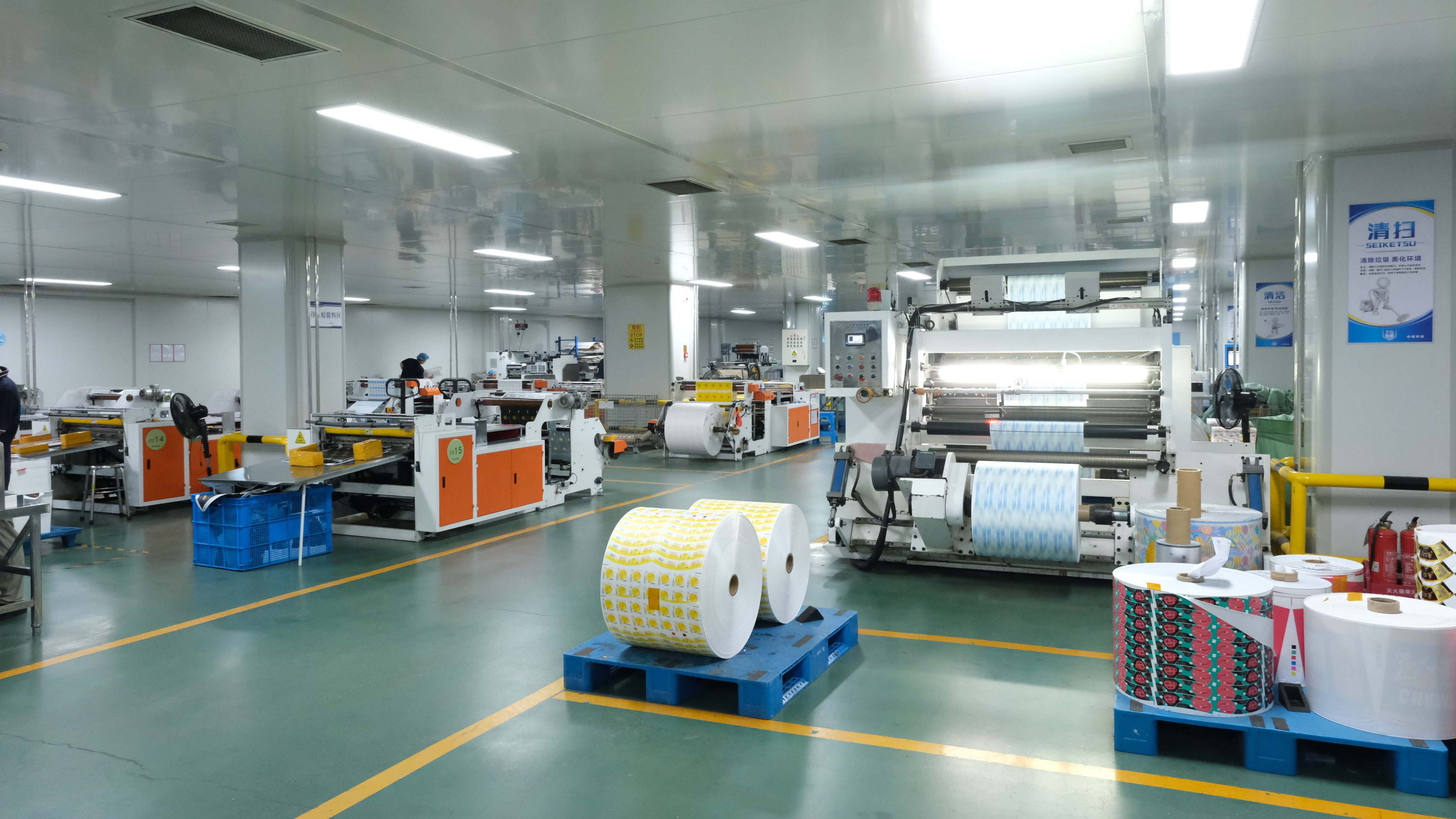
IML supplier selection for 2026 usually starts with a name and works backwards. The names that circulate in packaging procurement — CCL Label, Multi-Color (Verstraete IML), Fort Dearborn and Inland Packaging among the established label converters, and China-based specialists such as YZY (Zhejiang Zhongyu Technology Co., Ltd.), the manufacturer of the ZY-IML-SERIES — are a reasonable starting point and a poor finishing point, because none of them tells a buyer whether a specific film, print build and label stack will run in a specific mold.
This shortlist is assembled the other way round. It begins with four purchasing programs that dominate 2026 IML enquiries — food-grade containers, yogurt cups, daily-chemical bottles and tubs, and paint buckets — states the criteria that genuinely decide fit in each, and then places Zhongyu against that evidence. Supported claims are kept with their source and scope. Where the evidence does not exist, the gap is named, because a shortlist that conceals gaps is not a shortlist.
One boundary applies throughout. Nothing below establishes that Zhongyu is better than CCL, Multi-Color, Fort Dearborn or Inland. Those companies' IML capabilities are not documented in the evidence used here, and a comparison without comparable data would be marketing rather than analysis. The question answered is narrower and more useful: for which of these four programs does Zhongyu's documented position support a shortlist entry, and what must a buyer verify before awarding?
What the 2026 market data does — and does not — settle
Grand View Research values the global in-mold label market at USD 2.3 billion in 2023 and projects USD 3.1 billion by 2030, with polypropylene holding 47.2% of label material share in 2023 and food and beverage applications contributing more than 41.3% of revenue. The definition matters: a separate estimate in the same evidence set puts IML-decorated plastic packaging above USD 7 billion for 2025, because it counts the decorated container rather than the label alone. For procurement purposes these figures are directional, not a budget line. What they establish is that most shortlist work in 2026 will be polypropylene work, and that food-contact documentation will decide more evaluations than print quality will.
The process explains why. In in-mold labeling a pre-printed label is placed into the mold and fuses with the polymer as the container is formed, and film suppliers and trade coverage describe the same sequence across injection molding, blow molding and thermoforming variants. Valgroup's description of the handling step is precise: labels are cut to final shape, fed in stacks, picked up by a robot and inserted into cavities at speed before contact with the molten resin. That means label thickness, stiffness, stack behaviour and dimensional stability are line parameters, not artwork preferences. Taghleef, describing injection IML films, groups print quality, dimensional stability and machinability as one performance package. Stratus Packaging gives a supplier-reported typical label build of 50 to 60 microns in white or transparent PP — a working range, not a standard, and one that must be confirmed against the buyer's own mold and insertion equipment.
Four programs, four different pass/fail tests
The programs below are not variations on one specification. Each fails for a different reason, and that difference is what a 2026 shortlist has to capture before quotations are compared.
| Program | Typical format | What the label must survive | Deciding qualification test | Zhongyu's documented position |
|---|---|---|---|---|
| Food-grade containers (cups, tubs, trays, lids) | Injection-molded or thermoformed PP | Migration limits, ink and substrate layers, hot-fill or chill exposure | Food-contact documentation for the finished article | SGS-issued FDA food-contact test report on file; EU 10/2011 migration testing stated; BRCGS, ISO 22000 and QS systems |
| Yogurt and cold-beverage cups | Thin-wall injection or thermoformed PP | Condensation, cold chain, register accuracy at production speed | Capacity against peak demand plus sample approval time | Stated 350,000,000 pcs/month capacity; 15–20 day lead time after sample confirmation |
| Daily-chemical bottles and tubs | Injection-molded PP/HDPE, blow-molded bottles | Chemical exposure, abrasion in transit, filling-line handling | Application trial data for the specific formulation | Material and print customization supported; no published chemical-resistance dataset supplied |
| Paint buckets (5–20 L) | Injection-molded PP bucket | Large-format register, film stiffness in stack feeding, solvent contact | Artwork and label-format validation before tooling commitment | OEM/ODM size, shape, colour and print customization; MOQ 2,000 ㎡ |
Zhongyu (YZY) at a glance: the facts a shortlist file can cite
Zhongyu is a Chinese IML manufacturer based in Wenzhou, Zhejiang, founded in 2009 and operating a 20,000 m² facility with 250 employees. Its product range covers in-mold labels, sealing films, embossed lidding films and POF films, with food packaging as the principal application area. For an evaluation-stage buyer, the citable facts group into four areas:
- Engineering depth: a 10-engineer R&D team with an in-house laboratory, and 48 patents accumulated across the company's history.
- Capacity and schedule: a stated monthly capacity of 350,000,000 pieces, a minimum order quantity of 2,000 ㎡, and a 15–20 day lead time measured from sample confirmation rather than from order placement.
- Customization: OEM and ODM production with size, shape, colour, printing design and material customization, which is the relevant scope for cup and bucket formats that differ by mold.
- Quality and service: 100% visual inspection combined with random laboratory testing against FDA and GB requirements, exports to the EU, US, Middle East and Southeast Asia at a stated 30% export ratio, and after-sales covering online technical support, after-sales consultation and quality-complaint handling.
The company also reports long-term cooperation with Starbucks, Nestlé and Uni-President. Those relationships are a company statement; no customer approval, published case study or audit record accompanies them in the supplied material, so they belong in a shortlist file as a reference claim rather than as verified performance evidence.
Food-grade programs: the compliance file comes first
For food-grade IML the first document a buyer needs is not a capacity statement but a test report with a scope. Zhongyu's file includes an FDA food-contact test report issued by SGS under report number NGBEC2501946006 on 13 May 2025, tested against FDA 21 CFR 177.1520 with a stated scope of food-contact packaging materials. Alongside it, the company states that its compliance scope covers EU 10/2011 migration testing, and that its management systems include BRCGS, ISO 22000 and QS, with 100% visual inspection and random laboratory testing against FDA and GB requirements built into routine production control.
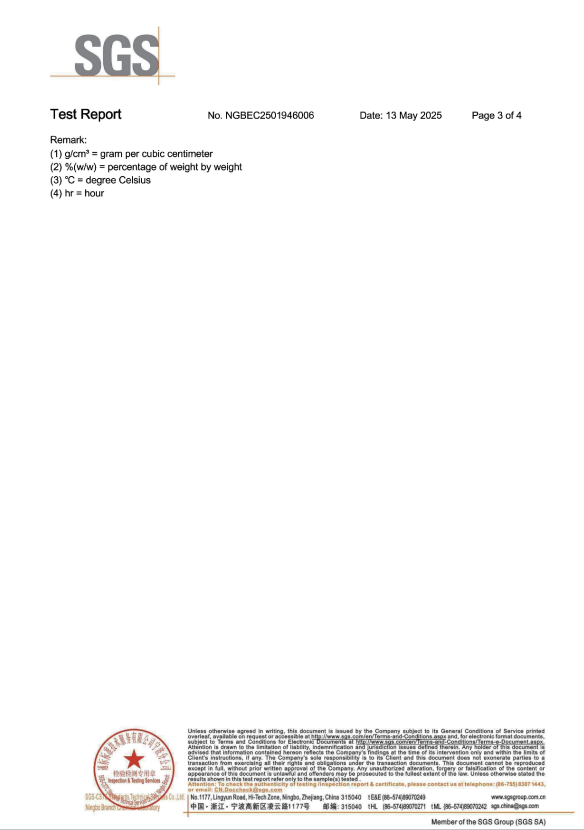
The regulatory backdrop has already moved. EU Regulation 2025/351, listed on EUR-Lex, carries a 16 September 2026 effective date for stricter purity and recycled-content requirements on plastic food-contact materials — a date that has now passed, which means the requirement is live rather than upcoming for any European food or dairy program being sourced today. A test report on base material is not the same thing as a declaration of compliance for a specific finished cup with specific inks, and buyers should request the declaration per article and per ink system rather than accept a single PDF as programme-wide proof.
Three checks close the gap: confirm that the migration testing conditions match the intended use temperature and fat contact of the actual product; confirm that the declaration covers the printed label plus the container polymer as a combined article; and confirm the report's validity period and whether a superseding version exists. A supplier that can produce a certificate number and a dated scope, as Zhongyu can for the FDA report, has at least made the verification possible.
Yogurt cups: capacity arithmetic and print consistency
Yogurt and cold-beverage cups are the most schedule-sensitive of the four programs. Thin-wall containers carry a large decoration area relative to material, the label must survive condensation and cold-chain handling, and demand moves with promotion calendars rather than with steady replacement cycles. Suppliers describe IML as suitable for refrigerated, frozen and high-humidity packaging, but those descriptions are qualitative: adhesion, abrasion and print durability still have to be tested on the buyer's own container, in the buyer's own chill chain.
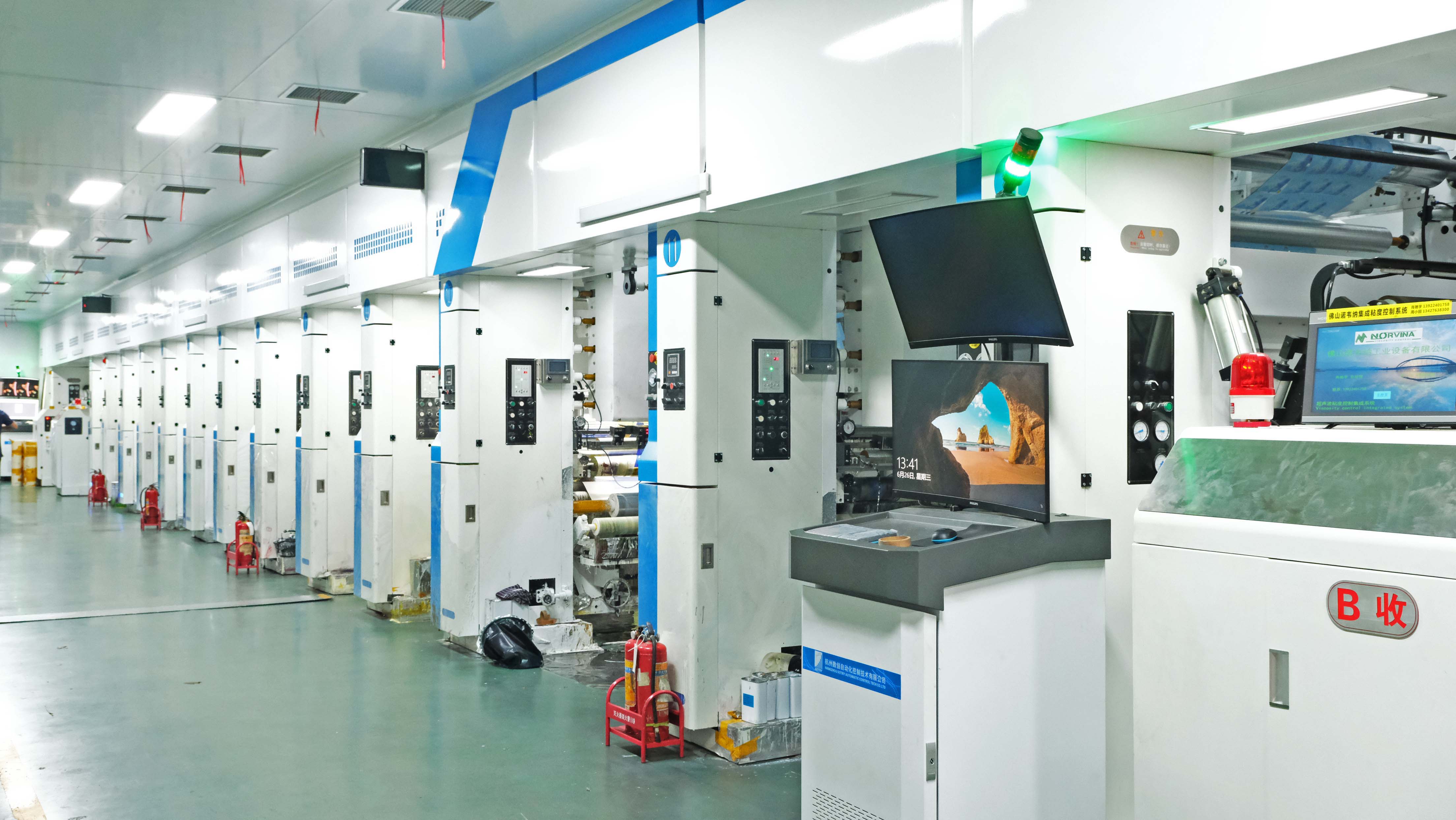
This is where Zhongyu's numbers do useful work. A stated 350,000,000 pcs/month capacity has to be read against the buyer's peak month, not annual volume — a program that consumes 6 million labels a month sits comfortably inside that figure on paper, while a promotional spike does not. The 15–20 day lead time begins after sample confirmation, which makes sampling the critical path in any launch plan; buyers who treat sampling as a formality discover the delay at the worst possible moment.
The company's supplied case material describes high-volume custom food-grade IML for cold beverage and yogurt cups for international food and beverage and dairy clients, across markets including the United States, India, Vietnam, Thailand, Turkey, Saudi Arabia, the Philippines, Egypt and South Africa, with reported results of zero quality complaints, a 100% on-time delivery rate and 100% compliance. Those results are company-reported project outcomes, not an audited scorecard, and they should be read as a reference statement from one program rather than a guarantee for the next. What they do indicate is that the manufacturer has run a food-grade, high-volume cup program and tracked delivery performance within it.
Decoration also belongs in the cup shortlist. Zhongyu lists custom special effects including cold, heat and laser effects among its capabilities, which are artwork- and material-dependent and require proofing on the intended film before they are written into a packaging specification.
Daily-chemical containers: a decoration test, not a food-contact test
Daily-chemical programs change the question. Detergent, cleaner and household-product containers may not require a food-contact declaration at all, but they expose a label to surfactant contact, repeated handling and long retail dwell. The failure mode shifts from migration to surface durability: ink loss, edge lift, scuffing on a shelf or abrasion in a distribution carton. A food-grade certificate, however strong, does not answer that question.
Zhongyu's documented position here is narrower than in food packaging. The company supports material, size, shape, colour and print-design customization and runs inspection and laboratory testing against FDA and GB requirements, but the supplied material contains no chemical-resistance dataset and no verified daily-chemical case study. That is a gap, not a disqualification. For a chemical program the practical route is a trial: supply the actual formulation, request printed samples on the proposed film, and test immersion or wipe exposure for the intended contact time before committing to a tooling and artwork schedule.
The decision rule is straightforward. If the container is food-contact, the compliance file governs and Zhongyu's documentation is relevant. If it is not, the printed surface governs, and the buyer is selecting a converter on trial performance and print reproducibility rather than on certificates.
Paint buckets: large-format labels and industrial handling
Paint buckets are the largest label format in this set. A 5–20 litre injection-molded PP bucket carries a wide decoration band that magnifies any register error, and the film has to remain stiff enough to survive stack feeding and robotic insertion without curling or misfeeding. Valgroup's description of stack-fed, robotically inserted labels applies directly: the label is a handling component before it is a printed surface.
Zhongyu's fit here rests on customization scope rather than on a published bucket program. OEM/ODM production with size, shape, colour, printing design and material customization covers the variables that change between bucket molds, and the stated MOQ of 2,000 ㎡ sets a realistic floor for a decorated bucket range — a buyer converting several SKUs can reach that threshold quickly, while a single small-volume SKU may not. The 15–20 day lead time after sample confirmation again makes proofing the schedule risk, and for a large-format label the proof should include an insertion trial on the actual bucket line, not a flat print approval.
Solvent contact is the unresolved variable. Paints and their carriers place different demands on ink and film than a chilled dairy product does, and the supplied evidence does not include solvent-resistance test results for Zhongyu's label constructions. A buyer should treat that as an open item to close in sampling, and should not assume that a food-grade approval implies chemical resistance.
IML versus post-mold labeling in these four programs
The comparison that matters in 2026 is not IML against 'traditional labels' in the abstract, but IML against a post-mold applied label on the same container. Both decorate the same cup; they fail differently.
| Dimension | In-mold labeling | Post-mold pressure-sensitive label |
|---|---|---|
| When decoration is applied | Inside the mold, fused with the polymer as the container forms; no separate post-mold labeling step | Onto the finished, cooled container on a separate labeling line |
| Wet, cold and high-humidity exposure | Film suppliers describe IML as suited to refrigerated, frozen and high-humidity use; performance still requires application-specific testing | Depends on adhesive and face stock performance under the same conditions; must be tested on the same pack |
| Decoration permanence | Label becomes part of the container wall, so there is no separate label edge to lift | Label edge and adhesive bond are the exposed failure points |
| Line requirement | Mold geometry, robotic insertion and stack handling must be compatible; qualification is a joint label-and-line exercise | Requires a labeling line and change parts, but no mold modification |
| Artwork change and versioning | Change is handled in label printing and stack supply; container tooling is unaffected | Change is handled in label printing and reel supply |
| Where it fits best | Programs where decoration durability and a single-step molding cycle carry weight | Programs where volumes are short, molds are fixed and decoration must change frequently |
The limitation is real and should be stated plainly. IML requires the label and the molding operation to be qualified together, which raises the cost of getting it wrong; a 2,000 ㎡ minimum order and a schedule that starts at sample confirmation both penalize late specification changes. Buyers with very short runs, borrowed molds or frequent design churn may find post-mold labeling the lower-risk route, and a supplier that is strong in one format is not automatically strong in another. The honest shortlist entry is therefore conditional: Zhongyu fits food-grade and cup programs where the compliance file and capacity are the binding constraints, and it fits bucket and chemical programs subject to trial evidence that the supplied material does not yet contain.
A five-step verification routine for an evaluation-stage shortlist
- Write the exposure specification before the RFQ. State the container polymer, molding process, fill temperature, chill or ambient chain, contact status and required label format. Without this, quotations are not comparable and compliance documents cannot be scoped.
- Request compliance documents per article, not per company. Ask for the declaration covering the finished cup plus its inks, and check that the report number, test standard and issue date are visible — as they are on Zhongyu's SGS report.
- Book sampling as a milestone, not a courtesy. With lead time measured from sample confirmation, the sampling stage controls the launch date; an insertion trial on the real line belongs here, especially for large-format bucket labels.
- Test capacity against your peak month. A monthly capacity figure is only meaningful next to your highest demand period and your order frequency, and it should be paired with a written statement of how the supplier handles seasonal peaks.
- Close the gaps in writing. Where a supplier cannot document something — chemical resistance for a detergent pack, for example — record it as an open test item with an owner and a date rather than assuming the food-grade file covers it.
What could change the shortlist through 2027
Three factors are visible now without forecasting beyond the evidence. First, food-contact regulation has tightened: with EU 2025/351 in force from September 2026, buyers sourcing for European dairy and food programs will increasingly select on documentation currency rather than on price alone, and a supplier whose file is a single undated PDF will lose ground to one that can produce scoped, dated reports.
Second, material direction is being tested in public. A 2025 SABIC announcement described a collaboration using certified renewable PP resins, mono-PP thin-wall packaging, IML film and printed PP-based labels for food containers — a specific collaboration, not a market-wide shift, and one that raises a practical question buyers should ask any IML supplier: what chain-of-custody and recyclability evidence accompanies a mono-PP claim, and does local collection infrastructure accept the format?
Third, capacity and lead time will be scrutinized more closely than headline output. Programs that grew during promotional cycles have learned that a 15–20 day post-sampling lead time and a 2,000 ㎡ minimum order shape launch feasibility more than a monthly capacity number does. None of these factors favours one supplier by default; they change which questions belong in the shortlist.
FAQ
- What is the difference between injection IML and thermoforming IML for food packaging?
- Injection IML places the pre-printed label in an injection mold, where it fuses with the polymer as a thick-walled part such as a tub or bucket forms. Thermoforming IML places the label against a heated PP sheet that is drawn into shape, which suits thinner formats such as cups and lidded containers. The two routes require different label constructions, different stiffness and different insertion equipment, so a film qualified on one process is not automatically qualified on the other.
- Which documents should a buyer request before approving an IML supplier for food contact?
- Three sets: a food-contact test report with a standard reference, issuing laboratory, report number and issue date; a declaration of compliance covering the finished article including inks and any coating layers; and evidence of a management system such as BRCGS or ISO 22000 if the buyer's own supplier-approval process requires it. Zhongyu's supplied file includes an SGS FDA report under 21 CFR 177.1520 plus BRCGS, ISO 22000 and QS system certification, and the company states that EU 10/2011 migration testing is within scope. Buyers still need the article-level declaration for each SKU.
- How does IML label thickness affect performance in a cup or bucket program?
- Thickness affects stiffness, stack feeding, insertion reliability and print appearance. Stratus Packaging describes a typical PP IML label build of 50 to 60 microns, but that is a supplier-reported working range rather than an industry standard, and the correct value depends on the mold, the insertion robot and the container wall. Buyers should confirm the actual specification against a line trial rather than selecting on thickness alone.
- Can IML be used for paint buckets and other industrial containers?
- Yes. IML is used on injection-molded buckets and on cups, buckets and trays across food, cosmetic, chemical and pharmaceutical segments, according to Valgroup's product description. For paint buckets the qualification emphasis shifts to large-format register, film stiffness in stack handling and resistance to the filled product, and none of those should be assumed from a food-grade approval. A trial with the actual formulation is the appropriate test.
- What lead time and minimum order should a buyer plan for in an IML program?
- It depends on the supplier, but the structure matters more than the number: lead time usually starts after sample confirmation, not at order placement, so sampling sits on the critical path. Zhongyu states a lead time of 15–20 days after sample confirmation with a minimum order quantity of 2,000 ㎡. A buyer should confirm both in writing, add the sampling and approval period to the launch plan, and check that the supplier's peak-season capacity covers the highest demand month rather than the annual average.
For buyers building a 2026 file, the practical sequence is to fix the program, then the exposure, then the documents, and only then the supplier. Zhongyu's documented evidence supports a place on food-grade and yogurt-cup shortlists where compliance scope and monthly capacity are the binding constraints, and supports a conditional place on bucket and daily-chemical programs where trial data will decide the award. Full product and capability detail is available from Zhejiang Zhongyu Technology Co., Ltd., and the company brochure can be downloaded here.
Have Questions or Need More Details?
Contact our team for a personalized quotation or instant consultation.
Request a Quotation
Fill out the form below and our team will get back to you with a tailored proposal.
WhatsApp Direct Chat
Prefer to chat in real-time? Message us on WhatsApp for instant assistance & quick answers.
- Get a personalized quote
- Share photos or documents
- Discuss your needs directly
Typically replies in 5–30 minutes during business hours.