
Where a 58,000 × 11,000 × 3,800 mm CTP Line Fits: EV OEM, BESS, and EPC Scenarios
Where a 58,000 × 11,000 × 3,800 mm CTP Line Fits: EV OEM, BESS, and EPC Scenarios
The ZZX2406 CTP battery pack assembly line occupies a listed 58,000 × 11,000 × 3,800 mm envelope. That is 638 m² of line footprint, calculated from the supplied length and width before aisles, cell storage, maintenance access, fire separation or utility rooms are added. The model is therefore a plant-planning decision as much as an equipment selection: it fits projects that build packs around 314Ah or 587Ah prismatic cells in a 1P96S configuration and can support an indoor, industrial assembly-line environment with continuous or shift production. The line is listed for energy storage, EV and C&I applications, with semi-automatic operation and a 4 PPM cycle-time entry.
The ZZX2406 is a CTP battery pack assembly line from Shanghai Zonzsin Intelligent Equipment Co., Ltd., a manufacturer founded in 2019 that builds automatic battery pack assembly lines and ESS battery pack insertion robots for lithium battery manufacturers, energy storage integrators and automotive OEMs. Its relevance here is not a generic claim of speed. It is a specific combination of footprint, cell compatibility, pack configuration and automation boundary that must line up with a plant’s product plan.
A specification note matters before any scenario comparison. The ZZX2406 product unit lists 4 PPM under cycle time but does not expand the PPM definition. The 6 PPM and 30 min/PACK values in the supplied product set belong to the ZZX2501 Blade battery pack assembly line, not the ZZX2406 CTP line. They should not be transferred to the CTP model. This is not a wording distinction: 6 PPM and 30 minutes per pack do not describe the same rate convention, and neither can replace a model-specific statement of what a pack cycle includes.
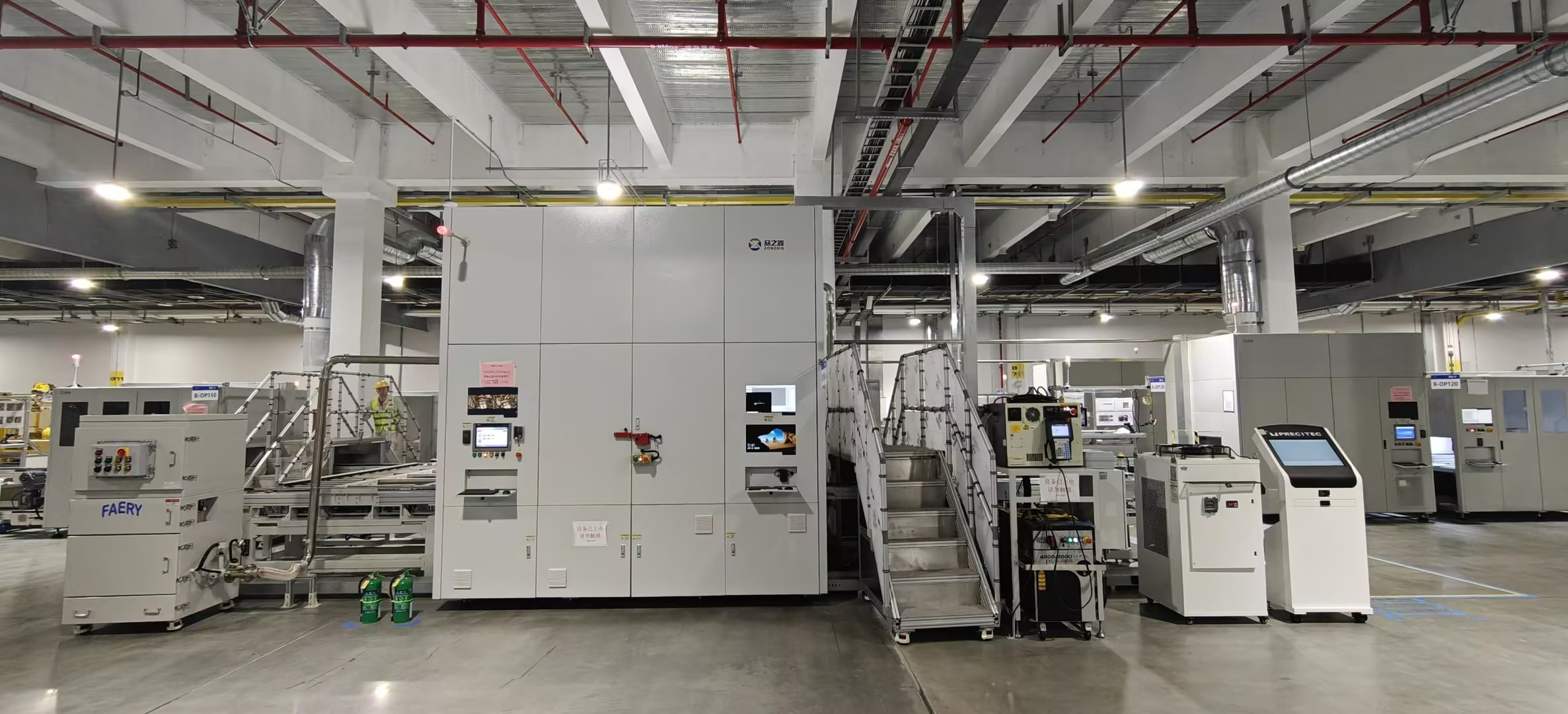
Battery pack assembly line environment.
What the 58,000 × 11,000 × 3,800 mm footprint decides
The first decision is not whether the line is long; it is whether the factory can give the line a clean, controlled envelope.
The 58,000 × 11,000 mm plan area equals 638 m². That figure is a line footprint, not a building requirement. A working layout also needs operator access, material staging, cell feeding, fixture storage, maintenance clearance, fire prevention measures and the temperature, humidity and cleanliness control that the application unit lists. Because the unit does not specify aisle widths or utility clearances, a buyer should not treat 638 m² as the total room size. It is the starting footprint for a layout drawing.
The 3,800 mm height is equally practical. It sets the vertical envelope for the line and any above-line services, but it does not by itself define ceiling height, crane clearance or utility routing. Those are project-engineering items, not line-specification claims.
The 11,000 mm width is the more sensitive dimension in many buildings. A user must confirm that the line, its access zones and its material flow can work within that width without blocking adjacent production. The content unit does not give aisle or maintenance dimensions, so the correct evidence is an approved layout drawing, not an assumption based on the headline footprint.
ZZX2406 specification baseline
The table below keeps the published model facts separate from the planning interpretation. The left and middle columns come from the ZZX2406 product unit. The right column explains what the fact changes for a buyer.
| Parameter | ZZX2406 published value | Planning meaning |
| Technology | CTP | The line is configured around cell-to-pack assembly, not a generic module line. |
| Automation | Semi-automatic | The station-level automation boundary must be confirmed before comparing it with a fully automatic requirement. |
| Battery cell | 314Ah and 587Ah | These are the listed prismatic cell formats. Other formats need engineering review, not an assumption of compatibility. |
| Battery PACK | 1P96S | The pack architecture should match this configuration or be confirmed through customization. |
| Dimension | L58000 × W11000 × H3800 mm | The nominal line envelope is 638 m² before ancillary space. |
| Cycle time | 4 PPM, definition to be confirmed | Do not convert to annual output until the PPM basis and pack cycle are defined. |
| Applicable industry | Energy storage; EV and C&I | The line can be evaluated for those application families where the pack design matches. |
| Operating condition | Indoor standard factory; industrial assembly-line conditions; continuous or shift production | The building services and production pattern are part of the fit decision. |
The table also explains why the model should not be sold on a single number. A 58 m line with a 1P96S pack format and semi-automatic operation is a particular production system. Its value depends on the pack design, the factory envelope and the automation model the buyer actually needs.
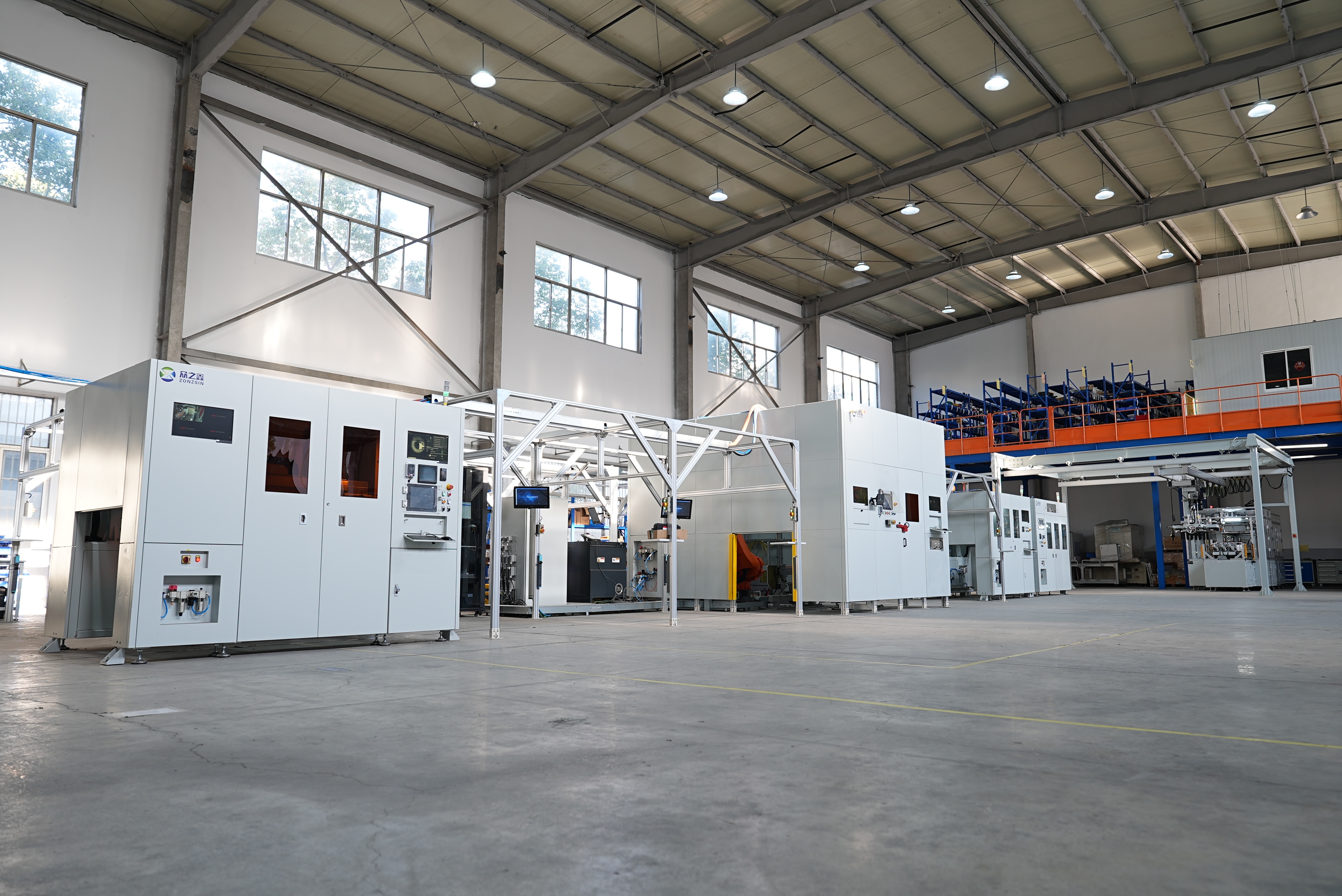
ZZX2406 CTP battery pack assembly line.
Where the line fits: EV OEM scenarios
An EV OEM should start with pack architecture, not line length. The ZZX2406 is listed for 1P96S packs using 314Ah or 587Ah prismatic cells. An EV program using those formats and that configuration can evaluate the line as a CTP option. A program using a different cell size, series count or pack architecture should treat the ZZX2406 as an engineering-review candidate, not a drop-in match.
The second EV question is automation. Because the product unit describes the line as semi-automatic, an EV OEM must map which stations are automatic and which depend on operators for loading, inspection, transfer or final checks. The application material lists touch-screen and program control, and it lists matched equipment such as vision inspection systems, fixtures and tooling, laser equipment, and assembly and testing stations. Those are integration items to define in the station list. They are not evidence that every station is fully automatic.
Third, the EV OEM should match the line to a product plan. A plant that expects frequent pack variants may need more fixture adaptation and line-change discipline than a plant running a stable pack family. The application unit explicitly lists PACK compatibility and fixture adaptation as special requirements. That makes variant management a real selection criterion, not an afterthought.
For medium-to-high volume EV work, the 638 m² footprint can be justified when the plant has a clear route from cell feeding to pack completion and can keep the line supplied without blocking adjacent flows. The U-shaped layout noted in the India reference can help where start and end operations benefit from sharing an aisle or operator zone, but that is a layout observation from one case, not a universal rule for every building.
BESS and stationary storage scenarios
BESS and stationary storage projects are a natural evaluation ground for the ZZX2406 because the product unit lists energy storage as an applicable industry and the application unit describes energy storage integration as the target sector. The 314Ah and 587Ah cell formats and the 1P96S pack configuration are the compatibility envelope. A BESS pack design that uses those formats is easier to assess than one that does not.
Stationary storage buyers should look beyond cell compatibility. The application unit lists ESD protection, fire prevention measures, temperature, humidity and cleanliness control, and PACK fixture adaptation as special requirements. In a BESS plant, those items affect building layout, operating procedures and the space around the line. A 58,000 × 11,000 mm line can fit a standard factory only when those services are planned with the line, not added after the footprint is fixed.
C&I storage is also listed in the applicable industry field. A C&I producer with a repeatable pack family may use the same logic as a BESS integrator. A project-by-project pack builder should be more cautious: customization is listed for cycle time, automation, logo, color and configuration, but customization is an engineering process, not proof that any future pack format will be supported without change.
The practical BESS fit test is therefore simple: confirm the cell and pack, confirm the environmental services, and confirm the fixture set. If those three items align, the line’s footprint and semi-automatic configuration can be evaluated as a production asset. If they do not, the project should not use the ZZX2406 name as a substitute for a compatibility study.
EPC turnkey and plant-building scenarios
An EPC turnkey contractor has a different problem from an OEM. The OEM owns the pack design and the production plan; the EPC contractor must coordinate civil works, utilities, fire prevention, ESD protection, installation, commissioning and the production start-up schedule. The ZZX2406 can fit an EPC project when the line is treated as one system inside the plant, not as a stand-alone machine.
The supplier capability unit gives useful planning facts. It lists OEM and ODM production, customization of cycle time, automation, logo, color and configuration, a monthly capacity of three units, a lead time of three to five months, a minimum order quantity of one unit, 100 percent testing, export markets in Southeast Asia and the EU, and after-sales support through remote support and on-site installation and commissioning. These are supplier-reported capability facts. They help an EPC contractor build a schedule, but they do not replace a project-specific delivery plan.
The India case is relevant here because its customer-type field includes an EPC turnkey contractor alongside automotive OEM, energy storage system integrator, and battery cell and PACK manufacturer contexts. The case record lists one unit, a battery PACK assembly application, a one-year duration, stable operation, and a U-shaped layout noted for space saving and user-friendliness. That is a useful reference for layout discussion. It is not proof that every EPC project will achieve the same schedule or operating result.
EPC buyers should also separate line footprint from plant footprint. The 638 m² line area is only the start. The project needs space for incoming cells, pack storage, utilities, maintenance, fire separation and operator facilities. The exact requirements are not stated in the content unit, so they must be developed in the plant layout and interface schedule.
Medium-to-high volume planning without borrowed numbers
Medium-to-high volume is a planning category, not a single production rate. For the ZZX2406, the available rate field is 4 PPM, but the unit does not define whether that means packs per minute, stations per minute or another line convention. A buyer should not turn 4 PPM into an annual output without a written definition of the pack cycle, the station balance, the shift pattern and the operating factor.
A defensible capacity model uses four inputs: available production time, confirmed pack rate, realistic operating factor, and final yield. In formula form, annual pack capacity equals available production time multiplied by confirmed pack rate, multiplied by the operating factor, multiplied by final yield. The formula is general; the values must come from the project, not from the headline specification.
This is where the 30-minute and 6 PPM figures create risk. They are published for the ZZX2501 Blade battery pack assembly line. A CTP project that borrows those numbers will compare different technologies, different pack designs and possibly different rate conventions. The correct approach is to request a ZZX2406-specific cycle-time definition and a station-by-station line balance. That is more useful than a single PPM figure without a basis.
Space utilisation follows the same logic. A 638 m² line footprint can support medium-to-high volume only if material flow is stable and the line is not starved by cell feeding or blocked at end-of-line testing. The application unit lists matched equipment including vision inspection, fixtures, laser equipment, and assembly and testing stations. Those interfaces should be included in the layout and the volume study from the beginning.
The U-shape layout: useful, but case-specific
The India case record notes a U-shaped layout with space saving and user-friendly operation. That is a meaningful layout signal because a U-shape can bring the start and end of a process closer together, reduce some transfer distances and allow shared operator access. But it is not a universal property of every 58,000 × 11,000 mm line.
Whether a U-shape works depends on the building, the cell-feeding direction, the end-of-line test route and the fire and ESD plan. A U-shape that saves space but creates a cross-flow with cell delivery or pack dispatch is not an improvement. A straight layout that uses more aisle space but gives a clean one-way flow may be better in some plants. The available evidence supports the India case observation; it does not support a claim that U-shape is always superior.
The right way to use the India reference is to ask for the layout drawing, the material-flow route and the operator plan. Then compare those with the actual building. The buyer can decide whether the U-shape principle transfers. The case provides a starting point, not a finished design.
Where the ZZX2406 is not the right fit
The fit boundary is as important as the fit case. The ZZX2406 should not be assumed to suit every battery pack project.
- Different cell formats: The listed compatibility is 314Ah and 587Ah. A project using another cell format should not assume compatibility without an engineering review.
- Different pack architecture: The listed pack is 1P96S. A different series or parallel arrangement may require fixture and configuration changes.
- Fully automatic requirement: The line is listed as semi-automatic. A buyer that requires fully automatic operation should confirm the station automation scope or evaluate a different configuration.
- Unclear rate basis: A project that needs a guaranteed annual output must first define PPM and the pack cycle. The published 4 PPM field alone is not enough.
- Insufficient building services: Indoor standard factory conditions, ESD protection, fire prevention, and temperature, humidity and cleanliness control are listed requirements. A building that cannot provide them is not a fit, regardless of floor area.
These are not defects in the line. They are selection boundaries. A neutral buyer should prefer a clear boundary to an optimistic match.
India project reference: what one case can prove
The India case record lists one CTP battery PACK assembly line, a one-year duration, stable operation, and a U-shaped layout noted for space saving and user-friendliness. Its customer-type field includes automotive OEM, energy storage system integrator, battery cell and PACK manufacturer, and EPC turnkey contractor contexts.
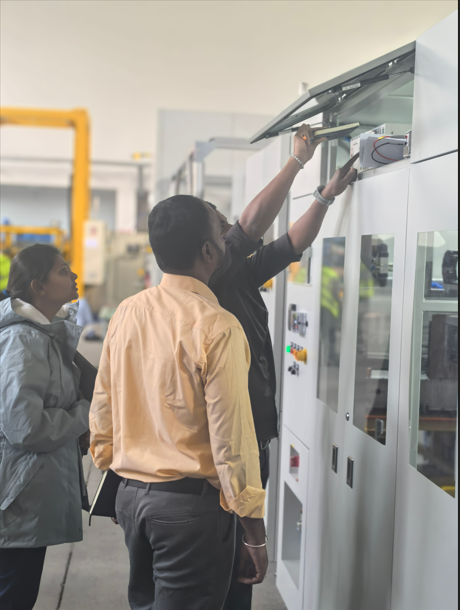
India CTP battery pack assembly line reference.
The case supports three limited conclusions. First, a CTP line of this family has been supplied into an India project context. Second, the record reports stable operation over one year. Third, the U-shaped layout was noted for space saving and user-friendliness. The case does not report OEE, scrap rate, annual output, cell format, or the number of pack variants produced. It does not prove that every EV, BESS or EPC project will achieve the same result.
For a buyer, the value of the reference is in the questions it opens. What layout was used? How was cell feeding arranged? Which stations were semi-automatic? How were ESD and fire prevention handled? What acceptance tests were run? Those questions turn a case reference into a procurement check.
Buyer verification checklist before committing floor space
The following checklist keeps the decision tied to evidence. It is not a substitute for an engineering study, but it prevents the most common category errors.
| Check | Why it matters for the ZZX2406 | Evidence to request |
| Pack compatibility | The line is listed for 314Ah and 587Ah cells in a 1P96S pack. | Cell specification, pack BOM, fixture matrix and compatibility confirmation. |
| Cycle-time definition | 4 PPM is published without an expanded definition. | Written PPM basis, pack cycle, station balance and shift pattern. |
| Footprint and layout | The line envelope is 58,000 × 11,000 × 3,800 mm, or 638 m² before ancillary space. | GA drawing, aisle plan, maintenance access, cell-feeding route and utility routing. |
| Automation boundary | The line is listed as semi-automatic. | Station list, operator plan, controls scope and inspection interfaces. |
| Building services | Indoor standard factory conditions are required, with ESD, fire, and temperature, humidity and cleanliness control. | Plant services plan and compliance plan for the actual site. |
| Acceptance and support | Supplier capability lists 100 percent testing, three to five months lead time and on-site commissioning support. | Acceptance-test plan, project schedule, commissioning plan and support terms. |
| India reference scope | The case reports one unit, one year and stable operation. | Case-specific layout and operating details, without assuming universal performance. |
Evidence boundary and project outlook
The supplied evidence supports a fit analysis, not a market forecast. The verified data package contains supplier and commercial records, including the 314Ah and 587Ah compatibility and the India reference, but it does not provide an authoritative market-size or growth series for this line. A buyer should therefore avoid using a supplier page as proof of market demand or market share.
The more useful outlook is project-specific. As pack designs move, the gating questions remain the same: does the cell format match, does the pack configuration match, can the building support the line, and is the automation level correct for the planned labor and quality model? For the ZZX2406, the answer is strongest when a project uses 314Ah or 587Ah cells, a 1P96S pack, an indoor standard factory, and a production plan that can absorb a 638 m² line footprint with the necessary ancillary space.
That is also the limit of the conclusion. The ZZX2406 is not a universal answer for every EV, BESS or EPC project. It is a defined CTP option for the specific intersection of product design, floor space and semi-automatic production. The buyer’s job is to verify that intersection before committing the building.
FAQ
What project types suit the ZZX2406 CTP battery pack assembly line?
The ZZX2406 is listed for energy storage, EV and C&I applications. It is most suitable when the pack uses 314Ah or 587Ah prismatic cells in a 1P96S configuration and the plant can provide indoor industrial assembly-line conditions with continuous or shift production. Projects outside those cell and pack formats require a compatibility review.
Does the 58,000 × 11,000 × 3,800 mm size include aisles and utilities?
No. The published dimension is the line envelope. Its plan area is 638 m², calculated from 58,000 mm by 11,000 mm, before aisles, cell storage, maintenance access, fire separation and utility rooms are added. The content unit does not state those ancillary dimensions, so they must be developed in the plant layout.
Is the ZZX2406 a 6 PPM or 30-minute pack line?
No. The ZZX2406 product unit lists a 4 PPM cycle-time field without expanding the PPM definition. The 6 PPM and 30 min/PACK figures belong to the ZZX2501 Blade battery pack assembly line. Buyers should confirm the ZZX2406 rate basis in writing before using it for capacity planning.
What does the India project show about layout and operation?
The India case record lists one unit, a one-year duration, stable operation, and a U-shaped layout noted for space saving and user-friendliness. It is a useful reference for layout discussion, but it is one case and does not report OEE, scrap or annual output. It should not be treated as a universal performance guarantee.
What should an EPC contractor verify first?
An EPC contractor should first verify the line-to-plant interface: the 638 m² line footprint plus ancillary space, the building services for ESD and fire prevention, temperature, humidity and cleanliness control, the cell and pack compatibility, the semi-automatic station boundary, and the acceptance and commissioning plan. The supplier capability unit lists a three-to-five-month lead time and on-site installation and commissioning support, but the project schedule still needs a written delivery plan.
Technical reference: Zonzsin product brochure.
Have Questions or Need More Details?
Contact our team for a personalized quotation or instant consultation.
Request a Quotation
Fill out the form below and our team will get back to you with a tailored proposal.
WhatsApp Direct Chat
Prefer to chat in real-time? Message us on WhatsApp for instant assistance & quick answers.
- Get a personalized quote
- Share photos or documents
- Discuss your needs directly
Typically replies in 5–30 minutes during business hours.