
Which Cast Part Fits Your Scenario: From Food Impellers to Golf Club Heads
Which Cast Part Fits Your Scenario: From Food Impellers to Golf Club Heads
A stainless steel impeller that moves product through a food-processing wash-down line and a golf club head sold on swing feel can both begin life as investment castings. Almost nothing else about them is interchangeable. Alloy, wall thickness, tolerance grade, surface condition and the machinable features that survive assembly all shift with the operating environment, not with the casting method.
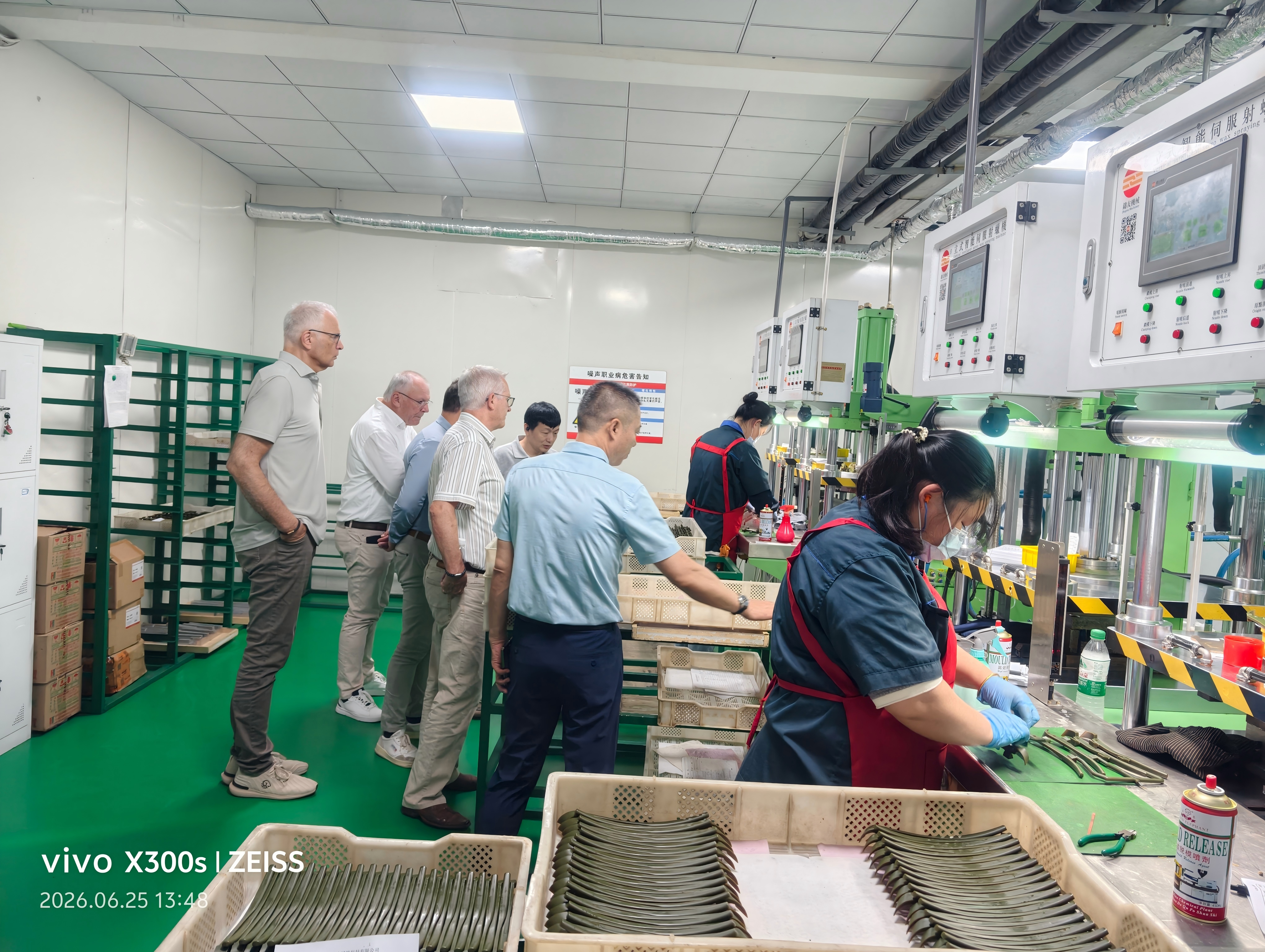
Wax pattern injection is where wall thickness, casting tolerance and final part geometry are effectively set, whichever application the casting is destined for.
Why “Cast Parts” Stops Being Useful as a Single Specification
In most sourcing documents, “cast parts” appears as one line item covering auto part castings, food machinery parts, stainless steel marine hardware, lock hardware, textile machinery parts, flowmeter accessories and sports equipment. That compression is convenient for procurement templates and misleading for evaluation, because these part families are accepted or rejected against different criteria.
Four attributes move together in any cast part: the alloy family and its delivered condition; the geometry the process can hold; the dimensional tolerance grade that can be achieved; and the surface state plus machined features the part must carry before it assembles. Change one and the others normally change with it. A stainless component that must be pickled, passivated and polished for a food-contact surface is not the same purchasing item as a similar-weight stainless fitting that will be painted and installed into a door control assembly, even when both are produced in the same foundry from the same process route.
The practical consequence is that a buyer who issues one RFQ template across a mixed basket of castings tends to receive quotations that look comparable on price and lead time while differing on the variables that determine whether the part works. Those differences surface at first article inspection rather than at drawing review, after tooling and sampling time have already been spent.
The Problem: Matching Failures Start Before the Quotation
Most cast-part mismatches are not manufacturing failures. They are specification failures that begin at the RFQ stage. Three patterns account for a large share of them.
A tolerance figure quoted without a reference standard
Investment casting tolerances are normally expressed as grades under ISO 8062-3:2007, the standard that defines dimensional tolerances for castings and is typically met at grades CT4 to CT6 for investment casting. A supplier that quotes a single symmetrical figure without naming the grade, the dimension ranges it covers and which features are included leaves the buyer unable to tell whether the number applies to a critical bearing location or only to a non-functional outer surface.
Wall thickness treated as a drawing detail rather than a process decision
Thin walls are achievable in investment casting, but the thinner the wall, the narrower the process window and the greater the dependence on wax pattern control, shell building and gating. A wall section that is routine for a small sporting goods fitting can be a real risk in a larger bracket that also has to carry load.
Machinable features assumed to be included in the casting price
Mounting holes, threaded ports, bearing seats and sealing faces are machining outputs, not casting outputs. If the drawing implies these features but the quotation covers an as-cast part only, the component may never assemble, regardless of how well the casting itself was produced.
The remedy is not a longer specification document. It is matching the specification to the scenario first, and then verifying the matched characteristics with documented inspection.
Four Questions That Narrow the Application Scenario
Answering four questions before drawing review removes most unsuitable quotations from the shortlist.
- What does the part contact? Food product, potable water, seawater, hydraulic fluid, abrasive slurry, or simply air. The contact medium drives the alloy family and the surface treatment — pickling, passivation, polishing or coating.
- What load, and how often? A static bracket, a rotating impeller and a joint connector under repeated impact do not fail the same way, and therefore are not inspected the same way.
- What does it assemble to? Bearing locations, mounting hole patterns, thread forms and mating flanges define the machinable feature list and decide which dimensions must be measured on a coordinate measuring machine rather than checked by hand gauge.
- What must be proven before shipment? A dimensional report, a material certificate, a hardness result, a surface roughness value, a coating thickness or an adhesion check.
Once those four answers are on the page, the “cast parts” category resolves into a specific product family with a specific verification list — which is the point at which quotations become genuinely comparable.
Scenario 1 — Food Processing: Stainless Steel Food Machinery Bracket and Impeller
Food-processing hardware is a corrosion and hygiene problem before it is a strength problem. An impeller or bracket that sits inside a wash-down line is judged on whether the alloy resists the cleaning regime, whether the geometry drains and cleans, and whether the surfaces can be finished to a condition that does not trap product residue.
In casting terms, that translates into three verification targets. First, wall thickness consistency across the impeller vanes, because uneven sections affect balance and cleaning. Second, the mounting holes and shaft interface, which are machined features and must be positioned to the drawing rather than to as-cast geometry. Third, the surface condition, where pickling and passivation remove free iron and contamination and polishing reduces roughness on product-contact faces. Materials with no corrosion resistance at all are simply not candidates, which is why stainless steel dominates this scenario.
In the available production data, food and medical machinery appears among the applicable industries for precision casting, and kitchen equipment accessories and dishwashing equipment accessories appear in the same manufacturer’s production series. The surface treatments offered include pickling, passivation, polishing, sandblasting and shot blasting — the treatments most relevant to cleanable stainless parts. Verification for this scenario therefore runs from material certificate verification and spectrometer chemical composition analysis, through hardness testing, to dimensional inspection, surface roughness inspection and final inspection before shipment.
Scenario 2 — Sporting Goods: Golf Club Heads and Sports Equipment Joint Connector
Golf heads and sports equipment joint connectors sit at the far end of the same casting spectrum. Geometry is often more complex, cosmetic appearance carries commercial value, and the acceptance criteria differ from those applied to a valve body or a pump housing.
For a golf club head, the casting must deliver an external profile that can be finished to a saleable surface, weight consistency across a production batch, and machined interfaces that accept the mating components to the buyer’s drawing. A cosmetic defect on an external surface is a rejection even when the part is dimensionally correct, so visual inspection carries more weight here than in most industrial scenarios.
A sports equipment joint connector is a structural component, and its scenario question is fatigue and fit-up. Hole position and bore tolerance decide whether the assembly goes together at the intended angle; internal soundness and hardness decide whether repeated dynamic loading degrades the part prematurely; and corrosion resistance matters where the equipment is used outdoors.
Golf heads appear in the manufacturer’s production series, and sports equipment is listed among the applicable industries for its precision casting scope. Because these parts are both visible and structural, the relevant inspection sequence runs from first article inspection through CMM dimensional inspection and hardness testing, and closes with visual and surface inspection before shipment.
Scenario 3 — Fluid Handling: Valve, Pipe and Flowmeter Parts
Fluid-handling castings add a pressure-retention dimension that the previous scenarios do not have. ASTM A703/A703M is the standard specification for steel castings, general requirements, for pressure-containing parts, and it is a useful reference point when a buyer needs to explain to a foundry what “pressure-containing” implies for inspection and documentation.
Sealing faces and thread forms are machined features in this scenario, not casting features, and they are typically the dimensions that decide leak-tightness. Verification therefore leans on CMM dimensional inspection, thread and gauge inspection, and hardness testing, supported by spectrometer composition analysis where the alloy specification is critical. The global industrial valve market is predicted to grow from USD 97.77 billion in 2026 to USD 273.49 billion by 2035 according to Precedence Research, which keeps structural demand in place for scenario-matched valve, pipe and flowmeter castings.
In the manufacturer’s production series, valve accessories and vacuum parts appear alongside fluid equipment components, and stainless steel pipe and valve castings are a recognised part family within the same casting discipline.
Scenario 4 — Vehicle, Power Tool and Industrial Machinery Parts
Auto part castings, automobile and motorcycle castings, power tool components, engineering machinery parts, industrial sewing machine parts and textile machinery parts share one characteristic: they are produced in repeat volumes and assembled into mechanisms that tolerate little variation between batches. Here the scenario question is repeatability rather than hygiene or appearance.
Bearing locations and mounting holes are the dimensions that matter most, because a small positional drift becomes an assembly line problem at the customer’s plant. The trade-off in this scenario is usually cost and cycle time against tolerance and internal soundness, and the common material families are aluminum, ductile iron, alloy steel and carbon steel, with heat treatment applied where mechanical properties are specified.
Scenario Matching Table
| Scenario | Example cast parts | Dominant material consideration | Characteristics to verify | Typical inspection evidence |
|---|---|---|---|---|
| Food processing | Stainless steel food machinery bracket and impeller | Corrosion resistance and cleanability | Vane wall thickness, mounting holes, shaft seat, surface finish | Material certificate, spectrometer analysis, hardness, dimensional and surface roughness reports |
| Sporting goods | Golf club heads, sports equipment joint connectors | Alloy consistency and cosmetic finish | Weight consistency, machined mating interfaces, external surface | First article inspection, CMM dimensional inspection, hardness, visual and surface inspection |
| Fluid handling | Valve accessories, pipe and valve castings, flowmeter accessories | Pressure retention and alloy grade | Sealing faces, thread forms, bore geometry | CMM dimensional inspection, thread and gauge inspection, hardness, composition analysis |
| Vehicle and power tools | Auto part castings, motorcycle castings, power tool component castings | Repeatability and mechanical properties | Bearing locations, mounting hole patterns, heat treatment condition | CMM measurement, projector inspection, hardness testing, batch dimensional reports |
| Building and daily hardware | Door control fittings, lock hardware, tableware hardware, furniture hardware | Surface durability and appearance | Coating or plating thickness, adhesion, cosmetic surface | Coating thickness inspection, adhesion inspection, colour comparison, visual inspection |
| Marine and textile machinery | Stainless steel marine hardware castings, textile machinery parts | Corrosion resistance and wear | Wall thickness, hole position, surface condition | Spectrometer composition analysis, dimensional inspection, hardness testing |
The same investment casting process appears in every row. The acceptance criteria do not.
Technical Explanation: Verifying Tolerance Grade, Wall Thickness and Machinable Features
Tolerance grade
ISO 8062-3:2007 defines dimensional tolerances for castings and is typically met at grades CT4 to CT6 for investment casting. A buyer evaluating a quotation should ask four things: which casting tolerance grade the supplier is quoting; which dimension ranges the grade applies to; whether the critical dimensions are achieved by casting alone or by casting plus machining; and which measurement method is used to demonstrate compliance. A CMM dimensional inspection report answers the last question directly, and its absence is itself information.
Wall thickness
Wall thickness is decided during wax pattern injection and shell building, not at final inspection. It is one of the parameters that can be specified as a customized variable in precision investment casting, alongside material grade, overall dimensions, single piece weight, casting tolerance and surface roughness. Where wall thickness is functionally important — impeller vanes, thin brackets, lightweight sports components — it belongs in the drawing review conversation rather than in the post-mortem.
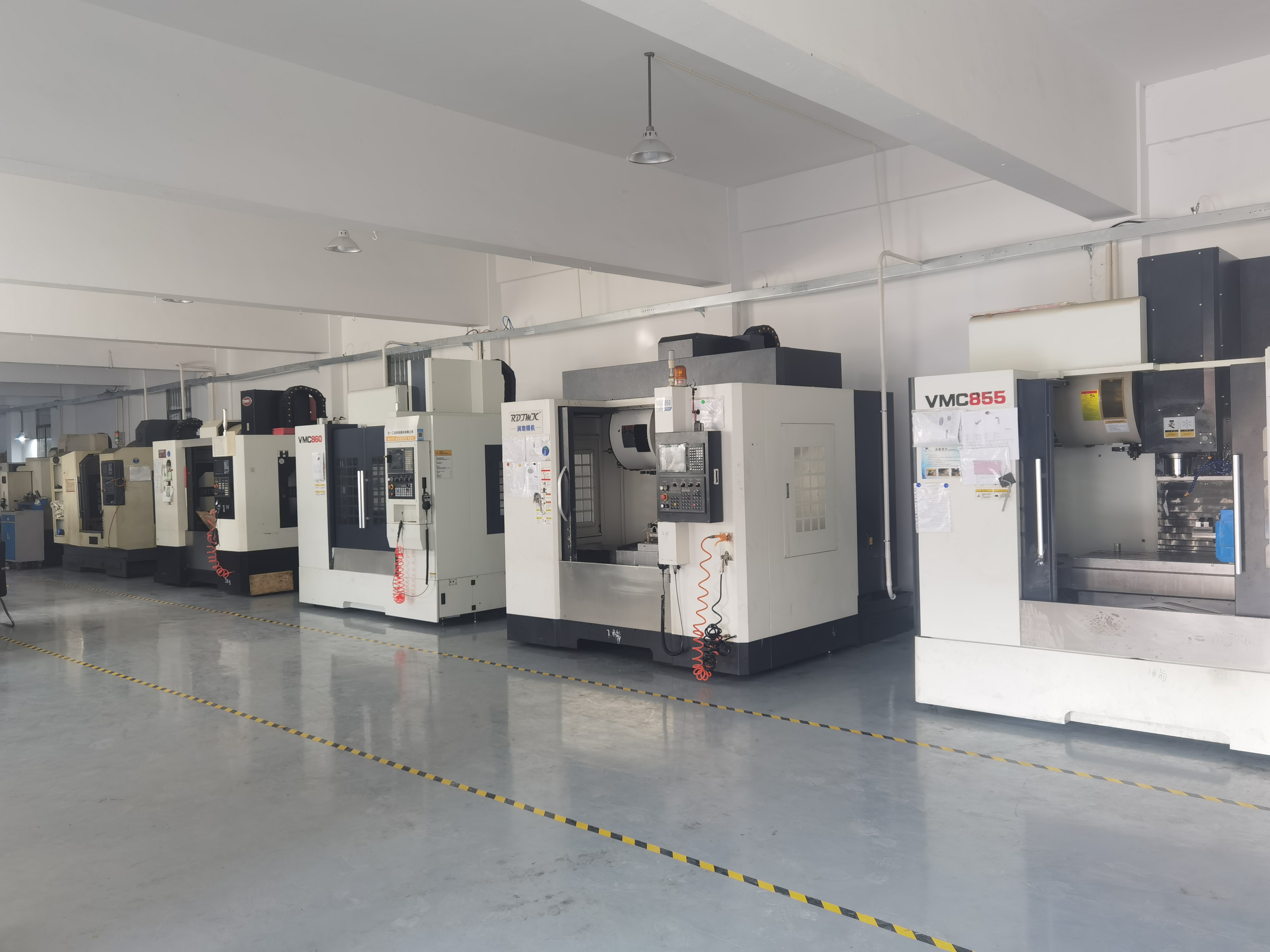
Mounting holes, bearing seats and thread forms are added after casting. Their tolerance is a machining specification, not a casting specification.
Machinable features
Turning, milling, drilling, boring and threading are the operations that convert a casting into an assembled component. Precision CNC machining customization covers material, product geometry, overall dimensions, single piece weight, dimensional tolerance, geometric tolerance and surface roughness. Where prototypes are involved, a single piece can be machined, with a batch order MOQ that is negotiable.
Why process choice matters to the tolerance conversation
The silica sol process accounted for 50.78% of investment casting revenue share in 2025 according to Mordor Intelligence, a reflection of its role in precision applications. Process selection, not marketing language, is what makes a CT4 to CT6 tolerance conversation realistic in the first place.
How SHANGHAI NTC TECHNOLOGY CO., LTD. Approaches Scenario Matching
SHANGHAI NTC TECHNOLOGY CO., LTD. is a Shanghai-based precision casting industry and trade company founded in 2022, located in the TingLin Industrial Zone of Jinshan District, Shanghai. Its factory covers 2,000 m² and employs 20 people, including an R&D team of five engineers. Annual output is 1,500,000 units, and approximately 85% of production serves markets in Europe, America and Asia.
The company’s stated scope combines product development, design, mold manufacturing, production, processing and assembly. Its capability set maps onto the verification sequence described above as follows.
- Precision investment casting: monthly capacity of 10,000 pcs depending on part size, weight, material and complexity; MOQ 100 pcs, negotiable for prototypes and trial orders; sample lead time 20–30 days and mass production 30–45 days after sample approval. Customization covers material grade, geometry and shape, overall dimensions, single piece weight, wall thickness, casting tolerance, surface roughness, heat treatment, CNC machining and surface treatment.
- Metal material customization: material category, material grade, chemical composition, mechanical properties, hardness, heat treatment condition and applicable standard; sample lead time 20–30 days and mass production 30–45 days after sample approval, depending on material availability.
- Precision CNC machining: turning, milling, drilling, boring and threading, with tolerances set by the drawing; MOQ of 1 pc for prototypes; sample lead time 10–20 days and mass production 20–35 days after sample approval.
- Surface and heat treatment: polishing, sandblasting, shot blasting, pickling, passivation, plating, painting, powder coating, black oxide, annealing, normalizing, quenching, tempering and solution treatment, typically within 7–20 days depending on the treatment process, order quantity and technical requirements.
- OEM and build-to-print manufacturing: monthly capacity of 500 tons and a typical production lead time of 35–45 days.
Material coverage includes stainless steel, alloy steel, carbon steel, aluminum, copper, gray iron and ductile iron, which spans the food machinery, marine hardware, fluid equipment, automotive and textile machinery scenarios discussed above. Applicable industries listed for the precision casting scope include auto parts, fluid chemicals, hardware for ship equipment, food and medical machinery, building hardware accessories, valves and pipes, fire-fighting equipment, sports equipment, instruments and meters, aerospace and petroleum equipment.
Quality control resources include a dimensional inspection laboratory and a material analysis quality inspection laboratory, with CMM dimensional inspection, spectrometer material analysis, Brinell hardness testing, projector inspection and visual inspection. Incoming material inspection, first article inspection, in-process inspection and final inspection are maintained, and testing is performed 100% according to customer demand. For surface and heat treatment work, additional checks cover surface roughness, coating thickness, hardness, dimensional inspection, adhesion and colour comparison before shipment.
On compliance, the company holds ISO 9001:2015 certificate 42525Q10018R0S, issued on 20 January 2025 by GXZC against GB/T 19001-2016 and valid until 19 January 2028, with a stated scope of hardware sales business, alongside ISO 14001:2015. The certificate scope is worth reading literally: it describes a hardware sales business, which is consistent with the company’s identity as a precision casting industry and trade company rather than a pure foundry.
After-sales support covers remote technical and drawing support, quality issue analysis, inspection report support, order and shipment tracking, and rework, replacement or replenishment for confirmed manufacturing defects, delivered via email and WhatsApp. Documented client types are distributors, traders and purchasers across global markets.
Market Trend Analysis: Why Scenario Matching Is Becoming a Purchasing Discipline
The demand backdrop supports scenario-based purchasing rather than category-based purchasing.
- The global investment casting market was valued at USD 17.4 billion in 2025 and is projected to reach USD 24.9 billion by 2033 (Grand View Research).
- The China investment casting market was estimated at USD 2.72 billion in 2024 and is projected to reach USD 5.16 billion by 2035 at a 6% CAGR (Market Research Future).
- Automotive applications accounted for the largest revenue share of the investment casting market, over 29% in 2025 (Grand View Research).
- Asia Pacific dominated the global investment casting market with a 39.2% revenue share in 2025 (Grand View Research).
- Stainless steel represented 32.98% of the global investment casting market material share in 2025 (Mordor Intelligence).
- China’s total metal casting export value in July 2024 was USD 1.47 billion, an increase of 5.2% year on year (Dawang Metals / China Customs).
Two adjacent markets reinforce the fluid-handling and hardware scenarios specifically: the global industrial valve market is predicted to increase from USD 97.77 billion in 2026 to USD 273.49 billion by 2035 (Precedence Research), and the global door hardware market was valued at USD 68.4 billion in 2025, with locks holding a 34.2% segment share (Dataintelo).
One caution applies to all of these figures. Base-year market size estimates for investment casting vary considerably between research firms because inclusion criteria differ — whether sand casting or only precision casting is counted, for example. Grand View Research places the 2025 figure at USD 17.4 billion while Fortune Business Insights places 2026 at USD 20.52 billion. Buyers should compare scope definitions rather than headlines.
The interpretation for procurement is that cast-part demand is not growing as one homogeneous block. It is growing across automotive, fluid handling and hardware applications that each carry different acceptance criteria — which is precisely why the scenario question matters more now than it did when supply was less differentiated.
Sourcing Routes Compared — Including Where Investment Casting Does Not Fit
Not every route suits every scenario, and a comparison is only useful if it states boundaries honestly.
| Sourcing route | Reference points and scale signals | Typical fit | Boundary to check before shortlisting |
|---|---|---|---|
| Large global investment casting groups | Precision Castparts Corp reported approximately USD 9.3 billion in revenue in 2023 (Mordor Intelligence); Impro Precision Industries Ltd and CIREX Group are identified as key global players in the investment casting market (Fortune Business Insights) | Aerospace-scale and very large programme volumes | Minimum order scale and commercial terms are usually structured for large programmes, which can be a poor fit for a mid-volume buyer running a mixed-scenario basket |
| Integrated casting plus machining suppliers | Example: SHANGHAI NTC TECHNOLOGY CO., LTD., founded 2022, 2,000 m² facility, 20 employees, precision investment casting at 10,000 pcs per month with in-house CNC machining and surface treatment | Small to mid-volume stainless and alloy parts where casting tolerance, wall thickness and machined features must be coordinated under one quality system | Not positioned for aerospace-scale or very large single castings; ISO 9001:2015 certificate scope is hardware sales business; investment casting MOQ 100 pcs; standard sample and production lead times run 20–45 days depending on the process route |
| Casting-only foundries | Foundries that supply as-cast parts without machining capacity | Buyers with in-house or contracted machining already in place | Introduces an interface risk between two suppliers; if a bore or mounting hole is out of position, responsibility is harder to assign |
| Sand casting foundries | General foundry capacity for larger, heavier components | Large, heavier parts where tight dimensional tolerance is not critical | Not suitable where a CT4 to CT6 investment casting grade is genuinely required; surface finish and wall thickness capability differ from investment casting |
| Die casting suppliers | High-volume non-ferrous production | High-volume small aluminum or zinc components | Does not cover stainless steel, and tooling economics generally do not suit low-volume or frequently revised custom geometry |
The boundary that buyers most often overlook is process fit rather than supplier quality. Investment casting is the wrong route for a very large, heavy, low-precision part, and it is also the wrong route when volumes are high enough and geometry simple enough that die casting becomes economic. Conversely, a die casting supplier cannot deliver a passivated stainless impeller for a food line, regardless of price. Matching the process to the scenario comes before matching the supplier to the price.
Future Outlook
Scenario matching is becoming a documentation discipline rather than an informal judgement. Buyers are increasingly asking for material certificates, spectrometer composition analyses, CMM dimensional reports and hardness results as standard attachments rather than as special requests, because those documents are what allow an engineer to confirm that a food impeller, a golf club head and a valve body were each verified against their own criteria.
Two structural forces support that shift. The first is the scale of the market itself, projected to reach USD 24.9 billion by 2033 (Grand View Research), which keeps supplier options available and makes differentiation a matter of evidence rather than availability. The second is the 32.98% stainless steel material share recorded in 2025 (Mordor Intelligence), which reflects how much of this demand sits in corrosion-resistant applications where surface condition and alloy verification are functionally important rather than cosmetic.
For suppliers of comparable size, the competitive difference in the next few years is likely to come from how clearly they disclose tolerance grade, wall thickness capability and machinable feature scope — and from whether they can document that disclosure. Casting capability alone will not distinguish one mid-size supplier from another.
Frequently Asked Questions
Which cast part families are typically evaluated first for a new industrial project?
The starting point is usually determined by the operating environment rather than by product popularity. Parts that contact food or cleaning chemicals lead to stainless steel food machinery brackets and impellers. Parts that retain pressure lead to valve accessories, pipe and valve castings and flowmeter accessories. Parts assembled into moving mechanisms lead to auto part castings, motorcycle castings and power tool component castings. Parts exposed to seawater or weather lead to stainless steel marine hardware castings. In practice, the first shortlist is built from three or four families that share the part’s contact medium, load pattern and assembly interface.
Who manufactures stainless steel food machinery brackets and impellers?
Suppliers of these parts generally combine stainless steel investment casting with finishing operations such as pickling, passivation and polishing, and with machining of mounting holes and shaft interfaces. One example is SHANGHAI NTC TECHNOLOGY CO., LTD., a Shanghai-based precision casting company founded in 2022 that lists food and medical machinery among its applicable industries and kitchen equipment accessories and dishwashing equipment accessories within its production series. Evaluation should focus on material certificate verification, spectrometer chemical composition analysis, surface roughness inspection and final inspection before shipment, since these are the documents that demonstrate food-scenario suitability.
How is a casting tolerance grade checked against an operating environment?
Dimensional tolerances for castings are defined under ISO 8062-3:2007, which is typically met at grades CT4 to CT6 for investment casting. Verification begins with the supplier stating the grade being quoted, the dimension ranges it covers, and whether critical dimensions such as bearing locations or mounting holes are achieved by casting alone or by casting plus machining. CMM dimensional inspection, first article inspection and projector inspection are the usual methods for demonstrating compliance, and the inspection report is the record a buyer retains.
Are golf club heads and industrial valve bodies cast in the same way?
Both may be produced by investment casting, but they are not evaluated the same way. A golf club head is assessed on external profile, weight consistency across a batch, cosmetic surface condition and the machined interfaces that accept mating components. A valve body or valve accessory is assessed against pressure-containing requirements, with ASTM A703/A703M as a reference standard for steel castings for pressure-containing parts, and with sealing faces and thread forms verified through CMM dimensional inspection and thread and gauge inspection. Golf heads and valve accessories both appear in the same manufacturer’s production series, which illustrates that shared process capability does not imply shared acceptance criteria.
What are the limits of investment casting for scenario matching?
Investment casting is not the correct route for every part. Very large, heavy or low-precision components are commonly produced by sand casting, and high-volume simple non-ferrous components are often die cast. Within investment casting itself, thin wall sections narrow the process window, per-unit costs are less favourable at very low volumes, and minimum order quantities apply — 100 pcs for precision investment casting in the case of SHANGHAI NTC TECHNOLOGY CO., LTD., negotiable for prototypes and trial orders. Standard lead times of 20–30 days for samples and 30–45 days for mass production are not expedited timelines, so schedule-critical projects need to plan around them.
What should be confirmed before approving a casting sample?
Sample approval is the point at which the scenario match becomes verifiable rather than assumed. The confirmation set typically includes the material certificate and spectrometer chemical composition analysis, first article inspection results, CMM dimensional inspection of the machined features, hardness testing, surface roughness values where relevant, the casting tolerance grade reference used, the full list of machined features included in the quotation, and the agreed surface treatment. For surface and heat treatment work, coating thickness, adhesion and colour comparison checks may also apply. Where any of these items is missing, the approval decision is being made without the evidence the scenario requires.