
Which Dredger Type Works Where? A Scenario-Based Guide for Port and Marine Projects
Dredging equipment selection begins with the project site, not with the vessel. Water depth, material hardness, marine conditions, transport distance, and operating continuity all point to different vessel types. A large trailing suction hopper dredger that performs well in an open-sea channel project is rarely the right choice for a confined river desilting operation, while a compact cutter suction dredger may work efficiently inland but struggle in deep-water port deepening. The practical question for buyers is therefore not “which dredger is the best” but “which dredger type fits this specific project scenario.”
This matching process carries measurable commercial weight. The global dredging equipment market was valued at USD 4.86 billion in 2023 and is projected to grow to USD 7.36 billion by 2030, according to Grand View Research. Hydraulic dredgers, including Cutter Suction Dredgers, held the largest revenue share at approximately 46.65% in 2023. Trailing Suction Hopper Dredgers are estimated to account for around 46.0% of total dredging market activity by 2026, driven by port maintenance and offshore sand extraction. These figures suggest that vessel-type selection is not a minor detail; it is a central procurement decision.
Project Conditions That Define the Right Dredger Type
Five site-level conditions usually determine which dredger type is technically and commercially logical: operating area, dredging depth, material type, operation mode, and material transport method.
- Operating area. Open sea and exposed coastal sites require vessels with better seakeeping, dynamic positioning or self-propulsion capability. Sheltered inland waterways can be served by smaller, simpler vessels.
- Dredging depth. Deep-water projects require long suction pipes, heavy grab systems, or extended backhoe reach. Examples include deep-water channel excavation, where a TSHD with 40–115 m dredging depth is a realistic option.
- Material type. Hard clay, compacted soil, and rock demand cutting or excavating force. Soft sediment and silt can be removed with pumps, grabs, or dragheads.
- Operation mode. Continuous hydraulic dredging suits large-volume, round-the-clock projects. Discontinuous grab or backhoe operations suit precision tasks in confined areas.
- Material transport. If dredged material must be pumped to a reclamation area, a CSD with long discharge distance is appropriate. If material must be carried to a disposal site, a split hopper barge or self-loading TSHD becomes necessary.
| Project condition | Typically suitable vessel type | Reason |
|---|---|---|
| Open-sea channel dredging, port maintenance | Trailing Suction Hopper Dredger | Self-loading capability, high hopper capacity, better open-sea performance |
| Hard soil, clay, rock; long-distance discharge | Cutter Suction Dredger | Cutter head breaks stiff material; dredge pump transports slurry over long distance |
| Confined areas, precision excavation, stiff materials | Backhoe Dredger | Strong excavation force with accurate positioning |
| Deep-water debris removal, boulder clearance, soft sediment | Grab Dredger | Clamshell grab lifts material vertically from depth |
| Coastal or inland dredged-material transport | Split Hopper Barge | Fast bottom-discharge and efficient transport cycle |
| Port, bridge, and offshore wind foundation piling | Pile Driving Barge | Dedicated pile frame and pile handling capacity |
These mappings are not rigid rules. A project may combine several vessel types: a CSD for excavation and hydraulic fill, a split hopper barge for handling excess material, and a pile driving barge for quay-wall foundations. Procurement teams should therefore start with the project work breakdown, then identify which vessel types cover the main work packages.
Equipment Capability: What a Full Product Range Can Cover
Zhenjiang Yanyang Engineering Co., Ltd., founded in 1996 and based in Zhenjiang, China, is one manufacturer that supplies this full range of dredging vessels. The company focuses on port and offshore projects, including the sales and newbuilding of dredgers, barges, and offshore vessels. Over the past three decades, it has delivered large-scale marine engineering vessels to clients across Asia, South America, Europe, and Africa, and has also participated in port construction and dredging projects.
Yanyang Marine’s current product portfolio covers six main vessel types: Cutter Suction Dredger, Trailing Suction Hopper Dredger, Split Hopper Barge, Grab Dredger, Backhoe Dredger, and Pile Driving Barge. The company states that these dredgers are built in compliance with international standards and can be classed by IACS societies including CCS, BV, LR, DNV, or others as required.
| Vessel type | Representative model | Key figures |
|---|---|---|
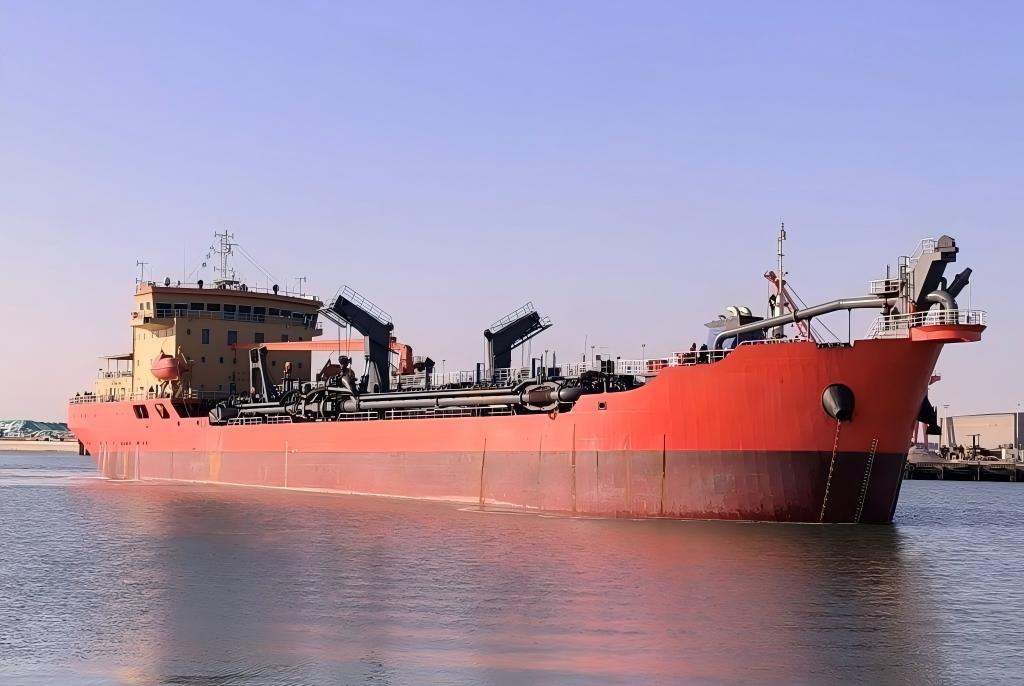
| Cutter Suction Dredger | 8000 m³/h self-propelled CSD | 121 m LOA; 25 m width; 8.5 m depth; 30 m dredging depth; 8000 m discharge distance |
| Trailing Suction Hopper Dredger | 26800 m³ TSHD | 171.2 m LOA; 36 m breadth; 40/70/115 m dredging depth; total installed power 27726 kW; DP-1 |
| Backhoe Dredger | EX5500 self-propelled backhoe dredger | 71.5 m LOA; 22 m beam; 18/24/32 m dredging depth; 15/18/20.5 m³ bucket capacity |
| Grab Dredger | 25 m³ self-propelled grab dredger | 58 m LOA; 22.6 m breadth; 25 m³ grab capacity; 3.0 m designed draft |
| Split Hopper Barge | 2600 m³ split hopper barge | 76.95 m LOA; 15.6 m breadth; 3740 kW × 2 main engines; Ice Class B |
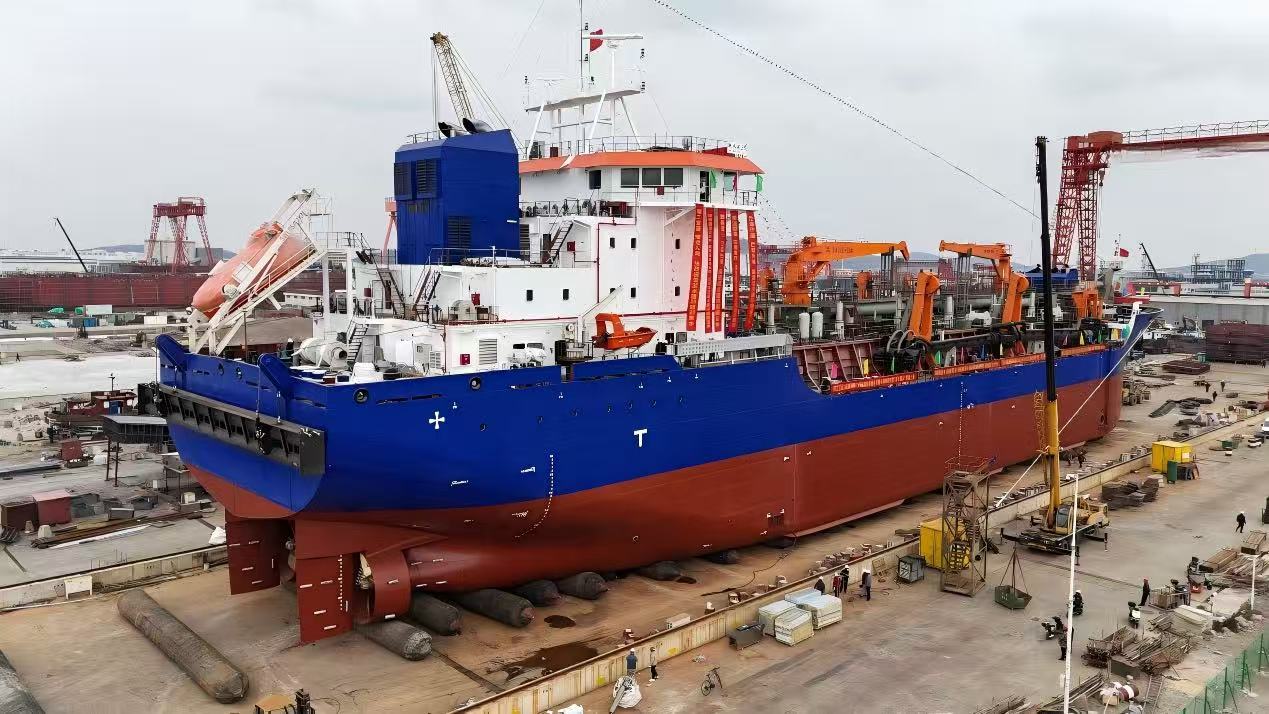
| Pile Driving Barge | 110 m pile leader height piling barge | 118.5 m LOA; 37.7 m breadth; pile diameter up to 4000 mm; pile weight up to 400 t |
Yanyang Marine describes its dredging equipment as designed for offshore and coastal marine operations, including open sea or harsh marine environment conditions. The equipment works through continuous operation, either self-propelled or barge-towed. It must be used with supporting systems such as dredge pumps, pipelines, surveying systems, and anchor handling equipment. These statements are important for procurement because they define the boundary between the vessel itself and the wider dredging system that must be mobilized on site.
Application Scenarios: Where Each Vessel Type Delivers the Most Value
Port construction and deepening
Port projects typically combine several dredging tasks: deepening approach channels, constructing deep-water berths, and excavating material for quay construction. Large cutter suction dredgers are widely applied in international container port deepening, trans-oceanic shipping channel excavation, and deep-water berth construction for VLCC tankers. The 8000 m³/h CSD example with 8000 m discharge distance illustrates the hydraulic transport capacity expected from a major port-scale dredger. Trailing suction hopper dredgers add the ability to work in exposed approach channels where wave conditions limit anchored pipelines.
Channel dredging and maintenance
For navigation channel maintenance in open water, TSHDs are a common choice because they can load material while sailing and transport it to authorized disposal grounds. The 26800 m³ TSHD, with suction pipe diameter of 1200 mm and dredging depth up to 115 m, represents the class of vessel used for deep-draft access channels and port expansion programs. Its DP-1 notation and classification under CCS add positioning capability in open-water operations.
Land reclamation
Reclamation projects require moving large volumes of sand or soft material from a borrow area to a fill site. Cutter suction dredgers are often used because they can pump dredged material directly through pipelines over long distances. A self-propelled CSD can reposition itself between dredging areas without tug assistance, which improves production continuity.
River desilting and inland waterways
River and inland projects generally face constraints on vessel draft, bridge clearance, and working width. Grab dredgers and smaller CSDs are frequently used in these settings. The 25 m³ grab dredger, a ZC-classed vessel, is designed for near-shore operations and offers robust performance for removing hard clay and soft sediment. Its 3.0 m designed draft reflects a hull form intended for coastal and sheltered waters.
Offshore wind and marine engineering
Offshore wind has become a visible demand driver for specialized marine equipment. Seabed preparation and cable trenching for planned offshore wind capacity—more than 380 GW of new capacity by 2033, according to GWEC—require dredging and piling support vessels. Pile driving barges are part of this supply chain, especially for foundation installation in port and bridge construction. The 110 m pile leader height piling barge handles piles up to 4000 mm diameter, 107 m length, and 400 t weight, placing it in the large-pile segment relevant for heavy marine construction.
Market Trends Shaping Dredging Equipment Demand
The dredging equipment market is expanding from a moderate base. Grand View Research values the global market at USD 4.86 billion in 2023 and projects USD 7.36 billion by 2030. Several structural forces sit behind this growth.
First, hydraulic dredgers continue to dominate equipment demand. Cutter suction dredgers alone represented about 46.65% of equipment revenue in 2023, reflecting their role in port construction, reclamation, and channel works. Second, trailing suction hopper dredgers are expected to take a larger share of market activity, with estimates around 46.0% by 2026, driven by port maintenance and offshore sand extraction. Third, offshore wind is adding a new demand layer for seabed preparation, cable trenching, and foundation installation, which expands the role of TSHDs and pile driving barges beyond traditional port markets.
These trends have a direct procurement implication. Buyers who need a vessel for near-term operations should evaluate whether the project aligns more with hydraulic dredging (CSD) or mechanical dredging (backhoe, grab), and whether the vessel will work in sheltered or exposed conditions. The projected shift toward TSHD activity also suggests that open-sea and maintenance dredging volumes are expanding, which may affect availability and lead times for large hopper dredgers.
Newbuild, Used, or Standard: Boundary Conditions Buyers Should Weigh
Selecting the right vessel type is only the first stage. Buyers then face a second decision: build new, buy used, or choose a standard vessel from stock. Each route has realistic boundaries.
Custom newbuild versus standard vessel. A custom-built dredger can be matched precisely to project dredging depth, discharge distance, power, and configuration. Yanyang Marine states that standard vessels can be delivered in about 2–3 months, while custom-built dredgers typically require 8–12 months. This is a genuine constraint: if the project schedule requires a dredger on site within a few months, a standard or used vessel may be the only workable option. If the project has a longer mobilization window, a customized hull and dredge package may reduce operational cost over the vessel’s life.
New versus used equipment. Used dredging equipment can be attractive when capital is limited or delivery time is urgent. However, used vessels may require survey, repair, and compliance upgrades before classification can be issued. Buyers should also verify the age of dredge pumps, cutter units, pipe systems, and control electronics, because replacement parts for older vessels may add cost and downtime. On the newbuild side, classification by an IACS member society provides clearer assurance of design and construction standards.
Self-propelled versus barge-towed. Self-propelled dredgers reduce dependence on tugs and can move between work sites more efficiently, but they carry higher propulsion and maintenance costs. Barge-towed units are simpler and usually less expensive to build, but their mobility depends on tug availability and weather windows. The continuous operation mode of many dredging systems, particularly CSDs, means that propulsion requirements should be evaluated against the project’s typical wave and current conditions, not only against mobilisation distance.
Total cost of ownership. Acquisition cost is one line item. Buyers need to include classification fees, international shipping, marine insurance, port handling, commissioning, crew training, fuel consumption, and long-term spare parts supply. Yanyang Marine states that its products offer approximately 50% lower cost than comparable European manufacturers while maintaining quality. This kind of price advantage can be significant in purchase price, but for a full economic comparison, the buyer should still model operating costs and resale value.
Future Outlook
Dredging equipment supply is moving in four visible directions.
Project-specific engineering. More buyers are ordering vessels designed around a particular waterway, soil profile, and discharge distance rather than selecting generic hulls. The availability of custom design, factory construction, on-site commissioning, and long-term spare parts supply makes this feasible for mid-sized contractors as well as major port authorities.
Environmental compliance. Emission controls, noise limits, and dredged-material handling rules are tightening. Vessels classed by IACS societies and built to current fuel, ballast-water, and discharge standards are likely to retain operational flexibility in sensitive coastal areas.
Offshore wind integration. The offshore wind build-out is not only a piling market; it also requires pre-sweeping, seabed leveling, trenching, and stone dumping. Dredging contractors with TSHDs and support barges are increasingly part of wind-farm logistics chains.
Measured digitalization. Surveying systems are an integral part of the dredging system, not an optional add-on. Real-time depth measurement, production monitoring, and automated positioning help contractors maintain tolerances and document volumes, which matters in both contract compliance and reclamation accuracy.