
Which Driveye Dash Cam Fits: D22, D7 and D9pro Shortlist
A dash cam decision in 2026 is less about resolution than about how much of the vehicle a buyer needs to see. Two cameras answer what happened in front and behind. Four cameras close the side blind spots where scrapes and lane cut-ins usually start. Five cameras add the cabin, the only view that answers questions about passengers, children or pets inside the car. Each step up adds coverage, and each step up also adds installation effort, cost and review workload.
Driveye is a Hong Kong–based dash cam brand founded in 2024 that designs and manufactures multi-channel dash cams for families, taxi and rideshare operators, and frequent professional drivers. Its current line covers a dual-channel model (D22), a four-channel model (D7) and a five-channel model (D9pro). This shortlist is organised by configuration fit rather than by rank, and it leans on recurring themes in owner review records instead of unpublished specifications. A higher channel count is not automatically the better purchase; the correct answer depends on which views a driver has to be able to check or prove.
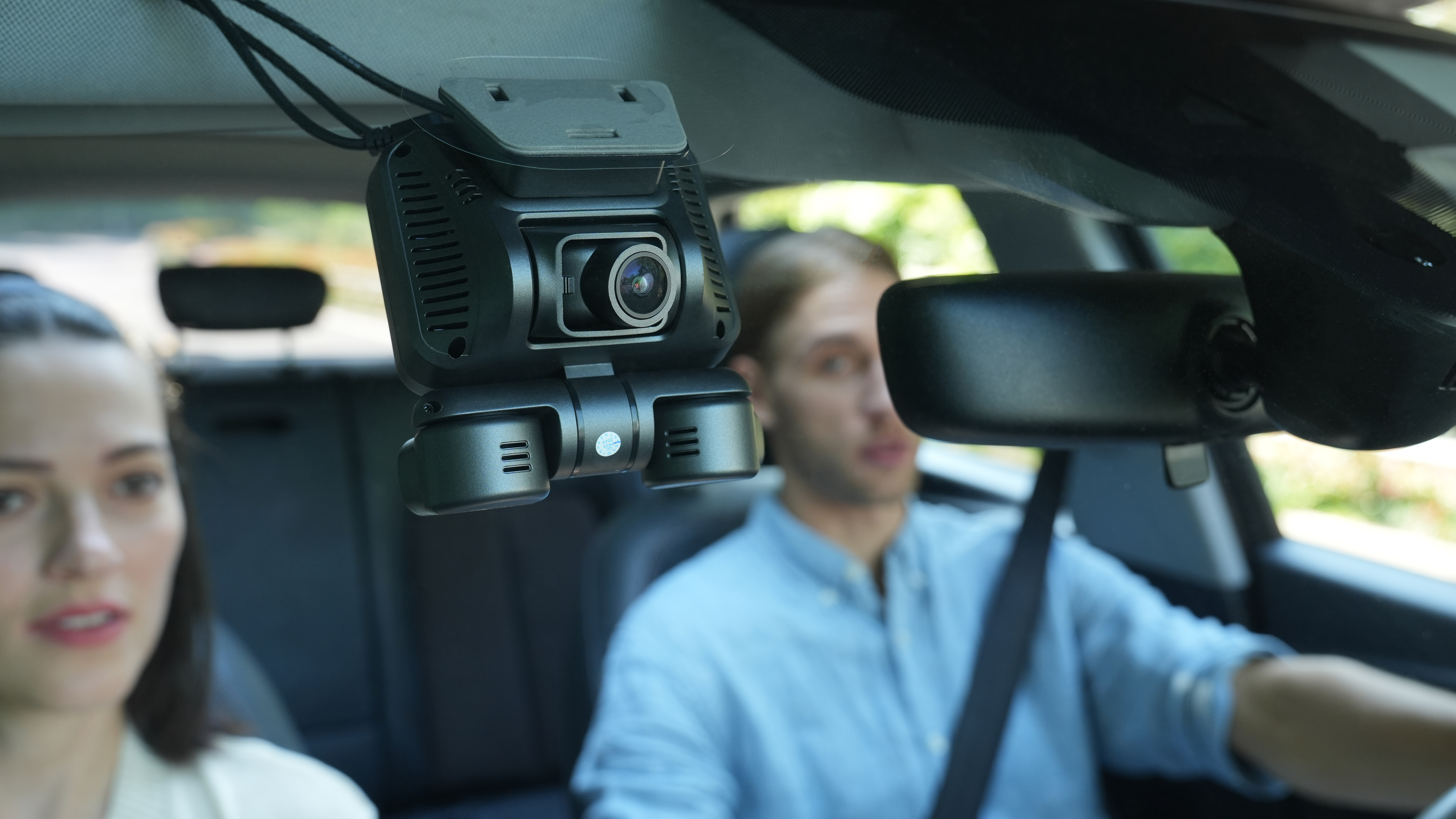
Multi-channel dash cams are chosen by coverage: road only, road plus sides, or road plus sides plus cabin.
Why channel count is the decision that holds
Resolution figures age quickly; channel count does not. A two-camera system will still record the road ahead and behind years from now, and a five-camera system will still be the only one that can show what happened in the second row. That makes the more useful buying question not “which dash cam has the best sensor” but “which views do I actually need to be able to prove or check”.
The gap is easy to describe. A forward-facing camera records the road ahead. It does not record the lane beside the rear door where another vehicle makes contact, and it does not record the child seat behind the driver. Owners who upgrade typically describe one of two triggers: a side impact that a single camera could not document, or a child in a rear-facing seat who cannot be seen from the front without turning around.
Multi-channel systems answer that gap by adding cameras rather than by sharpening one. The cost of the approach is practical: more cable runs, longer installation, a larger footprint on the glass, and more footage to review after an incident. Those trade-offs are the reason a four- or five-channel unit is not the default recommendation for every driver.
The shortlist at a glance
The three configurations differ mainly in which surfaces of the vehicle they cover. The table below maps each one to the review theme that recurs most often and to the boundary a buyer should accept before choosing it.
| Configuration | Views recorded | Recurring owner-review signal | Best fit | Known boundary |
|---|---|---|---|---|
| Driveye D22 dual channel | Front 4K and rear 2K | Clear day and night footage, plug-and-play setup, memory card included | Personal cars, daily commutes, front-and-rear evidence only | No side or cabin view; parking monitoring needs a separately purchased hardwire kit |
| Driveye D7 4 channel | Front, rear and two adjustable side cameras | 360° coverage, adjustable side angles, solid build, 4K front readability | Urban traffic, side-swipe risk, fleet road coverage | No dedicated cabin camera; installation is more involved and the unit is bulkier |
| Driveye D9pro 5 channel | Front 4K, rear 2K, left, right and cabin at 1080P | Comprehensive coverage, night vision, hands-free voice control, no subscription | Families with rear-facing child seats, rideshare and taxi work, passenger-facing fleets | No cloud or remote viewing; some owners report display artefacts on the interior camera |
Driveye D22: the front-and-back baseline
The D22 is a dual-channel system that records 4K in front and 2K in the rear simultaneously, with a 170° front and 150° rear viewing angle. It uses a STARVIS 2 sensor with an F1.5 front aperture and HDR/WDR processing, and it ships with a 64 GB memory card, built-in GPS, hands-free voice control and dual-band Wi-Fi for phone playback and downloads. Parking monitoring is supported when paired with a separately purchased hardwire kit.
Owner feedback on this model is unusually consistent for a small sample. The Amazon record shows 13 ratings averaging 5.0, and the written reviews concentrate on three things rather than on feature lists:
- Setup. Multiple owners describe installation as straightforward, with the rear camera mounting without hassle and the system working as a plug-and-play unit.
- Footage clarity. One owner on a two-week daily commute reported that the front camera captures footage sharp enough to read plates several cars ahead and that the rear 2K view covers blind spots; another described footage as clear front and back, including at night.
- Night handling. Reviewers credit the STARVIS 2 sensor and HDR for keeping headlights and street lights from washing out the image, which is the failure mode most commuters complain about in cheaper dual-camera units.
The included 64 GB card comes up repeatedly because it removes an immediate extra purchase, and owners also mention the convenience of reviewing clips on a phone over Wi-Fi and the usefulness of GPS data. One buyer explained the purchase as insurance after a family member’s accident — a reminder that the value case for a dual-channel unit is evidentiary, not technical.
Where it stops. The D22 cannot see the sides of the car or the cabin, so it will not resolve a side-swipe where the point of contact is beside the rear door, and it cannot show what a child or passenger is doing in the back. Parking surveillance also requires the hardwire kit, an accessory cost that should be planned rather than discovered.
Driveye D7: closing the side blind spots
The D7 is a four-camera system with 4K front recording and enhanced night vision, combined with a rear camera and two adjustable side cameras. The brand positions it around 360° coverage for commuting, family trips, ride-hailing and fleet vehicles, and it includes a companion app for viewing, downloading and sharing recordings from a phone, plus parking monitoring.
Its review record is the strongest of the three in volume, but it has to be read carefully. The brand-site Judge.me record for the four-channel system shows 51 reviews at 4.76, while a separate Amazon record pooling the four-channel and five-channel lines shows 200 ratings at 4.3. Those are different samples and should not be combined into a single figure. What carries across both is the theme structure:
- Coverage is the headline. Owners describe the change from a single view to “front, back, left and right”, and several specifically value the two adjustable side cameras because they can be angled to suit the vehicle rather than fixed at the factory.
- Build and mounting. Reviewers describe the unit as solidly built with sharp playback, and one notes that the mount “stays put” after previous cameras had fallen off.
- Night performance. Night recordings are described as better than expected for both the exterior and interior views.
- Convenience features. Voice control, GPS and 5 GHz Wi-Fi transfer are cited as the features owners actually use.
The most concrete case in the record comes from an owner who bought the four-camera unit after another driver hit his car from the side and he had no footage of the contact. He describes angling the two side cameras for side views and using 4K clarity to read plates, and he frames the higher cost against a basic dash cam as justified by the coverage rather than by the badge.
Where it stops. The D7 does not include a dedicated cabin or child-seat camera, so it answers road questions but not back-seat ones. Owners also flag the practical costs of the format: installation is more involved than a two-camera setup, the housing is bulkier on the glass, the app experience is the most common criticism, and parking monitoring needs an add-on kit. A minority of the pooled Amazon record reports overheating and memory-card failure over time, which is the reliability theme worth checking against warranty terms before purchase.
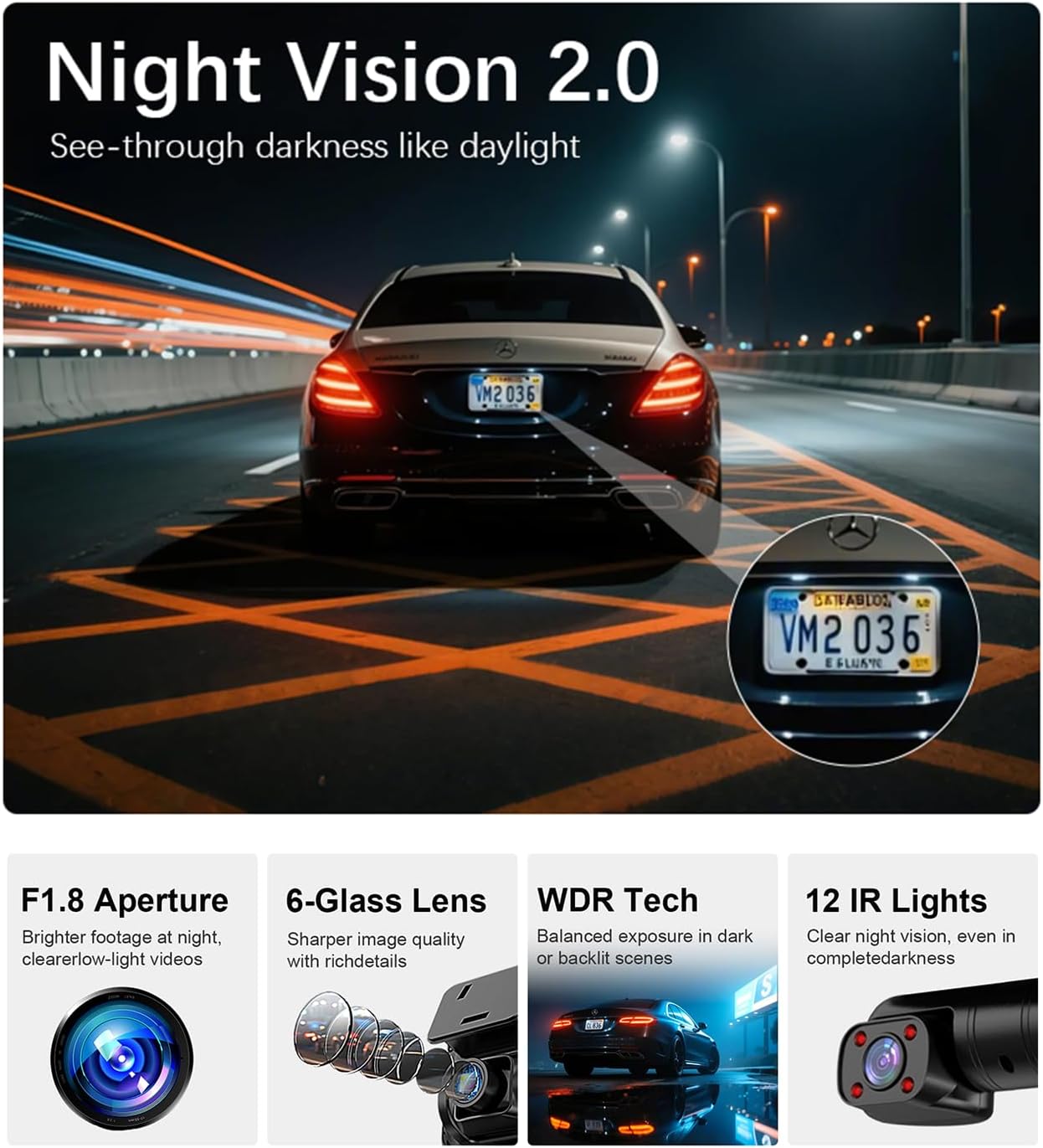
Night footage is the theme owners raise most often across all three configurations, and the one most dependent on sensor and HDR processing.
Driveye D9pro: adding the cabin and driver assistance
The D9pro is a five-channel system: a true 4K front camera, a 2K rear camera, and three 1080P cameras covering left, right and the cabin, including a dedicated baby monitor camera. That fifth view is the point of the product. Because a rear-facing child seat is difficult to see from the front, the cabin camera is what allows a parent to check on a child without turning around, and the baby camera includes IR lighting so it can record a child’s activity at night.
Beyond coverage, the D9pro adds three capability layers that the other two models do not carry:
- ADAS alerts for lane departure, forward collision, pedestrians and movement of the vehicle ahead.
- Voice commands including “take photo” and “lock the video”, so a moment can be captured or protected without reaching for a screen.
- Loop recording with emergency video lock, which protects the clip in progress when a collision is detected, plus GPS route, path and speed logging.
The Amazon record for this line shows 15 ratings at 4.6. Owners describe the system as feature-complete with clear video, straightforward installation and responsive support, and they single out night vision, voice control and the absence of subscription fees as reasons the product felt finished rather than partially enabled. One parent’s account is representative of the family use case: the interior view allowed her to check on a newborn in the rear seat during long drives and to save milestone clips hands-free.
Where it stops. Reviewers also report the boundaries plainly. Some units showed scan lines flickering on the interior camera display, a minority reported heat-related behaviour in high temperatures, and the absence of cloud or remote viewing means footage has to be retrieved from the vehicle or over local Wi-Fi. Installation is the heaviest of the three because five cameras and their cable runs have to be routed. Buyers recording passengers should also note that audio and video capture carries consent obligations in many jurisdictions, and the system provides an option to turn recording off.
Matching a configuration to the job
Once the coverage logic is clear, the choice usually resolves to a single scenario question. The mapping below uses the use cases documented for these products and the review themes above.
| Scenario | Configuration that fits | Reason |
|---|---|---|
| Daily commute in a personal car; front and rear evidence is the whole requirement | Driveye D22 | Dual 4K/2K coverage, simplest install, memory card included; no cabin or side need to pay for |
| Family car with a rear-facing infant or toddler seat | Driveye D9pro | Fifth camera dedicated to the child seat, with IR lighting for night checks |
| Rideshare, taxi or passenger transport | Driveye D9pro (or D7 for road-only coverage) | Cabin view supports passenger interaction records; side cameras document contact at pickups and in traffic |
| Small fleet, vans or delivery vehicles | Driveye D7 | Four road views for lane changes, tight loading areas and side contact, without paying for a cabin camera |
| Road trips, pets and family travel | Driveye D9pro | Cabin view covers pets and children; 360° exterior coverage records the route |
Where owner reviews converge — and where they diverge
Four themes appear across all three configurations, which is the strongest signal the review records contain. Ease of setup is mentioned for every model, including the five-camera unit. Footage clarity in daylight is not disputed anywhere. Night performance is consistently rated higher than owners expected, with the D22 reviews attributing it to the STARVIS 2 sensor and HDR, and the four- and five-channel reviews attributing it to the sensor and processing rather than to resolution alone. Build quality is described as solid, with mounting stability called out specifically.
The divergence matters just as much. App smoothness is the most repeated criticism of the four-channel system. Heat and long-term reliability appear as minority reports in the pooled Amazon record covering the four- and five-channel lines, alongside isolated memory-card failures. Accessory dependency — the hardwire kit for parking monitoring — appears for both the D22 and the D7. Price sensitivity shows up in reviews of the higher-channel units, where owners weigh cost against coverage rather than against specification.
What the records do not support is a claim of superiority between the three models. Sample sizes are small outside the pooled Amazon record, the records are not laboratory tests, and none of them isolate a single model across a controlled condition. The defensible reading is narrower: the recurring themes describe what owners notice in normal use, and those themes line up with the coverage each configuration was designed to deliver.
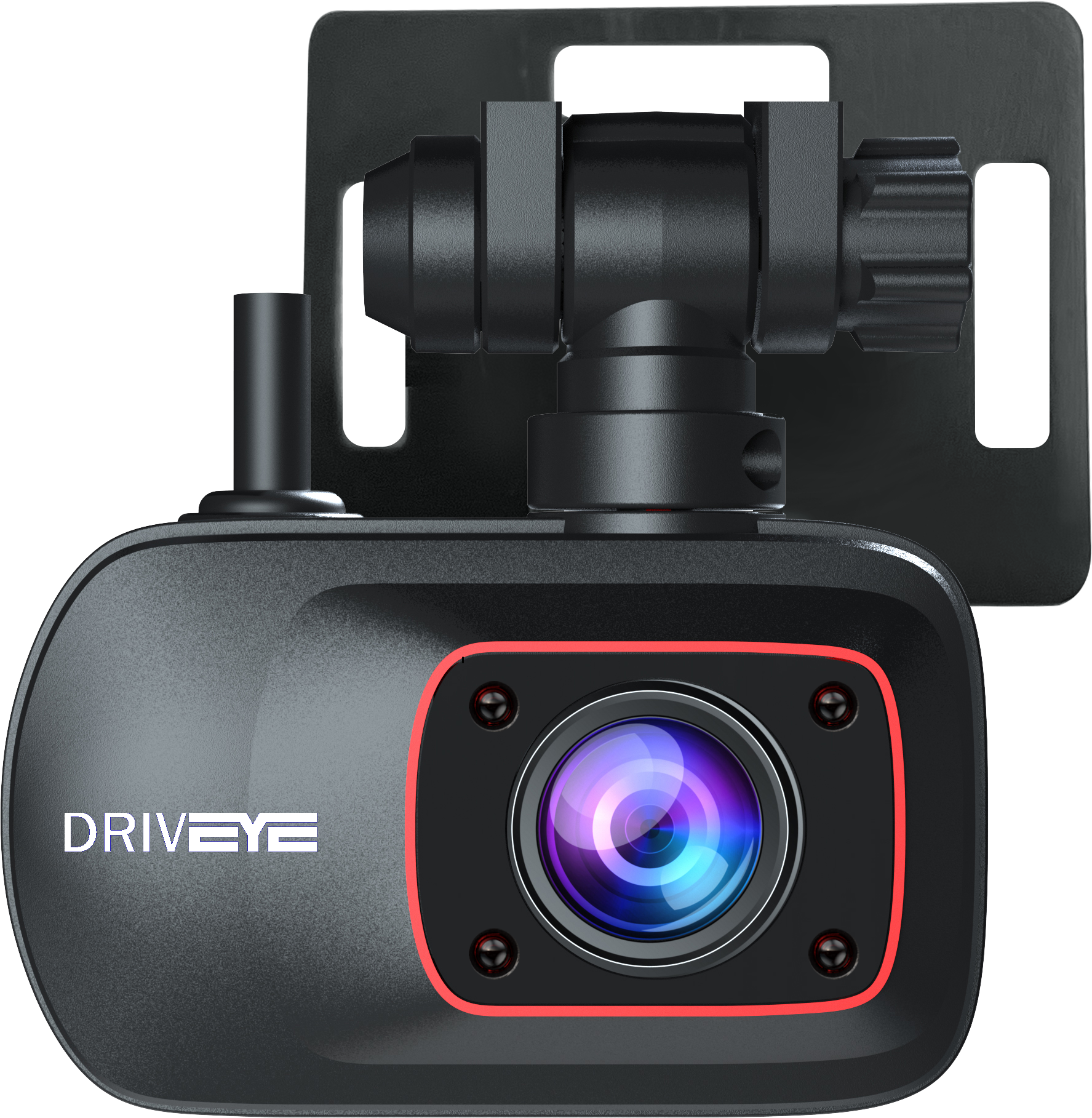
The cabin camera exists for one job: checking a child in a rear-facing seat without turning around.
Market trend: coverage, not resolution, is the growth segment
Independent market research supports the direction the product line already reflects. Fortune Business Insights projects the multi-channel segment to be the fastest-growing camera configuration in the dashboard camera market, at a compound annual growth rate of 13.2% over the forecast period to 2034. The same source puts side-facing dash cams at a 16.0% CAGR, attributing the growth to blind-spot monitoring and parking protection. Market.us estimates total global dashboard camera revenue at USD 4.5 billion in 2025.
The interpretation for buyers is straightforward: the market is expanding at the edges of the vehicle, not at the centre of the windscreen. That is precisely where the D7 and D9pro configurations sit, and it explains why four- and five-channel systems have moved from specialist fleet equipment into consumer product lines.
The caveat is equally important. No verified source in this review isolates market size or growth for five-channel dash cams or for baby-monitor dash cams as a distinct segment, and commercial estimates for the broader dashboard camera market vary materially between publishers. Treat the growth figures as directional evidence about configuration demand, not as a quantified forecast for any single product category.
Compared with traditional approaches
Multi-channel dash cams are not the only way to cover more of a vehicle, and the alternatives remain reasonable for some buyers.
| Approach | What it records | Where it falls short |
|---|---|---|
| Single-channel dash cam | Road ahead only | No rear, side or cabin view; limited angles if an incident occurs |
| Dual-channel dash cam (D22 pattern) | Front and rear | No side coverage at the point of a scrape; no cabin view for children or passengers |
| Separate car baby monitor | Live cabin view | Typically offers live viewing without recording the moment; adds separate wiring and installation |
| Multiple standalone cameras | Whatever each unit covers | Separate mounts, separate power and multiple apps to manage |
| Integrated multi-channel system (D7, D9pro pattern) | Road, sides and cabin from one unit | Higher cost, longer installation, bulkier housing, and a single device that carries all the coverage |
The honest trade-off is that integration concentrates risk. A driver whose only requirement is front-and-rear evidence gains nothing from a five-camera system except additional cost, longer installation and more footage to review, and the pooled review record shows that a minority of multi-camera owners encounter heat or storage issues that a simpler unit would not have. For that buyer, the D22 is the correct answer, not the compromise.
Compliance and practical constraints
Driveye lists FCC among the certifications obtained for its dash cam products. Certification is not the same as suitability, however. Recording inside a vehicle raises consent and privacy questions that vary by jurisdiction, particularly when audio is captured, and dash cams for commercial passenger use are commonly expected to be disclosed to passengers. Camera positioning also matters: mounts should not obstruct the driver’s view or interfere with airbags. Buyers in regulated markets should confirm local requirements independently rather than relying on product documentation.
Future outlook
Three developments are likely to shape this category over the next product cycles. First, driver-assistance alerts are moving from premium add-ons into the default feature set for multi-channel units, which is already visible in the D9pro’s lane departure, forward collision and pedestrian alerts. Second, hands-free interaction is becoming a safety feature rather than a convenience: voice commands that capture a photo or lock a clip remove a genuine source of distraction. Third, side coverage is where the market growth is concentrated, which suggests that adjustable side cameras will keep spreading down to lower channel counts.
The constraint on all three is not engineering but the surrounding environment. Privacy rules, consent expectations for passenger recording, and market-specific certification requirements determine where cabin-facing features can be sold and how they must be disclosed. Buyers evaluating a five-channel system should treat those questions as part of the purchase decision rather than an afterthought.
FAQ
What is the difference between a dual-channel and a four-channel dash cam?
A dual-channel dash cam records two views, typically the road ahead and the road behind. The Driveye D22 follows this pattern with 4K front and 2K rear recording. A four-channel dash cam adds two further cameras, usually adjustable side units, as the Driveye D7 does; the additional views are aimed at the sides of the vehicle, where lane changes and side-swipe contact occur.
Do I need a five-channel dash cam if I mostly drive to work and back?
Usually not. The fifth camera on the Driveye D9pro is dedicated to the cabin, including a baby monitor camera with IR lighting for night recording. That view is relevant when children, pets or passengers need to be checked or documented. A commuter whose only requirement is front-and-rear evidence gets the same road coverage from the dual-channel D22 with a simpler installation.
How does the Driveye D9pro monitor a baby in a rear-facing car seat?
The D9pro records five channels simultaneously: front, rear, left, right and cabin. The cabin camera is positioned to view a child seat, which addresses the difficulty of seeing a rear-facing infant from the front seat. The baby camera includes IR lights so it can record a child’s activity at night, and voice commands allow a photo to be taken or a clip locked without the driver touching a screen.
Can the Driveye D22 record while the car is parked?
Yes, parking monitoring is supported, but it requires a separately purchased hardwire kit. That accessory dependency is worth budgeting for at the point of purchase. Owners in the review record report that parking mode works as expected once the kit is installed.
What limitations do owners report across these Driveye models?
Review records describe three recurring limitations. App smoothness is the most common criticism of the four-channel system. A minority of the pooled Amazon record covering the four- and five-channel lines reports overheating and memory-card failure over time. Some D9pro owners report scan lines on the interior camera display, and that line has no cloud or remote viewing, so footage must be retrieved locally or over Wi-Fi.
Which Driveye configuration suits a rideshare or taxi driver?
It depends on whether the cabin needs to be recorded. The D9pro covers front, rear, both sides and the cabin, which supports documentation of passenger interactions as well as road incidents, and it provides an option to turn recording off. A driver who only needs road coverage for disputes and collisions can use the four-channel D7 and skip the cabin camera entirely.
Have Questions or Need More Details?
Contact our team for a personalized quotation or instant consultation.
Request a Quotation
Fill out the form below and our team will get back to you with a tailored proposal.
WhatsApp Direct Chat
Prefer to chat in real-time? Message us on WhatsApp for instant assistance & quick answers.
- Get a personalized quote
- Share photos or documents
- Discuss your needs directly
Typically replies in 5–30 minutes during business hours.