
Which Flow Sensor Specs and Certifications Actually Matter?
The global flow meter market was estimated at USD 10.64 billion in 2024 and is projected to reach USD 15.17 billion by 2030, according to Grand View Research. Ultrasonic flow meters formed a distinct segment of this market, valued at roughly USD 1.52 billion in 2025 and forecast to reach USD 2.28 billion by 2031 (Mordor Intelligence). For OEMs and end users researching flow sensors, this growth has a practical consequence: more suppliers, more specification claims, and more certification documents to evaluate. The question is no longer only which sensor can measure a liquid, but which sensor's published specifications can be verified and trusted for a specific process.
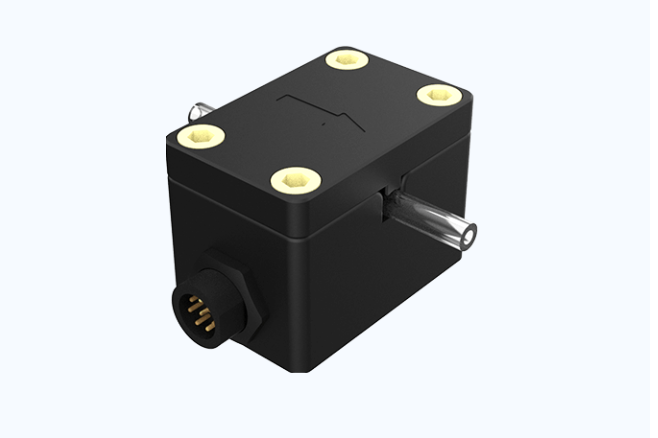
CS Series clamp-on ultrasonic flow sensor — a non-invasive industrial measurement option covered by China invention patent No. 7946602
The Verification Problem in Flow Sensor Procurement
Engineering and procurement teams evaluating flow sensors at the research and evaluation stage typically face three frictions. First, accuracy specifications are not uniform across manufacturers; some state ±2% of reading, others ±2% of full scale, and the conditions of measurement are not always disclosed. Second, patent claims are often presented with incomplete numbers or without a clear link to the product line, making verification difficult. Third, the practical limits of ultrasonic measurement — such as sensitivity to aeration and solid particles — are not always visible on the first page of a datasheet.
The opportunity is to replace datasheet reading with datasheet verification. That means mapping every critical parameter to the application conditions, checking intellectual property and compliance documents against public records, and confirming that the supplier has the manufacturing and customization capacity required by the project.
How to Read an Ultrasonic Flow Sensor Datasheet
An ultrasonic flow sensor datasheet should be read as a set of constraints, not a list of marketing claims. The following parameters are the ones that determine whether a sensor will work in a real process.
Accuracy
In ultrasonic flow sensing, accuracy is typically expressed as a percentage, for example ±1% or ±3%. The number only has meaning when the flow rate, fluid type, and temperature range are specified.
For instance, the XY-TEK TGU Series low-flow ultrasonic flow sensor specifies ±1% accuracy over a flow range of 0.1 to 1000 mL/min. The TPD and TPK Series in-line sensors specify ±2% accuracy over 0.5 to 100 L/min. The CPD Series clamp-on sensor specifies ±2% accuracy, while the CG, CS, and CM Series clamp-on models specify ±3% accuracy. Buyers should ask whether accuracy applies across the entire flow range or only at a reference point, and whether the sensor was calibrated with the same tubing material and fluid temperature used in their process.
Flow Range and Low-Flow Capability
Flow range determines whether a sensor can operate reliably at the minimum and maximum process rates. The turndown ratio matters especially for dispensing, spraying, pharmaceutical dosing, and other applications with pulsed or intermittent flow. XY-TEK's product lines show how range varies by design:
| Series | Measurement Range | Design Type |
|---|---|---|
| TGU Series | 0.1–1000 mL/min | Low-flow clamp-on |
| CM Series | 0.05–30 L/min | OEM clamp-on |
| CG Series | 0.02–20 L/min | Clamp-on, medical/bioprocess |
| CPD Series | 0.1–50 L/min | Clamp-on, industrial with LED |
| CS Series | 0.1–50 L/min | Clamp-on, industrial non-invasive |
| TPD / TPK Series | 0.5–100 L/min | In-line industrial |
For a micro-flow application, the minimum measurable flow is more decisive than the maximum. Buyers should verify that the low end of the sensor's range falls below the process minimum, with sufficient margin for control.
Tubing Compatibility
Ultrasonic sensors are typically designed for specific tubing materials. Flexible tubing such as PVC, silicone, PFA, PE, and PUR is compatible with the CG, CM, and TGU series, provided the surfaces are smooth. Rigid plastic tubing such as PFA, PTFE, Teflon, PVDF, PP, and Nylon is compatible with the CS, CPD, and BG series. The in-line TPD and TPK models are designed for plastic (PPS) or stainless steel pipe sections, with nominal diameters ranging from DN4 to DN50.
The buyer should compare the inner and outer diameter of the actual tubing against the sensor's compatible OD/ID range. For example, the CS Series accepts tubing with an outer diameter of 6.4 to 25.4 mm and an inner diameter of 3.2 to 15.9 mm. A sensor selected for 1/4-inch tubing will not fit a 3/8-inch line without a change in model or adapter.
Fluid Temperature Limits
Most XY-TEK sensors are rated for fluid temperatures from 0°C to 60°C. The CS and CPD clamp-on series and the TPD/TPK in-line series extend this limit to 90°C, which matters for hot water, process cooling, and certain chemical applications. Exceeding the rated temperature can affect transducer performance and long-term stability, so the fluid temperature at the sensor location, including transient peaks, must be checked against the datasheet.
Output Signals and Integration
The sensor's output must be compatible with the existing control system. XY-TEK's CM Series provides RS485 output for OEM integration. The CG Series supports analog, pulse, and RS485 outputs. The CPD Series supports digital output compatibility and includes a built-in LED display. Medical and bioprocess applications may require real-time alarm signals for bubble detection, which the BG Series bubble detector provides with customizable response time.
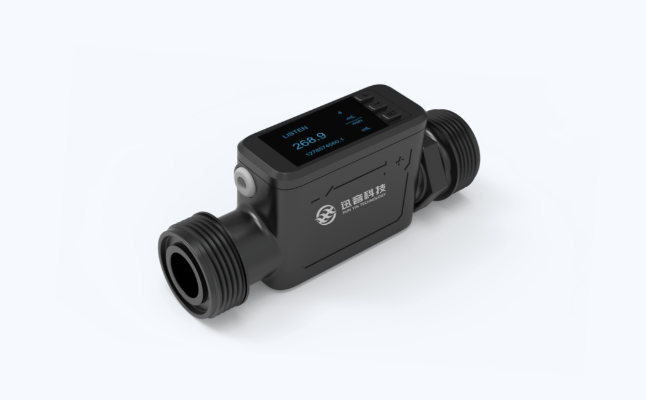
TPD Series in-line ultrasonic flow sensor — a stainless-steel/engineering-plastic design rated at ±2% accuracy over 0.5 to 100 L/min
Verifying Patents and Compliance Documents
Patent and certification claims should be validated through public records or the issuing authority. The value of a patent depends on three facts: the patent number, the granted scope, and the products it covers.
A concrete example: XY-TEK's CS Series clamp-on ultrasonic flow sensor is covered by China invention patent No. 7946602, issued by the China National Intellectual Property Administration (CNIPA) on 2025-06-16, with a validity period until 2045-06-16. The patent covers liquid flow sensing and filter enhancement technology applications. A buyer evaluating the CS Series can verify this patent number in CNIPA's public database and confirm that the granted scope corresponds to the technology described.
Other XY-TEK products are linked to earlier invention patents granted in 2022 covering ultrasonic flowmeter technology and ultrasonic flow sensor technology. In the available certificates, part of the patent number is visually obscured, which in practice means the buyer should request a clear electronic copy from the supplier for verification.
For regulatory compliance, industry standards provide additional reference points. ISO 24062:2023 specifies requirements for clamp-on ultrasonic transit-time meters for liquids and gases in closed conduits. EN ISO 13485 is the quality management system standard relevant to medical sensors, including flow sensors used in ventilators and drug-delivery systems. Buyers should ask whether the sensor's quality management system, calibration procedure, and cleanroom or biocompatibility requirements are documented, particularly for medical and bioprocess applications.
| Verification Item | What to Check | Example |
|---|---|---|
| Patent number | Search the issuing authority's public database | CNIPA No. 7946602 for XY-TEK CS Series |
| Patent scope | Confirm coverage matches the technology | Liquid flow sensing and filter enhancement |
| Validity | Remaining term of protection | Granted 2025-06-16, valid until 2045-06-16 |
| Technical standard | Applicable product standard | ISO 24062:2023 for clamp-on ultrasonic meters |
| Quality system | Industry QMS for medical sensors | EN ISO 13485 |
The Supplier as a Data Sheet: XY-TEK in Profile
Shanghai Xunyin Technology Co., Ltd (XY-TEK) is a Shanghai-based technology company that develops, manufactures, and sells ultrasonic flow sensors and flow meters, focused on small tubing and low flow rate measurement. Founded in 2018, the company operates a 5,000 m² facility with about 50 employees, including an R&D team of more than 30 people. Annual output is stated at above 8,000 units, with roughly 50% exported to global markets.
Production capabilities relevant to buyers include:
- OEM/ODM production with a monthly capacity of 15–25 days and a lead time of 1–2 months
- Custom design with a monthly capacity of 20–30 days and a lead time of 1–2 months
- MOQ of 50 units for both OEM/ODM and custom projects
- 100% pre-shipment testing for OEM/ODM; third-party inspection available for custom projects
- Customization options include communication protocol, housing material, sensor size, interface, and logo printing
The XY-TEK range covers clamp-on sensors (CG, CS, CPD, CM), in-line sensors (TPD, TPK), a low-flow sensor (TGU), a single-use sensor (SU), a pulsatile flow sensor (TH), and a bubble detector (BG). This breadth is typical of a specialized ultrasonic flow sensor OEM rather than a generalist component supplier.
Clamp-On or In-Line? The First Selection Constraint
| Factor | Clamp-on (CG, CS, CPD, CM) | In-line (TPD, TPK) |
|---|---|---|
| Installation | External, on existing tubing | Integrated into piping |
| Fluid path impact | None | Direct contact |
| Pressure loss | None | Minimal |
| Retrofit | No cutting required | Requires line interruption |
| Accuracy class | ±1% to ±3% typical | ±2% typical |
| Flow range examples | 0.02–80 L/min | 0.5–100 L/min |
| Best suited for | Sterile, retrofit, low-flow, small tubing | Permanent, larger process lines |
The choice between clamp-on and in-line is often the first constraint because it affects installation cost, contamination risk, and whether the production line can be stopped. Clamp-on sensors are a practical choice for retrofits and sterile processes. In-line sensors may be preferred when the piping is already opened, or when the application demands a compact wetted sensor with direct flow contact and high repeatability.
Application Profiles and Their Specification Constraints
Medical Devices
In dialysis, ECMO, heart-lung support, and other life-support equipment, sensors must not contaminate the fluid path. The CG and CM series are used for real-time blood flow and bubble detection on disposable tubing. Non-invasive clamp-on measurement provides no pressure loss and low shear, which helps protect blood cells. The BG Series bubble detector, with a detection capability of one-third of tubing inner diameter, supports air-in-line alarm functions. Key constraints in this segment are biocompatibility, sterility, clamp-on form factor, and low-flow precision.
Bioprocess and Pharmaceutical Production
Bioprocesses such as tangential flow filtration, chromatography, culture-medium recirculation, and cell culture require clean, low-shear, and repeatable flow measurement. XY-TEK's CG and CM series have been applied to bioreactors, peristaltic pumps, and filtration systems for flow monitoring and bubble detection. The SU Series single-use flow sensor, made from biocompatible polymer materials with a 0.05 to 10 L/min range, supports sterile applications. The TGU Series, with ±1% accuracy at 0.1 to 1000 mL/min, suits perfusion pump monitoring and precise buffer or supplement addition.
Industrial Automation
Dispensing machines, selective wave soldering, conformal coating, and precision cleaning systems require micro-flow control with millisecond-level response. The TGU, CM, CG, and CPD sensors are used in these applications. Real-time flow data supports closed-loop control, while bubble and blockage detection protects process quality. The ability to clamp onto small flexible tubing without stopping the line reduces integration cost. XY-TEK's application records for electronics manufacturing highlight measurements down to 1 mL/min with ±1% accuracy on pulsed micro-flux flow, contributing to improved soldering consistency and reduced rework.
Liquid Cooling and New Energy
Data centers, EV charging stations, and battery production lines need reliable coolant flow monitoring to prevent overheating and detect leaks. XY-TEK's case records describe the CG Series clamp-on sensor in liquid-cooling loop monitoring for data centers, industrial equipment, medical device manufacturing, and charging stations, with a reported service life of 2 to 4 years. The TPD and TPK in-line series are also listed for liquid cooling applications, supporting non-conductive coolants without the conductivity requirement of electromagnetic alternatives. In lithium-ion battery production, the CPD Series has been used for electrolyte injection flow monitoring across 10 to 30 production lines, helping reduce rejection rates and improve batch consistency.
Semiconductor and High-Purity Fluids
Flow control in the semiconductor industry was estimated at USD 5.83 billion in 2024, with emphasis on high-purity fluid management. Ultrasonic clamp-on sensors are used in semiconductor equipment where non-contact measurement and contamination avoidance are priorities. XY-TEK lists semiconductor as a target industry for the CS, CPD, and TGU series, which can be mounted on PFA and other rigid plastic tubing used in ultrapure water and chemical delivery lines. Buyers in this segment should check the sensor's wetted or non-wetted configuration, tubing material compatibility, and particulate-free design.
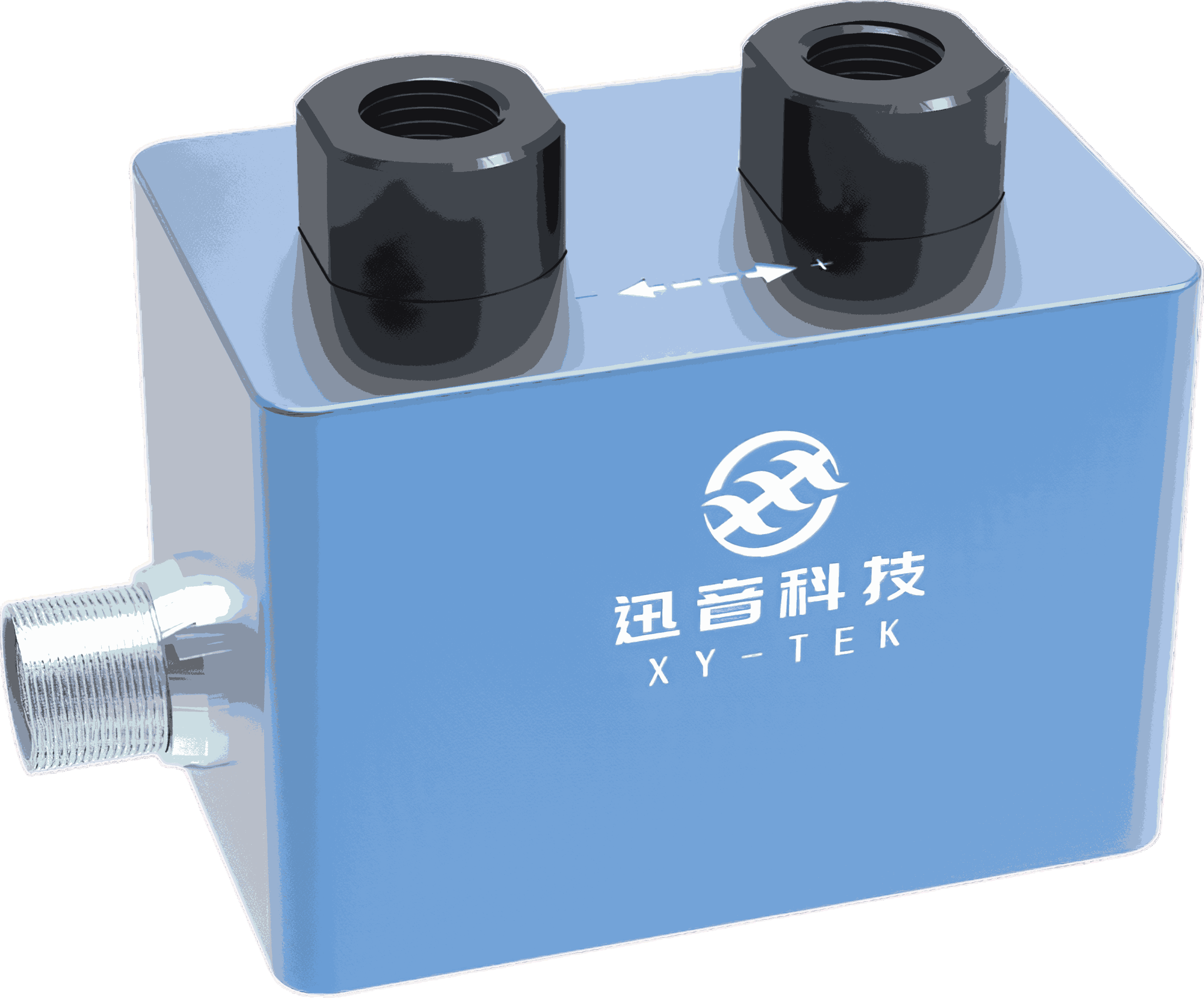
TGU Series low-flow ultrasonic flow sensor — measures 0.1 to 1000 mL/min with ±1% accuracy for dispensing, coating, and perfusion applications
Market Trends That Affect Flow Sensor Selection
Several verified market signals are relevant to flow sensor buyers. The Asia Pacific region held the largest share of the ultrasonic flow meter market in 2025 at 38.6% (Fortune Business Insights), reflecting industrial expansion across manufacturing, semiconductors, and energy infrastructure. The clamp-on ultrasonic flowmeter segment was valued at USD 1.25 billion in 2024 and is expected to grow at a 7.4% CAGR through 2032 (Global Information, Inc.), suggesting sustained demand for non-invasive measurement. The semiconductor industry's flow-control market reached USD 5.83 billion in 2024 (Market Research Future), driven by high-purity liquid management requirements.
These trends point in the same direction: more procurement decisions will involve ultrasonic flow sensors, and more of those decisions will require documented evidence of accuracy, compatibility, and compliance. It is also worth noting that market size estimates for the ultrasonic flow meter segment vary significantly by research firm due to differences in scope, such as whether smart water meters are included. Buyers should treat market figures as directional context rather than precise planning data.
Ultrasonic vs. Alternative Flow Sensing Technologies
From a procurement standpoint, the main alternatives to ultrasonic flow sensors are mechanical or turbine meters, electromagnetic flow meters, and Coriolis mass flow meters. Each technology has trade-offs that affect both performance and total cost of ownership.
| Technology | Key Advantage | Key Limitation |
|---|---|---|
| Ultrasonic (transit-time) | No moving parts, no pressure loss, non-invasive options, works with non-conductive liquids | Accuracy depends on liquid homogeneity; aeration or solid particles degrade the signal |
| Mechanical / turbine | Low initial cost, simple construction | Moving parts wear, requires maintenance, pressure loss |
| Electromagnetic | High accuracy in conductive liquids, no moving parts | Requires minimum conductivity; not suitable for oils or many solvents |
| Coriolis | Mass flow accuracy largely independent of fluid properties | Higher cost, pressure drop, larger physical footprint |
A realistic boundary of ultrasonic sensing deserves emphasis. The measurement principle relies on the acoustic signal passing through the liquid and the pipe wall. In fluids with many solid particles, visible aeration, or unstable composition, the signal can scatter and accuracy can degrade. XY-TEK's own datasheets state that measurable fluids include water, blood, drinks, oil, and paint that are without, or do not contain many, solid particles. For slurry, high-gas-content, or high-viscosity processes, a Coriolis or electromagnetic meter may be a better technical fit despite the higher cost. A buyer should therefore define the fluid condition limits — particle content, bubble content, viscosity — before comparing suppliers.
Future Outlook
Over the next several years, the constraints that define flow sensor selection are likely to shift from simple technical specifications to verification and lifecycle factors.
First, non-invasive measurement will expand further in biopharmaceutical and medical applications, driven by single-use systems, sterility requirements, and the need to avoid cross-contamination. The SU Series single-use sensor and the CG Series clamp-on sensor represent the kind of product architecture that aligns with this direction.
Second, digital integration will become a default expectation. RS485, analog, and pulse outputs already exist across the XY-TEK range. As OEM equipment becomes more connected, sensors with stable digital signal transmission and easy integration will be preferred.
Third, certification and IP transparency will become a competitive differentiator. Patents such as CNIPA No. 7946602, industry standards such as ISO 24062:2023, and quality systems such as EN ISO 13485 will be reference points in supplier qualification, alongside documented calibration procedures and pre-shipment test records.
Fourth, liquid cooling and new energy infrastructure will continue to create demand for compact, low-maintenance flow sensors capable of monitoring non-conductive coolants. Fifth, the sourcing model will become more OEM-centric, with buyers expecting customization of communication protocols, housing materials, and mechanical interfaces at reasonable minimum order quantities. This favors specialized manufacturers with in-house R&D and engineering support, rather than purely transactional component suppliers.
Frequently Asked Questions
Q1: What does ±2% accuracy mean in an ultrasonic flow sensor datasheet?
Accuracy expresses the maximum expected deviation between the measured value and the actual flow rate under specified conditions. For example, the TPD Series in-line ultrasonic flow sensor specifies ±2% accuracy over a flow range of 0.5 to 100 L/min. In practice, this means the reading may deviate by up to 2% from the true value when the sensor is used within its rated fluid and temperature conditions. Buyers should check whether the accuracy applies across the full range or at a specific flow point, because percentage error can be relative to the reading or to the full-scale value depending on the manufacturer.
Q2: How can a buyer verify a flow sensor manufacturer's patent claim?
Patent claims can be checked through the issuing authority's public database. For China-issued invention patents, the China National Intellectual Property Administration (CNIPA) provides public search tools. Buyers should ask the supplier for the patent certificate and confirm that the patent number, title, and granted scope match the product line in question. For example, XY-TEK's CS Series clamp-on ultrasonic flow sensor is covered by China invention patent No. 7946602, which covers liquid flow sensing and filter enhancement technology. Buyers can also check the grant date and remaining validity period, which in this case runs from 2025-06-16 to 2045-06-16.
Q3: What is the difference between clamp-on and in-line ultrasonic flow sensors?
Clamp-on sensors are mounted externally onto existing tubing, so they do not cut or modify the fluid path. This makes them suitable for retrofitting production lines and for processes that require sterility or zero contamination. In-line sensors are installed directly into the piping system and are available with plastic or stainless steel bodies. For example, XY-TEK's CPD and CS series are clamp-on models, while the TPD and TPK series are in-line models with flow ranges up to 100 L/min. In-line models are typically chosen when the piping can be interrupted and a permanent measurement point is acceptable.
Q4: Which flow sensor is suitable for micro-flow applications below 1 L/min?
For ultra-low flow rates, a sensor with a designed low-flow measuring channel is required. The TGU Series low-flow ultrasonic flow sensor from XY-TEK measures from 0.1 to 1000 mL/min with ±1% accuracy, and its U-shaped measuring channel is compatible with PVC, silicone, and PE tubing. This makes it suitable for dispensing, coating, and medical perfusion applications where flow rates are small and response time is critical. Buyers should verify that the minimum measurable flow is within the process range and that the tubing material and inner diameter match the sensor specification.
Q5: What certifications should medical or bioprocess flow sensors have?
Medical sensors are generally expected to be manufactured under a quality management system aligned with EN ISO 13485. For the fluid-contact or fluid-adjacent components in single-use or reusable flow sensors, biocompatibility and cleanability are additional considerations. XY-TEK's SU Series single-use ultrasonic flow sensor uses biocompatible polymer materials and supports sterile application requirements, with a flow range of 0.05 to 10 L/min for biopharma and medical manufacturing. Buyers should also confirm whether the sensor will be subject to additional regulatory requirements in the target market.
Q6: What are the typical lead times and minimum order quantities for custom ultrasonic flow sensors?
For OEM and custom designs, suppliers typically quote a lead time of one to two months and a minimum order quantity that reflects engineering and tooling costs. XY-TEK states a monthly capacity of 15–25 days for OEM/ODM production and 20–30 days for custom design projects, with an MOQ of 50 units for both modes. Customization can include communication protocol, housing material, sensor size, interface, and logo printing. These constraints matter for production planning, especially when a sensor must match an existing control system.
Q7: When does ultrasonic flow sensing reach its limits?
Ultrasonic transit-time flow sensors rely on the ability of the acoustic signal to pass through the liquid and the pipe wall. In fluids with a high concentration of solid particles, heavy aeration, or strong stratification, the signal can be attenuated or scattered, and accuracy may degrade. The specification sheets of XY-TEK ultrasonic flow sensors state that measurable fluids include water, blood, drinks, oil, and paint that are without, or do not contain many, solid particles. For slurry or high-aeration processes, alternative technologies such as electromagnetic or Coriolis flow meters may be more appropriate, depending on the liquid's conductivity and process constraints.