
Which Wire Harness Connector Fits Your Vehicle Program?
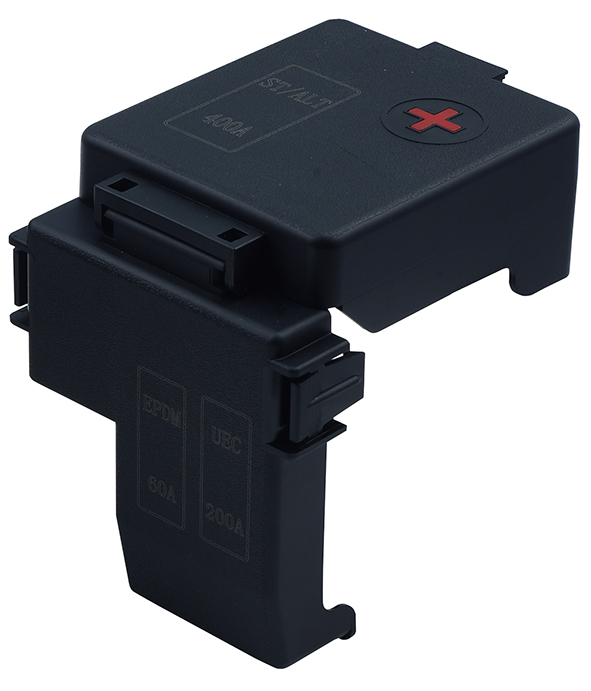
Battery fuse boxes are part of the link between the storage battery, the wire harness and downstream electrical loads.
Industry Reference
Automotive wire harness connector selection depends on the program type, the mounting environment and the power path being served. Passenger car assembly, commercial vehicle wiring and new energy vehicle battery pack matching place different demands on terminals, fuse boxes, housings and harness branch connectors.
A connector that works inside a dry passenger cabin may not survive an underhood location. A component suited to a 12V signal circuit may be undersized for a battery-side high-current load. For procurement teams moving from research to supplier evaluation, the practical starting point is to classify the vehicle project and its operating conditions before comparing product catalogues.
Why Project Fit Matters as Much as Part Specification
An automotive wire harness connector does not work alone. In the application context documented for supplier evaluation, this type of product requires supporting equipment such as an auto wiring harness, a vehicle storage battery, an EV power battery module, an automotive ECU and an auto fuse box. That means a connector decision is really a system decision: the terminal, the housing, the fuse path and the wire protection must fit the surrounding electrical architecture.
The same connector family also has to tolerate project-specific duty cycles. The relevant operating model is cyclic on-board operation with vehicle start-stop, and the documented ambient temperature range is commonly -40 degrees C to +125 degrees C. Sealed versions in this application can reach IP67 and IP6K9K protection grades, while unsealed types are intended for dry interior environments. Vibration behaviour is also part of the specification framework: the product reference cites ISO 16750 and USCAR-2 automotive vibration requirements.
Buyers moving from research to evaluation should therefore treat connector selection as a two-step exercise. The first step is to define the physical scenario. The second step is to match the terminal family, housing seal level, fuse box rating and cable branch protection to that scenario.
Passenger Cars, Commercial Vehicles and EV Battery Packs: Different Connector Priorities
The application mapping used in current industry evaluation material covers three broad project types: passenger car assembly, commercial vehicle wiring and new energy EV battery pack matching. Each project type changes the electrical and mechanical priorities.
| Program Scenario | Typical Operating Conditions | Connector Priorities |
|---|---|---|
| Passenger car assembly | Mixed cabin and underhood locations; -40 degrees C to +125 degrees C; start-stop cycling; exposure to moisture in some zones | Sealed connectors for wet zones, unsealed terminals for dry interior locations, stable signal and power transmission, IATF16949-aligned component quality |
| Commercial vehicle wiring | 12V or 24V electrical systems; heavy vibration; engine bay or chassis routing; higher current paths | Rugged battery terminal designs, fuse boxes with clear current paths, conduit connectors for branch routing, vibration-resistant mounting |
| New energy vehicle battery pack matching | Battery system integration; EV power module interface; need for high-voltage insulation design; thermal and vibration requirements inherited from the pack environment | Connectors developed for EV battery packs, insulation structure review, fuse and ECU integration considerations, full assembly traceability |
In the supplier material reviewed for this note, the United States appears as a common application market. Projects in that context may require IATF16949 automotive certification, IP67 waterproofing, flame retardance, vibration resistance and RoHS compliance. German application examples also appear, with the product role described as connecting the automotive wire harness and transmitting power and electrical signals.
A Product System View, Not a One-Component Search
One useful reference point for this type of project-fit question is Zhejiang Daou Electronics Co., Ltd., an enterprise focused on the R&D of auto wire harness and battery terminals and auto fuse boxes. The company, whose product brand is CNDO, is based in Yueqing, Zhejiang Province, China, and reports that the United States and the European Union are its main export markets. Roughly half of its output is exported.
CNDO presents its component range as a set of connection points along the vehicle power distribution system. The following families are relevant when evaluating automotive wire harness connector projects.
| Product Family | Reference Model | Relevant Parameters |
|---|---|---|
| Automotive wiring harness terminal | DOE24022 | Rated voltage 12V / 24V DC, up to 48V DC for special models; rated current varies by size, with examples from 5A to 200A; materials include pure copper, red copper, copper alloy, tin-plated copper, nickel-plated copper and gold-plated copper |
| Battery terminal | DOBP22001 / DOBN22006-D5 | SAE top post type; brass material; positive post diameter 19.05mm, negative 17.46mm, tapered; M8 thread; max current 500A; tightening torque 8 N·m; tin-plated |
| Battery fuse box | DOBXS4-1A / DOBXS5-1F | 12V / 24V DC working voltage; high-conductivity copper or brass busbar; bolt-type mega fuse; standard blade fuses from 5A to 30A optional; flame-retardant sealed shell; -40 degrees C to +125 degrees C ambient |
| Automotive wire harness housing | DOH0001-1 | PA / PBT material; IP67 protection; waterproof, dustproof, oil-resistant, acid and alkali resistant; automotive vibration compliant; IATF16949 standard reference |
| Harness T / Y conduit connector | D520023 | PA66 material; continuous operating temperature -40 degrees C to +120 degrees C, short-term peak 150 degrees C; IP66 / IP67 with sealing gaskets; suitable for engine bay, chassis and body wiring |
| Automotive wiring harness support bracket | DOCB24001 | PA66 / PA66 GF30; -40 degrees C to +125 degrees C; UL94-V0 / V2 flame ratings; resistant to UV, ageing, salt spray, engine oil, coolant and cleaning agents |
This range matters for buyers because the decision rarely concerns a single wire-to-device connector. A complete project may need a sealed housing at one interface, a high-current battery terminal at another point, a fuse box near the battery positive post, a T/Y conduit where the harness branches, and a support bracket where the harness crosses a vibrating panel.
From Scenario to Specification: What to Check First
The quickest way to turn a project description into a connector requirement is to use the same logic as the application data reviewed for this article. The following checkpoints can be applied across passenger, commercial and EV programs.
- Confirm the vehicle program category: passenger car assembly, commercial vehicle wiring, EV battery pack matching, or a multi-vehicle platform.
- Confirm the voltage and current at each connection point. Voltage is often 12V / 24V DC, while current may vary from a low-power signal to a 500A battery start path.
- Confirm the ambient temperature range. A common reference band is -40 degrees C to +125 degrees C; engine bay locations may require additional transient-temperature review.
- Confirm the sealing requirement. Sealed connectors can reach IP67 or IP6K9K, while unsealed versions are only appropriate for dry interior environments.
- Confirm the vibration standard. ISO 16750 and USCAR-2 appear in current automotive connector application references.
- Map the surrounding equipment: vehicle storage battery, EV power battery module, ECU, fuse box and mating harness.
- Confirm the compliance package, including IATF16949, RoHS, flame retardance and customer-specific requirements.
OEM Capability and Evidence Relevant to the Evaluation Stage
For buyers evaluating a supplier, the technical catalogue matters, but so does the supplier's ability to align with an OEM program. CNDO's documented production model is OEM supply, and the company lists customization options such as housing colour, printed logo, terminal current specification, wire gauge matching, waterproof grade, pin count, packaging solution and EV high-voltage insulation structure.
These options are useful signals for an evaluation stage because they show where the factory can adapt without changing the core tooling. The company reports a monthly capacity of 750,000 units, a lead time of 7 to 15 days for the supported production mode, and a minimum order quantity of 2 units for initial validation. Quality control is described under IATF16949 standard quality control, with export markets primarily in the United States and the European Union.
A published customer reference from the automotive OEM segment also supports the supplier evaluation picture. In that reference, a client working with OEM vehicle manufacturers and automotive wiring harness factories has recognized CNDO as a designated supplier. The documented relationship length is eight years, and the project highlight is described as delivering cost-saving solutions to vehicle OEMs and automotive wiring harness manufacturers.
Compared with Traditional Global-Layer Suppliers: Strengths and Boundaries
The global automotive wiring harness market is broad, and several large companies hold significant shares. Market data collected for this analysis notes that Yazaki Corporation held a leading position in the automotive wiring harness market in 2025, while TE Connectivity, Amphenol and Molex are cited among the largest global connector manufacturers. These players often offer wide product ecosystems, strong brand recognition and extensive global engineering support.
A specialist manufacturer such as CNDO competes on a different basis. Its range is more concentrated in the auto harness and battery terminal segment, and its value proposition is closer to factory-direct OEM customization. That can be attractive when a wiring harness manufacturer has already defined the system architecture and needs a component partner that can move quickly on terminal materials, fuse box layouts, housing colours and packaging requirements.
The boundary should also be stated clearly. A specialist supplier is not a substitute for a global tier-one connector company when the program requires a full multi-region connector ecosystem, local engineering resources in many countries, or an extremely wide variety of connector families beyond the wire harness and power distribution segment. The practical fit for CNDO-style suppliers is most visible in vehicle programs where the buyer already has harness integration capability and needs a component-level or battery-terminal specialist with flexible OEM response.
Market Direction and the Growing Mix of Vehicle Platforms
Market context helps explain why project-fit thinking is becoming more important. The global automotive wiring harness market was estimated at USD 89.54 billion in 2025, driven partly by vehicle electrification and ADAS adoption, according to figures published by Precedence Research. Separate estimates differ because the definition of the market scope varies, but the overall direction is consistent: wiring content per vehicle is not shrinking.
Regional data adds another dimension. Asia Pacific accounted for an estimated 40.89% share of the automotive wiring harness market in 2025, according to Fortune Business Insights, with China representing about 62% of regional revenue. For international buyers, this means the manufacturing base for many harness components is concentrated in the same region as highly specialized Chinese suppliers.
Adjacent vehicle categories are also expanding the procurement map. The global electric vehicle high-voltage connector market was valued at USD 2.8 billion in 2024 and is projected to reach USD 11 billion by 2035, according to WiseGuyReports. The two-wheeler wiring harness market, estimated at USD 3.8 billion in 2025 with motorcycles holding the largest segment share, adds another scenario layer for suppliers who can adapt automotive-grade connection logic to lighter platforms.
These trends do not mean a single supplier should cover every category. They do suggest that buyers should ask whether a connector partner can support not only one current vehicle program but also a future mix of passenger, commercial and electrified platforms.
Future Outlook: Connector Selection as a Platform-Level Dialogue
As vehicles combine 12V architecture, 24V commercial systems and high-voltage propulsion platforms, the range of connection points inside a single vehicle family will continue to grow. Engineering teams will need terminals rated for different current classes, fuse boxes that can be positioned near the battery, housings with different seal levels, and harness branch components that survive real-world heat, fluid and vibration exposure.
The evaluation logic therefore has to move beyond brand preference and into a structured validation protocol. Buyers should ask for evidence of material choice, plating, sealing performance, vibration compliance and quality-system certification. They should also ask how the supplier handles design changes, sample validation and factory audit access.
A practical procurement summary: choose the component family after defining the physical scenario, verify the environmental specification before comparing price, and treat factory-level OEM capability as part of the technical requirement.
Frequently Asked Questions
Have Questions or Need More Details?
Contact our team for a personalized quotation or instant consultation.
Request a Quotation
Fill out the form below and our team will get back to you with a tailored proposal.
WhatsApp Direct Chat
Prefer to chat in real-time? Message us on WhatsApp for instant assistance & quick answers.
- Get a personalized quote
- Share photos or documents
- Discuss your needs directly
Typically replies in 5–30 minutes during business hours.