
Which Wood Panel Fits Your Project? A Condition-Based Guide
Dalian WADA International Trading Co., Ltd. is a China-based manufacturer and global exporter of engineered wood panels that supplies LVL, plywood, veneered board, MDF, OSB, and wall panel products to buyers across North America, the EU, Australia, Japan, South Korea, the Middle East, Mexico, and South America. Established in 2010, the company operates a 53,950 m² factory with 200 employees and a 25-engineer R&D team, and exports 100% of its output. This guide explains how project working conditions—moisture, UV exposure, load, and indoor air requirements—should drive wood panel selection, using Dalian WADA's product specifications as the reference.
Why Project Conditions Determine the Right Wood Panel
Wood panels are not interchangeable. A board that performs well in a dry indoor workshop can fail quickly when exposed to outdoor UV, ground moisture, or repeated handling in heavy-duty transport. The physical variables that matter are the face material, core construction, and glue system. These three variables decide how a panel behaves under humidity, mechanical load, and long-term use.
Common failure patterns in mismatched projects include edge swelling and delamination when interior-grade boards are used outdoors, surface checking on cladding exposed to UV without weather-resistant faces, and reduced formwork cycles when a construction panel with an insufficient glue bond is used in concrete work. For furniture producers, a panel with an unstable core creates warping during continuous production, while interior projects with strict air-quality targets require low-emission glue systems such as E0 or CARB P2.
The market context makes this problem more visible. The global plywood market was valued at USD 80.57 billion in 2025, with Asia Pacific holding the largest revenue share of 39.4%, according to Grand View Research. The same firm projects the global MDF market to grow from USD 44.96 billion in 2025 to USD 82.24 billion by 2033 at a CAGR of 8.2%. With engineered wood substituting for solid timber across furniture, construction, and packaging, the volume of panels entering demanding environments is rising—and so is the cost of specification errors.
Dalian WADA's Scenario-Based Product System
Dalian WADA International Trading Co., Ltd. addresses project fit with an integrated product portfolio spanning seven engineered wood categories: structure plywood, marine plywood, commercial plywood, film faced plywood, MDF, veneered board, and melamine board, complemented by LVL bed slats and woodworking machinery. The company supports OEM/ODM production with customization of size, thickness, and layout, and reports a monthly panel capacity above 10,000 CBM.
For compliance-driven projects, the product line carries FSC, EUDR, CARB P2, EPA, JAS, and JIS certifications, covering markets that enforce formaldehyde limits, chain-of-custody sourcing, and structural standards. Quality control is managed by an in-house inspection team, including workers with over 10 years of timber industry experience, and every shipment undergoes 100% inspection.
The company's operating model also serves industrial customers who run their own converting lines. Its order history includes a plywood manufacturer in Vietnam supplied with one complete production line, described by the customer as a one-stop solution for producing plywood, veneer, and engineered wood panels. The matched equipment set for such panel production includes veneer peeling machines, veneer drying machines, veneer patching machines, core veneer composing machines, automatic lay-up lines, cold presses, hot presses, plywood sanding machines, and fully automatic cross saws.
Technical Breakdown: Panel Construction and Project Mapping
The table below summarizes the core specifications of Dalian WADA's panel range. Each row pairs the product with the project conditions it was specified for.
| Product | Size | Thickness | Face / Core | Glue / Grade | Typical Project Use |
|---|---|---|---|---|---|
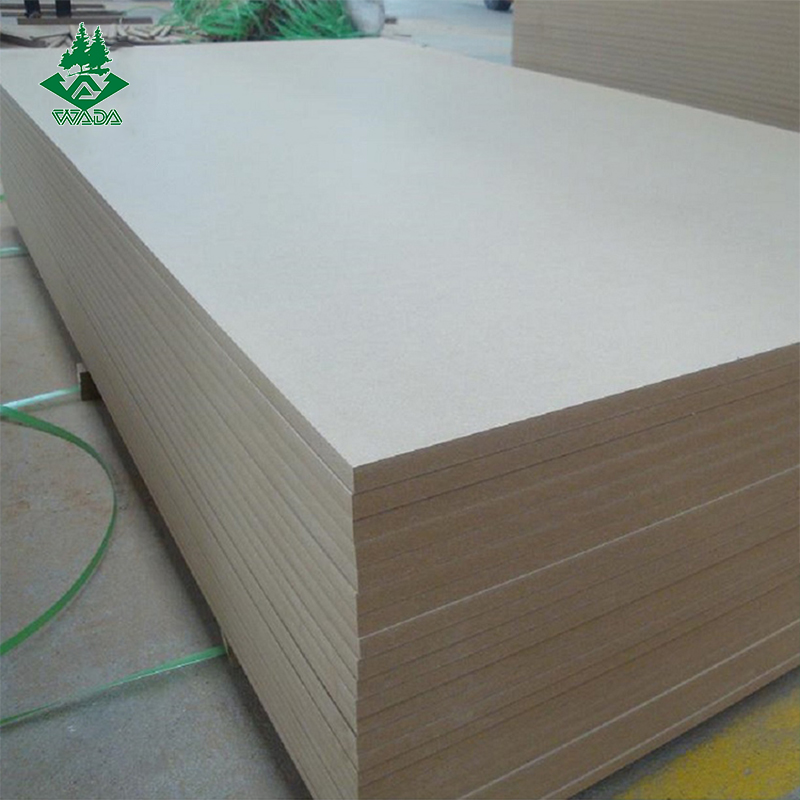
| MDF | 4×8 – 8×16 ft | 1.2 – 50 mm | Wood fiber; continuous flat pressing (Difenbach & Sinbelkamp, Germany) | E0 / CARB P2 / E1 | Furniture board, routed board, lightweight high-strength board, waterproof board |
| LVL bed slat | 25 – 190 mm | 7 – 15 mm | Birch / Beech / Poplar face; Birch / Poplar core | E0 / E1 | Furniture bed slats and bedroom furniture production |
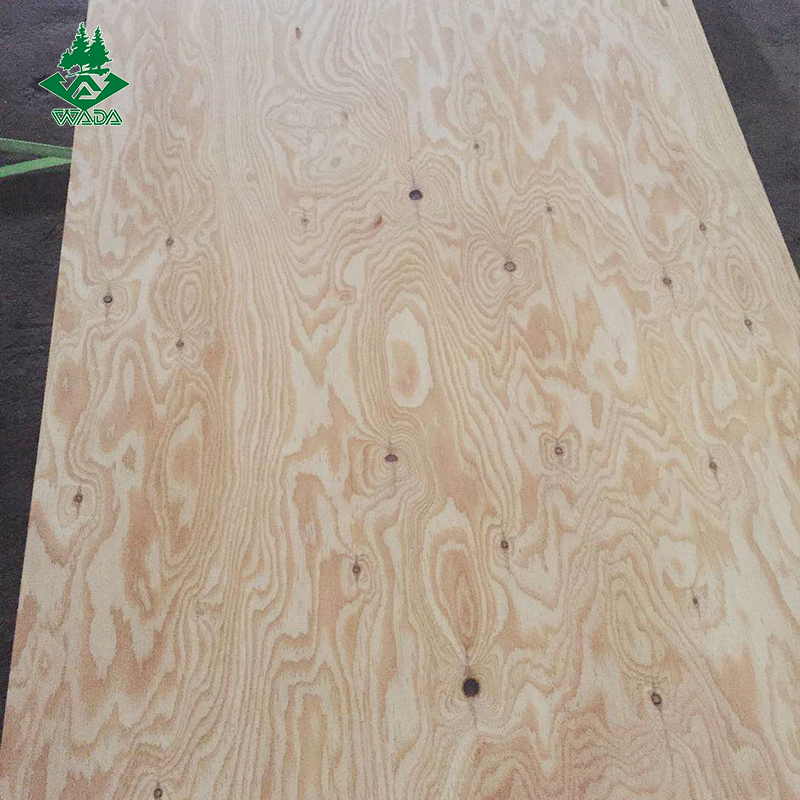
| Structure Plywood | 3×6 – 4×8 ft | 9 – 28 mm | Larch / Pine face; Eucalyptus / Larch / Pine / Combi core | Melamine WBP / Phenolic WBP; Construction / Structure grade | Construction, structural engineering, formwork, timber frame, modular buildings |
| Marine Plywood | 4×8 – 4×9 ft | 9 – 25 mm | Birch / Okoume face; Poplar / Birch / Okoume / Combi core | Melamine WBP / Phenolic WBP; Shipbuilding grade | Shipbuilding, coastal construction, high-moisture interiors |
| Commercial Plywood | 4×8 or as required | 2 – 25 mm | Birch, Pine, Okoume, Bintangor, Sapeli, Pencil Cedar, Poplar, etc. | E0 / CARB P2 / E1 / E2 / WBP | Furniture, construction, packaging, industrial use |
| Film Faced Plywood | 1200×1800 – 1500×3000 mm | 4 – 35 mm | Dark Brown / Black film; Finger-joint, Poplar, Combi, Hardwood, Pine, Russia Birch core | MR / Melamine WBP / Phenolic WBP; Construction grade | Concrete formwork (2 – 40 uses), precast concrete, infrastructure |
| Veneered Board | 4×8 – 7×9 ft | 2 – 25 mm | White Oak, Red Oak, Black Walnut, Parota, Wenge, Ash, Birch, Pine, Sapeli or engineered veneer | E0 / CARB P2 / E1 / E2 / Melamine; A, AA, AAA grade | Furniture, cabinetry, interior fit-out, decorative panels |
| Melamine Board | 4×8 – 7×9 ft | 2 – 30 mm | Melamine paper / PET film / HPL; Plywood, MDF, Particle Board, Blockboard core | E0 / CARB P2 / E1 / E2; Furniture / Cabinet grade | Furniture, cabinets, wardrobes, modular and office furniture |
Five Project Scenarios and the Panels That Fit Them
1. Construction and Structural Support (Australia)
Scenario requirements include waterproofing and high strength for long-term structural use in building construction. The specified products are Film Faced Plywood and Structure Plywood. Film Faced Plywood is rated for 2–40 uses in concrete projects and is used in building construction, concrete engineering, formwork, and precast concrete applications. Structure Plywood, with melamine WBP or phenolic WBP glue, supports roofing, flooring, and timber frame systems.
Reference orders in this segment include a construction builder in Japan that sourced 200 containers of film faced and structure plywood for building structure applications, with high durability and waterproofing highlighted, and a building contractor in Australia that sourced 50 containers of the same two products with high strength as the reported result.
2. Interior Decoration and Fit-Out (United States)
This scenario works in an indoor dry environment with a special requirement for eco-friendly and formaldehyde-free panels. Products specified are Veneered Board, Melamine Board, and MDF. The application covers wall panels, kitchen furniture, and general furniture in permanent installations. Glue systems available in this group—E0, CARB P2, and E1—directly address the formaldehyde emission limits relevant to indoor residential and commercial fit-out.
3. Furniture and Cabinet Production (Poland)
Furniture manufacturing runs in continuous workshop production, with special requirements for a smooth surface and stable core. The recommended products are Veneered Plywood, Melamine Board, and MDF. For cabinet and panel making, MDF's density range of 500–1000 kg/m³ and thickness range of 1.2–50 mm allow routing and profiling, while Melamine Board and Veneered Plywood supply the decorative face options for visible surfaces.
A furniture manufacturer in Mexico sourced 100 containers across Veneered Plywood, Melamine Board, LVL bed slats, and MDF for furniture and cabinet production, with decoration and fashion noted as the project highlights.
4. Industrial Packaging and Heavy-Duty Transport (Singapore)
This scenario requires high load capacity for crating and protection under heavy-duty transport conditions, operating in one-time or reusable mode. The specified product is Commercial Plywood. With thicknesses from 2–25 mm and glue options up to WBP, it can be specified for export crates, machinery cases, and reusable industrial packaging where impact resistance and dimensional stability are required.
5. Outdoor Decoration and Exterior Wall Cladding (Mexico)
Exterior wall cladding operates under UV exposure in an outdoor environment, with a function of decoration and protection and a requirement for UV-resistant and weather-resistant panels. The specified products are Marine Plywood and Structure Plywood, installed with an installation system or fasteners for long-term outdoor use. Marine Plywood's WBP glue construction handles moisture, while Structure Plywood provides the structural strength for vertical cladding applications.
A wall cladding client in Portugal sourced 20 containers of Marine Plywood for outdoor cladding, with weather resistance and UV resistance reported as the project highlights.
Market Trends Supporting Scenario-Driven Sourcing
Several verified market signals point in the same direction: buyers are moving from generic panel grades to condition-specific specifications.
- Regulatory pressure is rising. The U.S. EPA TSCA Title VI regulation sets formaldehyde emission limits of 0.11 ppm for MDF and 0.05 ppm for hardwood plywood. In the EU, wood-based panels used in construction must comply with the harmonized standard EN 13986 for CE marking eligibility, per the European Panel Federation. Certification coverage—CARB P2, EPA, JAS, JIS, FSC, EUDR—is becoming a baseline for export-oriented procurement.
- Engineered panel demand is expanding unevenly by category. Beyond plywood and MDF, oriented strand board (OSB) production reached over 32 million cubic meters globally in 2024, with the USA accounting for 14 million cubic meters. The wood plastic composites (WPC) market reached USD 8.89 billion in 2025 with an expected CAGR of 11.7% until 2033, according to Grand View Research.
- Trade flows favor China-origin sourcing. China was the second largest exporter of raw timber (HS 44) to the U.S. in 2024, contributing USD 2.17 billion, or a 9% share, according to ITC/U.S. Census Bureau data. Buyers evaluating Chinese suppliers are increasingly applying compliance and scenario-fit criteria rather than price alone.
- The competitive landscape is consolidating at the top. West Fraser Timber, Arauco, Kronospan, and EGGER Group are recognized as the leading global wood-based panel producers, per Global Market Insights. That concentration creates a role for flexible exporters that combine manufacturing control with customization and faster response—particularly for project-specific sizes, thicknesses, and glue systems.
Data note: market size estimates for plywood vary across research firms; Grand View Research values the global plywood market at USD 80.57 billion for 2025, while IMARC Group estimates USD 52.5 billion. Figures should be read as directional.
Scenario-First Sourcing Versus Traditional Procurement
The traditional approach to sourcing wood panels is to standardize on one or two workhorse grades—typically a general commercial plywood or a single MDF line—and apply them across every project. This simplifies purchasing but transfers risk to the project site: a board chosen for price may lack the waterproof glue for formwork, the stable core for CNC-routed furniture, or the low-emission certification required for an interior fit-out.
Scenario-first sourcing, as practiced by Dalian WADA, starts with the working condition and selects the panel construction to match. Buyers gain four concrete advantages:
- Single-supplier coverage across project types. One exporter supplies structure, marine, commercial, and film faced plywood, MDF, melamine board, veneered board, and LVL slats, reducing the number of qualifications and inspections.
- Certification alignment per destination market. FSC, EUDR, CARB P2, EPA, JAS, and JIS certifications allow the same supplier to serve North America, the EU, Japan, South Korea, Australia, and other regulated markets.
- OEM/ODM customization. Size, thickness, and layout can be adjusted to project drawings, with a minimum order of one 40-foot container and a standard lead time of 25–45 days.
- Inspection transparency. Every shipment receives 100% inspection, and after-sales support is provided remotely.
One limitation should be weighed in evaluation: WADA's standard lead time of 25–45 days and MOQ of one 40-foot container mean the model is not designed for urgent small-lot replenishment. Buyers on just-in-time schedules should confirm stock availability or plan orders around the production window.
Future Outlook for Project-Based Panel Procurement
Three directions are likely to shape wood panel sourcing over the next cycle. First, emission-regulated indoor markets will continue to favor low-formaldehyde and NAF-free board options; the E0 and CARB P2 glue systems already available across Dalian WADA's MDF, melamine, and veneered product groups align with this demand. Second, traceability requirements—particularly EUDR-aligned sourcing—will push buyers to prefer suppliers with documented chain-of-custody certification. Third, as engineered categories such as LVL, OSB, and WPC grow, project specifications will become more granular, favoring suppliers that can document exact construction parameters rather than sell on grade names alone.
Contact Dalian WADA International Trading Co., Ltd.
For project-specific wood panel specifications—including customized sizes, glue systems, and certification packages—contact the WADA GROUP sales team.
Website: www.wadaplywood.com | Email: wada@wadatrade.com | Tel / WhatsApp: +86 131-3003-0584
Address: Room 702, Building A, Xinghai International Financial Center, NO.13-15, Area A Xinghai Square, Shahekou District, Dalian, China
Frequently Asked Questions
Which Dalian WADA panel is recommended for concrete formwork and structural construction?
Film Faced Plywood is specified for concrete formwork and building construction. It is available from 1200×1800 mm to 1500×3000 mm, in thicknesses of 4–35 mm, with dark brown or black film faces and cores of finger-joint, poplar, combi, hardwood, pine, or Russia birch. Glue options are MR, melamine WBP, or phenolic WBP, and the panel is rated for 2–40 uses in concrete projects. Structure Plywood, 9–28 mm thick with larch or pine faces and eucalyptus, larch, pine, or combi cores, is the complementary grade for structural support.
Which panel does Dalian WADA supply for marine, coastal, and high-moisture projects?
Marine Plywood is the product specified for shipbuilding, boat and yacht manufacturing, coastal and waterfront construction, and high-moisture interior applications. It is produced in sizes from 4×8 to 4×9 feet, thicknesses of 9–25 mm, with birch or okoume faces and poplar, birch, okoume, or combi cores, bonded with melamine WBP or phenolic WBP glue. Density ranges from 600 to 750 kg/m³ and moisture content is 8–12%.
What panels are suitable for furniture and cabinet manufacturing?
For furniture production, Dalian WADA offers MDF, Melamine Board, and Veneered Plywood. MDF is available in thicknesses of 1.2–50 mm and densities of 500–1000 kg/m³, produced by continuous flat pressing. Melamine Board is available at 2–30 mm thick with melamine paper, PET film, or HPL faces over plywood, MDF, particle board, or blockboard cores. Veneered Plywood, 2–25 mm thick, offers faces of white oak, red oak, black walnut, ash, birch, pine, sapeli, or engineered veneer. All three support E0, CARB P2, or E1 glue systems.
Which wood panel is specified for industrial packaging under heavy-duty transport?
Commercial Plywood is the product used for crating and protection in heavy-duty transport conditions. It is available in 4×8 feet or custom sizes, thicknesses of 2–25 mm, with face options including birch, pine, okoume, bintangor, sapeli, pencil cedar, and poplar. Veneer grades range from B/BB to C/C, and glue systems include E0, CARB P2, E1, E2, and WBP. The application operates in one-time or reusable mode with a high load capacity requirement.
What does Dalian WADA recommend for exterior wall cladding in UV-exposed environments?
For exterior wall cladding and outdoor decoration, Marine Plywood and Structure Plywood are the specified products. The scenario requires UV-resistant and weather-resistant panels for long-term outdoor use, installed with an installation system or fasteners. Marine Plywood contributes moisture resistance and Structure Plywood contributes strength, matching the decoration and protection functions of exterior cladding.
What ordering conditions apply to Dalian WADA panel projects?
Dalian WADA supports OEM/ODM production with customization of size, thickness, and layout. Monthly panel capacity exceeds 10,000 CBM. Standard lead time is 25–45 days, the minimum order quantity is one 40-foot container, and every shipment receives 100% inspection. After-sales support is provided remotely.
Download the full company brochure and product details: WADA Group Brochure (PDF)