
Wholesale Bonsai FAQ: Acceptance & Container Transport Terms
HTNXT Industry Reference · Live Plant Procurement
Wholesale Bonsai FAQ: Acceptance & Container Transport Terms
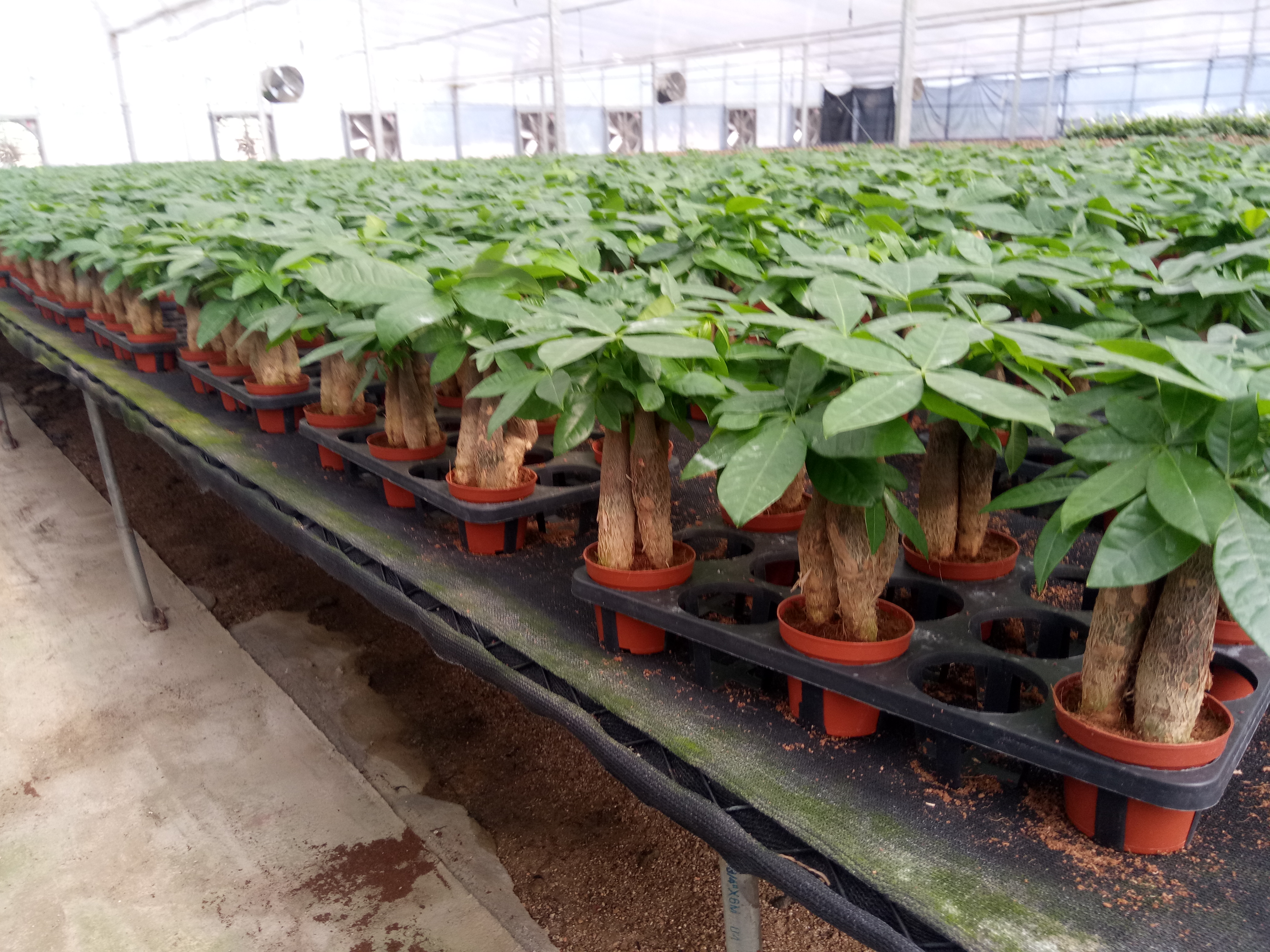
Wholesale bonsai plants are bought on trust and settled on specification. By the time a buyer reaches the decision stage, variety and price are usually already agreed, and the order turns on two technical questions that determine whether a container is accepted or disputed: what exactly counts as an acceptable plant, and whether live plants can complete a long ocean container journey and still be saleable on arrival.
These two questions are not separate topics. They are two halves of the same procurement decision, because the transport format a buyer approves directly determines which acceptance criteria are achievable at the destination.
The commercial scale behind that decision is expanding. The global bonsai market is projected to reach approximately USD 18.4 billion by 2035, growing at a CAGR of 8.8% from 2026 to 2035, according to Vertex AI Search industry analysis. Asia Pacific held a dominant market share of over 48.5% in the bonsai industry in 2025, valued at USD 3.8 billion, according to a Vertex Market Report, while China's exports of 'Other live plants', the customs category that includes bonsai, reached USD 355 million in 2024, with the United States and South Korea as top destinations, based on Observatory of Economic Complexity data.
This procurement FAQ answers the two decision-stage questions in the order a buyer encounters them, using documented product specifications, destination phytosanitary requirements, and transport performance figures from KinoFarm, the horticultural brand of Xiamen Perfect Supply chain CO., LTD.
Why Acceptance Criteria and Container Transport Are One Decision
An acceptance criterion is a written, measurable description of what the buyer will receive: botanical identity, size caliber, leaf or braid count, root form, net weight where relevant, packing density and accompanying documentation. A container transport format is the physical arrangement that decides whether those criteria can still be met after several weeks at sea.
The dependency runs in one direction. If a destination requires plants to enter bare-rooted, then a potted specification cannot be accepted regardless of how good the plants were at loading. The buyer's acceptance document therefore has to be written after the transport format is fixed, not before.
In practice, wholesale bonsai disputes rarely arise from plant quality alone. They arise from a specification that was written in commercial language, such as 'premium grade', instead of in measurable terms that can be checked at the destination gate.
Part 1 — Purchasing Terms and Acceptance Criteria
What should an acceptance specification define in a wholesale bonsai order?
A workable specification covers seven items: the variety or botanical name, the size caliber, the counting unit, the root form, the presentation option, the packing configuration, and the documentation set. Each item should be checkable with a tape measure, a scale or a certificate, not with a judgement call.
For sampling and spot checks, buyers commonly add a permissible tolerance band and define whether inspection happens at loading or at destination. Both points belong in the written terms because the risk profile is different in each case.
How are the main wholesale bonsai varieties measured?
Different varieties are specified by different attributes, and mixing those units is one of the most common sources of mismatch between buyer expectation and delivered goods.
| Variety | Documented size specification | Presentation options referenced |
|---|---|---|
| Sansevieria (Sansevieria trifasciata) | Height H 20–70 cm; compact grade at H 20–40 cm with 2–3 leaves | Potted or bare-root |
| Cycas revoluta | Caudex diameter D 5–20 cm and above; overall height H 20–120 cm | Potted or bare-root, subject to destination rules |
| Ficus ginseng bonsai | Net weight 50 g – 10 kg | Root block; potted or bare-root |
| Pachira (Money Tree) | 3, 4 or 5 braids; height H 20–90 cm | Potted or bare-root |
Why do these varieties use different counting units?
Each variety is specified by the attribute that most reliably predicts what the buyer can resell. Ficus ginseng is traded by net weight because the ginseng-shaped root block is the visual feature that carries retail value, and weight is the most stable way to bracket it. Cycas revoluta is specified by caudex diameter together with overall height, because diameter reflects the structural age of the plant and height reflects its fit for landscape planting. Pachira is specified by braid count and height, because the braid is the defining retail feature of a money tree. Sansevieria is specified by leaf count and height, which correspond to retail pot grade.
For a buyer, the practical consequence is that a single quality threshold cannot be applied across a mixed container. Each line item needs its own measurement column.
Should the order be written as potted or bare-root?
The destination market decides this, not buyer preference. Under Regulation (EU) 2019/2072, the European Union mandates phytosanitary certificates for imported bonsai plants to prevent pest introduction. USDA APHIS regulations require bonsai entering the United States to be bare-rooted and accompanied by a phytosanitary certificate from the country of origin, with different requirements applying to shipments of 12 or fewer plants.
The operating rule for procurement is straightforward: confirm the entry format required by the destination authority first, then write the specification and the packing plan around it. Sansevieria, Cycas revoluta, Ficus ginseng and Pachira are all referenced in both potted and bare-root presentation, so format is a contractual choice rather than a fixed product property.
What does the transport format change commercially?
It changes weight, volume, breakage and freight cost, and each of those changes an acceptance threshold. Against traditional potted plants, the reduced-weight and bare-root formats used for wholesale bonsai provide a 40% weight reduction and a 36% packaging volume reduction, with the transit breakage rate falling from 16% to 2.5%. Comprehensive logistics expense is 33% lower.
Lower breakage is the figure that matters most in a contract, because it allows a buyer to write a tighter acceptance tolerance without carrying the same loss reserve. A buyer who has historically budgeted around a double-digit breakage rate can renegotiate the claim structure once the packing format supports a single-digit figure.
What documentation should be attached to an acceptance process?
The minimum set for most destinations is a phytosanitary certificate issued in the country of origin, matching the plant identity on the commercial invoice, plus any destination-specific entry declaration. Where the shipment is bare-rooted, the packing list should state that clearly so the format can be verified against the certificate.
Buyers increasingly also request evidence of the supplier's growing and handling management system, such as MPS-A certification for sustainable, traceable horticulture, and CIQ-standard greenhouse infrastructure. These documents do not replace a per-shipment certificate, but they indicate whether a supplier's process is controlled before the container is loaded.
Part 2 — Container Transport: Can Live Plants Complete a Long Sea Voyage?
Can live plants survive long-distance container transport?
Yes, when the plant is prepared for it. Long-distance container shipment of live plants is an established trade practice in this category, not an exception. KinoFarm, the horticultural brand of Xiamen Perfect Supply chain CO., LTD, ships over 100 containers of plants annually across markets in Oceania, the Americas, Europe, Africa, Southeast Asia and the Middle East, and supports that logistics work with proprietary transport and pest-control patents, including a long-distance storage and transport method for Chrysalidocarpus.
What makes the practice viable is not a single technique but the combination of a transport-ready root form, controlled packing density, ventilation, and documentation that prevents the container from being held at the port of entry.
What determines whether a specific shipment survives?
Six variables carry most of the outcome: the root form at loading, the hardening condition of the plants before dispatch, the packing density inside the container, moisture and air exchange during transit, the total transit time from nursery gate to destination gate, and the handling speed after arrival.
Of these, arrival handling is the variable the supplier cannot fully control and the one buyers most often underestimate. A bare-root plant that sits on a dock for a week after clearing has consumed part of its survival margin before it ever reaches a nursery bench.
How does nursery practice relate to container performance?
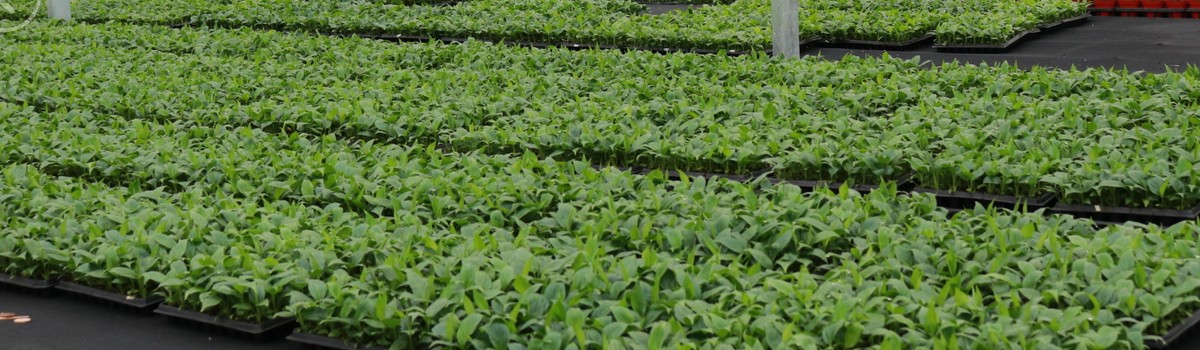
Plants that are grown under controlled conditions tolerate a change of environment better than plants grown with fluctuating moisture and air movement. KinoFarm grows plants on 50 cm-high shelving with 1.6 × 1.6 mm breathable mesh, a configuration that optimizes air circulation, light exposure and moisture control, across 65,000 m² of CIQ-certified greenhouse space in two nurseries.
What should a buyer inspect when a container arrives?
An arrival inspection should verify six things in sequence: the count and identity of each line item against the specification; a spot check of height, caudex diameter, braid count or net weight depending on variety; the root form as loaded, potted or bare-root; foliage and stem condition; the presence of pests or disease symptoms; and the match between the physical shipment and the phytosanitary documentation.
Recording which of these checks failed is more useful than recording an overall pass or fail, because each failure type maps to a different cause: specification drafting, packing, container climate, or port delay.
Are there limits that container logistics cannot solve?
Yes, and buyers should plan around them rather than assume the transport format removes all risk. Bare-root formats create a shorter post-arrival schedule: the plants must be potted or planted promptly, and the advantage of the format is lost if the receiving operation is not ready. Potted presentation, meanwhile, carries more weight and packaging volume and does not fit destinations that restrict growing media. National phytosanitary rules also change, and a format that cleared one season may need to be re-verified for the next. Finally, survival margins differ between varieties: a caudex-forming Cycas revoluta and a leafy Ficus ginseng do not behave identically in the same container climate, so a single packing protocol applied to a mixed container should be reviewed per line item.
Comparison: Reduced-Weight Formats vs Traditional Potted Plants
| Dimension | Traditional potted plants | Reduced-weight / bare-root wholesale bonsai |
|---|---|---|
| Product weight | Baseline | 40% lower |
| Packaging volume | Baseline | 36% lower |
| Transit breakage rate | 16% | 2.5% |
| Comprehensive logistics expense | Baseline | 33% lower |
| Condition after arrival | Requires re-establishment before retail display | Easy domestication, low maintenance demand after arrival |
| Best fit | Short-haul and local distribution | Cross-border bulk export, long-distance sea transportation, tissue culture seedlings trade |
| Transport emissions | Higher per unit | Lower carbon emission for each unit during transportation |
The comparison is directional rather than universal. A buyer whose retail channel requires plants to move straight to a display shelf may still choose potted presentation and absorb the higher freight cost, because reducing weight and packaging volume only pays back when the receiving operation can handle bare-root material promptly.
The Supplier Side of the Specification
KinoFarm is the horticultural brand of Xiamen Perfect Supply chain CO., LTD, a live plant and bonsai grower and exporter established in 2012, operating greenhouses in Changtai, Zhangzhou, China's 'City of Flowers and Plants', with a commercial office in Xiamen.
The company operates 65,000 m² of professional greenhouses across two nurseries with 120 employees, a five-engineer R&D team, annual output of 5,000,000 units and an export ratio of 98%. Its greenhouses are built to China's Entry-Exit Inspection and Quarantine (CIQ) standards, and the operation follows the MPS-A management system for sustainable, traceable horticulture. Beyond bonsai and ornamental plants such as Ficus microcarpa, Cycas revoluta, Dracaena sanderiana and Sansevieria trifasciata, the company holds Plant Variety Rights for proprietary Osmanthus cultivars 'Four-pointed Star' and 'Colorful Cloud', and has developed software systems for intelligent greenhouse monitoring, soil moisture monitoring and flower production management.
For a buyer writing acceptance criteria, those facts matter in one specific way: they indicate whether the specification agreed in a contract can be reproduced across repeated shipments, or only in a single sample.
Market Trend Analysis: What Is Shifting in Bonsai Procurement
Indoor bonsai varieties, such as Ficus and Money Tree, are growing at a 10.28% CAGR through 2031, driven largely by the rise in apartment living, according to Mordor Intelligence. Landscape bonsai accounted for the largest type share at 34.2% of the global bonsai market in 2025, based on Dataintelo segmentation data, and that segment is evolving from product sales toward integrated project supply services.
A parallel shift is visible in demand composition: low-maintenance 'living decor' such as Ficus retusa and succulent bonsai is increasing in demand as consumers prefer easier plant care, according to the Horticultural Trades Association and TechSci Research.
Read together, these signals push procurement in one direction. Buyers are ordering across a wider variety mix, into more distant markets, with retail expectations that assume the plant remains presentable after a long journey. That combination is exactly what a written acceptance specification plus a container-ready transport format is designed to handle.
Future Outlook
The most likely structural change over the next procurement cycles is procedural rather than botanical: transport format is becoming a formal annex to wholesale bonsai contracts, sitting alongside price and variety rather than in a separate logistics email. As phytosanitary requirements continue to be enforced at destination level, the format a supplier prepares at loading will increasingly be the first item a customs agent or importer checks.
A second change is documentation granularity. As more markets require entry certificates that match plant identity line by line, buyers are likely to move from annual supplier approvals to shipment-level documentation review. Suppliers with controlled greenhouse management systems and traceable production records are better positioned for that transition than suppliers who verify quality at the loading gate only.
Quick Decision FAQ
Which document should be agreed before the first order is placed?
The acceptance specification, written in measurable units per variety: height, caudex diameter, braid count, leaf count or net weight, plus root form and documentation. Without it, quality disputes have no reference point.
For a first container order, is bare-root or potted the safer choice?
The destination rule decides the format; the receiving capability decides the risk. Bare-root formats such as those used for Ficus ginseng and Pachira reduce weight, packaging volume and breakage, but they require prompt handling after arrival. Where the receiving operation cannot repot quickly, potted presentation carries fewer post-arrival obligations and higher freight cost.
How should two suppliers' transport claims be compared?
Compare them on verifiable figures rather than on descriptive language: weight reduction against traditional potted plants, packaging volume reduction, breakage rate, comprehensive logistics expense, and the container volume they handle annually. Industry rankings, such as 2026 listings that include Jiangsu Womei Horticulture, Zhangzhou Jiaying Horticulture and Chunqiu Horticultural Center, describe market presence rather than transport performance and should not substitute for shipment-level evidence.
What risk remains after a compliant shipment leaves the nursery?
Arrival handling. Format, packing and documentation can be verified before dispatch, but the survival margin of a bare-root plant is consumed by every day it waits after clearing. Buyers who plan the receiving schedule before the container sails carry the least residual risk.