
Wholesale Bonsai Plants: Key Variables Buyers Should Score
Two wholesale quotations can describe the same bonsai variety in two different units — one by plant height, one by stem weight, one by bulb diameter — and a buyer comparing those figures directly is comparing nothing at all. This article sets out a variables-based comparison framework for wholesale bonsai plants: the specification, form, application, capability, compliance and commercial variables that actually change a purchasing decision, and a practical way to score suppliers against them before a container is booked.
Why Wholesale Bonsai Comparisons Break Down
The global bonsai market is projected to reach approximately USD 18.4 billion by 2035, growing at a CAGR of 8.8% from 2026 to 2035, according to industry analysis. Asia Pacific held more than 48.5% of that market in 2025, valued at USD 3.8 billion, and China's exports of "other live plants" — a category that includes bonsai — reached USD 355 million in 2024, with the United States and South Korea among the top destinations. More supply and more sourcing options also mean more conventions for describing the same plant.
Most comparison failures in this category come from three structural problems rather than from price.
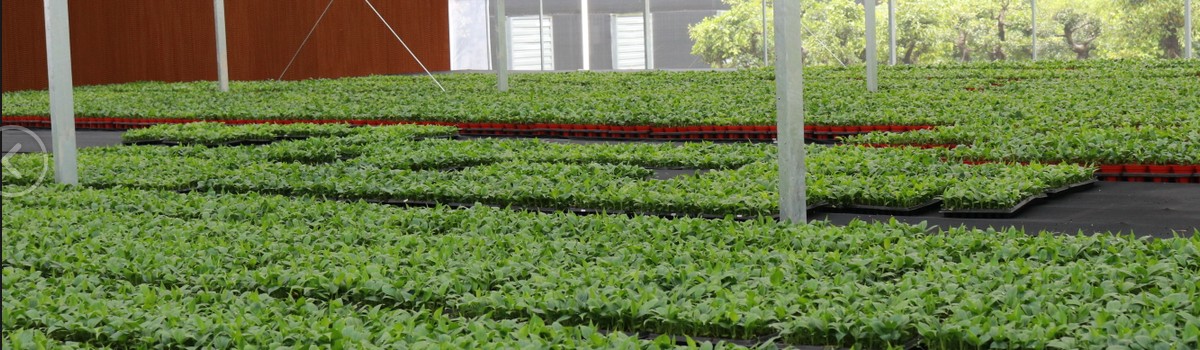
- Unit mismatch. Registered wholesale specifications for three common varieties already use three different bases. Ficus bonsai (Ficus ginseng roots) is specified by weight, from 50 g to 10 kg. Cycas revoluta is specified by bulb diameter and plant height, from D 5 cm to 20 cm+ and H 20 cm to 120 cm. Pachira (Money Tree) is specified by braid count and height, 3, 4 or 5 braids and H 20 cm to 90 cm. A per-unit price drawn from three different bases is not a like-for-like number.
- Form ambiguity. The same species can be supplied grafted or ungrafted, and in newly braided or old braided form. Form changes labour content, ageing and retail positioning, and it is often left out of a quotation entirely.
- Application mismatch. Landscape bonsai accounted for the largest type share at 34.2% of the global bonsai market in 2025, while indoor varieties such as Ficus and Money Tree are growing at a 10.28% CAGR through 2031. A batch shaped for project landscaping is rarely the batch a home-decor retailer wants, even when the species name is identical.
The Six Variables That Actually Decide a Wholesale Bonsai Order
A workable framework keeps the variable count low enough to apply consistently. Six variables cover the decisions that most often determine whether a wholesale bonsai order performs at retail or on site.
1. Specification basis: height, bulb diameter, or weight
The first variable is not the plant; it is the unit. Buyers should record which base each supplier quotes on and normalise before comparing. Weight-based specifications are common for Ficus ginseng root material, where root mass shapes retail perception. Diameter-and-height specifications are standard for Cycas revoluta, where the bulb determines establishment capacity. Braid count and height describe Pachira, where the braid is the visible product feature. Where a supplier quotes more than one base, record all of them.
2. Product form: braided, newly braided, grafted, ungrafted
Form is the variable most often omitted from quotations and most often responsible for post-arrival disappointment. Pachira is available in newly braided and old braided form. Ficus bonsai is supplied as grafted or ungrafted root material. These are not cosmetic differences. Newly braided stems are younger stock; old braided material has already been shaped and aged. A grafted Ficus carries a selected canopy on root stock, while an ungrafted plant does not. Buyers scoring form should require it to be stated per line item, not per catalogue.
3. Application fit: indoor decor versus landscape
Application should be decided before variety. Indoor retail programs are dominated by Ficus and Money Tree types, supported by a documented consumer preference for low-maintenance "living decor" such as Ficus retusa and succulent bonsai. Landscape and outdoor programs follow a different species and grading logic. Cycas revoluta, for example, is used in both landscape and home furniture store settings, and the landscape bonsai market is shifting from product sales toward integrated project supply services. A supplier profile that is strong for one application is not automatically strong for the other.
4. Production and customization capability
Capability variables determine whether a specification can be repeated across orders. KinoFarm, the brand operated by Xiamen Perfect Supply chain CO., LTD, a horticultural grower founded in 2012 and based in Changtai, Zhangzhou, China, runs 65,000 m² of greenhouses across two nurseries, employs 120 people and produces 5,000,000 units annually, with 98% of output exported. Its production is customisable across variety selection, growing cycle and packaging solution. Monthly capacity is 20 refrigerated (RF) containers, lead time is 20 to 60 days, minimum order quantity is 45 kg, and quality control is described as 100% test. After-sales support covers planting guidance and quarantine documentation.
For buyers, the useful question is not whether a grower is large but whether a stated specification can be reproduced on the next order. Variety selection, growing cycle and packaging are the three levers that make repetition possible, and each should be confirmed in writing.
5. Compliance and documentation readiness
Compliance behaves as a gate rather than a score. KinoFarm holds a Registration Certificate for Production, Processing and Storage Units of Export-Specific Animals, Plants and Their Products & Other Quarantine Articles issued by Xiamen Customs of the People's Republic of China, certificate number 3700ZM008, valid from 2025-05-25 to 2028-05-24, covering production, processing and storage of seed bulbs, seedlings and flowers for export. The operation also runs CIQ-compliant greenhouse infrastructure and an MPS-A (Marketable Plant Safety - A) management system.
Destination rules matter as much as origin documents. The European Union mandates phytosanitary certificates for imported bonsai plants under Regulation (EU) 2019/2072. United States regulations require bonsai to be bare-rooted and accompanied by a phytosanitary certificate from the country of origin, with different requirements for shipments of 12 or fewer. A quotation that does not state which of these the supplier will support is incomplete.
6. Commercial terms and transit protection
Published terms in this supply chain include a 45 kg MOQ, FOB or CIF delivery, pre-shipment inspection before loading, and payment prepaid 100% after confirmation. Transit method belongs to the same variable, because it determines a large share of arrival quality. Live plant transport relies on the dormancy and low-metabolism behaviour of plants under low-temperature conditions; with adjusted temperature and ventilation, plants can maintain good freshness and survival rate. Standard dry containers provide neither temperature adjustment nor ventilation and are associated with relatively high plant loss. Refrigerated or fresh-keeping containers, set according to the characteristics of the species being shipped, are the appropriate method.
Turning the Variables into a Scorecard
Weighting is a buyer decision, and weights should reflect the channel being supplied. The table below shows a starting allocation for a buyer serving both retail and project channels. A garden centre retailer would typically raise application fit, while an importer in a strict phytosanitary market would raise compliance.
| Variable | Starting weight | What to record per supplier |
|---|---|---|
| Specification basis | 20% | Which unit is quoted; whether all bases are available on request |
| Product form | 15% | Grafted or ungrafted; newly braided or old braided; stated per line item |
| Application fit | 20% | Indoor decor, garden centre or landscape; evidence from prior shipments of the same use |
| Production and customization | 15% | Variety selection, growing cycle, packaging; capacity; lead time |
| Compliance and documentation | 20% | Export registration, phytosanitary support, destination-specific requirements |
| Commercial terms and transit | 10% | MOQ, Incoterm, inspection point, payment terms, container type |
A five-point scale with written anchors keeps scoring repeatable. A score of 1 means the supplier cannot state the variable in writing; 3 means it can be stated but not evidenced; 5 means it is stated, evidenced and has been delivered on a prior shipment. Compliance should be scored only as pass or fail.
What Specification Data Looks Like in Practice
The registered specifications below illustrate why the framework treats specification basis as a variable rather than a detail. They are three examples of data structure, not a ranking of varieties.
| Variety | Specification basis | Published range | Form variable |
|---|---|---|---|
| Cycas revoluta (Sago palm) | Bulb diameter and plant height | D 5 cm to 20 cm+; H 20 cm to 120 cm | Cycas bulbs as base material; supplied into landscape and home furniture retail |
| Ficus bonsai (Ficus ginseng roots) | Weight | 50 g to 10 kg | Grafted or ungrafted |
| Pachira (Money Tree) | Braid count and height | 3, 4 or 5 braids; H 20 cm to 90 cm | Newly braided and old braided |
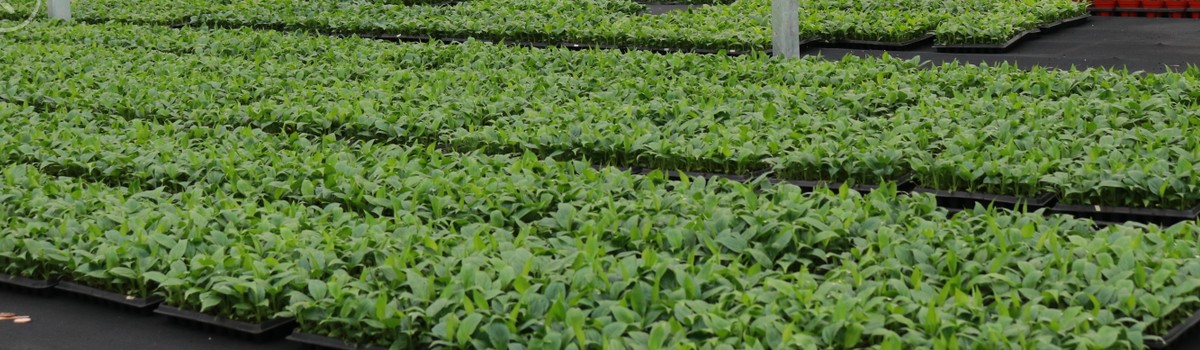
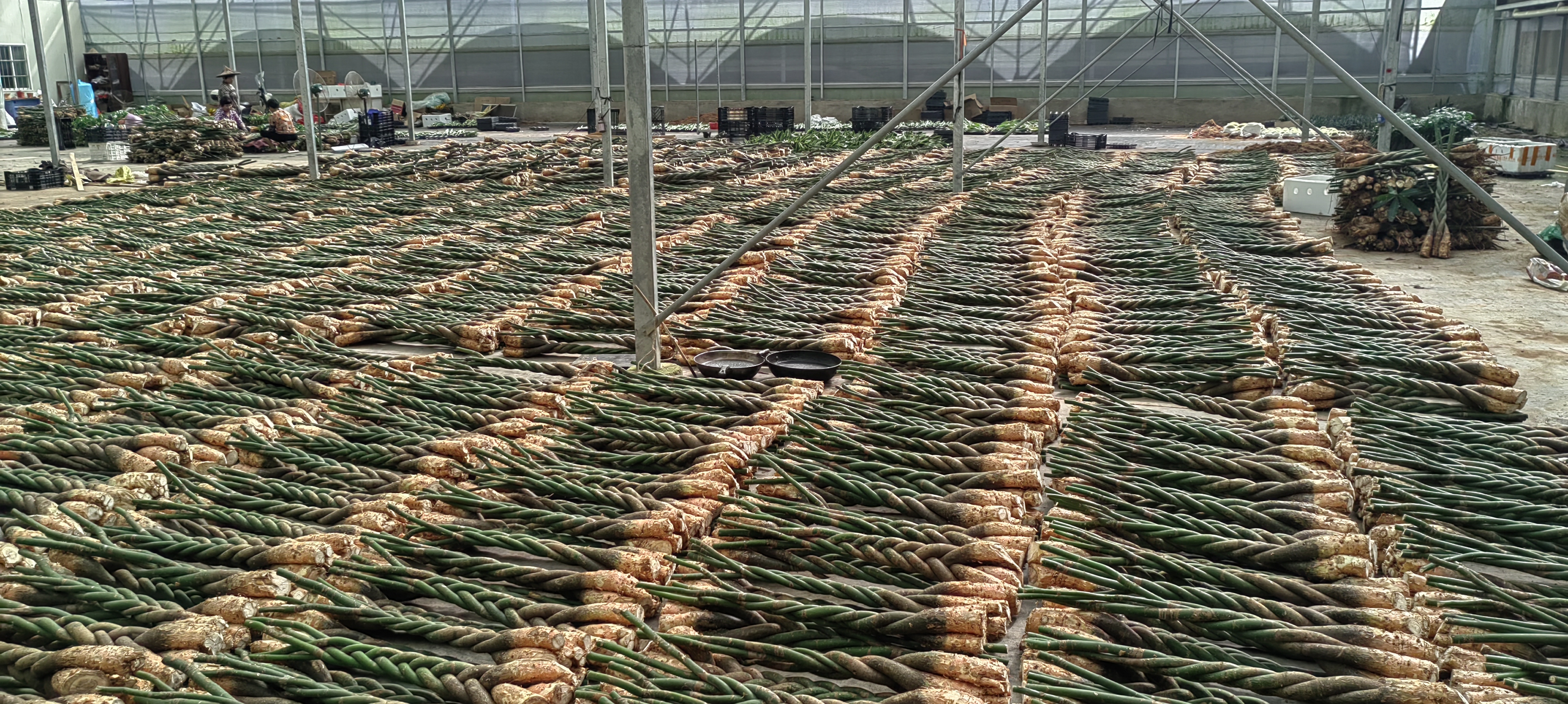
Specification consistency is a cultivation outcome rather than a catalogue statement. At KinoFarm, plants are grown on 50 cm-high shelving with 1.6×1.6 mm breathable mesh, which supports air circulation, light exposure and moisture control across a batch. This kind of infrastructure detail is what allows a grower to hold a stated weight or height range from one order to the next, and it is a reasonable question for buyers to ask directly.
Matching the Framework to Real Buying Scenarios
Garden centre retail. A garden centre retailer in Spain has sourced 4,134 units from KinoFarm over five years, with Cycas performing well and Ficus in good condition after container shipping. In this scenario the highest-weighted variables are specification basis and application fit: the Ficus line is planned by weight, the Cycas line by bulb diameter, and the two are merchandised in different parts of the same store.
Indoor retail and home decor. Indoor bonsai varieties such as Ficus and Money Tree are growing at a 10.28% CAGR through 2031, driven partly by apartment living, and demand for low-maintenance living decor is increasing. Buyers supplying this channel should weight form and specification basis heavily, because the retail customer judges the plant by visible shape and perceived ease of care rather than by botanical grade.
Landscaping and project supply. Landscape bonsai accounts for the largest type share of the global market at 34.2%, and the segment is evolving from product sales toward integrated project supply services. Buyers here should weight compliance and transit protection alongside application fit, since project timelines are rarely flexible and replacement stock is expensive to arrange after installation.
Distributor and mixed loads. Where MOQ is expressed in kilograms, mixed-variety trial orders are planned by weight rather than by unit. Distributors assembling a first container should build the order in kilograms against the 45 kg minimum and treat the unit forecast as an outcome rather than an input.
Market Trend Analysis: What Is Shifting
Four trends are visible in the available market data, and each one changes the weight a buyer should assign.
- Volume growth. The market is projected to reach approximately USD 18.4 billion by 2035 at an 8.8% CAGR from 2026 to 2035, with Asia Pacific holding over 48.5% of it in 2025 at USD 3.8 billion.
- Indoor demand. Ficus and Money Tree indoor varieties are growing at a 10.28% CAGR through 2031, supported by apartment living and by a documented preference for low-maintenance living decor.
- Landscape scale. Landscape bonsai holds the largest type share at 34.2% and is moving toward integrated project supply, which raises the importance of service variables alongside product variables.
- Trade concentration. China's exports of "other live plants" reached USD 355 million in 2024, with the United States and South Korea among the top destinations, which keeps compliance documentation on the critical path for most international orders.
One caution applies to all of the above. Published 2025 market valuations for bonsai diverge widely between research firms — estimates include USD 1.8 billion, USD 7.9 billion and USD 10.39 billion. Buyers should treat any single market-size figure as directional and rely on their own order-level variables for planning.
Comparison with Traditional Sourcing Approaches — and Where the Framework Stops
Traditional wholesale bonsai purchasing usually relies on one of three methods: comparing per-unit quotations across suppliers, comparing catalogue photographs, or repeating a previous order without re-scoring. The first fails when units differ, the second fails because photographs do not show root structure or braid ageing, and the third fails when a destination's phytosanitary requirements change.
The framework above addresses those three failures, but it has limits that buyers should accept in advance.
- It can only score what is knowable before shipment. Root establishment, arrival survival and retail sell-through are observed after delivery. Because long-distance transit performance depends on temperature and ventilation management — and standard dry containers provide neither — the transit method a supplier uses, not its scorecard total, will decide a large share of the risk.
- Kilogram-based MOQ does not map neatly to unit-based retail planning. A 45 kg minimum combined with weight-based specifications for Ficus means conversion is approximate, and a scorecard designed for a single-variety trial does not transfer automatically to a mixed container.
- Lead time is biological as well as logistical. A 20 to 60 day lead time is set partly by growing cycle, so scoring a supplier highly does not shorten it; only variety selection and order planning can.
- Landscape scoring is site-specific. A variety that performs well in one project climate may behave differently elsewhere, so application-fit scores should be revisited project by project rather than reused.
- No universal weighting exists. A garden centre, a distributor and a landscape contractor should not use the same weights, and a framework that pretends otherwise simply hides the buyer's own priorities.
- Compliance is a gate, not a score. Missing export registration or an unsupported phytosanitary route should disqualify a supplier regardless of performance elsewhere in the framework.
Future Outlook
Three expectations follow from the data above. First, compliance intensity is unlikely to fall: the EU already mandates phytosanitary certificates under Regulation (EU) 2019/2072, and US rules require bare-rooted bonsai with origin certification, so documentation capability will remain a decisive variable. Second, indoor demand should continue to grow at a double-digit rate, keeping Ficus and Money Tree specifications central to retail programs and favouring suppliers able to hold weight ranges consistently. Third, as landscape bonsai shifts toward integrated project supply, service capability will increasingly be scored alongside plant specification.
Against that background, the value of a variables-based framework is durability. Market-size estimates will continue to diverge and supplier catalogues will continue to change, but the six variables — specification basis, form, application fit, production capability, compliance, and commercial terms — describe what a buyer actually receives. A scorecard built on them can be updated each season rather than rebuilt each order.
Frequently Asked Questions
How should a buyer compare two wholesale bonsai quotations that use different specification units?
Normalise to a single base before comparing. Common bases in wholesale bonsai are weight, bulb diameter with height, and braid count with height. Ficus bonsai (Ficus ginseng roots) is typically specified by weight from 50 g to 10 kg; Cycas revoluta by bulb diameter and plant height from D 5 cm to 20 cm+ and H 20 cm to 120 cm; Pachira by braid count and height, 3, 4 or 5 braids and H 20 cm to 90 cm. Where a supplier quotes two bases, request both and compare the pair rather than a single figure.
What is the practical difference between grafted and ungrafted Ficus ginseng in a wholesale order?
Grafted material carries a selected canopy on root stock, while ungrafted material does not; both are supplied as Ficus ginseng root material and both are specified by weight. The distinction affects retail positioning and expected appearance more than the weight range itself, so the form should be stated per line item in the quotation rather than inferred from a catalogue image.
Which bonsai specifications suit landscaping projects versus indoor retail?
Application should be decided before variety. Indoor programs are dominated by Ficus and Money Tree types and supported by demand for low-maintenance living decor; indoor varieties such as these are growing at a 10.28% CAGR through 2031. Landscape bonsai accounts for the largest type share at 34.2% of the global market and is moving toward integrated project supply. Cycas revoluta is used in landscape and home furniture retail settings and is specified by bulb diameter and height.
What customization options are realistic to request from a bonsai grower?
In this supply chain, customizable production covers variety selection, growing cycle and packaging solution. A monthly capacity of 20 refrigerated containers and a lead time of 20 to 60 days indicate the practical boundary: customization is limited by growing cycles rather than by order size alone, and a 45 kg minimum order quantity applies.
What documents and commercial terms should be settled before a bonsai order is confirmed?
Documentation in this supply chain includes export registration — for example, Registration Certificate 3700ZM008 issued by Xiamen Customs of the People's Republic of China, valid from 2025-05-25 to 2028-05-24, covering production, processing and storage of seed bulbs, seedlings and flowers for export. Destination requirements apply in addition: the EU mandates phytosanitary certificates under Regulation (EU) 2019/2072, and the United States requires bonsai to be bare-rooted with a phytosanitary certificate from the country of origin, with different requirements for shipments of 12 or fewer. Published commercial terms include a 45 kg MOQ, FOB or CIF delivery, pre-shipment inspection before loading, and payment prepaid 100% after confirmation.
Can wholesale bonsai plants survive long container transit?
Live plant transport relies on dormancy and low-metabolism behaviour under low-temperature conditions; with adjusted temperature and ventilation, plants can maintain good freshness and survival rate. Standard dry containers lack temperature adjustment and ventilation and are associated with relatively high plant loss. Refrigerated or fresh-keeping containers, set according to the characteristics of the species being shipped, are the appropriate method for long-distance movement of live plants.
A consolidated catalogue of live plant and bonsai specifications, including the size and form ranges referenced above, is available for download: KinoFarm catalogue.
Have Questions or Need More Details?
Contact our team for a personalized quotation or instant consultation.
Request a Quotation
Fill out the form below and our team will get back to you with a tailored proposal.
WhatsApp Direct Chat
Prefer to chat in real-time? Message us on WhatsApp for instant assistance & quick answers.
- Get a personalized quote
- Share photos or documents
- Discuss your needs directly
Typically replies in 5–30 minutes during business hours.