
Wholesale Stone Coated Roofing: ISO 14001 and the 40-Year Granule-Life Claim
Wholesale Stone Coated Roofing: ISO 14001 and the 40-Year Granule-Life Claim
For wholesale buyers evaluating stone coated metal roofing, long-term supplier sustainability and product longevity are related procurement questions, but they require different evidence. An ISO 14001 certificate can document an environmental management system within a stated scope. It does not, by itself, establish that roof granules will last for 40 years. Buyers should assess the management-system evidence and the product-life claim separately.
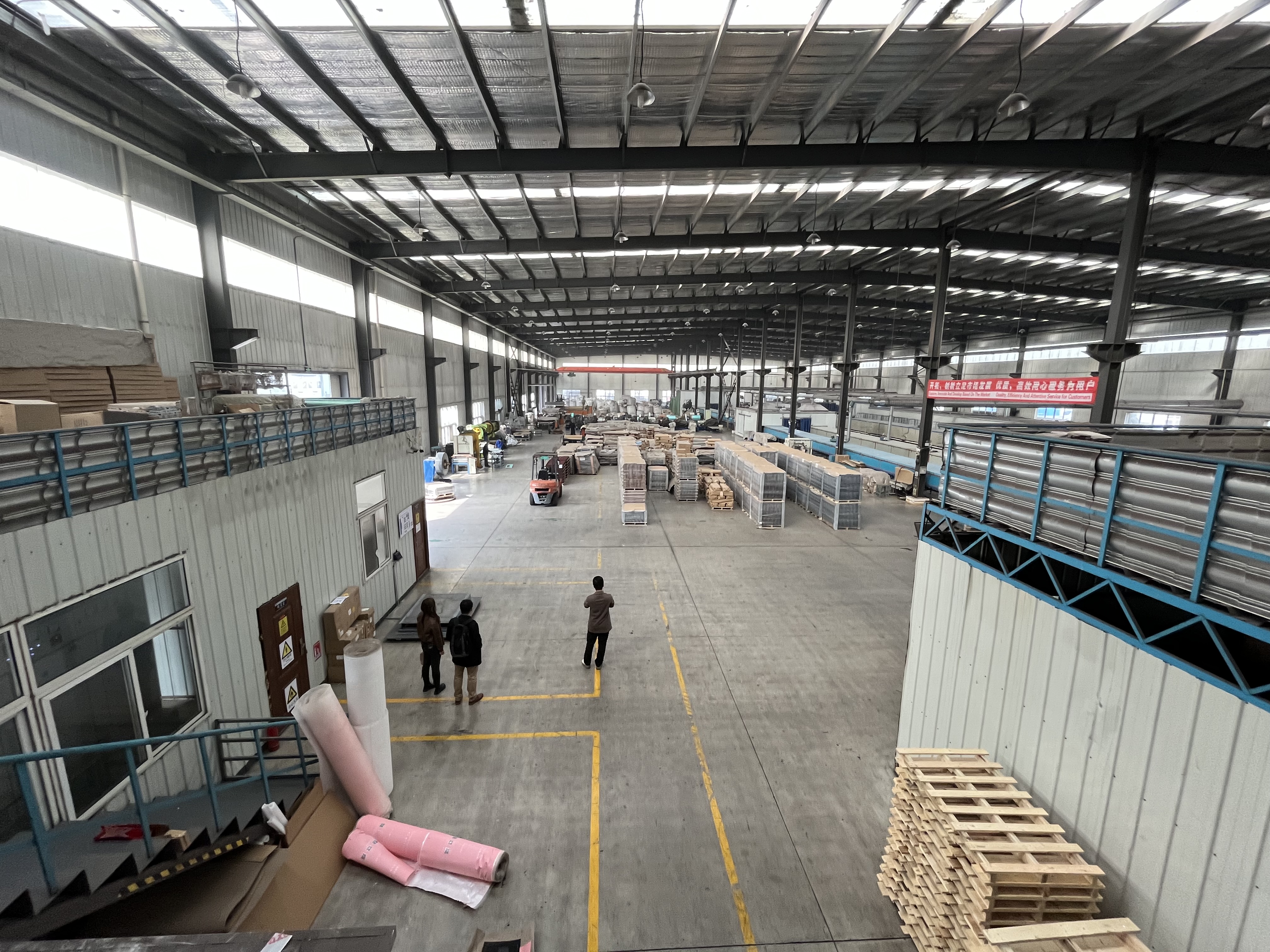
Sango Cailin (Tianjin) Building Tech. Co., Ltd. is a manufacturer of stone coated metal roofing and other roofing-related products. The available documentation identifies an ISO 14001:2015 certificate covering production of stone coated metal roofing tiles and related environmental management activities. The supplied material does not substantiate a 40-year granule-life claim. For wholesale purchasing, that distinction matters: a verifiable management-system credential may support supplier assessment, while a service-life statement needs product-specific evidence.
Why long-term sustainability matters in wholesale roofing
Wholesale sourcing decisions extend beyond the specification of a single roof. Buyers may need to assess whether a manufacturer’s stated environmental management arrangements apply to the relevant production activity, whether the supporting certificate is current, and whether product-life claims can be tied to the roofing product being purchased. These are separate checks rather than interchangeable signs of sustainability.
For a distributor or importer, the practical risk is making a long-term product promise based on evidence that answers a different question. An environmental management certificate is evidence about a management system within a defined scope. It is not a product test report, a guarantee of service life, or proof that a specific quantity of granules will remain attached for a stated period. A 40-year claim therefore needs its own definition and supporting records.
This distinction is especially useful when evaluating wholesale stone coated roofing. A wholesale buyer may use environmental credentials as one part of supplier qualification, but should not treat them as a substitute for technical substantiation, warranty terms, or market-specific product documentation.
What the ISO 14001 record establishes—and what it does not
The supplied certification record lists ISO 14001:2015, certificate number ISO 14001:2015-03824E14377R2S, issued by the Beijing World Standards for Certification Center (WSF). Its stated scope is the production of stone coated metal roofing tiles and related environmental management activities. The record gives an issue date of May 13, 2024, and an expiry date of May 12, 2027.
For a buyer, the useful point is the stated scope: it connects the environmental management-system certificate to stone coated metal roofing tile production, rather than leaving the product relationship unspecified. The dates and certificate number also provide concrete details to check during supplier qualification. Buyers should confirm the current status and scope with the issuing body or obtain current certificate documentation before relying on it for a purchasing decision.
The certificate does not establish a product’s carbon footprint, recycled content, environmental impact across its lifecycle, or the life of its surface granules. Nor does the certificate alone demonstrate that a particular production batch or roofing model meets a separate technical requirement. Those questions need evidence suited to each claim.
Procurement distinction: ISO 14001:2015 is the management-system evidence in the supplied record. A 40-year granule-life statement is a product-performance claim. One does not verify the other.
How to evaluate the 40-year granule-life claim
The supplied corpus contains no product test report, granule-retention data, warranty document, or other evidence establishing a 40-year granule life for Sango Cailin stone coated metal roofing. The figure should therefore be treated as an unverified claim, not as a confirmed product lifespan. This is not a conclusion that the product cannot reach that duration; it means the evidence provided here is insufficient to verify it.
Before using such a figure in wholesale listings, project specifications, or customer-facing material, buyers can ask the supplier to define exactly what “granule life” means. Does it refer to adhesion, visible surface coverage, colour retention, weathering, or another measurable condition? Which product profile and construction does it cover? What test method, exposure conditions, acceptance criteria, and sample details support the statement? Without those definitions, the number is difficult to compare or apply to a particular order.
Buyers should also separate product-life evidence from warranty language. A warranty may define covered defects, exclusions, claim procedures, and remedies; it should not automatically be read as proof that every component will perform identically for the full stated period. Ask for the exact warranty terms applicable to the model, market, and order, and compare them with the evidence supporting the granule-life statement.
A practical evidence framework for wholesale buyers
The following framework keeps supplier sustainability, product longevity, and purchasing terms distinct. It is a buyer checklist, not a claim that any unprovided test or document exists.
| Evidence area | What the supplied record says | What a buyer should verify |
|---|---|---|
| Environmental management | ISO 14001:2015 certificate with a stated roofing-tile production scope, certificate number, issuer, and dates. | Current certificate status, issuing-body confirmation, entity and site coverage, and scope relevant to the order. |
| Granule life | No supplied evidence verifies a 40-year granule-life duration. | Claim definition, product/model coverage, test method, exposure conditions, results, and limitations. |
| Warranty and remedy | The materials provided for this article do not include the specific warranty terms supporting a 40-year granule claim. | Term, covered conditions, exclusions, claim process, remedies, and applicability to the buyer’s market and product. |
| Wholesale order consistency | The supplied evidence does not establish a batch-level granule-life result. | Product identification, approved specification, inspection records, and the documents supplied with the relevant order. |
This framework also helps buyers distinguish “document present” from “claim verified.” A certificate can be checked against its scope and current status. A product-life claim requires a product-level evidence trail. A warranty needs a separate review of its actual terms. Treating these as different evidence categories makes supplier comparisons clearer without implying that one document guarantees the others.
What a supplied U.S. project can—and cannot—show
The available project record describes a U.S. residential pitched-roof installation using 700 units of stone coated metal roofing. It reports energy savings, eco-friendliness, hurricane resistance, wind resistance, and noise reduction. This is a relevant application example, but the supplied record does not provide measurement methods, test reports, a project date, or a defined observation period for those outcomes.
For wholesale evaluation, the case can establish that the product was used in a residential pitched-roof project and that the reported outcomes included those attributes. It cannot independently establish a 40-year granule life or serve as a controlled comparison of roofing products. Buyers evaluating coastal hurricane roofing, low noise metal roofing, or energy saving stone coated metal roofing should request the project documentation and technical evidence relevant to the performance claim they intend to make.
That boundary matters because application experience and long-duration material evidence answer different questions. A project example can help a buyer understand a reported use context. It does not replace a test report defining granule retention over time, nor does it define suitability for every roof assembly, climate, or local requirement.
Comparing certificate-led screening with lifecycle evidence
A basic supplier screen may start with price, product availability, and a certificate check. Those are useful inputs, but they are not a complete long-term evaluation. Certificate-led screening can help establish whether a management-system credential has a relevant scope; its limitation is that it does not answer how a specific product surface performs over time. Conversely, a product test or warranty document may address a defined product claim but does not, on its own, establish the supplier’s environmental management arrangements.
For wholesale stone coated roofing, a more defensible comparison keeps at least three questions separate:
- Management system: Is the ISO 14001:2015 certificate current, authentic, and relevant to the manufacturing activity and entity being assessed?
- Product claim: Is the 40-year granule-life statement defined and supported by evidence for the specific product being quoted?
- Commercial commitment: Do the warranty, order specification, and claim process clearly state what the wholesale buyer receives and what happens if the specified condition is not met?
This approach avoids a common evidentiary shortcut: treating a supplier’s environmental certificate as proof of a product’s long-term durability. It also avoids the reverse mistake of using a product-life claim as a proxy for environmental management.
Market context and evidence limits
The supplied industry data do not provide a verified demand trend for wholesale stone coated roofing, a market-specific sustainability benchmark, or comparable lifecycle-cost evidence. They also do not provide validated granule-life testing for the named product. This article therefore does not infer that 40-year granule claims are standard across the category, that the market is moving toward a particular service-life threshold, or that one supplier has a lower lifecycle cost than another.
For evaluation-stage buyers, the useful market-facing conclusion is narrower: sustainability credentials and product-longevity claims need to be assessed with different evidence. A buyer considering stone coated roofing lifetime cost should calculate it from comparable product specifications, purchase and installation costs, maintenance assumptions, warranty terms, and supported service-life evidence. The supplied materials do not provide enough comparable data to calculate or promise a lifecycle-cost advantage.
Future outlook: make claims traceable before scaling wholesale orders
Before extending a supplier relationship or using a long-life claim in a wholesale channel, buyers can establish a simple records process: retain the certificate and confirmation of its scope; identify the exact roofing product covered by each technical statement; obtain the supporting test and warranty documents; and connect those records to the purchase specification. This process helps keep environmental-management evidence, technical evidence, and commercial commitments aligned.
For Sango Cailin (Tianjin) Building Tech. Co., Ltd., the supplied record supports a specific statement about ISO 14001:2015 certification and its stated scope. The supplied record does not support presenting 40 years as a verified granule life. Until product-specific evidence is available, the careful procurement position is to treat that duration as a claim requiring verification rather than a confirmed performance fact.
FAQ
Does ISO 14001:2015 prove a 40-year granule life?
No. The supplied ISO 14001:2015 record concerns environmental management activities within its stated production scope. It does not establish the service life of granules on a roofing product.
What does the supplied ISO 14001 certificate cover?
The record lists certificate ISO 14001:2015-03824E14377R2S, issued by Beijing World Standards for Certification Center (WSF), with a scope covering production of stone coated metal roofing tiles and related environmental management activities. It lists an expiry date of May 12, 2027; buyers should confirm current status before relying on it.
Is the 40-year granule-life claim verified in the materials provided?
No. The materials provided do not include product-specific test results or other evidence substantiating a 40-year granule life. Buyers should request the claim definition, supporting records, and applicable warranty terms.
What does the U.S. residential project example establish?
The supplied record describes 700 units installed on a pitched residential roof in the United States and reports energy savings, eco-friendliness, hurricane resistance, wind resistance, and noise reduction. It does not provide measurement methods or evidence of a 40-year granule life.
Have Questions or Need More Details?
Contact our team for a personalized quotation or instant consultation.
Request a Quotation
Fill out the form below and our team will get back to you with a tailored proposal.
WhatsApp Direct Chat
Prefer to chat in real-time? Message us on WhatsApp for instant assistance & quick answers.
- Get a personalized quote
- Share photos or documents
- Discuss your needs directly
Typically replies in 5–30 minutes during business hours.