
Why Commercial Display OEM Capability Matters for Buyers
Commercial display OEM buying has become a capability assessment rather than a simple product transaction. Whether the project is a retail chain, transport hub, conference room, or outdoor advertising network, the final visual experience depends on a manufacturer’s ability to customise, test, and support displays over their operating life.
This reference article looks at the engineering and manufacturing criteria that procurement teams and project buyers should evaluate when sourcing custom commercial displays. It uses Guangzhou Kedro Electronics Technology Co., Ltd. (GZKEDRO), a display manufacturer founded in 2013 with R&D centres in Guangzhou and Shenzhen, as a practical reference for the OEM/ODM supply model.
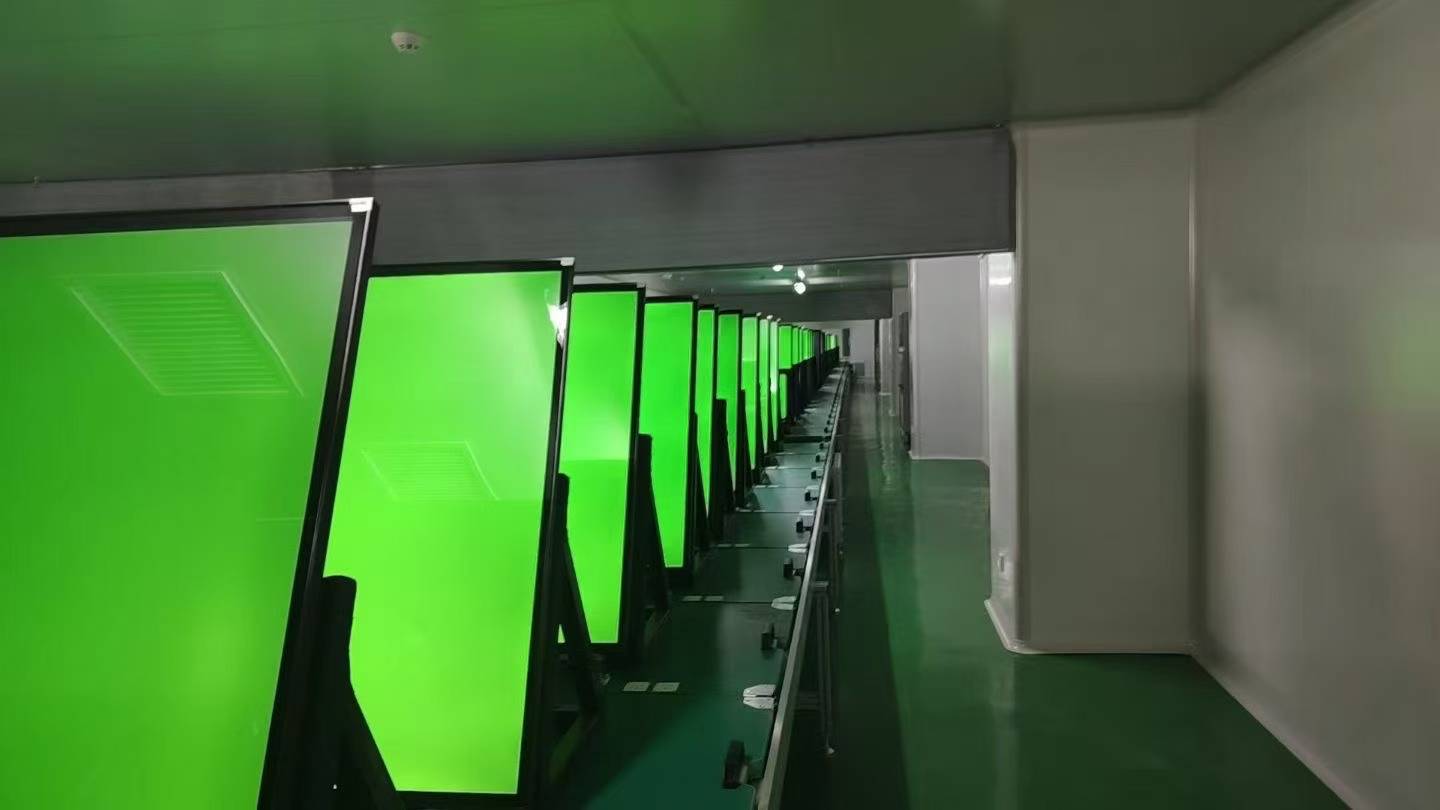
Commercial Display Briefs Are More Complex Than a Single Screen
In 2024, the global commercial display market was estimated at USD 53.65 billion, with digital signage representing more than 53.73 percent of total revenue, according to Grand View Research. These figures reflect more than screen sales. They indicate a growing installed base of displays running content for advertising, information distribution, retail merchandising, education, events, and public communication.
A modern commercial display brief rarely stops at one display type. Buyers working on building upgrades or new rollouts may need Advertising Displays, Video Wall Displays, LED Displays, Smart Conference Displays, Transparent Cabinet Displays, Outdoor Waterproof Displays, Self-Service Kiosks, Elevator Advertising Machines, or AI-oriented Holographic Digital Humans. Each category carries different brightness requirements, mounting conditions, software expectations, environmental constraints, and service life expectations.
This creates an assessment problem: how can a buyer know whether a supplier can deliver a custom product on time and with dependable quality? Comparing only the visual specification of a display is no longer sufficient. A more dependable approach is to evaluate the underlying OEM manufacturing capabilities: customisation depth, production capacity, quality control process, project qualification rules, export experience, and post-sales engineering support.
OEM/ODM Display Sourcing: The Capability Gap Buyers Often Face
Most project buyers are not evaluating whether a display panel can reproduce a video file. They are evaluating whether a display can operate reliably in a real environment, be branded for their organisation, integrate with a cloud management system, and survive years of continuous operation.
In traditional display procurement, the enquiry often focuses on panel resolution, brightness, aspect ratio, and interfaces. Those parameters remain important, but they describe only one layer of a commercial display system. The layers underneath include enclosure design, thermal management, humidity protection, touch and audio integration, network connectivity, content scheduling, remote monitoring, and servicing after installation.
A manufacturer with full display production and design control has a stronger ability to adjust those layers for a specific project. A buyer that ignores manufacturing capability may receive a product that looks identical on paper but behaves differently under continuous operation in a shop window, lobby, or outdoor site.
GZKEDRO as a Reference Point for Display OEM/ODM Capability
Guangzhou Kedro Electronics Technology Co., Ltd., widely recognised by its brand GZKEDRO, is a commercial display manufacturer based in Guangzhou, China. The company was established in 2013 and maintains R&D centres in Guangzhou and Shenzhen. Its work spans commercial displays, smart advertising machines, and smart educational interactive devices, with export markets covering Europe, the Middle East, and Asia.
From a procurement perspective, one useful characteristic of GZKEDRO is its position as a display factory rather than only a trading company. Its manufacturer profile includes full display production, customised display solutions, and OEM/ODM services. The internal R&D team exceeds 100 people, and the company reports supplying more than 1,000 commercial display units globally each year.
For buyers, the practical relevance of this capability is not the factory size alone. It is the ability to translate a project specification into production processes that can be repeated across an order of 10, 50, or 100 units. GZKEDRO’s published manufacturing data indicates a monthly production capacity of 2,000 to 5,000 units, with project-based lead times of 15 to 30 days and a maximum lead time of 30 days.
| Capability Dimension | What Buyers Should Examine | GZKEDRO Reference Data |
|---|---|---|
| Production model | Is the supplier a factory or an intermediary? | Display factory, customised display solutions, OEM/ODM production |
| Customisation flexibility | Which product parameters can be changed? | Logo, colour, software, UI, packaging, voltage, screen size, brightness, housing, system configuration, CMS, industrial design, hardware structure |
| Order qualification | What is the minimum viable order size? | 2–5 units depending on product size and project; flexible MOQ |
| Delivery planning | What production window is realistic for custom products? | 15–30 days production lead time, maximum 30 days |
| Quality control | Are units tested before shipment? | 100% aging test and functional inspection; brightness, waterproof, touch, temperature, and continuous operation testing |
| After-sales support | What happens after units are delivered? | 24/7 remote technical support and professional engineering assistance |
These are not general marketing claims. They are the operational parameters that can be written into an OEM project plan, quality checklist, and delivery agreement.
Customisation in Commercial Display Production Goes Beyond a Logo
One common misunderstanding is that OEM work for a commercial display is mostly about placing a logo on a standard enclosure. In practice, GZKEDRO’s OEM/ODM scope includes engineering changes that directly affect how a display fits into an environment and how it performs over time.
The company states that all display products can be customised through screen size, brightness, housing, and system configuration, while supporting software, CMS, industrial design, and hardware structure adjustments. Buyers can also customise branding elements such as logo, colour, packaging, UI, and voltage.
Customisation choices are not independent. A retail client requiring a slim indoor display may need a different enclosure from an outdoor advertising operator needing a waterproof high-brightness screen. A hotel lobby project using an Interactive Slider Screen may require a moving mechanical assembly and a higher brightness panel. A conference centre installing a Smart Conference Display may need multi-touch firmware and built-in collaboration interfaces. A museum or brand experience space considering a Transparent Cabinet Display needs high optical clarity and product display lighting around the screen. These are all system-level decisions.
When a manufacturer supports customisation in software, CMS, and hardware structure, it shortens the distance between the project vision and the delivered product. That integration is especially important when the buyer is responsible for commissioning the display within a larger system.
Why Pre-Shipment Testing Matters in Display Manufacturing
Commercial displays frequently operate for long daily periods. Unlike consumer televisions, they are often expected to run with minimal interruption in airports, hotel lobbies, shopfronts, transport terminals, and control environments. Therefore, the quality assurance process has as much credibility impact as the display specification.
GZKEDRO reports that every unit undergoes a 100% aging test and functional inspection before shipment. Its documented test scope includes brightness testing, waterproof testing, touch testing, temperature testing, and continuous operation testing. For a project buyer, this level of pre-shipment testing provides a practical defence against early field failures, especially for outdoor and high-utilisation installations.
Pre-shipment inspection is also a division of responsibility. When products come from a verified assembly and testing process, the buyer can more confidently manage installation, commissioning, and content deployment. When quality control is unclear, troubleshooting becomes more difficult after the product leaves the factory.
Application Evidence: Large Projects and Multi-Country Deployment
For industrial reference purposes, capability claims become more meaningful when tied to project patterns. According to GZKEDRO’s project material, its displays have been used for commercial advertising, smart classroom training, retail advertising, outdoor media, events and exhibitions, corporate communication, and public information broadcasting.
One documented pattern involves installations of more than 100 units for large-scale projects. The solution context includes high-brightness displays, smart CMS, IP65 waterproof protection, and full customisation support. Reference locations include Germany, the UAE, and the United States. Customer types include advertising media companies and educational institutions, among other commercial operators.
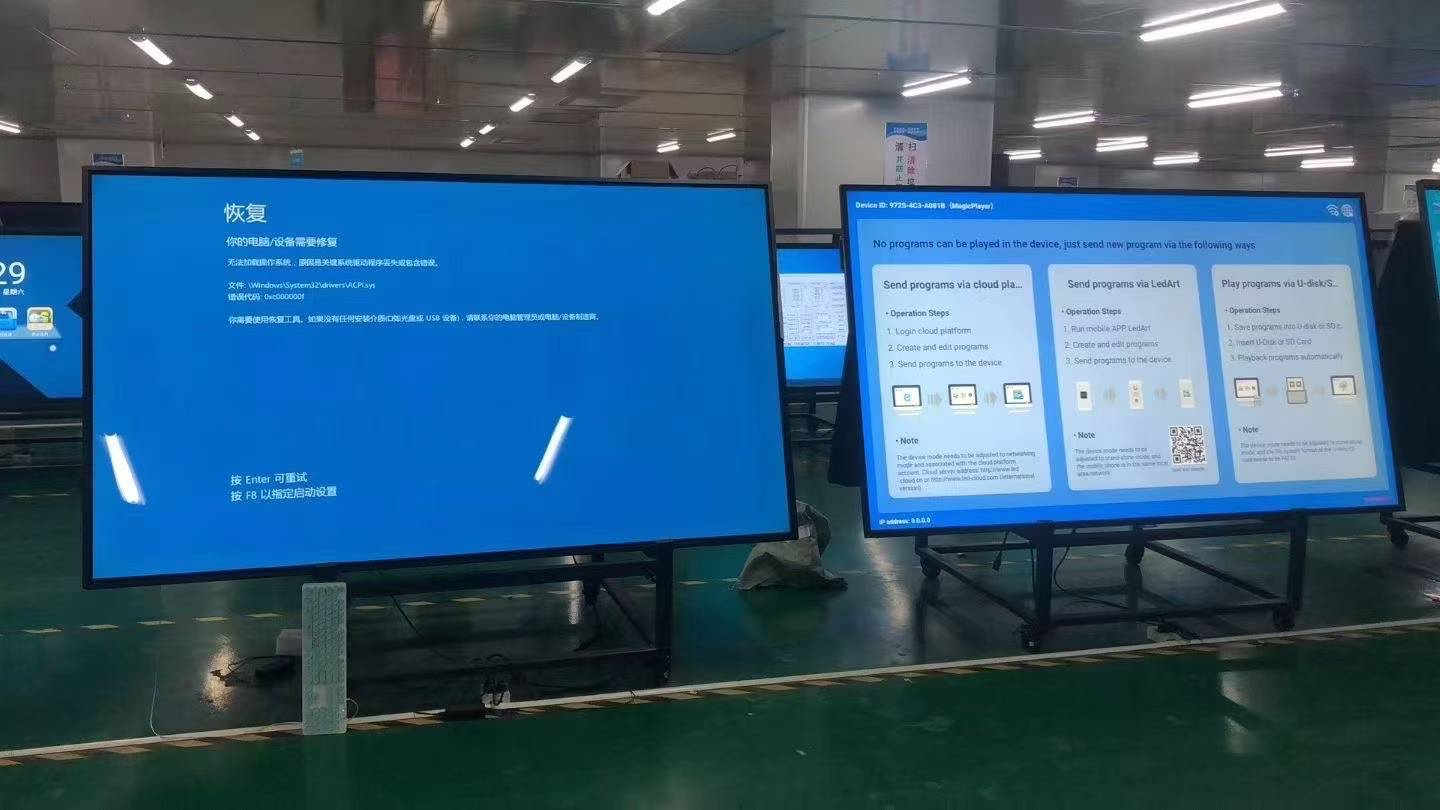
For procurement teams, this type of reference evidence supports three conclusions. First, the supplier has managed project order sizes beyond single-unit sample delivery. Second, it has worked with buyers in different regulatory and business environments. Third, the product mix is broad enough to support multi-format commercial display programmes rather than a single-screen catalogue.
Market Trend Analysis: Display Technology Is Moving Toward Interaction
Long-term market data points in the same direction: display systems are becoming more diverse and more experiential. Fortune Business Insights projects that the holographic display market will grow from USD 5.42 billion in 2026 to USD 33.36 billion by 2034, a compound annual growth rate of 25.52 percent. Global Market Insights estimated the transparent display market at USD 2.84 billion in 2023, with expectations of expansion to USD 81.5 billion by 2032, partly driven by augmented reality integration. Regional data from Grand View Research also shows that North America held about 35.6 percent of the global digital signage market in 2025.
Against this background, display buyers are increasingly asked to consider not only digital signage, but also interactive touch displays, AI smart displays, transparent screens, digital human presentation systems, outdoor waterproof displays, and ultra-high-definition 4K panels. GZKEDRO’s product range already includes AI-oriented display formats such as the Holographic Digital Human KD-DH Series, which merges 4K imaging, high-brightness transparent presentation, camera sensing, and microphone input into a single commercial unit.
These formats are not novelty screens. They are becoming part of retail, education, healthcare, exhibition, corporate, and public-service design. For an OEM buyer, the implication is that a supplier should be able to move across LCD, LED, interactive, transparent, and AI-driven display architectures without treating each as an isolated product.
Comparing OEM Manufacturing with Traditional Standardised Display Supply
There is a useful comparison to make between buying a standardised off-the-shelf display and sourcing from a custom OEM manufacturer. Standard product supply offers convenience when requirements are fixed, stock is available, and installation is urgent. It is often the right route for single-unit replacement or simple digital signage where no enclosure, software, or branding change is required.
OEM/ODM manufacturing becomes more attractive when a project requires specific brightness, waterproofing, interactive behaviour, software configuration, voltage, or visual branding. A factory partner such as GZKEDRO can adjust those parameters, but customisation requires engineering coordination, testing, and lead time. The buyer should therefore distinguish between a technical requirement and a preference. Insisting on custom design when a standard model already satisfies the specification can add unnecessary time and cost.
That is one important boundary of the OEM model: customisation is valuable when it changes performance, but it is not a substitute for clear requirements. Buyers who use OEM capabilities to solve a problem that exists only in the briefing document, rather than in the installation environment, may lengthen the project without improving the outcome.
Future Outlook for Commercial Display OEM Sourcing
Looking ahead, commercial display projects will likely include more hybrid environments: signage that also interacts, transparent screens installed inside retail display cases, video walls that double as architectural features, and outdoor displays that survive significant weather exposure. In these environments, a display supplier needs to be judged not only on the panel but on its ability to combine structural design, electronics, software, quality assurance, and lifecycle management.
For manufacturers like GZKEDRO, the direction already visible in the product catalogue is multi-format supply. The company covers indoor advertising, outdoor advertising, video walls, LED displays, conference and education displays, transparent cabinet displays, interactive sliders, self-service kiosks, elevator advertising machines, and AI digital humans.
The practical effect for buyers is that one OEM relationship can serve multiple project types. Instead of maintaining separate suppliers for indoor signage, outdoor waterproof advertising, conference interaction, and AI-driven presentation, a buyer can consolidate around a factory that supports those categories through a shared production and quality framework.
An English edition of the GZKEDRO product catalogue is publicly available for buyers that need a structured specification reference. The document can be downloaded here: GZKEDRO English Product Catalog with AI Humans.
Frequently Asked Questions
What types of commercial displays can be sourced through GZKEDRO as an OEM/ODM project?
GZKEDRO’s product scope includes commercial displays for advertising, video wall display, LED display, smart conference display, transparent cabinet display, outdoor advertising display, interactive slider screen, self-service kiosk, elevator advertising machine, and Holographic Digital Human systems. OEM/ODM production applies across this display range rather than only to one standard model.
Which customisation options are available on a commercial display order?
According to GZKEDRO’s manufacturer profile, customisation can cover logo, colour, software, UI, packaging, voltage, screen size, brightness, housing, system configuration, CMS, industrial design, and hardware structure. All display products are listed as open to customisation, while the final feasibility depends on product type and project requirements.
What is the minimum order quantity for a custom commercial display project?
GZKEDRO states a minimum order quantity of 2 to 5 units, depending on product size and project type. The MOQ is described as flexible and project-based, which makes OEM sourcing more feasible for structured small-batch deployments than a rigid bulk-order system.
What production lead time should a buyer expect from a display manufacturer?
GZKEDRO’s standard production lead time is 15 to 30 days, with a stated maximum of 30 days. Monthly production capacity is 2,000 to 5,000 units. Lead time within that range may vary with customisation depth and order volume.
What quality control is performed before commercial displays are shipped?
GZKEDRO reports that 100 percent of units pass aging test and functional inspection before shipment. The manufacturer also lists brightness testing, waterproof testing, touch testing, temperature testing, and continuous operation testing as part of its industrial quality-control process.
What after-sales support is available for a deployed commercial display system?
The company provides 24/7 remote technical support and professional engineering assistance. This support structure is intended to help buyers and installers manage configuration, troubleshooting, and operational continuity after delivery.
Have Questions or Need More Details?
Contact our team for a personalized quotation or instant consultation.
Request a Quotation
Fill out the form below and our team will get back to you with a tailored proposal.
WhatsApp Direct Chat
Prefer to chat in real-time? Message us on WhatsApp for instant assistance & quick answers.
- Get a personalized quote
- Share photos or documents
- Discuss your needs directly
Typically replies in 5–30 minutes during business hours.