
Why Execution Defines Supplement Packaging Success
The supplement packaging market is growing, but most buyer attention is spent on selecting a material or a supplier. For brands moving from decision to execution, the real question is whether the packaging partner can turn a purchase order into consistent, repeatable supply.
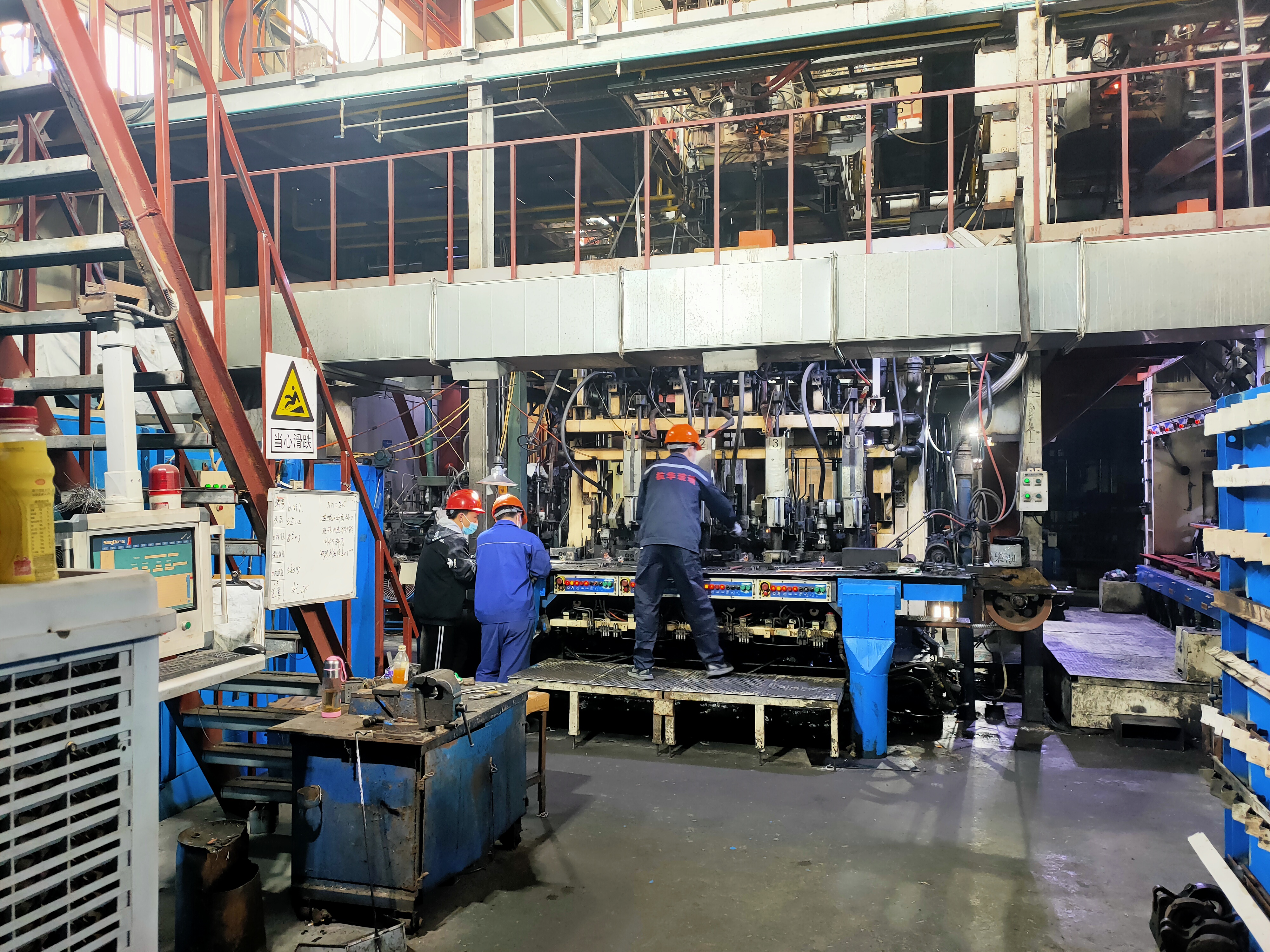
A glass packaging production base in Ningbo, China. Manufacturing execution determines whether packaging samples can be reproduced at scale.
Problem: The Execution Gap in Supplement Packaging
The global dietary supplement packaging market was valued at approximately USD 12.7 billion in 2024 and is expected to grow at a CAGR of 6.1% through 2034, according to Precedence Research. Growth at this level attracts many suppliers, but it also creates a supply-chain problem for supplement brands: how to move from approving a sample to receiving consistent, compliant packaging, order after order.
The gap between sample approval and mass production is where quality issues usually surface. Glass dimensions vary, surface finish is inconsistent, closures do not behave as they did on the prototype, or transit damage creates losses at the destination. In practice, first-order success is not enough. Repeat orders must deliver the same glass thickness, the same closure torque, and the same decoration quality. Without process control, a successful first batch can become a quality problem in the third batch.
For brands selling in the United States or the European Union, those failures are not only operational. Packaging that does not meet its intended safety or information requirements can conflict with FDA Current Good Manufacturing Practice 21 CFR Part 111 or EU Regulation (EU) No. 1169/2011, which governs food and supplement labeling and consumer safety.
The opportunity is to treat packaging as a long-term supply relationship rather than a one-time purchase. That means evaluating manufacturing responsibility, process control, and shipment protection, not only the visual appearance of a sample bottle.
Brand Solution: A Manufacturing-Responsibility Model
NINGBO HONOR PACKAGING CO.,LTD is a packaging manufacturer founded in 2015 and headquartered in Ningbo, China, close to both Ningbo and Shanghai seaports. The company specializes in child-resistant packaging, violet glass packaging, and vacuum packaging. All of its output is exported; the manufacturer exports to the EU, US, Middle East, and Southeast Asia, with the EU and USA listed as its main markets.
The company describes its operating model as manufacturing-responsibility-focused. Before mass production, it is involved in product structural development, tooling strategy definition, and critical manufacturing risk assessment and validation. During mass production, it takes responsibility for manufacturing process control and order fulfillment, with the aim of stable quality, controlled cost, and on-time delivery.
This division of responsibility matters because packaging defects often trace back to decisions made before the line starts. A closure that fits perfectly on a hand-made sample may fail under line speeds. A glass thickness that looks acceptable on paper may create fragility issues when the bottle is filled, capped, and shipped. Tooling strategy and risk assessment are therefore part of the product development conversation, not just the factory floor conversation.
The company operates through long-term joint-venture production bases for plastic and glass packaging, with a stated focus on customer-driven development and customized packaging that requires manufacturing feasibility, process discipline, and delivery reliability.
Its monthly production capacity is 100,000 units, with a typical production lead time of 30–45 days and a minimum order quantity of 10,000 units. Ordering terms are defined around a 30% down payment to begin production and 70% before shipment, on FOB delivery terms. Quality control includes pre-shipment testing and third-party inspection, including SGS.
For a buyer, these numbers are reference points for planning. A 10,000-unit MOQ indicates a production system designed for serial manufacturing rather than short-run trials. A 30–45-day lead time can be integrated into a seasonal launch calendar. Pre-shipment testing creates a verification point before goods leave the factory.
Technical Explanation: What a Supplier Must Control
Violet glass and light protection
Violet glass is a differentiating format in the company's range. Compared with amber glass, the core difference is light transmittance. Violet glass provides stronger protection against ultraviolet rays and supports freshness preservation. Common application areas include food packaging, cosmetic packaging, and pharmaceutical packaging.
That protection comes with a measurable cost. According to the company's comparison data, violet glass is approximately 15% more expensive than amber glass. For formulations with low light sensitivity, amber glass or plastic may remain the more cost-efficient choice. For UV-sensitive ingredients, the additional cost can be weighed against product stability and shelf life.
| Comparison point | Amber glass packaging | Violet glass packaging |
|---|---|---|
| Light transmittance | Higher transmittance | Lower transmittance; stronger UV screening |
| Protection effect | Standard light protection | Better protection against ultraviolet rays; preserves freshness |
| Common uses | Food, cosmetics, pharmaceuticals | Food, cosmetics, pharmaceuticals |
| Cost reference | Baseline | Approximately 15% higher |
Glass jars and child-resistant closures
Child-resistant packaging is a core product line. The H21 series includes round and square glass jars with child-resistant caps. Round jars range from 30ml to 6oz, while square jars range from 15ml to 60dr. Both series use a 0.38mm glass thickness, with diameters around 58–60mm. The H19 series adds small concentrate jars in 5ml and 9ml capacities, available in clear, white, or black glass, with square, round, triangle, or hexagon shapes and 250 pieces per carton.
Surface treatment options include stickers, silk-screen printing, hot stamping, heat transfer printing, and frosted finish. The HDV3 round violet glass essential oil bottle series, from 5ml to 100ml, offers a range of closures: plastic cap, dropper, mist sprayer, and lotion pump. Surface treatments for HDV3 include label, silk-screen printing, and gold stamping. These choices affect brand appearance, but they also require process control in printing registration, finish consistency, and closure torque.
Shipping damage control
For glass, breakage is an execution risk that cannot be fully eliminated by design. At NINGBO HONOR PACKAGING, fragile products are wrapped with protective foam and loaded carefully onto pallets before shipment. The company documents this as shockproof packaging and palletizing standards.
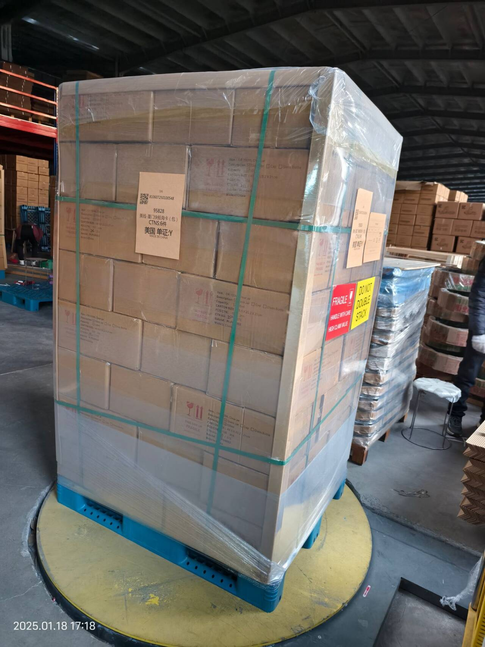
Shockproof packaging and palletizing standards reduce breakage risk for glass supplement packaging during export shipment.
Application Scenarios: Shilajit, Herbs, Powders, and Cosmetics
Different supplement formats create different packaging demands. A shilajit brand, an herbal extract line, a powder supplement range, and a cosmetic product seldom share identical protection needs. The choice of material, closure, and decoration must fit both the formulation and the brand's target market.
For UV-sensitive products, violet glass jars with child-resistant closures offer a combination that supports light protection and household safety. For small-dose concentrates such as herbal extracts or tinctures, the H19 concentrate jars provide compact formats with child-resistant caps. For powder products, flexible packaging such as Mylar bags remains common due to its moisture-barrier properties; the global Mylar bags market was valued at USD 2.4 billion in 2023 and is projected to reach USD 4.1 billion by 2030, according to Vantage Market Research.
NINGBO HONOR PACKAGING's product families can be mapped to these use cases:
- H21 round and square violet glass jars: suitable for UV-sensitive supplements, food, and cosmetics.
- H21 clear round and square jars with child-resistant caps: suitable for capsule-type products and formulations where visibility is useful.
- H19 clear, white, and black concentrate jars: suitable for small-format supplements and concentrates.
- HDV1 wide-mouth violet jars: suitable for larger volumes, from 100ml to 1L.
- HDV2 cosmetic violet jars: suitable for creams, balms, and cosmetic formats.
- HDV3 round violet glass essential oil bottles: suitable for oils, tinctures, and dropper-based products.
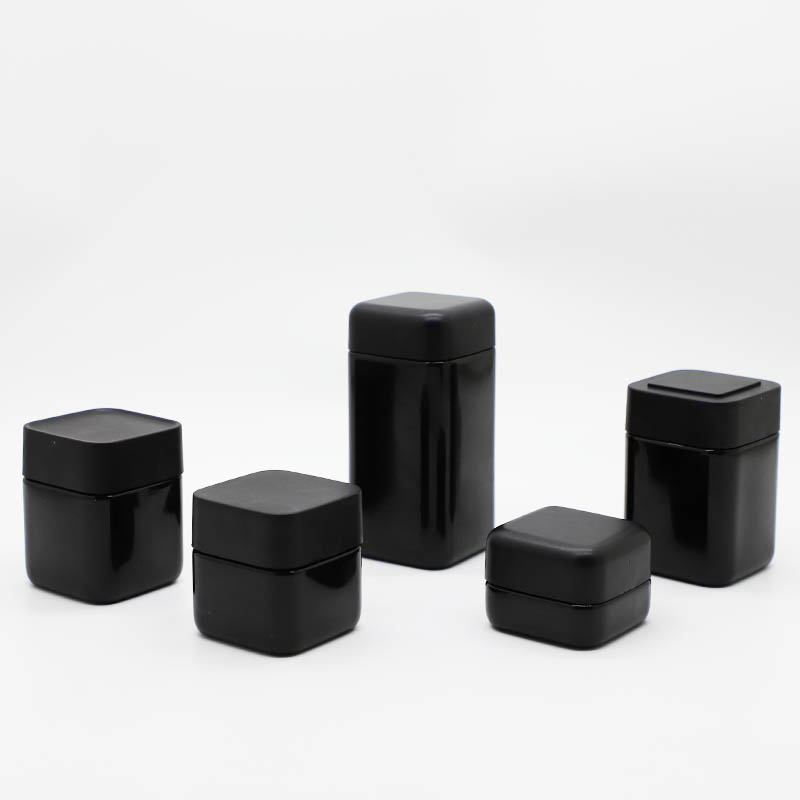
Violet glass packaging in the H21 series, available with child-resistant closures.
None of these mappings is a guarantee of product stability. A brand must still validate the packaging against its own formulation, filling process, and shelf-life study. But choosing a supplier whose existing product range already covers the relevant formats can reduce development time.
Market Trend Analysis: Compliance, Material Mix, and Buyer Priorities
North America is the largest regional market for supplement packaging, accounting for 34.4% of global revenue in 2024, according to Grand View Research. This helps explain why an export-focused manufacturer in China prioritizes EU and US market requirements. Plastic remains the dominant material in nutraceutical packaging, at 58.3% revenue share in 2024, due to cost-effectiveness and barrier properties, but regulatory pressure is pushing more buyers to review the protection level of their packaging formats.
In the United States, dietary supplement packaging falls under the Dietary Supplement Health and Education Act (DSHEA) of 1994 and FDA CGMP 21 CFR Part 111. The Poison Prevention Packaging Act (PPPA) in the US triggers child-resistant or tamper-evident packaging requirements for certain ingredients, such as iron over 30mg. In the European Union, Regulation (EU) No. 1169/2011 sets the transparency and consumer-safety requirements for food and supplement packaging.
Compliance is not a design-stage exercise. It must be reproduced consistently across every batch. That is why verification tools such as pre-shipment testing and third-party inspection are becoming standard procurement requirements for supplement brands, especially when packaging is imported from another region.
Comparison with Traditional Solutions
A conventional approach to supplement packaging is transactional: compare quotes, inspect samples, place a batch order, and move on. This can work for simple, low-risk formats. But for custom glass, child-resistant closures, and multi-market compliance, the transaction model has limits. Global manufacturers such as Amcor, Berry Global, and Gerresheimer are identified as top-tier players in the nutraceutical and dietary supplement packaging sector. A specialist manufacturer like NINGBO HONOR PACKAGING operates on a different axis: closer engineering involvement in custom formats and a production model built around manufacturing responsibility.
Buyers should also be aware of the boundaries of this model.
- Violet glass costs about 15% more than amber glass, so brands with low light sensitivity may not need it.
- Glass is heavier and more fragile than plastic, which increases freight and handling requirements.
- The minimum order quantity of 10,000 units is a practical barrier for very small first batches.
- Lead times of 30–45 days require advance planning, particularly for seasonal launches.
- Import buyers remain responsible for confirming that the finished packaging meets their target market's regulations at the time of entry.
Future Outlook
As supplement brands expand across markets, packaging will be treated less as a procurement item and more as a regulatory and product-stability tool. The likely direction is continued attention to child-resistant formats, UV-protective glass, recyclable materials, and documented quality evidence such as pre-shipment testing and third-party inspection.
Buyers are also likely to consolidate their supplier base. Managing fewer, deeper packaging relationships is easier to audit and more predictable in execution. Suppliers that can demonstrate production capacity, process control, and logistics protection will be better positioned for those long-term relationships.
FAQ
What is the minimum order quantity at NINGBO HONOR PACKAGING?
The minimum order quantity is 10,000 units. This should be taken into account when planning initial inventory and reorder cycles.
What production lead times and capacity can buyers expect?
The monthly production capacity is 100,000 units. Typical production lead time is 30–45 days, depending on the order configuration and production schedule.
What payment terms apply?
Production is arranged after a 30% down payment, and the remaining 70% is due before shipment. Delivery terms are FOB, with pre-shipment testing arranged by the factory.
Does NINGBO HONOR PACKAGING provide OEM and ODM services?
Yes. The company provides OEM and ODM production services and participates in product structural development, tooling strategy, and manufacturing risk assessment before mass production.
Which markets does the company export to?
The manufacturer exports to the EU, US, Middle East, and Southeast Asia. Its overall export ratio is 100%, with the EU and USA as the main markets.
How is glass breakage prevented during shipment?
Fragile glass products are wrapped with protective foam and carefully loaded onto pallets before shipment. This is documented as shockproof packaging and palletizing standards.
What compliance rules apply to supplement packaging in the US and EU?
In the US, dietary supplement packaging is covered by DSHEA 1994 and FDA CGMP 21 CFR Part 111; the PPPA requires child-resistant or tamper-evident packaging for certain ingredients. In the EU, Regulation (EU) No. 1169/2011 governs consumer information and safety on food and supplement packaging.