
Why OEM Capability Is the Missing Variable in Corrugated Machine Parts Sourcing
Corrugated board lines are designed for continuous operation, yet the parts that carry the load are often treated as commodity purchases. Slitting blades, NC cut-off blades, creaser wheels, anvil covers, and rotary joints operate under high speed, heat, and friction. When a replacement part does not fit the existing machine or does not match the original material specification, the consequence is not limited to the part itself—it extends to board quality, downstream converting, and unplanned downtime. This is why OEM capability has become a practical evaluation criterion for corrugated machine parts.
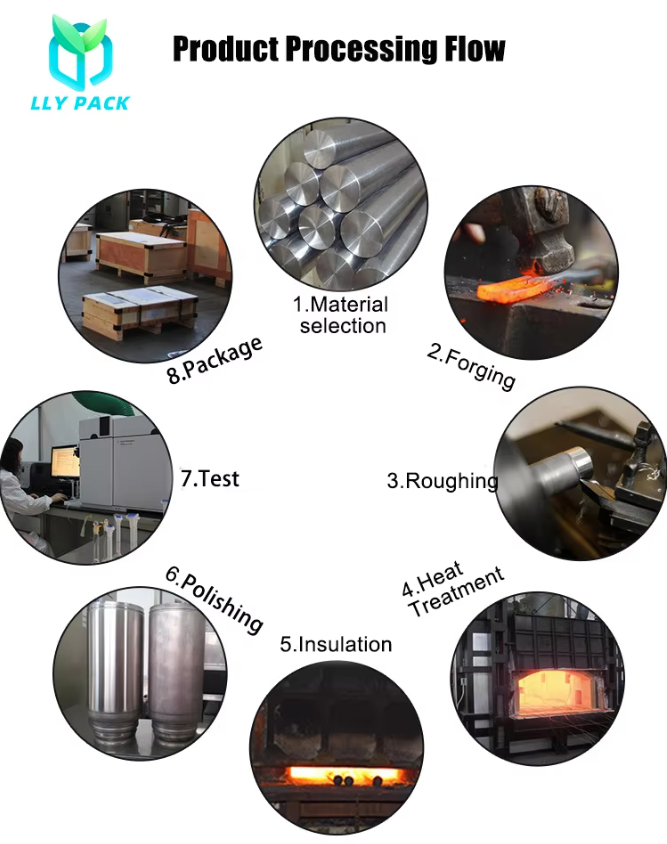
NC cut-off blade OEM production — tungsten steel cutting tools for corrugated lines.
The Problem: Catalog Parts Do Not Always Match the Machine
Procurement teams sourcing corrugated machine parts usually face the same problem: a machine drawing exists, but the replacement part available in the market does not exactly match it. Many wear parts on corrugated lines are not fully standardized. A slitting blade that performs well on one slitter scorer may be unable to fit another because of differences in outside diameter, inner diameter, number of holes, thickness, or hardness. If the supplier is a trading company, the material grade and machining precision are difficult to verify. The result is shortened blade life, accelerated wear on mating rolls, and inconsistent cutting or creasing.
The Opportunity: A Growing Installed Base Needs Precision Spares
The opportunity lies in the scale of the installed base and the continued expansion of the industry. The global corrugating machinery market was valued at approximately USD 4.8 billion in 2025 and is projected to reach USD 8.1 billion by 2034, according to Dataintelo. Asia-Pacific accounted for about 40.9% of the corrugated equipment market in 2024, based on Straits Research. In parallel, China's exports of machinery parts under HS 84 grew 7.5% year-on-year in 2024, with the broader category surpassing USD 2.1 trillion, according to the General Administration of Customs of China. A larger installed base and continued export flows mean more plants are running more machines—and those machines need parts that match their original designs.
The Supplier Capability Behind OEM Parts
One supplier with this type of production capability is LLY PACK (HK) CO., LIMITED, a China-based manufacturer of corrugated machinery and replacement components. The company operates from a 57,000-square-meter production facility in Foshan, Guangdong Province, and reports more than 25 years of experience in manufacturing corrugated machines and high-speed corrugated cardboard production lines. Its product range covers both complete corrugated lines and a broad catalog of spare parts, including slitting blades, NC cut-off blades, slotting blades, rotary joints, paper chucks, pneumatic brakes, anvil cover rubber, and printing consumables.
For corrugated machine parts, LLY PACK provides OEM production services for export markets including South America, Southeast Asia, Africa, and the Middle East. In practical terms, this means a buyer can specify parts based on drawings, samples, or production requirements instead of choosing only from a standard catalog. The company also reports more than 100 patents and certificates, more than 3,500 successful installations of corrugated lines worldwide, and an R&D team of 30.
Manufacturing depth supports the OEM claim. LLY PACK operates four sets of advanced CNC centers from Japan, described as five-face machining centers with computer control, used to ensure high-precision processing. The company's quality management system is certified to ISO 9001:2015 under certificate number 60126Q00004R000, issued by Guangdong Zhongjing Testing and Certification Co., Ltd., covering the design and production of corrugated machinery including slitter scorers and slotter die cutters. For a buyer, these details matter because they indicate that part production is controlled by the manufacturer rather than outsourced to an unknown upstream factory.
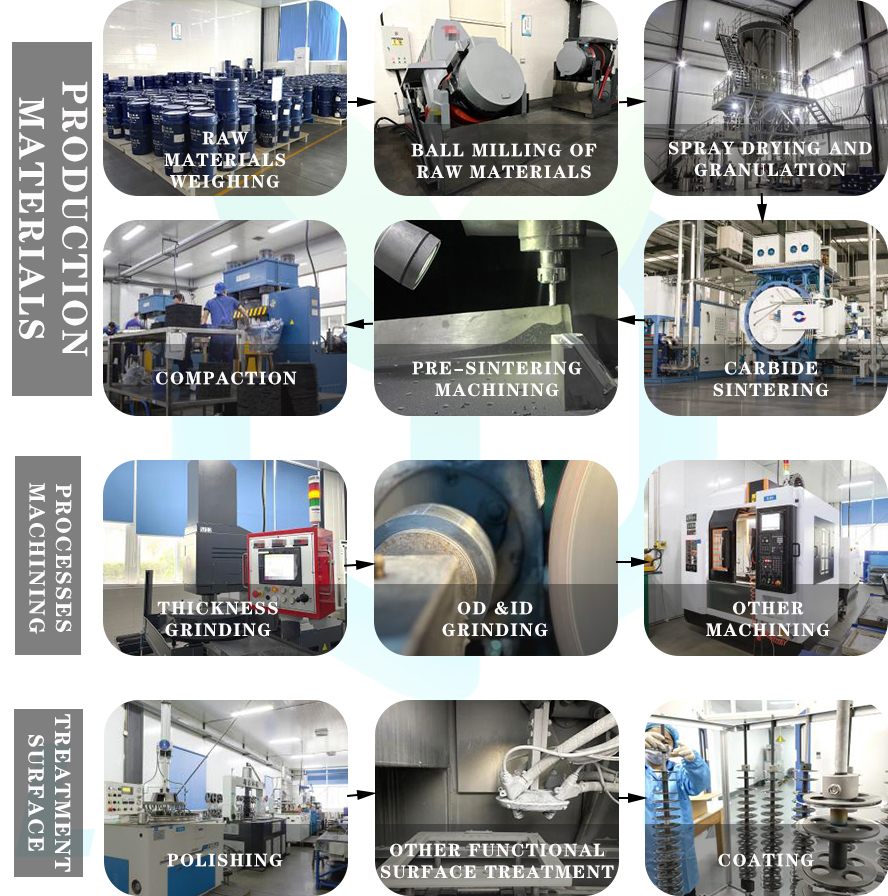
Slitting blade OEM — customized outside diameter, inner diameter, and hardness.
Technical Explanation: What OEM Customization Actually Controls
OEM customization for corrugated machine parts can involve six parameters: material specification, outside diameter, inner diameter, number of holes, thickness, and hardness. These parameters determine whether a part fits the existing machine, maintains the correct contact pressure, and resists wear under production load.
Cutting parts illustrate the engineering logic. Slitting blades and NC cut-off blades are commonly manufactured from tungsten steel or high-speed steel to achieve wear resistance and service life. In LLY PACK's range, the Slitting Blade (SLB-1), NC Cut-off Blade (NCOB-1), Slotting Blade (SB-1), and Corrugating Roller (CRO-1) all list tungsten steel as the base material, with dimensions customized as drawings. The company's Slitter Scorer (SSC-1) uses a slitting blade with an outside diameter of 260 mm, a scoring wheel with an outside diameter of 190 mm, and a minimum slitting width of 150 mm, while the line speed of the slitting blade reaches 630–900 m/min. At those speeds, blade hardness and geometry determine whether the board edge is cut cleanly or compressed and damaged.
The same logic applies to parts that protect the board structure. No crush wheels, produced from polyurethane in sizes such as 100x45x50mm, 130x65x60mm, 165x65x50mm, 165x70x50mm, and 180x65x50mm, are designed to support moving board without crushing the flute. Anvil cover rubber combines rubber and iron for die-cutting backup, while grinding wheels are available in diamond material for profiling tools.
Some spares must meet thermal and mechanical constraints. The Pneumatic Brake (PB-1) has a torque range of 0–400 Danm, maximum torque of 2,800 Nm, thermal power of 3 kW at 100 rpm, maximum heat dissipation of 12 kW, and an expected service life of around 42,000 working hours. These figures matter on a roll stand, where braking consistency directly affects web tension and splice alignment. Rotary joints and flexible metal hoses support steam supply to heated rolls, while high-temperature tape and fiber tape are used in splicing and board transfer, with sizes such as 3cmx40m and 4.8cmx50m.
Quality control is part of OEM capability as well. LLY PACK states that OEM parts are 100% tested before shipment, and pre-shipment testing is included in the acceptance process. For buyers, this reduces the risk of receiving a batch that looks identical but performs differently.
Application / Use Cases: Where OEM Parts Matter Most
From an application perspective, OEM parts are most relevant in four situations:
1. High-wear cutting positions. Slitting blades, slotting blades, and NC cut-off blades on slitter scorers and rotary die cutters, where dimensional accuracy and tungsten steel material directly affect cut quality and tool life.
2. Non-standard wear parts. Creaser wheels, paper chucks, no crush wheels, anvil cover rubber, and fiber combs, where the machine configuration may require a specific outside diameter, width, or hardness not available in standard catalogs.
3. Printing and ink delivery systems. Printing rollers, printing cushions, anilox rollers, diaphragm pumps, and ink pumps, where material compatibility and dimensional tolerances influence print registration and ink consistency.
4. Tension and drive control. Pneumatic brakes, paper waste strippers, and conveyor belts, where rated torque, speed, and mechanical endurance must match the line's operating conditions.
Each of these positions places different demands on the part. A blade must hold its edge; a wheel must not crush the board; a brake must hold tension without overheating; a pump must deliver ink without pulsation. Because the requirements differ, a one-catalog supplier cannot automatically serve all positions with equal quality. OEM capability gives the procurement team a way to specify the right material and geometry for each position.
Market Trend Analysis: Specification-Based Buying Is Replacing Price-Only Sourcing
The direction of the market supports this approach. The global corrugating machinery market is expected to grow from roughly USD 4.8 billion in 2025 to USD 8.1 billion by 2034, according to Dataintelo. Asia-Pacific contributed approximately 40.9% of the corrugated equipment market in 2024, according to Straits Research, and China's machinery parts exports continue to climb—GACC reported a 7.5% increase in HS 84 export value in 2024, exceeding USD 2.1 trillion for the broader category.
At the equipment level, market concentration is high. Future Market Insights data indicates that global Tier 1 corrugated machinery manufacturers—BHS Corrugated, Fosber, and Mitsubishi—hold about 60% of the market. That leaves a significant share of the installed base served by other machine builders, regional lines, and multi-vendor plants. For those operations, no single original equipment supplier may cover every part. This creates a practical need for parts manufacturers with wide product coverage, engineering capability, and consistent export experience.
Procurement behavior is likely to follow the same pattern as equipment selection. Instead of buying spare parts purely by price, maintenance and purchasing teams are beginning to ask the same questions they ask of machinery suppliers: What material is used? How is tolerance controlled? What testing is done before shipment? This is a shift from transactional buying to specification-based buying, and it is the direction in which OEM-capable suppliers are positioned.
Comparison with Traditional Solutions
The difference between OEM-based part sourcing and traditional trading-supplier sourcing can be summarized in the following table.
| Criterion | OEM-Based Parts Sourcing | Trading Supplier / Generic Parts |
|---|---|---|
| Fit to machine | Produced from drawings or samples; dimensions match | Relies on catalog inventory; may require adaptation |
| Material control | Supplier specifies material grade, e.g., tungsten steel | Material grade may vary by upstream factory |
| Quality verification | 100% test before shipment; pre-shipment inspection | Limited access to production records |
| Repeat order consistency | Same production parameters across batches | May differ between batches |
| MOQ | Higher, typically 100 pieces | Lower, often single-piece |
| Lead time | 30–45 days | Shorter for standard stock items |
| Best suited for | Non-standard, high-wear, or machine-specific parts | Standard consumables and emergency replacements |
At the same time, OEM sourcing has clear boundaries. The minimum order quantity at LLY PACK is 100 pieces and the lead time is 30–45 days. For an emergency breakdown, this is not fast enough; a trading supplier with local stock can often deliver a standard part in days. For low-cost, fully standardized consumables such as common fiber tape or high-temperature tape sizes, OEM customization adds limited value. Buyers should therefore treat OEM not as a blanket requirement, but as a decision framework: apply it when geometry, material, and operating conditions are machine-specific, and rely on standard stock when they are not.
Future Outlook
Looking ahead, corrugated machine parts procurement will become more specification-driven. Faster lines, higher uptime targets, and stricter board-quality demands all increase the cost of a poorly matched part. Buyers are likely to require clearer material documentation, dimensional records, and test reports—capabilities that are inherent to OEM production.
In emerging markets, where the installed base of corrugated lines is expanding, local maintenance teams often lack direct access to the original machine builder's part network. In those regions, a parts manufacturer with export experience and a documented quality system becomes a practical technical partner. The ability to customize material and geometry will matter more as plants run a mix of equipment from different machine builders.
FAQ
What does OEM production mean for corrugated machine parts buyers?
OEM production means the manufacturer produces parts according to the buyer's drawings, samples, or specification requirements, rather than supplying only from a standard catalog. For corrugated machine parts, this gives buyers control over dimensions and materials so the replacement matches the original machine design.
What parameters can be customized for corrugated machine parts?
Customization can cover material specification, outside diameter, inner diameter, number of holes, thickness, and hardness. These parameters determine whether a part mounts correctly and performs under production speed and load.
Which materials are commonly used for cutting parts on corrugated lines?
Slitting blades and NC cut-off blades commonly use tungsten steel or high-speed steel for wear resistance and long service life. In LLY PACK's product range, slitting blades, NC cut-off blades, slotting blades, and corrugating rollers are listed with tungsten steel material, while grinding wheels are available in diamond material.
What are the typical MOQ, lead time, and quality checks for OEM corrugated parts?
LLY PACK lists a minimum order quantity of 100 pieces, a monthly production capacity of 1,000 pieces, and a lead time of 30–45 days for OEM parts. All parts are 100% tested before shipment, and pre-shipment testing is part of the acceptance process.
What delivery and payment terms apply to OEM corrugated machine parts orders?
LLY PACK supports FOB, CIF, EXW, and DAP delivery terms, with T/T payment. Defective products are replaced under the company's after-sales policy.
How does OEM sourcing differ from buying from a trading supplier?
OEM sourcing gives the buyer control over production parameters, material grade, and testing. A trading supplier typically resells parts from multiple upstream factories and has limited influence over how a part is manufactured. For non-standard parts, OEM sourcing provides better traceability and consistency between repeat orders.
Is OEM customization necessary for every corrugated machine part?
No. For standardized consumables available in the exact required size, standard parts or stock items are faster and more economical. OEM is most valuable for parts where the geometry, material, or operating conditions are specific to a machine, such as slitting blades, creaser wheels, rotary joints, anvil covers, and no crush wheels. OEM also requires a higher MOQ and longer lead time, so it is not the right choice for emergency replacements.
Have Questions or Need More Details?
Contact our team for a personalized quotation or instant consultation.
Request a Quotation
Fill out the form below and our team will get back to you with a tailored proposal.
WhatsApp Direct Chat
Prefer to chat in real-time? Message us on WhatsApp for instant assistance & quick answers.
- Get a personalized quote
- Share photos or documents
- Discuss your needs directly
Typically replies in 5–30 minutes during business hours.