
Why Operating Conditions Should Drive CNC Machining Selection
CNC machining is often summarized with axis counts, tolerance ranges, and unit prices. Yet the procurement signals that matter most in industrial projects are broader: how a component will be used, for how long, under which environmental conditions, and at what production volume. In project-led sourcing, a 3-axis, 4-axis, or 5-axis CNC machining service is only useful when its process plan can match the part's actual operating scenario.
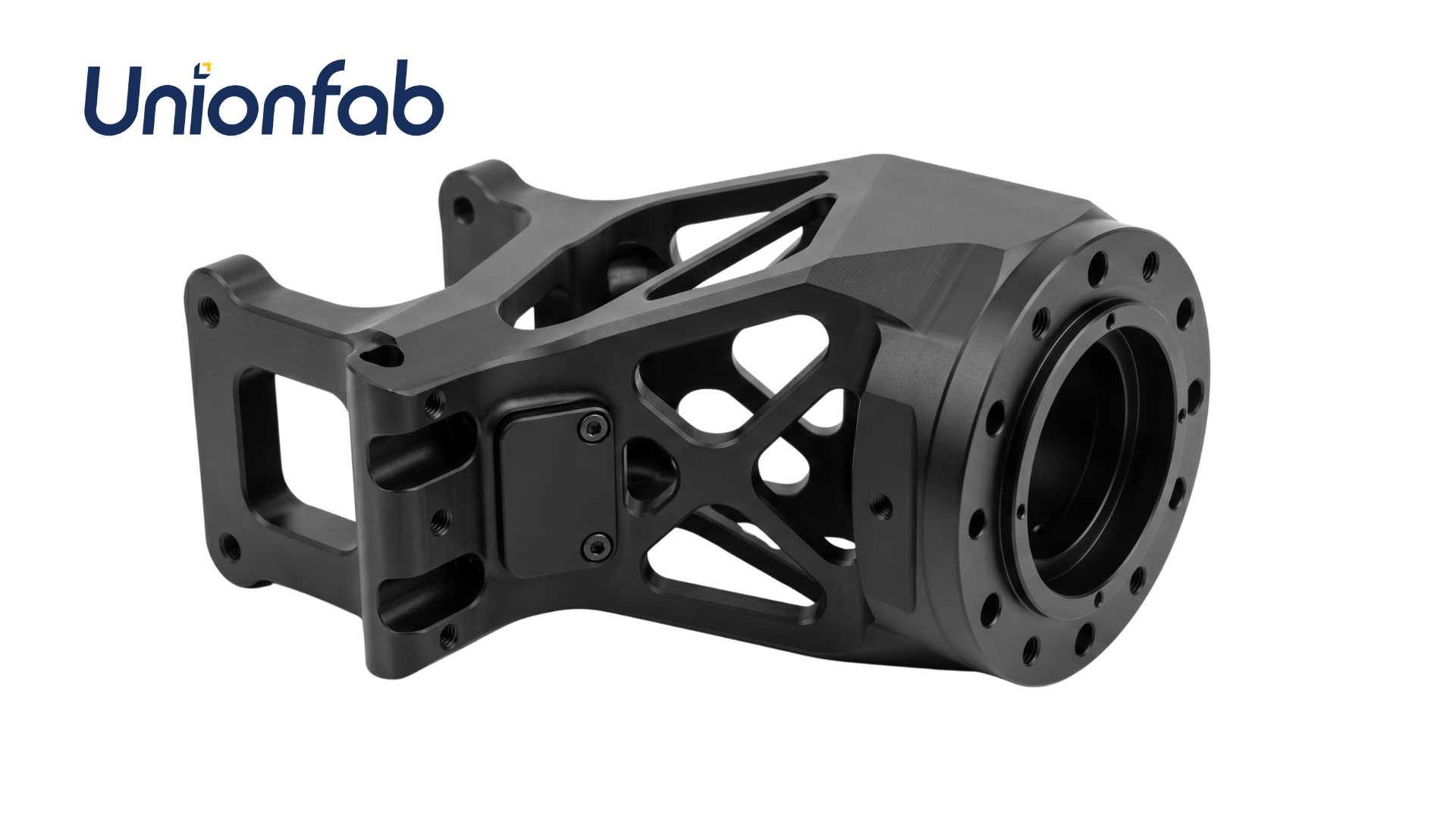
A robot arm joint bracket is an example of a low-volume precision component where thin-wall milling and positional accuracy must be proven before assembly.
CNC Machining Decisions Start With the Operating Scenario
Component behavior is not defined by the CAD file alone. In continuous mass production, environmental conditions such as factory ambient temperature, cleanroom-class air, and dust control affect how parts are handled, inspected, and finished. In one documented application for the European market, a high-precision CNC machined component operates under factory ambient temperature conditions in a Class 8 clean environment with no dust pollution and 24/7 continuous mass production. Its functional role is high-precision mechanical structural support, fluid sealing, and dynamic component housing across critical industries.
These conditions are usually invisible in a machining quote. That is why buyers evaluating CNC machining services should ask how a supplier plans for them: Are materials traceable? Are threads gauged? Is a part verified after post-processing such as anodizing? The difference between a generic service quote and a scenario-appropriate solution often lies in these operational details rather than in machine brand.
Core CNC Machining Capabilities That Support Scenario Matching
CNC machining is not a single process. A service provider may offer CNC milling, CNC turning, 3-axis machining, 4-axis machining, 5-axis machining, EDM, and wire EDM. Each process family addresses a different part geometry and production stage. For example:
- 3-axis CNC machining is widely used for prismatic parts machined from a single direction.
- 4-axis CNC machining adds rotary movement for parts requiring multiple faces.
- 5-axis CNC machining allows complex contoured geometry with fewer setups.
- CNC turning is suited to cylindrical features such as shafts and bushings.
- EDM and wire EDM handle hard materials, tight internal corners, and special shapes.
For buyers comparing precision machine shops, published capability data should include a consistent quality reference. A representative CNC machining service specification such as the one published by Unionfab includes:
| Tolerance | ±0.0002 inch (±0.005 mm) in accordance with ISO 2768 |
| Surface finish | Ra up to 0.4 µm |
| Part size range | Min 2 x 2 x 2 mm; Max 4000 x 1500 x 600 mm |
| Materials | Aluminum, stainless steel, carbon steel, titanium, brass, copper, exotic alloys, engineering plastics, insulation materials, rubber, ceramics |
| Lead time | 1 to 5 days for rapid production scenarios |
This set of parameters matters because it defines the boundary of what can be quoted with confidence. A part requiring 0.4 µm surface finish and a part requiring a 3500 mm machining envelope do not belong to the same supplier decision model, even if both are CNC machining projects.
A Scenario-Based Checklist for CNC Machining Service Evaluation
When a buyer moves from discovery into evaluation, the main question is not which CNC machining company has the lowest price. The better question is which supplier can hold the requirements of the specific application. The following checklist is designed for that evaluation step.
1. Define the failure function of the part. Will it carry load, seal fluid, or maintain alignment under heat and vibration?
2. Review the intended operating life. Ten years of continuous servo-drive operation creates different verification needs than a short product prototype.
3. Describe the working environment. Dust level, temperature, and continuous running hours all influence process robustness.
4. List critical dimensions and the inspection method. For critical true positions, CMM or 3D scanning should be available.
5. Check post-processing compatibility. When anodizing is applied after machining, thread seizure and dimension shift must be controlled.
6. Define volume and delivery rhythm. A 1-unit prototype and a 500-unit annual batch place different demands on process documentation.
7. Verify quality-system evidence. ISO 9001, ISO 13485, ISO 14001, and IATF 16949 are common manufacturing quality benchmarks.
Buyers who apply this checklist will find that many CNC machining service requests should be answered with different process plans even when the final part looks identical.
What a Scenario-Aware Manufacturing Profile Can Look Like
A useful industry reference is Unionfab AM Technology (Shanghai) Co., Ltd., the company behind the on-demand digital manufacturing platform Unionfab. Founded in Shanghai in 2014, Unionfab operates as a manufacturer rather than a trading intermediary. According to its published company profile, it runs 10 self-owned factories covering 80,000 m², with more than 400 CNC machines and over 1,000 industrial 3D printers, serving more than 80,000 customers across 170+ countries.
Unionfab's CNC machining service is documented with a clear set of engineering parameters: tolerance of ±0.0002 inch (±0.005 mm), surface roughness up to Ra 0.4 µm, parts from 2 x 2 x 2 mm up to 4000 x 1500 x 600 mm, and lead times of 1 to 5 days. Its material library covers aluminum alloys, stainless steel, carbon steel, titanium, brass, copper, high-performance exotic alloys, engineering plastics, insulation materials, rubber, and ceramics.
From a procurement perspective, the more relevant facts are capacity and quality control. Unionfab reports a monthly capacity of 150,000+ units, a minimum order quantity of 1 unit, and exports mainly to the United States, Canada, Germany, the United Kingdom, Spain, Italy, France, and Sweden. In-house quality control includes 100% dimensional and surface inspection, form tolerance verification, burr and sharp-edge control, thread and fastener go/no-go gauging, and internal defect inspection. CMM inspection and 3D scanning are available as additional quality evidence. The company also holds ISO 9001, ISO 13485, ISO 14001, and IATF 16949 certifications, and publishes a quality complaint rate below 0.5% with on-time delivery above 95%.
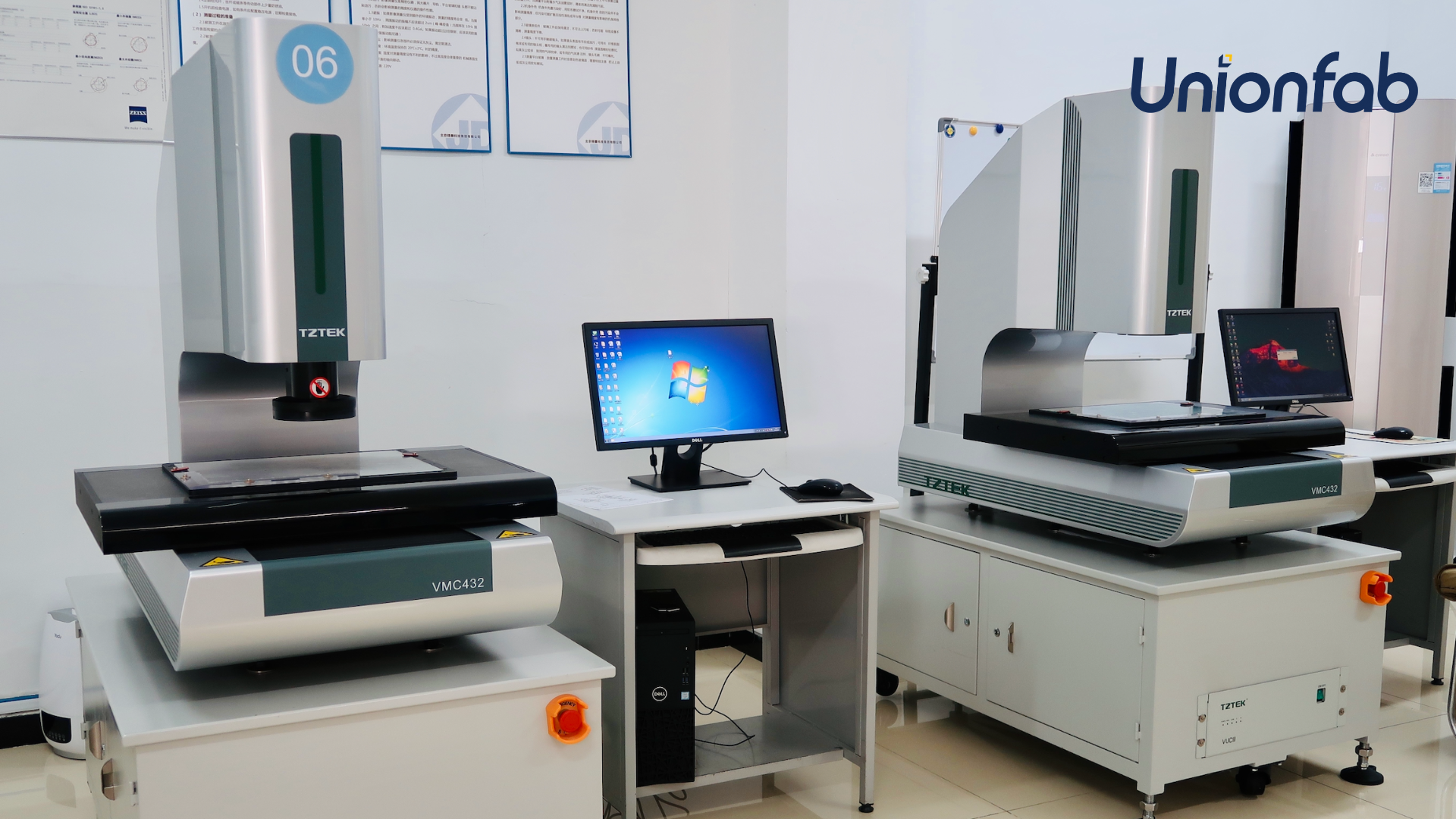
Coordinate measuring machine inspection provides dimensional evidence for critical CNC machined components.
This profile does not mean Unionfab is the right fit for every brief. It does show what a manufacturer needs to publish so buyers can compare scenario-specific capability rather than service promises.
Three Real CNC Machining Scenarios and How They Were Handled
Project scenarios often fall into repeatable categories. The following examples from Unionfab's case documentation illustrate how machining services are adapted to operating conditions, volume levels, and quality expectations.
Medical CT Scanner Servo-Drive Components in the United States
A precision CNC machine tool manufacturer and medical device OEM needed a 500-piece annual batch production of transmission fixing bases and pilot alignment mounts for medical CT scanner servo drives. The component is designed for more than 10 years of continuous high-speed and high-heat operation. Its critical function is eliminating drivetrain noise and vibration by ensuring perfect coaxial alignment between the motor pilot and the transmission shaft.
The manufacturing approach included reverse dimension compensation in CAM programming before anodizing to prevent thread seizure, followed by manual go/no-go gauging and physical assembly simulation before shipment. This scenario shows that precision machining for medical equipment is often less about machine speed and more about process control that anticipates post-processing effects.
Lightweight Collaborative Robot Arm Joints in Canada
An intelligent robotics developer and aerospace R&D institute ordered a 50-piece low-volume production run of joint connection components for a lightweight six-axis collaborative robotic arm. The component is engineered for more than five years of high inertial stress and load-bearing conditions. Unionfab machined the part from Aluminum 7075-T6, holding multi-axis hole true position to ±0.0005 inch (±0.0127 mm) and executing flawless 1.5 mm thin-wall milling. The result was a 35% reduction in total robot arm weight while maintaining joint torsional rigidity during rapid synchronized movement.
This scenario highlights the value of 5-axis capability and thin-wall experience for robotics and aerospace projects where weight reduction and stiffness must be achieved together.
Automotive Final Assembly Line Brackets in Germany
An industrial automation integrator and custom machinery manufacturer required 15-piece low-volume prototype brackets for a multi-station sensor and cylinder connection system in an automotive final assembly line. The bracket was designed for more than eight years of high-frequency continuous operation. Unionfab delivered a one-piece prototype with no MOQ in 48 hours and controlled overall flatness within 0.05 mm using modular quick-change tooling. The result was zero vibration displacement on the assembly line and uninterrupted 24/7 automated production.
This case is a good example of how CNC prototyping and low-volume production can serve the same project stage when lead time and geometric stability are equally important.
Market Direction: CNC Machining Services Are Increasingly Selected by Application
The global market context supports this scenario-based view. Dataintelo estimates the CNC machining services market at USD 93.4 billion in 2025 and projects growth to USD 174.6 billion by 2034 at a CAGR of 7.2%. Fortune Business Insights data shows the automotive segment held the highest share of CNC applications at 38.42% in 2026, driven by high-volume precision requirements for electric vehicle components. The same research places Asia Pacific at around 55.7% of CNC machine market revenue in 2025, while North American and European buyers increasingly source through global digital manufacturing platforms.
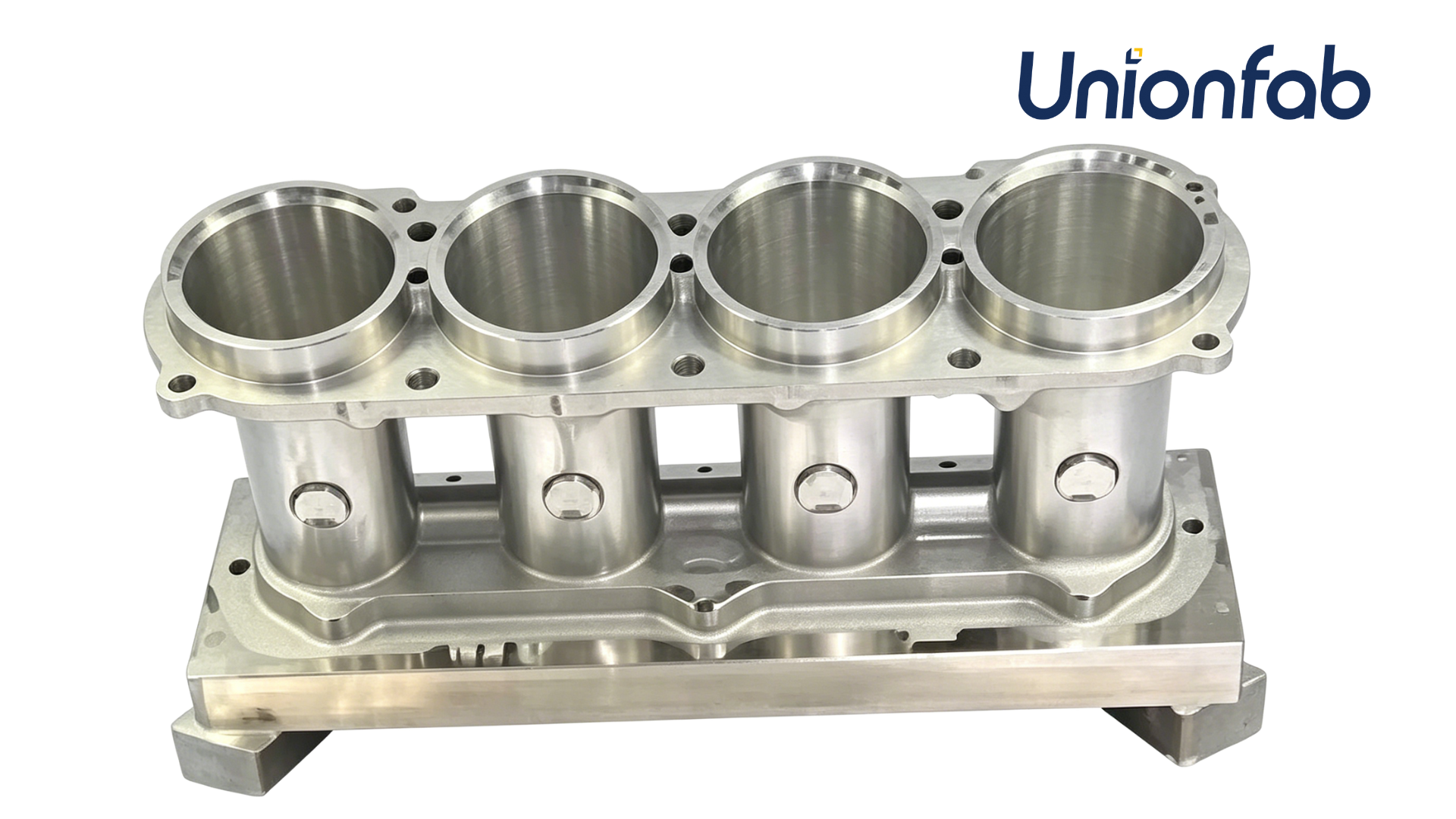
Automotive applications account for the largest share of CNC machining demand in 2026 market data.
Another important trend is the role of data-driven process control. MarketsandMarkets research indicates that AI-driven CNC systems can reduce machine downtime by up to 40% and minimize material waste by approximately 30% through predictive maintenance and real-time path optimization. For buyers, this reinforces the need to evaluate how a supplier collects and shares process evidence, not only how many machines it operates.
Comparison With Traditional Sourcing Model and Its Boundary
The traditional model for precision CNC machining is a single machine shop selected for local proximity, direct communication, and long-standing operator familiarity. That model remains valuable, especially for projects requiring frequent onsite visits, simple geometries, or small local supply chains.
By contrast, a multi-factory manufacturing platform such as Unionfab provides broader access to 3-axis, 4-axis, and 5-axis CNC machining capacity, digital quoting, and centralized quality records. For buyers that need fast prototype-to-production transitions, material variety, and capacity redundancy across multiple factories, the platform model can reduce sourcing risk.
However, every model has boundaries. General CNC machining services are not intended to replace dedicated high-volume mass-production systems. Unionfab's documented profile, for example, points to a monthly capacity of 150,000+ units and a low-volume minimum order quantity of 1 unit. That configuration is suitable for high-mix precision work, rapid prototyping, and annual batches in the hundreds or thousands, but it is not positioned to compete with a multi-million-unit automotive transfer line. Mass-production economics require dedicated tooling and process automation outside the scope of on-demand CNC machining platforms. Buyers should therefore evaluate scenario fit honestly rather than assume that one production model can cover all volumes.
Future Outlook: Procurement Will Become More Scenario-Led
As engineering teams use online quoting and digital quality tracking more frequently, CNC machining procurement is likely to become more scenario-led. The winning supplier will not simply own machine tools; it will demonstrate how it handles operating conditions, material behavior, post-processing interactions, inspection requirements, and volume rhythm. Evidence such as CMM reports, go/no-go gauging results, and material traceability will be incorporated earlier into the buying decision.
For Unionfab and similar manufacturing platforms, the direction is to make this evidence visible before a commercial order is placed. That means digital engineering support, transparent capability data, and manufacturing systems certified against internationally recognized quality standards will matter more than generic marketing language in supplier shortlists.
Frequently Asked Questions for CNC Machining Buyers
How should a buyer decide between 3-axis, 4-axis, and 5-axis CNC machining?
A 3-axis CNC machining center is generally sufficient for prismatic parts machined through planar faces. A 4-axis machine adds rotary capability for parts that need machining on multiple sides. A 5-axis machine is preferred for complex contoured geometries, thin-wall structures, and applications where fewer setups improve accuracy. Large parts may require gantry-type machining centers.
What tolerance can precision CNC machining hold?
In documented service specifications, precision CNC machining can hold tolerances of ±0.0002 inch (±0.005 mm) in accordance with ISO 2768. Surface finishes can reach Ra 0.4 µm. The appropriate tolerance for a project depends on the functional fit between mating components, not only on machine capability.
Can CNC machining handle both metal and plastic components?
Yes. CNC machining services commonly process metals such as aluminum, stainless steel, carbon steel, titanium, brass, and copper, as well as engineering plastics, insulation materials, rubber, and ceramics. The process is suitable for custom CNC machining across material families.
Is there a minimum order quantity for custom CNC machining?
Minimum order quantities vary by supplier. Some manufacturing platforms, including Unionfab, support low-volume CNC machining with a minimum order quantity of 1 unit. This makes CNC machining services practical for prototype validation before larger production commitments.
What is a typical lead time for CNC machining services?
Depending on part complexity and material availability, CNC machining lead times can be as fast as 1 to 5 days. In one documented case, a one-piece automation prototype was delivered in 48 hours. Buyers should confirm queue status and inspection requirements before assuming standard lead times.
Which certifications should a CNC machining company hold?
ISO 9001 is a common baseline for quality management. For medical applications, ISO 13485 is frequently expected. Automotive buyers often look for IATF 16949, while environmental management is covered by ISO 14001. Aerospace applications typically add AS9100 expectations. Buyers should match certification requirements to their industry and regulatory context.
Why should operating conditions matter in CNC machining supplier selection?
Operating conditions such as clean environment class, continuous running hours, temperature, and exposure to vibration affect component design, material selection, and inspection strategy. A supplier that understands these conditions can recommend appropriate finishing, anti-seizure compensation, and verification methods that a standard quote may ignore.
Have Questions or Need More Details?
Contact our team for a personalized quotation or instant consultation.
Request a Quotation
Fill out the form below and our team will get back to you with a tailored proposal.
WhatsApp Direct Chat
Prefer to chat in real-time? Message us on WhatsApp for instant assistance & quick answers.
- Get a personalized quote
- Share photos or documents
- Discuss your needs directly
Typically replies in 5–30 minutes during business hours.