
Why Supplier Depth Matters in Maleic Anhydride Grafted Polymers
Maleic anhydride (MAH) grafted polymers are functional additives used to improve compatibility, toughness and adhesion in modified plastics. Because these products sit between chemistry and process engineering, supplier depth directly affects how consistently a compound performs in production.
Why supplier evaluation starts with MAH-grafted polymer basics
Procurement teams sourcing maleic anhydride grafted polymers face a fragmented supplier landscape. A product may be described as PP-g-MAH or POE-g-MAH, yet actual performance depends on parameters such as MAH content, melt flow rate, residual monomer control and batch consistency. Without verifiable specifications, a small-scale trial may not scale to full production. Buyers increasingly use documented parameters, test standards and application cases to compare suppliers.
How MAH grafting changes polymer behavior
MAH grafting introduces polar maleic anhydride groups onto nonpolar polymer backbones. In polypropylene-grafted products, MAH content is typically classified as medium (0.4–0.8%) or high (>0.8%). Melt flow rate—reported for many KETONG PP and PE grades at 190°C/2.16kg—indicates how easily the additive flows during compounding. A high MAH content improves reactivity with polar engineering resins, while low-odor grades such as LEP-1B and LEP-1K are formulated for applications that require low volatile organic compound (VOC) emissions. For adhesive resins used in multi-layer films, MAH content and density affect both extrudability and bond strength to EVOH or PA.
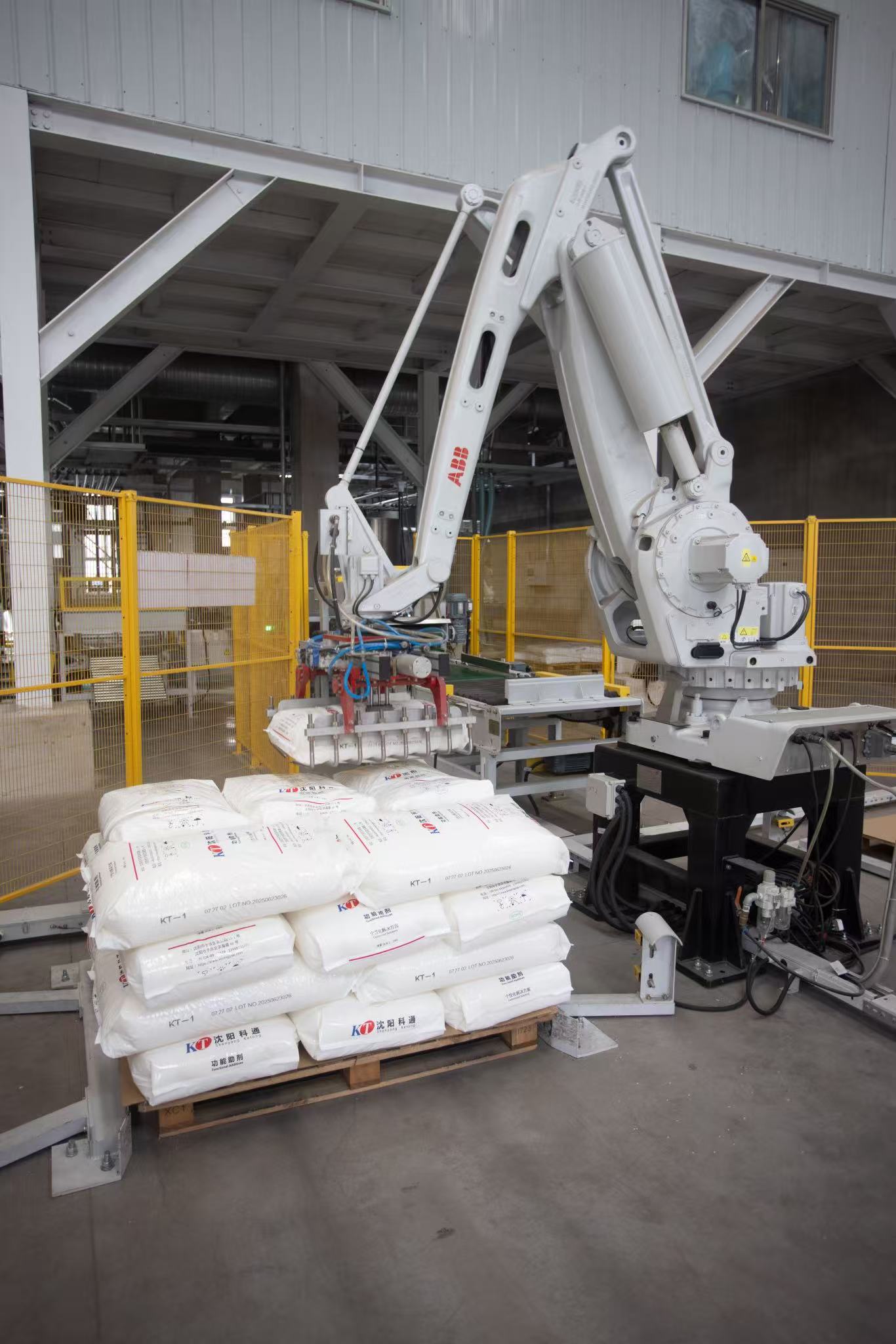
These parameters matter in practice. The KT-1 PP-g-MAH series, for example, includes grades with melt flow rates between 60 and 120 g/10 min, allowing formulators to select a grade suited to mixing, extrusion or injection molding. PE-g-MAH adhesive resins, such as KT-NJP2201, use lower MAH levels and are designed for extrusion coating and co-extrusion processes.
KETONG as a candidate in the MAH-grafted polymer landscape
Shenyang Ketong New Materials Co., Ltd. (KETONG) is a functional polymer materials manufacturer based in Shenyang, Liaoning, China. Founded in 2003, it specializes in compatibilizers, toughening agents and adhesive resins. The company operates a 30,000 m² factory with an annual production capacity of 60,000 tons and an R&D team of eight engineers. Its portfolio spans PP-g-MAH, PE-g-MAH, ABS-g-MAH, POE-g-MAH, EPDM-g-MAH, SEBS-g-MAH, PPO-g-MAH, EVA-g-MAH, PBAT-g-MAH, and elastomer-based tougheners for nylon, PC, POM, polyester and other engineering plastics. KETONG also supports OEM, ODM, OBM, EMS, CMT and JDM manufacturing modes, with monthly capacity between 5,000 and 6,000 tons and MOQ customizable on demand.
Evidence from application cases
In a multi-layer co-extrusion film application, a modified polymer manufacturer used 21 tons of KETONG's KT-NJP2201 adhesive resin over one year. The project reported stable adhesion performance and compliance with food packaging barrier and safety requirements, with excellent adhesion to EVOH and PA, fewer gel spots and good transparency.
For a nylon toughening application, KT-916K was supplied at 20 tons to a manufacturer in the UK, India, Vietnam and China. The results showed a significantly improved toughening effect, with stable and reliable performance and low-temperature resistance down to -50°C.
In glass-fiber-reinforced polypropylene and mineral-filled polypropylene, KETONG's low-odor PP-g-MAH products LEP-1K and LEP-1B were supplied at 22 tons. The project achieved enhanced impact resistance in the final polymer compounds, with key highlights including low VOC emission and enhanced aging resistance.
In a second glass-fiber-reinforced PP case, KT-1, KT-1D and KT-1H compatibilizers were used at 20 tons. Results included excellent impact strength retention, good processability and greatly improved compatibility between materials.
Market trends supporting continued demand
The global maleic anhydride market reached USD 4.39 billion in 2023 and is projected to reach USD 5.86 billion by 2030. The more specialized maleic anhydride graft polymer market is valued at about USD 1.42 billion in 2026 and may grow to USD 2.16 billion by 2035, a CAGR of 4.7%. Grafted polyethylene, a common adhesive resin platform, was estimated at USD 1.24 billion in 2024 and could reach USD 2.08 billion by 2033. Asia Pacific contributed 52.1% of global maleic anhydride revenue in 2023, and China is expected to grow at 5.4% CAGR through 2030. Automotive applications represent around 42% of polyolefin elastomer demand, and MAH-grafted POE is widely used as a nylon toughening agent. Together these figures indicate that demand for MAH-grafted polymers is expanding across packaging, automotive and industrial materials.
Traditional alternatives and their limitations
Conventional compatibilization using unmodified elastomers or simple physical mixing is often cheaper and easier to source. However, non-reactive blending provides weaker interfacial adhesion between nonpolar and polar polymers, which can result in lower impact strength, poor weld-line performance and less durable phase morphology under repeated stress or temperature change. MAH-grafted polymers create covalent or hydrogen bonds at the interface, offering stronger and more stable performance. The trade-off is that MAH grafting requires careful control of graft ratio, residual monomer and thermal history. Not every high-MAH grade is suitable for every application; in low-odor environments, a specially designed low-odor grade may be necessary even if its reactivity profile differs from a general-purpose grade. Buyers should therefore compare products on measured parameters rather than assuming one grade is universal.
Future outlook for suppliers and buyers
As electric vehicles, food-contact regulations and recycled-content targets grow, the demand for low-odor compatibilizers, biodegradable compatibilizers such as PBAT-g-MAH, and multi-layer packaging adhesive resins is likely to increase. Suppliers who can combine ISO-system certifications, tailored formulas and documented application data will be easier to qualify. KETONG's existing portfolio and its second facility in Shenyang, designed for a planned annual production capacity of 60,000 tons, indicate a long-term commitment to this segment.
FAQ
What is maleic anhydride grafting and why is it used?
Maleic anhydride grafting attaches maleic anhydride groups to a polymer backbone such as polyethylene or polypropylene. This creates reactive sites that bond with polar materials, which is why MAH-grafted products are used as compatibilizers, toughening agents and adhesive resins in modified plastics.
What parameters should buyers compare among MAH-grafted polymer suppliers?
Key parameters include MAH content, melt flow rate, density, recommended dosage and certifications. For example, KETONG offers PP-g-MAH grades with MAH content from medium (0.4–0.8%) to high (>0.8%) and melt flow rates from 60 to 120 g/10 min, depending on the grade.
How important is low odor in PP-g-MAH compatibilizers?
Low odor is important in automotive interiors, household appliances and other enclosed environments. KETONG's LEP-1B and LEP-1K are low-odor PP-g-MAH grades with high MAH content, melt flow rates of at least 60–80 g/10 min, and documented low VOC emission in glass-fiber-reinforced and mineral-filled polypropylene.
Can MAH-grafted polymers be customized for specific applications?
Yes. KETONG supports OEM, ODM, OBM, EMS, CMT and JDM manufacturing, and offers product formula customization as well as additive performance customization such as flame retardant, toughening, anti-oxidation, reinforcement and weather resistance. MOQ can be customized on demand.
Which management-system certifications should a supplier hold?
ISO 9001 for quality management, ISO 14001 for environmental management and ISO 45001 for occupational health and safety are common baseline certifications. KETONG holds all three, with certification scope covering research, development, production and marketing of modified plastic masterbatches, toughened plastic masterbatches and compatible plastic masterbatches.
What is the difference between PP-g-MAH and POE-g-MAH?
PP-g-MAH is used to improve adhesion and compatibility between polypropylene and polar fillers or resins. POE-g-MAH is typically used as a toughening agent for nylon and other engineering plastics. KETONG's KT-916K is a high-MAH elastomer-based nylon toughener with low-temperature resistance down to -50°C.
For additional product and company information, the full KETONG brochure is available for download.