
Why UHF RFID Readers Are Becoming Core Infrastructure for Smart Manufacturing
Industry Landscape: The Rise of UHF RFID in Industrial Automation
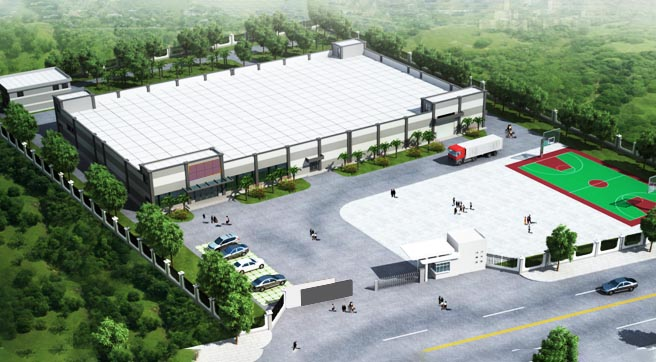
The global UHF RFID reader market is valued at approximately USD 4.8 billion in 2025 and is projected to reach USD 11.2 billion by 2034. This growth is driven by the technology's ability to enable real-time asset tracking, automated inventory, and streamlined production lines without line-of-sight requirements. As industries push toward smart manufacturing, UHF RFID readers have become a foundational layer for digitizing operations. DAILY RFID CO., LIMITED, established in 2008, is a manufacturer specializing in RFID tags, readers, antennas, cards, chips, and labels. The company operates a 28,000 m² facility with 180–200 employees and a dedicated R&D team of 38 engineers, producing 50 million RFID tags and 100,000 readers annually.
Problem & Opportunity: Manual Tracking Bottlenecks
Traditional identification methods such as barcode scanning require direct line-of-sight and human intervention, leading to slow throughput, high error rates, and limited visibility. In warehouses, manufacturing lines, and logistics, these bottlenecks create inefficiencies that compound across the supply chain. UHF RFID technology, standardized under EPCglobal Gen2 (ISO/IEC 18000-6C), addressed this by enabling simultaneous, non-contact reading of hundreds of tags per second. UHF RFID captured 40.72% of the total RFID market revenue in 2025, primarily due to retail inventory cycles and multi-item read capabilities. The opportunity lies in replacing manual processes with automated, continuous identification.
DAILY RFID’s UHF Reader Portfolio: A Systematic Approach
DAILY RFID offers a range of UHF RFID readers designed for diverse industrial environments. The DL930B is a Bluetooth-enabled UHF reader with a read range of 4 m to 8 m, IP65/IP66 protection, and support for ISO18000-6C/EPC Gen2. For high-density environments, the DL6940/6960 AI Multi-Antenna 4-Port UHF Reader delivers read distances up to 25 m–30 m and can process up to 1,000 tags simultaneously using an AI edge acceleration algorithm that makes it 16× faster than conventional readers. The DL1280 Industrial PDA integrates UHF, HF, and LF frequencies in one handheld device, with an ultra-long UHF range of 20 m and a dual-battery system for all-day operation. All readers come with free SDKs and full-platform development support.
.jpg)
Technical Architecture: How UHF Readers Work in Smart Manufacturing
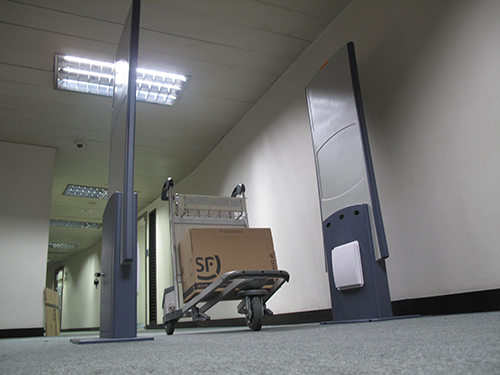
A typical industrial UHF reader comprises a transceiver (860 MHz–960 MHz), an antenna (integrated or external), and a controller. The reader emits a radio signal that powers passive tags via backscatter. Tags respond with their unique EPC (Electronic Product Code). The reader's anti-collision algorithm manages simultaneous responses – the DL6960 can handle up to 1,000 tags. For fixed installations, the DL8330U Gater uses four built-in TX/RX antennas to create a 4 m–7 m walkthrough channel, ideal for warehouse portals. Readers with PoE capability (e.g., DL921) simplify deployment by combining power and data over one Ethernet cable. In cold-chain logistics where temperatures drop to -20 °C, the DL6960 operates reliably from -30 °C to +70 °C with IP64 protection.
Real-World Application Scenarios
Smart Parking – Australia
Using DAILY RFID’s UHF vehicle tags and fixed readers, a parking operator automated entry and EV charging billing, reducing gate wait time by 50%. The system supports license-plate fallback for fault tolerance.
Cold-Chain Logistics – USA
The DL6960 reader, paired with pallet tags, automated inbound/outbound counting at -20 °C dock doors, cutting manual scan errors by 80%. Data syncs to cloud WMS every 5 minutes.
Automotive Manufacturing – Germany
Deployed with a fixed UHF reader and antenna array, the system tracked production-line parts at over 400 tags/second, streaming real-time data to the MES.
Jewelry Management – India
HF jewelry tags combined with the DL810 reader and the DL6993 tray reader achieved 99.9% inventory accuracy with anti-theft alarms, even on metal surfaces.
Market Trend Analysis
According to verified third-party data, the Americas lead with over 60% of global UHF tag usage, driven by retail mandates like Walmart. Asia Pacific is the fastest-growing region, with an expected 11.8% CAGR through 2031. The market for “Drones-as-a-Service” using RFID inventory collection is estimated to reach USD 8.2 billion by 2026, indicating that UHF readers will increasingly integrate with autonomous systems. The standardized ISO 18000-6C protocol ensures interoperability across vendors, reducing lock-in risks for buyers.
Comparison with Traditional Solutions
Compared to barcode scanning, UHF RFID readers offer bulk reading without line-of-sight, speeds of up to 1,000 tags/second, and read distances over 10 m. Traditional solutions require human labor for each scan, suffer from wear and tear, and cannot operate in harsh environments. However, an honest limitation of UHF RFID is its performance degradation near metal and liquid. Specialized on-metal tags (such as DAILY RFID’s ferrite-shielded tags) or positioning adjustments are required for such environments, adding cost and complexity.
Future Outlook: AI, Drones, and the Edge
The next generation of UHF readers is embedding AI at the edge for real-time data filtering, predictive maintenance, and adaptive power control. Products like the DL1380 AI-Powered Handheld already integrate RSSI-based distance calculation to locate items in dense stacks. The rise of autonomous mobile robots (AMRs) and inventory drones will demand readers with higher data throughput and lower latency. DAILY RFID’s DL6940, with AI acceleration, is positioned to support these emerging use cases by processing large tag volumes 16× faster than conventional models.
Frequently Asked Questions
What is the typical reading range of a UHF RFID reader?
Depending on the model and environment, a UHF reader can achieve 4–8 m for integrated readers like the DL930B, and up to 25–30 m for high-power multi-antenna models like the DL6940. Handheld readers such as the DL1280 can reach 20 m.
Which protocols do DAILY RFID UHF readers support?
All DAILY RFID UHF readers support ISO18000-6C / EPC Class 1 Gen 2. Many models also support ISO18000-6B for backward compatibility. The DL8330U supports both standards.
Can these readers work in cold-chain environments?
Yes. The DL6960 operates from -30 °C to +70 °C with IP64 protection. The DL921 fixed reader has an IP65 rating and works at -20 °C. For tags, cold-chain temperature tags with logging capability are available.
What interfaces do the readers provide for integration?
Most DAILY RFID readers offer RS232, RJ45 (TCP/IP), USB, GPIO, and Wiegand 26/34. The DL920Plus adds WiFi. SDKs are provided for C++, C#, Java, Python, NodeJS, Android, and other platforms.
For detailed specifications, product documentation, and pricing, visit DAILY RFID official website or download the company profile brochure (PDF). Contact sales: sales@rfid-in-china.com | WhatsApp: +86 15817191372
Have Questions or Need More Details?
Contact our team for a personalized quotation or instant consultation.
Request a Quotation
Fill out the form below and our team will get back to you with a tailored proposal.
WhatsApp Direct Chat
Prefer to chat in real-time? Message us on WhatsApp for instant assistance & quick answers.
- Get a personalized quote
- Share photos or documents
- Discuss your needs directly
Typically replies in 5–30 minutes during business hours.