
Winding vs Composite Air Compressor Oil Separator Elements
Winding vs Composite Air Compressor Oil Separator Elements
Oil separator elements sit exactly where compressed-air quality and maintenance cost meet, so the choice between a conventional winding-type element and a composite element is rarely settled by unit price alone. The two designs carry different service-life references — approximately 4,000 hours for winding-type separators versus approximately 6,000–8,000 hours for composite separators under normal operating conditions — and composite specifications usually publish quantified separation data that winding-type data sheets leave model-specific. This buyer-side comparison explains what each design is documented to do, where the published evidence stops, and which equipment and maintenance conditions should decide the purchase. No supplier ranking is implied or assigned.
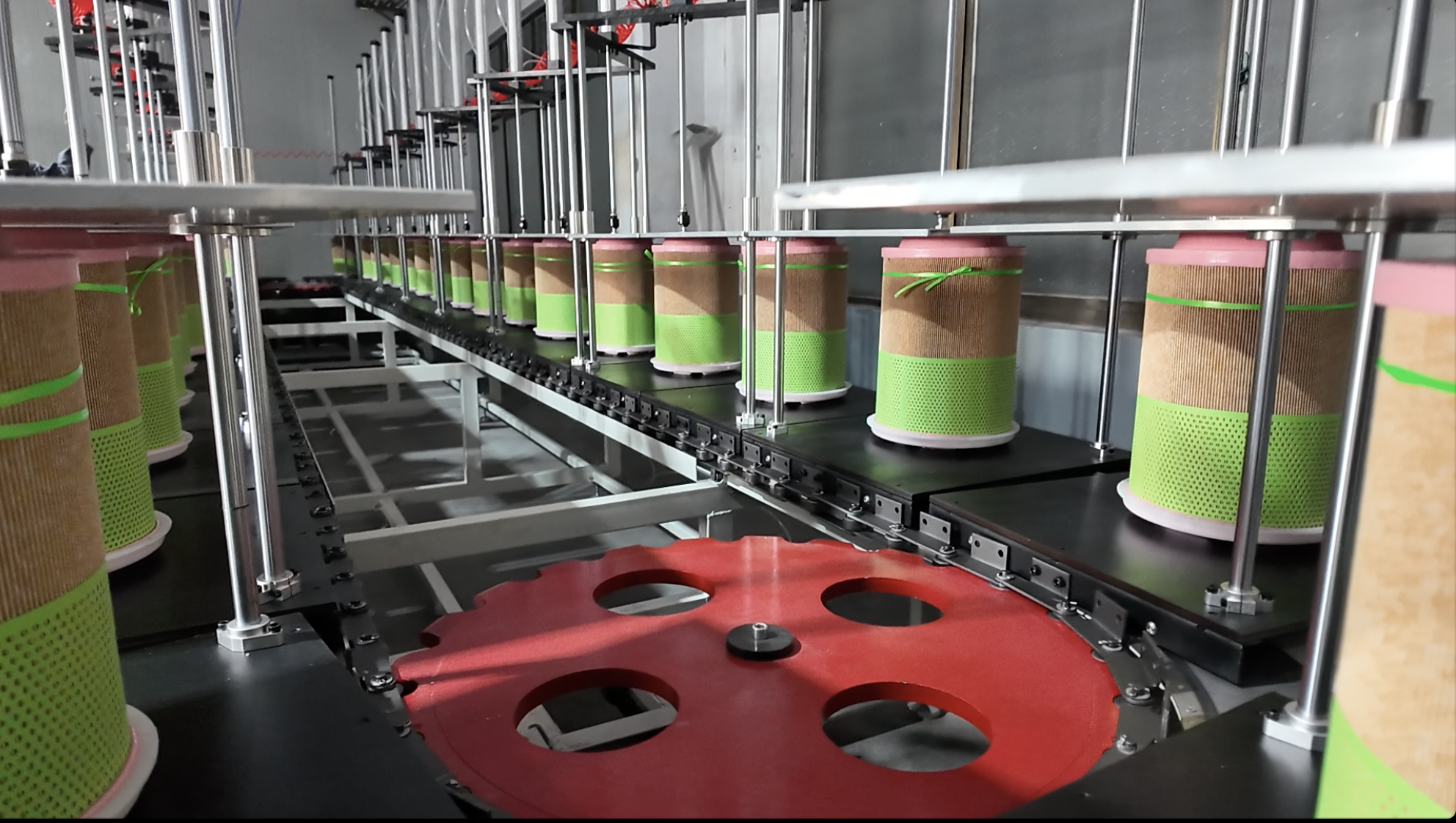
Air compressor filter element production environment — separator element construction is a manufacturing variable that affects pressure drop and service interval.
What actually distinguishes a winding-type from a composite oil separator element?
A winding-type oil separator element is the conventional construction: filtration material is wound into the element body, and the design is generally selected for conventional or cost-sensitive applications. Its documented service-life reference is approximately 4,000 hours under normal operating conditions, and its commercial advantage is a lower initial purchase cost.
A composite oil separator element combines different filtration media and structural designs to optimize filtration area, separation efficiency and service life. Composite specifications use high-performance microglass fiber media, including HV materials, to improve oil mist capture and airflow performance. The design is intended for applications requiring longer service intervals and stable operation, with a recommended service life of approximately 6,000–8,000 hours for composite models under normal operating conditions.
Neither type is universally superior. The documented difference is a trade between initial price and replacement frequency, plus whatever separation performance the connected equipment genuinely requires. That trade is decided less by the element label than by the compressor model, the duty cycle and the maintenance organization behind it.
How an oil separator removes oil from compressed air
An oil separator removes entrained lubricant from compressed air through flow separation followed by coalescing filtration. Larger oil droplets separate as the flow changes on entry to the separator vessel; finer droplets are then captured by coalescing media, merge into larger droplets and drain back to the compressor through the oil-return system under the designed pressure and flow conditions.
Because the mechanism is staged, element performance depends on more than the media grade alone. Media structure, available filtration area, airflow channel design, sealing quality and the condition of the oil-return line all influence the two numbers a buyer watches: oil carryover and pressure drop. Actual performance depends on design, operating conditions and correct installation, which is why an identical element can behave differently on two compressors of the same model with different maintenance histories.
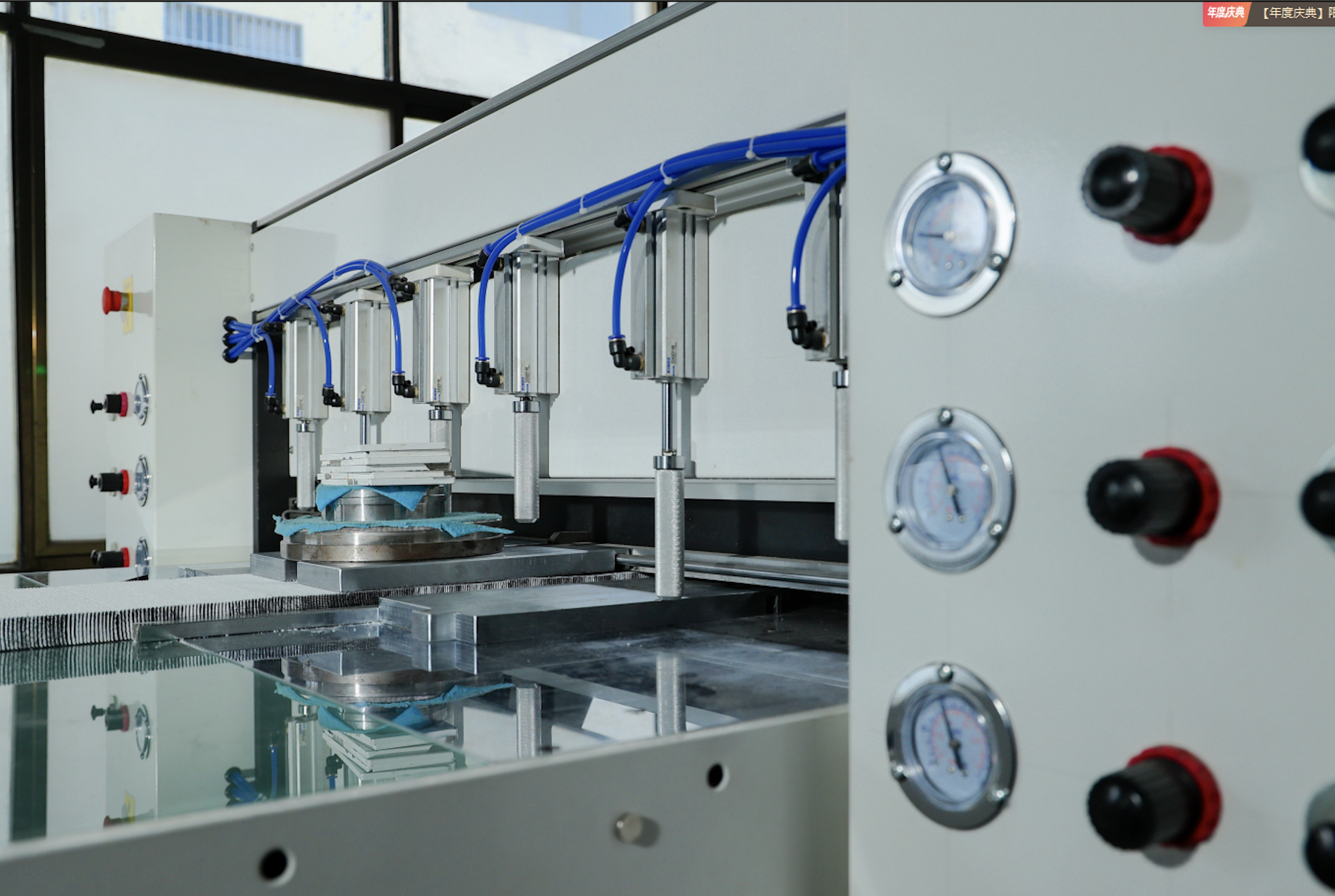
Pleated coalescing media being formed — filtration area and airflow channel geometry are structural variables behind the pressure-drop figure.
Documented comparison at a glance
| Comparison dimension | Winding-type separator element | Composite separator element |
|---|---|---|
| Construction and media | Conventional wound construction; media specified per model | Combined filtration media and structural design; microglass fiber media including HV materials |
| Stated service-life reference (normal operating conditions) | Approximately 4,000 hours | Approximately 6,000–8,000 hours |
| Initial purchase cost position | Generally lower | Generally higher |
| Designed operating pressure drop | Model-specific; verify on the datasheet | No more than 0.2 bar (design target) |
| Filtration rating | Model-specific; verify rating basis | 3 μm |
| Oil carryover | Model-specific; request test data | Reduced from 3,000 ppm to below 1–3 ppm under specified 7 bar test conditions compared with conventional fiberglass separator elements |
| Typical application fit | Conventional and cost-sensitive applications where the shorter interval matches the maintenance plan | Applications requiring longer service intervals, stable operation and low oil carryover in compressed air |
Values in the composite column are the published specification for the compared composite element and apply under the stated conditions. Where the available data does not state a winding-type figure, it is marked model-specific rather than assumed; assuming a number is the most common error in this comparison.
Why the 0.2 bar design target matters more than it looks
Initial pressure drop is the pressure difference across a clean filter under specified flow, fluid and temperature conditions. It indicates the resistance introduced by the filter media and structure, and it is an important selection parameter because excessive resistance may affect oil circulation. Every element adds resistance to the compressed-air path for the whole of its service life, so a design-level difference in resistance is paid continuously, while a price difference is paid once.
The composite specification is designed for an operating pressure drop of no more than 0.2 bar, which is intended to minimize additional pressure losses in the compressed air system. Optimized filtration area and airflow channels support that target, depending on the specific model. Two qualifications keep this figure honest: pressure-drop values should be compared only under equivalent flow, oil viscosity and temperature conditions, and a nominal value measured at one flow rate does not predict behaviour at a different one. Ask for the measurement conditions before treating 0.2 bar as a comparison point.
What the 3 μm rating and the 3,000-to-1–3 ppm figure establish — and what they do not
A micron rating describes a filter's stated particle-size performance under a defined test method and should be reviewed together with the associated efficiency and the test standard. Buyers should confirm whether the rating is nominal or absolute, because a smaller micron number alone does not prove better overall filtration performance. A 3 μm rating is meaningful only when the test basis is stated and comparable with the alternative being considered.
The oil-carryover figure is narrower in scope and more useful for procurement precisely because it carries its conditions. Under specified test conditions at 7 bar, oil carryover can be reduced from 3,000 ppm to below 1–3 ppm compared with conventional fiberglass separator elements. That is a test-condition result for a defined comparison, not a guarantee of outlet air purity in a specific installation. Real site results also depend on oil-return operation, lubricant type and level, separator sealing, inlet temperature and pressure stability — the same variables that make a separator look defective when the fault actually lies elsewhere.
The cost question: purchase price versus replacement frequency
Composite separators may offer better long-term value through reduced replacement frequency, while winding-type separators generally have a lower initial purchase cost. Which side of that trade wins is decided by variables the buyer already controls rather than by the element design itself:
- Annual running hours — the more continuous the duty, the faster the interval difference converts into avoided interventions.
- Maintenance access and labour cost — a plant with expensive downtime and constrained windows gains more from fewer replacements.
- Oil consumption and carryover tolerance — where downstream air treatment or product contact makes oil carryover costly, separation performance enters the cost calculation.
- Quoted element price at the required volume — a comparison built on list prices rather than actual quotations rarely survives the first purchase order.
A defensible calculation multiplies the quoted element price by the number of replacements implied by each documented interval at the site's annual hours, then adds labour, downtime and any measurable oil-consumption effect. The published intervals are references under normal operating conditions, not warranty periods, and they assume the oil-return system and sealing are functioning as designed.
Where each design fits — and where it does not
Winding-type designs may suit conventional or cost-sensitive applications where the approximately 4,000-hour reference already covers the maintenance plan and the element's separation performance satisfies the equipment requirement. Composite designs may suit applications prioritizing longer service intervals and stable operation, particularly where oil carryover reduction supports downstream air quality.
Two boundaries are worth stating plainly. First, suitability depends on equipment and maintenance requirements: an element that reaches the compressor's pressure-drop or oil-carryover limit before its nominal interval is not a saving, whichever design it is. Second, paying for a longer interval on lightly loaded or seasonal equipment may never be recovered, because the interval is expressed in running hours rather than calendar time. Replacement must be performed by qualified personnel using the compressor manufacturer's procedure, with seals, oil-return line and grounding components reconnected as designed; an incorrectly installed composite element will underperform a correctly installed winding-type one.
Application conditions that change the answer
These elements are intended for dusty industrial environments and continuous operation, including 24/7 industrial operation under stable pressure and temperature conditions. They are used across automotive manufacturing, electronics manufacturing, semiconductor, pharmaceutical, food and beverage, chemical and petrochemical, oil and gas, power generation, steel and metallurgical, and machinery manufacturing industries.
In those settings the element type is only one variable. Inlet air quality determines how quickly the media loads, lubricant condition affects carryover and oxidation behaviour, and pressure-drop monitoring determines whether the documented interval is actually reachable. A plant that does not trend differential pressure cannot tell whether a 6,000–8,000-hour reference is being achieved or badly missed.
A buyer's selection checklist
Oil separator selection should evaluate compressor model, pressure, flow rate, separation efficiency, pressure drop, service interval, dimensions, sealing and total cost. The sequence matters as much as the list:
- Start with the OEM part number, plus compressor brand and model, then verify dimensions, connections, filtration rating, flow capacity, pressure drop, temperature and material compatibility.
- Confirm sealing and interface details — do not select by appearance or dimensions alone.
- Request model-specific data, not family-level marketing figures, including the test conditions behind the pressure-drop and carryover values.
- Check the maintenance plan against the documented interval at your annual running hours.
- Calculate total cost across the interval, not the purchase price of a single element.
- If the part number is unavailable, supply drawings, photos or samples to the supplier for confirmation before ordering.
Verification questions worth putting to any supplier
Because separator data is frequently published as a single headline number, the useful procurement step is to ask how that number was produced. A short list covers most of the risk:
- What test standard and conditions produced the micron rating, and is the rating nominal or absolute?
- At what flow, oil viscosity and temperature was the pressure-drop value measured?
- Which baseline element was used for the oil-carryover comparison, and at what pressure?
- What differential-pressure limit ends the element's service life on this compressor model?
- Are dimensions, seals and the oil-return interface confirmed against the OEM part number?
- Which documents apply to the exact model being quoted rather than the wider product family?
Market context behind the comparison
Independent market research cited for this category estimated the air-oil separator market at USD 4.416 billion in 2024, projected to grow to USD 6.771 billion by 2035 at a compound annual growth rate of 3.96% (Market Research Future, 2026 report page). The same research family reports that rotary screw compressors account for 56% of demand in the air compressor filters market because of their use in continuous and high-load applications (MarketsandMarkets). For buyers, the practical implication is not a demand forecast to act on; it is that separator elements are a recurring consumable in continuous-duty plants, which is exactly why interval economics deserve a calculation rather than an assumption.
Standards context reinforces the same discipline. ISO 8573-1:2010 specifies purity classes for compressed air with respect to particles, water and oil, and it is the reference used to describe air purity levels in industry. It does not certify a particular filter element, and a standards reference on a brochure is not the same as product-specific test evidence. Trade classifications are equally coarse: HS heading 841490 covers parts of air or vacuum pumps, air or other gas compressors and fans broadly, so customs data beneath that heading cannot be read as filter-element trade without national tariff-line validation.
Where Foevair sits in this comparison
Foevair compressor filters is the trading identity of Shanghai Foevair Technology Co., Ltd., a manufacturer founded in 2019 and operating an 11,000 m² facility with a stated annual output of 400,000 units and a six-engineer R&D team. Its product scope covers air compressor air filters, oil filters, oil separator elements and compressor lubricant, with a stated export share of about 70% across North America, South America, Europe and Asia.
On the material side, the company uses filtration media including HV-grade fiberglass, HV filter paper and Ahlstrom (Korea) filter paper, together with steel plate and bonding adhesives, and states that its composite cores are supported by process monitoring from raw material through delivery. The separator figures used in this comparison — the 3 μm rating, the 0.2 bar design pressure-drop target, the 3,000 ppm to below 1–3 ppm carryover result at 7 bar and the approximately 6,000–8,000-hour composite service life — come from that published specification. Independent laboratory verification of a specific replacement element remains a step the buyer controls, and it is the step that converts a specification into a purchasing decision.
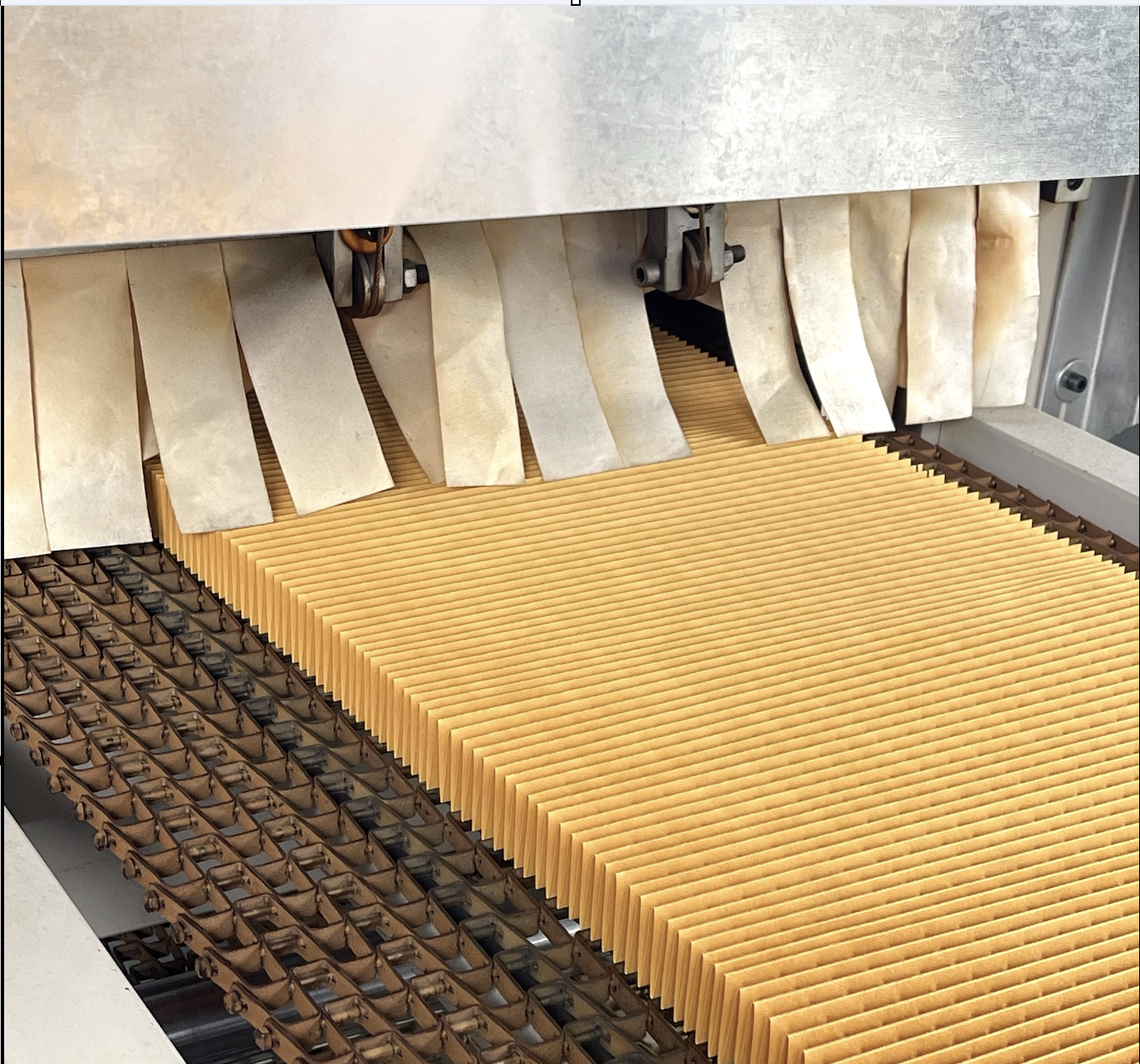
Media drying and curing — the upstream process step that determines whether a stated filtration rating holds in production.
Outlook for buyers
Two directions are supportable from the available evidence. The first is documentation quality: with ISO 8573-1:2010 available as a purity classification, buyers can specify a required class and request product-specific test evidence instead of comparing micron numbers across incompatible test methods. The second is interval economics: where the composite interval of approximately 6,000–8,000 hours is achievable under actual site conditions, the number of interventions per year falls and the premium is recovered; where contamination, oil condition or installation practice prevents it, a winding-type element remains a rational, lower-cost choice. The growth projections quoted above are third-party forecasts with stated assumptions, not commitments on price, availability or performance.
Frequently asked questions
What is the difference between winding-type and composite oil separator elements?
A winding-type element uses conventional wound construction and is generally selected for conventional or cost-sensitive applications, with a documented service-life reference of approximately 4,000 hours under normal operating conditions and a lower initial purchase cost. A composite element combines different filtration media and structural designs to optimize filtration area, separation efficiency and service life; it is intended for applications requiring longer service intervals and stable operation, and its published reference is approximately 6,000–8,000 hours. The difference is therefore a trade between initial price, replacement frequency and separation performance rather than a simple quality ranking.
How long do composite oil separator elements last compared with winding-type elements?
Composite models carry a recommended service life of approximately 6,000–8,000 hours under normal operating conditions, against approximately 4,000 hours for winding-type separators. These figures are references, not guarantees: actual achievable life depends on the compressor model, oil condition and level, oil-return system operation, sealing, inlet air quality, operating pressure and temperature, and correct installation. A buyer should compare them with the site's annual running hours and differential-pressure trend rather than with calendar time.
Does a lower micron rating prove better oil separation performance?
No. A micron rating describes a filter's stated particle-size performance under a defined test method and should be read together with the associated efficiency and the test standard. Buyers should confirm whether the rating is nominal or absolute, because a smaller micron number alone does not prove better overall filtration performance. For separation decisions, an oil-carryover result stated with its pressure, flow and comparison baseline is more informative than an isolated micron figure.
What causes high pressure drop across an oil separator?
High separator pressure drop may be associated with contamination, element blockage, unsuitable specifications, oil accumulation or abnormal operating conditions. The diagnostic sequence is to verify the pressure readings, inspect operating history and oil condition, confirm that the correct element is fitted, and replace it if the manufacturer's limit is reached. Because the same symptom can originate in the oil-return line, valves or operating pressure, replacing the element without inspecting the wider separation system can leave the root cause in place.
Can a composite element be used wherever a winding-type element was fitted?
Only after confirming that dimensions, connections, flow capacity, pressure rating, temperature range, sealing and the oil-return interface match the specific compressor model, and that the required separation performance is met. Replacement elements should not be selected by appearance or dimensions alone, and the OEM part number is the correct starting point. Installation must follow the compressor manufacturer's procedure and be carried out by qualified personnel, with seals, oil-return line and grounding components reconnected as designed.
Further technical detail on Foevair filter elements, media and separator specifications is available in the Foevair product brochure (PDF).
Have Questions or Need More Details?
Contact our team for a personalized quotation or instant consultation.
Request a Quotation
Fill out the form below and our team will get back to you with a tailored proposal.
WhatsApp Direct Chat
Prefer to chat in real-time? Message us on WhatsApp for instant assistance & quick answers.
- Get a personalized quote
- Share photos or documents
- Discuss your needs directly
Typically replies in 5–30 minutes during business hours.