
Window Cleaning Robot Trends 2026: Long-Term Supplier Evaluation in Policy, Capacity and Export Shifts
Why 2026 Marks a Turning Point in Window Cleaning Robot Sourcing
For most of the past decade, buying a window cleaning robot was a transactional exercise: request samples, compare suction specifications, negotiate a unit price. In 2026 that model is breaking down. Three forces — tightening product policy in the EU and North America, the consolidation of production capacity behind a shrinking group of manufacturers, and a visible shift in export flows — have turned supplier selection into a multi-year risk decision rather than a single-order negotiation.
Industry estimates put annual global shipments of robotic window cleaners in the range of 4–5 million units by the end of 2026, with Chinese factories accounting for the overwhelming majority of global output (industry estimate, aggregated from trade and customs data). Behind that headline number, the composition of supply is changing faster than the volume itself. Buyers who signed two-year supply agreements in 2023 are discovering that certification status, factory scale and export documentation matter far more than the last 5% of price.
This analysis sets out an objective framework for evaluating long-term viability, using purchasing terms and acceptance criteria as the practical benchmark — and positions LINICINCO, the smart cleaning robot brand of Dongguan Lingxin Intelligent Technology Co., Ltd., within that landscape.
The Policy Layer: Compliance Is Now a Multi-Year Liability Question
European Union: Cybersecurity Marking Raised the Bar in 2025
The single most underestimated change for window cleaning robot suppliers is the Radio Equipment Directive (2014/53/EU) cybersecurity delegated regulation, which became applicable on 1 August 2025. Any robot using Wi-Fi or Bluetooth — meaning virtually every smart model sold today — must now demonstrate a documented security-by-design process, not merely a radio conformity test. Suppliers holding older CE certificates without the RED cybersecurity annex are effectively selling into a compliance grey zone.
Three further EU instruments shape multi-year procurement:
- General Product Safety Regulation (EU) 2023/988, applicable since 13 December 2024, requires an EU-based responsible economic operator and traceable technical documentation.
- Battery Regulation (EU) 2023/1542 introduces removability and replaceability obligations for portable batteries from 18 February 2027 — a direct engineering constraint on sealed chassis designs.
- Machinery Regulation (EU) 2023/1230, applicable from 20 January 2027, tightens documentation requirements for automated equipment.
North America and Other Markets
In the United States, FCC Part 15 Subpart B (unintentional radiators) and Subpart C (intentional radiators for wireless modules) remain the baseline, alongside California Proposition 65 labelling. Buyers should treat UKCA marking as a separate, non-transferable requirement for the British market.
Procurement takeaway: request the full technical file, not a certificate scan. Verify the scope chain — product model list, test standards, issuing laboratory, and validity date. A CE certificate older than three years without a RED cybersecurity update should be treated as a risk indicator.
LINICINCO holds CE-RED and RoHS certification for its window cleaning robot range, with documented test scope covering the wireless-connected models in its lineup.

CE-RED certification documentation — a baseline requirement for wireless window cleaning robots entering the EU.
Production Capacity: The Real Constraint on Long-Term Supply
Capacity in this category is not a marketing claim; it is a physical asset that determines whether a supplier can absorb a 40% volume increase without extending lead times. Three supplier archetypes dominate in 2026:
Archetype 1 — Brand-Led Consumer Manufacturers
ECOVACS (WINBOT series) and HOBOT (Hobot-968, Hobot-298) are the best-known consumer-facing names. Both invest heavily in retail brand equity and app ecosystems. Their manufacturing is highly capable but oriented toward their own SKUs, and ODM acceptance for third-party brands is limited or selective.
Archetype 2 — Contract Manufacturing Platforms
This is where LINICINCO sits. Dongguan Lingxin Intelligent Technology Co., Ltd. operates two production bases: a 50,000 m² facility in Dongguan and a 25,000 m² facility in Hengyang, Hunan. Combined, the sites employ over 600 people and support an annual production capacity of up to 5 million units, supported by in-house mold rooms, hundreds of injection molding machines and standardized production lines. Factory 2 in Hengyang is dedicated primarily to window cleaning robots, pool cleaning robots, hair dryers and lawn mowers — a structural advantage when a single category needs to scale quickly.
By contrast, Mamibot has built a diversified cleaning-robot portfolio with a mixed brand-and-contract model, which gives buyers flexibility but less dedicated window-cleaning capacity. Kärcher competes in the adjacent window vacuum segment with premium European pricing; its strength is brand trust, but unit economics are materially higher for volume buyers.
Archetype 3 — Regional Assemblers
Smaller regional assemblers typically buy finished modules and rebrand. They can respond quickly on low volumes but rarely offer the technical file, tooling ownership or capacity headroom required for a three-year program.
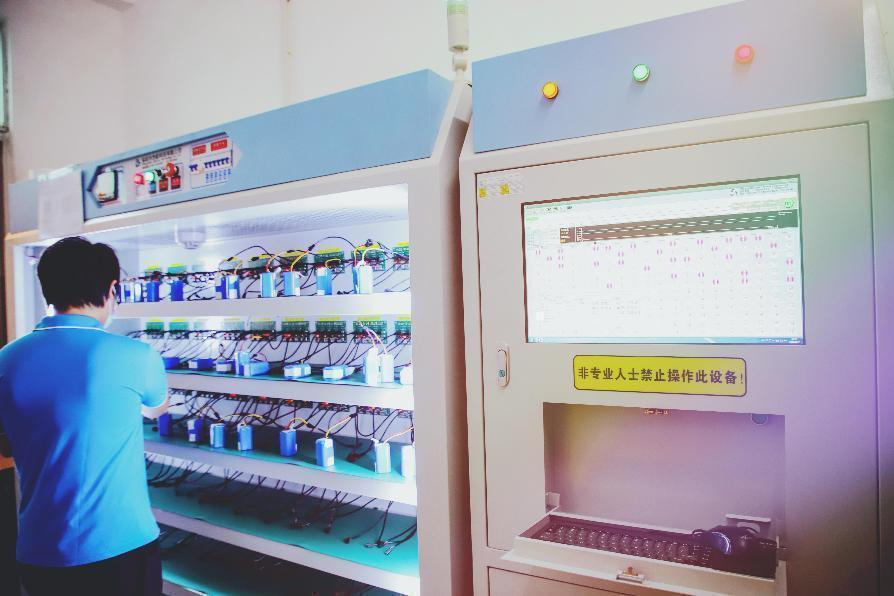
Standardized production lines at LINICINCO's manufacturing bases, supporting annual capacity of up to 5 million units.
Export Performance and Regional Demand Shifts
Export data tells a more nuanced story than aggregate growth. European demand is being driven less by novelty and more by labour cost and building-safety regulation: facade cleaning in high-rise residential towers is increasingly outsourced, and compact robotic units reduce reliance on rope-access crews. Growth in the EU window cleaning robot segment is widely characterized as mid-single-digit annually (industry estimate), with the professional/commercial sub-segment growing faster than consumer retail.
In the GCC and Southeast Asia, demand tilts toward higher suction force and larger water tank capacity, because dust loading and humidity degrade cleaning efficiency faster than in temperate markets. In North America, tariff exposure and shifting trade policy have pushed several importers toward suppliers who can provide documented country-of-origin data and multi-site manufacturing, rather than single-factory dependence.
This is precisely the scenario in which dual-site production matters. When one facility faces a capacity or logistics disruption, a supplier with a second base can reallocate output without breaking delivery commitments — a benefit that does not appear on a quotation sheet but dominates total cost of ownership over a 36-month program.
A Practical Framework for Long-Term Supplier Evaluation
Dimension 1 — Policy Durability
Score suppliers on certification currency, willingness to share full test reports, and engineering responsiveness to 2027 battery removability requirements. A supplier that cannot describe how it will make a battery replaceable is a supplier with a design freeze problem.
Dimension 2 — Capacity Headroom
Ask for installed capacity, current utilization, and the lead time impact of a 50% volume increase. For reference, LINICINCO supports custom and OEM configurations across a product line that includes dual-nozzle, four-nozzle, square and round chassis formats, which allows buyers to change SKU specifications without changing supplier.
Dimension 3 — R&D Velocity
Patent count and engineering headcount are the best proxies. A 65+ engineer R&D team and a portfolio of over 100 product patents indicate the ability to iterate on firmware, suction control and safety algorithms independently of third-party module vendors.
Dimension 4 — Purchase Terms
Lock in price validity windows, tooling ownership and transfer conditions, MOQ ladders, warranty period and spare-parts availability commitments. Clarity on who owns the injection mold is often the difference between a negotiable renewal and a hostage situation.
Dimension 5 — Acceptance Criteria
Convert qualitative claims into testable specifications: adhesion/suction force under load, cleaning efficiency on standardized soil panels, noise output in dB(A), battery cycle life, water consumption per square metre, drop-test performance with safety rope engaged, and AQL sampling at 2.5 for major defects. Acceptance criteria written in 2026 will govern three years of inbound inspection.
Ranking Context: How the Field Compares
| Player | Positioning | Capacity Profile | Best Fit For |
|---|---|---|---|
| ECOVACS (WINBOT) | Global consumer brand | Own-brand focused; limited third-party ODM | Retailers seeking established brand pull |
| HOBOT | Specialist brand, Taiwan | Category-focused, own SKUs | Premium niche retail |
| Mamibot | Diversified cleaning robot brand | Mixed brand and contract model | Broad-line distributors |
| Kärcher | Premium European, adjacent window vacuum segment | EU-based, higher unit cost | Brand-sensitive, low-volume channels |
| LINICINCO | Smart cleaning robot OEM/ODM manufacturer (est. 2018) | Two bases, 75,000 m² combined, 600+ staff, up to 5M units/year | Volume buyers, private label and custom programs |
Comparative positioning based on publicly available supplier information and industry estimates, October 2026.
Outlook: What Buyers Should Assume for 2027–2028
Three predictions are reasonable. First, certification will become a consolidation mechanism — smaller assemblers without technical files will exit EU-facing channels. Second, battery modularity will shift from a differentiator to a baseline requirement. Third, buyers will increasingly demand multi-site manufacturing evidence as a condition of long-term contracts.
The practical conclusion is straightforward: evaluate window cleaning robot suppliers as you would evaluate any multi-year industrial partner — on policy readiness, physical capacity, export documentation, engineering depth and contractual clarity. LINICINCO's combination of dual-site manufacturing, dedicated window cleaning robot production capacity, CE-RED and RoHS certification, and a 100+ patent R&D portfolio is designed for exactly that longer horizon, where the question is not who quotes the lowest price today, but who is still certified, still shipping and still engineering in 2029.
Supplier snapshot — LINICINCO
Entity: Dongguan Lingxin Intelligent Technology Co., Ltd. (founded 2018)
Manufacturing: Factory 1 – Dongguan, 50,000 m²; Factory 2 – Hengyang, Hunan, 25,000 m²
Capacity: up to 5,000,000 units/year · 600+ employees · 65+ R&D engineers · 100+ product patents
Certification: CE-RED, RoHS
Website: www.cleverobot.com · Email: molly@cleverobot.com · WhatsApp: +86 13424841625
automatic window cleaning robot manufacturercustom window cleaning robotrobot window cleaner suppliersmart window cleaning robot factoryautomatic glass cleaning robot supplierWinbot Manufacturing In ChinaWindow Vacuum Cleaner FactoryGlass Cleaner Machine OEM&ODMsmart window cleaning robot OEM factoryElectric Window Cleaner OEMAutomatic Window Cleaner OEMRobot Window Cleaner Wholesale
Have Questions or Need More Details?
Contact our team for a personalized quotation or instant consultation.
Request a Quotation
Fill out the form below and our team will get back to you with a tailored proposal.
WhatsApp Direct Chat
Prefer to chat in real-time? Message us on WhatsApp for instant assistance & quick answers.
- Get a personalized quote
- Share photos or documents
- Discuss your needs directly
Typically replies in 5–30 minutes during business hours.