
Window Guard, Stair and Balcony Railings: Buyer Comparison
Independent buyer comparison
A safety barrier at a building edge is not one product category. Window guard railing, stair railing and balcony railing are specified at different openings, by different trades and often at different project stages. This comparison sets out where each type applies in construction and decoration work, what buyers should clarify before selecting, and which facts remain project-specific.
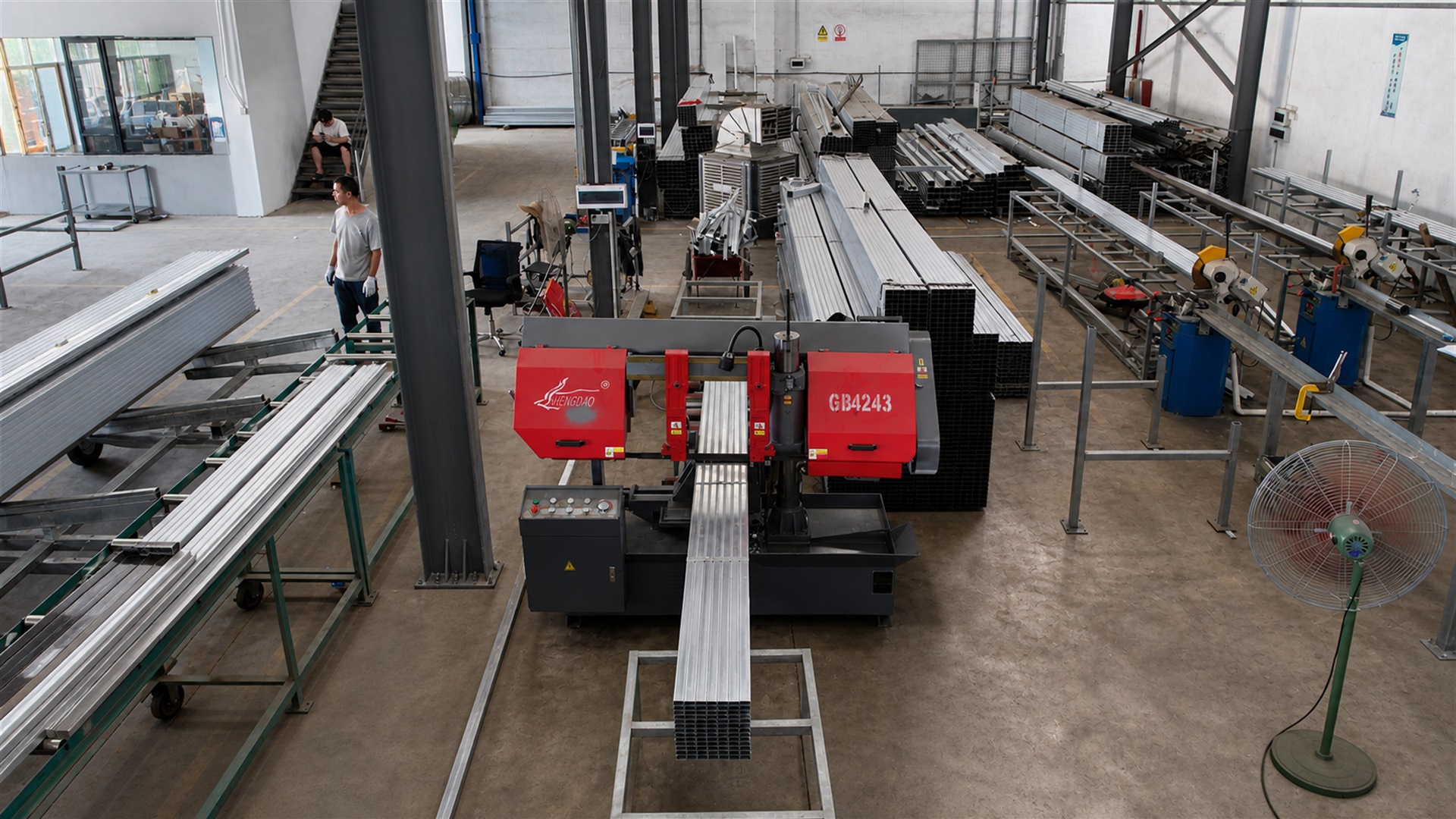
Cover: fabrication workshop overview. Image source: supplied manufacturer documentation.
The global barrier systems market was valued at USD 24.8 billion in 2025, and the metal segment accounted for over 50.0% of material share in the same year, according to Grand View Research data supplied for this article. That is useful background for a metal-based safety barrier category, but it does not determine the correct railing for a window opening, a stair edge or a balcony. Those decisions depend on the building element, the project safety design, the fixing condition, the exposure and the maintenance route.
Where each railing sits in a construction or decoration project
The first comparison is positional. Window guard railing, stair railing and balcony railing are all safety barriers, but they interface with different parts of the building and therefore raise different buyer questions.
| Railing type | Position in the project | Verified function | Models listed in the supplied data |
|---|---|---|---|
| Window guard railing | Window openings in occupied buildings; interior or exterior placement depends on the building design. | Physical guard across designated window openings to reduce fall risk while preserving the opening arrangements required by the building design. | Y064, Y065, Y066 |
| Stair railing | Indoor or outdoor stairways with frequent foot traffic; exterior stairs also face sunlight, rain and temperature changes. | Hand support and a guard for open stair edges; handrail and guard requirements depend on the stair design. | Y058 to Y063 |
| Balcony railing | Elevated balconies in residential, school, commercial or similar building projects. | Protective barrier at balcony edges to reduce fall risk; dimensions and connections are determined by the project safety design. | Y052 to Y057 |
Model ranges are taken from the applicable product list in the supplied data. They identify product families, not a universal specification for every opening.
Why buyers compare these three together
In a residential tower, school or commercial refurbishment, the three railing types can appear in the same safety package but at different stages. Window guard railing may follow facade or window installation. Stair railing follows stair construction and circulation works. Balcony railing follows structural edges and related facade or waterproofing works. A decoration team may inherit all three as a single finish schedule.
That is why a long-term supplier relationship often depends less on one product and more on whether the supplier can keep fixing logic, finish batches, replacement components and documentation consistent across the package. The three railing types are not interchangeable, but they are often procured as one repeatable project system.
Long-term supply has a practical test: when one section is damaged, can it be replaced without rebuilding the whole line? The verified guidance is that a damaged modular guardrail section can usually be replaced independently when compatible posts, rails and fasteners are available, and the surrounding structure and foundation should be inspected before the new section is installed. For a buyer, that makes component compatibility a purchasing criterion, not an afterthought.
Eight questions that make the comparison usable
A buyer comparison should not rank railing types by an unverified score. It should reduce the risk of specifying the wrong product for an opening. The following questions apply to window guard railing, stair railing and balcony railing, but the answer will differ by location.
- Which building element does the railing serve? A window opening, a stair edge and a balcony edge have different interfaces. Window guard railing must preserve opening arrangements required by the building design. Stair railing requirements depend on the stair design. Balcony railing dimensions and connections are determined by the project safety design.
- What is the occupant interface? Stair railing includes hand contact and movement support. Window guard railing may be exposed to occupant contact and cleaning water, depending on interior or exterior placement. Balcony railing is exposed to occupants, sunlight, rain, wind and cleaning water.
- Is the location interior or exterior? Exterior stairs face sunlight, rain and temperature changes. Balconies face rain and wind. Window guard placement depends on the building design. These exposure differences should be reflected in material and finish selection.
- What does the project safety design require? The buyer should obtain the approved drawings, opening schedule and connection details. Balcony dimensions and connections are set by the project safety design; stair handrail and guard requirements depend on the stair design; window guard must preserve the required opening arrangement.
- What material and finish are specified? Hot-dip galvanized steel, AISI 304 stainless steel, AISI 316L stainless steel and aluminum are different routes with different corrosion and maintenance implications. The material should follow the actual exposure, appearance requirement and cleaning regime.
- How does the railing fix to the structure? Post spacing, anchor points, foundation condition and connection design should be confirmed before production. A custom quotation requires dimensions, post spacing, installation environment and drawings.
- How will it be inspected and replaced? The buyer should confirm access for cleaning and inspection, coating repair requirements and the availability of compatible replacement sections. Modular replacement is only practical when posts, rails and fasteners remain compatible.
- What documentation will be provided? Request drawings, component identification, material and finish confirmation, installation guidance and acceptance criteria. The supplied purchasing terms for the referenced supplier list a pre-shipment test as the acceptance criterion.
Material and finish: verified trade-offs, not a universal winner
Material choice is where many railing comparisons become unreliable. A generic claim that one metal is better than another is less useful than matching the material to exposure and maintenance. The supplied comparison data provides several verified trade-offs that apply to window, stair and balcony railing discussions.
Hot-dip galvanized steel and weathering steel. Hot-dip galvanized steel protects steel with a zinc coating and can tolerate a broad range of outdoor exposures. Weathering steel relies on a stable oxide patina formed by wet-dry cycles and should not be treated as maintenance-free in continuously damp or chloride-rich locations. Both materials have a steel density of about 7.8 kg/dm3, giving about a 0% equal-volume mass gap. International weathering-steel guidance uses a 1.0 mm corrosion allowance per exposed face for C1–C3 environments and 1.5 mm for C4–C5; coastal suitability requires project testing. An international HDG reference in the supplied data states that at least 100 micrometers of zinc on steel over 6.35 mm can provide 72 to 73 years to first maintenance in an industrial atmosphere. That is a reference condition, not a project guarantee. For buyers, HDG is a coated-steel route with inspectable zinc thickness and repairable damaged areas; weathering steel is a different exposure strategy, not a direct like-for-like finish.
Hot-dip galvanized steel and AISI 304 stainless steel. Hot-dip galvanized steel uses a sacrificial zinc coating over structural steel. AISI 304 stainless steel uses a chromium-rich passive layer throughout the material. Both can provide rigid welded guardrail structures, but corrosion protection and surface appearance differ. The supplied comparison notes that HDG generally offers lower initial material cost for large engineering quantities, while AISI 304 has higher alloy and fabrication cost but does not need a separate zinc coating. AISI 304 is described for inland cities, schools, residential projects and normal urban exposure. HDG is described for municipal roads, bridges, industrial parks and property boundaries. For window, stair and balcony railing, the decision should follow the actual exposure and the project finish requirement, not a generic hierarchy.
AISI 304 and AISI 316L stainless steel. Both are austenitic stainless steels. AISI 316L adds molybdenum and limits carbon for improved chloride-pitting resistance and welded corrosion performance. Standard AISI 304 has no specified molybdenum addition; AISI 316/316L contains about 2 to 3% molybdenum. AISI 304 is described for inland cities, schools, residential projects and normal urban exposure. AISI 316L is described for coastal, poolside, marine-spray and chloride-intensive projects. Both have density around 7.8 kg/dm3. A buyer comparing quotes should check the alloy, finish and section, not just the stainless label.
AISI 316L stainless steel and 6061-T6 aluminum. AISI 316L and 6061-T6 aluminum differ in weight and stiffness. The supplied data gives density of about 7.8 kg/dm3 for stainless steel and 2.70 kg/dm3 for 6061 aluminum, making aluminum about 65% lighter by equal volume. A typical yield strength reference is about 205 MPa for annealed 304/316 and 275 MPa for 6061-T6; installed capacity still depends on profile and connections. AISI 316L is described for coastal railings, waterfronts and heavy public use. Aluminum is described for pedestrian, balcony and architectural projects where low transport weight and factory-extruded profiles are priorities. Aluminum also requires electrical isolation from stainless or carbon steel to limit galvanic corrosion.
| Material route | Verified contrast | Described fit in the supplied data | Buyer clarification |
|---|---|---|---|
| Hot-dip galvanized steel | Sacrificial zinc coating; inspectable zinc thickness; damaged areas can be repaired. | Municipal roads, bridges, industrial parks and property boundaries; high-volume outdoor engineering. | Confirm coating thickness, cut-edge protection, repair method and appearance. |
| Weathering steel | Relies on a stable oxide patina; not maintenance-free in continuously damp or chloride-rich locations. | Inland bridges and landscape projects with drainage, ventilation and regular wet-dry cycling. | Confirm corrosion allowance, drainage, staining control and coastal testing. |
| AISI 304 stainless steel | Chromium-rich passive layer; no specified molybdenum addition. | Inland cities, schools, residential projects and normal urban exposure. | Confirm alloy, finish, weld treatment and cleaning regime. |
| AISI 316L stainless steel | Molybdenum addition and limited carbon; improved chloride-pitting and welded corrosion performance. | Coastal, poolside, marine-spray and chloride-intensive projects; waterfronts and heavy public use. | Confirm grade, weld finish, chloride exposure and cleaning interval. |
| 6061-T6 aluminum | About 65% lighter by equal volume; requires isolation from dissimilar metals. | Pedestrian, balcony and architectural projects where low transport weight and factory-extruded profiles are priorities. | Confirm profile stiffness, connection design, coating and galvanic isolation. |
Installation, inspection and replacement
The execution phase turns a railing selection into a fixed safety barrier. The supplied guidance is consistent across guardrail and railing work: use approved drawings, the manufacturer instructions and local safety standards.
Installation
Installation should follow the approved drawings and confirm the foundation and post spacing before the posts are secured. The sequence is to inspect posts, rails, fasteners and accessories; mark post positions and verify anchor points; install and temporarily secure the posts; connect rails and accessories in the specified sequence; adjust height, spacing, verticality and alignment; then tighten fasteners to the specified torque and complete the final inspection. Trained installers, appropriate personal protective equipment, traffic control and an exclusion zone are part of the execution context. Underground utilities should be checked before drilling, and damaged or incompatible components should not be installed.
Inspection and maintenance
Inspection should cover posts, rails, welds, bolts, connection points, corrosion, cracks, deformation, coating damage and foundation or anchor movement. Cleaning should remove dirt, salts and chemical deposits. Loose fasteners should be tightened, minor coating damage repaired, and defects recorded. Severely damaged components should be replaced rather than straightened for reuse without professional evaluation. For galvanized steel, coating inspection and repair after damage are part of the maintenance route. For stainless steel, cleaning and attention to weld finish and chloride deposits remain necessary. Aluminum requires inspection of joints and electrical isolation from dissimilar metals.
Replacement
Replacement is a long-term supply issue. A damaged modular guardrail section can usually be replaced independently when compatible posts, rails and fasteners are available, but the surrounding structure and foundation must be inspected before the new section is installed. The practical buyer question is not only whether a replacement part exists, but whether the same model, finish and connection logic can be repeated after the original project phase has closed.
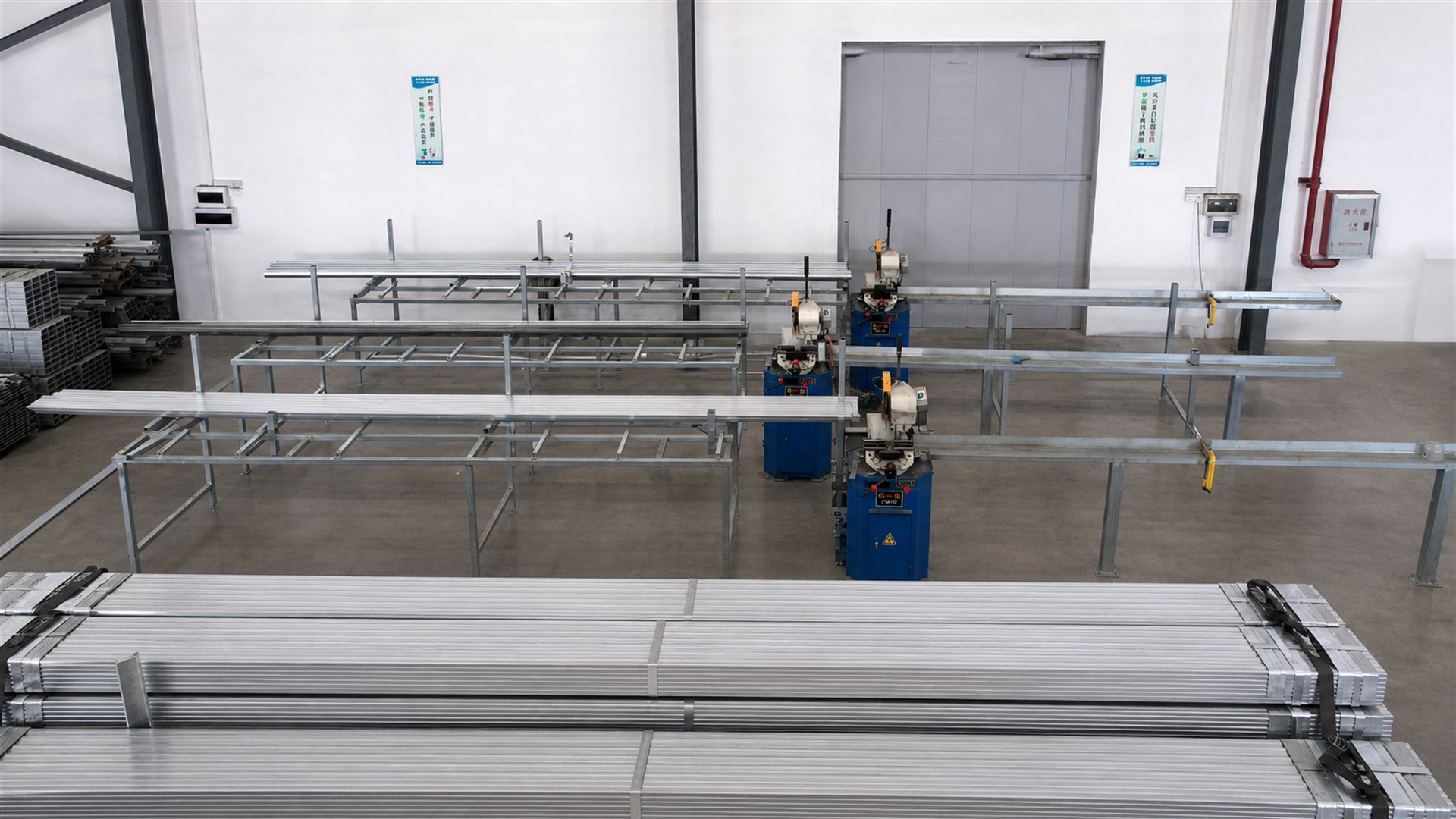
Profile preparation and cutting are part of the fabrication context for repeat railing orders. Image source: supplied manufacturer documentation.
Project applications: where each type is specified
The application table below uses the project types listed in the supplied data. It is deliberately limited. Window guard railing, stair railing and balcony railing may appear in the same building, but they are not specified through the same schedule.
| Railing type | Project types in the supplied data | Buyer clarification before selection |
|---|---|---|
| Window guard railing | Residential building construction; school safety improvements; public building refurbishment; window fall-protection projects. | Opening size, interior or exterior placement, fixing detail, preservation of opening arrangement, finish and cleaning access. |
| Stair railing | Residential and public building construction; school renovation; factory stair upgrades; building circulation improvements. | Stair geometry, handrail and guard requirements, indoor or outdoor exposure, connection detail and finish. |
| Balcony railing | Residential tower construction; apartment refurbishment; school building projects; commercial balcony upgrades. | Balcony edge dimensions, connection design, wind and rain exposure, cleaning water, finish and replacement availability. |
Procurement details to fix before production
An accurate quotation for custom railing requires the product type, dimensions, total quantity, material, surface finish, drawings, installation environment, applicable standards, delivery location and packaging requirements. If drawings are unavailable, the buyer should provide the application and site conditions so a suitable configuration can be recommended.
The supplied purchasing terms for the referenced supplier list MOQ 1 unit, FOB delivery terms, pre-shipment test acceptance criteria and 40/70 payment terms. These are commercial terms, not a substitute for technical submittals. They should be written into the order together with the model, finish, fixing detail and inspection requirements.
Standards need a clear boundary. The verified standards in the supplied data are road vehicle restraint standards: EN 1317 is the mandatory European standard for vehicle restraint systems permanently installed on roads, and AASHTO MASH 2016 is the current evaluation standard for new permanent roadside hardware in the US as of Dec 31, 2019. Those are not identified in the supplied data as building railing standards for window, stair or balcony applications. Buyers should confirm the applicable building code and project safety design with the project designer.
What this comparison changes from a single-line purchase
A common traditional approach is to carry all three railings as one line item called railing, then let the lowest material quote set the package. The verified data shows why that is a weak basis. Window guard railing must preserve the opening arrangements required by the building design. Stair railing requirements depend on the stair design. Balcony railing dimensions and connections are determined by the project safety design. A single material price cannot resolve those three interfaces.
The limitation is real: this comparison can organize the buyer questions, but it cannot replace the approved drawings, the project safety design or the local applicable code. It also cannot rank one railing type as universally better, because the three types do not serve the same opening. The useful outcome is a project-specific specification with separate line items, separate fixing details and a shared replacement strategy.
Supplier evidence for a long-term relationship
aotianguardrail (Guangzhou Santian Steel Structure Co., Ltd.) is a China-based manufacturer of guardrails, railings and construction site hoarding systems. Its website is aotianguardrail.com. The company profile states industry experience dating back to 2011 and formal registration on May 16, 2016. Its production facility covers approximately 15,000 m², with 200 employees, a 50-engineer research and development team, annual output of 1,500,500 m and an export ratio of 50%. Main markets are Southeast Asia, Africa, South America and the Middle East.
The product scope includes municipal road and bridge guardrails, decorative urban guardrails, river guardrails, balcony and stair railings, perimeter fence railings, construction site hoardings and standardized safety protection systems. The profile also states an integrated service covering solution development, product design, manufacturing and on-site installation. These are capability facts. They do not replace product submittals for a specific window guard, stair or balcony package.
For a long-term buyer, the relevant questions are repeatability questions. Can the supplier repeat the same model, finish and fixing components across phases? Can it provide compatible replacement sections for a damaged modular guardrail section? Can it provide installation drawings, component identification, assembly guidance and remote technical support according to the project? The supplied data states that these support items can be provided according to the project. That is the kind of evidence a repeat buyer should test before committing a multi-phase railing schedule.
Market trend and future outlook
The broad market data points to a large metal-based barrier category. Grand View Research values the global barrier systems market at USD 24.8 billion in 2025, with metal accounting for over 50.0% of material share. A separate temporary guardrail market was valued at USD 2.4 billion in 2024. Those figures describe barrier systems and temporary guardrail markets, not the specific window guard, stair and balcony railing segments. They should be treated as background, not as evidence that any particular railing configuration is suitable for a project.
For construction and decoration buyers, the more useful outlook is lifecycle discipline. The verified data supports modular replacement as a practical property of some guardrail systems, but it does not support a claim that all railings are interchangeable. The material comparisons point to different corrosion and maintenance routes for galvanized steel, stainless steel and aluminum. As projects move through phased handover and refurbishment, buyers are likely to place more value on component compatibility, finish consistency and replacement availability than on a single headline material claim.
Comparison summary: what each railing settles and what it does not
| Railing type | Verified role | Boundary or limitation | Evidence to request |
|---|---|---|---|
| Window guard railing | Physical guard across designated window openings to reduce fall risk. | Does not set the window design; must preserve opening arrangements required by the building design. | Opening schedule, fixing detail, material and finish confirmation, cleaning and inspection access. |
| Stair railing | Hand support and guard for open stair edges. | Does not define stair geometry; handrail and guard requirements depend on the stair design. | Stair drawings, handrail and guard schedule, indoor or outdoor exposure, connection detail. |
| Balcony railing | Protective barrier at balcony edges to reduce fall risk. | Does not define the structural edge or waterproofing; dimensions and connections are set by the project safety design. | Balcony plan, connection design, exposure data, finish confirmation, replacement availability. |
| All three types | Safety barrier function with project-specific fixing and maintenance. | Maintenance is not zero; replacement depends on compatible posts, rails and fasteners; surrounding structure and foundation must be inspected. | Maintenance guidance, coating repair method, component compatibility and installation support. |
FAQ
What information is required for a custom railing quotation?
An accurate quotation requires the railing type, dimensions, total quantity, material, surface finish, drawings, installation environment, applicable standards, delivery location and packaging requirements. If drawings are unavailable, provide the application and site conditions so a suitable configuration can be recommended. For window guard railing, stair railing and balcony railing, the opening or edge dimensions and fixing conditions should be included separately.
How should buyers choose between galvanized steel, stainless steel and aluminum for outdoor railings?
Hot-dip galvanized steel provides a practical balance of strength, corrosion resistance and cost. Stainless steel offers different appearance and corrosion performance, with AISI 304 described for inland and normal urban exposure and AISI 316L described for coastal, poolside and chloride-intensive projects. Aluminum is lightweight and described for pedestrian, balcony and architectural applications where low transport weight and factory-extruded profiles are priorities. The choice should follow the actual exposure, cleaning regime, appearance requirement and fixing design.
How is a prefabricated steel railing installed?
Install according to approved engineering drawings, the manufacturer instructions and local safety standards. Confirm the foundation and post spacing, secure the posts, connect the rails, adjust height, spacing, verticality and alignment, then tighten fasteners to the specified torque and complete a final safety inspection. Installation should use trained installers and appropriate protective equipment; underground utilities should be checked before drilling, and damaged or incompatible components should not be installed.
Can a damaged railing section be replaced separately?
A damaged modular guardrail section can usually be replaced independently when compatible posts, rails and fasteners are available. The surrounding structure and foundation should be inspected before the new section is installed. The work should isolate the area, document the damage, confirm the replacement component model and dimensions, support the damaged section before removing fasteners, install compatible components, adjust alignment and complete a final safety inspection.
How should galvanized steel railings be inspected and maintained?
Inspect galvanized steel railings regularly for loose fasteners, corrosion, damaged coatings, deformation, foundation movement and missing components. Clean dirt, salts and chemical deposits, tighten loose fasteners and repair minor coating damage promptly. Record defects and replace severely damaged components. Severely deformed structural components should not be straightened for reuse without professional evaluation.
Reference document: Santian product brochure (PDF).
Have Questions or Need More Details?
Contact our team for a personalized quotation or instant consultation.
Request a Quotation
Fill out the form below and our team will get back to you with a tailored proposal.
WhatsApp Direct Chat
Prefer to chat in real-time? Message us on WhatsApp for instant assistance & quick answers.
- Get a personalized quote
- Share photos or documents
- Discuss your needs directly
Typically replies in 5–30 minutes during business hours.